
Introduction
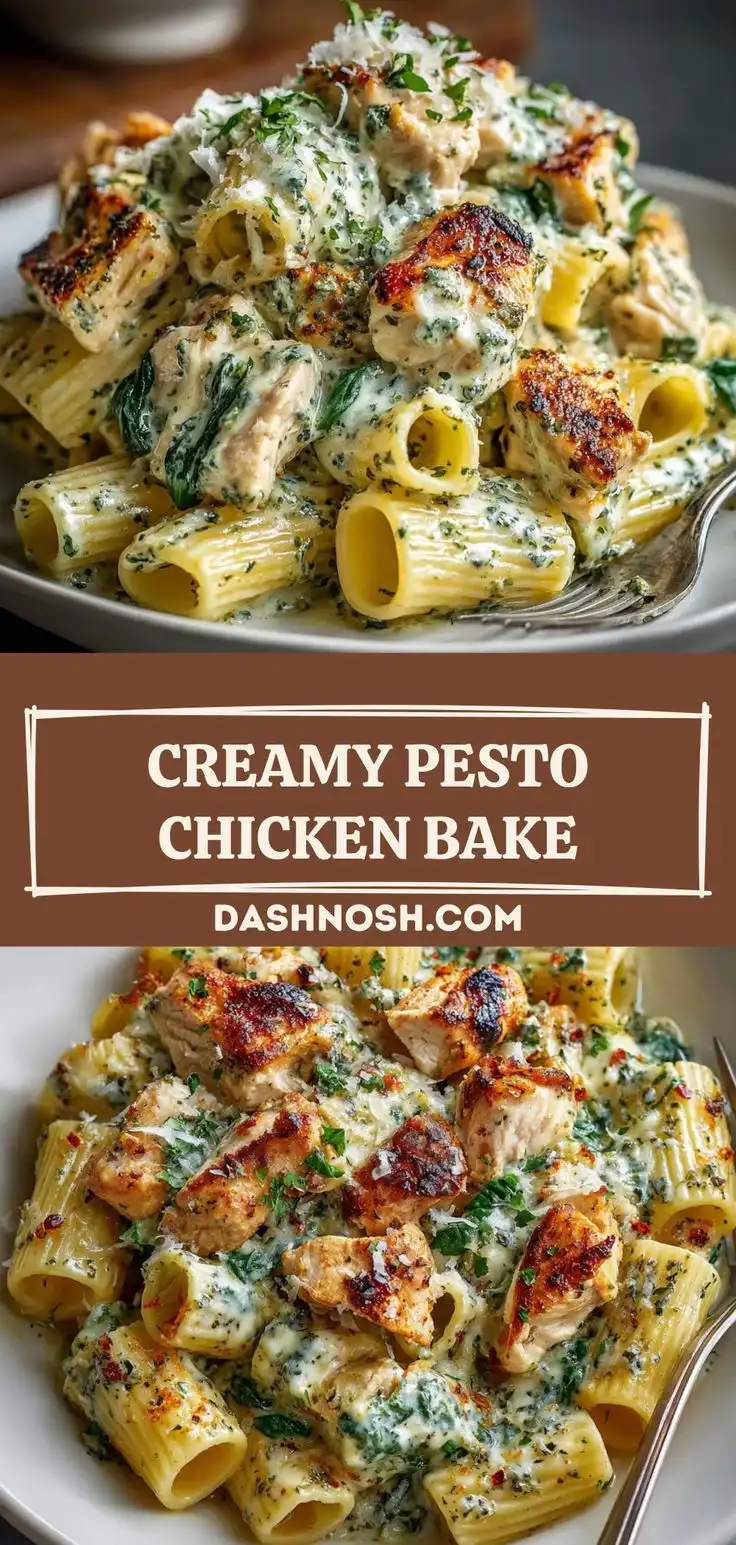
Welcome to a rich, comforting, and utterly satisfying weeknight dinner solution: the Creamy Pesto Chicken Pasta Bake. This beloved dish masterfully marries the bold, herbaceous punch of fresh basil pesto with tender shredded chicken, creamy ricotta and Parmesan cheeses, and perfectly al dente pasta—all baked to golden-brown perfection under a bubbling, cheesy crust. Whether you’re feeding a busy family, hosting casual friends, or simply craving something deeply flavorful yet effortlessly elegant, this pasta bake delivers restaurant-quality taste with minimal hands-on effort. It’s hearty enough to stand alone as a complete meal, yet versatile enough to adapt to dietary preferences, seasonal ingredients, or pantry constraints—making it a true kitchen staple you’ll return to again and again.
The History
While pasta bakes have roots stretching back centuries across Mediterranean and European cuisines—from Italian timballi and French gratin de pâtes to American mid-century casserole culture—the Creamy Pesto Chicken Pasta Bake is a modern fusion born from the late 20th- and early 21st-century rise of gourmet convenience cooking. Its evolution reflects several culinary trends: the rediscovery of authentic Genovese pesto (traditionally made with basil, pine nuts, garlic, olive oil, and aged cheese) beyond jarred versions; the growing popularity of protein-forward vegetarian and poultry-based pastas in health-conscious households; and the home cook’s desire for make-ahead, crowd-pleasing dishes that balance freshness with richness. Chefs and food bloggers began experimenting in the early 2000s by folding pesto into creamy cheese sauces instead of relying solely on heavy cream or béchamel—resulting in a lighter, more vibrant flavor profile. The addition of rotisserie chicken (a supermarket innovation that gained mass appeal in the 1990s) further cemented its status as an accessible, time-saving showstopper. Today, this dish appears on countless meal-prep blogs, TikTok recipe reels, and even in updated versions on the menus of artisanal fast-casual eateries—proof of its enduring, adaptable charm.
Ingredients Breakdown
Understanding each ingredient’s role not only ensures success but also empowers customization. Here’s why every component matters:
- Pasta (12 oz dried): Short, sturdy shapes like penne, fusilli, rigatoni, or casarecce hold up best during baking and trap creamy sauce in their nooks. Whole wheat or gluten-free alternatives work beautifully—just adjust cooking time to avoid mushiness.
- Boneless, skinless chicken breasts or thighs (1 lb): Breasts yield lean, mild flavor; thighs offer richer moisture and deeper umami. Rotisserie chicken (about 3 cups shredded) is a brilliant shortcut—just be sure to pat it dry to prevent excess water in the bake.
- Fresh basil pesto (1 cup, ~8 oz): The soul of the dish. Homemade is ideal (garlic, toasted pine nuts, fresh basil, extra-virgin olive oil, grated Parmigiano-Reggiano, and a touch of lemon zest), but high-quality store-bought brands without fillers or artificial preservatives (e.g., DeLallo, Rao’s, or Mezzetta) deliver excellent results. Avoid “pesto-style” sauces with soybean oil or excessive salt—they dull the brightness.
- Ricotta cheese (15 oz whole-milk, well-drained): Provides luscious creaminess and subtle sweetness. Drain overnight in a fine-mesh sieve over a bowl if using a wetter variety (especially low-fat or part-skim). Cottage cheese (blended until smooth) is a viable substitute with added protein and tang.
- Grated Parmigiano-Reggiano (1 cup, freshly grated): Adds salty, nutty depth and helps bind the mixture. Pre-grated versions contain anti-caking agents that inhibit melting—always grate fresh for optimal texture and flavor.
- Mozzarella (1½ cups shredded, low-moisture whole milk): Melts into stretchy, golden pockets when baked. Fresh mozzarella (torn and patted dry) adds luxury—but use sparingly, as excess moisture can make the top soggy.
- Heavy cream or whole milk (½ cup): Enhances silkiness without thinning the sauce. For lighter versions, evaporated milk or unsweetened oat milk (barley-enriched varieties work best) add body without heaviness.
- Garlic (3 cloves, minced): Sautéed gently to mellow sharpness and build aromatic foundation. Roasted garlic paste (1 tbsp) offers deeper, caramelized nuance.
- Olive oil (2 tbsp): Used for sautéing and brushing the top—infuses fruity notes and promotes browning.
- Lemon zest (1 tsp) and juice (1 tbsp): Brightens the entire dish, cutting through richness and elevating herbal notes. Never skip—this is the secret balancing act.
- Salt and freshly ground black pepper: Season at every stage—not just at the end—for layered, harmonious flavor.
- Red pepper flakes (¼ tsp, optional): A whisper of heat that complements basil’s sweetness without overpowering.
- Fresh basil leaves (for garnish): Added post-bake for fragrance, color, and textural contrast.
Step-by-Step Recipe
- Preheat & Prep: Position oven rack to center position and preheat to 375°F (190°C). Lightly grease a 9×13-inch ceramic or glass baking dish (or 3-quart oval baker) with olive oil or butter. Bring a large pot of heavily salted water to a rolling boil.
- Cook Pasta Al Dente: Add pasta and cook 2 minutes *less* than package directions for “al dente.” Reserve 1 cup of starchy pasta water before draining. Rinse briefly under cool water to halt cooking—this prevents overcooking in the oven—and drain thoroughly. Toss with 1 tsp olive oil to prevent sticking.
- Prepare Chicken: While pasta cooks, season chicken with salt and pepper. Heat 1 tbsp olive oil in a large nonstick skillet over medium-high heat. Cook chicken 5–6 minutes per side (breasts) or 7–8 minutes (thighs) until internal temperature reaches 165°F (74°C). Transfer to a cutting board, let rest 5 minutes, then shred with two forks or chop into bite-sized pieces. If using rotisserie chicken, skip this step and proceed to step 4.
- Sauté Aromatics: In the same skillet (wipe out excess fat if needed), heat remaining 1 tbsp olive oil. Add minced garlic and red pepper flakes; sauté 30–45 seconds until fragrant but not browned. Stir in lemon zest and remove from heat.
- Build Creamy Base: In a large mixing bowl, combine ricotta, ¾ cup Parmigiano-Reggiano, 1 cup mozzarella, heavy cream, lemon juice, salt, and pepper. Whisk vigorously until completely smooth and lump-free—this step is critical for velvety texture. Fold in sautéed garlic mixture.
- Combine Everything: Gently fold drained pasta, shredded chicken, and pesto into the ricotta mixture until evenly coated. If too thick, add reserved pasta water 1 tbsp at a time until desired consistency is reached (it should cling luxuriously—not pool or slide off).
- Transfer & Top: Pour mixture into prepared baking dish, spreading evenly. Sprinkle remaining ¼ cup Parmigiano-Reggiano and ½ cup mozzarella over top. Drizzle lightly with olive oil and grind additional black pepper.
- Bake: Place dish on a parchment- or foil-lined baking sheet (to catch potential spills). Bake uncovered for 25–30 minutes, rotating halfway, until edges are bubbling vigorously and top is deeply golden with crisp, lacy cheese edges.
- Rest & Serve: Remove from oven and let rest for 12–15 minutes before slicing. This allows the sauce to reabsorb and set—preventing a runny first bite. Garnish generously with fresh basil leaves and extra lemon zest.
Tips
- Texture Control is Key: Overcooked pasta becomes gummy when baked; undercooked pasta stays chalky. Always undercook by 2 minutes and rely on residual heat + sauce moisture to finish.
- Drain Ricotta Thoroughly: Even “dry” ricotta holds hidden water. Line a fine-mesh strainer with cheesecloth, add ricotta, and refrigerate 1–2 hours—or overnight—for ultra-thick, luxurious results.
- Layer Flavor Early: Don’t just stir in pesto at the end—reserve 2 tbsp to swirl on top before baking for a vibrant, herbaceous finish that doesn’t disappear in the oven.
- Prevent Soggy Tops: If cheese browns too quickly, tent loosely with foil—but only after 20 minutes, so the surface has time to set. Alternatively, broil 1–2 minutes at the end for extra crispness (watch closely!).
- Make-Ahead Magic: Assemble up to 24 hours ahead—cover tightly and refrigerate unbaked. Add 5–8 minutes to bake time if going straight from fridge to oven. For freezing, bake fully, cool completely, wrap in double layers of plastic + foil, and freeze up to 3 months. Reheat covered at 325°F until warmed through (≈45 min), then uncover and crisp under broiler 2–3 min.
- Stovetop Shortcut: No oven? Transfer mixture to a deep, oven-safe skillet, top with cheese, cover, and simmer on low for 15 minutes—then uncover and cook 5 more minutes to set and brown slightly.
- Acid Is Non-Negotiable: Lemon zest and juice aren’t optional—they lift the fat, brighten herbs, and keep flavors distinct. Taste before baking and adjust: sometimes an extra ½ tsp lemon juice makes all the difference.
- Use a Scale When Possible: Especially for cheese and pesto—volume measurements vary wildly. 1 cup grated Parmigiano weighs ~85g; 1 cup pesto ≈ 240g. Precision prevents blandness or salt overload.
Variations and Customizations
This recipe thrives on creativity—here are dozens of tested, chef-approved adaptations:
- Vegetarian Version: Omit chicken and add 1½ cups roasted vegetables (zucchini, cherry tomatoes, bell peppers, red onion) + ½ cup toasted walnuts or sunflower seeds for crunch and protein.
- Vegan Adaptation: Use dairy-free ricotta (made from tofu or cashews), nutritional yeast (¼ cup) + 2 tbsp white miso for umami, vegan mozzarella shreds, and basil pesto made with nutritional yeast instead of cheese. Boost creaminess with silken tofu blended with lemon and olive oil.
- Gluten-Free Option: Substitute certified GF pasta (brown rice, quinoa, or lentil-based) and ensure pesto contains no wheat-derived vinegar or thickeners. Increase bake time by 3–5 minutes—GF pasta absorbs more liquid.
- Seafood Twist: Replace chicken with 12 oz cooked, flaked wild-caught salmon or lump crab meat. Add 1 tsp dill and 1 tbsp capers for briny complexity.
- “Green Giant” Edition: Stir in 1 cup chopped spinach (wilted and squeezed dry), ½ cup frozen peas (thawed), and ¼ cup chopped asparagus tips—adds nutrients and visual appeal without compromising texture.
- Spicy Arrabbiata Style: Swap half the pesto for ½ cup arrabbiata sauce, add 1 finely diced jalapeño (seeds removed), and finish with crumbled Calabrian chiles.
- Herb Swap: Try cilantro-lime pesto with grilled chicken and cotija cheese for a Mexican-inspired riff—or swap basil for arugula, lemon, and pistachios for peppery sophistication.
- Breakfast-for-Dinner Bake: Add 4 whisked eggs and ¼ tsp smoked paprika to the ricotta mixture before combining. Bake 35–40 minutes until set—creates a frittata-pasta hybrid with incredible custardy texture.
- Gourmet Upgrade: Top with crispy pancetta bits, toasted pine nuts, and a drizzle of aged balsamic reduction before serving. Or fold in 2 oz thinly sliced prosciutto with the chicken for salty, savory depth.
- Kid-Friendly Mild: Reduce garlic to 1 clove, omit red pepper flakes, add ¼ cup mascarpone for extra sweetness, and stir in ½ cup shredded mild cheddar for familiar comfort.
- Low-Carb/Keto Alternative: Replace pasta with 1 lb spiralized zucchini (“zoodles”) or shirataki noodles—blot extremely dry, sauté 2–3 minutes to remove moisture, then proceed. Reduce bake time to 20 minutes.
- Instant Pot First Step: Cook pasta and chicken simultaneously using the pot-in-pot method: place trivet, add 1 cup water, set steamer basket with seasoned chicken on top, and nestle sealed foil packet of pasta + 1 cup water beside it. Pressure cook 8 minutes, quick release, then shred and combine as directed.
Health Considerations and Nutritional Value
A single 1¼-cup serving (based on 8 servings per 9×13 dish) delivers approximately:
- Calories: 485 kcal
- Protein: 32 g (excellent source—supports muscle repair, satiety, and metabolic health)
- Total Fat: 24 g (mostly unsaturated from olive oil, pesto, and cheese—heart-healthy fats linked to reduced inflammation)
- Saturated Fat: 11 g (within moderate limits for most adults; choose lower-fat ricotta or part-skim mozzarella to reduce by ~3 g)
- Carbohydrates: 34 g (primarily complex carbs from pasta—opt for whole grain to add 5 g fiber/serving)
- Fiber: 2.5 g (boost to 6–8 g with whole wheat pasta + added spinach/peas)
- Sodium: 520 mg (moderate—reduce by using low-sodium pesto, less added salt, and rinsing canned ingredients if used)
- Vitamin K: 75 mcg (from basil and spinach—supports bone and cardiovascular health)
- Calcium: 320 mg (25% DV—crucial for bone density and nerve function)
- Iron: 2.4 mg (13% DV—enhanced absorption when paired with vitamin C from lemon)
Dietary Notes: Naturally low in sugar (<1 g/serving) and free of trans fats. Gluten-containing unless GF pasta is substituted. Lactose content is moderate—many find ricotta and aged cheeses tolerable due to lower lactose levels. For dairy sensitivity, see vegan variation above. Those managing hypertension should prioritize sodium control via homemade pesto and no-added-salt cheeses. Athletes and active individuals will appreciate the balanced macros supporting recovery and sustained energy.
Ingredients
- 12 oz dried short pasta (penne, fusilli, or rigatoni)
- 1 lb boneless, skinless chicken breasts or thighs (or 3 cups shredded rotisserie chicken)
- 1 cup high-quality basil pesto (homemade or premium store-bought)
- 15 oz whole-milk ricotta cheese, well-drained
- 1 cup finely grated Parmigiano-Reggiano cheese, divided
- 1½ cups low-moisture whole-milk mozzarella cheese, shredded, divided
- ½ cup heavy cream or whole milk
- 3 cloves garlic, minced
- 2 tbsp extra-virgin olive oil, divided
- 1 tsp lemon zest
- 1 tbsp fresh lemon juice
- 1 tsp kosher salt, plus more to taste
- ½ tsp freshly ground black pepper, plus more to taste
- ¼ tsp red pepper flakes (optional)
- Fresh basil leaves, for garnish
Directions
- Preheat oven to 375°F (190°C). Grease a 9×13-inch baking dish.
- Bring 4–5 quarts water to boil in a large pot. Add 1 tbsp salt. Cook pasta 2 minutes less than package directions. Reserve 1 cup pasta water, then drain, rinse under cool water, and toss with 1 tsp olive oil.
- Season chicken with salt and pepper. Heat 1 tbsp olive oil in a large skillet over medium-high. Cook chicken until internal temp reaches 165°F (74°C), 10–15 min depending on cut. Rest 5 min, then shred.
- In same skillet, heat remaining 1 tbsp olive oil. Sauté garlic and red pepper flakes 30 sec. Stir in lemon zest; remove from heat.
- In a large bowl, whisk ricotta, ¾ cup Parmigiano-Reggiano, 1 cup mozzarella, heavy cream, lemon juice, salt, and pepper until smooth. Fold in garlic mixture.
- Gently fold in pasta, chicken, and pesto until fully combined. Add reserved pasta water as needed for creaminess.
- Transfer to prepared dish. Top with remaining ¼ cup Parmigiano-Reggiano and ½ cup mozzarella. Drizzle with olive oil and extra black pepper.
- Bake uncovered 25–30 minutes, until golden, bubbly, and heated through.
- Let rest 12–15 minutes. Garnish with fresh basil and extra lemon zest before serving.
FAQ
- Can I use jarred pesto?
- Yes—but read labels carefully. Opt for brands with simple ingredients: basil, olive oil, nuts, cheese, garlic, salt. Avoid those listing “vegetable oil,” “sugar,” or “natural flavors” as top ingredients. Rao’s, DeLallo, and Barilla’s “Homestyle” line are reliable choices.
- Why does my bake turn out watery?
- Most often due to undrained ricotta, un-rinsed pasta (starch washes away), or excess moisture in rotisserie chicken. Always drain ricotta, rinse pasta, and squeeze shredded chicken in a clean towel before adding.
- Can I prepare this the night before?
- Absolutely. Assemble completely (without baking), cover tightly, and refrigerate up to 24 hours. Bake covered with foil for first 20 minutes, then uncover for final 10–15 minutes to brown.
- What’s the best way to reheat leftovers?
- For best texture, reheat individual portions in a skillet over medium-low with 1 tsp water or broth, stirring gently until warmed through (~4–5 min). Microwave works in 30-sec bursts, stirring between, but may toughen cheese.
- Is there a way to make it lighter without sacrificing flavor?
- Yes! Use part-skim ricotta (drained extra well), reduce mozzarella to 1 cup total, replace ¼ cup cream with unsweetened almond milk, and boost volume with 1.5 cups chopped spinach or roasted cauliflower florets.
- Can I freeze this dish?
- Yes—either unbaked (assemble, freeze solid, then wrap airtight) or baked and cooled. Thaw overnight in fridge before baking (add 5–10 min) or reheat frozen directly at 325°F (covered) for 60–75 min.
- My pesto tastes bitter—what went wrong?
- Bitterness usually comes from over-blending (releasing tannins from basil stems) or using older, stressed basil. Always use young, vibrant leaves, remove thick stems, and pulse—not blend—pesto. A pinch of sugar or extra lemon juice can rescue it.
- What sides pair well with this bake?
- Keep it light and fresh: mixed green salad with lemon vinaigrette, roasted asparagus or broccoli, garlic sautéed green beans, or a chilled tomato-cucumber-avocado salad. Avoid heavy starches—this dish is already substantial.
- Can I add other cheeses?
- Deliciously yes! Try folding in ½ cup crumbled feta for saltiness, ¼ cup grated Pecorino Romano for sharper bite, or ⅓ cup fontina for extra melt. Avoid very moist cheeses like brie or fresh mozzarella balls unless patted *extremely* dry.
- How do I know when it’s done baking?
- Look for vigorous bubbling around the edges, a deeply golden and slightly blistered top, and an internal temperature of 165°F (74°C) when checked with an instant-read thermometer inserted into the center.
Summary
This Creamy Pesto Chicken Pasta Bake is a masterclass in effortless elegance—layering vibrant basil pesto, tender chicken, velvety ricotta, and golden cheese into a one-dish wonder that satisfies cravings and simplifies weeknight cooking.
With endless variations, smart make-ahead options, and nutritionally balanced goodness, it’s not just a recipe—it’s a versatile, beloved cornerstone of modern home cooking that transforms humble ingredients into unforgettable comfort.