
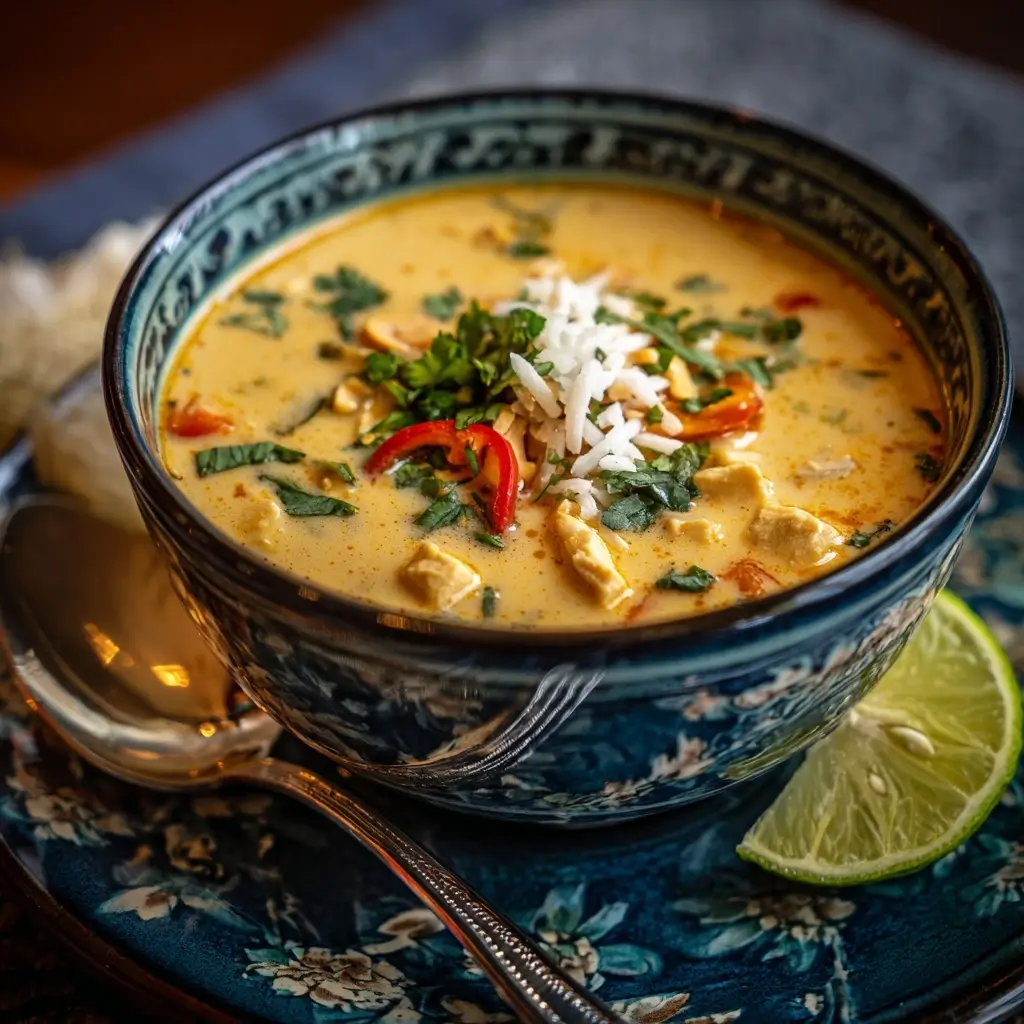
Creamy Peanut Thai Soup: A Flavorful Fusion of Spices, Creaminess, and Comfort
The world of soups is vast and varied, but few dishes manage to strike the perfect balance between bold flavor, creamy texture, and aromatic complexity quite like Creamy Peanut Thai Soup. This modern culinary delight blends the rich traditions of Thai cuisine with the nutty warmth of peanut butter, creating a dish that’s both comforting and invigorating. Whether you’re looking for a cozy meal on a chilly evening or a vibrant way to enjoy plant-based ingredients, this soup delivers on every level. Packed with fragrant herbs, tender vegetables, protein-rich elements, and a luscious peanut broth, it’s no wonder that this recipe has become a staple in homes around the globe.
The History Behind the Dish
While traditional Thai cuisine doesn’t include a soup exactly like the modern “Creamy Peanut Thai Soup,” its roots can be traced back to several authentic Thai dishes that emphasize bold flavors, coconut milk, and spice pastes. Dishes such as Tom Kha Gai (coconut chicken soup) and various Thai curries use coconut milk as a base, along with lemongrass, galangal, kaffir lime leaves, and chili—ingredients that are now commonly integrated into peanut-based soups.
The inclusion of peanut butter likely emerged from Western adaptations of Southeast Asian recipes, where cooks began experimenting with accessible ingredients. Peanut butter, though not traditionally used in Thai cooking, complements the richness of coconut milk and balances spicy and sour notes beautifully. Over time, fusion chefs and home cooks alike began blending Thai aromatics with peanut butter, giving birth to what we now know as Creamy Peanut Thai Soup—a harmonious marriage of Thai-inspired spices and American pantry staples.
This soup gained popularity in the 2000s and 2010s as global cuisine trends encouraged cross-cultural experimentation. It became especially beloved in vegetarian, vegan, and gluten-free communities due to its adaptability and deep, satisfying flavor profile without relying on meat or dairy.
Ingredients Breakdown: What Makes This Soup So Special?
The magic of Creamy Peanut Thai Soup lies in its layered ingredients, each contributing to a symphony of taste, aroma, and texture. Here’s a detailed breakdown of the key components:
- Peanut Butter: The star ingredient. Natural, unsweetened peanut butter provides a rich, nutty depth. Opt for smooth varieties to ensure a silky broth.
- Coconut Milk: Full-fat coconut milk adds creaminess and mellows out the spice. It also carries fat-soluble flavors, enhancing the overall taste experience.
- Fresh Aromatics: Garlic, ginger, and lemongrass form the aromatic foundation. These ingredients are sautéed first to release their essential oils and build flavor.
- Lime Juice: Adds a bright, tangy contrast that cuts through the richness of the peanut and coconut.
- Soy Sauce or Tamari: Provides umami and saltiness. Tamari is a great gluten-free alternative.
- Chili Paste or Sriracha: Introduces heat. Adjust according to your spice tolerance—Thai bird’s eye chilies can also be used for authenticity.
- Vegetables: Common choices include bell peppers, carrots, mushrooms, spinach, and broccoli. These add color, nutrients, and texture.
- Protein: Tofu, tempeh, shredded chicken, or cooked shrimp can be added. For vegans, marinated baked tofu works wonderfully.
- Rice Noodles or Quinoa: Often served alongside or mixed into the soup for heartiness.
- Garnishes: Fresh cilantro, chopped peanuts, sliced green onions, lime wedges, and red pepper flakes elevate both presentation and flavor.
Step-by-Step Recipe: How to Make Creamy Peanut Thai Soup at Home
Follow this detailed guide to create a restaurant-quality bowl of Creamy Peanut Thai Soup right in your kitchen.
Ingredients
- 1 tablespoon coconut oil or neutral vegetable oil
- 1 medium onion, thinly sliced
- 3 cloves garlic, minced
- 1 tablespoon fresh ginger, grated
- 1 stalk lemongrass, outer layers removed, inner core finely chopped (or 1 teaspoon lemongrass paste)
- 1 red bell pepper, sliced
- 2 medium carrots, julienned or thinly sliced
- 8 oz mushrooms (shiitake or cremini), sliced
- 3 cups vegetable broth (or chicken broth if not vegetarian)
- 1 (13.5 oz) can full-fat coconut milk
- 1/4 cup natural smooth peanut butter (unsweetened)
- 3 tablespoons soy sauce or tamari
- 2 tablespoons lime juice (about 1 lime)
- 1–2 teaspoons sriracha or chili garlic sauce (adjust to taste)
- 1 cup fresh spinach or baby kale
- 1 cup cooked protein (tofu, chicken, shrimp, etc.)
- 1/2 cup rice noodles (optional, cooked separately)
Directions
- Sauté the Aromatics: In a large pot or Dutch oven, heat the coconut oil over medium heat. Add the onion and cook for 4–5 minutes until translucent. Stir in the garlic, ginger, and lemongrass, cooking for another 1–2 minutes until fragrant.
- Add the Vegetables: Toss in the bell pepper, carrots, and mushrooms. Sauté for 6–7 minutes, stirring occasionally, until the vegetables begin to soften.
- Create the Broth Base: Pour in the vegetable broth and bring to a gentle simmer. Allow it to cook for 5 minutes to meld the flavors.
- Incorporate Creamy Elements: Reduce the heat to low. Stir in the coconut milk and peanut butter until fully combined and smooth. Use a whisk if needed to avoid lumps.
- Season the Soup: Add the soy sauce, lime juice, and sriracha. Taste and adjust seasoning—add more lime for acidity, soy sauce for saltiness, or chili for heat.
- Add Greens and Protein: Stir in the spinach and cooked protein. Simmer gently for 3–4 minutes until the greens are wilted and everything is heated through. Do not boil vigorously after adding coconut milk to prevent separation.
- Serve: Ladle the soup into bowls. If using, place a portion of cooked rice noodles in each bowl before pouring the soup over. Garnish generously.
- Garnish and Enjoy: Top with fresh cilantro, chopped peanuts, green onions, a squeeze of lime, and a sprinkle of red pepper flakes for extra kick.
Tips for Perfect Creamy Peanut Thai Soup Every Time
- Use Natural Peanut Butter: Avoid brands with added sugar or hydrogenated oils. The ingredient list should ideally be just peanuts (and maybe salt).
- Don’t Boil After Adding Coconut Milk: High heat can cause coconut milk to separate. Keep the soup at a gentle simmer after adding it.
- Bloom the Spices: Cooking garlic, ginger, and lemongrass in oil before adding liquids enhances their flavor dramatically.
- Brighten with Acid: Always finish with fresh lime juice. It lifts the entire dish and balances the richness.
- Adjust Consistency: If the soup is too thick, add more broth or water. If too thin, simmer longer or add a bit more peanut butter.
- Make Ahead Friendly: This soup tastes even better the next day as flavors deepen. Store in an airtight container for up to 4 days in the fridge or freeze for up to 3 months.
- Reheat Gently: Warm on low heat, stirring frequently, to prevent scorching or separation.
Variations and Customizations
One of the greatest strengths of Creamy Peanut Thai Soup is its versatility. Here are some creative ways to customize it:
- Vegan Version: Ensure all ingredients are plant-based—use tofu or tempeh, and double-check that your peanut butter and soy sauce are vegan.
- Gluten-Free Option: Use tamari instead of soy sauce and verify that your peanut butter is certified gluten-free.
- Low-Carb/Keto Adaptation: Omit noodles and starchy vegetables. Use more non-starchy veggies like zucchini, bok choy, or cauliflower. Increase healthy fats with extra coconut milk or avocado garnish.
- Nut-Free Alternative: Substitute peanut butter with sunflower seed butter or tahini (sesame paste). Note: Tahini will change the flavor profile significantly.
- Seafood Twist: Add cooked shrimp, scallops, or flaked white fish during the final minutes of cooking.
- Curry Infusion: Stir in 1–2 teaspoons of red or yellow Thai curry paste for a deeper, more complex spice layer.
- Herb Variations: Try Thai basil instead of regular basil, or add mint for a refreshing note.
- Noodle Options: Swap rice noodles for soba, udon, zucchini noodles (zoodles), or shirataki noodles.
Health Considerations and Nutritional Value
Creamy Peanut Thai Soup can be both indulgent and nutritious, depending on how it’s prepared. Here’s a breakdown of its health benefits and considerations:
- Healthy Fats: Coconut milk and peanut butter provide monounsaturated and medium-chain triglycerides (MCTs), which may support heart health and energy metabolism.
- Plant-Based Protein: Peanuts, tofu, and legumes offer protein, making this soup satisfying and suitable for vegetarians and vegans.
- Rich in Vitamins and Minerals: Carrots (vitamin A), spinach (iron, folate), and bell peppers (vitamin C) contribute essential micronutrients.
- Digestive Support: Ginger and garlic have anti-inflammatory and gut-friendly properties.
- Fiber Content: Vegetables and optional whole grain noodles increase dietary fiber, aiding digestion and satiety.
Considerations:
- Calorie Density: Due to peanut butter and coconut milk, this soup can be high in calories. Use light coconut milk or reduce peanut butter for a lighter version.
- Allergens: Contains peanuts and tree nuts (coconut). Not suitable for those with nut allergies unless substitutions are made.
- Sodium Levels: Soy sauce can be high in sodium. Use low-sodium versions or coconut aminos as a substitute.
- Balanced Meal: Pair with a side salad or steamed vegetables to round out the nutrition.
Approximate Nutritional Information (per serving, serves 4):
- Calories: 380–450
- Fat: 28–32g (mostly healthy fats)
- Carbohydrates: 22–28g
- Fiber: 5–7g
- Protein: 12–16g
- Sodium: 600–800mg (varies with soy sauce)
Frequently Asked Questions (FAQ)
Q: Can I make this soup without peanut butter?
A: Yes! Try sunflower seed butter, almond butter, or tahini. Each will alter the flavor slightly but still provide creaminess.
Q: Is this soup gluten-free?
A: It can be. Use tamari instead of soy sauce and ensure all other ingredients (like broth and peanut butter) are certified gluten-free.
Q: Can I use powdered peanut butter (like PB2)?
A: Not recommended. Powdered peanut butter lacks the oil content needed for a creamy texture and may result in a chalky soup.
Q: How do I store leftovers?
A: Cool completely and store in an airtight container in the refrigerator for up to 4 days. Reheat gently on the stove.
Q: Can I freeze Creamy Peanut Thai Soup?
A: Yes, though the texture may change slightly upon thawing. Freeze without noodles or fresh greens. Stir in coconut milk after reheating if separation occurs.
Q: Why is my soup separating?
A: Coconut milk can separate if boiled. Always simmer gently after adding it. Whisking while reheating can help recombine the fats.
Q: What can I serve with this soup?
A: Steamed jasmine rice, spring rolls, Thai cucumber salad, or a simple green salad complement the flavors well.
Q: Can I make it spicier?
A: Absolutely. Add fresh Thai chilies, extra sriracha, or a dash of cayenne pepper. You can also serve hot sauces on the side.
Summary
Creamy Peanut Thai Soup is a luxurious, flavorful dish that blends the aromatic essence of Thai cuisine with the comforting richness of peanut butter and coconut milk. Easy to customize and packed with nutrients, it’s a satisfying meal that warms the soul and excites the palate.