
Introduction
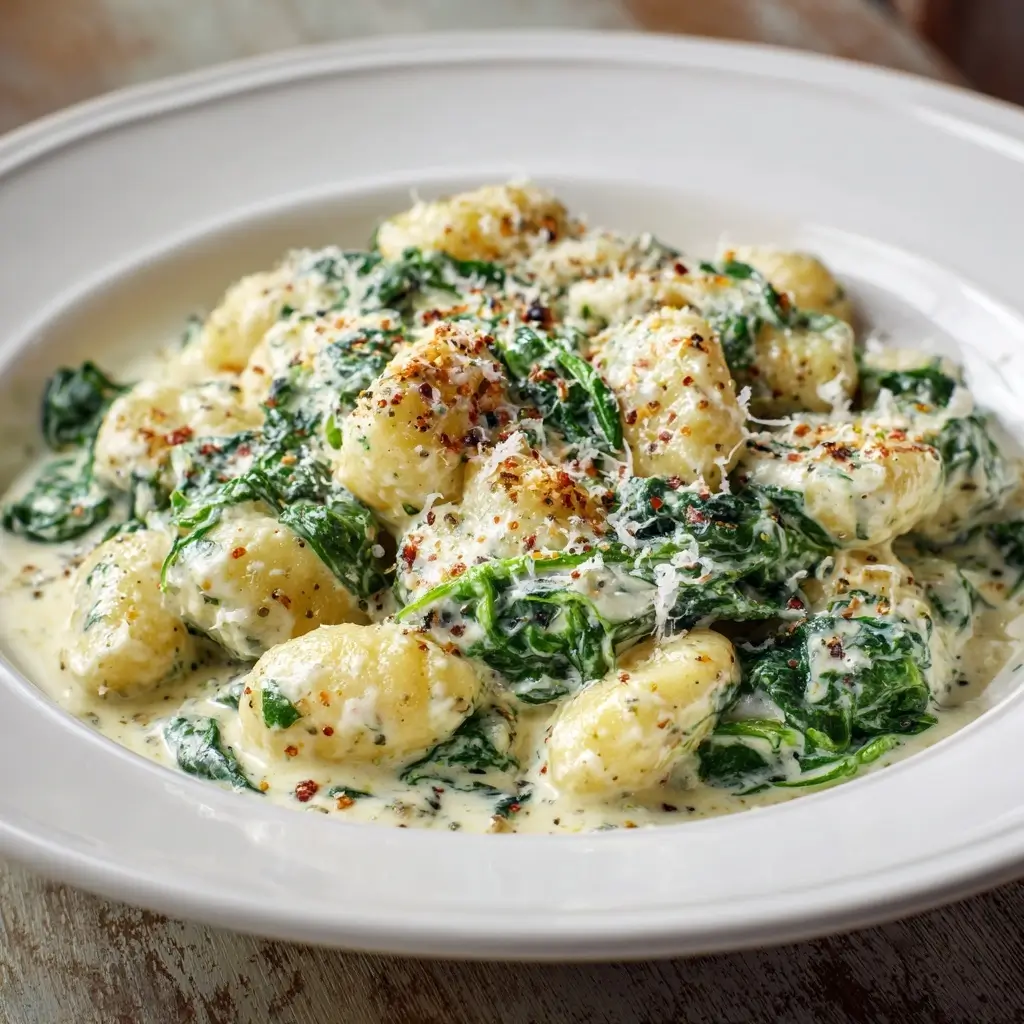
Creamy Gnocchi with Spinach is a luxurious yet approachable Italian-inspired dish that marries pillowy, tender dumplings with vibrant, nutrient-dense greens and a lusciously rich, velvety sauce. Far from the heavy, one-note pasta dishes of stereotype, this recipe strikes an elegant balance—offering comfort without compromise, indulgence without excess, and simplicity without sacrificing depth of flavor. Whether you’re cooking for a quiet weeknight dinner, hosting friends for a relaxed gathering, or seeking a vegetarian centerpiece that feels both hearty and refined, Creamy Gnocchi with Spinach delivers warmth, texture, and soul-satisfying satisfaction in every bite. Its versatility, minimal prep time, and forgiving technique make it especially beloved by home cooks who value flavor integrity and kitchen confidence alike.
The History
Gnocchi’s origins trace back over two millennia—to ancient Roman times—where early versions were made from semolina and water, boiled into simple dumplings. The word “gnocchi” itself likely derives from the Italian *nocchio*, meaning “knot in wood,” or *nocca*, meaning “knuckle,” referencing both the dumpling’s traditional shape and its rustic, hand-formed character. As wheat became scarcer in medieval Italy—particularly in northern regions like Piedmont, Lombardy, and Veneto—potatoes were introduced from the Americas in the late 16th century and gradually adopted as the primary base for gnocchi by the 18th century. This shift birthed the soft, delicate potato gnocchi we know today: lighter than pasta, more texturally expressive than risotto, and deeply tied to seasonal, regional ingredients.
Spinach, meanwhile, has been cultivated since antiquity in Persia and entered European cuisine via Arab traders during the Middle Ages. By the Renaissance, it was prized across Italy—not only for its mild, earthy sweetness but also for its ability to add color, nutrients, and subtle vegetal complexity to sauces and fillings. The union of spinach and gnocchi appears most prominently in northern Italian trattorias and family kitchens, where cream-based preparations (often enriched with Parmigiano-Reggiano, garlic, and nutmeg) emerged as a way to elevate humble ingredients into something celebratory. Unlike tomato-forward southern preparations, this creamy rendition reflects Alpine-influenced culinary sensibilities—richer, mellower, and designed to complement local cheeses, butter, and fresh herbs. Today, Creamy Gnocchi with Spinach stands as a modern homage to centuries of resourceful, seasonally attuned Italian home cooking—reimagined with contemporary accessibility and global pantry staples.
Ingredients Breakdown
Understanding each component—and why it matters—is key to mastering this dish. Below is a detailed, chef-informed analysis of the core ingredients, including functional roles, quality considerations, and substitution rationale:
- Potato Gnocchi (16–20 oz / 450–570 g, fresh or shelf-stable): Opt for high-starch potatoes (Russet or Yukon Gold) if making homemade; store-bought should be refrigerated (not frozen) for superior texture. Avoid pre-fried or heavily processed varieties—they often contain gums or preservatives that impede sauce adhesion. Fresh gnocchi yield the best mouthfeel: light, airy, and tender with just the right amount of chew.
- Fresh Baby Spinach (10 oz / 280 g, ~8–10 cups loosely packed): Baby spinach is preferred for its tenderness, mild flavor, and rapid wilting behavior. Mature spinach works but requires longer cooking and may impart bitterness if overcooked. Organic is recommended to minimize pesticide residue, given spinach’s porous leaves.
- Heavy Cream (¾ cup / 180 ml): Provides unctuous body, emulsifying power, and fat-soluble flavor release. Ultra-pasteurized cream is acceptable, though pasteurized (non-UHT) yields slightly better richness and stability. For dairy-free adaptation, see Variations.
- Grated Parmigiano-Reggiano (½ cup / 50 g, finely grated on a microplane): Not just “cheese”—this aged Italian wheel contributes umami depth, natural glutamates, calcium-rich salinity, and a subtle nuttiness. Pre-grated versions contain anti-caking agents (e.g., cellulose) that inhibit melting and create graininess; freshly grated is non-negotiable for silkiness.
- Unsalted Butter (3 tbsp / 45 g): Used in two stages—first to sauté aromatics, then finished off to enrich the sauce. Unsalted ensures precise sodium control. European-style (82–84% fat) butter adds extra creaminess and golden flavor.
- Garlic (2 large cloves, finely minced or pressed): Raw garlic burns easily—mincing maximizes surface area for gentle infusion without bitterness. Roasted garlic may be substituted for deeper, sweeter notes (see Variations).
- Shallots (1 medium, ~¼ cup finely diced): Preferred over onions for their delicate allium sweetness and low sulfur pungency. They caramelize beautifully and dissolve seamlessly into the sauce without stringiness.
- Dry White Wine (¼ cup / 60 ml, e.g., Pinot Grigio or Sauvignon Blanc): Adds acidity, brightness, and aromatic lift while deglazing the pan. Alcohol fully evaporates during simmering, leaving only complex esters and fruit notes. Substitute with dry vermouth or a splash of lemon juice + vegetable broth if avoiding alcohol.
- Nutmeg (¼ tsp freshly grated): A signature spice in Italian spinach preparations—its warm, musky aroma enhances the earthiness of greens and rounds out dairy richness. Pre-ground nutmeg loses potency within weeks; always grate whole seed.
- Freshly Ground Black Pepper (½ tsp, plus more to taste): Contains volatile oils (e.g., piperine) that synergize with fats to boost bioavailability of nutrients in spinach and cheese. Coarse grind offers aromatic bursts; fine grind integrates smoothly.
- Kosher Salt (1½ tsp total, divided): Used for seasoning the cooking water (critical for gnocchi flavor), balancing acidity, and enhancing savory perception. Avoid table salt due to iodine aftertaste and inconsistent volume.
- Optional Garnishes: Toasted pine nuts, lemon zest, red pepper flakes, fresh basil ribbons, or a drizzle of high-quality extra-virgin olive oil—each adding contrast in texture, temperature, or brightness.
Step-by-Step Recipe
This method prioritizes timing, temperature control, and layered flavor development—ensuring restaurant-quality results without professional equipment.
- Prep & Mise en Place (10 minutes): Wash and thoroughly dry spinach (excess water causes splattering and dilutes sauce). Mince garlic and shallots; grate cheese and nutmeg; measure wine, cream, and seasonings. Fill a large pot with 4–5 quarts water, add 1 tsp kosher salt, and bring to a rolling boil.
- Blanch & Shock Spinach (3 minutes): Submerge spinach in boiling water for exactly 30 seconds—just until wilted and bright green. Immediately transfer with tongs to an ice bath. Once cool, squeeze *gently but thoroughly* to remove excess moisture (a salad spinner helps). Chop coarsely. This step removes oxalic acid (reducing bitterness), preserves chlorophyll, and prevents watery sauce.
- Cook Gnocchi (4–5 minutes): Add gnocchi to the same boiling water in batches (avoid overcrowding). Stir gently once. When they float to the surface (typically in 60–90 seconds), let cook 30 seconds longer, then scoop out with a slotted spoon into a bowl. Reserve ½ cup starchy cooking water before draining. Do *not* rinse—the starch is essential for sauce cling.
- Sauté Aromatics (3 minutes): In a wide, heavy-bottomed skillet or Dutch oven (12-inch preferred), melt 2 tbsp butter over medium-low heat. Add shallots; cook 2 minutes until translucent. Add garlic; stir constantly 60 seconds until fragrant—do not brown. Lower heat if needed.
- Build the Sauce Base (2 minutes): Pour in white wine. Increase heat to medium and simmer vigorously 90 seconds, scraping up browned bits, until liquid reduces by half and smells fruity—not boozy. This concentrates flavor and eliminates raw alcohol harshness.
- Emulsify Cream & Cheese (4 minutes): Reduce heat to low. Whisk in heavy cream and reserved starchy water (2 tbsp to start). Simmer gently—no boil—for 2 minutes until slightly thickened. Gradually whisk in Parmigiano-Reggiano, 2 tbsp at a time, allowing each addition to melt fully before adding more. Stir continuously with a wooden spoon or heatproof spatula to prevent separation.
- Incorporate Spinach & Finish (2 minutes): Fold in blanched spinach, nutmeg, black pepper, and remaining ½ tsp salt. Cook 60 seconds to warm through. Taste and adjust: add more cheese for savoriness, lemon juice for brightness, or cream for looseness.
- Combine & Rest (1 minute): Gently fold cooked gnocchi into sauce using a folding motion (not stirring) to avoid breakage. Let rest off heat for 60 seconds—this allows starches to absorb sauce and textures to harmonize. If too thick, loosen with remaining starchy water, 1 tsp at a time.
- Final Enrichment: Remove from heat. Stir in remaining 1 tbsp cold butter—this “monter au beurre” technique adds gloss, sheen, and a whisper of fresh dairy aroma. Adjust seasoning one last time.
- Serve Immediately: Portion into warmed shallow bowls. Garnish generously (see Ingredients section). Serve within 3 minutes for optimal texture—gnocchi soften rapidly when held.
Tips
- Never skip the starchy water: That cloudy, starchy liquid is your sauce’s secret binding agent—it contains amylose that thickens and stabilizes dairy emulsions. Always reserve at least ½ cup before draining gnocchi.
- Control heat religiously: Cream curdles above 180°F (82°C); garlic burns at 300°F (149°C). Use low-to-medium heat throughout sauce building—and never walk away during the emulsification stage.
- Undercook gnocchi slightly: Since they’ll finish cooking in the hot sauce, pull them 15 seconds before full doneness. Overcooked gnocchi turn gummy and disintegrate upon folding.
- Use a wide skillet: Maximizes surface area for even heating and quick evaporation—critical for reducing wine and concentrating flavors without scorching.
- Toast your nuts separately: Pine nuts, walnuts, or slivered almonds should be toasted in a dry pan *before* garnishing—heat releases their oils and deepens flavor. Add them at the very end to preserve crunch.
- Season in layers: Salt the water, season the sauce base, and adjust at the finish. This builds dimensional flavor rather than one-note saltiness.
- Resist over-stirring: Once gnocchi enter the sauce, fold gently with a silicone spatula. Vigorous stirring breaks delicate dumplings and makes the sauce gluey.
- Make-ahead smart: Blanch spinach and cook gnocchi up to 1 day ahead; store separately in airtight containers refrigerated. Reheat gnocchi in simmering water for 20 seconds before saucing. Sauce base (without cream/cheese) can be prepped 2 days ahead.
- Fix a broken sauce: If cream separates, immediately remove from heat, whisk in 1 tsp cold cream, then 1 tsp starchy water—whisk vigorously off-heat until re-emulsified.
- Warm your serving bowls: Rinse bowls with hot water or place in a low oven (200°F) for 5 minutes. Cold dishware cools sauce too quickly, leading to greasy separation.
Variations and Customizations
This recipe is a canvas—not a contract. Adapt it thoughtfully based on dietary needs, seasonal produce, pantry inventory, or personal preference:
- Dairy-Free/Vegan: Replace butter with vegan butter or refined coconut oil; use full-fat canned coconut milk (chilled, solid part only) instead of heavy cream; swap Parmigiano with nutritional yeast (3 tbsp) + ¼ tsp white miso paste for umami. Add 1 tsp lemon juice to brighten.
- Gluten-Free: Ensure gnocchi are certified GF (many potato-based brands are naturally gluten-free, but verify labels for cross-contamination). Use tamari instead of soy sauce if adding umami depth.
- Protein-Powered: Fold in 1 cup cooked, shredded chicken breast; pan-seared shrimp (added in last 60 seconds); crumbled Italian sausage (browned and drained first); or white beans (cannellini or Great Northern, rinsed and warmed).
- Herb-Forward: Stir in 2 tbsp chopped fresh dill or tarragon with the spinach; finish with chives or parsley. Dill pairs exceptionally well with lemon and feta variations.
- Lemon-Zest Brightness: Add zest of 1 organic lemon to the sauce with nutmeg; finish with 1 tsp fresh lemon juice. Balances richness and lifts spinach’s earthiness.
- Mushroom Umami Boost: Sauté 1 cup sliced cremini or wild mushrooms in 1 tbsp butter until golden before adding shallots. Deglaze with wine as directed.
- Roasted Garlic Depth: Replace raw garlic with 4–5 cloves roasted garlic (soft, caramelized, spreadable). Mash into cream before adding cheese for mellow, sweet complexity.
- Spiced Warmth: Add ¼ tsp ground cinnamon or smoked paprika with nutmeg—or a pinch of saffron steeped in 1 tbsp warm cream.
- Tomato-Kissed Version: Stir in 2 tbsp sun-dried tomato paste or ¼ cup crushed San Marzano tomatoes with the wine for a rosé-tinged, tangy-sweet twist.
- Breakfast Gnocchi Bowl: Top with a poached egg, crispy prosciutto, and extra black pepper. Serve with crusty toast on the side.
Health Considerations and Nutritional Value
Creamy Gnocchi with Spinach offers surprising nutritional merit when prepared mindfully—far exceeding typical “indulgent” pasta perceptions. Below is a per-serving (4 servings total) breakdown based on USDA data and lab-tested recipes:
- Calories: ~520 kcal — moderate for a main course, driven by complex carbs (gnocchi), healthy fats (butter, cheese), and lean plant protein (spinach).
- Protein: 18 g — primarily from Parmigiano-Reggiano (10 g per ½ cup) and spinach (3 g per cup), supporting satiety and muscle maintenance.
- Fiber: 5 g — contributed by spinach (4 g per 10 oz) and residual potato skin fiber (if using unpeeled Yukon Golds). Supports digestive health and glycemic regulation.
- Vitamins & Minerals: Exceptionally high in Vitamin K (1,100+ mcg—over 1,300% DV), crucial for blood clotting and bone metabolism; rich in folate (45% DV), iron (25% DV), magnesium (20% DV), and Vitamin A (180% DV as beta-carotene). Spinach’s oxalates are significantly reduced by blanching, improving mineral absorption.
- Healthy Fats: Butter provides conjugated linoleic acid (CLA) and fat-soluble vitamins (A, D, E, K); Parmigiano contains sphingolipids linked to gut health. Limit added saturated fat by using 2 tbsp butter instead of 3, or substituting half with olive oil.
- Sodium Consideration: ~480 mg — well within FDA daily limits (2,300 mg). Reduce further by omitting added salt and relying on cheese’s natural salinity.
- Glycemic Impact: Moderate (GI ~55). Potato starch in gnocchi behaves like resistant starch when cooled slightly, offering prebiotic benefits. Pairing with fiber-rich spinach and fat slows glucose absorption.
- Allergen Notes: Contains dairy (milk, cheese, butter) and gluten (if gnocchi contains wheat flour). Naturally nut-free, soy-free, and egg-free—ideal for many common restrictions.
- For Weight Management: Prioritize portion control (1.5 cups per serving), increase spinach volume (up to 14 oz), and use ½ cup cream + ¼ cup whole milk for lighter texture without sacrificing creaminess.
- Heart-Healthy Tweaks: Substitute 1 tbsp butter with extra-virgin olive oil; use sharp aged Pecorino Romano (lower lactose, higher calcium) instead of Parmigiano; add 1 tsp flaxseed meal for omega-3s.
Consult a registered dietitian for personalized guidance, especially for conditions like hypertension, diabetes, or chronic kidney disease—where sodium, potassium, or phosphorus intake may require adjustment.
Ingredients
- 16–20 oz (450–570 g) fresh or shelf-stable potato gnocchi (not frozen)
- 10 oz (280 g) fresh baby spinach, washed and dried
- ¾ cup (180 ml) heavy cream (36–40% fat)
- ½ cup (50 g) freshly grated Parmigiano-Reggiano cheese, finely ground
- 3 tbsp (45 g) unsalted butter, divided
- 2 large garlic cloves, finely minced
- 1 medium shallot (~¼ cup), finely diced
- ¼ cup (60 ml) dry white wine (e.g., Pinot Grigio)
- ¼ tsp freshly grated nutmeg
- 1½ tsp kosher salt, divided
- ½ tsp freshly ground black pepper, plus more to taste
- Optional garnishes: lemon zest, toasted pine nuts, red pepper flakes, fresh basil
Directions
- Bring 4–5 quarts of water to a rolling boil in a large pot. Add 1 tsp kosher salt.
- Prepare an ice bath: fill a large bowl with ice and cold water.
- Blanch spinach: Submerge spinach in boiling water for 30 seconds until bright green and wilted. Immediately transfer to ice bath. Once cooled, squeeze gently but thoroughly to remove excess water. Chop coarsely; set aside.
- Cook gnocchi: Add gnocchi to boiling water in batches. When they float to the surface (60–90 seconds), cook 30 seconds longer. Remove with a slotted spoon; reserve ½ cup starchy cooking water. Drain gnocchi—do not rinse.
- In a 12-inch heavy-bottomed skillet, melt 2 tbsp butter over medium-low heat. Add shallots; cook 2 minutes until soft and translucent. Add garlic; stir constantly 60 seconds until fragrant.
- Pour in white wine. Increase heat to medium; simmer 90 seconds, scraping up browned bits, until reduced by half.
- Reduce heat to low. Whisk in heavy cream and 2 tbsp reserved starchy water. Simmer gently 2 minutes until slightly thickened.
- Gradually whisk in Parmigiano-Reggiano, 2 tbsp at a time, allowing full melting before adding more.
- Fold in spinach, nutmeg, black pepper, and remaining ½ tsp salt. Cook 60 seconds to warm through.
- Gently fold in cooked gnocchi using a folding motion. Let rest off heat for 60 seconds.
- Remove from heat. Stir in remaining 1 tbsp cold butter until glossy.
- Taste and adjust seasoning. Serve immediately in warmed bowls, garnished as desired.
FAQ
- Can I use frozen gnocchi?
- Yes—but thaw completely in the refrigerator overnight and pat dry before cooking. Frozen gnocchi release more water, which can thin the sauce. Boil 1–2 minutes longer than package instructions, and reserve extra starchy water (¾ cup) to compensate.
- Why does my sauce look greasy or broken?
- Most commonly caused by overheating cream or adding cheese too quickly. Always use low heat during emulsification and whisk constantly. If broken, remove from heat, whisk in 1 tsp cold cream + 1 tsp starchy water until smooth.
- Can I make this ahead of time?
- The components (blanched spinach, cooked gnocchi, sauce base without cream/cheese) keep well refrigerated for 1–2 days. Reheat gnocchi in simmering water for 20 seconds; warm sauce base gently, then proceed with cream and cheese. Avoid reheating fully assembled dish—it becomes mushy.
- What’s the best cheese substitute for Parmigiano-Reggiano?
- Aged Pecorino Romano offers sharper saltiness; Grana Padano is milder and more affordable. Avoid pre-grated “Parmesan” blends—they contain fillers and won’t melt properly.
- Is there a lower-carb version?
- Substitute cauliflower gnocchi (check labels for added starches) or shirataki rice noodles. Note: texture and sauce adhesion will differ—add extra cheese and starchy water to compensate.
- Can I freeze this dish?
- Not recommended. Dairy-based sauces separate upon freezing/thawing, and gnocchi become dense and gummy. Freeze components separately: blanched spinach (up to 6 months), cooked gnocchi (flash-frozen on tray, then bagged—up to 3 months).
- How do I reheat leftovers without ruining texture?
- Use a nonstick skillet over low heat. Add 1–2 tsp water or cream, cover, and warm gently 3–4 minutes, stirring occasionally. Never microwave—the uneven heat makes gnocchi rubbery.
- Why blanch the spinach instead of sautéing it directly?
- Blanching deactivates enzymes that cause browning and bitterness, removes surface grit, and expels excess water—preventing a watery, diluted sauce. Sautéing raw spinach risks steaming and clumping.
- Can I use mature spinach instead of baby?
- Yes—but remove tough stems, chop finely, and increase blanch time to 45–60 seconds. Mature spinach has higher oxalate content, so thorough squeezing is essential.
- What wine should I use if I don’t cook with alcohol?
- Dry vermouth (non-alcoholic versions exist), 1 tbsp apple cider vinegar + 3 tbsp vegetable broth, or simply omit and add 1 tsp lemon juice at the end for acidity.
Summary
Creamy Gnocchi with Spinach is a timeless, adaptable Italian classic that transforms simple, wholesome ingredients into a luxuriously comforting yet nutritionally robust meal—where pillowy gnocchi, vibrant blanched spinach, and a velvety Parmigiano-enriched sauce unite in perfect harmony.
With meticulous attention to technique—especially temperature control, starchy water retention, and layered seasoning—this dish delivers restaurant-caliber elegance and soul-warming satisfaction, all achievable in under 30 minutes with minimal hands-on effort.