
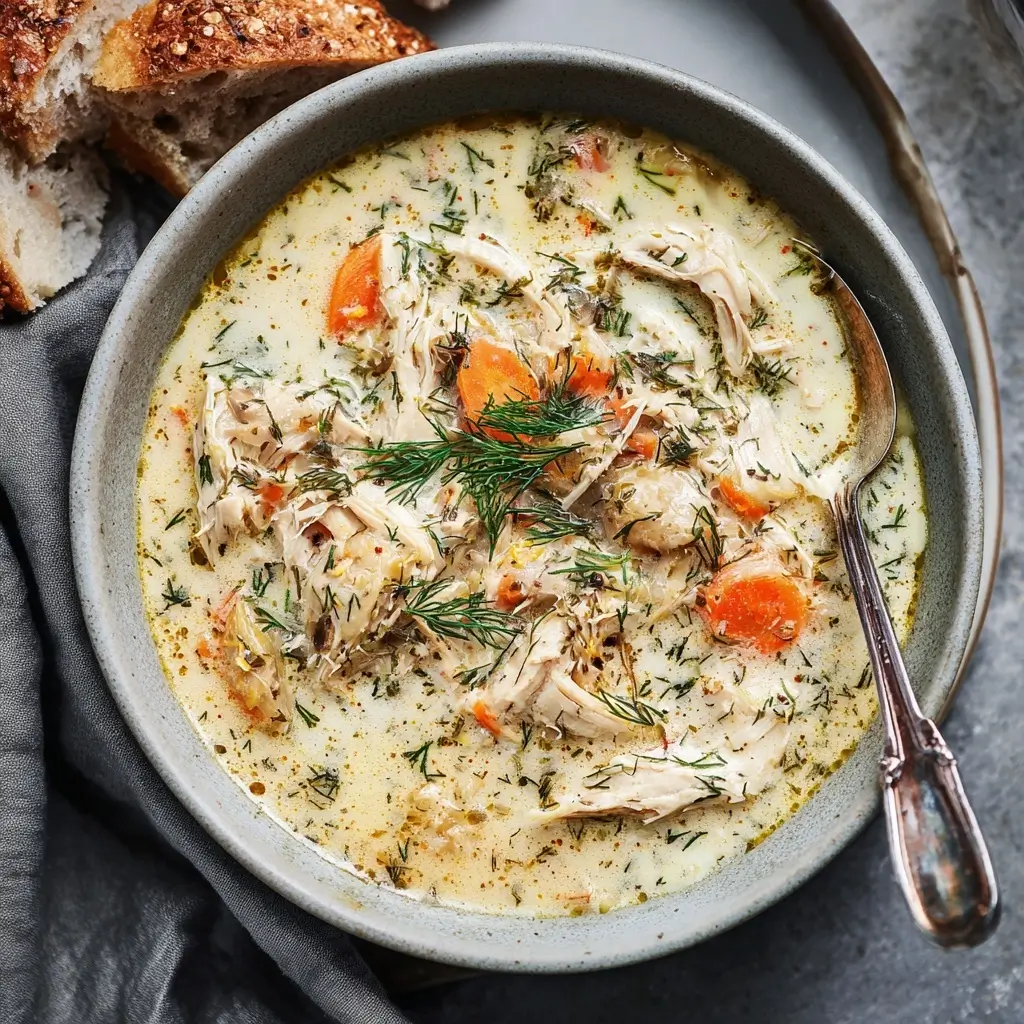
Creamy Dill Chicken Soup: A Comforting Classic with a Fresh Twist
There’s something deeply comforting about a warm bowl of soup on a chilly evening — and few dishes deliver that cozy feeling quite like Creamy Dill Chicken Soup. This luscious, velvety soup combines tender chicken, aromatic herbs, and the bright, tangy flavor of fresh dill to create a dish that’s both nourishing and indulgent. Whether you’re looking for a hearty meal to serve your family or a soothing remedy on a rainy day, this soup checks all the boxes: creamy texture, savory depth, herbal freshness, and just the right amount of richness without being overly heavy.
The History of Creamy Dill Chicken Soup
The origins of Creamy Dill Chicken Soup can be traced back to Eastern European and Scandinavian culinary traditions, where dill has long been a staple herb used in soups, pickles, and fish dishes. In countries like Russia, Ukraine, Poland, and Sweden, dill is revered not only for its flavor but also for its digestive benefits and aromatic qualities. Traditional chicken soups in these regions often feature root vegetables, herbs, and sometimes sour cream, laying the groundwork for what would evolve into the modern creamy dill variation.
In North America, particularly during the mid-20th century, the popularity of cream-based soups surged thanks to the availability of canned condensed soups and an increasing appreciation for rich, comforting foods. Home cooks began experimenting by adding fresh dill to classic chicken-and-dumplings or chicken-rice soups, leading to the emergence of Creamy Dill Chicken Soup as a distinct and beloved recipe. Over time, it became a favorite in Jewish delis, Scandinavian-inspired restaurants, and home kitchens alike — especially during colder months.
Today, Creamy Dill Chicken Soup stands at the intersection of rustic tradition and modern comfort food, offering a perfect balance between simplicity and elegance. It’s often served at family gatherings, holiday meals, or even as a gourmet starter in fine dining establishments, proving its versatility and enduring appeal.
Ingredients Breakdown: What Makes This Soup So Special?
The magic of Creamy Dill Chicken Soup lies in its harmonious blend of ingredients, each contributing to its rich flavor, silky texture, and aromatic profile. Let’s take a closer look at the components that make this soup truly exceptional:
- Chicken Breast or Thighs: Boneless, skinless chicken breasts are commonly used for their lean texture and mild flavor, though dark meat (like thighs) adds more moisture and richness. Poaching the chicken ensures tenderness and infuses the broth with natural savoriness.
- Vegetables: Onions, carrots, and celery form the classic “mirepoix” base, providing sweetness, earthiness, and depth. Some variations include garlic, leeks, or potatoes for added body and complexity.
- Chicken Broth: High-quality low-sodium broth allows you to control the salt level while building a flavorful foundation. Homemade broth enhances the richness even further.
- Fresh Dill: The star ingredient! Fresh dill imparts a bright, slightly anise-like flavor with citrusy notes. Dried dill works in a pinch, but fresh is essential for authentic taste and vibrant color.
- Cream or Half-and-Half: Adds luxurious creaminess and smooth mouthfeel. For a lighter version, whole milk or evaporated milk can be substituted, though the soup will be less rich.
- Butter and Flour: Used to make a roux, which thickens the soup naturally and gives it that velvety consistency without relying on starches or thickeners.
- Lemon Juice (optional): A splash brightens the flavors and balances the richness, enhancing the herbal notes of the dill.
- Seasonings: Salt, black pepper, bay leaf, and sometimes a pinch of nutmeg or paprika elevate the overall taste profile without overpowering the delicate dill.
Step-by-Step Recipe: How to Make Creamy Dill Chicken Soup from Scratch
Follow this detailed guide to create a restaurant-quality Creamy Dill Chicken Soup in your own kitchen. With careful attention to technique, you’ll achieve a perfectly balanced, silky-smooth result every time.
Ingredients
- 1.5 lbs (680g) boneless, skinless chicken breasts or thighs
- 1 tbsp olive oil or unsalted butter
- 1 medium yellow onion, finely diced
- 2 medium carrots, peeled and sliced into rounds
- 2 celery stalks, chopped
- 3 cloves garlic, minced
- 6 cups (1.5 liters) low-sodium chicken broth
- 1 bay leaf
- ½ cup (60g) all-purpose flour
- ½ cup (1 stick / 113g) unsalted butter
- 2 cups (480ml) heavy cream or half-and-half
- ¼ cup fresh lemon juice (about 1 large lemon)
- ¾ cup packed fresh dill, chopped (plus extra for garnish)
- Salt and freshly ground black pepper, to taste
- Optional: 1 cup cooked white rice, egg noodles, or orzo
Directions
- Poach the Chicken: Place chicken breasts in a large pot and cover with chicken broth. Add one chopped carrot, one celery stalk, and a bay leaf. Bring to a gentle simmer over medium heat and cook for 15–20 minutes until chicken reaches 165°F (74°C). Remove chicken, reserve broth, and shred meat using two forks. Set aside.
- Sauté the Aromatics: In a separate large Dutch oven or heavy-bottomed pot, heat olive oil or butter over medium heat. Add diced onion, remaining carrots, and celery. Cook for 6–8 minutes until softened and fragrant. Stir in minced garlic and cook for 30 seconds more until aromatic.
- Make the Roux: Push vegetables to the side of the pot. Melt ½ cup butter into the center until foamy. Gradually whisk in ½ cup flour to form a paste. Cook for 2–3 minutes, stirring constantly, to remove the raw flour taste and create a light golden roux.
- Combine and Thicken: Slowly pour in the reserved chicken broth (from poaching), whisking continuously to prevent lumps. Bring to a gentle boil, then reduce to a simmer. Cook for 5–7 minutes until the mixture thickens slightly and coats the back of a spoon.
- Add Cream and Chicken: Stir in heavy cream (or half-and-half) and return the shredded chicken to the pot. Simmer gently for 10 minutes to allow flavors to meld. Do not boil vigorously after adding cream to avoid curdling.
- Finish with Dill and Lemon: Remove bay leaf. Stir in fresh chopped dill and lemon juice. Taste and adjust seasoning with salt and pepper as needed. For extra brightness, add another squeeze of lemon if desired.
- Serve Warm: Ladle soup into bowls. Garnish with additional fresh dill, a dollop of sour cream, or a sprinkle of cracked black pepper. Serve with crusty bread, crackers, or a green salad.
Tips for the Perfect Creamy Dill Chicken Soup
- Use Fresh Dill Whenever Possible: Dried dill lacks the vibrancy and subtle citrus notes of fresh dill. If you must use dried, reduce the amount by two-thirds (e.g., use 1 tablespoon dried instead of ¾ cup fresh).
- Don’t Rush the Roux: Cooking the flour-butter mixture for a full 2–3 minutes eliminates the starchy taste and ensures a smooth, lump-free texture.
- Avoid Boiling After Adding Cream: High heat can cause dairy to separate. Keep the soup at a gentle simmer once cream is added.
- Reserve Broth from Poaching: Using the broth in which the chicken was cooked adds incredible depth of flavor compared to store-bought alone.
- Balance the Acidity: Lemon juice enhances the dill but should be added gradually. Start with 2 tablespoons and increase to taste.
- Thicken Naturally: If you prefer a thicker soup without extra flour, consider blending a portion of the vegetables before adding cream.
- Let It Rest: Like many soups, Creamy Dill Chicken tastes even better the next day as the flavors continue to develop.
Variations and Customizations
This versatile recipe lends itself beautifully to creative adaptations. Here are some popular twists:
- Dairy-Free Version: Replace cream with coconut milk or cashew cream. Use olive oil instead of butter and a cornstarch slurry (2 tbsp cornstarch + ¼ cup cold water) to thicken.
- Gluten-Free Option: Substitute flour with gluten-free all-purpose flour or arrowroot powder for the roux.
- Vegetarian Adaptation: Omit chicken and use mushrooms or chickpeas for protein. Swap chicken broth for vegetable broth and add miso paste for umami depth.
- Seafood Twist: Replace chicken with poached salmon or shrimp for a Scandinavian-style dill soup.
- Add Grains: Stir in cooked wild rice, barley, or farro for heartier texture and fiber.
- Extra Veggies: Include peas, spinach, zucchini, or leeks for added nutrition and color.
- Smoky Flavor: Add a pinch of smoked paprika or a small piece of ham hock while simmering for a deeper, smoky note.
- Spicy Kick: Infuse with red pepper flakes or a dash of hot sauce for those who enjoy heat.
Health Considerations and Nutritional Value
Creamy Dill Chicken Soup, while rich and satisfying, can be adapted to suit various dietary needs and health goals. Here’s a breakdown of its nutritional aspects:
- Protein-Rich: Chicken provides high-quality protein essential for muscle repair and immune function. One serving (about 1.5 cups) contains approximately 25–30g of protein.
- Fat Content: Depending on ingredients, a standard serving may contain 18–25g of fat, mostly from cream and butter. To reduce fat, use low-fat milk, Greek yogurt, or evaporated skim milk instead of heavy cream.
- Calories: A typical serving ranges from 350–500 calories. Lighter versions using less cream and more vegetables can come in under 300 calories.
- Vitamins and Minerals: Carrots supply beta-carotene (vitamin A), celery and onions offer antioxidants, and dill contributes vitamin C, manganese, and anti-inflammatory compounds.
- Digestive Benefits: Dill has traditionally been used to soothe digestion and reduce bloating, making this soup not only delicious but potentially beneficial for gut health.
- Sodium Control: Using low-sodium broth and adjusting salt allows you to manage sodium intake, important for those monitoring blood pressure.
- Balanced Meal: When served with a side salad or whole grain bread, this soup becomes a well-rounded, nutrient-dense meal.
Frequently Asked Questions (FAQ)
Can I freeze Creamy Dill Chicken Soup?
Yes, but with caveats. Dairy-based soups can separate when frozen and thawed. For best results, omit the cream before freezing and add it fresh when reheating. Alternatively, use coconut milk or a stabilizer like xanthan gum to improve freeze-thaw stability.
How long does it last in the refrigerator?
Stored in an airtight container, the soup keeps well for 3–4 days. Reheat gently on the stove over low heat, stirring frequently to prevent scorching.
Why did my soup curdle?
Curdling usually occurs due to high heat after adding dairy. Always simmer gently and avoid boiling. Adding acidic ingredients like lemon juice too quickly or directly to hot cream can also cause separation. Temper the lemon juice by mixing it with a little warm broth first.
Can I make this in a slow cooker?
Absolutely! Sauté vegetables and make roux separately, then transfer to a slow cooker with broth, chicken, and seasonings. Cook on low for 6–8 hours. Shred chicken, stir in cream and dill during the last 30 minutes.
What can I substitute for dill?
While nothing replicates dill exactly, tarragon offers a similar licorice-like note. Parsley, chives, or a mix of herbs can provide freshness, though the flavor profile will change significantly.
Is this soup suitable for kids?
Yes! Its creamy texture and mild flavor make it appealing to children. You can puree part of the soup for younger eaters or add fun shapes like pasta stars to make it more engaging.
Summary
Creamy Dill Chicken Soup is a luxurious yet comforting dish that blends tender chicken, garden-fresh vegetables, and vibrant dill into a velvety, soul-warming masterpiece. Easy to customize and rich in flavor, it’s a timeless recipe that brings warmth to any table.