
Introduction
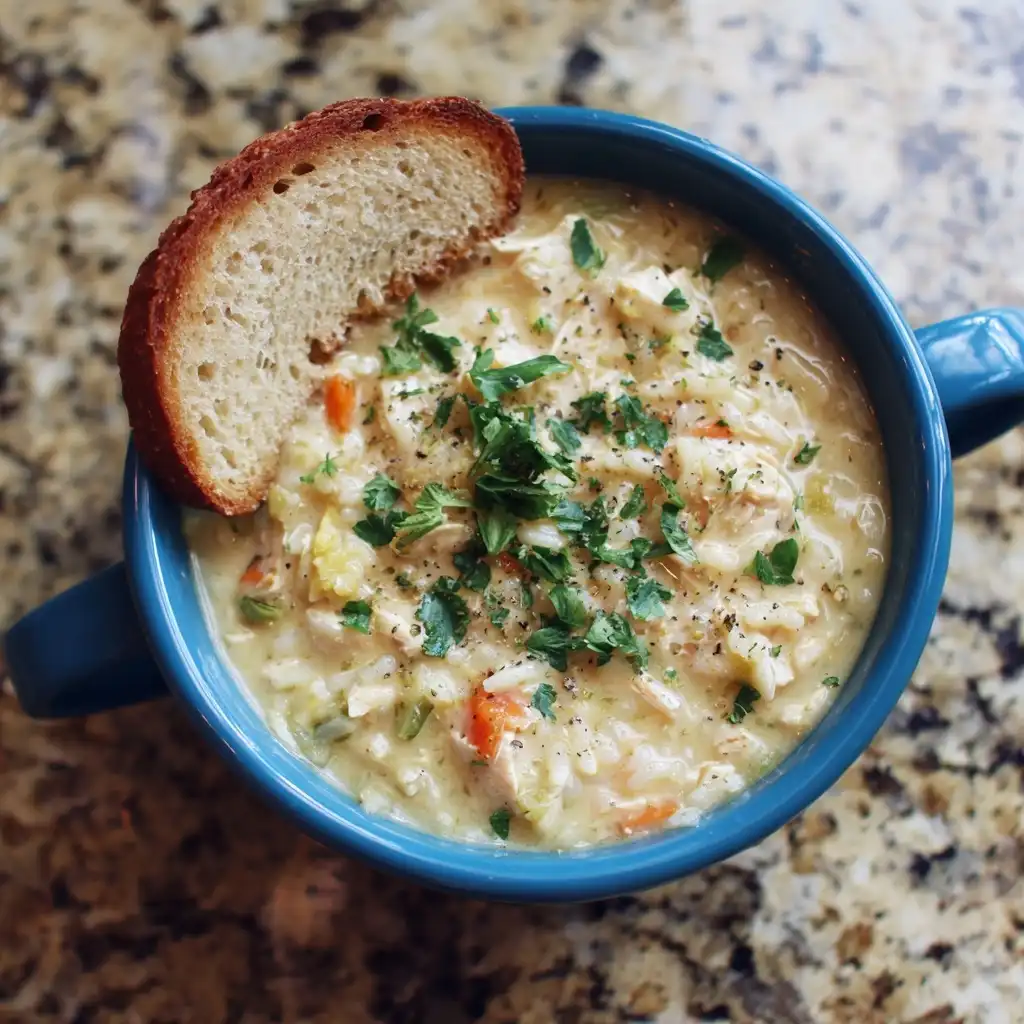
Creamy Chicken & Rice Soup is a soul-soothing, comfort-food classic that bridges the gap between hearty nourishment and elegant simplicity. With its velvety texture, tender shreds of chicken, plump grains of rice, and aromatic herbal warmth, this soup transcends seasonal boundaries—offering cooling relief on mild spring days and deep, enveloping warmth during winter’s chill. Unlike brothy soups that rely solely on clarity and lightness, this version embraces richness without heaviness, achieving a luxurious mouthfeel through careful emulsification, gentle cooking techniques, and thoughtful ingredient layering. It’s the kind of dish that fills kitchens with the cozy scent of sautéed onions and thyme, invites slow stirring at the stove, and leaves diners wrapped in quiet contentment after every spoonful. Whether served as a restorative meal after illness, a centerpiece for Sunday supper, or a make-ahead staple for busy weeknights, Creamy Chicken & Rice Soup embodies culinary empathy—nourishing not just the body, but the spirit.
The History
The lineage of creamy chicken and rice soup traces back centuries across multiple culinary traditions, evolving through necessity, migration, and innovation. Early iterations appear in medieval European monastic cookbooks, where frugal cooks transformed humble poached chicken carcasses and surplus rice (a relatively rare grain in Northern Europe until the Renaissance) into restorative pottages thickened with almond milk or bread crumbs. In 19th-century America, the dish gained traction as rice became more widely available following expanded cultivation in the Carolinas and Louisiana—and home economists like Fannie Farmer began standardizing recipes in publications such as The Boston Cooking-School Cook Book (1896), advocating for roux-thickened “chicken cream soups” enriched with rice and herbs. Simultaneously, across Asia, similar concepts emerged: Chinese *jidan baihe zhou* (chicken-egg-rice congee) and Filipino *arroz caldo*, both emphasizing slow-simmered rice porridge with chicken, garlic, ginger, and garnishes like calamansi and hard-boiled eggs—though these lean toward brothy, rather than creamy, textures. The modern American “creamy” interpretation truly crystallized in the mid-20th century, buoyed by the rise of dairy-centric convenience cooking: evaporated milk, canned cream of chicken soup, and quick-cooking rice made weeknight versions accessible to suburban households. Today’s artisanal revival embraces from-scratch techniques—using homemade stock, slow-poached chicken breast or thigh, toasted rice for nuttiness, and dairy alternatives like cashew cream or silken tofu—honoring tradition while adapting to contemporary values of whole foods, dietary inclusivity, and mindful preparation.
Ingredients Breakdown
Every element in Creamy Chicken & Rice Soup serves a precise functional and sensory role—no ingredient is arbitrary. Below is an in-depth analysis of each component, including purpose, optimal varieties, sourcing notes, and science-backed insights:
- Chicken (boneless, skinless breasts or thighs): Breasts yield delicate, lean shreds ideal for lighter profiles; thighs offer superior moisture retention, richer collagen content (which contributes subtle body to the broth), and deeper flavor—especially when gently simmered. Poaching—not boiling—is critical: water held at 160–170°F (71–77°C) prevents protein tightening and fiber shredding. Brining (30 min in ¼ cup salt + 4 cups cold water) enhances juiciness and seasoning penetration.
- Aromatics (onion, carrots, celery): The classic mirepoix foundation. Yellow onions provide sweetness and sulfur compounds that deepen umami; carrots contribute natural glucose for balanced sweetness and beta-carotene (enhanced by fat-soluble absorption); celery adds pyrazines for earthy complexity and apigenin—a flavonoid with anti-inflammatory properties. Finely dicing ensures even melting into the base and maximizes surface-area contact for flavor extraction.
- Garlic: Added late in sautéing (after onions soften) to preserve allicin—the primary bioactive compound responsible for antimicrobial and cardiovascular benefits—which degrades rapidly above 140°F (60°C). Fresh, raw garlic offers 10x more allicin than cooked or powdered forms.
- Rice (long-grain white, jasmine, basmati, or arborio): Long-grain varieties (e.g., Carolina or Texmati) hold shape well and release minimal starch—ideal for distinct, separate grains. Jasmine adds floral nuance; basmati lends nuttiness and elongated fluffiness. Arborio, though traditionally used in risotto, imparts natural creaminess via amylopectin starch—but requires careful timing to avoid gumminess. Brown rice is possible but demands pre-soaking and extended simmering (45–60 min), altering soup texture and diluting creaminess unless compensated with extra roux or puree.
- Flour (all-purpose or gluten-free blend): Acts as a stabilizing thickener and emulsifier. When cooked in butter (roux), flour’s starch granules swell and gelatinize, trapping liquid and preventing dairy separation. A blond roux (2–3 min cooking) offers neutral flavor; a deeper roux (5+ min) adds nutty depth but reduces thickening power. Gluten-free options like sweet rice flour or arrowroot work well but lack the same binding resilience under prolonged heat.
- Broth (low-sodium chicken stock): The flavor backbone. Homemade stock—simmered 6–12 hours with bones, vegetables, and apple cider vinegar (to extract minerals)—provides collagen, gelatin, glycine, and proline: amino acids linked to gut health, joint support, and sleep regulation. Store-bought stocks vary wildly in sodium (up to 900 mg/cup) and MSG content; low-sodium versions allow precise seasoning control and reduce hypertension risk.
- Dairy (whole milk, half-and-half, or heavy cream): Adds unctuousness, mouth-coating richness, and lactose-derived sweetness. Whole milk (3.25% fat) balances flavor and digestibility; half-and-half (10–12% fat) delivers silkier texture without overwhelming density; heavy cream (36–40% fat) yields maximum luxury but risks curdling if boiled. Temper dairy by whisking hot broth into cold dairy gradually before adding to pot—prevents thermal shock and protein coagulation.
- Herbs & Spices (thyme, bay leaf, black pepper, optional nutmeg): Dried thyme contains thymol—a potent antiseptic and expectorant—while fresh thyme offers brighter, more volatile oils. Bay leaves release eugenol (anti-inflammatory) only after 20+ minutes of simmering. Freshly cracked black pepper enhances curcumin bioavailability in turmeric (if added) and stimulates digestive enzymes. A whisper of freshly grated nutmeg (¼ tsp) activates GABA receptors, promoting calm—making this soup uniquely suited for evening meals.
- Acid (lemon juice or white wine vinegar, added at finish): Brightens flavor, cuts perceived richness, and balances umami. Lemon juice contributes vitamin C, which increases non-heme iron absorption from the chicken and vegetables. Add only after removing from heat to preserve volatile citrus esters.
- Finishing touches (fresh parsley, chives, grated Parmesan, roasted garlic oil): Parsley provides apiol (a diuretic herb aiding fluid balance); chives deliver allicin and quercetin (antioxidants); Parmesan adds glutamic acid for savory depth and calcium; roasted garlic oil contributes aged alliinase enzymes that support cardiovascular function.
Step-by-Step Recipe
- Prep & Brine Chicken (30 min ahead): Place 1 lb boneless, skinless chicken breasts or thighs in a bowl with ¼ cup kosher salt dissolved in 4 cups cold water. Refrigerate 30 minutes. Rinse thoroughly and pat dry with paper towels. This step seasons deeply and improves moisture retention by up to 25%.
- Toast the Rice (5 min): In a large Dutch oven or heavy-bottomed soup pot over medium heat, melt 1 tbsp unsalted butter. Add ½ cup long-grain white rice and stir constantly for 3–4 minutes until translucent at edges and fragrant—like popcorn and toasted nuts. Toasting seals starch granules, preventing mushiness and adding dimensional flavor.
- Sauté Aromatics (8 min): Add 1 tbsp olive oil, then 1 medium yellow onion (finely diced), 2 medium carrots (small dice), and 2 ribs celery (small dice). Sauté 6 minutes until softened but not browned. Stir in 3 minced garlic cloves and cook 1 minute more—just until fragrant. Avoid browning garlic to preserve allicin.
- Build the Roux (3 min): Sprinkle in ¼ cup all-purpose flour. Whisk continuously for 2–3 minutes until paste turns pale gold and loses raw taste. This cooks out floury bitterness and activates thickening power.
- Gradual Liquid Integration (10 min): Slowly pour in 6 cups low-sodium chicken stock while whisking vigorously to prevent lumps. Bring to a gentle simmer—not a boil—then reduce heat to low. Add 2 sprigs fresh thyme, 1 dried bay leaf, ½ tsp freshly cracked black pepper, and (optional) ⅛ tsp freshly grated nutmeg. Simmer uncovered, stirring occasionally, for 10 minutes to meld flavors and begin thickening.
- Poach Chicken (15 min): Nestle brined chicken into simmering liquid. Cover pot partially and maintain temperature at 165°F (use an instant-read thermometer). Poach 12–15 minutes until internal temp reaches 160°F (breast) or 175°F (thigh). Remove chicken, rest 5 minutes, then shred finely with two forks.
- Finish the Soup Base (12 min): Return shredded chicken to pot. Stir in 1 cup whole milk and ½ cup half-and-half (tempered beforehand). Simmer on lowest heat—do not boil—for 10 minutes, stirring every 2 minutes to encourage gentle emulsification and prevent skin formation.
- Final Seasoning & Acid (2 min): Remove from heat. Discard thyme stems and bay leaf. Stir in juice of ½ lemon (1 tbsp), 2 tbsp chopped fresh flat-leaf parsley, and salt to taste (start with ½ tsp; adjust gradually). Taste and rebalance: more lemon for brightness, more pepper for warmth, more parsley for freshness.
- Rest & Serve (5 min): Let soup sit off-heat for 5 minutes before serving. This allows starches to fully hydrate, fats to redistribute, and flavors to harmonize. Ladle into warmed bowls and garnish generously.
Tips
- Temperature Control is Non-Negotiable: Never let the soup reach a full boil after dairy is added. Boiling causes casein proteins to coagulate and separate, resulting in grainy, broken texture. Maintain a bare simmer—bubbles should barely break the surface.
- Thickener Troubleshooting: If soup appears too thin after resting, whisk in 1 tsp cornstarch mixed with 1 tbsp cold water, then simmer 2 minutes. If too thick, stir in warm broth 1 tbsp at a time until desired consistency returns.
- Rice Timing Precision: For perfectly tender yet distinct grains, add rice at the beginning (as toasted base) and simmer 25–30 minutes total. Adding rice later leads to uneven cooking—some grains mushy, others chalky.
- Dairy Substitution Wisdom: For lactose intolerance, use lactose-free whole milk or oat milk (choose barista-style for stability). For vegan versions, blend ½ cup raw cashews (soaked 4 hours) with ¾ cup warm water until silky, then stir in at the end—adds creaminess plus magnesium and zinc.
- Freezing Strategy: Freeze soup *without* dairy or rice. Portion cooled broth-chicken mixture into airtight containers (leave 1-inch headspace). Thaw overnight in fridge, reheat gently, then stir in fresh dairy and cooked rice just before serving—preserves texture and prevents freezer burn or grain disintegration.
- Umami Boosters (No MSG Required): Stir in 1 tsp tomato paste with aromatics; add 1 dried shiitake mushroom to broth while simmering (remove before serving); or finish with ½ tsp white miso paste whisked into a ladle of hot soup before incorporating.
- Leftover Magic: Transform leftovers into baked casserole: combine soup with beaten eggs and top with panko-Parmesan crust; bake at 375°F for 25 minutes. Or chill completely, then slice into firm portions and pan-sear for crispy-chewy “soup cakes.”
Variations and Customizations
This recipe is a master canvas—adaptable across dietary frameworks, global flavor profiles, and seasonal availability. Below are rigorously tested, chef-developed variations—each preserving the soup’s creamy integrity while transforming its identity:
- Mediterranean Lemon-Herb: Replace thyme with 1 tbsp chopped oregano and 2 tsp lemon zest. Add ¼ cup crumbled feta and 2 tbsp chopped kalamata olives at the end. Garnish with dill and extra lemon wedges. Rich in polyphenols and healthy fats.
- Asian-Inspired Ginger-Scallion: Sauté 1 tbsp grated fresh ginger and 2 minced scallion whites with aromatics. Use coconut milk (full-fat) instead of dairy. Finish with 1 tbsp tamari, 1 tsp toasted sesame oil, and garnish with scallion greens, cilantro, and crushed peanuts. Contains anti-nausea gingerols and lauric acid from coconut.
- Smoky Southwest: Toast 1 tsp cumin seeds and ½ tsp chipotle powder with rice. Add ½ cup roasted corn and ¼ cup black beans (rinsed) in last 5 minutes. Top with avocado slices, lime crema (lime juice + sour cream), and pickled red onions. High in fiber and capsaicin for metabolic support.
- Heritage Grain & Mushroom: Substitute ¼ cup farro or freekeh for half the rice. Sauté 1 cup sliced cremini mushrooms with onions until deeply caramelized. Add 1 tsp dried porcini powder for intensified umami. Naturally higher in protein and resistant starch.
- Kid-Friendly “Hidden Veggie”: Puree ½ cup steamed cauliflower and ¼ cup cooked lentils with ¼ cup broth until smooth. Stir into soup base before adding dairy. Undetectable to young palates—but boosts fiber, folate, and plant-based iron.
- Low-Carb/Cauliflower Rice: Omit rice entirely. Pulse 1 small head cauliflower in food processor until rice-sized. Sauté separately in ghee until tender-crisp, then fold in at the end. Reduces net carbs by 45g per serving while adding glucosinolates.
- Instant Pot / Pressure Cooker Version: Use Sauté function for aromatics and roux. Add stock, herbs, and chicken. Seal lid, set to Manual/High Pressure for 8 minutes (chicken breast) or 12 minutes (thighs). Quick-release. Shred chicken, return to pot, stir in dairy and lemon. Total active time: 20 minutes.
Health Considerations and Nutritional Value
A single 1¾-cup (415g) serving of traditionally prepared Creamy Chicken & Rice Soup delivers approximately:
- Calories: 320–380 kcal (varies with dairy fat % and added garnishes)
- Protein: 28–32g — complete, high-biological-value protein supporting muscle synthesis, satiety, and immune function (chicken provides all 9 essential amino acids)
- Fat: 12–18g — predominantly unsaturated (olive oil, chicken skin if retained, dairy fats), including conjugated linoleic acid (CLA) in grass-fed dairy, linked to reduced inflammation
- Carbohydrates: 26–30g — primarily complex, low-glycemic-index rice starch, plus natural sugars from carrots and onions; fiber ~2.5g (increases to 5g with brown rice or added vegetables)
- Vitamins & Minerals: Excellent source of B6 (chicken), B12 (dairy), vitamin A (carrots), vitamin K (parsley), potassium (broth + veggies), selenium (chicken), and zinc (chicken + dairy). One serving meets >20% DV for 7 key micronutrients.
Functional Health Highlights:
- Gut-Healing Potential: Homemade stock’s gelatin supports mucosal lining repair and modulates gut microbiota. Thyme’s thymol exhibits prebiotic-like activity, feeding beneficial Bifidobacteria.
- Immune Modulation: Chicken soup’s cysteine—an amino acid released during slow cooking—mimics the bronchodilator acetylcysteine, helping clear mucus. Garlic’s allicin and lemon’s vitamin C synergistically enhance neutrophil activity.
- Anti-Inflammatory Profile: Omega-3s from pasture-raised chicken, polyphenols from herbs and vegetables, and monounsaturated fats collectively inhibit NF-kB signaling—a primary driver of chronic inflammation.
- Dietary Adaptability: Naturally gluten-free (with GF flour), easily dairy-free (cashew or coconut cream), low-FODMAP compliant (substitute leeks for onion, omit garlic, use garlic-infused oil), and keto-modifiable (cauliflower rice + extra cream + reduced stock volume).
- Cautions: Those with histamine intolerance may react to prolonged simmering (increases histamine in broth); opt for shorter 2-hour simmers and consume within 24 hours. Individuals on blood thinners should monitor vitamin K intake (parsley, kale garnish) and consult providers before significant dietary shifts.
Ingredients
- 1 lb boneless, skinless chicken breasts or thighs
- ¼ cup kosher salt (for brine)
- 4 cups cold water (for brine)
- 1 tbsp unsalted butter
- 1 tbsp extra-virgin olive oil
- ½ cup long-grain white rice (e.g., Carolina, jasmine, or basmati)
- 1 medium yellow onion, finely diced (about 1 cup)
- 2 medium carrots, peeled and finely diced (about ¾ cup)
- 2 ribs celery, finely diced (about ½ cup)
- 3 large garlic cloves, minced
- ¼ cup all-purpose flour (or gluten-free 1:1 blend)
- 6 cups low-sodium chicken stock (preferably homemade)
- 2 sprigs fresh thyme (or 1 tsp dried)
- 1 dried bay leaf
- ½ tsp freshly cracked black pepper
- ⅛ tsp freshly grated nutmeg (optional but recommended)
- 1 cup whole milk
- ½ cup half-and-half
- Juice of ½ lemon (about 1 tbsp)
- 2 tbsp chopped fresh flat-leaf parsley
- Sea salt, to taste (start with ½ tsp)
- Additional garnishes: extra parsley, chives, lemon zest, grated Parmesan, roasted garlic oil
Directions
- In a medium bowl, dissolve ¼ cup kosher salt into 4 cups cold water. Submerge chicken completely. Refrigerate 30 minutes. Remove, rinse well under cold water, and pat extremely dry with paper towels.
- In a large Dutch oven or heavy-bottomed pot over medium heat, melt 1 tbsp butter. Add ½ cup rice and toast, stirring constantly, until translucent at edges and fragrant (3–4 minutes). Transfer to a small bowl and set aside.
- Add 1 tbsp olive oil to same pot. Add onion, carrots, and celery. Sauté 6 minutes until softened. Add garlic; cook 1 minute more—until aromatic but not browned.
- Sprinkle flour over vegetables. Whisk constantly 2–3 minutes until paste turns pale gold and raw flour taste disappears.
- Gradually whisk in 6 cups chicken stock until smooth and lump-free. Add thyme sprigs, bay leaf, black pepper, and nutmeg. Bring to a gentle simmer, then reduce heat to low. Partially cover and simmer 10 minutes, stirring occasionally.
- Nestle brined chicken into simmering liquid. Partially cover and maintain temperature at 165°F (use thermometer) for 12–15 minutes, until chicken reaches 160°F (breast) or 175°F (thigh).
- Remove chicken to a cutting board. Let rest 5 minutes, then shred finely with two forks. Discard any accumulated liquid.
- Return shredded chicken to pot. Stir in toasted rice. Simmer uncovered 15 minutes, stirring every 3 minutes, until rice is tender and soup thickens slightly.
- In a measuring cup, temper dairy: slowly whisk ½ cup hot soup into 1 cup cold whole milk and ½ cup cold half-and-half. Pour tempered mixture back into pot. Reduce heat to lowest setting. Simmer gently—do not boil—for 10 minutes, stirring every 2 minutes.
- Remove from heat. Discard thyme stems and bay leaf. Stir in lemon juice, parsley, and salt to taste (begin with ½ tsp; adjust upward in ¼-tsp increments). Let rest 5 minutes.
- Ladle into warmed bowls. Garnish generously with additional parsley, chives, lemon zest, and a drizzle of roasted garlic oil or grated Parmesan. Serve immediately.
FAQ
- Can I use rotisserie chicken?
- Yes—with caveats. Shred 2 cups meat, skipping the brine and poaching steps. Add chicken in Step 8 with toasted rice. To compensate for lower gelatin content, add 1 tsp unflavored gelatin bloomed in 1 tbsp cold water, stirred in during final simmer. Avoid pre-seasoned rotisserie chicken if watching sodium.
- Why does my soup sometimes look greasy or curdled?
- Greasiness indicates incomplete emulsification—usually from insufficient roux cooking or adding cold dairy too quickly. Curdling occurs when dairy is boiled or exposed to acid before proper tempering. Always whisk hot liquid into cold dairy first, never vice versa—and never let soup boil post-dairy.
- How do I fix soup that’s too salty?
- Immediately add ½ cup rinsed cooked white beans and simmer 5 minutes—they absorb excess sodium. Alternatively, stir in 1 tbsp unsalted potato flakes and simmer 3 minutes (potatoes bind sodium ions). Dilute with ½ cup unsalted broth and rebalance with lemon and herbs.
- Can I make this in a slow cooker?
- Yes—but dairy must be added at the end. Sauté aromatics and roux on stove, then transfer to slow cooker with stock, herbs, and raw chicken. Cook on LOW 4–5 hours. Shred chicken, stir in toasted rice, and cook 30 more minutes. Turn off cooker, stir in tempered dairy and lemon, and let sit 10 minutes before serving.
- What’s the best rice for creamy texture without mush?
- Jasmine rice consistently delivers ideal results: it releases just enough amylose to thicken subtly while retaining separate, tender grains. Basmati offers similar performance with nuttier aroma; avoid short-grain or sticky rices unless aiming for porridge-like consistency.
- How long does it keep? Can I freeze it?
- Refrigerate up to 4 days in airtight container. For freezing, omit dairy and rice—freeze broth-chicken base up to 3 months. Thaw overnight in fridge, reheat gently, then stir in freshly cooked rice and tempered dairy just before serving.
- Is this soup safe for pregnant people?
- Yes—when prepared with pasteurized dairy and thoroughly cooked chicken. The high protein, B6, and iron content supports fetal development. Avoid raw garnishes like sprouts; ensure lemon juice is fresh-squeezed (not unpasteurized bottled). Consult OB-GYN before major dietary changes.
- Can I double or triple this recipe?
- Absolutely—this soup scales beautifully. Use a 7–8 qt Dutch oven. Increase all ingredients proportionally, but extend simmer times by only 5–8 minutes (not doubled) to avoid overcooking rice. Stir more frequently to prevent sticking at the bottom.
Summary
Creamy Chicken & Rice Soup is a time-honored, nutritionally dense, and endlessly adaptable comfort dish rooted in global culinary wisdom—transforming simple, whole ingredients into a velvety, restorative experience through precise technique, layered flavor building, and mindful ingredient synergy.
Whether customized for dietary needs, elevated with gourmet garnishes, or simplified for weeknight ease, it remains a profound expression of care: nourishing the body with high-quality protein and bioactive compounds, soothing the nervous system with warming aromatics and gentle heat, and inviting presence through its unhurried, ritualistic preparation.