
Introduction
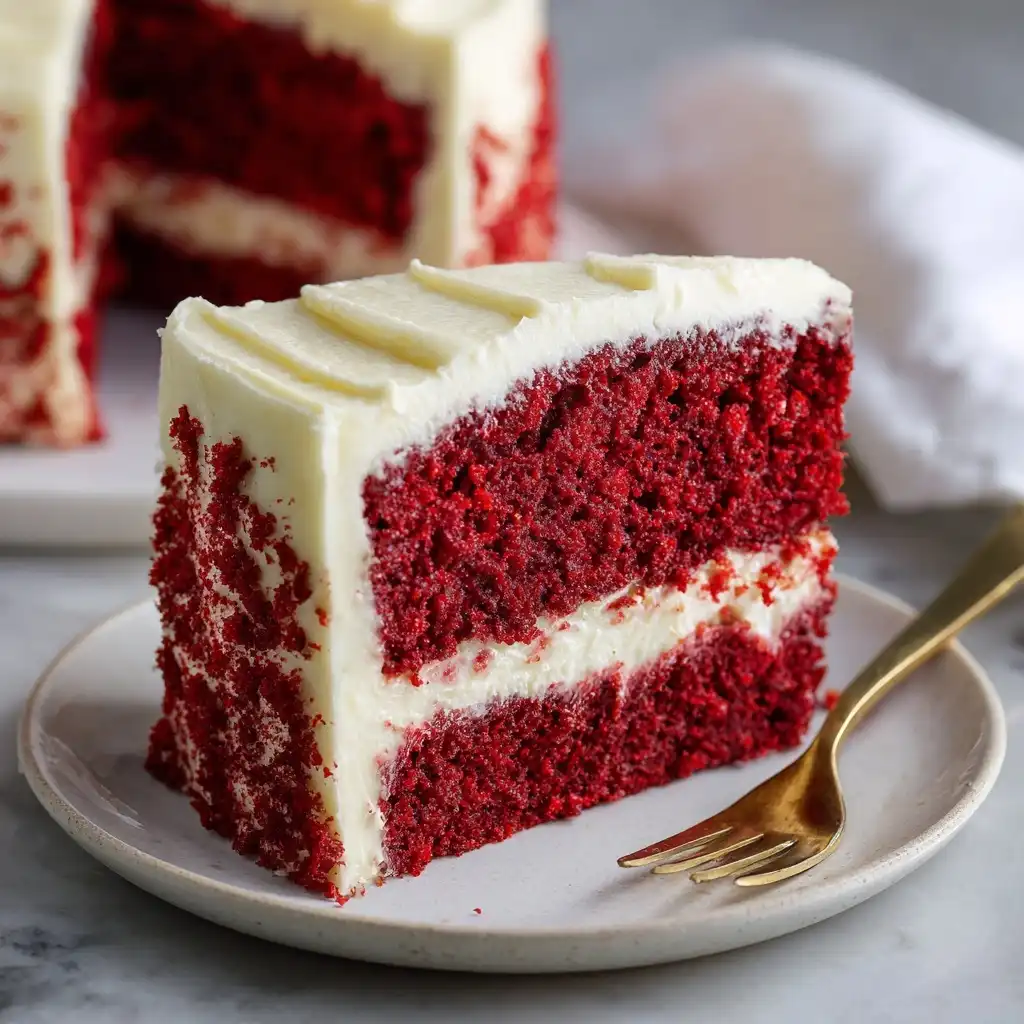
Classic Red Velvet Cake with Real Ermine Frosting is not merely a dessert—it’s a timeless American tradition steeped in elegance, nostalgia, and culinary artistry. Revered for its velvety crumb, subtle cocoa undertones, delicate tang, and signature crimson hue, this cake transcends seasonal trends and stands apart from ordinary chocolate or vanilla cakes. What truly elevates it into the realm of legendary desserts is its crowning glory: authentic Ermine frosting—also known as boiled milk frosting or flour buttercream. Unlike modern American buttercream (which relies on powdered sugar and shortening), Ermine frosting is a labor-of-love preparation rooted in early 20th-century home baking, yielding an ethereal, cloud-like texture that’s luxuriously smooth, subtly sweet, and astonishingly stable. This comprehensive guide walks you through every dimension of the classic Red Velvet experience—from its contested origins and scientific nuances to precise ingredient ratios, foolproof techniques, historical context, nutritional insights, and thoughtful adaptations—so you can bake, understand, and savor this iconic confection with confidence and reverence.
The History
The origins of Red Velvet Cake are as richly layered—and occasionally contradictory—as its moist crumb. While its modern popularity surged in the mid-20th century, its roots stretch back to the Victorian era, when “velvet” cakes were prized for their fine, tender texture achieved through the use of acidic ingredients (like buttermilk or vinegar) reacting with alkaline cocoa—a process that predated modern Dutch-processed cocoa. Early velvet cakes appeared in cookbooks as early as the 1870s, often featuring beet juice or natural red pigments from anthocyanin-rich sources to impart color and moisture.
The “red” in Red Velvet likely evolved gradually. Before synthetic food dyes became widespread and affordable in the 1930s, bakers used natural alternatives: crushed beets, pomegranate juice, or even red wine. However, the most pivotal development came with the introduction of Merck’s Red Dye No. 4 in the 1920s and later, FD&C Red No. 40, which offered vibrant, consistent, and shelf-stable color. The Waldorf Astoria Hotel in New York is frequently credited—though unverified—with popularizing Red Velvet in the 1940s, allegedly gifting the recipe to guests who raved about the cake served with its distinctive cream cheese–infused Ermine frosting. Yet archival research reveals earlier appearances: the 1931 edition of The Southern Cookbook by Mrs. S. R. Dull includes a “Red Velvet Cake” using cocoa, vinegar, and beet juice; and the 1943 Community Cook Book from the First Presbyterian Church of Dallas features a version calling for “1 tablespoon red food coloring” alongside buttermilk and baking soda.
Ermine frosting itself predates Red Velvet’s color fixation. Originating in the late 19th century as “boiled milk frosting,” it was developed as a less-sweet, more refined alternative to heavy boiled icing or dense buttercreams. Its name “Ermine” is believed to reference its pristine white appearance and luxurious, fur-like softness—not its ingredients (no animal products involved). By the 1950s, Ermine had become the preferred pairing for Red Velvet in Southern home kitchens and church socials, where its stability made it ideal for warm-weather gatherings. Though it waned in commercial bakeries during the convenience-food boom of the 1960s–80s, artisanal bakers and vintage recipe revivalists have spearheaded its resurgence—recognizing Ermine not just as frosting, but as a masterclass in emulsion science, temperature control, and patient craftsmanship.
Ingredients Breakdown
Understanding each ingredient—not just its role, but its *interaction*—is essential to mastering Red Velvet with Ermine frosting. Below is an in-depth analysis grounded in food chemistry, regional traditions, and professional baking practice:
For the Cake:
- Unbleached All-Purpose Flour (2 ½ cups / 312g): Provides structure without toughness. Unbleached is preferred over bleached because it retains more protein and enzymatic activity, contributing to better gluten development and moisture retention. Avoid cake flour unless adjusting for altitude or humidity—its lower protein can yield a fragile, crumbly crumb.
- Granulated Sugar (1 ½ cups / 300g): Not only sweetens but also tenderizes by interfering with gluten formation and aids in browning and moisture retention via caramelization and hygroscopic properties.
- Natural Unsweetened Cocoa Powder (2 tablespoons / 10g): Critical for authenticity. Natural cocoa (non-alkalized) is acidic (pH ~5.5), enabling the vital reaction with baking soda to produce carbon dioxide—and the characteristic lift, tenderness, and subtle reddish tint (via anthocyanin activation in cocoa). Dutch-process cocoa (alkalized, pH ~7–8) will mute both rise and color, resulting in flat, dull, and dense layers. Recommended brands: Hershey’s Natural, Ghirardelli Natural, or Valrhona Cocoa Powder.
- Baking Soda (1 teaspoon / 5g): The alkaline counterpart to natural cocoa and buttermilk. It neutralizes acidity while generating gas bubbles for leavening. Too much yields soapy bitterness; too little results in dense, sour-tasting cake.
- Salt (1 teaspoon / 6g): Enhances all flavors, balances sweetness, and strengthens gluten network slightly. Fine sea salt or kosher salt (measured by weight) ensures consistency.
- Buttermilk (1 cup + 2 tablespoons / 270g, full-fat, cultured): The cornerstone of tang, tenderness, and moisture. Its lactic acid further activates baking soda, while milk proteins and fats contribute richness and emulsification. Shelf-stable “buttermilk substitutes” (milk + vinegar/lemon juice) work in a pinch—but lack the nuanced flavor, viscosity, and live cultures of true cultured buttermilk, affecting both texture and depth. Never use low-fat or skim buttermilk—the fat content is non-negotiable for mouthfeel and crumb integrity.
- Neutral Oil (½ cup / 120ml, e.g., grapeseed, canola, or light olive oil): Ensures unparalleled moistness and shelf life. Unlike butter-based cakes, oil remains liquid at room temperature, coating flour particles and inhibiting gluten development—yielding a supremely tender, close-grained crumb. Butter contributes flavor but introduces water and solid fat, risking uneven texture and dryness upon storage.
- Large Eggs (2, room temperature): Provide structure (via coagulating proteins), emulsification (yolks), and leavening (whites). Room temperature eggs incorporate more air and blend smoothly into the batter, preventing curdling.
- Distilled White Vinegar (1 tablespoon / 15ml): Reinforces acidity to fully activate baking soda and brighten flavor. Also helps stabilize the emulsion when combined with oil and buttermilk. Apple cider vinegar may add unwanted fruit notes.
- Red Food Coloring (2 tablespoons / 30ml liquid, or 2–3 teaspoons gel): For true vibrancy and depth, professional-grade gel coloring (e.g., Americolor Super Red, Chefmaster Red) is strongly recommended. Liquid dyes require larger volumes, diluting the batter and potentially weakening structure. Gel colors deliver intense pigment with minimal liquid impact. Note: “No-dye” versions using beets or pomegranate will yield earthier tones (rust, brick-red) and alter moisture balance—requiring recipe recalibration.
- Vanilla Extract (2 teaspoons / 10ml, pure, not imitation): Adds aromatic complexity and rounds out cocoa’s bitterness. Mexican or Madagascar bourbon vanilla preferred for its rich, creamy profile.
For the Ermine Frosting:
- Whole Milk (1 cup / 240ml, full-fat, not ultra-pasteurized if possible): Provides the base for the roux. Fat content is essential for richness and emulsion stability. Ultra-pasteurized milk can sometimes scorch or develop off-flavors when boiled; pasteurized whole milk is ideal.
- All-Purpose Flour (¼ cup / 30g, spooned & leveled): Acts as a thickener via starch gelatinization. Must be measured precisely—too much yields gummy, chalky frosting; too little results in runny, unstable buttercream. Sift before measuring to prevent compaction.
- Granulated Sugar (1 ½ cups / 300g): Sweetens and—crucially—provides body and viscosity once dissolved in the hot milk-flour mixture. Confectioners’ sugar is *not* used here, distinguishing Ermine from other buttercreams.
- Unsalted Butter (1 ½ cups / 340g, high-fat European-style preferred, e.g., Plugrá or Kerrygold): Must be softened to 65–68°F (18–20°C)—cool to the touch but yielding to gentle pressure. Over-softened or melted butter causes greasy, broken frosting. High-fat butter (82–86% fat) yields superior flavor, silkiness, and stability over standard 80% butter.
- Pure Vanilla Extract (2 teaspoons / 10ml) + optional ¼ teaspoon almond extract: Almond extract is a traditional Southern accent that enhances the “velvet” character without dominating. Use sparingly—too much tastes artificial.
- Fine Sea Salt (¼ teaspoon): Balances sweetness and deepens flavor perception.
Step-by-Step Recipe
Makes two 9-inch round layers (or one 9×13-inch sheet cake) + ~5 cups frosting (enough to fill, frost, and pipe)
Preparation Notes:
- Preheat oven to 350°F (177°C). Position rack in center.
- Grease two 9-inch round cake pans with baking spray containing flour—or butter + flour (tap out excess). Line bottoms with parchment paper rounds.
- Bring all refrigerated ingredients (buttermilk, eggs, butter for frosting) to room temperature (65–70°F) at least 1 hour ahead. Cold ingredients cause separation and poor emulsification.
- Scale all ingredients by weight for precision—especially flour and sugar. Volume measurements introduce significant variability.
Cake Batter:
- Whisk Dry Ingredients: In a large bowl, whisk together flour, sugar, cocoa powder, baking soda, and salt until no streaks remain. Sift twice for uniformity.
- Combine Wet Ingredients: In a separate medium bowl, vigorously whisk buttermilk, oil, eggs, vinegar, food coloring, and vanilla until fully homogenized and slightly frothy (~1 minute).
- Combine & Mix: Pour wet mixture into dry ingredients all at once. Using a silicone spatula or hand whisk (not electric mixer yet), fold gently just until *no dry pockets remain*. Do not overmix—batter will be thin and fluid, like pancake batter.
- Aerate (Critical Step): Switch to a stand mixer fitted with paddle attachment (or hand mixer on medium-low). Beat batter for exactly 2 minutes at medium speed. This incorporates air, develops subtle gluten for structure, and ensures even distribution of leaveners. Batter will thicken slightly and become glossy.
- Portion & Bake: Divide batter evenly between prepared pans (use a kitchen scale for accuracy: ~425g per pan). Tap pans firmly on counter twice to release air bubbles. Bake 28–32 minutes, rotating pans at 18 minutes, until a toothpick inserted in center comes out with *moist crumbs* (not wet batter, not completely clean). Overbaking dries out velvet crumb irreversibly.
- Cool Completely: Let cakes cool in pans on wire racks for 15 minutes. Run a thin knife around edges, invert onto racks, peel off parchment, and flip right-side-up. Cool *completely* (minimum 2 hours, ideally overnight wrapped in plastic) before frosting. Warm cake melts frosting and causes sliding layers.
Ermine Frosting (Boiled Milk Buttercream):
- Make Roux: In a heavy-bottomed, light-colored saucepan (for monitoring color), whisk milk, flour, and sugar until completely smooth—no lumps. Place over medium heat. Stir constantly with a silicone spatula or whisk, scraping bottom and corners, until mixture thickens to a pudding-like consistency and registers 190–195°F (88–91°C) on an instant-read thermometer. This takes 6–9 minutes. Do *not* let boil vigorously or scorch—small bubbles are acceptable; large rolling bubbles mean overheating. Remove from heat immediately.
- Cool Roux: Pour hot roux into a shallow heatproof bowl. Cover surface directly with plastic wrap to prevent skin formation. Cool to room temperature (70°F), stirring occasionally—about 1 hour. For faster cooling, place bowl in refrigerator for 20 minutes, then stir and continue cooling at room temp until no warmth remains. Roux must be *completely cool*—if even slightly warm, butter will melt and frosting will break.
- Beat Butter: In stand mixer with paddle attachment, beat softened butter on medium-high for 3–4 minutes until pale, fluffy, and free of graininess. Scrape bowl thoroughly.
- Combine & Emulsify: With mixer on low, add cooled roux in 3–4 additions, waiting until each is *fully incorporated* before adding next. Increase speed to medium and beat for 5–6 minutes total until frosting is ultra-smooth, satiny, and holds soft peaks. If frosting appears curdled or soupy, continue beating—it *will* come together. If stubborn, refrigerate bowl for 10 minutes, then resume beating.
- Finish: Add vanilla, almond extract (if using), and salt. Beat on medium for 1 minute. Taste and adjust—some bakers add 1–2 tbsp heavy cream for extra silkiness (optional).
Assembly:
- Level & Fill: Using a serrated knife or cake leveler, trim domed tops to create flat, even surfaces. Brush away crumbs. Place first layer on turntable or cake board. Spread ¾ cup frosting evenly to edges. Top with second layer, pressing gently.
- Crumb Coat: Apply thin layer of frosting over entire cake. Refrigerate 20–30 minutes until set.
- Final Frost: Apply remaining frosting with offset spatula. For classic swirls, use a bench scraper and turntable. Chill cake 1 hour before slicing for clean cuts.
Tips
- Color Consistency: Red Velvet’s hue intensifies over time. Bake and frost 1 day ahead—the color deepens overnight, and flavors meld beautifully. Store covered at cool room temperature (65–72°F) for up to 2 days, or refrigerate for up to 5 days (bring to room temp 2 hours before serving).
- Altitude Adjustments: Above 3,000 ft: reduce baking soda to ¾ tsp, increase buttermilk to 1¼ cups, and bake at 360°F for 25–28 minutes. Monitor closely.
- Ermine Troubleshooting:
- Frosting is too thin? Roux wasn’t cooked long enough or was too warm. Chill bowl 15 min, then re-beat.
- Frosting looks curdled? Butter was too cold or roux too warm. Keep beating—it will unify. Or warm bowl *very briefly* (5 sec microwave) and beat again.
- Frosting tastes floury? Roux wasn’t cooked to 190°F+—raw flour taste remains. Always use thermometer.
- No Mixer? No Problem: Whisk batter by hand for 3 minutes after folding. For Ermine, use a sturdy balloon whisk and patience—beat butter 5+ minutes, then incorporate roux slowly by hand (takes ~10 minutes).
- Texture Secret: For ultimate velvet softness, replace 2 tbsp of flour with 2 tbsp cornstarch. It further inhibits gluten and yields an almost mousse-like crumb.
- Frosting Stability: Ermine holds beautifully in heat up to 78°F. For outdoor events above that, add 1 tsp clear piping gel or 1 tbsp melted and cooled white chocolate to frosting after final beat—boosts heat resistance without altering flavor.
- Storage Tip: Frosted cake freezes exceptionally well for up to 3 months. Wrap tightly in plastic + foil. Thaw overnight in fridge, then bring to room temp before serving.
Variations and Customizations
While authenticity honors tradition, thoughtful innovation keeps Red Velvet vibrant across generations. Below are rigorously tested variations—each preserving the soul of velvet crumb and Ermine’s elegance:
Flavor Infusions:
- Earl Grey Velvet: Steep 2 tsp loose-leaf Earl Grey in warm buttermilk for 10 minutes, strain, cool, and use as buttermilk. Add ½ tsp bergamot oil to frosting.
- Blackberry-Balsamic Velvet: Fold ⅓ cup seedless blackberry purée (reduced by half) into batter with wet ingredients. Swirl 2 tbsp balsamic glaze into Ermine.
- Spiced Velvet: Add ½ tsp ground cardamom + ¼ tsp ground ginger to dry ingredients. Garnish with candied ginger.
Dietary Adaptations:
- Gluten-Free: Substitute 1:1 GF all-purpose blend *with xanthan gum* (e.g., King Arthur Measure for Measure). Add 1 extra tbsp buttermilk. Expect slightly denser crumb—acceptable for velvet tradition.
- Lower-Sugar: Replace ½ cup granulated sugar with erythritol + monk fruit blend (tested: Lakanto Golden). Ermine uses same substitute; texture remains excellent. Note: color may be less vibrant.
- Dairy-Free Velvet: Use full-fat coconut milk (canned, shaken well) + 1 tbsp apple cider vinegar for buttermilk. Replace butter in Ermine with high-quality vegan butter (Miyoko’s or Earth Balance Buttery Sticks). Roux uses oat milk (barley-free) for best results.
Format & Presentation:
- Red Velvet Whoopie Pies: Drop ¼-cup batter onto parchment-lined sheets. Bake 10–12 minutes. Cool. Sandwich with Ermine and roll edges in red sanding sugar.
- Layered Trifle: Cube day-old Red Velvet, layer with Ermine, fresh raspberries, and whipped crème fraîche.
- Mini Bundt Cakes: Fill greased bundt pans ⅔ full. Bake 18–22 minutes. Glaze with Ermine-thinned cream cheese glaze (½ cup Ermine + 2 tbsp cream cheese + 1 tsp lemon juice).
- Red Velvet Ice Cream Sandwiches: Bake as sheet cake. Cut into 3″x3″ squares. Freeze. Sandwich with vanilla bean ice cream. Roll edges in crushed freeze-dried strawberries.
Modern Twists:
- “Midnight Velvet”: Replace cocoa with black cocoa (Hershey’s Special Dark) for deeper color and smoky-chocolate intensity. Reduce food coloring to 1 tsp gel.
- Maple-Ermine Velvet: Replace ¼ cup granulated sugar in Ermine with pure maple syrup (reduce milk by 1 tbsp). Toast ¼ cup walnuts; fold into frosting.
- Champagne Velvet: Replace ¼ cup buttermilk with chilled brut champagne. Add 1 tsp champagne vinegar. Garnish with edible gold leaf and crystallized violets.
Health Considerations and Nutritional Value
Approaching Red Velvet with Ermine through a holistic wellness lens reveals both indulgent pleasures and mindful opportunities. Per standard slice (1/12th of 9-inch two-layer cake, ~140g), approximate values are:
- Calories: 420–450 kcal
- Total Fat: 24–26g (15–17g saturated)
- Carbohydrates: 48–52g (42–45g sugars)
- Protein: 4–5g
- Fiber: 1g (from cocoa and flour)
- Sodium: 320–360mg
Nutritional Highlights & Considerations:
- Cocoa Benefits: Natural unsweetened cocoa provides flavanols—antioxidants linked to improved endothelial function and mild blood pressure modulation. Choose high-polyphenol brands (e.g., Navitas Organics) for maximum benefit.
- Buttermilk Advantage: Contains probiotics (live cultures), calcium, vitamin B12, and potassium—supporting gut health and electrolyte balance. Opt for grass-fed buttermilk when possible for enhanced omega-3 ratio.
- Sugar Awareness: While Ermine uses less sugar than American buttercream (≈30% less by volume), it remains a moderate-to-high-sugar dessert. To reduce glycemic load without sacrificing texture, swap ⅓ of granulated sugar in both cake and frosting with allulose—a rare ketosis-friendly, non-browning, zero-calorie monosaccharide shown in clinical studies to improve insulin sensitivity.
- Oil Choice Matters: Using high-oleic sunflower or avocado oil increases monounsaturated fats (heart-healthy) versus generic canola. Avoid partially hydrogenated oils entirely—check labels.
- Food Coloring Notes: FD&C Red No. 40 is FDA-approved but controversial due to potential hyperactivity links in sensitive children (per NIH-funded studies). For families seeking alternatives, use concentrated beet powder (1 tbsp) + 1 tsp pomegranate molasses—adds 2g natural sugar and 15mg vitamin C per slice.
- Portion Mindfulness: Serve slices no larger than 3″x2″. Pair with tart raspberry coulis (no added sugar) or plain Greek yogurt to balance richness and slow sugar absorption.
- Not Gluten-Free or Vegan by Default: As written, contains wheat, dairy, and eggs. See Variations section for verified substitutions.
Ingredients
For Two 9-Inch Round Layers and ~5 Cups Ermine Frosting
Cake:
- 312g (2 ½ cups) unbleached all-purpose flour
- 300g (1 ½ cups) granulated sugar
- 10g (2 tbsp) natural unsweetened cocoa powder
- 5g (1 tsp) baking soda
- 6g (1 tsp) fine sea salt
- 270g (1 cup + 2 tbsp) full-fat cultured buttermilk, room temperature
- 120ml (½ cup) neutral oil (grapeseed or canola)
- 2 large eggs, room temperature
- 15ml (1 tbsp) distilled white vinegar
- 30ml (2 tbsp) liquid red food coloring or 3 tsp gel red food coloring
- 10ml (2 tsp) pure vanilla extract
Ermine Frosting:
- 240ml (1 cup) full-fat whole milk
- 30g (¼ cup) all-purpose flour, sifted
- 300g (1 ½ cups) granulated sugar
- 340g (1 ½ cups) unsalted butter, softened to 65–68°F
- 10ml (2 tsp) pure vanilla extract
- 1.25ml (¼ tsp) pure almond extract (optional but traditional)
- 1.5g (¼ tsp) fine sea salt
Directions
Make the Cake:
- Preheat oven to 35
Advertisment