
Introduction
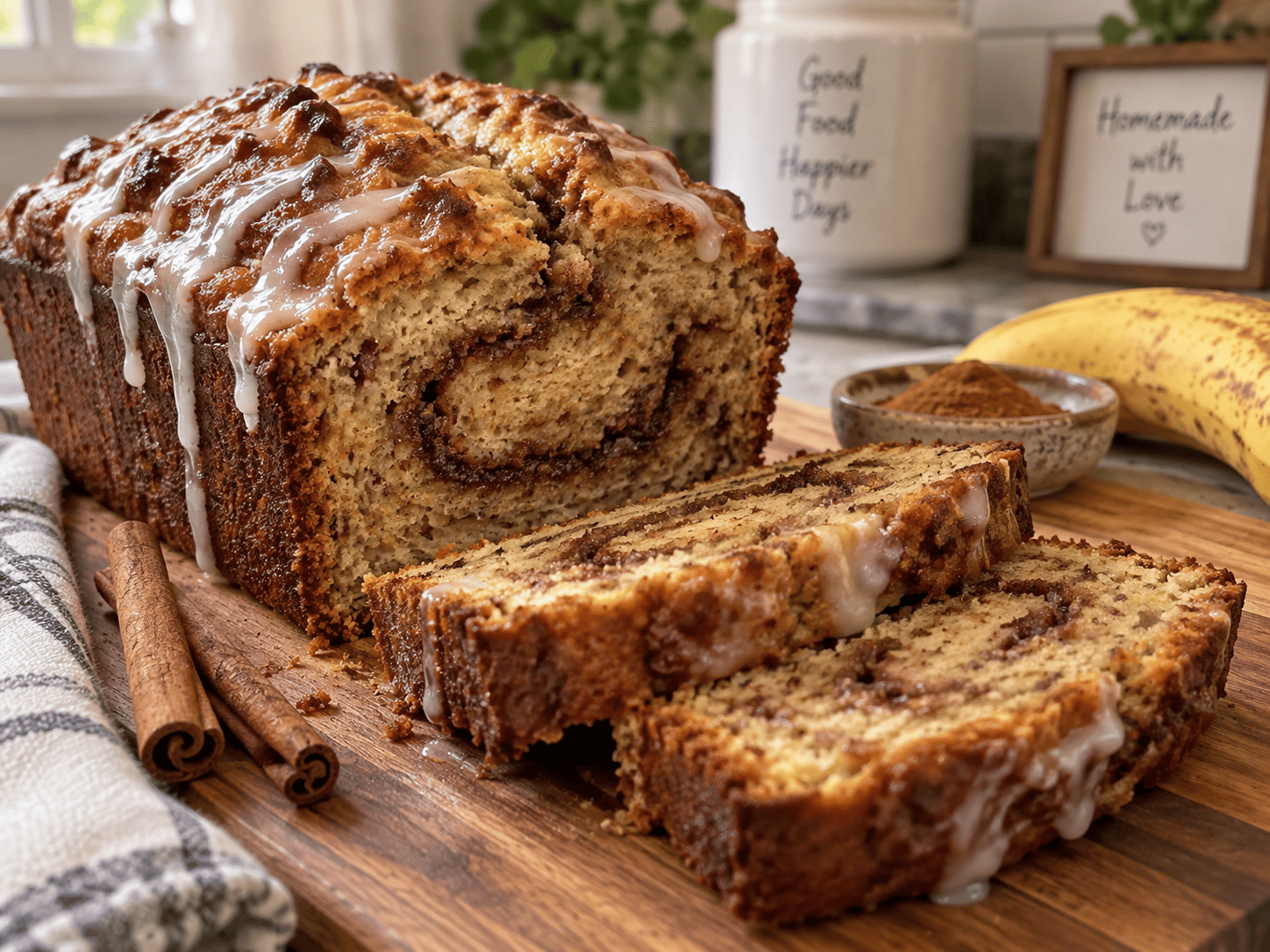
There are few comfort foods that rival the nostalgic warmth of a freshly baked loaf of banana bread. It is the quintessential solution for overripe fruit, a kitchen staple that has graced countertops for generations. Similarly, the cinnamon roll stands as a pinnacle of indulgent breakfast treats, known for its gooey center, spiraling layers of dough, and that distinct, spicy-sweet aroma that fills an entire house. But what happens when you cross these two titans of the baking world? You get Cinnamon Roll Banana Bread—a hybrid masterpiece that combines the moist, dense crumb of banana bread with the decadent, swirled filling and creamy glaze of a cinnamon roll.
This recipe is not merely a mashup; it is an elevation of both classics. Imagine slicing into a warm loaf to reveal ribbons of cinnamon sugar running through a tender, banana-infused cake, all topped with a velvety cream cheese frosting. It is the perfect bridge between a healthy-ish breakfast and a decadent dessert, suitable for Sunday brunches, holiday gatherings, or a solitary midnight snack. In this comprehensive guide, we will explore the origins of this trend, the science behind the ingredients, and provide you with a foolproof method to create the ultimate Cinnamon Roll Banana Bread in your own kitchen.
The History
To understand the Cinnamon Roll Banana Bread, we must first look at the lineage of its parents. Banana bread, as we know it today, is a product of necessity born during the Great Depression in the 1930s. When food was scarce and nothing could be wasted, resourceful housewives began mashing overripe, blackened bananas and folding them into batter to create a moist, sweet loaf. It was popularized further by major food companies like Pillsbury and Chiquita in the mid-20th century, cementing its place in American culinary history.
On the other side of the Atlantic, the cinnamon roll (or kanelbulle) traces its roots back to Sweden in the 1920s. It became a cultural icon, eventually leading to the establishment of “Cinnamon Roll Day” in Sweden. In the United States, the cinnamon roll gained massive popularity in the 1980s with the rise of mall food courts and chains like Cinnabon, which introduced the concept of the oversized, cream-cheese-frosted roll.
The fusion of these two items is a distinctly modern phenomenon, emerging from the “hybrid food” trend of the 2010s. As bakers and food bloggers sought to innovate on traditional recipes, the idea of injecting the flavor profile of a cinnamon roll into the convenient format of a quick bread loaf gained traction on social media platforms like Instagram and Pinterest. It represents the modern baker’s desire for complexity and indulgence without the time commitment of yeast-based dough.
Ingredients Breakdown
Understanding the role of each ingredient is the key to baking success. Here is a deep dive into the chemistry of Cinnamon Roll Banana Bread:
The Bananas
The star of the show must be overripe. Green or yellow bananas lack the necessary sugar concentration and enzymatic activity. As bananas ripen, their starches convert into simple sugars (glucose, fructose, and sucrose), making them sweeter and easier to mash. This natural sweetness reduces the need for added sugar and contributes to the moist texture of the final loaf.
The Fats (Butter and Oil)
We often use a combination of melted butter and vegetable oil. Butter provides flavor and richness, contributing to that “bakery” taste. However, butter contains water and can solidify when cold, potentially making the bread slightly firmer. Vegetable oil remains liquid at room temperature, ensuring the crumb stays tender and moist for days after baking.
The Sugars
This recipe utilizes both brown sugar and white granulated sugar. Brown sugar contains molasses, which adds a depth of flavor reminiscent of caramel and helps retain moisture due to its hygroscopic nature (it attracts water from the air). White sugar aids in the structure and helps create a nice crust.
The Leavening Agents
Baking soda is crucial here. Because ripe bananas are acidic, baking soda (a base) reacts with them to produce carbon dioxide gas. This reaction causes the bread to rise and creates a light, airy texture. Using too much can result in a soapy taste, while too little leads to a dense brick.
The Cinnamon Swirl
The “cinnamon roll” element relies on a mixture of cinnamon and sugar, often with a bit of flour and melted butter. Cinnamon contains cinnamaldehyde, the organic compound responsible for its flavor and odor. When heated, these oils release, permeating the batter.
Step-by-Step Recipe
Follow this detailed walkthrough to ensure your loaf turns out perfect every time.
Phase 1: Preparation
Begin by preheating your oven to 350°F (175°C). Consistent heat is vital for the rise of the bread. While the oven warms, grease a 9×5 inch loaf pan with butter or non-stick spray. For extra security against sticking, line the bottom with a strip of parchment paper, leaving an overhang on the sides to act as “handles” for lifting the bread out later.
Phase 2: The Wet Mixture
In a large mixing bowl, mash your ripe bananas with a fork or potato masher until they are mostly smooth, though a few small chunks are acceptable for texture. Add the melted butter, beaten egg, vanilla extract, and sour cream (or yogurt). The sour cream adds acidity which reacts with the baking soda, and its fat content ensures a velvety crumb. Whisk these ingredients together until fully emulsified.
Phase 3: The Dry Mixture
In a separate medium bowl, combine your all-purpose flour, baking soda, salt, and half of your granulated sugar. Whisk these dry ingredients together to distribute the leavening agents evenly. This prevents “tunneling,” where large holes form in the bread due to concentrated pockets of baking soda.
Phase 4: Combining
Pour the dry ingredients into the wet mixture. Here is the golden rule of quick breads: do not overmix. Use a spatula to fold the ingredients together just until the flour streaks disappear. Overmixing develops gluten, which makes bread chewy; we want this loaf to be tender and cake-like.
Phase 5: The Swirl
In a small bowl, mix brown sugar, cinnamon, and a tablespoon of flour. Pour half of your batter into the prepared loaf pan. Sprinkle half of the cinnamon-sugar mixture over the batter. Pour the remaining batter on top, followed by the rest of the cinnamon mixture. Use a knife to gently swirl the layers together. Do not over-swirl, or the cinnamon will disappear into the batter rather than forming distinct ribbons.
Phase 6: Baking
Place the pan in the center rack of the oven. Bake for 55 to 65 minutes. The time varies based on oven calibration and banana moisture content. The bread is done when the top is golden brown and a toothpick inserted into the center comes out clean or with just a few moist crumbs.
Tips
- The Freeze-and-Thaw Trick: For the easiest peeling, freeze your bananas in their skins until they turn completely black. Thaw them before using; they will release more liquid and mash effortlessly.
- Room Temperature Ingredients: Ensure your egg and sour cream are at room temperature before mixing. Cold ingredients can shock the melted butter, causing it to seize, and can result in uneven baking.
- Tent with Foil: If the top of your bread is browning too quickly before the center is cooked (common with high-sugar batters), loosely tent a piece of aluminum foil over the top for the last 15 minutes of baking.
- Cooling is Key: Resist the urge to cut the bread while it is piping hot. Quick breads are fragile when hot and can crumble. Let it cool in the pan for 10 minutes, then transfer to a wire rack to cool completely before glazing.
Variations and Customizations
While the classic recipe is divine, baking is an art form that invites experimentation.
Nutty Crunch
Add ½ cup of chopped walnuts or pecans to the batter. Toasting the nuts beforehand enhances their flavor and provides a delightful textural contrast to the soft bread.
Chocolate Chip Cinnamon
For the ultimate indulgence, fold in ½ cup of semi-sweet chocolate chips. The bitterness of the chocolate pairs exceptionally well with the spice of the cinnamon and the sweetness of the banana.
Gluten-Free Adaptation
This recipe translates well to gluten-free baking. Substitute the all-purpose flour with a high-quality 1:1 gluten-free flour blend that contains xanthan gum. You may need to add an extra tablespoon of milk if the batter appears too thick.
Vegan Version
Replace the egg with a “flax egg” (1 tbsp ground flaxseed meal mixed with 3 tbsp water, let sit for 5 minutes). Substitute the butter with melted coconut oil or vegan butter, and use a plant-based yogurt for the sour cream component.
Health Considerations and Nutritional Value
While this is a treat, it does offer some nutritional benefits compared to standard pastries. Bananas are an excellent source of potassium, which supports heart health and blood pressure regulation. They also provide Vitamin B6 and dietary fiber, which aids in digestion. However, potential bakers should be aware of the sugar content. Between the brown sugar in the swirl, the sugar in the batter, and the cream cheese glaze, this is a high-carbohydrate, high-sugar item. It is best enjoyed in moderation as part of a balanced diet. Using whole wheat pastry flour can increase the fiber content, and reducing the sugar in the glaze can lower the overall glycemic load.
Ingredients
For the Banana Bread:
- 3 large ripe bananas, mashed (about 1 ½ cups)
- 1/3 cup melted unsalted butter
- ¾ cup brown sugar, packed
- 1 large egg, beaten
- 1 teaspoon vanilla extract
- 1 teaspoon baking soda
- Pinch of salt
- 1 ½ cups all-purpose flour
- ¼ cup sour cream or plain Greek yogurt
For the Cinnamon Swirl:
- 1/3 cup brown sugar, packed
- 1 tablespoon ground cinnamon
- 1 tablespoon all-purpose flour
- 1 tablespoon melted butter
For the Cream Cheese Glaze:
- 4 oz cream cheese, softened
- ¼ cup unsalted butter, softened
- 1 cup powdered sugar, sifted
- ½ teaspoon vanilla extract
- 1-2 tablespoons milk or heavy cream
Directions
- Preheat & Prep: Preheat oven to 350°F (175°C). Grease a 9×5 inch loaf pan and line with parchment paper.
- Mix Wet Ingredients: In a large bowl, mash bananas. Stir in melted butter. Mix in baking soda and salt. Stir in sugar, beaten egg, vanilla, and sour cream until combined.
- Add Flour: Mix in the flour just until incorporated. Do not overmix.
- Make Swirl: In a small bowl, combine cinnamon swirl ingredients (brown sugar, cinnamon, flour, melted butter) until crumbly.
- Layer: Pour half the batter into the pan. Sprinkle half the swirl mixture. Add remaining batter and top with remaining swirl. Use a knife to gently swirl.
- Bake: Bake for 55-65 minutes. Check with a toothpick; if it comes out clean, it is done.
- Cool: Let cool in pan for 10 minutes, then remove to a wire rack to cool completely.
- Glaze: Beat cream cheese and butter until smooth. Add powdered sugar, vanilla, and milk. Whisk until smooth. Drizzle over cooled bread.
FAQ
Can I use frozen bananas?
Yes, frozen bananas are excellent for this recipe. Thaw them completely and drain any excess liquid that accumulates during thawing before mashing.
Why did my bread sink in the middle?
This usually happens if the bread is underbaked or if too much leavening agent was used. Ensure your baking soda is fresh and do not open the oven door during the first 40 minutes of baking.
How do I store this bread?
Because of the cream cheese glaze, this bread should be stored in an airtight container in the refrigerator. It will stay fresh for up to 5 days. You can bring it to room temperature before serving for the best texture.
Can I freeze the loaf?
Yes, but it is best to freeze the bread without the glaze. Wrap the cooled loaf tightly in plastic wrap and foil. Freeze for up to 3 months. Thaw overnight in the fridge and apply the glaze before serving.
Summary
Cinnamon Roll Banana Bread fuses the moist, dense texture of classic banana quick bread with the spicy-sweet ribbons and cream cheese glaze of a cinnamon roll. It is the ultimate comfort food hybrid, perfect for utilizing overripe fruit while delivering a decadent, bakery-quality treat.