
Introduction
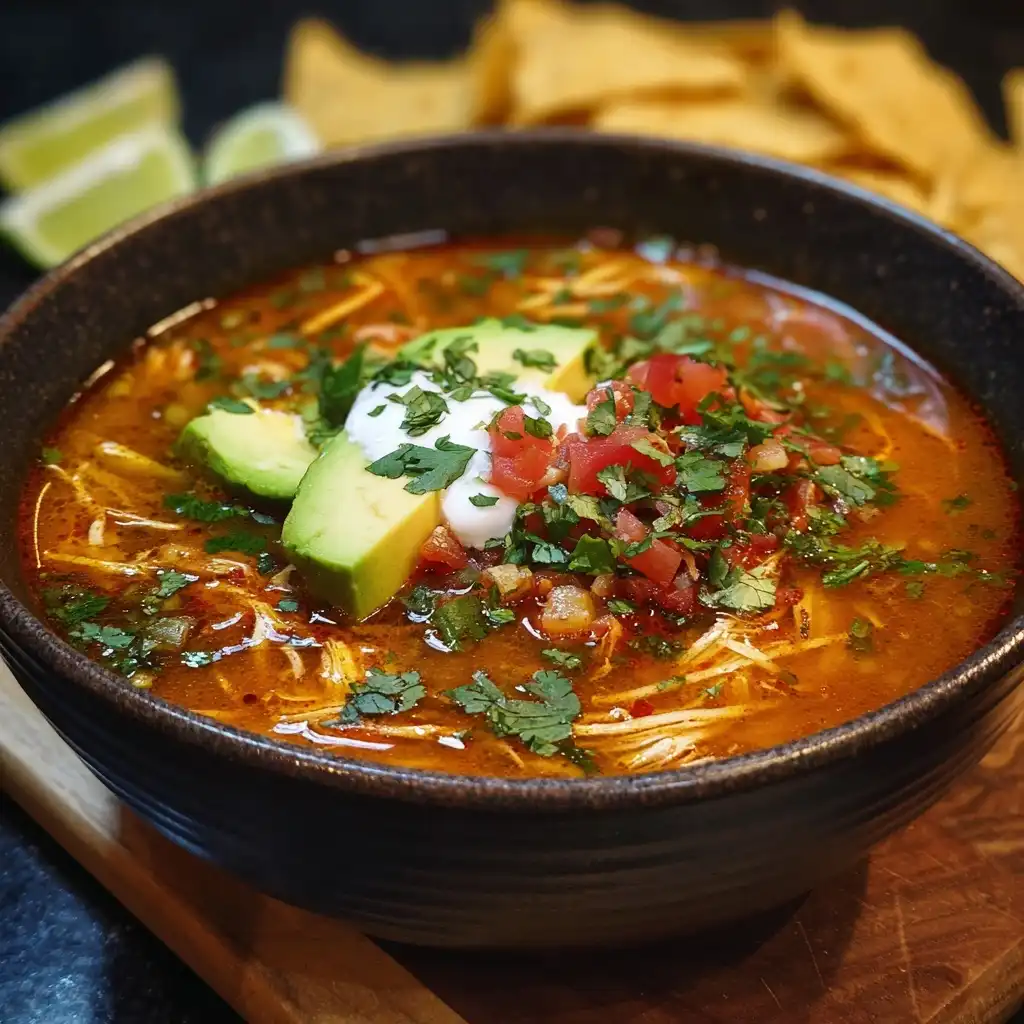
Chicken Tortilla Soup is a vibrant, soul-warming Mexican-inspired classic that marries bold flavors, comforting textures, and rustic charm in every steaming bowl. Far more than just a simple soup, it’s a celebration of layered aromatics, slow-simmered depth, and customizable freshness—equally at home on a chilly winter evening, as a crowd-pleasing appetizer at a festive gathering, or as a nourishing, weeknight-ready meal that comes together with surprising ease. Its signature elements—tender shredded chicken, rich tomato-corn-and-black bean broth, crispy tortilla strips, creamy avocado, tangy lime, and earthy spices—create a dynamic interplay of heat, acidity, crunch, creaminess, and umami that satisfies on every level. Whether you’re new to Latin American cooking or a seasoned home chef seeking a reliable, adaptable staple, Chicken Tortilla Soup delivers authenticity without intimidation—and rewards both tradition and creativity.
The History
Chicken Tortilla Soup, known in Spanish as Sopa de Pollo con Tortilla, traces its roots deeply into the culinary soil of central Mexico, particularly the states of Puebla, Tlaxcala, and the Valley of Mexico. While no single “invention” is documented, its origins are firmly grounded in pre-Hispanic Mesoamerican foodways: ancient civilizations like the Aztecs and Toltecs cultivated maize (corn), beans, chiles, tomatoes, and squash—core pillars still defining the soup today. The foundational technique of simmering roasted or dried chiles (like ancho, guajillo, and chipotle) in broth to build complex, smoky heat predates European contact by centuries. The addition of shredded chicken reflects post-colonial integration of poultry—a protein introduced by the Spanish—but quickly adopted and elevated through indigenous preparation methods. The iconic fried tortilla strips (tostadas or totopos) evolved from the practice of repurposing stale corn tortillas, transforming them into flavorful, crunchy garnishes rather than waste. Regional variations abound: Oaxacan versions often feature hoja santa and epazote; Yucatecan renditions may include achiote and sour orange; while Tex-Mex adaptations popularized in the U.S. Southwest since the mid-20th century introduced ingredients like cumin, Monterey Jack cheese, and heavy use of processed tortilla chips. Despite these evolutions, the soul of the dish remains unchanged: a communal, restorative, deeply flavorful bowl rooted in resourcefulness, seasonality, and reverence for corn—the sacred grain of Mesoamerica.
Ingredients Breakdown
Understanding each ingredient’s role elevates your Chicken Tortilla Soup from good to extraordinary. This breakdown goes beyond listing—it reveals *why* each component matters:
- Chicken (bone-in thighs or breasts): Bone-in, skin-on chicken thighs are preferred for their collagen-rich connective tissue, which melts into the broth during simmering, yielding unmatched richness, body, and natural gelatinous mouthfeel. Breasts offer leaner texture but benefit from careful poaching to avoid dryness. Rotisserie chicken is a brilliant shortcut—but reserve its juices and fat for maximum flavor infusion.
- Dried Ancho Chiles: Mild, fruity, and raisin-like with subtle cocoa notes, anchos form the aromatic backbone. Toasting and rehydrating them unlocks deep, rounded warmth—not just heat—essential for authentic depth.
- Chipotle Peppers in Adobo: Smoked, dried jalapeños packed in tangy, garlicky adobo sauce. They contribute indispensable smokiness, moderate heat, and complex acidity. Even one small pepper transforms the entire profile—don’t skip!
- Fire-Roasted Diced Tomatoes: The charred, caramelized edges add natural sweetness and concentrated umami that canned regular tomatoes simply can’t match. Look for brands with minimal additives and real fire-roasting claims.
- Homemade Chicken Stock (or high-quality low-sodium store-bought): The liquid foundation. Homemade stock made from roasted bones and aromatic vegetables yields superior clarity, body, and nuanced savoriness. If using store-bought, choose low-sodium to control salt levels and avoid overwhelming herbal or artificial notes.
- White Onion & Garlic: Sautéed slowly until golden (not browned), they build a sweet, savory base layer. Raw garlic added at the end (as garnish) offers a bright, pungent counterpoint.
- Fresh Corn Kernels (cut from cob or frozen): Sweetness and textural pop. Fresh corn in season adds unparalleled brightness; frozen works beautifully year-round—just thaw and pat dry to prevent dilution.
- Black Beans (cooked from dry or low-sodium canned): Provide plant-based protein, fiber, and earthy balance. Rinsing canned beans removes excess sodium and the starchy liquid that can cloud the broth.
- Epazote (optional but traditional): A pungent, citrusy herb native to Mexico, traditionally used to aid digestion of beans and add unmistakable terroir. If unavailable, a pinch of oregano or marjoram offers a subtle aromatic proxy.
- Lime Juice (freshly squeezed, added at the end): Not just acidity—it’s the vital “lift” that balances richness, brightens spices, and makes all other flavors sing. Bottled lime juice lacks volatile citrus oils and introduces off-notes.
- Corn Tortillas (for frying or baking): Must be 100% corn (no wheat flour or preservatives). Their natural sweetness and sturdy texture hold up to frying without turning greasy or brittle. Day-old tortillas work best—they’re drier and crisp more evenly.
- Avocado (Hass variety): Adds luxurious creaminess, healthy monounsaturated fats, and cool contrast to the soup’s warmth. Its subtle nuttiness complements the chiles beautifully.
- Queso Fresco or Cotija Cheese: Crumbled fresh cheeses provide salty, milky, slightly tangy notes and delicate texture. Queso fresco is milder and creamier; cotija is saltier and crumblier—both are authentic. Avoid pre-shredded “Mexican blend” cheeses, which contain anti-caking agents and lack freshness.
Step-by-Step Recipe
- Toast & Rehydrate the Chiles: Remove stems and seeds from 3–4 dried ancho chiles. Heat a dry cast-iron skillet over medium-low heat. Toast chiles for 20–30 seconds per side until fragrant and pliable (do not burn). Immediately transfer to a heatproof bowl, cover with 2 cups hot (not boiling) chicken stock, and weigh down with a small plate. Soak for 20 minutes until softened. Reserve soaking liquid.
- Prepare the Chipotle Base: In the same skillet, lightly toast 1–2 chipotle peppers in adobo (plus 1 tsp adobo sauce) for 15 seconds. Add soaked anchos + ½ cup reserved soaking liquid. Simmer gently for 5 minutes. Cool slightly, then transfer to a blender with ¼ cup fresh cilantro stems, 1 clove garlic, and 1 tsp apple cider vinegar. Blend until perfectly smooth—scraping sides often. Strain through a fine-mesh sieve into a bowl, pressing solids to extract every drop of velvety puree.
- Sauté the Aromatics: Heat 2 tbsp avocado oil in a large Dutch oven or heavy-bottomed pot over medium heat. Add 1 large diced white onion; cook 6–8 minutes until translucent and beginning to soften. Add 4 minced garlic cloves; stir 1 minute until fragrant. Stir in 1 tbsp ground cumin, 1 tsp smoked paprika, and ½ tsp dried oregano; toast 30 seconds until aromatic.
- Bloom the Chile Puree: Reduce heat to medium-low. Carefully stir in the strained ancho-chipotle puree. Cook, stirring constantly, for 3–4 minutes until the mixture darkens slightly and oil begins to separate at the edges—this “blooms” the spices and deepens flavor dramatically.
- Build the Broth: Pour in remaining soaking liquid (if any), 6 cups chicken stock (low-sodium), 1 (14.5 oz) can fire-roasted diced tomatoes (with juices), 1 tsp kosher salt, and ½ tsp black pepper. Bring to a gentle simmer. Partially cover and cook for 15 minutes to meld flavors.
- Add Chicken & Simmer: Add 1.5 lbs bone-in, skin-on chicken thighs (or 1 lb boneless, skinless breasts). Submerge fully. Reduce heat to low, cover, and simmer gently for 25–30 minutes (thighs) or 15–18 minutes (breasts) until chicken is tender and registers 165°F internally. Remove chicken, reserving broth. When cool enough to handle, shred meat with two forks, discarding bones and skin. Skim excess fat from broth surface if desired.
- Incorporate Vegetables & Beans: Return shredded chicken to pot. Stir in 2 cups fresh or frozen corn kernels, 1 (15 oz) can rinsed black beans, and 1 tbsp chopped fresh epazote (or oregano). Simmer uncovered for 10 minutes to allow corn to tenderize and flavors to harmonize. Taste and adjust seasoning—add more salt, a splash of lime juice, or a pinch of cayenne if needed.
- Finish with Brightness: Just before serving, stir in juice of 2 large limes (about ¼ cup) and ¼ cup finely chopped fresh cilantro leaves. Do not boil after adding lime—it dulls the brightness.
Tips
- Toast Your Spices Separately: Don’t just dump ground cumin into hot oil. Toast whole cumin seeds in the dry skillet first until fragrant (30–60 sec), then grind fresh. The difference in aroma and complexity is transformative.
- Control Heat with Precision: Chipotles vary wildly in heat. Start with 1 pepper + 1 tsp adobo. After blending the puree, taste a tiny amount mixed into broth. Add more only if needed—you can always increase heat, but never decrease it.
- Resist Overcooking the Chicken: Especially with breasts—remove *as soon as* it hits 165°F. Carryover cooking will raise the temp another 5°F. Overcooked chicken turns rubbery and leaches proteins that cloud the broth.
- Skim Fat Strategically: After simmering, chill the soup overnight. Solidified fat rises to the top and lifts off cleanly with a spoon—yielding crystal-clear, refined broth. For immediate service, use a fat separator or chilled metal spoon to skim.
- Fry Tortillas Like a Pro: Cut 4–5 corn tortillas into ¼-inch strips. Heat ½ inch of avocado or peanut oil to 350°F (use a thermometer!). Fry in batches 60–90 seconds until golden and crisp. Drain on wire rack (not paper towels—to prevent steam-sogginess). Sprinkle immediately with flaky sea salt.
- Layer Garnishes Thoughtfully: Place crunchy elements (tortillas, radish) on top so they stay crisp. Creamy (avocado, crema) and acidic (lime, pickled red onion) should go next. Delicate herbs (cilantro) and cheese last—so their fragrance isn’t lost.
- Make It Ahead & Freeze Brilliantly: Soup (without lime, fresh herbs, or avocado) freezes beautifully for up to 3 months. Thaw overnight in fridge, reheat gently, then finish with fresh lime, herbs, and garnishes for restaurant-quality results.
- Use the Broth for Everything: Leftover broth is liquid gold—use it as a base for rice, quinoa, lentils, or even a quick pan sauce for grilled fish or shrimp.
Variations and Customizations
Chicken Tortilla Soup is gloriously forgiving—here’s how to make it your own without compromising soul:
- Vegetarian/Vegan Version: Omit chicken. Use 8 cups robust vegetable stock. Boost umami with 1 tbsp soy sauce or tamari, 1 tsp nutritional yeast, and ½ cup sautéed mushrooms. Replace chicken with extra black beans, pinto beans, or roasted sweet potatoes. Use avocado oil and vegan crema (cashew-based).
- Smoky Roasted Vegetable Twist: Roast 1 diced poblano, 1 red bell pepper, and 1 small zucchini at 425°F until blistered (20 min). Blend half into the broth puree; dice the rest and stir in at the end for charred sweetness and texture.
- Green Chile Style (New Mexico Inspired): Replace anchos/chipotles with 3–4 roasted, peeled, and chopped New Mexico green chiles + 1–2 roasted jalapeños. Add 1 tsp ground coriander and finish with crumbled queso blanco.
- Seafood Fusion: Swap chicken for 1 lb cooked, flaked white fish (cod, halibut) and ½ lb peeled, cooked shrimp. Add in the last 3 minutes of simmering. Garnish with pickled jalapeño and micro-cilantro.
- Breakfast Tortilla Soup: Top bowls with a soft-poached egg, crumbled chorizo, and a drizzle of chili oil. Serve with warm corn tortillas on the side for dipping.
- Instant Pot / Pressure Cooker Method: Sauté aromatics using “Sauté” function. Add puree, stock, tomatoes, spices, and 1.5 lbs boneless chicken thighs. Pressure cook on High for 12 minutes, natural release 10 minutes. Shred chicken, then stir in corn, beans, lime, and herbs. Quick, consistent, and hands-off.
- Slow Cooker Adaptation: Sauté aromatics and puree separately. Combine everything *except* lime, fresh herbs, avocado, and tortillas in the slow cooker. Cook on Low 6–7 hours or High 3–4 hours. Stir in finishing elements before serving.
- Kid-Friendly Mild Version: Omit chipotles entirely. Use only 1 mild ancho, increase fire-roasted tomatoes to 2 cans, and add 1 tbsp honey for balancing sweetness. Serve with extra cheese and avocado to tone down any residual warmth.
Health Considerations and Nutritional Value
A single generous 1.5-cup serving (without heavy garnishes) delivers remarkable nutritional synergy:
- Protein Powerhouse: ~28g high-quality, complete protein from chicken and black beans supports muscle maintenance, satiety, and metabolic health.
- Fiber-Rich & Gut-Healthy: ~12g total dietary fiber (from beans, corn, onions, tomatoes) promotes digestive regularity, feeds beneficial gut bacteria, and helps regulate blood sugar and cholesterol.
- Antioxidant & Anti-Inflammatory Boost: Lycopene (tomatoes), anthocyanins (purple corn, if used), capsaicin (chiles), quercetin (onions), and vitamin C (lime, cilantro) collectively combat oxidative stress and chronic inflammation.
- Heart-Smart Fats: Avocado and avocado oil supply heart-healthy monounsaturated fats and beta-sitosterol, shown to support healthy cholesterol levels.
- Low in Added Sugar & Refined Carbs: Naturally free of added sugars; relies on whole-food carbohydrates from vegetables and legumes—ideal for balanced blood glucose response.
- Hydration & Electrolyte Support: Broth-based, naturally rich in potassium (beans, tomatoes, chicken), magnesium (black beans), and sodium (moderated with low-sodium stock)—excellent for rehydration.
- Considerations: Sodium content hinges on stock and canned goods—opt for low-sodium versions and rinse beans thoroughly. For lower-carb diets, reduce corn and beans slightly and increase zucchini or spinach. Those with nightshade sensitivities (tomatoes, peppers, chiles) may need to explore substitutions like roasted carrots and celery root, though authenticity shifts significantly.
Overall, this soup exemplifies the Mediterranean and Mexican dietary patterns’ shared emphasis on plant-forward, whole-food ingredients, lean protein, and vibrant phytonutrients—making it not just delicious, but genuinely functional nutrition.
Ingredients
- 3–4 dried ancho chiles, stemmed and seeded
- 1–2 chipotle peppers in adobo sauce, plus 1 tsp adobo sauce
- 2 tbsp avocado oil (or peanut oil), divided
- 1 large white onion, finely diced (about 1.5 cups)
- 4 garlic cloves, minced
- 1 tbsp ground cumin
- 1 tsp smoked paprika
- ½ tsp dried Mexican oregano
- 6 cups low-sodium chicken stock (homemade preferred)
- 1 (14.5 oz) can fire-roasted diced tomatoes, with juices
- 1.5 lbs bone-in, skin-on chicken thighs (or 1 lb boneless, skinless chicken breasts)
- 1 tsp kosher salt (plus more to taste)
- ½ tsp freshly ground black pepper
- 2 cups fresh or frozen corn kernels, thawed and drained
- 1 (15 oz) can black beans, rinsed and drained
- 1 tbsp fresh epazote leaves, chopped (or 1 tsp dried oregano)
- Juice of 2 large limes (about ¼ cup)
- ¼ cup fresh cilantro leaves, finely chopped
- 4–5 corn tortillas, cut into ¼-inch strips
- 1 ripe Hass avocado, diced
- ½ cup crumbled queso fresco or cotija cheese
- Optional garnishes: thinly sliced radishes, pickled red onions, sour cream or Mexican crema, extra lime wedges, hot sauce
Directions
- Toast dried ancho chiles in a dry skillet over medium-low heat for 20–30 seconds per side until fragrant and pliable. Transfer to a heatproof bowl, cover with 2 cups hot chicken stock, and soak for 20 minutes. Reserve soaking liquid.
- In the same skillet, toast chipotle peppers and 1 tsp adobo sauce for 15 seconds. Add soaked anchos and ½ cup reserved soaking liquid. Simmer gently for 5 minutes. Cool slightly, then blend with ¼ cup cilantro stems, 1 garlic clove, and 1 tsp apple cider vinegar until smooth. Strain through a fine-mesh sieve.
- Heat 1 tbsp oil in a large Dutch oven over medium heat. Sauté onion until translucent (6–8 min). Add minced garlic; cook 1 min. Stir in cumin, smoked paprika, and oregano; toast 30 seconds.
- Reduce heat to medium-low. Stir in chile puree. Cook, stirring constantly, for 3–4 minutes until darkened and oil separates.
- Pour in remaining soaking liquid (if any), 6 cups stock, tomatoes with juices, salt, and pepper. Bring to a gentle simmer. Partially cover and cook 15 minutes.
- Add chicken. Submerge fully. Cover and simmer gently until cooked through (25–30 min for thighs; 15–18 min for breasts). Remove chicken, shred, and reserve broth.
- Return shredded chicken to pot. Stir in corn, black beans, and epazote. Simmer uncovered 10 minutes.
- Stir in lime juice and fresh cilantro. Taste and adjust seasoning.
- Meanwhile, heat remaining 1 tbsp oil in a skillet. Fry tortilla strips in batches until golden and crisp (60–90 sec). Drain on a wire rack; sprinkle with flaky salt.
- Ladle hot soup into bowls. Top generously with crispy tortillas, avocado, cheese, radishes, pickled onions, crema, and extra cilantro. Serve immediately with lime wedges.
FAQ
- Can I use rotisserie chicken?
- Absolutely—and it’s highly recommended for weeknights! Use 3–4 cups shredded meat. Add it in Step 7 with the corn and beans. For maximum flavor, deglaze the rotisserie pan with ¼ cup broth and stir that liquid into the soup.
- Why is my soup cloudy or oily?
- Cloudiness often comes from boiling instead of simmering, or from over-blending the chile puree with too much water. Oiliness is usually excess chicken fat—skim it off the surface during simmering, or chill and remove solidified fat. Using skinless chicken or trimming visible fat beforehand also helps.
- How do I store and reheat leftovers?
- Cool completely. Store soup (without lime, fresh herbs, avocado, or tortillas) in airtight containers for up to 5 days in the fridge or 3 months in the freezer. Reheat gently on stove or microwave. Stir in fresh lime juice and herbs after reheating. Add garnishes just before serving.
- What’s the best way to make it spicier or milder?
- For more heat: Add an extra chipotle, a pinch of cayenne, or a dash of hot sauce (like Cholula or Valentina) at the end. For milder: Remove all seeds/membranes from chiles before toasting, use only 1 ancho, omit chipotle, and add 1 tbsp honey or maple syrup to balance.
- Can I make it gluten-free?
- Yes—naturally! Ensure your stock, canned tomatoes, and adobo sauce are certified gluten-free (some brands use wheat-based thickeners). Use 100% corn tortillas (check labels for hidden wheat starch).
- What if I don’t have epazote?
- It’s traditional but not essential. Substitute 1 tsp dried oregano or marjoram, or omit entirely. Fresh cilantro added at the end provides complementary freshness.
- Can I use canned chiles instead of dried?
- You can substitute ½ cup canned roasted poblano or pasilla chiles for the dried anchos—but the flavor profile will be less deep and complex. Toasting dried chiles is irreplaceable for authentic depth.
- Why do some recipes add rice or noodles?
- This is a common Tex-Mex adaptation for added heartiness and texture. If desired, stir in ½ cup cooked long-grain white rice or small pasta (like orzo) during the last 5 minutes of simmering—but note it will absorb broth, so serve immediately.
Summary
Chicken Tortilla Soup is a masterclass in layered Mexican-American comfort food—built on toasted ancho-chipotle depth, enriched with slow-simmered chicken, brightened by fresh lime and cilantro, and crowned with crispy tortillas and cool avocado. It’s endlessly adaptable, deeply nourishing, and steeped in centuries of culinary wisdom.
Whether you honor tradition with homemade stock and dried chiles or embrace modern ease with rotisserie chicken and pressure cooking, every bowl delivers soul-satisfying warmth, vibrant flavor, and the joyful flexibility that makes it a timeless kitchen essential.