
Introduction
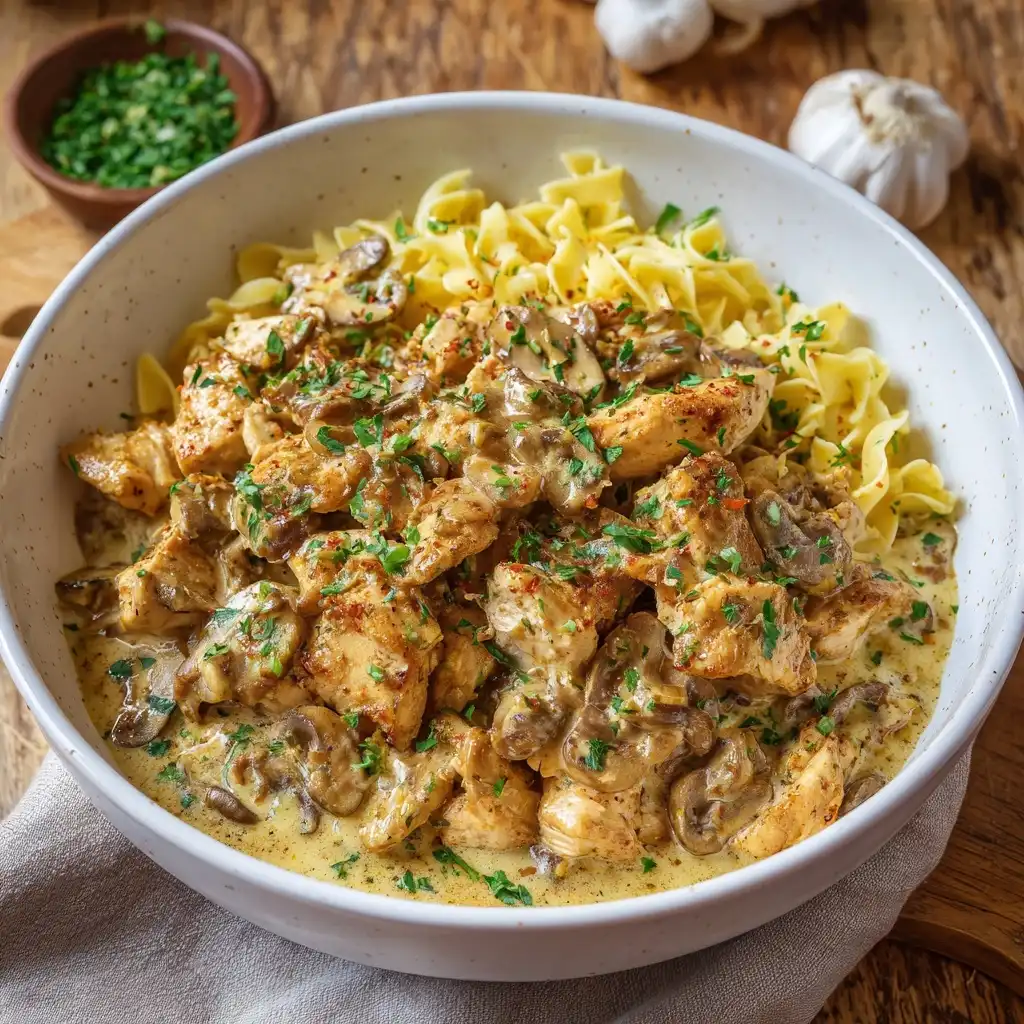
Chicken Stroganoff is a beloved, creamy, and comforting dish that bridges the elegance of classic European cuisine with the approachability of modern weeknight cooking. Though its roots lie in Russian culinary tradition—originally conceived as a luxurious beef-based preparation—this chicken adaptation emerged in mid-20th century America as a more economical, faster-cooking, and family-friendly alternative. Today, Chicken Stroganoff stands as a testament to culinary evolution: rich yet balanced, deeply savory yet subtly tangy, tender yet texturally satisfying. Whether served over buttered egg noodles, fluffy rice, or even mashed potatoes, it delivers warmth in every bite—a nostalgic hug on a plate that transcends generations and geographies.
The History
The story of Stroganoff begins in 19th-century Imperial Russia, where the affluent Stroganov family—industrialists, philanthropists, and patrons of the arts—commissioned their private chefs to craft refined dishes for aristocratic gatherings. The earliest documented version, “Beef Stroganoff,” appeared in Elena Molokhovets’ seminal 1861 cookbook A Gift to Young Housewives, calling for sautéed beef strips in a mustard-and-sour cream sauce. Over time, variations proliferated across Eastern Europe and Scandinavia, each region adding local flourishes—like paprika in Hungary or dill in Ukraine.
When Russian émigrés brought the dish to Paris and later New York in the early 1900s, it entered haute cuisine circles—but remained relatively obscure to the American public until the 1950s. Post-war prosperity, the rise of convenience foods (especially canned mushroom soup), and the popularity of mid-century “continental” cooking transformed Stroganoff into a dinner-party staple. Cookbooks like The Joy of Cooking (1951 edition) and Betty Crocker’s guides featured simplified versions, often substituting ground or sliced beef—and soon after, boneless chicken breast—for accessibility and speed. By the 1960s and ’70s, Chicken Stroganoff had firmly taken root in American home kitchens, school cafeterias, and church potlucks alike. Its enduring appeal lies not only in its adaptability but also in its quiet sophistication: a dish that feels special without demanding professional technique or rare ingredients.
Ingredients Breakdown
Every exceptional Chicken Stroganoff hinges on thoughtful ingredient selection—not just for flavor, but for texture, balance, and depth. Below is a detailed breakdown of each component’s functional role:
- Chicken Breast or Thighs: Boneless, skinless chicken breast offers lean tenderness and neutral flavor, ideal for absorbing the sauce—but can dry out if overcooked. Chicken thighs (boneless, skinless) provide superior moisture, richer umami, and forgiving cook times—making them the preferred choice for restaurant-quality results. Always slice against the grain into thin, uniform strips (¼-inch thick, 1½–2 inches long) for optimal tenderness.
- Cremini or White Button Mushrooms: Cremini (baby bella) mushrooms deliver deeper earthiness and meatier texture than white buttons, while still maintaining accessibility and affordability. Their natural glutamates enhance savoriness (umami), and their ability to brown beautifully adds visual and aromatic complexity. Avoid pre-sliced “stir-fry” blends—they often contain excess moisture and inconsistent cuts.
- Yellow Onion: A medium yellow onion provides foundational sweetness and aromatic backbone. Finely diced (not minced) ensures even cooking and integration without overpowering. Red onions are too sharp; sweet onions (Vidalia, Walla Walla) lack sufficient pungency for balance.
- Garlic: Fresh, freshly minced garlic—not jarred or powdered—is non-negotiable. It contributes volatile sulfur compounds that bloom under heat, adding brightness and depth. Add it late in the sauté process (30 seconds before removing from heat) to prevent bitterness.
- Dijon Mustard: This is the secret bridge between richness and brightness. Its sharp acidity cuts through the sauce’s creaminess, while its emulsifying properties help stabilize the sour cream mixture. Whole-grain Dijon adds subtle texture; avoid honey or spicy mustards, which distort the flavor profile.
- Beef or Chicken Stock (Low-Sodium): A high-quality, low-sodium stock forms the savory base of the sauce. Beef stock adds traditional depth—even in chicken versions—while chicken stock maintains purity of poultry flavor. Homemade stock yields unparalleled body and gelatinous mouthfeel; if using store-bought, choose brands with minimal additives (e.g., Swanson, Kitchen Basics, or Better Than Bouillon paste diluted properly).
- Sour Cream (Full-Fat, Cultured): The soul of Stroganoff. Full-fat (14–18% milkfat), cultured sour cream provides tang, lush texture, and stability. Low-fat or “light” versions separate easily and yield watery, chalky sauces. For safety and consistency, always temper sour cream by whisking in a ladleful of warm (not boiling) sauce before folding it in.
- Unsalted Butter & All-Purpose Flour: Used to build a smooth, velvety roux. Unsalted butter allows precise salt control; all-purpose flour provides reliable thickening power without grittiness. A 1:1 ratio (e.g., 2 tbsp each) creates a “blond roux” that cooks out raw flour taste while lending subtle nuttiness.
- Fresh Dill & Parsley: Added at the very end, these herbs lend aromatic freshness and visual contrast. Dill complements the sour cream’s tang; flat-leaf parsley adds grassy brightness. Dried dill lacks vibrancy and can taste medicinal—never substitute unless absolutely necessary (and even then, use only ⅓ the volume).
- Seasonings: Kosher salt enhances all flavors; freshly ground black pepper adds warmth and spice. A pinch of smoked paprika (not hot) deepens color and imparts gentle smokiness—optional but highly recommended. Avoid garlic powder, onion powder, or pre-made “Stroganoff seasoning”—they mute nuance and introduce unwanted sodium and anti-caking agents.
Step-by-Step Recipe
- Prep & Marinate (10 minutes): Slice chicken uniformly. Pat *extremely* dry with paper towels—moisture is the enemy of browning. In a bowl, combine chicken with 1 tsp kosher salt, ½ tsp black pepper, and 1 tsp smoked paprika (if using). Toss gently and set aside while prepping aromatics.
- Prep Aromatics & Fungi (5 minutes): Finely dice 1 medium yellow onion. Mince 3 garlic cloves. Wipe 8 oz cremini mushrooms clean with a damp cloth (never soak); slice ¼-inch thick. Measure 1 cup low-sodium beef or chicken stock, ½ cup full-fat sour cream, 1 tbsp Dijon mustard, 2 tbsp unsalted butter, 2 tbsp all-purpose flour, 2 tbsp fresh dill, 2 tbsp fresh parsley, and juice of ½ lemon.
- Sear Chicken (4–5 minutes): Heat 1 tbsp neutral oil (avocado or grapeseed) in a large, heavy-bottomed skillet or Dutch oven over medium-high heat until shimmering. Add chicken in a single layer—do not crowd. Sear undisturbed for 2 minutes per side until golden-brown and just cooked through (165°F internal temp). Transfer to a clean plate, cover loosely with foil, and rest.
- Sauté Aromatics (3 minutes): Reduce heat to medium. Add 1 tbsp butter to same pan. Once melted and foaming subsides, add onions. Sauté 2 minutes until softened and translucent. Add mushrooms; cook 4–5 minutes, stirring occasionally, until deeply browned and their liquid has fully evaporated. Push mixture to edges of pan.
- Build Roux & Deglaze (2 minutes): Add remaining 1 tbsp butter to center of pan. Once melted, sprinkle in flour. Whisk constantly for 1 minute until pale golden and fragrant—no raw flour smell. Immediately pour in stock while whisking vigorously to dissolve lumps and scrape up browned bits (fond) from the pan bottom.
- Simmer Sauce (5–6 minutes): Bring mixture to a gentle simmer. Reduce heat to low-medium and cook, whisking every 60 seconds, until thickened to a light gravy consistency (coats the back of a spoon). This should take 5–6 minutes. Stir in Dijon mustard and a squeeze of lemon juice (½ tsp)—this brightens the base.
- Temper & Incorporate Sour Cream (2 minutes): Remove pan from heat. Ladle ¼ cup of hot sauce into a heatproof bowl containing sour cream. Whisk vigorously until smooth and cooled slightly. Repeat with another ¼ cup. Then slowly pour tempered mixture back into pan, whisking constantly. Do *not* return to direct heat—residual warmth is sufficient.
- Combine & Finish (2 minutes): Return rested chicken (with any accumulated juices) to pan. Gently fold to coat. Simmer *very gently* for 1–2 minutes—just until heated through. Do not boil, or sour cream may curdle. Taste and adjust: add salt in ¼-tsp increments, more lemon for brightness, or a splash of stock if too thick. Stir in fresh dill and parsley just before serving.
Tips
- Dry Chicken is Non-Negotiable: Excess surface moisture causes steaming instead of searing—resulting in gray, rubbery chicken. Pat *thoroughly*, even between slices, with multiple paper towels.
- Brown Mushrooms in Batches: Overcrowding drops pan temperature and releases water instead of promoting caramelization. Cook in two batches if needed—clean, hot pan each time.
- Roux Consistency Matters: Undercooked roux tastes raw and starchy; overcooked turns dark and bitter. Aim for a pale blond color with a warm, toasty aroma—about 60–90 seconds of constant whisking.
- Tempering Prevents Curdling: Never add cold sour cream directly to hot liquid. Temper in stages, cooling the dairy gradually to match the sauce’s temperature—this preserves emulsion and creaminess.
- Rest Chicken Before Reintegrating: Resting allows juices to redistribute, ensuring moist bites when returned to the sauce. Skipping this leads to dry chicken leaching water into your sauce.
- Acid Is Your Friend: That half-teaspoon of lemon juice added to the simmering sauce makes an outsized difference—it lifts heaviness, balances fat, and harmonizes dairy and meat notes. Don’t omit it.
- Low-and-Slow Final Simmer: Once sour cream is added, keep heat *off* or on the lowest possible setting. Gentle residual warmth is enough. Boiling = broken sauce.
- Use a Wide, Heavy Pan: Ensures even heat distribution, prevents scorching, and maximizes surface area for browning—critical for fond development.
- Taste Twice—Before and After Dairy: Season the base sauce before adding sour cream, then re-evaluate afterward. Sour cream mutes salt perception, so final adjustment is essential.
- Make Ahead Smartly: Prepare components separately up to 2 days ahead—chicken marinated, mushrooms sliced, aromatics chopped—but combine only at serving time. Fully assembled Stroganoff doesn’t reheat well (curdling risk); instead, gently warm sauce separately and add fresh chicken or quickly sear pre-cooked strips.
Variations and Customizations
Chicken Stroganoff is inherently versatile—its structure welcomes global influences, dietary adaptations, and seasonal creativity without compromising its soul. Here’s how to make it your own:
- Global Twists: Japanese-Inspired: Swap Dijon for 1 tbsp mirin + 1 tsp tamari; finish with toasted sesame oil and scallions. Mediterranean: Use lemon zest, oregano, and crumbled feta instead of dill; stir in roasted cherry tomatoes at the end. Smoky Tex-Mex: Add chipotle in adobo (minced, ½ tsp), cumin, and top with avocado and cilantro.
- Dietary Adaptations: Gluten-Free: Replace flour with 1 tbsp cornstarch or arrowroot slurry (mix with cold stock first). Dairy-Free: Use full-fat coconut milk + 1 tbsp nutritional yeast + 1 tsp apple cider vinegar for tang; omit sour cream and finish with cashew cream. Keto/Low-Carb: Serve over cauliflower rice or shirataki noodles; increase healthy fats with extra butter or a swirl of truffle oil.
- Protein Swaps: Try thinly sliced turkey breast (brined first for moisture), pork tenderloin medallions, or even firm tofu (pressed, marinated, pan-seared). For pescatarians, replace chicken with seared scallops—add in last 60 seconds.
- Vegetable Boosters: Fold in 1 cup baby spinach (wilted at the end), roasted red peppers, caramelized fennel, or blanched asparagus tips. For heartiness, add ½ cup cooked lentils or pearl barley during sauce simmer.
- Texture & Umami Enhancers: Stir in 1 tsp fish sauce (adds stealthy depth), 1 tbsp tomato paste (sautéed with onions), or 2 rehydrated dried porcini mushrooms (finely chopped, added with creminis). Top with crispy fried shallots or capers for crunch.
- Herb & Spice Evolution: Replace dill with tarragon (classic French pairing), chervil, or lemon thyme. Add warmth with a pinch of ground cardamom or star anise (remove before serving). For heat, incorporate Aleppo pepper or a few drops of chili crisp.
- Wine Integration: Deglaze with ¼ cup dry white wine (Sauvignon Blanc or Pinot Grigio) *before* adding stock—simmer 2 minutes to burn off alcohol. Adds aromatic lift and acidity that complements sour cream beautifully.
- Creaminess Alternatives: Substitute part sour cream with crème fraîche (higher fat, more stable), Greek yogurt (full-fat, well-tempered), or mascarpone thinned with stock (luxurious, less tangy).
- One-Pot / Sheet Pan Options: For hands-off cooking: toss marinated chicken and mushrooms with oil, herbs, and spices; roast at 425°F for 20–22 minutes. Meanwhile, prepare sauce stovetop, then combine. Or use an Instant Pot: sauté mode for browning, then pressure cook sauce base for 5 minutes before finishing with dairy.
- Breakfast Reinvention: Make a smaller batch and serve over toasted sourdough or potato latkes—top with a fried egg and extra dill for a decadent brunch.
Health Considerations and Nutritional Value
Chicken Stroganoff, when prepared mindfully, can be both deeply satisfying and nutritionally balanced—far from the “guilty pleasure” label it sometimes carries. A standard 1-cup serving (without noodles) contains approximately 380–420 calories, 28–32g protein, 22–26g fat (mostly unsaturated from butter and chicken thigh fat), and 8–10g carbohydrates—making it naturally moderate in carbs and rich in satiating protein and healthy fats.
Nutrient Highlights:
- High-Quality Protein: Chicken provides all nine essential amino acids, supporting muscle maintenance, immune function, and metabolic health. Thighs offer more iron and zinc than breast—key for energy and cellular repair.
- Probiotic Potential: Full-fat, cultured sour cream contains live bacterial strains (Lactobacillus, Bifidobacterium) that may support gut microbiome diversity—especially when paired with fiber-rich sides like roasted vegetables or whole-grain noodles.
- Antioxidant-Rich Vegetables: Onions and mushrooms supply quercetin (anti-inflammatory flavonoid), selenium (immune-supportive mineral), and ergothioneine (a unique antioxidant found almost exclusively in fungi).
- Healthy Fats: Butter contributes butyrate (a short-chain fatty acid linked to gut health and reduced inflammation) and fat-soluble vitamins A, D, E, and K2—especially when sourced from grass-fed cows.
Considerations & Optimizations:
- Sodium Control: Store-bought stocks and mustards can be high in sodium. Opt for low-sodium or no-salt-added versions, and rely on herbs, citrus, and umami-rich mushrooms to build flavor instead of excess salt.
- Saturated Fat Balance: While saturated fat from butter and poultry skin isn’t inherently harmful in moderation, those managing cholesterol may prefer skinless chicken breast and reduce butter to 1½ tbsp total—compensating with extra sautéed mushrooms for body.
- Lactose Sensitivity: Sour cream contains minimal lactose (<1g per 2 tbsp) due to bacterial fermentation—many lactose-intolerant individuals tolerate it well. For strict avoidance, use lactose-free sour cream or coconut-based alternatives.
- Added Sugar Awareness: Some commercial Dijon mustards contain sugar or glucose syrup. Check labels—or make your own with mustard seeds, vinegar, water, and salt.
- Glycemic Impact: Naturally low-glycemic, especially without refined carbohydrate sides. Pair with non-starchy vegetables (green beans, broccoli rabe, zucchini noodles) for blood-sugar stability.
- Pregnancy & Food Safety: Ensure chicken reaches 165°F internally and sour cream is pasteurized. Avoid raw garlic or unpasteurized dairy if immunocompromised.
Ultimately, Chicken Stroganoff shines as a nutrient-dense, whole-foods-forward meal—especially when built around quality ingredients, vibrant produce, and mindful preparation techniques.
Ingredients
- 1½ lbs boneless, skinless chicken thighs (or breasts), sliced into ¼-inch thick strips
- 1 tsp kosher salt, plus more to taste
- ½ tsp freshly ground black pepper
- 1 tsp smoked paprika (optional but recommended)
- 1 tbsp neutral high-heat oil (avocado, grapeseed, or refined coconut)
- 8 oz cremini mushrooms, wiped and sliced ¼-inch thick
- 1 medium yellow onion, finely diced
- 3 garlic cloves, finely minced
- 2 tbsp unsalted butter, divided
- 2 tbsp all-purpose flour (or gluten-free 1:1 blend)
- 1 cup low-sodium beef or chicken stock
- 1 tbsp Dijon mustard (stone-ground preferred)
- ½ cup full-fat, cultured sour cream
- ½ tsp fresh lemon juice
- 2 tbsp fresh dill, finely chopped
- 2 tbsp fresh flat-leaf parsley, finely chopped
Directions
- Pat chicken strips *very* dry with paper towels. In a bowl, toss with 1 tsp salt, ½ tsp pepper, and smoked paprika. Set aside.
- Heat oil in a large heavy-bottomed skillet or Dutch oven over medium-high heat until shimmering. Add chicken in a single layer; sear 2 minutes per side until golden and cooked through (165°F). Transfer to a plate, cover loosely with foil, and rest.
- Reduce heat to medium. Add 1 tbsp butter. Once melted, add onion; sauté 2 minutes until soft. Add mushrooms; cook 4–5 minutes, stirring occasionally, until deeply browned and dry.
- Push mushrooms/onion to edges. Add remaining 1 tbsp butter to center. Once foaming subsides, whisk in flour. Cook 1 minute until fragrant and pale gold.
- Gradually whisk in stock, scraping up all browned bits. Bring to a gentle simmer. Cook 5–6 minutes, whisking often, until thickened to light gravy consistency.
- Remove from heat. Whisk in Dijon and lemon juice. Ladle ¼ cup hot sauce into sour cream; whisk smooth. Repeat. Pour tempered mixture back into pan, whisking constantly.
- Add rested chicken (and juices) to sauce. Gently fold to coat. Warm gently 1–2 minutes—do not boil.
- Taste and adjust seasoning. Stir in dill and parsley. Serve immediately over your choice of accompaniment.
FAQ
- Can I use frozen chicken?
- Yes—but thaw completely in the refrigerator overnight and pat *extremely* dry before slicing and searing. Never cook frozen chicken directly; uneven thawing risks foodborne illness and poor browning.
- Why does my sauce break or curdle?
- Most commonly due to overheating after adding sour cream, adding cold sour cream to boiling liquid, or using low-fat/diet versions with unstable emulsifiers. Always temper, remove from heat before adding dairy, and warm gently—not boil.
- Can I make this ahead of time?
- You can prep components up to 2 days ahead (chicken marinated, mushrooms sliced, stock measured), but do *not* combine sauce and chicken until serving. Fully assembled Stroganoff separates upon reheating. Instead, refrigerate sauce and chicken separately, then gently reheat sauce and fold in freshly seared or warmed chicken.
- What’s the best side dish for Chicken Stroganoff?
- Egg noodles are classic—but consider whole-wheat or gluten-free pasta, buttered wide rice noodles, creamy mashed potatoes, roasted fingerling potatoes, or even a simple arugula salad with lemon vinaigrette for contrast.
- Can I freeze Chicken Stroganoff?
- Freezing is not recommended due to sour cream separation and textural degradation of chicken. However, you *can* freeze the base sauce (without dairy or chicken) for up to 3 months. Thaw overnight, reheat gently, then add fresh chicken and sour cream.
- Is Chicken Stroganoff gluten-free?
- Not by default—the flour roux contains gluten. To make it gluten-free, substitute an equal amount of cornstarch or arrowroot powder mixed with 2 tbsp cold stock to form a slurry, added after deglazing and brought to a simmer until thickened.
- My sauce is too thick/thin—how do I fix it?
- Too thick? Whisk in warm stock, 1 tbsp at a time, until desired consistency. Too thin? Simmer uncovered 2–3 minutes longer to reduce—or make a quick slurry (1 tsp cornstarch + 1 tbsp cold water), whisk in, and simmer 1 minute.
- Can I use canned mushrooms?
- Avoid them. Canned mushrooms are waterlogged, lack flavor, and turn rubbery when heated. Fresh mushrooms are inexpensive, widely available, and essential for proper texture and umami.
- What can I use instead of sour cream?
- Full-fat Greek yogurt (well-tempered), crème fraîche, or mascarpone thinned with stock work well. Avoid low-fat yogurts or “sour cream substitutes”—they lack fat content needed for stability and richness.
- How do I get restaurant-quality browning on the chicken?
- Key factors: ultra-dry surface, hot pan (shimmering oil, not smoking), no overcrowding, and patience—let it sear untouched for full 2 minutes before flipping. A cast-iron or stainless steel pan performs best for consistent browning.
Summary
Chicken Stroganoff is a timeless, adaptable, and deeply comforting dish rooted in Russian culinary heritage but perfected through generations of home cooks seeking balance, richness, and ease. With its golden-brown chicken, earthy mushrooms, velvety sour cream–mustard sauce, and aromatic herb finish, it transforms humble ingredients into something extraordinary—every single time.
By mastering the fundamentals—proper searing, mindful thickening, careful tempering, and intentional seasoning—you don’t just make dinner; you create a ritual of warmth, nourishment, and culinary joy that resonates across cultures, diets, and decades.