
Introduction
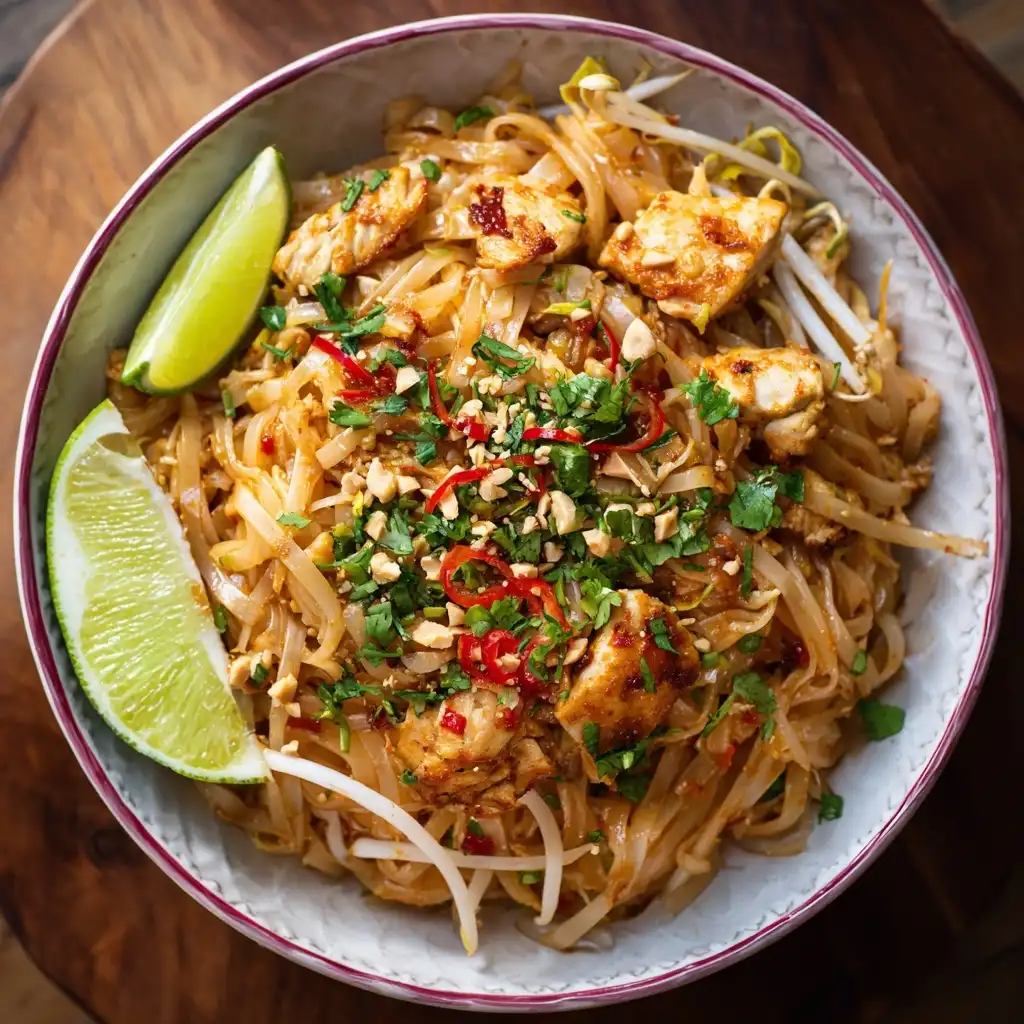
Chicken Pad Thai is the quintessential Thai street food dish that has captivated palates worldwide — a harmonious symphony of sweet, sour, salty, and umami flavors wrapped around tender chicken, chewy rice noodles, crisp vegetables, and garnished with aromatic herbs and crunchy toppings. Unlike its Westernized counterparts often laden with excessive oil or sugar, authentic Chicken Pad Thai is a masterclass in balance: tangy tamarind paste provides bright acidity, palm sugar lends deep caramelized sweetness, fish sauce delivers savory depth, and lime juice adds a refreshing finish. Its vibrant colors, textural contrasts (soft noodles, springy chicken, crunchy peanuts, and fresh bean sprouts), and bold yet refined flavor profile make it not just a meal, but an experience — one that tells the story of Thailand’s culinary ingenuity, resourcefulness, and reverence for harmony in every bite.
The History
While today Pad Thai is synonymous with Thai national identity — even featured on tourism posters and taught in cultural diplomacy programs — its origins are surprisingly modern and politically charged. The dish emerged in the 1930s and 1940s under the leadership of Prime Minister Plaek Phibunsongkhram, who launched a nation-building campaign to modernize and unify Thailand (then Siam). As part of this initiative, the government actively promoted rice noodles — made from locally abundant rice — as a patriotic alternative to imported wheat noodles, while simultaneously encouraging citizens to eat more nutritious, affordable protein like chicken, tofu, and eggs. Tamarind, palm sugar, and fish sauce were already staples in Thai pantries, but their combination into this specific stir-fried format was codified and popularized through state-sponsored cooking demonstrations, cookbooks, and street vendor training programs. Interestingly, early versions often used preserved shrimp or dried shrimp rather than chicken, reflecting regional availability; chicken became dominant later as poultry farming expanded across Central Thailand. By the 1950s, Pad Thai had become a symbol of Thai resilience and culinary sovereignty — so much so that UNESCO included Thai cuisine (with Pad Thai as its flagship dish) in its Intangible Cultural Heritage tentative list. Its global rise began in earnest in the 1980s and 1990s, accelerated by Thai immigration, international tourism, and the proliferation of Thai restaurants abroad — though many adaptations outside Thailand significantly diverge from the original’s delicate equilibrium.
Ingredients Breakdown
Every ingredient in Chicken Pad Thai plays a deliberate, non-negotiable role — no component is merely decorative or optional in the pursuit of authenticity. Let’s explore them in detail:
- Rice Noodles (Sen Lek): Flat, medium-width (about 1/4-inch) dried rice stick noodles are essential. Their starch content must be carefully managed — soaked just until pliable but still firm (al dente), as over-soaking leads to mushiness during high-heat stir-frying. Brands like Three Ladies, Love Brand, or Lotus Roots are preferred for their clean texture and neutral flavor. Fresh rice noodles can be used but require extra care to avoid clumping and overcooking.
- Chicken Breast or Thigh: Boneless, skinless chicken thigh is highly recommended for superior tenderness, juiciness, and flavor retention under high heat. Breast works but risks drying out unless sliced very thinly against the grain and marinated properly. Chicken should be cut into uniform ¼-inch strips to ensure even cooking and integration with noodles.
- Tamarind Paste: The soul of Pad Thai. Authentic tamarind paste — made from pressed tamarind pulp, water, and sometimes a touch of salt — provides complex sourness with fruity, earthy undertones. Avoid “tamarind concentrate” or “tamarind sauce” with added sugar, preservatives, or artificial flavors. Look for jars labeled “100% tamarind paste” or prepare your own by soaking tamarind pulp in warm water and straining.
- Fish Sauce (Nam Pla): A fermented condiment made from anchovies and salt, aged for months to develop rich umami and subtle funk. Premium brands like Red Boat (40°N), Squid, or Tiparos offer cleaner, less harsh profiles. Fish sauce contributes saltiness, depth, and the unmistakable savory backbone — never substitute with soy sauce, which lacks nuance and introduces unwanted color and wheat notes.
- Palm Sugar: Unrefined, caramel-colored sugar made from the sap of coconut or palmyra palm trees. It imparts a warm, molasses-like sweetness with floral and woody notes that perfectly counterbalances tamarind’s acidity. Granulated palm sugar is ideal; avoid brown sugar (too sharp) or white sugar (one-dimensional). If unavailable, a blend of light brown sugar + a pinch of molasses may approximate it — but true palm sugar remains irreplaceable for depth.
- Dried Shrimp: Tiny, pungent, sun-dried shrimp add an intense oceanic savoriness and textural pop. They’re toasted lightly before use to awaken their aroma. Not optional in traditional recipes — they’re what gives Pad Thai its signature “funky” complexity. Vegetarian versions substitute fermented soybean paste or toasted nori flakes.
- Garlic & Shallots: Fresh, finely chopped garlic and small purple shallots form the aromatic base. Shallots — milder and sweeter than onions — are traditional and contribute a delicate allium fragrance without overwhelming bitterness.
- Eggs: Added at the end of stir-frying, eggs bind the dish together, enriching mouthfeel and adding subtle richness. They should be softly scrambled into ribbons, not fully cooked into curds.
- Bean Sprouts (Mung Bean): Crunchy, juicy, and slightly sweet — added raw at the very end to preserve their crispness and freshness. They provide vital textural contrast and a cooling counterpoint to the warm, savory noodles.
- Chives & Garlic Chives: Often confused, but distinct: regular chives lend mild onion notes, while garlic chives (with flat, wider leaves) offer a more robust garlicky aroma. Both are traditionally used — chives for garnish, garlic chives stir-fried briefly for fragrance.
- Roasted Peanuts: Unsalted, coarsely chopped roasted peanuts (not peanut butter or honey-roasted) supply nutty richness and crunch. They’re sprinkled generously on top just before serving — never cooked into the dish, as heat softens their texture.
- Lime Wedges: Served on the side for diners to adjust acidity to taste. Freshly squeezed lime juice adds brightness that cuts through richness and lifts all other flavors.
- Chili Flakes or Fresh Bird’s Eye Chilies (Prik Kee Noo): For heat — optional but traditional. Dried chili flakes (prik bon) offer smoky heat; fresh chilies deliver sharp, floral fire. Always serve on the side to respect individual spice preferences.
Step-by-Step Recipe
This method prioritizes authenticity, timing precision, and wok hei (the prized “breath of the wok” — that elusive smoky aroma only achieved with high-heat, rapid stir-frying). It assumes use of a carbon steel wok and gas stove — though a large, heavy-bottomed skillet or Dutch oven works with adjustments.
- Prep the Noodles: Place 8 oz (225g) dried rice noodles in a large bowl. Cover with room-temperature filtered water. Soak for 45–60 minutes, gently separating strands halfway. They should be flexible but retain a slight core — like al dente pasta. Drain thoroughly in a colander and rinse under cold water to remove excess surface starch. Toss with 1 tsp neutral oil (e.g., peanut or canola) to prevent sticking. Set aside.
- Prepare the Sauce: In a small bowl, combine 3 tbsp tamarind paste, 3 tbsp palm sugar (finely grated or pounded), 3 tbsp fish sauce, and 1 tsp freshly ground white pepper. Whisk vigorously until sugar fully dissolves — no graininess should remain. Taste and adjust: it should be aggressively tart-sweet-salty — remember, noodles will dilute it. Set aside.
- Marinate the Chicken: In another bowl, mix 12 oz (340g) thinly sliced chicken thigh with 1 tbsp fish sauce, 1 tsp cornstarch, and 1 tsp neutral oil. Massage well. Marinate 15 minutes at room temperature (not refrigerated — cold meat steams instead of sears).
- Toast & Prep Aromatics: Toast 2 tbsp dried shrimp in a dry wok over medium-low heat for 1–2 minutes until fragrant and slightly puffed. Cool, then roughly chop. Mince 3 cloves garlic and 4 small shallots. Thinly slice 2 green onions (reserve greens), ¼ cup garlic chives, and 1 cup fresh mung bean sprouts. Have ¼ cup roasted unsalted peanuts ready.
- Heat the Wok: Place wok over highest possible heat for 2–3 minutes until smoking hot. Add 2 tbsp neutral oil — swirl to coat. Oil should shimmer and thin instantly.
- Stir-Fry Aromatics: Add minced garlic and shallots. Stir-fry 15–20 seconds until fragrant but not browned. Immediately add marinated chicken in a single layer. Let sear untouched for 20 seconds, then stir-fry rapidly for 1½–2 minutes until just cooked through and lightly golden at edges. Remove chicken to a clean plate — do not wash wok.
- Build Flavor Base: Return wok to high heat. Add 1 tbsp oil if needed. Toss in toasted dried shrimp and stir-fry 10 seconds. Push to one side; crack 2 large eggs into the center. Let set 5 seconds, then scramble gently with spatula until just-coagulated but still moist (not dry).
- Combine Noodles & Sauce: Add drained noodles to wok. Using two spatulas or chopsticks, gently lift and toss noodles with egg mixture for 30 seconds to coat. Pour sauce evenly over noodles. Continue tossing and flipping — never pressing — for 1 minute. Noodles will absorb sauce, soften slightly, and begin to glisten.
- Incorporate Chicken & Veggies: Return chicken to wok. Add garlic chives and half the bean sprouts. Toss continuously for 45–60 seconds until everything is heated through and noodles reach perfect “just-right” texture — plump, slippery, and cohesive, not sticky or brittle.
- Final Garnish & Serve: Transfer to serving plates. Top generously with remaining bean sprouts, roasted peanuts, green onion greens, lime wedges, and chili flakes. Serve immediately — Pad Thai waits for no one. Optimal eating window: within 90 seconds of plating.
Tips
- Wok Temperature is Non-Negotiable: Underheated woks cause steaming, not searing — leading to soggy noodles and bland flavor. Use an infrared thermometer if unsure: target 450–500°F (230–260°C) at the wok’s center before adding oil.
- Prep Everything Before You Start: Pad Thai is a “stir-fry sprint” — once the wok heats, there’s no time to chop or measure. Mise en place (everything in its place) is mandatory: noodles drained and oiled, sauce mixed, proteins marinated, aromatics minced, garnishes portioned.
- Noodle Soaking Time Varies: Humidity, water temperature, and noodle brand affect soak time. Test every 5 minutes after 30 minutes. Ideal texture: bendable without snapping, with a faint resistance when bitten — like uncooked spaghetti.
- Use Two Utensils: A wok spatula (chuan) and long chopsticks give superior control for lifting, separating, and tossing noodles without breaking them — far better than one spoon or fork.
- Don’t Overcrowd the Wok: Cook in batches if doubling the recipe. Overloading drops temperature drastically, causing stewing instead of stir-frying.
- Resist the Urge to Stir Constantly: Let ingredients sear and develop fond (those delicious browned bits) — especially chicken and eggs — before tossing. That fond dissolves into the sauce, adding profound depth.
- Acidity Last, Always: Never add lime juice to the wok — its volatile compounds break down under heat, losing brightness. Squeeze fresh lime over the plated dish just before eating.
- Rest the Sauce: Let sauce sit for 10 minutes after mixing — this allows flavors to meld and sugar to fully integrate, preventing graininess during cooking.
- Chop Peanuts Coarsely: Fine peanut dust disappears into the dish; chunky pieces provide audible crunch and visual appeal.
- Reheat with Caution: Leftover Pad Thai becomes gummy. If reheating, steam gently or microwave with 1 tsp water covered, then refresh with lime, peanuts, and fresh sprouts.
Variations and Customizations
While respecting its roots, Chicken Pad Thai gracefully adapts to regional tastes, dietary needs, and seasonal ingredients — always maintaining its foundational sweet-sour-salty-umami balance:
- Regional Thai Variations: In Bangkok, expect extra tamarind and dried shrimp for boldness; in Chiang Mai, a hint of fermented soybean paste (tua nao) adds earthiness; Southern Thai versions sometimes include kaffir lime leaves or turmeric for color and aroma.
- Protein Swaps: Shrimp Pad Thai (Pad Thai Goong) uses jumbo shrimp, deveined and tossed in at the last 30 seconds. Tofu Pad Thai (Pad Thai Tao Hoo) features pan-fried firm tofu cubes for vegetarians — marinated in soy sauce, sesame oil, and ginger. Duck or pork versions exist but are less common internationally.
- Vegetable Enhancements: While bean sprouts, garlic chives, and shallots are standard, home cooks often add shredded carrots (for sweetness and color), blanched broccoli florets (for crunch and nutrition), or baby corn (for texture). Avoid watery veggies like zucchini or tomatoes — they release moisture and ruin texture.
- Gluten-Free Adaptation: Naturally gluten-free if using certified GF fish sauce (many contain wheat) and tamari-based tamarind alternatives (though true tamarind is GF). Double-check palm sugar for anti-caking agents.
- Low-Carb/Keto Version: Replace rice noodles with shirataki noodles (rinse thoroughly and dry-fry to remove odor) or spiralized zucchini (add at the very end, uncooked). Increase healthy fats: add avocado slices and extra peanuts; reduce palm sugar to 1 tsp and supplement with erythritol or monk fruit — but note flavor shift.
- Spice-Lover’s Edition: Infuse oil with 2–3 crushed bird’s eye chilies before stir-frying aromatics. Stir in 1 tsp chili-garlic paste with the sauce. Garnish with pickled chilies or chili vinegar.
- Gourmet Upscale Twist: Use free-range chicken confit instead of stir-fried breast/thigh; finish with black garlic oil and candied ginger; garnish with micro cilantro and edible orchids. Serve with house-made tamarind soda.
- Quick Weeknight Shortcut: Use pre-cooked rotisserie chicken (shredded), 5-minute microwave-soaked noodles, and a simplified sauce (2 tbsp tamarind concentrate + 2 tbsp fish sauce + 2 tbsp palm sugar). Accept minor compromises for speed — but never skip lime, peanuts, or fresh sprouts.
Health Considerations and Nutritional Value
A single serving (approx. 1.5 cups, 450g) of traditionally prepared Chicken Pad Thai contains roughly:
- Calories: 520–630 kcal (varies with oil and peanut quantity)
- Protein: 28–34g (excellent source from chicken, eggs, and dried shrimp)
- Carbohydrates: 72–85g (primarily complex carbs from rice noodles; fiber ~2g)
- Fat: 14–19g (mostly unsaturated from peanut and cooking oils; saturated fat ~3g)
- Sodium: 950–1,300mg (largely from fish sauce — moderate intake advised for hypertension)
- Vitamins & Minerals: Rich in B vitamins (B6, niacin), selenium (from chicken), iron (dried shrimp), vitamin C (lime), and antioxidants (garlic, shallots, chives)
Health Highlights:
- High-Quality Protein Combo: Chicken provides complete amino acids; dried shrimp adds zinc and iodine; eggs contribute choline for brain health — making it a satiating, muscle-supportive meal.
- Functional Ingredients: Garlic and shallots contain allicin (anti-inflammatory, cardiovascular support); tamarind is rich in tartaric acid (antioxidant) and magnesium; lime juice boosts collagen synthesis and iron absorption.
- Low in Added Sugars (When Authentic): Palm sugar has a lower glycemic index (~35) than white sugar (~65) and contains polyphenols — though portion control remains key for diabetics.
- Considerations: High sodium warrants attention for those on low-salt diets — reduce fish sauce by 1 tbsp and compensate with extra lime and tamarind. Restaurant versions often contain 2–3x more oil and sugar; homemade allows full control. Gluten-sensitive individuals must verify fish sauce purity. Peanuts pose allergy risks — sunflower seed “peanuts” work as safe substitutes.
- Balanced Meal Strategy: Pair with a side of papaya salad (Som Tum) for extra fiber and vitamin A, or steamed bok choy for volume and micronutrients — turning Pad Thai into a nutritionally comprehensive plate.
Ingredients
- 8 oz (225g) dried flat rice noodles (sen lek / rice stick noodles)
- 12 oz (340g) boneless, skinless chicken thighs, sliced thinly against the grain
- 3 tbsp pure tamarind paste (not concentrate)
- 3 tbsp palm sugar, finely grated
- 3 tbsp premium fish sauce (nam pla), plus extra for marinating
- 1 tsp freshly ground white pepper
- 2 large eggs
- 2 tbsp neutral oil (peanut, canola, or rice bran), divided
- 3 cloves garlic, finely minced
- 4 small purple shallots, finely minced
- 2 tbsp dried shrimp, toasted and coarsely chopped
- ¼ cup garlic chives, cut into 1-inch pieces
- 1 cup fresh mung bean sprouts, rinsed and drained
- 2 green onions, thinly sliced (whites and greens separated)
- ¼ cup unsalted roasted peanuts, coarsely chopped
- 2 limes, cut into wedges
- Red chili flakes or fresh bird’s eye chilies, for serving
Optional marinade for chicken: 1 tbsp fish sauce, 1 tsp cornstarch, 1 tsp neutral oil
Directions
- Soak rice noodles in cool water for 45–60 minutes until flexible but still slightly firm. Drain thoroughly, rinse with cold water, and toss with 1 tsp neutral oil. Set aside.
- In a small bowl, whisk together tamarind paste, palm sugar, 3 tbsp fish sauce, and white pepper until sugar dissolves completely. Set sauce aside.
- In another bowl, combine chicken with optional marinade ingredients. Mix well and let sit 15 minutes at room temperature.
- Toast dried shrimp in a dry wok over medium-low heat for 1–2 minutes until fragrant and puffed. Cool, then chop coarsely.
- Heat wok over highest heat until smoking. Add 1½ tbsp oil and swirl. Add garlic and shallots; stir-fry 15 seconds until fragrant.
- Add marinated chicken in a single layer. Sear 20 seconds untouched, then stir-fry 1½–2 minutes until cooked. Transfer to a plate; wipe wok clean if needed.
- Return wok to high heat. Add remaining ½ tbsp oil. Add toasted dried shrimp; stir-fry 10 seconds. Push to side; add eggs to center. Scramble gently until just set but still moist.
- Add soaked noodles. Toss with egg mixture 30 seconds. Pour sauce evenly over noodles. Toss and flip continuously for 1 minute until noodles absorb sauce and glisten.
- Return chicken to wok. Add garlic chives, green onion whites, and half the bean sprouts. Toss 45–60 seconds until heated through and noodles reach ideal texture.
- Plate immediately. Top with remaining bean sprouts, green onion greens, roasted peanuts, lime wedges, and chili flakes. Serve with extra lime and fish sauce on the side.
FAQ
- Can I use spaghetti or other noodles instead of rice noodles?
- No — rice noodles are fundamental. Wheat-based noodles (like spaghetti) lack the neutral flavor, chewy-yet-slippery texture, and starch behavior critical for absorbing the sauce without becoming gluey. Substituting changes the dish entirely. If rice noodles are unavailable, look for “rice vermicelli” (thinner) or “rice sticks” — adjust soaking time accordingly.
- Why does my Pad Thai turn out sticky or clumpy?
- Three main causes: (1) Over-soaking noodles — they release too much starch; (2) Adding noodles to a wok that’s not hot enough — they steam instead of sear and clump; (3) Pressing or stirring too forcefully — breaks noodles and releases starch. Solution: Perfect soak time, blazing-hot wok, gentle tossing with two utensils.
- Is Pad Thai traditionally spicy?
- No — heat is entirely optional and served on the side. Authentic Pad Thai is about balance, not burn. The dish’s “funk” comes from dried shrimp and fish sauce, not chilies. Many Thais eat it mild, adjusting heat per bite with chili flakes or fresh chilies.
- Can I make Pad Thai ahead of time?
- It’s best eaten immediately — noodles continue to absorb moisture and soften. However, you can prep components up to 1 day ahead: soak and oil noodles (store covered in fridge), marinate chicken, make sauce, toast shrimp, chop aromatics. Assemble and stir-fry within 30 minutes of serving.
- What’s the difference between Pad Thai and Drunken Noodles (Pad Kee Mao)?
- Pad Thai is sweet-sour-salty-umami focused, with tamarind, palm sugar, and dried shrimp. Pad Kee Mao is spicy, herbaceous, and savory — flavored with Thai basil, chilies, soy sauce, and oyster sauce. Texture-wise, Pad Kee Mao uses wider, chewier noodles and features more aggressive wok hei.
- Can I freeze leftover Pad Thai?
- Not recommended. Freezing makes rice noodles extremely brittle and gummy upon thawing/reheating. The texture irreversibly degrades. Better to refrigerate (up to 2 days) and refresh with lime, peanuts, and raw sprouts.
- Why does restaurant Pad Thai taste different from mine?
- Most restaurants use pre-made sauce mixes (often high in MSG, sugar, and preservatives), excessive oil for sheen, and lower-grade tamarind or artificial souring agents (vinegar). They also frequently overcook noodles for consistency across orders. Homemade lets you control quality, freshness, and balance.
- Is Pad Thai healthy for weight loss?
- Yes — when prepared mindfully at home. It’s high in protein and moderately low in unhealthy fats. Portion control (1.5 cups max), limiting oil to 2 tbsp, skipping extra peanuts, and loading up on sprouts and chives makes it a satisfying, nutrient-dense option. Avoid takeout versions, which average 900+ calories and 30g+ fat per serving.
Summary
Chicken Pad Thai is far more than a beloved Thai export — it’s a meticulously balanced, historically significant, and deeply flavorful stir-fry where every ingredient serves a precise sensory and functional purpose, from the tangy depth of tamarind to the umami punch of fish sauce and the textural poetry of crisp sprouts and creamy peanuts. Mastering it requires respect for tradition, precision in technique, and appreciation for the harmony that defines Thai cuisine at its finest.
Whether enjoyed as a quick weeknight dinner, a celebratory feast, or a gateway into Southeast Asian cooking, authentic Chicken Pad Thai rewards patience with unforgettable taste, aroma, and satisfaction — a true testament to how simplicity, when guided by wisdom and craft, achieves extraordinary results.