
Introduction
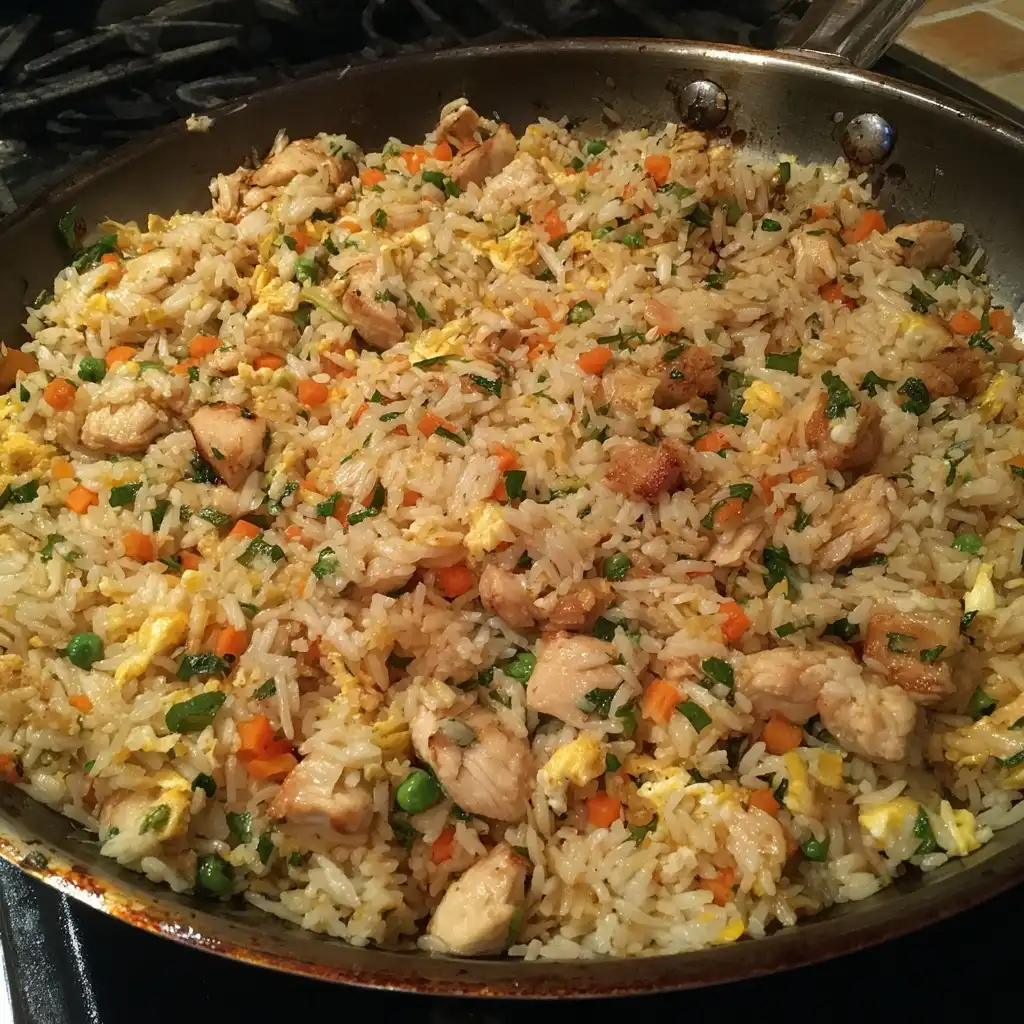
Chicken Fried Rice is a beloved staple of American-Chinese cuisine and a quintessential weeknight dinner that bridges comfort, convenience, and culinary creativity. Far more than just a pantry-clearing dish, it’s a masterclass in texture, temperature, and timing—where tender bites of seasoned chicken, golden-edged rice grains, crisp vegetables, and savory umami unite in perfect harmony. Whether served piping hot from a wok at your favorite takeout spot or lovingly crafted at home with care and intention, Chicken Fried Rice satisfies hunger, soothes the soul, and adapts effortlessly to personal taste, dietary needs, and seasonal availability. Its universal appeal lies not only in its rich, savory depth but also in its remarkable versatility—making it equally suitable for a quick lunchbox addition, a festive potluck centerpiece, or an elegant dinner party side dish elevated with gourmet touches.
The History
While fried rice traces its origins to the Sui Dynasty (589–618 CE) in China—where chefs ingeniously repurposed leftover rice to avoid waste—Chicken Fried Rice as we know it today is a product of cultural fusion and diasporic innovation. Early Chinese immigrants arriving on the West Coast of the United States in the mid-to-late 19th century adapted traditional techniques to local ingredients and palates, giving rise to what scholars now refer to as “American-Chinese cuisine.” Unlike regional Chinese fried rice variations—such as Yangzhou Fried Rice (with shrimp, ham, and peas) or Hokkien Fried Rice (featuring thick noodles and dark soy)—American-style Chicken Fried Rice emerged in the early 20th century as a protein-forward, accessible interpretation designed to appeal to Western preferences: milder seasoning, generous portions of familiar chicken breast or thigh, and a balance of colorful, crunchy vegetables like carrots, peas, and green onions. The dish gained widespread popularity after World War II, boosted by the rise of suburban Chinese restaurants, frozen food innovations (like the first commercially available frozen Chicken Fried Rice in the 1950s), and later, television cooking shows and food blogs. Today, it remains one of the most ordered dishes in U.S. Chinese restaurants—and a foundational recipe taught in countless home kitchens, culinary schools, and YouTube tutorials worldwide.
Ingredients Breakdown
Every exceptional Chicken Fried Rice begins with thoughtful ingredient selection—not just for flavor, but for function. Each component plays a distinct role in building layers of aroma, texture, and mouthfeel:
- Cooked Rice: Day-old, refrigerated jasmine or medium-grain white rice is ideal—the starch has retrograded, making grains firmer and less sticky. Freshly cooked rice releases excess moisture, leading to steamed (not fried) results. Brown rice, black rice, or cauliflower rice can be substituted for whole-grain or low-carb alternatives—but require adjustments to cooking time and oil volume.
- Chicken: Boneless, skinless chicken breast offers lean tenderness; thighs provide richer flavor and juicier texture due to higher fat content. Uniform dicing (½-inch cubes) ensures even cooking. Marinating in soy sauce, rice wine, cornstarch, and white pepper for 15–30 minutes enhances moisture retention and umami depth.
- Aromatics: Minced garlic and ginger form the aromatic base—added early to infuse oil with warmth and pungency. Scallion whites go in with garlic and ginger; greens are reserved for finishing.
- Veggies: A classic trio includes diced carrots (for sweetness and crunch), frozen or fresh peas (for pop and color), and finely chopped bell pepper (red or yellow for brightness). Optional additions: broccoli florets, zucchini ribbons, shiitake mushrooms (sautéed separately), baby corn, water chestnuts, or bok choy stems.
- Eggs: Beaten eggs are poured into hot oil and scrambled just until softly set—then broken into small curds. Adding them before the rice prevents overcooking and preserves fluffiness.
- Sauces & Seasonings: Light soy sauce provides saltiness and color; dark soy sauce adds molasses-like depth and sheen (used sparingly); oyster sauce contributes briny-sweet umami; sesame oil delivers nutty fragrance (always added off-heat); and a touch of sugar balances acidity. Fish sauce (¼ tsp) or fermented black bean paste can be used for advanced depth.
- Fats: Peanut, canola, or avocado oil withstand high-heat stir-frying without smoking. Toasted sesame oil is strictly a finishing oil—never heated directly.
- Garnishes: Thinly sliced scallion greens, toasted sesame seeds, crispy fried shallots, chili crisp, lime wedges, or nori strips add freshness, contrast, and visual appeal.
Step-by-Step Recipe
Yield: 4–6 servings | Total Time: 40 minutes (10 min prep, 30 min active cooking)
- Prep All Ingredients Mise en Place: Dice chicken into ½-inch pieces. Whisk marinade (1 tbsp soy sauce, 1 tsp rice wine, 1 tsp cornstarch, ¼ tsp white pepper) and marinate chicken 15–30 minutes. Rinse and drain frozen peas. Julienne carrots and bell peppers. Mince 3 cloves garlic and 1 tbsp fresh ginger. Chop 4 scallions—whites and greens separated. Beat 3 large eggs with 1 tsp water and pinch of salt.
- Cook & Cool the Rice: If using freshly cooked rice, spread it thinly on a baking sheet and refrigerate uncovered for ≥1 hour—or better yet, use rice cooked the day before. Fluff with fork before using.
- Heat Wok or Large Skillet: Place carbon steel wok or heavy-bottomed 14-inch skillet over high heat for 2 minutes. Add 2 tbsp neutral oil—swirl to coat. Oil should shimmer but not smoke (≈400°F).
- Stir-Fry Chicken: Add marinated chicken in single layer. Let sear 1 minute untouched, then stir-fry 2–3 minutes until opaque and lightly browned. Remove and set aside on plate—do not wash wok.
- Sauté Aromatics: Add remaining 1 tbsp oil. Toss in garlic, ginger, and scallion whites. Stir constantly 30 seconds until fragrant—do not burn.
- Toast Vegetables: Add carrots and bell peppers. Stir-fry 2 minutes until crisp-tender. Push to edges; add peas to center and cook 1 minute to thaw and warm.
- Scramble Eggs: Pour beaten eggs into center of wok. Let sit 10 seconds, then gently push and fold with spatula until softly scrambled (~1 minute). Break into small curds; remove with chicken.
- Fry the Rice: Increase heat to maximum. Add cooled rice. Use spatula to break up clumps, pressing gently against wok surface to create light caramelization (“wok hei” effect). Stir-fry 3–4 minutes until grains are separate, dry, and slightly glossy.
- Combine & Season: Return chicken and eggs to wok. Pour in combined sauce (3 tbsp light soy, 1 tsp dark soy, 1 tsp oyster sauce, ½ tsp sugar, ¼ tsp white pepper). Toss vigorously 90 seconds—every grain must glisten. Taste and adjust: more soy for salt, sugar for balance, splash of rice vinegar for brightness.
- Finish & Garnish: Remove from heat. Drizzle with 1 tsp toasted sesame oil and toss once more. Fold in scallion greens. Transfer to serving platter. Top with sesame seeds, optional chili crisp, and lime wedge.
Tips
- Rice Is Non-Negotiable: Never skip the chilling step—even 30 minutes in the freezer helps. Warm rice = mushy fried rice.
- High Heat, Fast Motion: Stir-frying is about rapid conduction, not simmering. Keep ingredients moving; pause only to let rice sear briefly for flavor development.
- Don’t Crowd the Pan: Cook in batches if doubling the recipe. Overloading drops temperature and steams instead of fries.
- Wok Technique Matters: Tilt wok forward to pool oil, toss ingredients upward using wrist flick—not arm swing. A well-seasoned carbon steel wok yields superior browning.
- Sauce Timing: Add sauces at the end—too early causes clumping and oversalting. Mix ahead and have ready beside stove.
- Egg Texture Secret: Add 1 tsp water or milk to eggs—they steam slightly, yielding softer, fluffier curds.
- Acid Balance: A final ¼ tsp rice vinegar or lime juice brightens richness and cuts through oiliness—add just before serving.
- Rest Before Serving: Let plated rice sit 2 minutes—allows residual heat to evenly distribute and flavors to meld.
- Clean as You Go: Wipe wok between steps if residue builds (e.g., after eggs). A clean surface ensures consistent searing.
- Taste Twice: Once after adding sauce, again after sesame oil—seasoning evolves rapidly during high-heat cooking.
Variations and Customizations
Chicken Fried Rice is a canvas—not a formula. Here’s how to reimagine it across global and dietary landscapes:
- Regional Twists: Korean-Style: Swap soy for gochujang + soy glaze; add kimchi (rinsed and sautéed), shredded nori, and sesame oil. Thai-Inspired: Use jasmine rice, add lemongrass-infused oil, kaffir lime leaves, Thai basil, and fish sauce instead of oyster sauce. Hawaiian: Include diced pineapple, macadamia nuts, and teriyaki-marinated chicken.
- Protein Swaps: Shrimp (add last, 1 minute before finish), ground turkey or pork, tofu (extra-firm, pressed & pan-seared), tempeh (marinated in tamari + maple), or seitan. For pescatarians, flaked salmon works beautifully with dill and lemon zest.
- Vegetable Rotations: Asparagus tips in spring; roasted sweet potato cubes in fall; cherry tomatoes and zucchini in summer; sautéed kale or spinach stirred in at the end for iron boost.
- Dietary Adaptations: Gluten-Free: Use tamari or coconut aminos; verify oyster sauce is GF-certified (many contain wheat). Keto/Low-Carb: Replace rice with riced cauliflower (squeezed dry), increase healthy fats (avocado oil, extra egg yolks), and add avocado slices post-cook. Vegan: Omit eggs/chicken; use crumbled baked tofu + shiitakes + liquid aminos + nutritional yeast + miso paste for savoriness.
- Gourmet Upgrades: Finish with truffle oil, grated aged Gouda, pickled mustard greens, preserved lemon, or crispy prosciutto bits. For fine dining flair, serve in hollowed-out pineapples or individual cast-iron skillets.
- Breakfast Version: Add extra eggs (4–5), top with sriracha mayo, avocado, and everything bagel seasoning. Ideal for brunch or hangover recovery.
- Meal Prep Friendly: Cook components separately—rice, protein, veggies—and refrigerate up to 4 days. Reheat rice in skillet with splash of broth before combining.
Health Considerations and Nutritional Value
A single 1.5-cup serving (≈375g) of homemade Chicken Fried Rice—made with brown rice, lean chicken breast, minimal oil, and abundant vegetables—provides approximately 420 kcal, 28g protein, 52g complex carbohydrates, 11g healthy fats, and 6g dietary fiber. It delivers notable micronutrients: vitamin A (from carrots & peppers), vitamin K (from leafy greens), B6 and niacin (from chicken), selenium (antioxidant support), and choline (brain health). However, restaurant versions often contain hidden pitfalls: excessive sodium (up to 1,800mg/serving), refined white rice contributing to blood sugar spikes, and oils high in omega-6 fatty acids (e.g., soybean or cottonseed) when used excessively. To maximize wellness benefits: choose organic, pasture-raised chicken to reduce antibiotic exposure; opt for cold-pressed oils; load up on cruciferous veggies (broccoli, bok choy) for sulforaphane; and limit added sugars (common in bottled sauces). For those managing diabetes, pairing with a side of miso soup or edamame slows glycemic response. Individuals with hypertension should rinse canned peas or use low-sodium soy alternatives. Those with histamine sensitivity may benefit from omitting fermented elements (oyster sauce, aged soy) and using fresh ginger-garlic paste instead of powdered versions. Always consult a registered dietitian for personalized guidance—especially for renal, autoimmune, or digestive conditions.
Ingredients
- 3 cups cooked, chilled jasmine or medium-grain white rice (preferably 1–2 days old)
- 1 lb boneless, skinless chicken breast or thighs, cut into ½-inch dice
- 3 large eggs
- 2 tbsp neutral oil (peanut, canola, or avocado), divided
- 1 tbsp toasted sesame oil (for finishing)
- 3 cloves garlic, minced
- 1 tbsp fresh ginger, grated or finely minced
- 4 scallions, whites and greens separated and chopped
- 1 medium carrot, finely diced (≈¾ cup)
- 1 red or yellow bell pepper, finely diced (≈1 cup)
- 1 cup frozen peas, thawed and drained
- 3 tbsp low-sodium light soy sauce
- 1 tsp dark soy sauce (for color & depth)
- 1 tsp oyster sauce (or vegetarian oyster sauce)
- ½ tsp granulated sugar
- ¼ tsp freshly ground white pepper
- 1 tsp rice wine or dry sherry (optional but recommended)
- 1 tsp cornstarch
- Salt to taste (usually unnecessary if using soy sauces)
- For garnish: toasted sesame seeds, extra scallion greens, chili crisp, lime wedges
Directions
- Marinate Chicken: In a bowl, combine diced chicken with 1 tbsp soy sauce, 1 tsp rice wine, 1 tsp cornstarch, and ⅛ tsp white pepper. Mix well and refrigerate 15–30 minutes.
- Prepare Eggs: In a separate bowl, whisk eggs with 1 tsp water and pinch of salt until uniform. Set aside.
- Chop & Measure: Mince garlic and ginger. Chop scallion whites and greens separately. Dice carrots and bell pepper. Drain peas thoroughly in a fine-mesh strainer—press gently with paper towel to remove excess moisture.
- Heat Wok: Place wok or large skillet over high heat for 2 minutes. Add 1 tbsp neutral oil and swirl to coat. When oil shimmers (≈400°F), add marinated chicken in a single layer. Let sear undisturbed for 60 seconds, then stir-fry 2–3 minutes until no longer pink. Transfer to a clean plate and set aside.
- Sauté Aromatics: Add remaining 1 tbsp oil. Immediately toss in garlic, ginger, and scallion whites. Stir constantly 20–30 seconds until fragrant and golden—do not brown.
- Cook Vegetables: Add carrots and bell peppers. Stir-fry 2 minutes until vibrant and slightly softened but still crisp. Push to outer edges of wok; add peas to center and cook 1 minute to warm through.
- Scramble Eggs: Pour eggs into center. Let sit 10 seconds, then gently push and fold with spatula until soft curds form (~60–90 seconds). Break into ½-inch pieces and remove with chicken.
- Fry Rice: Increase heat to highest setting. Add chilled rice. Use spatula to break apart clumps, pressing rice against hot surface for 10–15 seconds to develop subtle crust. Continue stirring and tossing 3–4 minutes until grains are separate, dry, and slightly translucent.
- Combine Everything: Return chicken and eggs to wok. In a small bowl, whisk together 3 tbsp light soy sauce, 1 tsp dark soy sauce, 1 tsp oyster sauce, ½ tsp sugar, and remaining ⅛ tsp white pepper. Pour evenly over rice. Toss vigorously for 90 seconds—lift and fold continuously to coat every grain.
- Finish & Serve: Remove from heat. Drizzle with 1 tsp toasted sesame oil and toss once. Fold in scallion greens. Taste and adjust—add splash of rice vinegar if too heavy, pinch of sugar if too salty. Serve immediately in warmed bowls, garnished with sesame seeds, chili crisp, and lime.
FAQ
- Q: Can I use fresh rice?
A: Technically yes—but it requires immediate cooling: spread hot rice on a tray, fan for 10 minutes, then refrigerate uncovered for 30+ minutes. Even then, day-old rice yields superior texture and separation. - Q: Why does my fried rice turn out soggy?
A: Most commonly due to wet rice (not drained properly), overcrowded pan (lowers temperature), insufficient heat, or adding sauce too early. Ensure every ingredient is dry before entering the wok. - Q: Can I make this vegetarian or vegan?
A: Absolutely. Replace chicken with pressed, cubed extra-firm tofu (marinated and pan-seared), and omit eggs or use chickpea flour “egg” batter. Swap oyster sauce for mushroom-based vegetarian oyster sauce or hoisin + miso blend. - Q: How do I reheat leftover Chicken Fried Rice?
A: Avoid microwaving—it makes rice rubbery. Instead, heat 1 tsp oil in skillet over medium-high heat, add rice, and stir-fry 3–4 minutes until hot and crisp at edges. Splash with 1 tsp water or broth if drying out. - Q: Is Chicken Fried Rice gluten-free?
A: Not by default—soy sauce and oyster sauce contain wheat. Use certified gluten-free tamari and GF oyster sauce (or coconut aminos + mushroom powder). Verify all labels carefully. - Q: What’s the best oil for authentic flavor?
A: Traditional Chinese cooks favor peanut oil for its high smoke point and neutral-yet-nutty profile. Avocado oil is excellent for high-heat integrity; sesame oil is only for finishing. - Q: Can I freeze Chicken Fried Rice?
A: Yes—but best when under-seasoned. Portion into airtight containers, press plastic wrap directly on surface to prevent freezer burn, and freeze up to 3 months. Thaw overnight in fridge, then reheat in skillet with extra oil. - Q: Why add sugar?
A: A tiny amount balances saltiness, enhances natural sweetness of carrots/peas, and promotes gentle caramelization—key to “wok hei.” Omit if avoiding added sugar; substitute ¼ tsp apple cider vinegar for brightness. - Q: My garlic burns every time—what am I doing wrong?
A: Garlic burns at ~300°F—well below frying temps. Add it *after* ginger, and stir constantly. Or infuse oil with smashed garlic first, then remove before adding other aromatics. - Q: Can I use brown rice?
A: Yes—with caveats. Brown rice is denser and holds more moisture. Cook it al dente (reduce water by ¼ cup), chill overnight, and stir-fry 1–2 minutes longer. Add ½ tsp extra oil to prevent sticking.
Summary
Chicken Fried Rice is a time-honored, globally cherished dish rooted in resourcefulness and refined through generations of culinary evolution—transforming humble leftovers into a symphony of savory, sweet, umami, and aromatic delight. With meticulous attention to rice texture, high-heat technique, balanced seasoning, and intentional customization, it transcends its takeout origins to become a nourishing, expressive, and endlessly adaptable cornerstone of home cooking.