
Introduction
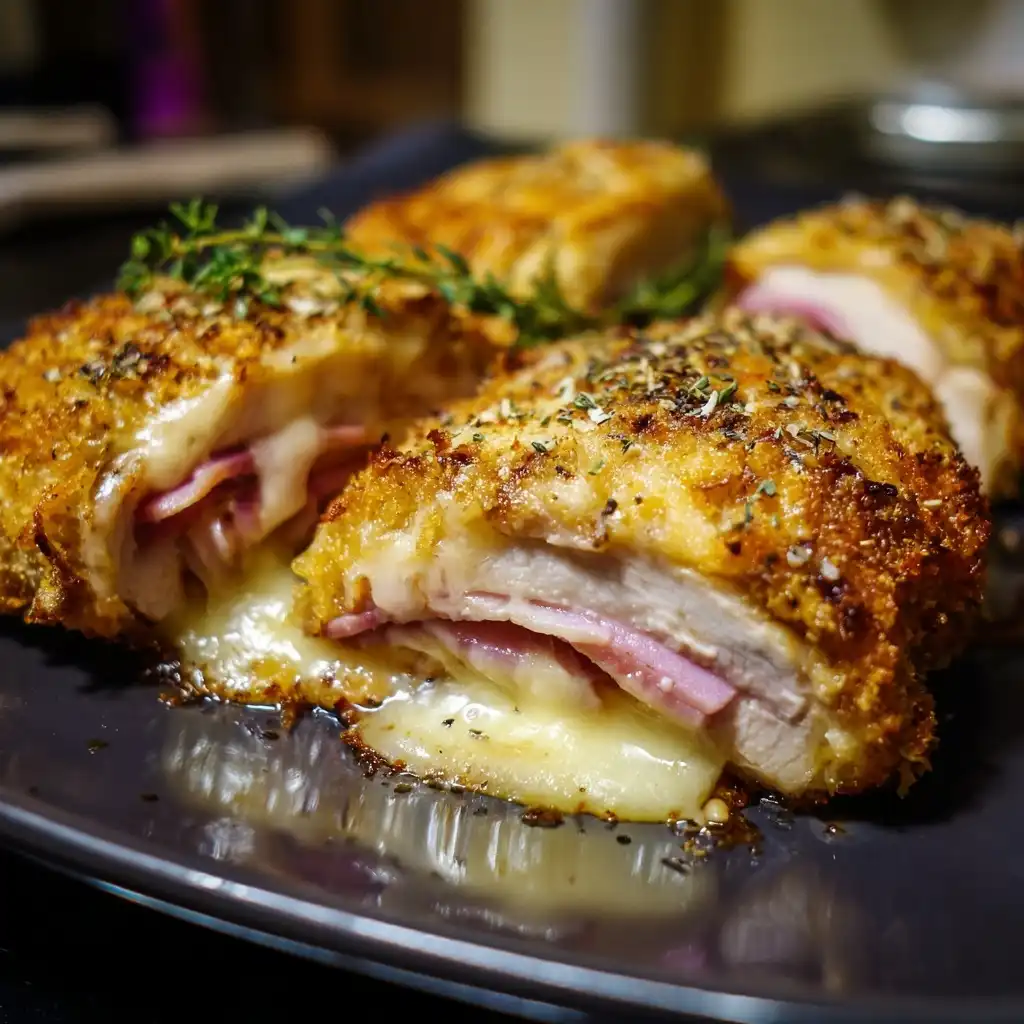
Chicken Cordon Bleu is a timeless classic that epitomizes elegance, comfort, and culinary craftsmanship in one golden, crispy package. Originating from mid-century European fine dining traditions but perfected in American home kitchens and upscale bistros alike, this dish transforms simple pantry staples—chicken breast, ham, and cheese—into a restaurant-worthy centerpiece. With its delicate balance of savory, salty, and creamy notes encased in a shatteringly crisp, herb-kissed crust, Chicken Cordon Bleu delivers both sophistication and soul-satisfying satisfaction. Whether served at a holiday dinner, a romantic date night, or even as an elevated weeknight treat, it’s a dish that consistently impresses without demanding professional training—just patience, precision, and a love for layered flavor.
The History
The origins of Chicken Cordon Bleu are delightfully contested—and rich with gastronomic intrigue. While many assume it’s a centuries-old French creation (thanks to its name—cordon bleu translates to “blue ribbon,” a prestigious French order of chivalry later adopted by the culinary world to denote excellence), historical evidence suggests the dish as we know it likely emerged in the mid-20th century. The earliest documented references appear in Swiss and French cookbooks from the 1940s and 1950s, notably in Switzerland, where a similar preparation called “Cordon Bleu Suisse” featured veal pounded thin, wrapped around Emmental and ham, then breaded and pan-fried. Around the same time, American culinary magazines—including Bon Appétit and McCall’s—began publishing chicken-based versions, capitalizing on the growing popularity and affordability of boneless, skinless chicken breasts post-WWII. By the 1960s, Chicken Cordon Bleu had become a staple of continental-style supper clubs, TV dinners, and Julia Child-inspired home cooking. Its rise paralleled America’s fascination with “gourmet” convenience—elegant enough for guests, yet approachable enough for the modern homemaker. Though purists may debate whether true Cordon Bleu must be veal, the chicken adaptation has undeniably earned its place in the global canon—not as a compromise, but as a beloved evolution.
Ingredients Breakdown
Every exceptional Chicken Cordon Bleu begins not with technique—but with intention behind each ingredient. Below is a meticulous breakdown of why each component matters—and how to select the best:
- Chicken Breasts: Boneless, skinless, and preferably air-chilled for superior texture and moisture retention. Look for “natural” or “no antibiotics” labels if sourcing ethically raised poultry. Thickness is critical: aim for 6–8 oz per breast, uniform in size to ensure even pounding and cooking. Avoid pre-tenderized or injected breasts, which can release excess water and sabotage breading adhesion.
- Ham: High-quality Black Forest, smoked Virginia, or Parisian-style cooked ham (not deli “lunch meat” with added water or phosphates). Thinly sliced (approx. 1/16-inch) ensures clean rolling and prevents bulging. For depth, consider dry-cured prosciutto di Parma or smoked turkey ham for a leaner twist.
- Cheese: Gruyère remains the gold standard—nutty, slightly sweet, and molten without greasiness. Swiss, Emmental, or Comté offer excellent alternatives. Avoid pre-shredded cheeses (coated in anti-caking agents that hinder melting) and low-moisture mozzarella (too stringy and bland). For boldness, blend 70% Gruyère with 30% aged white cheddar or fontina. Vegan options? Try cashew-based “Gruyère” or Miyoko’s Cultured Vegan Cheese, though melt behavior will differ.
- Breading Station Components:
- All-purpose flour: Unbleached, ideally with 10–11% protein—enough structure for coating without toughness.
- Eggs: Large, pasture-raised eggs at room temperature bind best. Add 1 tsp Dijon mustard and 1 tbsp heavy cream per egg for enhanced richness and adhesion.
- Breadcrumbs: Panko is non-negotiable for maximum crunch and airy lift. Toast your own from day-old sourdough or brioche for nuanced flavor—season with garlic powder, onion powder, dried thyme, and a whisper of grated lemon zest.
- Seasonings & Aromatics: Kosher salt and freshly ground black pepper are foundational. Fresh herbs—flat-leaf parsley, chives, or tarragon—add brightness when folded into the egg wash or sprinkled over finished dishes. A pinch of nutmeg in the cheese layer subtly enhances warmth.
- Fat for Cooking: Clarified butter (ghee) + high-smoke-point avocado oil (50/50 blend) delivers golden color, rich flavor, and zero burnt bits. For baking, use olive oil spray or brush with melted herb butter before roasting.
Step-by-Step Recipe
This meticulously tested method prioritizes food safety, structural integrity, and textural contrast—ensuring your Chicken Cordon Bleu stays sealed, juicy, and spectacularly crisp.
- Prep & Chill (30 min): Place chicken breasts between two sheets of parchment paper or inside a heavy-duty zip-top bag. Using a meat mallet (flat side), pound evenly to ¼-inch thickness—working from center outward. Wipe dry with paper towels. Season both sides lightly with salt and pepper. Refrigerate uncovered for 20 minutes—this firms the meat and reduces surface moisture, improving breading adherence.
- Assemble the Filling: Lay each pounded breast flat. Place one slice of ham slightly off-center, leaving ½-inch borders. Top with 1½ oz of thinly sliced cheese (slightly overlapping). Gently fold short ends inward, then roll tightly from bottom to top like a jelly roll, sealing seam with light pressure. Tuck in any cheese or ham that escapes. Secure each roll with 2–3 toothpicks (stainless steel preferred).
- Breading Sequence (The Trinity): Set up three shallow dishes: (1) seasoned flour (½ tsp salt, ¼ tsp pepper, ¼ tsp garlic powder), (2) egg wash (eggs + mustard + cream), (3) panko mixed with 1 tbsp melted butter, 1 tsp dried thyme, ½ tsp paprika, and zest of ½ lemon). Dredge each roll: flour → shake off excess → dip fully in egg wash → coat thoroughly in panko, pressing gently to adhere. Place on a wire rack set over parchment. Refrigerate uncovered for 30–45 minutes—this sets the crust and prevents slippage during cooking.
- Cooking Method Options:
- Pan-Searing + Oven Finish (Recommended): Heat 3 tbsp clarified butter–avocado oil blend in a heavy oven-safe skillet (cast iron or stainless) over medium-high until shimmering (350°F). Carefully place rolls seam-side down. Sear 3–4 min per side until deep golden. Transfer skillet to a preheated 375°F oven. Roast 12–16 min, rotating halfway, until internal temp reaches 165°F at thickest part (use a leave-in probe thermometer). Rest 8 minutes before slicing.
- Air Fryer (Weeknight-Friendly): Preheat air fryer to 375°F. Lightly spray breaded rolls with avocado oil. Cook 14–18 min, flipping halfway, until golden and 165°F internally. Rest 5 min.
- Deep-Frying (Restaurant Crisp): Heat peanut or rice bran oil to 350°F in a Dutch oven. Fry 2–3 rolls at a time for 5–6 min until golden and cooked through. Drain vertically on a wire rack over paper towels.
- Rest & Slice: Remove toothpicks. Let rest on a wire rack (not a plate) for 8–10 minutes—this allows juices to redistribute and crust to stabilize. Use a serrated knife (slight sawing motion) to cut 1-inch medallions. Serve immediately.
Tips
- Pounding Perfection: If chicken tears while pounding, don’t discard—patch with a small piece of ham or cheese and continue. A slightly irregular shape still cooks beautifully.
- Leak-Proof Sealing: Before breading, run a thin line of Dijon mustard along the seam edge—it acts as a natural “glue” and adds tangy depth.
- Crust Insurance: For ultra-crisp results, double-dip: after first panko coating, chill 15 min, then repeat egg wash + panko for a thicker, more resilient shell.
- Temperature Control: Never skip the rest before slicing—even 5 extra minutes prevents cheesy ooze and ensures clean cuts. Serve on pre-warmed plates to maintain crispness.
- Sauce Strategy: Make sauces ahead—a classic Dijon cream sauce (shallots, white wine, Dijon, heavy cream, reduction) or mushroom marsala pairs perfectly. Keep warm on low heat, but never boil after adding cream.
- Batch Prep Friendly: Assemble and bread up to 1 day ahead; store covered on a parchment-lined tray in fridge. Or freeze unbaked rolls (wrap individually in plastic + foil) for up to 3 months—bake from frozen, adding 8–10 min to cook time.
- Leftover Magic: Cold slices make stellar sandwiches (on brioche with arugula and grainy mustard) or chopped into salads with apple, walnuts, and honey-Dijon vinaigrette.
Variations and Customizations
Chicken Cordon Bleu is a canvas—not a cage. Here’s how to reimagine it with creativity and confidence:
- Protein Swaps: Turkey breast (leaner, milder), pork loin medallions (juicier, richer), or even firm tofu steaks (pressed, marinated in tamari–maple–garlic) for plant-based appeal.
- Cheese Reinventions: Brie + fig jam (remove rind, add ½ tsp jam per roll), goat cheese + sun-dried tomato paste, smoked gouda + caramelized onion, or sharp provolone + roasted red pepper strips.
- Holiday Editions: Festive cranberry–orange chutney + brie; chestnut–sage stuffing + fontina; or maple-glazed bacon + aged cheddar.
- Global Twists:
- Mediterranean: Sun-dried tomatoes, kalamata olives, feta, and oregano.
- Mexican: Chipotle-infused cream cheese, roasted corn, cotija, and pickled jalapeños.
- Asian-Inspired: Miso–ginger glaze brushed pre-bake, shiitake–scallion filling, and panko toasted in sesame oil + nori flakes.
- Dietary Adaptations:
- Gluten-Free: Use almond flour + gluten-free panko (Kinnikinnick or Schar), and tamari instead of soy-free Worcestershire in sauces.
- Keto: Almond flour–parmesan crust, sugar-free Dijon, and full-fat dairy only. Net carbs drop to ~3g per serving.
- Low-Sodium: Use no-salt-added ham, unsalted butter, and reduce added salt by 50%; boost flavor with lemon zest, smoked paprika, and fresh herbs.
- Deconstructed “Cordon Bleu”: For kids or texture-sensitive eaters: bake chicken tenders filled with ham & cheese, then serve with dipping sauces (ranch, honey mustard, or curry yogurt).
Health Considerations and Nutritional Value
A single, traditionally prepared 6-oz Chicken Cordon Bleu (pan-seared + baked, no heavy sauce) delivers approximately:
- Calories: 420–480 kcal
- Protein: 42–48g (excellent complete protein source)
- Fat: 22–28g (mostly unsaturated from cheese and cooking oils; saturated fat ~10g)
- Carbohydrates: 8–12g (primarily from breading)
- Sodium: 680–920mg (highly variable—depends on ham and seasoning choices)
- Vitamins & Minerals: Rich in B12 (from chicken/ham), calcium (cheese), selenium (chicken), and riboflavin (eggs/dairy).
Smart Swaps for Wellness:
- Use leaner ham (95% fat-free) and reduced-fat Swiss (cuts ~3g sat fat/serving).
- Replace half the panko with crushed whole-grain crackers or high-fiber cereal for added fiber (+3g/serving).
- Swap traditional cream sauce for a light lemon–herb Greek yogurt drizzle (saves 120 kcal and 10g fat per ¼ cup).
- Increase veggie volume: serve with a vibrant kale–apple–walnut salad or roasted rainbow carrots and fennel.
- Portion control: Stick to one 5–6 oz roll, paired with 1 cup non-starchy vegetables and ½ cup quinoa or wild rice.
Cautions: Those managing hypertension should monitor sodium—opt for low-sodium ham and skip added salt in breading. Individuals with lactose sensitivity may tolerate aged Gruyère (naturally low-lactose), but should avoid ricotta or cottage cheese fillings. Always ensure internal temperature reaches 165°F to prevent foodborne illness—especially critical when stuffing poultry.
Ingredients
- 2 large boneless, skinless chicken breasts (6–8 oz each)
- 4 thin slices high-quality smoked ham (about 4 oz total)
- 4 oz Gruyère cheese, sliced 1/8-inch thick (or Swiss/Emmental)
- ½ cup all-purpose unbleached flour
- 1 tsp kosher salt, divided
- ½ tsp freshly ground black pepper, divided
- ¼ tsp garlic powder
- 3 large pasture-raised eggs
- 1 tbsp Dijon mustard
- 1 tbsp heavy cream
- 1½ cups panko breadcrumbs
- 3 tbsp unsalted butter, melted
- 1 tsp dried thyme
- ½ tsp smoked paprika
- Zest of ½ lemon
- 3–4 tbsp clarified butter (ghee) or avocado oil (for searing)
- 2–3 stainless steel toothpicks per roll
Directions
- Place chicken breasts between two sheets of parchment paper. Pound evenly to ¼-inch thickness using the flat side of a meat mallet. Pat completely dry with paper towels. Season both sides with ½ tsp salt and ¼ tsp pepper. Refrigerate uncovered for 20 minutes.
- Arrange pounded chicken on a clean surface. Lay 2 ham slices slightly off-center on each breast, leaving ½-inch borders. Top each with 2 oz Gruyère slices. Fold short ends inward, then roll tightly from bottom to top. Seal seam with light pressure. Insert 2–3 toothpicks horizontally to secure.
- Set up breading station: (1) Flour mixed with remaining salt, pepper, and garlic powder. (2) Egg wash: whisk eggs, Dijon, and cream until smooth. (3) Panko mixed with melted butter, thyme, paprika, and lemon zest.
- Dredge each roll in flour, shaking off excess. Dip fully into egg wash, letting excess drip off. Press firmly into panko mixture, turning to coat all sides evenly. Place on a wire rack set over parchment. Refrigerate uncovered for 30–45 minutes.
- Preheat oven to 375°F. Heat 3 tbsp clarified butter–avocado oil blend in an oven-safe skillet over medium-high heat until shimmering (350°F).
- Carefully place rolls seam-side down in hot skillet. Sear 3–4 minutes per side until deeply golden brown. Transfer skillet to preheated oven.
- Bake 12–16 minutes, rotating halfway, until internal temperature reaches 165°F when measured with an instant-read thermometer at thickest part.
- Remove toothpicks. Rest rolls on a wire rack for 8 minutes. Slice into 1-inch medallions with a serrated knife. Serve immediately with desired sauce and sides.
FAQ
- Can I make Chicken Cordon Bleu ahead of time?
- Yes! Assemble and bread up to 24 hours in advance—store covered on a parchment-lined tray in the refrigerator. For longer storage, freeze unbaked rolls (wrap individually in plastic wrap + aluminum foil) up to 3 months. Bake from frozen, adding 8–10 minutes to total cook time.
- Why does my cheese leak out during cooking?
- Cheese leakage usually stems from three causes: (1) Overfilling—use precisely 1½–2 oz cheese per roll; (2) Inadequate chilling—breaded rolls must refrigerate 30+ minutes to set the crust; (3) Excessive heat—sear over medium-high, not high, and finish in the oven to gently melt without explosive pressure.
- Can I use frozen chicken breasts?
- It’s strongly discouraged. Thawing creates excess moisture that breaks down breading adhesion and promotes steam pockets, leading to soggy crusts and uneven cooking. Always use fully thawed, dry chicken.
- What’s the best way to reheat leftovers without losing crispness?
- Avoid the microwave—it turns crusts leathery. Instead, reheat in a 375°F oven on a wire rack for 10–12 minutes, or air fry at 350°F for 5–7 minutes. Brush lightly with oil before reheating to revive crunch.
- Is Chicken Cordon Bleu safe for pregnant people or immunocompromised individuals?
- Yes—if cooked to a minimum internal temperature of 165°F and consumed promptly. Avoid raw or undercooked eggs in homemade sauces; use pasteurized eggs or prepare sauces with a cooked base (e.g., roux-thickened).
- Can I bake it without searing first?
- You can—but you’ll sacrifice texture and depth. Skipping the sear yields a pale, softer crust and less complex Maillard-driven flavor. For optimal results, always sear first, then finish in the oven.
- What sides pair best with Chicken Cordon Bleu?
- Classic pairings include buttered egg noodles, Dijon-mashed potatoes, roasted asparagus, green beans almondine, or a crisp frisée salad with lemon vinaigrette. For lighter options: quinoa pilaf with herbs or sautéed spinach with garlic.
- How do I prevent the breading from falling off?
- Follow the “dry–wet–dry” principle strictly: dry chicken → flour (dries surface + provides grip) → egg wash (binds) → panko (adheres to wet layer). Chilling after breading is non-negotiable—it allows starches in flour to hydrate and proteins in egg to partially coagulate, creating a fused barrier.
Summary
Chicken Cordon Bleu is far more than a retro dinner party relic—it’s a masterclass in layered textures, balanced umami, and accessible elegance, rooted in mid-century innovation but endlessly adaptable to modern palates and dietary needs. With careful prep, smart ingredient choices, and respect for its simple yet precise technique, it rewards every effort with golden crispness, tender juiciness, and a luxurious, molten heart.
Whether you’re honoring tradition with Gruyère and Black Forest ham or reinventing it with miso-ginger tofu and nori panko, Chicken Cordon Bleu remains a triumphant testament to the idea that extraordinary flavor doesn’t require complexity—just clarity, care, and a little blue-ribbon confidence.