
Introduction
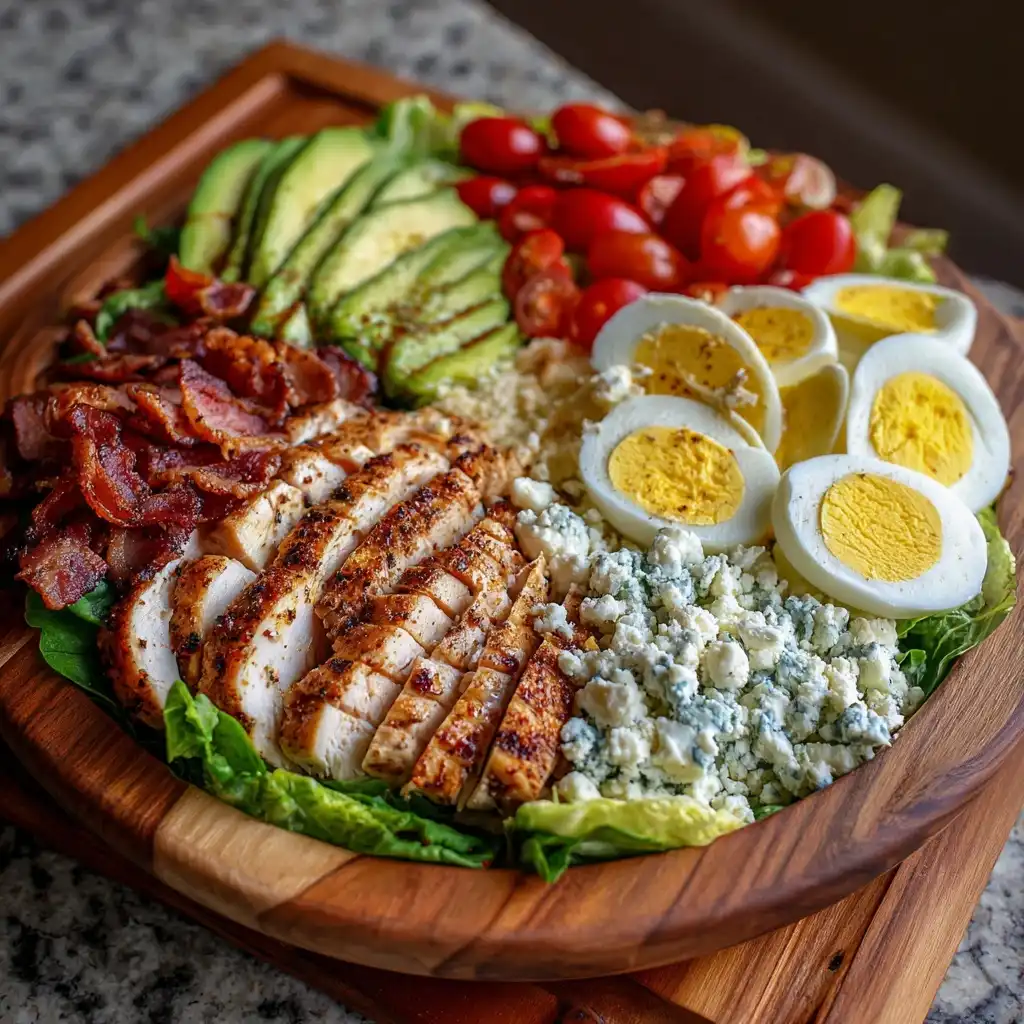
The Chicken Cobb Salad is a timeless American classic—elegant yet approachable, hearty yet refreshingly light. More than just a salad, it’s a masterclass in texture, contrast, and balanced flavor: tender grilled or roasted chicken meets creamy avocado, crisp bacon, buttery eggs, sharp blue cheese, and a vibrant medley of fresh vegetables—all harmonized by a bright, tangy dressing. Born from necessity and elevated by intention, the Cobb Salad has evolved from its humble Hollywood roots into a globally beloved staple on café menus, meal-prep containers, and dinner tables alike. Whether served as a satisfying lunch, a protein-packed dinner, or an impressive starter at gatherings, the Chicken Cobb Salad delivers restaurant-quality sophistication with home-kitchen accessibility.
The History
The origins of the Cobb Salad trace back to the golden age of Hollywood in the 1930s, specifically to the legendary Brown Derby restaurant on Hollywood Boulevard—a hotspot frequented by stars like Clark Gable, Joan Crawford, and Walt Disney. According to widely accepted lore, the salad was invented in 1937 by Robert Howard Cobb, the restaurant’s co-owner. The story goes that late one night, Cobb was rummaging through the restaurant’s walk-in refrigerator—hungry, tired, and inspired by whatever ingredients were on hand. He chopped up leftover grilled chicken, crispy bacon, hard-boiled eggs, chives, tomatoes, watercress, romaine lettuce, and Roquefort cheese, then tossed them together with a simple vinaigrette. When fellow restaurateur Sid Grauman tasted it, he enthusiastically declared it “the best thing I’ve ever eaten,” and the dish was added to the menu the next day—named simply “The Cobb Salad.” While variations existed earlier (including a similar “Emerson Salad” cited in some culinary archives), Cobb’s version—with its iconic ingredient arrangement and bold flavor profile—became the definitive standard. Over the decades, the salad gained national prominence, appearing in cookbooks, women’s magazines, and television cooking shows. Its inclusion in the James Beard Cookbook (1959) and later adoption by chains like The Cheesecake Factory cemented its status as an American culinary icon. Notably, the original recipe did not include avocado—a California addition that emerged in the 1950s as Hass avocados became more widely available and celebrated for their creaminess and nutrient density.
Ingredients Breakdown
What makes the Chicken Cobb Salad extraordinary isn’t just its visual appeal—it’s the deliberate synergy of each component, where every ingredient plays a distinct, essential role:
- Chicken Breast (or Thigh): The protein anchor—lean, versatile, and ideal for absorbing seasoning. Grilled, roasted, or pan-seared; skinless and boneless for optimal texture and health profile.
- Bacon: Adds smoky depth, salty crunch, and rich umami. Traditionally thick-cut and cooked until crisp but not brittle—provides both textural contrast and fat-soluble flavor carriers.
- Hard-Boiled Eggs: Contribute creaminess, protein density, and subtle sulfur notes. Sliced or quartered, they act as both garnish and nutritional powerhouse (rich in choline, vitamin D, and lutein).
- Avocado: A modern hallmark—introduces monounsaturated fats, velvety mouthfeel, and earthy sweetness that tempers sharper elements. Ripe but firm for clean slicing.
- Blue Cheese (typically Roquefort or Gorgonzola): Delivers pungent, salty, and tangy complexity—the “bold voice” in the ensemble. Crumbled rather than diced to maximize surface area and flavor dispersion.
- Cherry or Grape Tomatoes: Provide juicy acidity, brightness, and bursts of sweetness. Halved to release their essence without overwhelming.
- Red Onion (thinly sliced): Offers sharp, clean bite and aromatic volatility—best soaked briefly in cold water or vinegar to mellow intensity.
- Butter Lettuce & Romaine Blend: The foundational bed—butter lettuce brings delicate sweetness and tender folds; romaine adds sturdy crunch and mild bitterness. Often augmented with watercress or arugula for peppery nuance.
- Chives or Scallions: Fresh allium finish—adds grassy aroma, visual pop, and subtle onion essence without raw harshness.
- Dressing Base: Typically a red wine vinaigrette (Dijon mustard, red wine vinegar, extra-virgin olive oil, garlic, salt, pepper), though ranch, blue cheese, or lemon-herb variations are common. Emulsified to cling—not pool—ensuring every bite is cohesive.
Each element contributes to a multi-dimensional sensory experience: temperature (cool lettuce vs. warm chicken), texture (crisp bacon vs. creamy avocado), fat content (bacon grease, olive oil, cheese, avocado), acidity (vinegar, tomato, lemon), salt (bacon, cheese, dressing), and freshness (herbs, greens, veggies). This intentional layering is why the Cobb endures—it satisfies primal cravings while honoring culinary craftsmanship.
Step-by-Step Recipe
- Prepare the Chicken: Pat 2 boneless, skinless chicken breasts (about 1 lb total) dry. Season generously with kosher salt, freshly ground black pepper, smoked paprika, and a pinch of garlic powder. Heat 1 tbsp high-smoke-point oil (avocado or grapeseed) in a stainless steel or cast-iron skillet over medium-high heat. Sear chicken 5–6 minutes per side until deeply golden and internal temperature reaches 165°F. Rest 10 minutes, then slice thinly against the grain.
- Cook the Bacon: In the same skillet (draining excess fat if needed), arrange 8 slices of thick-cut applewood-smoked bacon in a single layer. Cook over medium-low heat, turning occasionally, until evenly crisp and deep amber—about 12–15 minutes. Transfer to a paper towel–lined plate; cool completely, then crumble or chop into ½-inch pieces.
- Hard-Boil the Eggs: Place 4 large eggs in a saucepan, cover with cold water by 1 inch. Bring to a rolling boil, then cover, remove from heat, and let sit for 11 minutes. Drain, transfer to ice water for 15 minutes. Peel under cold running water; slice into quarters or eighths.
- Prep the Produce: Wash and thoroughly dry 1 head of romaine and 1 head of butter lettuce (or 6 cups pre-washed spring mix). Tear into bite-sized pieces. Halve 1 cup cherry tomatoes. Thinly slice ¼ small red onion and soak in ¼ cup cold water + 1 tsp apple cider vinegar for 10 minutes; drain well. Pit and slice 1 ripe Hass avocado lengthwise into ¼-inch thick crescents.
- Assemble with Precision: In a large, wide, shallow serving bowl or platter, spread the mixed greens evenly. Arrange ingredients in neat, parallel rows or sections (traditional Cobb style): sliced chicken top-left, bacon top-right, eggs center-left, avocado center-right, crumbled blue cheese bottom-left, tomatoes bottom-center, red onion bottom-right. Scatter chives or scallion greens over top.
- Finish & Serve: Just before serving, drizzle generously with chilled dressing (about ⅓–½ cup), starting from the center and working outward in a circular motion. Toss *gently* tableside—or serve undressed for those who prefer control over saturation. Serve immediately with extra blue cheese and cracked black pepper on the side.
Tips
- Dry Greens Are Non-Negotiable: Excess moisture dilutes dressing and causes sogginess. Use a salad spinner, then pat leaves with clean kitchen towels—even refrigerate uncovered for 15 minutes pre-assembly to ensure crispness.
- Warm Chicken, Cold Greens: Serve chicken slightly warm—not hot—to avoid wilting the lettuce. Let rest 5–10 minutes after slicing before assembling.
- Bacon Fat Is Flavor Gold: Reserve 1–2 tbsp of rendered bacon fat to whisk into your vinaigrette for unparalleled depth—just reduce added oil accordingly.
- Avocado Protection: To prevent browning, toss avocado slices lightly in lime or lemon juice *immediately* after cutting—and add them last, right before dressing.
- Egg Perfection: For flawless hard-boiled eggs, start with room-temp eggs, use older eggs (5–7 days old), and shock in ice water *immediately* after cooking. Peel under cold water with gentle pressure near the larger end (air pocket).
- Blue Cheese Balance: If Roquefort feels too aggressive, blend it with milder gorgonzola dolce or even a touch of feta for approachability—never substitute pre-crumbled “blue cheese” from the dairy aisle, which contains anti-caking agents and lacks freshness.
- Dressing Timing: Always dress just before serving. If prepping ahead, store components separately in airtight containers: greens (with paper towel), chicken (cooled), bacon (room temp), eggs (refrigerated), avocado (with citrus), cheese (wrapped in parchment), dressing (shaken well).
- Knife Skills Matter: Slice chicken against the grain for tenderness; cut bacon while still slightly warm for cleaner edges; use a serrated knife for tomatoes to avoid crushing.
- Season in Layers: Salt the chicken before cooking, the eggs while boiling (1 tsp salt in water), the red onion during soaking, and the final dish with flaky sea salt and cracked pepper.
- Plating Psychology: Use a wide, white platter or wooden board to showcase colors and textures. Garnish with edible flowers (nasturtiums, pansies) or microgreens for elevated presentation.
Variations and Customizations
The beauty of the Cobb lies in its adaptability—honoring tradition while welcoming innovation. Here are thoughtfully curated variations, each preserving the core structural integrity (protein + fat + acid + crunch + cream + herb) while expanding dietary inclusivity and global inspiration:
- Grain-Inspired Cobb: Add ½ cup cooked farro, quinoa, or freekeh for heartiness and fiber—toss grains with dressing first to help them absorb flavor without weighing down greens.
- Mediterranean Cobb: Swap bacon for marinated artichoke hearts and kalamata olives; replace blue cheese with crumbled feta; add cucumber ribbons and lemon-dill vinaigrette.
- Southwest Cobb: Use chipotle-rubbed chicken, black beans, fire-roasted corn, pickled red onions, cotija cheese, and avocado-lime crema. Garnish with cilantro and crushed tortilla strips.
- Vegetarian Cobb: Omit chicken and bacon; boost protein with pan-seared halloumi, roasted chickpeas, and marinated tempeh “bacon” (tamari + liquid smoke + maple). Keep eggs, avocado, blue cheese (or vegan wedge), and tomatoes.
- Keto/High-Fat Cobb: Double the avocado and bacon; add macadamia nuts or pumpkin seeds; use full-fat blue cheese and extra virgin olive oil-based dressing; omit tomatoes and onions for lower net carbs.
- Paleo/Whole30 Cobb: Skip blue cheese and bacon (use nitrate-free, compliant brands if allowed); substitute with grilled shrimp or turkey, duck fat–roasted sweet potatoes, sliced apple, and walnut halves. Dress with apple cider vinegar + avocado oil.
- Asian-Inspired Cobb: Marinate chicken in ginger-soy-garlic; use crispy wonton strips instead of bacon; swap blue cheese for toasted sesame seeds and pickled daikon; add mandarin segments and cilantro; dress with tamari-ginger-miso vinaigrette.
- Breakfast Cobb: Serve chilled or room-temp with breakfast sausage crumbles, extra eggs (soft-boiled or poached), and maple-balsamic dressing—ideal for weekend brunch.
- Deconstructed Jar Cobb: Layer ingredients in a 32-oz mason jar in reverse order (dressing first, then hearty items, greens last) for perfect meal prep. Shake to combine when ready to eat.
- Smoked Cobb: Elevate with hickory-smoked chicken breast, smoked Gouda instead of blue, and smoked sea salt in the dressing—ideal for summer grilling season.
Remember: substitutions should maintain balance. If removing bacon, compensate with another savory, fatty element (e.g., roasted almonds, sunflower seeds, or aged cheddar). If skipping blue cheese, introduce fermented brightness via kimchi, sauerkraut, or preserved lemon. The Cobb is a framework—not a formula.
Health Considerations and Nutritional Value
A well-constructed Chicken Cobb Salad is nutritionally dense, offering a synergistic blend of macro- and micronutrients that support satiety, metabolic health, cognitive function, and gut integrity. A standard serving (approx. 6 cups assembled, without excessive dressing) provides roughly:
- Calories: 580–720 kcal (varies with cheese, bacon, and oil volume)
- Protein: 42–54 g (chicken, eggs, cheese, bacon—complete amino acid profile)
- Fat: 36–48 g (mostly unsaturated from avocado, olive oil, and eggs; ~10–14 g saturated from cheese/bacon)
- Carbohydrates: 14–19 g (primarily from tomatoes, onions, and greens—low glycemic, high-fiber)
- Fiber: 7–9 g (romaine, butter lettuce, tomatoes, avocado, red onion—supports microbiome diversity and digestive regularity)
- Vitamins & Minerals: Exceptionally high in Vitamin K (greens), Vitamin A (romaine, eggs), Vitamin C (tomatoes, red onion), Folate (leafy greens, avocado), Choline (eggs, chicken), Potassium (avocado, tomatoes), and Calcium (cheese, greens).
Key Health Highlights:
- Heart Health: Monounsaturated fats (avocado, olive oil) and potassium help regulate blood pressure and improve lipid profiles. Omega-3s from eggs (especially pasture-raised) further support vascular function.
- Weight Management: High protein + high fiber + healthy fats create prolonged satiety—reducing between-meal cravings and stabilizing blood sugar. The chewing resistance of varied textures also enhances mindful eating.
- Brain & Eye Health: Lutein and zeaxanthin (in leafy greens and egg yolks) protect retinal tissue; choline supports acetylcholine synthesis for memory and focus; DHA from eggs aids neuronal membrane integrity.
- Gut Microbiome Support: Prebiotic fibers (inulin from onions, resistant starch from cooled potatoes if added) feed beneficial bacteria. Fermented blue cheese introduces probiotic strains (though heat-sensitive—opt for raw, artisanal versions when possible).
- Inflammation Modulation: Polyphenols in extra-virgin olive oil, anthocyanins in red onion, and apigenin in parsley/chives exert antioxidant and anti-inflammatory effects.
Considerations & Modifications:
- Sodium Awareness: Bacon and blue cheese contribute significant sodium (~800–1,200 mg/serving). Reduce by using low-sodium bacon, rinsing bacon post-cook, or substituting turkey bacon or roasted seaweed strips.
- Saturated Fat Moderation: While current science supports dietary saturated fat in context, those with familial hypercholesterolemia may opt for leaner chicken thighs (skinless), reduced cheese (2 oz instead of 3 oz), or plant-based fats.
- Food Sensitivities: Blue cheese contains penicillium mold—avoid if mold-allergic. Substitute aged goat cheese or nutritional yeast for umami. Eggs can be omitted or replaced with silken tofu “eggs” (blended with turmeric and black salt) for vegan needs.
- Oxalate Consideration: Spinach is sometimes added but high in oxalates—those prone to kidney stones may prefer romaine/butter lettuce as base.
- Low-Histamine Option: For histamine intolerance, skip aged blue cheese, avocado, and tomatoes; use fresh mozzarella, zucchini ribbons, and grilled chicken with lemon-dill dressing.
Ultimately, the Chicken Cobb Salad exemplifies how whole, minimally processed foods—thoughtfully combined—can deliver exceptional nourishment without sacrifice.
Ingredients
- 2 (6–8 oz) boneless, skinless chicken breasts
- 1 tbsp avocado oil or grapeseed oil
- 1½ tsp kosher salt, divided
- 1 tsp freshly ground black pepper, divided
- ½ tsp smoked paprika
- 8 slices thick-cut applewood-smoked bacon
- 4 large eggs
- 1 cup cherry or grape tomatoes, halved
- ¼ small red onion, very thinly sliced
- 1 ripe Hass avocado
- 3 oz crumbled Roquefort or Gorgonzola blue cheese
- 1 head romaine lettuce, chopped
- 1 head butter lettuce, chopped (or 6 cups mixed spring greens)
- 2 tbsp finely chopped fresh chives or scallion greens
For the Classic Red Wine Vinaigrette:
- ⅓ cup extra-virgin olive oil
- 3 tbsp red wine vinegar
- 1½ tsp Dijon mustard
- 1 small garlic clove, minced
- 1 tsp honey or maple syrup (optional, for balance)
- ¼ tsp freshly ground black pepper
- ¼ tsp kosher salt
Directions
- Season and Cook Chicken: Pat chicken dry. Rub with ½ tsp salt, ½ tsp pepper, paprika, and ½ tsp oil. Heat remaining oil in skillet over medium-high. Sear chicken 5–6 min per side until golden and 165°F internally. Rest 10 min, then slice thinly across the grain.
- Crisp the Bacon: In same skillet (reduce heat to medium-low), cook bacon 12–15 min, turning often, until uniformly crisp. Drain on paper towels; cool, then crumble.
- Hard-Boil Eggs: Cover eggs with cold water by 1 inch. Bring to boil, cover, remove from heat, and steep 11 min. Transfer to ice bath 15 min. Peel under cold water; slice.
- Prep Vegetables: Wash and spin-dry greens. Halve tomatoes. Soak red onion in cold water + 1 tsp vinegar 10 min; drain. Cut avocado into ¼-inch crescents; toss with 1 tsp lime juice.
- Make Dressing: Whisk vinegar, mustard, garlic, honey (if using), salt, and pepper. Slowly drizzle in olive oil while whisking vigorously until emulsified. Taste and adjust acidity or salt.
- Assemble: In large bowl or platter, spread greens. Arrange chicken, bacon, eggs, avocado, cheese, tomatoes, and red onion in distinct rows or sections. Sprinkle with chives.
- Finish: Drizzle generously with dressing just before serving. Toss gently or serve undressed. Offer extra cheese and cracked pepper at the table.
FAQ
- Can I make this salad ahead of time?
- Yes—but keep components separate. Store dressed greens for no more than 2 hours. Best practice: prep chicken, bacon, eggs, and dressing up to 3 days ahead; wash/dry greens and store wrapped in damp paper towel inside airtight container for up to 2 days; slice avocado fresh. Assemble within 15 minutes of serving.
- What’s the best way to reheat leftover chicken for Cobb?
- Gently steam or microwave at 50% power for 30–45 seconds—never dry-heat, which toughens. Alternatively, slice cold chicken and add directly; its flavor melds beautifully with room-temp ingredients.
- Is blue cheese necessary? What are good substitutes?
- Traditionally yes—but not dogmatically. Excellent alternatives include crumbled feta (saltier, milder), aged goat cheese (tangy, less funky), gorgonzola dolce (creamier, less assertive), or even sharp white cheddar for a non-blue option. Avoid mild cheeses like mozzarella—they lack structural contrast.
- Why does my Cobb salad get soggy so fast?
- Three main culprits: 1) Undried greens (always spin + pat), 2) Warm/hot chicken added directly (let rest first), 3) Dressing applied too early or too heavily. Also, tomatoes and avocado exude moisture—halve tomatoes just before serving and add avocado last.
- Can I use rotisserie chicken?
- Absolutely—and it’s a brilliant time-saver. Choose low-sodium, skinless, and pull/shred rather than slice for better integration. Pat dry to remove excess moisture before adding.
- What dressing pairs best with Cobb salad?
- Classic red wine vinaigrette is ideal for brightness and balance. But ranch (homemade, not bottled), blue cheese (creamy, not overly thick), lemon-tahini, or even a light miso-ginger vinaigrette all work beautifully—just ensure acidity cuts through richness.
- Is Cobb salad gluten-free?
- Yes, inherently—provided you use gluten-free bacon (check for malt vinegar or fillers) and verify dressing labels (many store-bought vinaigrettes contain gluten-derived vinegar or thickeners). Homemade dressings are safest.
- How do I make a vegetarian Cobb without losing substance?
- Focus on layered textures and umami: marinated tempeh “bacon,” pan-seared halloumi or baked tofu, roasted beets or sweet potatoes, toasted walnuts, and fermented elements like sauerkraut or capers. Boost eggs or add hemp hearts for complete protein.
- Can I freeze any part of this salad?
- No—freezing destroys the cellular structure of greens, avocado, eggs, and tomatoes, resulting in mush and separation. However, cooked chicken and bacon freeze well for up to 3 months; thaw overnight in fridge before use.
- What wine pairs well with Chicken Cobb salad?
- A crisp, high-acid white shines: Sauvignon Blanc (cuts richness), unoaked Chardonnay (complements avocado), or dry Rosé (bridges bacon and tomatoes). For red lovers, a light Pinot Noir works—avoid tannic Cabernet, which clashes with blue cheese.
Summary
The Chicken Cobb Salad is a meticulously balanced, nutritionally robust masterpiece rooted in Hollywood ingenuity and perfected through generations of home cooks and chefs alike—where every ingredient serves a purpose, and every bite delivers harmony of flavor, texture, and satisfaction. It is simultaneously nostalgic and endlessly adaptable—proof that tradition need not mean rigidity, and that the simplest combinations, when executed with care, become timeless.