
Introduction
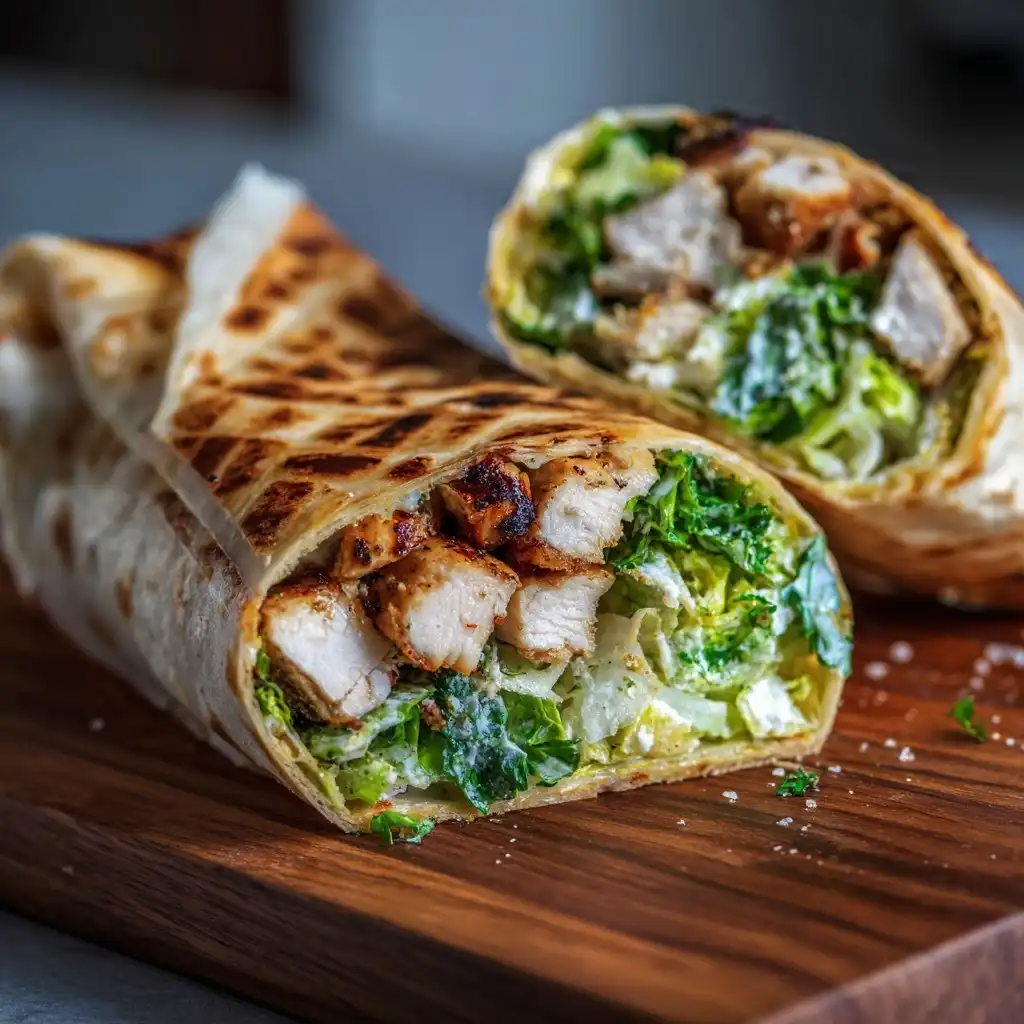
The Chicken Caesar Wrap is a modern culinary classic—a vibrant, portable fusion of two beloved American staples: the hearty Caesar salad and the convenient, handheld wrap. It transforms traditionally plate-bound ingredients into a cohesive, flavorful, and satisfying meal that’s equally at home in a corporate lunchroom, a school cafeteria, a gym bag, or a picnic blanket. Unlike its salad counterpart, the wrap adds structural integrity and textural contrast through soft yet pliable tortillas—often whole wheat, spinach, or herb-infused—while preserving the iconic savory-umami profile that defines Caesar cuisine. Its popularity has surged over the past two decades as consumers seek balanced, restaurant-quality meals that don’t compromise on taste, nutrition, or convenience. Whether served warm or chilled, dressed with house-made or artisanal dressing, or elevated with gourmet add-ons, the Chicken Caesar Wrap remains endlessly adaptable—making it not just a recipe, but a versatile culinary canvas.
The History
Though no single inventor claims credit, the Chicken Caesar Wrap emerged organically from the late 1990s to early 2000s as part of the broader “wrap revolution” sweeping North America and Europe. Its lineage traces back to three distinct culinary roots: first, the legendary Caesar salad, invented in 1924 by Italian-Mexican restaurateur Caesar Cardini in Tijuana, Mexico—originally made tableside with romaine, croutons, Parmesan, lemon, olive oil, garlic, Worcestershire, raw egg, and anchovies; second, the ancient tradition of flatbread-based wraps—from Middle Eastern lavash and Greek pita to Mexican flour tortillas—adapted for portability and versatility; and third, the rise of health-conscious fast-casual dining chains like Panera Bread, Chipotle (in its early salad-and-wrap phase), and Cosi, which standardized grilled chicken as a lean protein staple and popularized customizable, build-your-own formats. By the mid-2000s, food magazines, cooking shows, and supermarket delis began featuring variations of the “Caesar wrap,” often substituting traditional romaine with butter lettuce or baby kale for tenderness, adding sun-dried tomatoes or roasted red peppers for depth, and experimenting with grilled, rotisserie, or even sous-vide chicken. Today, it appears on menus from boutique juice bars to five-star hotel lounges—and continues to evolve with plant-based dressings, gluten-free tortillas, and globally inspired twists.
Ingredients Breakdown
Understanding each component deepens both flavor execution and nutritional intentionality:
- Grilled Chicken Breast: The protein foundation—naturally low in fat and high in satiating complete protein (≈31g per 100g). Marinated in lemon zest, garlic powder, black pepper, and a touch of olive oil, it delivers juiciness without heaviness. Opt for organic, air-chilled, or antibiotic-free poultry when possible.
- Romaine Lettuce: Chosen for its crisp, sturdy ribs and mild bitterness that balances richness. Iceberg lacks nuance; butter lettuce wilts too easily; arugula overwhelms. Romaine’s vertical structure also prevents sogginess by creating natural air pockets within the wrap.
- Homemade Caesar Dressing: Far superior to most store-bought versions—which often contain high-fructose corn syrup, excessive sodium (up to 400mg per tbsp), and unstable emulsifiers. A true version features anchovy paste (for umami depth), Dijon mustard (natural emulsifier), fresh lemon juice (bright acidity), raw egg yolk or pasteurized egg substitute (creamy base), garlic, grated Parmigiano-Reggiano, and extra-virgin olive oil. Optional additions include capers for brininess or a splash of white wine vinegar for lift.
- Garlic-Herb Croutons: Not just texture—they’re flavor amplifiers. Made from day-old sourdough or multigrain bread, toasted in garlic-infused olive oil with dried oregano, thyme, and a whisper of smoked paprika. Avoid pre-packaged croutons laden with hydrogenated oils and artificial preservatives.
- Freshly Grated Parmigiano-Reggiano: Aged minimum 24 months, this cheese offers complex nuttiness and crystalline crunch. Pre-grated “Parmesan” often contains cellulose anti-caking agents and lacks enzymatic depth.
- Whole Wheat Tortilla (10-inch): Provides fiber (≈4–5g per wrap), B vitamins, and slow-release carbohydrates. Look for brands with whole grain listed first, minimal added sugars (<2g), and no hydrogenated oils. Spinach or tomato-infused tortillas add phytonutrients without altering structure.
- Optional Enhancements: Roasted cherry tomatoes (lycopene boost), shaved fennel (anise brightness), pickled red onions (tangy crunch), or microgreens (vitamin K and chlorophyll).
Step-by-Step Recipe
- Prepare the Chicken: Pat 2 boneless, skinless chicken breasts (6 oz each) dry. In a small bowl, whisk together 2 tbsp fresh lemon juice, 2 tsp olive oil, 2 minced garlic cloves, 1 tsp dried oregano, ½ tsp black pepper, and ¼ tsp sea salt. Rub mixture evenly over chicken. Let marinate 20–30 minutes at room temperature (or up to 4 hours refrigerated). Grill over medium-high heat for 6–7 minutes per side, until internal temperature reaches 165°F. Rest 5 minutes, then slice thinly against the grain.
- Make the Dressing: In a blender or food processor, combine 1 large pasteurized egg yolk, 2 tsp lemon juice, 1 tsp Dijon mustard, 1 tbsp anchovy paste, 1 small garlic clove (minced), ½ tsp Worcestershire sauce, and a pinch of black pepper. Blend 15 seconds. With motor running, slowly drizzle in ⅓ cup extra-virgin olive oil until thick and emulsified. Stir in ¼ cup freshly grated Parmigiano-Reggiano. Taste and adjust: more lemon for brightness, more anchovy for depth, or a pinch of sugar to round acidity. Refrigerate 15 minutes to meld flavors.
- Toast the Croutons: Cut 2 slices (½ inch thick) of whole grain bread into ¾-inch cubes. Toss with 1½ tbsp olive oil, 1 minced garlic clove, ½ tsp dried parsley, ¼ tsp onion powder, and a pinch of salt. Spread on a parchment-lined baking sheet. Bake at 375°F for 10–12 minutes, tossing halfway, until golden and crisp. Cool completely.
- Prep the Greens: Wash and thoroughly spin-dry 1 large head of romaine (≈6 cups chopped). Tear into bite-sized pieces—avoid chopping with a knife, which bruises leaves and encourages oxidation.
- Warm the Tortilla: Heat a dry stainless steel skillet over medium heat. Place tortilla in for 15–20 seconds per side—just enough to make it pliable and slightly puffed, not crispy. Transfer to a clean kitchen towel to retain steam and prevent drying.
- Assemble the Wrap: Lay tortilla flat. In the center, spread 3 tbsp Caesar dressing in a horizontal stripe, leaving 1.5-inch borders. Arrange half the romaine over dressing, followed by half the sliced chicken, half the croutons, and half the Parmigiano. Add optional enhancements now (e.g., 3–4 roasted cherry tomatoes or 1 tbsp pickled red onions).
- Roll with Precision: Fold the bottom edge up over filling, tuck tightly, then fold left and right sides inward. Continue rolling forward with firm, even pressure—like a sushi roll—to seal. If needed, lightly brush edges with a bit of dressing or water to adhere.
- Chill & Slice (Optional but Recommended): For clean cuts and structural integrity, wrap tightly in parchment paper, then plastic wrap. Refrigerate 20–30 minutes. Slice diagonally with a serrated knife for presentation.
Tips
- Dressing Consistency Matters: Too thin? Add ½ tsp more grated cheese or a pinch of xanthan gum (¼ tsp max). Too thick? Whisk in ½ tsp lemon juice or cold water—one drop at a time.
- Chicken Moisture Control: Always rest grilled chicken before slicing—it retains juices. For ultra-tender results, brine breasts in ¼ cup salt + 2 cups water for 30 minutes before marinating.
- Crispness Preservation: Never dress greens until *immediately* before assembly. Store romaine wrapped in dry paper towels inside a sealed container—lasts up to 5 days.
- Tortilla Flexibility Hack: If using cold tortillas, microwave for 5 seconds between two damp paper towels. Or steam briefly over simmering water using a bamboo steamer basket.
- No-Soggy Secret: Layer greens *over* dressing—not under—to create a barrier between wet dressing and tortilla. Croutons go on top of greens to maintain crunch.
- Make-Ahead Strategy: Marinate chicken and prep dressing up to 3 days ahead. Toast croutons 2 days ahead; store airtight at room temperature. Assemble wraps within 2 hours of serving for optimal texture.
- Grill Alternative: No grill? Use a cast-iron grill pan, air fryer (400°F for 12 min, flipping halfway), or even poach chicken gently in broth (165°F for 15–18 min) for ultra-moist results.
- Slicing Technique: Use a sharp, serrated knife and apply gentle sawing motion—not downward pressure—to avoid squashing fillings. Wipe blade between cuts.
- Serving Temperature: Best enjoyed at cool room temperature (65–70°F)—chilled wraps mute flavors; overly warm ones soften croutons and wilt greens.
- Plating Elegance: Serve on a chilled slate board or ceramic plate lined with edible flowers (nasturtiums, chive blossoms) or lemon wheels. Drizzle reserved dressing in a zigzag pattern beside the wrap.
Variations and Customizations
This recipe is intentionally modular—here are 12 thoughtfully curated adaptations, each nutritionally grounded and flavor-balanced:
- Mediterranean Twist: Swap chicken for grilled lemon-herb shrimp; replace croutons with toasted pine nuts; add kalamata olives, crumbled feta, and chopped cucumber.
- Smoky Chipotle Version: Marinate chicken in chipotle purée, adobo sauce, lime, and cumin; use cotija instead of Parmesan; garnish with pickled jalapeños and avocado ribbons.
- Vegan Caesar Wrap: Use baked marinated tofu or tempeh “chicken”; replace dressing with cashew-anchovy (or miso-nutritional yeast) base; top with hemp seeds and sunflower seed “croutons.”
- Keto-Friendly: Substitute low-carb almond-flour or coconut-flour tortilla (net carbs <3g); double croutons with pork rinds; add sliced avocado and extra olive oil in dressing.
- Breakfast Caesar: Replace chicken with scrambled eggs cooked in olive oil with garlic and herbs; add crumbled bacon and a sprinkle of cheddar-jack blend.
- Asian-Inspired: Marinate chicken in ginger-soy-sesame; use sesame-ginger slaw (shredded cabbage, carrots, scallions) instead of romaine; swap Parmesan for furikake; finish with chili crisp.
- Buffalo Chicken Style: Toss grilled chicken in hot sauce and melted butter; use blue cheese crumbles instead of Parmesan; add celery matchsticks and ranch-Caesar hybrid dressing.
- Harvest Autumn: Add roasted sweet potato cubes, caramelized apples, candied pecans, and goat cheese; use maple-Dijon Caesar dressing.
- Tex-Mex Caesar: Season chicken with chili-lime rub; add black beans, corn, pickled red onions, and cilantro; finish with cotija and lime crema.
- Deconstructed “Deconstructed”: Serve components separately in mason jars: dressing on bottom, then croutons, cheese, chicken, greens on top. Shake to combine at mealtime.
- Brunch Board Style: Present one large wrap cut into 6 pinwheels alongside roasted beet hummus, heirloom cherry tomatoes, and grilled asparagus spears.
- Meal Prep Mega-Portion: Double recipe; portion into 4 individual vacuum-sealed wraps (undressed); freeze up to 3 weeks. Thaw overnight, dress and assemble same-day.
Health Considerations and Nutritional Value
A meticulously crafted Chicken Caesar Wrap delivers exceptional macro- and micronutrient synergy—when prepared mindfully. Below is a detailed analysis per standard serving (1 wrap, approx. 10-inch whole wheat tortilla, 6 oz chicken, 3 tbsp dressing, 1 cup romaine, ¼ cup croutons, 2 tbsp cheese):
- Calories: ≈ 520–580 kcal — well-balanced across protein (35%), healthy fats (38%), and complex carbs (27%).
- Protein: 38–42g — meets ~75% of average adult daily requirement (50g), supporting muscle synthesis and satiety. Contains all 9 essential amino acids.
- Fat Profile: 22–25g total fat, of which 16–18g are unsaturated (primarily monounsaturated from olive oil and Parmesan). Omega-3s from anchovies (≈120mg EPA/DHA per tbsp paste) support cardiovascular and cognitive health.
- Fiber: 7–9g — primarily from whole wheat tortilla (4–5g) and romaine (2g), promoting gut motility, microbiome diversity, and stable blood glucose.
- Vitamins & Minerals: Exceptionally rich in Vitamin K (320% DV from romaine), Vitamin A (140% DV as beta-carotene), Calcium (28% DV from Parmesan + greens), and Selenium (45% DV from chicken). Also provides significant B6, folate, and magnesium.
- Sodium Consideration: ≈ 580–650mg — significantly lower than commercial versions (often 1,100–1,500mg). Controlled via no-added-salt croutons, low-sodium Worcestershire, and mindful cheese quantity.
- Glycemic Impact: Low-to-moderate GI (~45–50) due to high fiber, protein, and healthy fats slowing carbohydrate absorption—ideal for metabolic health and sustained energy.
- Allergen Notes: Naturally gluten-free if using certified GF tortilla (verify dressing for hidden wheat derivatives); dairy-free option with nutritional yeast + capers + lemon base; egg-free via aquafaba or silken tofu emulsion.
- Dietary Alignment: Supports Mediterranean, DASH, Weight Watchers (≈12–14 SmartPoints), and flexitarian frameworks. Easily adapted for paleo (collard green wrap), keto (low-carb tortilla), or renal diets (low-phosphorus cheese swap).
- Functional Benefits: Anchovies and garlic offer natural antimicrobial and anti-inflammatory compounds; lemon bioflavonoids enhance iron absorption from greens; olive oil polyphenols reduce LDL oxidation.
Note: Nutrition estimates assume homemade dressing and croutons. Store-bought alternatives may increase sodium by 200–400mg, added sugars by 3–6g, and unhealthy trans/saturated fats by 2–4g per serving.
Ingredients
- 2 (6 oz) boneless, skinless chicken breasts
- 2 tbsp fresh lemon juice (plus extra for finishing)
- 2 tsp extra-virgin olive oil (plus 1½ tbsp for croutons)
- 2 garlic cloves, minced (divided)
- 1 tsp dried oregano
- ½ tsp freshly ground black pepper
- ¼ tsp fine sea salt
- 1 large pasteurized egg yolk (or 1 tbsp aquafaba for egg-free)
- 1 tsp Dijon mustard
- 1 tbsp anchovy paste (or 4 mashed anchovy fillets)
- ½ tsp Worcestershire sauce (gluten-free if needed)
- ⅓ cup extra-virgin olive oil (for dressing)
- ¼ cup freshly grated Parmigiano-Reggiano (plus extra for garnish)
- 2 slices whole grain or sprouted bread (for croutons)
- ½ tsp dried parsley
- ¼ tsp onion powder
- 1 large head romaine lettuce (≈6 cups, chopped)
- 1 (10-inch) whole wheat or spinach tortilla
- Optional: 3–4 roasted cherry tomatoes, 1 tbsp pickled red onions, 1 tbsp microgreens
Directions
- Marinate chicken in lemon juice, 2 tsp olive oil, 1 minced garlic clove, oregano, pepper, and salt for 20–30 minutes.
- Grill chicken over medium-high heat 6–7 minutes per side until 165°F internally. Rest 5 minutes, then slice thinly against the grain.
- In a blender, combine egg yolk, Dijon, anchovy paste, remaining minced garlic, Worcestershire, and pepper. Blend 15 seconds.
- With blender running, slowly drizzle in ⅓ cup olive oil until thick and emulsified. Stir in ¼ cup Parmigiano. Chill 15 minutes.
- Toss bread cubes with 1½ tbsp olive oil, parsley, onion powder, and pinch salt. Bake at 375°F for 10–12 minutes until golden. Cool.
- Wash and spin-dry romaine. Tear—not chop—into pieces.
- Warm tortilla in dry skillet 15–20 sec per side. Keep wrapped in towel.
- Spread 3 tbsp dressing horizontally across center of tortilla.
- Layer romaine, chicken, croutons, Parmigiano, and optional add-ins.
- Fold bottom edge up, tuck sides in, and roll tightly forward.
- Wrap in parchment + plastic; chill 20–30 minutes for clean slicing.
- Cut diagonally with serrated knife. Garnish with lemon zest, extra Parmigiano, and microgreens.
FAQ
- Can I make this ahead of time?
- Yes—with caveats. Fully assembled wraps hold best for 2–3 hours refrigerated (wrapped tightly). For longer prep, store components separately: dressed chicken (3 days), croutons (5 days airtight), dressing (1 week), greens (5 days in damp towel), tortillas (room temp 1 week). Assemble within 30 minutes of serving.
- What’s the best tortilla to use?
- Look for 100% whole grain, low-sugar (<2g), and no hydrogenated oils. Top picks: Siete Almond Flour Tortillas (GF/keto), Mission Whole Grain (budget-friendly), or Ole’ Tomato Basil (flavor-forward). Avoid “multigrain” labels—many contain refined flours.
- Is traditional Caesar dressing safe without raw egg?
- Our recipe uses pasteurized egg yolk for safety and authentic texture. For egg-free, substitute 1 tbsp aquafaba (chickpea brine) or 2 tbsp blended silken tofu + ½ tsp lemon juice. Emulsify carefully—results may be slightly thinner but still delicious.
- How do I prevent soggy wraps?
- Three keys: (1) Dry greens *thoroughly*, (2) Layer greens *over* dressing (not under), and (3) Add croutons *last*, directly on top of greens. Never refrigerate assembled wrap longer than 30 minutes before serving.
- Can I freeze Chicken Caesar Wraps?
- Freezing fully assembled wraps degrades texture. Instead, freeze marinated, uncooked chicken breasts (3 months) or cooked, sliced chicken (2 months). Thaw overnight, then assemble fresh.
- What can I use instead of anchovies?
- Anchovies provide irreplaceable umami—but for strict vegetarians, try 1 tsp white miso + 1 tsp capers + ½ tsp soy sauce. For pescatarians, 1 tsp fish sauce works beautifully.
- Is this suitable for weight loss?
- Yes—when portion-controlled and made with whole ingredients. At ~550 kcal and 38g protein, it promotes fullness and preserves lean mass. Skip croutons or reduce to 2 tbsp to cut ~60 kcal.
- Why does my dressing break?
- Emulsion fails when oil is added too fast, ingredients are too cold, or acid is imbalanced. Fix by blending 1 tsp Dijon + 1 tsp lemon juice, then slowly re-emulsifying broken dressing into it.
- Can I use leftover rotisserie chicken?
- Absolutely—and it’s time-saving! Just shred or slice, toss with 1 tsp lemon juice and black pepper, and proceed. Avoid pre-seasoned rotisserie chicken with high sodium or sugar glazes.
- How do I make it spicier?
- Add ¼ tsp cayenne to marinade, stir 1 tsp harissa into dressing, or top with Calabrian chiles. For heat *without* acidity, use smoked paprika in croutons.
Summary
The Chicken Caesar Wrap is far more than a quick lunch—it’s a masterclass in balance: creamy yet crisp, rich yet refreshing, indulgent yet nourishing, traditional yet endlessly reinventable. Every element—from the umami-kissed dressing to the tender-yet-toothy romaine and golden garlic croutons—works in harmony to deliver layered texture, bold yet nuanced flavor, and sustained energy.
Whether you’re meal-prepping for the week, hosting a brunch gathering, seeking a post-workout recovery meal, or simply craving something deeply satisfying without heaviness, this recipe adapts with intelligence and integrity—proving that wholesome eating need never sacrifice joy, craftsmanship, or crave-worthy deliciousness.