
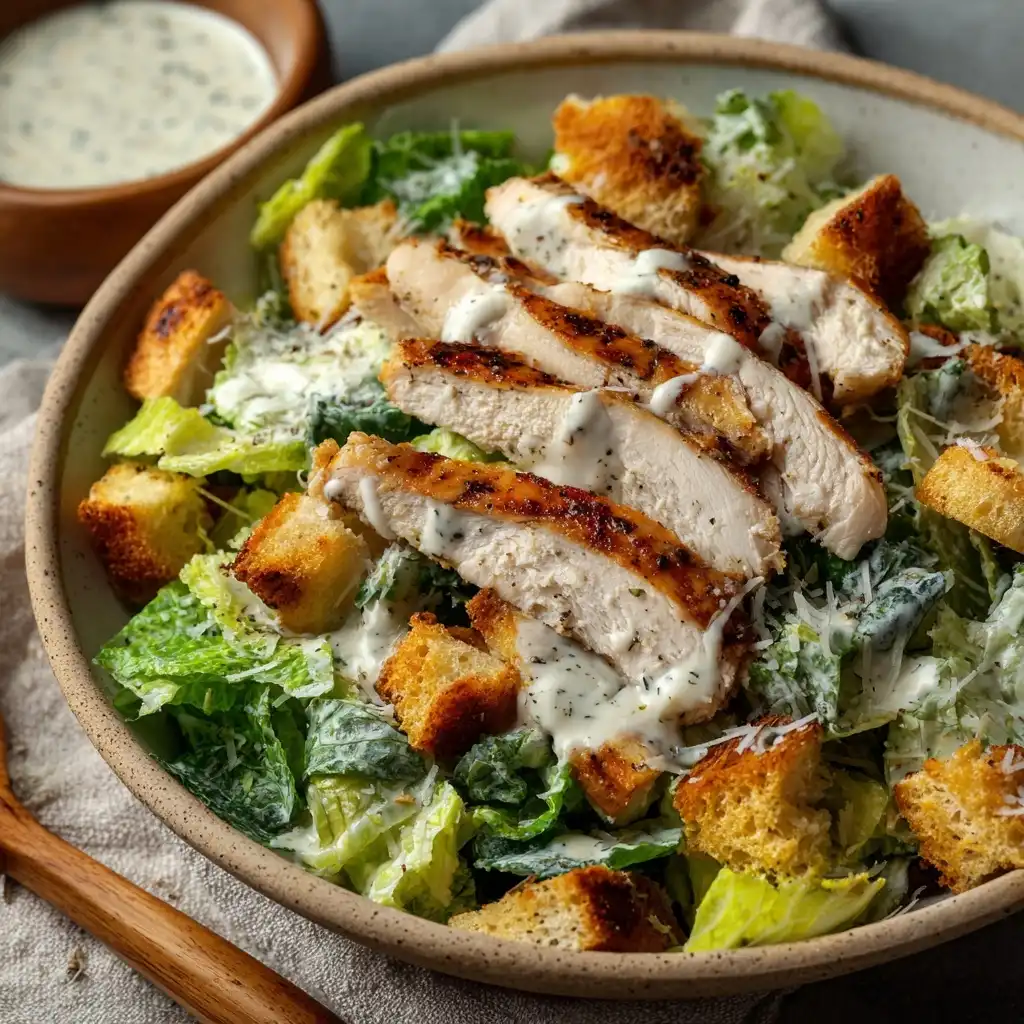
Introduction
The Chicken Caesar Salad is a timeless classic—a vibrant, satisfying, and nutritionally balanced dish that seamlessly bridges the gap between casual lunch and elegant dinner. Born from the union of bold flavors, crisp textures, and wholesome ingredients, it transforms humble romaine lettuce into a culinary centerpiece with the addition of tender grilled or roasted chicken, rich Parmesan cheese, crunchy croutons, and the iconic, umami-laden Caesar dressing. Far more than just a “diet salad,” this dish embodies balance: the freshness of raw vegetables, the savory depth of aged cheese, the protein punch of lean poultry, and the creamy-tangy complexity of its signature sauce. Whether served as a light weekday meal, a protein-packed post-workout recovery dish, or an impressive starter at a dinner party, the Chicken Caesar Salad remains endlessly adaptable, culturally resonant, and deeply satisfying—proof that simplicity, when executed with quality ingredients and mindful technique, yields extraordinary results.
The History
The origins of the Chicken Caesar Salad are rooted in culinary serendipity—and a healthy dose of entrepreneurial ingenuity. While the original Caesar Salad was famously invented in 1924 by Italian-American restaurateur Caesar Cardini in Tijuana, Mexico, during a Fourth of July rush when his kitchen was running low on provisions, the *chicken* variation did not emerge until decades later. Cardini’s original creation featured romaine lettuce, garlic-rubbed croutons, Parmesan cheese, lemon juice, olive oil, raw egg yolks, Worcestershire sauce, and black pepper—all tossed tableside in a dramatic flourish. Notably, it contained no chicken, anchovies (a common modern misconception), or mustard. The addition of grilled or roasted chicken was a mid-20th-century American innovation—driven by evolving dietary trends, rising demand for high-protein meals, and the growing popularity of lean poultry in post-war home cooking. By the 1960s and ’70s, health-conscious cookbooks and restaurant menus began regularly featuring “Chicken Caesar” as a go-to option for dieters, athletes, and busy professionals alike. Its mainstream breakthrough came in the 1980s and ’90s, buoyed by the rise of California cuisine, celebrity chefs like Wolfgang Puck (who elevated it with artisanal ingredients), and the proliferation of fast-casual salad chains. Today, it stands as one of the most ordered and replicated salads worldwide—a testament to its enduring versatility, cultural adaptability, and ability to reflect regional preferences—from smoky chipotle-infused dressings in Texas to miso-kissed versions in Los Angeles. Understanding its history reminds us that tradition is not static; rather, the Chicken Caesar Salad is a living recipe—one continually reinterpreted, refined, and reinvented across generations and geographies.
Ingredients Breakdown
Every exceptional Chicken Caesar Salad begins with intentionality—not just in selection, but in understanding the functional and flavor role each component plays. Below is a meticulous, chef-level breakdown of core ingredients and their contributions:
- Romaine Lettuce: Chosen for its sturdy, ribbed leaves and crisp, slightly sweet, mineral-forward flavor. Its structural integrity prevents sogginess when dressed, while its cool, refreshing base balances the richness of other elements. Opt for hearts of romaine for maximum tenderness and visual appeal.
- Chicken Breast (or Thigh): Skinless, boneless chicken breast is favored for its lean protein profile and neutral canvas—but boneless, skinless thighs offer superior juiciness, deeper flavor, and forgiveness during cooking. Marinating or brining enhances moisture retention and seasoning penetration.
- Garlic: Fresh, raw garlic provides pungent, aromatic heat essential to authentic Caesar flavor. When minced finely or crushed into a paste, it emulsifies seamlessly into the dressing and infuses croutons with savory depth.
- Anchovy Paste (or Fillets): Often misunderstood, anchovies are the secret umami engine of traditional Caesar dressing—adding saltiness, oceanic savoriness, and complexity without tasting “fishy” when properly balanced. Paste offers convenience and consistency; whole fillets provide greater control and depth.
- Dijon Mustard: Acts as both emulsifier and flavor enhancer—its sharp tang cuts through fat, stabilizes the vinaigrette, and adds subtle spice and fruitiness that complements lemon and garlic.
- Fresh Lemon Juice: Provides essential acidity to brighten the entire dish, balance the richness of cheese and oil, and preserve the vibrancy of greens. Bottled juice lacks the nuanced floral-citrus notes and volatile oils critical for authenticity.
- Extra-Virgin Olive Oil: High-quality EVOO contributes peppery, grassy, and buttery notes while lending body and mouthfeel. Its monounsaturated fats help absorb fat-soluble vitamins from the salad. Avoid refined or light olive oils—they lack character and smoke too easily.
- Parmigiano-Reggiano: Authentic, aged Italian Parmesan—not pre-grated “Parmesan-style” blends—is non-negotiable. Its crystalline texture, nutty sweetness, and salty umami deliver unparalleled depth. Microplane-grating maximizes surface area and melt-in-the-mouth integration.
- Homemade Croutons: Cubed day-old baguette or rustic sourdough, toasted in garlic-infused olive oil (not butter, for stability and flavor clarity), yields golden, airy-yet-substantial croutons with shatteringly crisp edges and tender interiors. Store-bought versions often contain preservatives, excess sodium, and inconsistent texture.
- Raw Egg Yolk (or Pasteurized Alternative): The traditional binder and enricher—providing silkiness, emulsification, and luxurious mouthfeel. For food safety, use pasteurized eggs or gently cook the yolk to 140°F (60°C) via sous-vide or a warm emulsion technique.
- Worcestershire Sauce: A fermented condiment made from vinegar, molasses, tamarind, anchovies, and spices—adds layered fermentation notes, tang, and subtle sweetness that harmonizes all other savory components.
- Black Pepper (Freshly Cracked): Not an afterthought—coarsely ground Tellicherry or Lampong black pepper delivers floral, resinous, and mildly spicy top notes that evolve as you eat, enhancing aroma and perception of saltiness.
Each ingredient serves a precise purpose: structure, contrast, acidity, richness, salt, aroma, or texture. Omitting or substituting without understanding these roles risks flattening the salad’s multidimensional experience.
Step-by-Step Recipe
This meticulously crafted, restaurant-grade method ensures consistent excellence—emphasizing timing, temperature control, and layering of flavor. Yield: 2 generous main-course servings.
- Brine the Chicken (30 minutes–2 hours): In a bowl, combine 2 cups cold water, 2 tbsp kosher salt, 1 tbsp brown sugar, 4 smashed garlic cloves, 1 tsp black peppercorns, and 2 bay leaves. Submerge two 6–7 oz boneless, skinless chicken breasts (or thighs). Refrigerate. Brining seasons deep into the muscle fibers and locks in moisture.
- Prepare Croutons (15 minutes, can be done ahead): Preheat oven to 375°F (190°C). Cut 1 small baguette (½-inch cubes) and toss with 3 tbsp garlic-infused olive oil (made by gently warming ¼ cup EVOO with 3 minced garlic cloves for 3 minutes), 1 tsp dried oregano, ½ tsp onion powder, and 1 tsp flaky sea salt. Spread evenly on parchment-lined sheet pan. Bake 12–14 minutes, tossing halfway, until golden and crisp. Cool completely—this prevents steam-induced wilting of greens.
- Make the Dressing (10 minutes, best fresh): In a medium bowl, whisk together 1 large pasteurized egg yolk, 2 tsp Dijon mustard, 2 tsp freshly squeezed lemon juice, 1 tsp Worcestershire, 1 tsp anchovy paste, 1 small clove garlic (minced to paste), and ¼ tsp freshly cracked black pepper. Slowly drizzle in ⅓ cup extra-virgin olive oil in a thin, steady stream while whisking vigorously to emulsify. Whisk in 2 tbsp freshly grated Parmigiano-Reggiano. Taste and adjust: add more lemon for brightness, more anchovy for depth, or a pinch of salt if needed. Cover and refrigerate up to 2 hours (do not exceed—raw egg base degrades).
- Cook the Chicken (12–15 minutes): Remove chicken from brine; pat *very* dry. Heat 1 tbsp neutral oil (like grapeseed) in stainless steel or cast iron over medium-high. Season chicken generously with salt and pepper. Sear undisturbed 5–6 minutes per side until deeply golden and internal temp reaches 155°F (68°C) for breast (carryover will bring it to 165°F/74°C); 175°F (80°C) for thighs. Transfer to cutting board; rest 8 minutes—critical for juicy, sliceable meat.
- Prep the Greens (5 minutes): Wash and thoroughly spin-dry 1 large head romaine (approx. 8 cups chopped). Use only the inner, pale-green hearts for tenderness and visual elegance. Tear—not chop—to preserve cell structure and prevent browning.
- Assemble with Precision (3 minutes): In a large, wide wooden or stainless mixing bowl, add greens. Drizzle with *half* the dressing. Using clean hands or salad tongs, gently lift and turn—never stir or press—until every leaf glistens lightly. Add half the croutons and half the cheese; toss once more. Plate individually: mound salad slightly off-center. Fan 3–4 diagonal slices of rested chicken over top. Garnish with remaining croutons, cheese, a final crack of black pepper, and a lemon wedge. Serve immediately.
Tips
- Dry Greens Relentlessly: Even a trace of water dilutes dressing, causes slippage, and promotes bacterial growth. Use a salad spinner twice, then lay greens on clean kitchen towels for 5 minutes before assembling.
- Chill Your Bowl: Place your serving or mixing bowl in the freezer for 10 minutes before assembly—cold surfaces keep greens crisp and slow oxidation.
- Layer Dressing Strategically: Never drown the salad. Apply in stages: first coat greens lightly, then add dry elements (croutons, cheese), then finish with protein. This prevents sogginess and ensures even distribution.
- Rest Chicken Like Steak: Skipping the rest allows juices to flood out upon slicing—resulting in dry, fibrous meat. Resting redistributes moisture throughout the muscle.
- Grate Cheese Yourself: Pre-grated cheese contains anti-caking agents (like cellulose) that mute flavor and inhibit melting/adhesion. A microplane creates feathery, aromatic shreds that cling beautifully.
- Emulsify with Patience: If dressing breaks, whisk in 1 tsp cold water or lemon juice—then slowly reintroduce broken mixture while whisking continuously. A blender works wonders for foolproof emulsification.
- Toast Croutons in Batches: Overcrowding the pan causes steaming instead of crisping. Use two sheet pans if necessary.
- Use Anchovy Paste for Control: It dissolves instantly and avoids the textural distraction of whole fillets—ideal for picky eaters or refined presentations.
- Add Lemon Zest to Dressing: Just ½ tsp finely grated zest amplifies citrus aroma without added liquid—brightening the entire profile.
- Serve Within 10 Minutes: Caesar is a time-sensitive art. After 15 minutes, croutons soften, cheese clumps, and greens weep. Prepare components ahead—but assemble à la minute.
Variations and Customizations
The beauty of the Chicken Caesar lies in its chameleon-like adaptability. Below are thoughtfully curated variations—each preserving the soul of the dish while honoring dietary needs, global influences, seasonal availability, or culinary curiosity:
- Grilled Caesar: Replace pan-seared chicken with charcoal-grilled breasts brushed with garlic-herb oil. Add charred romaine halves (cut lengthwise, grilled 2 min per side) for smoky complexity and dramatic presentation.
- Keto/Whole30 Adaptation: Skip croutons entirely; replace with toasted almond slivers, hemp seeds, or crispy bacon bits. Use avocado oil instead of olive oil, and omit sugar from brine. Ensure Worcestershire is sugar-free (Lea & Perrins Original contains malt vinegar and no sugar—verify label).
- Vegan “Caesar”: Substitute chicken with marinated, baked tofu or chickpea “tuna” (mashed chickpeas + nori flakes + lemon + capers + vegan mayo). Use cashew- or white bean–based dressing with nutritional yeast, miso, capers, and Dijon. Top with hemp hearts and sunflower seed “croutons.”
- Mediterranean Twist: Add kalamata olives, roasted red peppers, and crumbled feta alongside Parmesan. Swap lemon juice for preserved lemon pulp and use oregano-infused oil in croutons.
- Asian-Inspired Caesar: Marinate chicken in ginger-soy-mirin blend; use toasted sesame oil in dressing; garnish with nori strips, pickled daikon, and wasabi-pea croutons. Replace Parmesan with aged white miso paste + toasted sesame seeds.
- Breakfast Caesar: Top with a perfectly poached egg, crispy prosciutto ribbons, and truffle oil drizzle. Serve warm—dressing slightly warmed to melt cheese and coat yolk-rich greens.
- Deconstructed Platter: Arrange components separately on a large wooden board: chilled romaine ribbons, sliced chicken fan, mosaic of croutons and cheese, ramekin of chilled dressing, lemon wedges, and pepper mill. Guests assemble their own—ideal for parties or interactive dining.
- Winter Caesar: Swap romaine for lacinato kale (massaged with ½ tsp lemon juice + ½ tsp oil to tenderize), add roasted delicata squash, pomegranate arils, and pepitas. Use roasted garlic in dressing for mellow sweetness.
- Spicy Chipotle Caesar: Blend 1 canned chipotle in adobo into dressing. Rub chicken with smoked paprika, cumin, and chipotle powder before grilling. Top with pickled red onions.
- Seafood Caesar: Replace chicken with seared scallops or grilled shrimp. Add shaved fennel and orange segments. Finish with dill and a splash of orange zest in dressing.
Remember: customization should enhance—not obscure—the foundational harmony of crunch, creaminess, salt, acid, and umami. Always taste and recalibrate as you innovate.
Health Considerations and Nutritional Value
A well-constructed Chicken Caesar Salad is a nutrient-dense powerhouse—far exceeding the “light salad” stereotype. Below is a comprehensive analysis based on the chef-prepared recipe above (using 6 oz chicken breast, 8 cups romaine, ½ cup croutons, ¼ cup Parmesan, and full dressing):
- Calories: ~580–640 kcal—balanced across macronutrients (35% protein, 45% fat, 20% carbs), making it satiating without spiking blood sugar.
- Protein: ~42g—meeting over 80% of the RDA for adults. Chicken provides all nine essential amino acids; Parmesan adds casein for sustained release. Ideal for muscle repair, metabolic support, and appetite regulation.
- Healthy Fats: ~32g—primarily monounsaturated (oleic acid from EVOO) and omega-3s (from anchovies). Supports brain health, reduces inflammation, and aids absorption of fat-soluble vitamins A, D, E, and K—abundant in romaine (vitamin K: 120% DV; vitamin A: 90% DV).
- Fiber: ~5g—mostly from romaine and whole-grain croutons (if used). Promotes gut microbiome diversity, digestive regularity, and stable glucose metabolism.
- Vitamins & Minerals: Exceptionally rich in vitamin K (critical for bone and cardiovascular health), folate (DNA synthesis), potassium (electrolyte balance), and calcium (from Parmesan—15% DV). Anchovies contribute selenium and vitamin B12.
- Sodium Considerations: Naturally moderate (~620mg) when using low-sodium brine and minimal added salt—well below the 2,300mg daily limit. Avoid high-sodium store-bought dressings (often 500–800mg per 2 tbsp).
- Food Safety Notes: Raw egg yolk carries risk for immunocompromised individuals, pregnant people, and young children. Mitigate with pasteurized eggs, sous-vide yolk (140°F/60°C for 75 mins), or a cooked emulsion (whisk yolk into warm lemon/worcestershire reduction before adding oil).
- Gluten Sensitivity: Traditional croutons and Worcestershire contain gluten. Use certified gluten-free bread and GF Worcestershire (Annie’s or Lea & Perrins GF version).
- Low-FODMAP Option: Substitute garlic-infused oil (garlic solids removed), omit onion powder, use lactose-free Parmesan (aged >12 months is naturally low-FODMAP), and limit croutons to ¼ cup.
- Weight Management Support: High-volume, low-energy-density foods (romaine, lemon, herbs) promote fullness with fewer calories. Protein and fat delay gastric emptying—reducing cravings and snacking between meals.
When built mindfully, this salad aligns with Mediterranean, DASH, and MIND dietary patterns—linked in research to reduced risk of heart disease, cognitive decline, and type 2 diabetes. It’s not just food—it’s functional nutrition.
Ingredients
- 2 (6–7 oz) boneless, skinless chicken breasts or thighs
- 2 cups cold water
- 2 tbsp kosher salt
- 1 tbsp brown sugar
- 4 garlic cloves, smashed
- 1 tsp black peppercorns
- 2 bay leaves
- 1 small baguette (about 4 oz), cut into ½-inch cubes
- 3 tbsp garlic-infused olive oil (see Tips)
- 1 tsp dried oregano
- ½ tsp onion powder
- 1 tsp flaky sea salt (for croutons)
- 1 large pasteurized egg yolk (or substitute per safety notes)
- 2 tsp Dijon mustard
- 2 tsp freshly squeezed lemon juice (plus 1 lemon wedge for garnish)
- 1 tsp Worcestershire sauce (check for gluten/sugar if needed)
- 1 tsp anchovy paste (or 2 rinsed anchovy fillets)
- 1 small garlic clove, minced to paste
- ¼ tsp freshly cracked black pepper
- ⅓ cup extra-virgin olive oil (high-quality, fruity)
- ¼ cup freshly grated Parmigiano-Reggiano (plus extra for garnish)
- 1 large head romaine lettuce (hearts only, ~8 cups torn)
- Flaky sea salt and freshly cracked black pepper, to finish
Directions
- Brine the chicken: In a non-reactive bowl, combine cold water, kosher salt, brown sugar, smashed garlic, peppercorns, and bay leaves. Stir until dissolved. Submerge chicken completely. Refrigerate 30 minutes (minimum) to 2 hours (maximum).
- Make croutons: Preheat oven to 375°F (190°C). On a parchment-lined baking sheet, toss baguette cubes with garlic-infused olive oil, oregano, onion powder, and flaky salt. Spread in single layer. Bake 12–14 minutes, flipping halfway, until golden and crisp. Cool completely on wire rack.
- Prepare dressing: In medium bowl, whisk egg yolk, Dijon, lemon juice, Worcestershire, anchovy paste, garlic paste, and pepper until smooth. Slowly drizzle in olive oil in thin, steady stream, whisking constantly until thick and emulsified. Whisk in grated Parmesan. Cover and refrigerate up to 2 hours.
- Cook chicken: Remove chicken from brine; pat *extremely* dry with paper towels. Heat 1 tbsp neutral oil in skillet over medium-high. Season chicken with salt and pepper. Sear 5–6 minutes per side until deeply browned and internal temperature reaches 155°F (breast) or 175°F (thigh). Transfer to cutting board; rest uncovered for 8 minutes.
- Prep greens: Wash romaine thoroughly. Spin dry *twice*. Lay on clean towels for 5 minutes. Tear into bite-sized pieces—avoid chopping.
- Assemble: In large chilled bowl, add romaine. Drizzle with half the dressing. Gently toss with hands or tongs until evenly coated. Add half croutons and half cheese; toss once more. Divide between two plates. Slice rested chicken diagonally into ¼-inch pieces; fan over salads. Top with remaining croutons and cheese. Finish with extra black pepper, lemon wedge, and flaky salt if desired. Serve immediately.
FAQ
- Can I make this salad ahead of time?
- Yes—with smart staging. Prep brine, croutons, dressing, and cooked chicken up to 2 days ahead. Store separately: croutons at room temp in airtight container; dressing and chicken refrigerated; greens washed, spun, and wrapped in dry towels inside sealed container. Assemble only within 10 minutes of serving.
- Why does my dressing break?
- Emulsification fails when oil is added too quickly, ingredients are too cold, or the base lacks enough lecithin (egg yolk) or acid. Fix it: whisk 1 tsp cold water into broken dressing, then slowly whisk in the broken mixture. Or blend all ingredients (except cheese) in a blender for 30 seconds—guaranteed stability.
- Can I use store-bought dressing?
- You can—but most commercial versions contain high-fructose corn syrup, soybean oil, preservatives, and artificial flavors that mute authenticity and increase sodium by 300%. If using, choose brands with <5 ingredients (e.g., Primal Kitchen, Tessemae’s), and always taste before adding.
- Is anchovy necessary?
- For true umami depth and historical accuracy—yes. But it’s not about “fishiness.” Anchovies dissolve into the dressing, acting like salt + MSG. If avoiding, substitute ½ tsp soy sauce + ¼ tsp miso paste—but expect less complexity.
- How do I keep croutons crispy?
- Avoid refrigeration (causes condensation). Store at room temperature in airtight container with a silica gel packet or a square of paper towel to absorb ambient moisture. Revive stale croutons by toasting 3 minutes at 350°F.
- Can I use another green besides romaine?
- Romaine is ideal for texture and tradition—but for variety: Little Gem offers buttery tenderness; escarole adds bitter balance; endive provides elegant crunch. Avoid delicate greens (spinach, arugula) unless using sparingly—they wilt under rich dressing.
- What’s the best way to slice chicken for presentation?
- Use a very sharp chef’s knife. Slice against the grain at a 45° angle into ¼-inch-thick, 2-inch-long pieces. This shortens muscle fibers for tenderness and creates elegant, uniform layers that showcase grill marks or sear.
- Can I freeze leftovers?
- Do not freeze dressed salad—it becomes watery and mushy. Freeze *undressed* components only: cooked chicken (3 months), croutons (6 months), and dressing (2 months, thaw overnight in fridge). Reheat chicken gently; refresh croutons in oven.
- How do I scale this for a crowd?
- Multiply ingredients linearly—but prep in batches. Make dressing in blender (up to 4x). Grill or roast chicken on sheet pans. Chill multiple large bowls. Toss salad in batches using clean hands—never a metal spoon (bruises greens). Set up a “Caesar Bar” for DIY assembly.
- Is this salad suitable for weight loss?
- Yes—when portion-controlled and prepared without excess oil or cheese. Prioritize lean breast, limit croutons to ⅓ cup, use 2 tbsp cheese, and measure dressing (2 tbsp max). Its high protein/fiber content promotes satiety better than low-fat, high-carb alternatives.
Summary
The Chicken Caesar Salad is far more than a menu staple—it’s a masterclass in balance, technique, and ingredient integrity, where every component—from brined, rested chicken to hand-emulsified, anchovy-kissed dressing—serves a precise sensory and nutritional purpose.
By honoring its history, respecting its structure, and adapting thoughtfully to personal needs