
Introduction
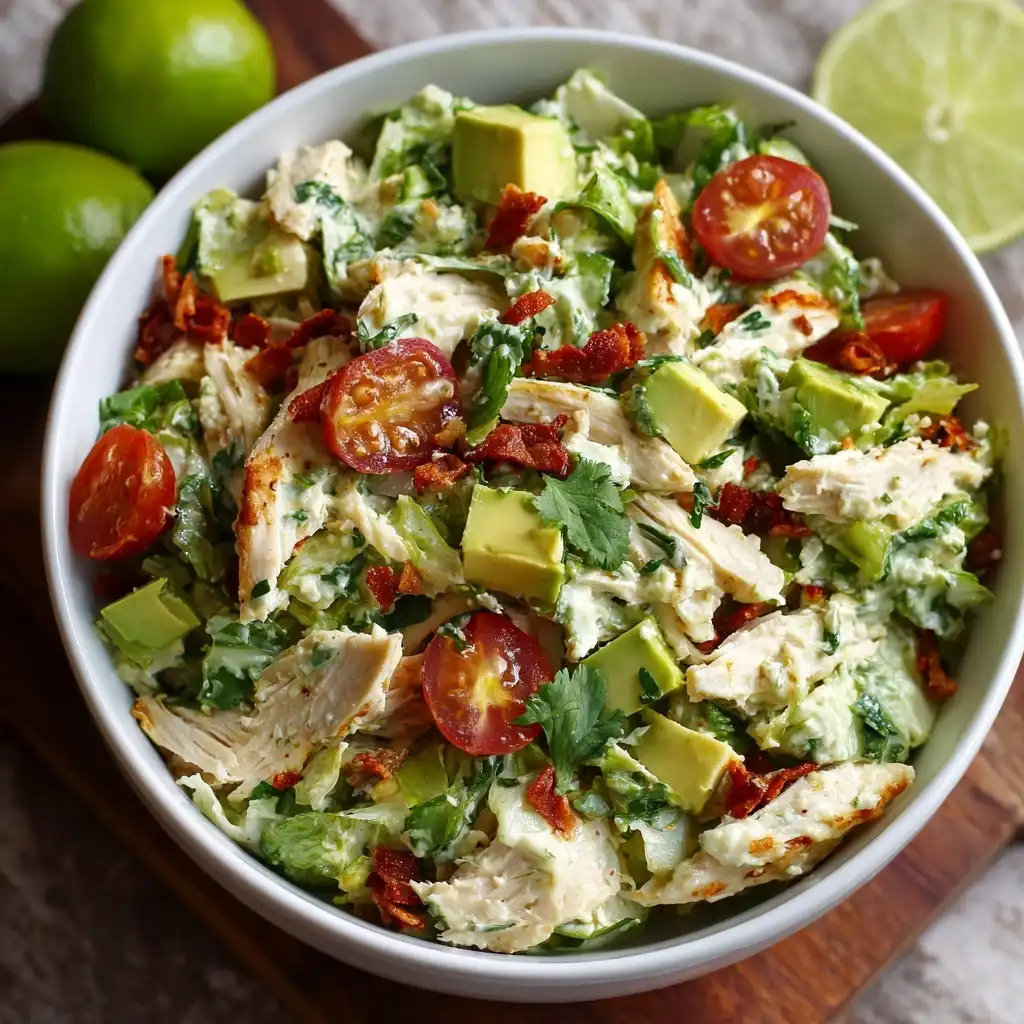
Chicken Avocado Salad is a vibrant, nutrient-dense dish that effortlessly bridges the gap between indulgence and wellness. Born from the convergence of California’s farm-to-table ethos and global culinary influences, this salad has evolved from a simple lunchbox staple into a celebrated centerpiece on restaurant menus, meal-prep rosters, and health-conscious kitchen counters worldwide. Its appeal lies not only in its creamy, savory, and subtly zesty flavor profile but also in its remarkable versatility—equally at home atop a bed of mixed greens, tucked into a whole-grain wrap, served chilled in a mason jar, or even transformed into a protein-rich grain bowl. Whether you’re seeking a 15-minute weeknight dinner, a make-ahead office lunch, or a crowd-pleasing potluck offering, Chicken Avocado Salad delivers freshness, satiety, and sophistication in every bite.
The History
While no single origin story defines Chicken Avocado Salad, its roots trace back to multiple culinary currents. Avocados—native to south-central Mexico over 10,000 years ago—were cultivated by Mesoamerican civilizations long before European contact. Spanish explorers introduced them to Europe in the 16th century, but it wasn’t until the early 20th century that avocados gained traction in the United States, particularly after the Hass variety (patented in 1935) proved ideal for commercial growing in Southern California. Meanwhile, grilled and roasted chicken salads surged in popularity during the mid-20th-century American health movement, as lean poultry replaced heavier meats in pursuit of lower-fat, higher-protein meals. The marriage of these two ingredients likely began informally in home kitchens across the Southwest in the 1970s and ’80s, buoyed by the rise of food magazines like Gourmet and Bon Appétit, which featured avocado-laced poultry dishes with increasing frequency. By the 2000s, food blogs, cooking shows, and social media platforms amplified its reach—showcasing variations with lime-cilantro dressings, quinoa bases, and Mediterranean twists—solidifying Chicken Avocado Salad as a modern classic grounded in tradition yet endlessly adaptable.
Ingredients Breakdown
Every exceptional Chicken Avocado Salad begins with thoughtfully selected, high-quality components. Below is an in-depth exploration of each core ingredient—not just what goes in, but why it matters:
- Chicken Breast or Thigh (Cooked & Diced/Shredded): Skinless, boneless chicken breast offers lean protein (≈31g per 4 oz), while thighs provide richer flavor and slightly more healthy fats (≈26g protein + monounsaturated fats). Pasture-raised or air-chilled chicken enhances taste and nutrition; leftover rotisserie chicken is a time-saving, flavorful option—just be mindful of sodium content and seasoning compatibility.
- Ripe Hass Avocados: The gold standard for creaminess and buttery depth. Look for dark, pebbled skin that yields gently to palm-pressure—not fingertips—to avoid bruising. Ripe avocados contain over 20 essential vitamins and minerals, including potassium (more than bananas), folate, vitamin K, and heart-healthy monounsaturated fats that enhance absorption of fat-soluble nutrients (like lycopene from tomatoes or beta-carotene from peppers).
- Red Onion (Finely Diced): Adds sharp, aromatic crunch and quercetin—a potent anti-inflammatory flavonoid. Soaking in cold water for 5–10 minutes mellows pungency and preserves crispness without sacrificing phytonutrient benefits.
- Cherry or Grape Tomatoes (Halved): Bursting with lycopene (enhanced by light cooking or pairing with healthy fats), vitamin C, and natural sweetness. Heirloom varieties add nuanced acidity and visual appeal.
- Red or Yellow Bell Pepper (Diced): A powerhouse of vitamin C (169% DV per cup), antioxidants like capsanthin, and subtle sweetness that balances avocado’s richness.
- Fresh Cilantro (Chopped): More than garnish—it contributes immune-supportive vitamins A and K, volatile oils with antimicrobial properties, and a bright, citrusy lift that cuts through richness. For those with the soapy-taste genetic variant (OR7D4 gene), substitute fresh parsley or basil.
- Lime Juice (Freshly Squeezed): Critical for both flavor and function: its citric acid prevents avocado browning via enzymatic inhibition, enhances mineral absorption (especially iron from chicken), and adds zesty brightness that lifts the entire profile. Bottled lime juice lacks volatile aromatic compounds and often contains preservatives.
- Extra-Virgin Olive Oil (EVOO): A cornerstone of Mediterranean-inspired balance. Choose cold-pressed, certified-organic EVOO rich in oleocanthal (a natural anti-inflammatory compound) and polyphenols. It emulsifies the dressing, carries fat-soluble flavors, and contributes velvety mouthfeel.
- Garlic (Minced or Microplaned): Raw garlic delivers allicin—the compound responsible for cardiovascular and immune support. Microplaning releases maximum enzymatic activity; let minced garlic sit 10 minutes before mixing to optimize allicin formation.
- Dijon Mustard (Optional but Recommended): Acts as a natural emulsifier for the vinaigrette, adds tangy depth, and contains selenium and B vitamins. Choose stone-ground or organic versions without added sugar or artificial dyes.
- Sea Salt & Freshly Ground Black Pepper: Enhance natural flavors and improve sodium-potassium balance. Unrefined sea salt retains trace minerals; freshly cracked pepper activates piperine, which boosts bioavailability of other nutrients (e.g., curcumin, resveratrol).
- Optional Add-Ins: Sliced radishes (crunch + glucosinolates), cucumber ribbons (hydration + silica), crumbled feta or cotija (umami + calcium), toasted pepitas or slivered almonds (crunch + zinc/magnesium), or microgreens (nutrient-dense finishing touch).
Step-by-Step Recipe
This meticulously tested method ensures perfect texture, balanced seasoning, and minimal browning—ideal for both immediate serving and next-day freshness.
- Prep the Chicken (10 minutes): If starting with raw chicken, season 2 boneless, skinless breasts (or 4 thighs) generously with salt, pepper, and smoked paprika (optional). Grill, pan-sear, or bake at 375°F (190°C) for 20–25 minutes (breast) or 30–35 minutes (thighs), until internal temperature reaches 165°F (74°C). Let rest 5–8 minutes, then dice into ½-inch cubes. For efficiency, use 3 cups pre-cooked, cooled rotisserie chicken—remove excess skin and shred or chop evenly.
- Ripen & Prep Avocados (5 minutes): Select two ripe Hass avocados. Cut lengthwise around the pit, twist to separate, and carefully remove the pit with a spoon. Scoop flesh into a large mixing bowl using a large spoon—avoid over-mixing at this stage. Mash *lightly* with a fork just until 70% creamy with 30% small, distinct chunks remaining—this creates textural contrast and prevents mushiness.
- Prep Aromatics & Veggies (8 minutes): Finely dice ¼ cup red onion and soak in ice water for 5 minutes. Drain and pat dry. Halve 1 cup cherry tomatoes. Dice ½ medium red bell pepper (≈¾ cup). Chop ¼ cup fresh cilantro leaves and tender stems. Mince 1 small garlic clove or microplane directly into the bowl.
- Build the Dressing (3 minutes): In a small bowl, whisk together 3 tbsp fresh lime juice, 2 tbsp extra-virgin olive oil, 1 tsp Dijon mustard, ½ tsp fine sea salt, and ¼ tsp freshly ground black pepper until fully emulsified (no separation). Taste and adjust—lime should be bright but not harsh; salt should enhance, not dominate.
- Combine Gently (4 minutes): Add drained red onion, tomatoes, bell pepper, cilantro, and cooked chicken to the avocado bowl. Pour dressing over top. Using a wide silicone spatula or large spoon, fold *from bottom up* in slow, deliberate motions—just 12–15 folds—until evenly coated but still textured. Overmixing warms the avocado and accelerates browning.
- Rest & Chill (Minimum 15 minutes): Cover bowl tightly with plastic wrap, pressing it directly onto the salad surface to limit air exposure. Refrigerate 15–30 minutes. This allows flavors to meld and cools ingredients for optimal freshness—never skip this step if serving chilled.
- Final Season & Serve (2 minutes): Uncover, give one gentle fold, and taste again. Adjust with a pinch more salt, a squeeze of lime, or extra black pepper. Serve immediately in chilled bowls, over baby spinach or arugula, in lettuce cups, or alongside whole-grain toast points.
Tips
- Avoid Browning Like a Pro: Lime juice is your first defense—but for extended storage (up to 24 hours), press plastic wrap directly onto the surface and store in an airtight container. Adding ½ tsp apple cider vinegar to the dressing further stabilizes avocado enzymes.
- Texture Is Everything: Never use a blender or food processor—avocado turns gluey. Always hand-mash with a fork and fold gently. For ultra-creamy versions (e.g., dip-style), mash avocado completely *before* adding other ingredients.
- Chicken Temperature Matters: Always cool chicken completely before mixing. Warm chicken releases steam, causing avocado to oxidize faster and making the salad watery.
- Make-Ahead Mastery: Prepare all components separately up to 2 days ahead (store chicken, chopped veggies, and dressing separately in sealed containers). Assemble no more than 2 hours before serving for best texture and color.
- Scale Without Sacrifice: Doubling? Use two large bowls and fold in batches—overcrowding leads to uneven mixing and heat buildup.
- Acid Balance Trick: If lime juice overwhelms, balance with ½ tsp raw honey or maple syrup—not for sweetness, but to round acidity and enhance fruit notes in avocado and tomato.
- Knife Skills for Uniformity: Use a serrated knife for tomatoes (prevents squashing), and chill bell peppers for 10 minutes before dicing—they’re firmer and yield cleaner cuts.
- Salting Strategy: Salt the chicken before cooking—not just after—for deeper, more consistent flavor penetration. For rotisserie chicken, rinse lightly under cold water and pat dry to reduce surface salt before adding to salad.
- Avocado Ripeness Hack: To speed ripening, place unripe avocados in a brown paper bag with a banana or apple for 1–3 days—the ethylene gas they emit accelerates softening.
- Cilantro Preservation: Store fresh cilantro like flowers—trim stems, place in a jar with 1 inch of water, cover loosely with a plastic bag, and refrigerate for up to 10 days.
Variations and Customizations
Chicken Avocado Salad is a canvas—not a formula. Here are 12 globally inspired, dietary-aligned, and occasion-specific adaptations—each preserving core integrity while inviting creativity:
- Mediterranean Style: Swap lime for lemon juice; add ⅓ cup crumbled feta, 2 tbsp kalamata olives (pitted & halved), 1 tbsp chopped fresh oregano, and 1 tsp capers. Serve over baby kale with a sprinkle of sumac.
- Southwest Fiesta: Add ½ cup black beans (rinsed), ¼ cup roasted corn, 1 diced jalapeño (seeds removed), and 1 tsp chili powder to dressing. Top with crushed tortilla chips and avocado crema (blended avocado + Greek yogurt + lime).
- Asian-Inspired: Replace lime with rice vinegar; use toasted sesame oil (1 tsp) + neutral oil (1 tbsp); add 1 tbsp low-sodium tamari, 1 tsp grated ginger, 1 scallion (thinly sliced), and 1 tbsp chopped roasted cashews. Garnish with sesame seeds and micro shiso.
- Keto-Friendly: Omit tomatoes and onions; add ¼ cup diced cucumber, 2 tbsp chopped dill, 2 tbsp full-fat plain Greek yogurt to dressing, and 2 tbsp crumbled blue cheese. Serve in butter lettuce cups.
- Paleo/Whole30 Compliant: Skip mustard (check label for sugar), use coconut aminos instead of soy-based condiments, and ensure all ingredients are unprocessed and compliant. Add diced apple (Granny Smith) and walnuts for crunch.
- Vegetarian “Chicken” Version: Substitute 1.5 cups marinated, baked tofu or 1.5 cups cooked chickpeas (mashed slightly). Boost umami with 1 tsp nutritional yeast and ½ tsp smoked paprika.
- Breakfast Bowl: Fold in 2 hard-boiled eggs (chopped), 2 tbsp crumbled bacon, and 1 tbsp chopped chives. Serve warm or room-temp over sautéed spinach.
- Grain-Powered: Toss with 1.5 cups cooked farro, freekeh, or tri-color quinoa. Add dried cranberries (unsweetened) and toasted pecans. Dress with apple cider vinaigrette.
- Low-Histamine Adaptation: Omit avocado (if sensitive), garlic, and tomatoes; use peeled, seeded cucumber, zucchini ribbons, roasted carrots, and fresh basil. Dress with olive oil + lemon zest only (no juice).
- Meal-Prep Mason Jar Layers: From bottom to top: 2 tbsp lemon-tahini dressing, ½ cup chopped romaine, ¼ cup cherry tomatoes, 2 tbsp red onion, ¼ cup chicken, ¼ avocado (tossed in lime), 1 tbsp cilantro. Seal and refrigerate upright—shake before eating.
- Smoky BBQ Twist: Marinate chicken in 2 tbsp sugar-free BBQ sauce before grilling. Add 2 tbsp finely chopped red cabbage and 1 tsp liquid smoke to dressing. Top with crispy fried onions.
- Herb-Forward Garden: Double the cilantro and add 1 tbsp each chopped mint and tarragon. Include blanched green peas and edible flowers (nasturtiums, pansies) for elegance.
Health Considerations and Nutritional Value
A single 1.5-cup serving (approx. 325g) of classic Chicken Avocado Salad delivers exceptional macro- and micronutrient synergy—making it far more than a “light lunch.” Here’s a science-backed nutritional snapshot (values approximate, based on USDA FoodData Central and peer-reviewed studies):
- Calories: ~380–420 kcal — balanced between satiating protein, fiber-rich produce, and heart-smart fats (not empty calories).
- Protein: 32–36g — meets ≈65–75% of average adult daily needs. High biological value protein supports muscle maintenance, satiety hormones (GLP-1, PYY), and thermic effect of food (TEF).
- Healthy Fats: 22–26g total fat, of which 15–18g are monounsaturated (MUFA) — primarily oleic acid from avocado and EVOO. Clinical trials link MUFA-rich diets to reduced LDL cholesterol, improved endothelial function, and decreased abdominal adiposity.
- Dietary Fiber: 10–12g — ≈40% of daily target. Combines soluble (avocado, bell pepper) and insoluble (tomato skins, red onion) fiber to support microbiome diversity, glycemic control, and regularity.
- Potassium: ~1,150 mg — exceeds banana (≈422 mg) and supports sodium-potassium pump function, critical for nerve transmission, blood pressure regulation, and fluid balance.
- Vitamin K1: ~45–55 mcg — ≈60–75% DV. Essential for calcium-binding in bone matrix (osteocalcin activation) and vascular health (inhibits arterial calcification).
- Folate (B9): ~120 mcg DFE — vital for DNA synthesis, red blood cell formation, and neural tube development (crucial for pregnancy nutrition).
- Antioxidant Capacity: ORAC score ≈2,400 μmol TE/100g — driven by lycopene (tomatoes), quercetin (onion), lutein (bell pepper), and glutathione (avocado). Correlates with reduced oxidative stress markers in human intervention studies.
- Glycemic Impact: Low glycemic load (<5) — thanks to high fiber, healthy fats, and protein, resulting in gradual glucose release and minimal insulin spikes—ideal for prediabetes and metabolic syndrome management.
- Allergen & Sensitivity Notes: Naturally gluten-free, dairy-free, soy-free, and nut-free (unless customized). Low-FODMAP when omitting onion/garlic (use infused oil and chives instead). Histamine levels moderate—avocado and lemon are generally tolerated, but sensitive individuals may prefer substitutions.
Note on Sustainability: Choosing pasture-raised chicken and Fair Trade-certified avocados supports regenerative agriculture, biodiversity, and ethical labor practices—making this salad as conscientious as it is nourishing.
Ingredients
- 2 (6-oz) boneless, skinless chicken breasts or 4 chicken thighs, cooked and cooled
- 2 ripe Hass avocados, pitted and scooped
- ¼ cup finely diced red onion, soaked in ice water and drained
- 1 cup cherry or grape tomatoes, halved
- ½ medium red bell pepper, finely diced (≈¾ cup)
- ¼ cup fresh cilantro leaves and tender stems, chopped
- 3 tablespoons freshly squeezed lime juice (about 1–1.5 limes)
- 2 tablespoons extra-virgin olive oil
- 1 teaspoon Dijon mustard (optional but recommended)
- ½ teaspoon fine sea salt, or to taste
- ¼ teaspoon freshly ground black pepper
- Additional lime wedges, extra cilantro, and microgreens for garnish (optional)
Directions
- Place the cooled, diced or shredded chicken in a large mixing bowl.
- Add the scooped avocado flesh to the bowl. Using a fork, gently mash the avocado until mostly smooth with small, creamy chunks remaining—do not over-mash.
- Add the soaked and drained red onion, halved tomatoes, diced bell pepper, and chopped cilantro.
- In a small bowl, whisk together the lime juice, olive oil, Dijon mustard (if using), sea salt, and black pepper until well combined and slightly emulsified.
- Pour the dressing over the salad ingredients. Using a wide spatula or large spoon, fold gently from the bottom upward—about 12–15 slow, deliberate folds—until everything is evenly coated but still vibrant and textured.
- Cover the bowl tightly with plastic wrap, pressing it directly onto the surface of the salad to minimize air exposure. Refrigerate for at least 15 minutes (up to 30 minutes) to allow flavors to meld and chill thoroughly.
- Before serving, uncover and give the salad one final gentle fold. Taste and adjust seasoning—add more lime for brightness, salt for depth, or pepper for warmth.
- Serve chilled in individual bowls, over leafy greens, in lettuce wraps, or alongside whole-grain crackers or toasted sourdough. Garnish with extra lime wedges, cilantro sprigs, and a sprinkle of microgreens for visual and nutritional flourish.
FAQ
- Q: Can I make this salad ahead of time?
A: Yes—with caveats. Assembled salad keeps well for up to 24 hours refrigerated if wrapped airtight with plastic pressed directly onto the surface. For best quality beyond 12 hours, prep components separately and combine within 2 hours of serving. - Q: Why does my avocado turn brown so fast?
A: Enzymatic oxidation occurs when avocado flesh contacts oxygen. Lime juice slows this by lowering pH, but physical barrier (plastic wrap) and cold temperature are equally crucial. Adding a thin layer of lime juice directly onto exposed avocado before covering helps further. - Q: Can I freeze Chicken Avocado Salad?
A: Not recommended. Avocados suffer severe texture degradation (grainy, watery) when frozen and thawed due to ice crystal formation disrupting cell structure. Freeze chicken separately instead. - Q: What can I use instead of cilantro?
A: Fresh flat-leaf parsley offers similar texture and mild freshness. Basil adds sweetness; dill provides tangy complexity; mint brings cool brightness—choose based on your flavor direction. - Q: Is there a low-carb version?
A: Absolutely. Omit tomatoes and onions (higher-carb veggies), increase avocado and bell pepper, add cucumber or celery for crunch, and boost protein with extra chicken or hard-boiled eggs. - Q: How do I pick the perfect avocado?
A: Look for dark green to nearly black, pebbled skin. Gently squeeze near the stem end—if it yields slightly to palm-pressure (not fingertips) and feels creamy—not mushy—it’s perfectly ripe. Avoid avocados with deep indentations or rancid odor near the stem. - Q: Can I use canned chicken?
A: Yes, in a pinch—but drain thoroughly and rinse to remove brine. Opt for low-sodium, water-packed varieties. Note: texture and flavor won’t match freshly cooked or rotisserie chicken. - Q: Is this salad safe during pregnancy?
A: Yes—when prepared with pasteurized ingredients and proper food safety: use fully cooked chicken (165°F), wash all produce thoroughly, avoid unpasteurized cheeses or sprouts unless specified safe, and consume within 24 hours refrigerated. - Q: Can I add cheese?
A: Certainly! Crumbled feta, cotija, goat cheese, or sharp cheddar all pair beautifully. Add just before serving to preserve texture and prevent melting or clumping. - Q: What’s the best way to reheat leftovers?
A: Do not reheat—this is a cold salad. If chicken was warm when assembled, chilling restores ideal texture. Gently stir and refresh with a squeeze of lime before serving.
Summary
Chicken Avocado Salad is a masterclass in culinary harmony—where lean, flavorful protein meets creamy, nutrient-dense avocado and vibrant, antioxidant-rich vegetables, all bound by a bright, herbaceous lime dressing. It’s a deeply satisfying, endlessly customizable dish that supports sustained energy, digestive health, cardiovascular wellness, and mindful eating—all without compromising on taste, texture, or joy.
Whether enjoyed as a revitalizing lunch, a protein-packed snack, or a sophisticated starter, this salad proves that nourishment and delight are not mutually exclusive—but inherently, deliciously intertwined.