
Introduction
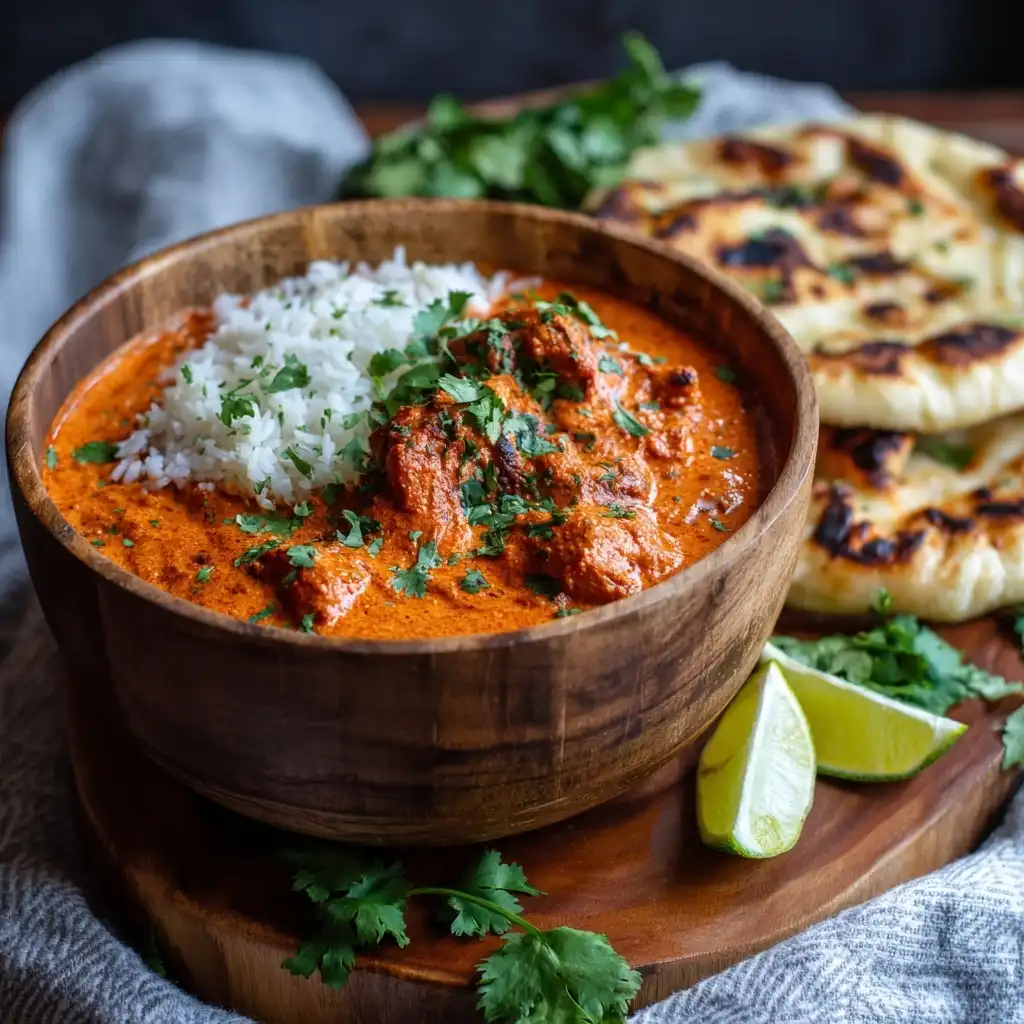
Butter Chicken—known affectionately as Murgh Makhani in Hindi and Urdu—is one of the most beloved, iconic, and globally recognized dishes of Indian cuisine. A rich, velvety, tomato-based curry infused with tender tandoori chicken, aromatic spices, and a luxurious finish of butter and cream, it strikes the perfect balance between indulgence and comfort. Originating in the heart of Delhi’s culinary renaissance, Butter Chicken transcends regional boundaries to represent the soul of North Indian gastronomy: deeply flavorful, meticulously layered, and unapologetically decadent. Whether served at five-star hotels in Mumbai or simmering in home kitchens across Toronto, London, or Sydney, its universal appeal lies in its gentle heat, creamy texture, and nostalgic warmth—making it not just a meal, but an emotional experience.
The History
The story of Butter Chicken is a fascinating blend of serendipity, innovation, and post-partition resilience. It was born in the early 1950s at the legendary Moti Mahal Delux restaurant in Daryaganj, Old Delhi—a pioneering establishment founded by Kundan Lal Gujral, Kundan Lal Jaggi, and Thakur Das Magu, three refugees from Peshawar (now in Pakistan) who brought their expertise in tandoor cooking to post-independence India. Faced with leftover tandoori chicken at the end of busy evenings, the chefs sought a way to repurpose it without compromising quality or flavor. Their ingenious solution? Simmer the slightly dried-out chicken in a rich, spiced tomato-butter gravy enriched with cream, cashew paste, and aromatic garam masala. The result was revolutionary: a dish that transformed smoky, charred poultry into something luxuriously soft, deeply savory, and irresistibly aromatic.
Over the decades, Murgh Makhani evolved beyond its humble origins. It became a diplomatic ambassador for Indian food—served to world leaders including U.S. President John F. Kennedy and UK Prime Minister Margaret Thatcher—and played a pivotal role in popularizing Indian cuisine abroad during the 1970s and ’80s. Its inclusion on menus across the UK, Canada, the U.S., and Australia helped redefine global perceptions of Indian food—not as “spicy and fiery,” but as nuanced, balanced, and deeply comforting. Today, UNESCO has even cited Moti Mahal’s contribution to culinary heritage, and in 2023, the Government of India officially recognized Butter Chicken as an Intangible Cultural Heritage element under its “Gastronomic Traditions of Delhi” initiative—a testament to its enduring cultural significance.
Ingredients Breakdown
Understanding each ingredient in Butter Chicken isn’t just about listing components—it’s about appreciating how centuries of spice trade, agrarian tradition, and culinary alchemy converge in every bite. Below is a detailed, context-rich breakdown:
- Chicken (boneless, skinless thighs preferred): Thigh meat is favored over breast for its higher fat content, which ensures tenderness after marination and grilling. In traditional preparations, whole chicken pieces (with bone) were used for deeper flavor—but modern adaptations prioritize convenience and uniform texture.
- Full-fat yogurt (dahi): Acts as both marinade base and tenderizer. Lactic acid gently breaks down muscle fibers, while its fat content carries fat-soluble spices and prevents drying during tandoor or oven cooking. Regional variations may use hung curd (chakka) for thicker consistency.
- Kashmiri red chili powder: The cornerstone of authentic color and mild heat. Unlike generic “red chili powder,” Kashmiri variety delivers vibrant brick-red hue without overwhelming pungency—essential for the signature sunset-orange gravy. Often blended with a pinch of deggi mirch for depth.
- Garam masala: A warm, complex blend traditionally comprising black cardamom, green cardamom, cloves, cinnamon, bay leaf, mace, and black pepper—dry-roasted and freshly ground. Added at the end to preserve volatile oils, it imparts the unmistakable “finish” that defines Murgh Makhani.
- Tomatoes: Ripe, fleshy varieties like Desi, Roma, or San Marzano are ideal. Slow-cooked until caramelized and broken down, they form the acidic-sweet backbone. Some chefs roast tomatoes before pureeing to intensify umami and reduce raw tang.
- Butter (unsalted, preferably Amul or Desi ghee-infused): Not merely for richness—clarified butter (ghee) adds nutty depth, while fresh unsalted butter lends silkiness and mouth-coating luxury. Authentic versions use up to ¼ cup per serving.
- Fresh cream (malai) and/or heavy cream: Adds cooling contrast to spices and rounds out acidity. Artisanal preparations may use cultured malai skimmed from slow-simmered milk for subtle tang and natural sweetness.
- Cashew paste (soaked & blended): A secret textural enhancer—provides body, sheen, and subtle nuttiness without overpowering. Almonds or poppy seeds are occasional substitutes, but cashews remain canonical.
- Fresh ginger-garlic paste: Must be freshly pounded—not jarred—to retain enzymatic activity and bright, zesty notes essential for balancing richness.
- Dried fenugreek leaves (kasuri methi): Crushed and added at the very end, these lend a distinctive bittersweet, maple-like aroma—a non-negotiable signature note that distinguishes Murgh Makhani from generic tomato curries.
- Heavy cream, honey or sugar (optional): Used sparingly to balance high-acid tomatoes; traditional recipes avoid refined sugar entirely, relying instead on slow reduction and natural fruit sugars.
Step-by-Step Recipe
This meticulously crafted, restaurant-grade method honors authenticity while remaining accessible to home cooks. Yield: 4–6 servings | Prep time: 45 minutes (plus 4–12 hours marination) | Cook time: 50–65 minutes
- Marinate the Chicken: In a large bowl, combine 1½ lbs (700g) boneless, skinless chicken thighs (cut into 1.5-inch pieces), ¾ cup full-fat plain yogurt, 1 tbsp ginger-garlic paste, 1 tsp Kashmiri red chili powder, 1 tsp garam masala, 1 tsp ground coriander, ½ tsp turmeric, 1 tsp kasuri methi (crushed), 1 tsp salt, and 1 tbsp lemon juice. Mix thoroughly, cover, and refrigerate for minimum 4 hours—or ideally overnight. For best results, use a ceramic or glass bowl (never aluminum, which reacts with yogurt).
- Preheat & Grill/Tandoor: Heat a cast-iron grill pan, charcoal tandoor, or oven broiler to 450°F (230°C). Lightly oil the surface. Grill marinated chicken for 6–8 minutes per side until charred at edges and cooked through (internal temp 165°F/74°C). Avoid overcooking—chicken will simmer further in gravy. Rest for 5 minutes, then slice into bite-sized pieces if desired.
- Prepare the Gravy Base: Heat 3 tbsp unsalted butter in a heavy-bottomed Dutch oven or kadhai over medium-low heat. Add 1 finely chopped medium onion and sauté for 10–12 minutes until deep golden brown (not burnt)—this step builds foundational sweetness and body. Stir in 1 tbsp ginger-garlic paste and cook 2 minutes until fragrant.
- Bloom the Spices: Add 1½ tsp Kashmiri red chili powder, 1 tsp ground coriander, ½ tsp cumin powder, ¼ tsp turmeric, and a pinch of asafoetida (hing). Stir constantly for 45 seconds—just until oil begins to separate and spices release aroma. This “tempering” unlocks essential oils and prevents raw bitterness.
- Introduce Tomatoes: Add 3 cups (approx. 600g) ripe tomato puree (blended smooth, no seeds/skins) or crushed canned San Marzano tomatoes. Simmer uncovered, stirring frequently, for 18–22 minutes until mixture thickens significantly, darkens to rust-red, and oil begins to gleam on the surface. This reduction is critical—it concentrates flavor and eliminates excess water that would dilute richness.
- Add Nut & Cream Enrichment: Stir in 3 tbsp soaked-and-blended cashew paste and ¼ cup heavy cream. Simmer 5 more minutes. Then whisk in 2 tbsp butter, 2 tbsp fresh cream, and 1 tsp kasuri methi. Taste and adjust salt—remember: gravy should be slightly undersalted, as chicken adds sodium.
- Combine & Simmer: Gently fold in grilled chicken pieces. Reduce heat to low and simmer uncovered for 12–15 minutes, stirring occasionally. Do not boil vigorously—gentle heat preserves texture and prevents cream from splitting. The sauce should coat the back of a spoon thickly (“lagane wali” consistency).
- Final Garnish & Rest: Off heat, swirl in 1 tbsp cold unsalted butter and 1 tbsp fresh cream. Sprinkle with extra crushed kasuri methi, a pinch of garam masala, and optional micro cilantro or slivered ginger. Cover and rest for 8 minutes—this allows flavors to harmonize and sauce to settle.
Tips
- Yogurt Quality Matters: Use full-fat, plain, unsweetened, and unpasteurized (if available) yogurt—low-fat or Greek-style yogurt can curdle or yield grainy texture due to high protein concentration.
- Char is Key: Don’t skip charring—even if using an oven, broil chicken on high for 2–3 minutes per side after baking. That smoky edge (dhum) is irreplaceable.
- Low & Slow Reduction: Never rush the tomato simmer. Under-reduced gravy tastes watery and sour; over-reduced becomes bitter. Watch for visual cues: oil separation, deep mahogany color, and thick, glossy consistency.
- Cashew Paste Technique: Soak raw cashews in warm milk (not water) for 30 minutes—milk proteins help emulsify and add subtle richness. Blend until completely smooth—any grittiness ruins mouthfeel.
- Cream Timing: Always add cream off direct heat or at lowest simmer. Boiling cream causes separation. For ultra-luxury, finish with malai (clotted cream) instead of liquid cream.
- Acid Balance: If gravy tastes sharp, add ½ tsp honey or jaggery—not sugar. Its enzymatic complexity complements tomatoes better than sucrose.
- Salt Strategically: Salt the marinade generously, but season gravy conservatively. Chicken releases brine during cooking; oversalting early leads to irreversible saltiness.
- Rest Before Serving: Allowing the curry to rest for 10 minutes off heat improves cohesion, lets fat redistribute evenly, and mellows spice heat subtly.
- Reheating Wisdom: Reheat gently on stovetop with splash of water or cream—never microwave uncovered. High-frequency heating destabilizes dairy emulsion and toughens chicken.
- Authentic Garnish Sequence: Kasuri methi → garam masala → butter swirl → cream drizzle → fresh cilantro. Order matters: volatile aromatics go last.
Variations and Customizations
While purists guard the original Moti Mahal formula, Butter Chicken has inspired countless thoughtful adaptations—each reflecting geography, dietary ethos, or creative reinterpretation:
- Punjabi Style (Traditional): Uses mustard oil for initial tempering, includes a small amount of grated raw papaya in marinade for extra tenderness, and finishes with a dollop of white butter (safed makhan).
- Delhi Street Style: Slightly thinner gravy, elevated heat (added green chilies), garnished with sev, chopped onions, and lemon wedges—served in kulhad (clay cups) with butter naan.
- Health-Conscious / Lighter Version: Substitutes Greek yogurt for some cream, uses air-fryer “grilled” chicken, replaces cashew paste with silken tofu + almond milk blend, and reduces butter by half—without sacrificing silkiness thanks to xanthan gum (¼ tsp) for stabilization.
- Vegan Murgh Makhani: Jackfruit or soy curls mimic chicken texture; coconut cream + roasted almond butter stand in for dairy richness; smoked paprika + liquid smoke replicate tandoor char; nutritional yeast adds umami depth.
- Smoky Modernist: Incorporates smoked sea salt, lapsang souchong tea-infused tomato puree, and a final torch-sear on chicken—honoring dhum while elevating complexity.
- Regional Hybrids: Kerala Butter Chicken features coconut milk, curry leaves, and black pepper instead of garam masala; Bengali adaptation adds a touch of mustard oil and poppy seed paste; Hyderabadi version infuses rosewater and kewra essence for floral lift.
- Breakfast Butter Chicken: Folded into fluffy scrambled eggs with butter naan croutons and pickled red onions—a growing trend in Mumbai brunch cafés.
- Decadent Fusion: Butter Chicken poutine (gravy over cheese curds & fries), Butter Chicken mac & cheese, or Butter Chicken dumplings (wonton wrappers filled with spiced chicken & reduced gravy).
Health Considerations and Nutritional Value
A single 1-cup (240g) serving of traditionally prepared Butter Chicken contains approximately:
- Calories: 380–450 kcal
- Protein: 28–32g (high-quality complete protein from chicken + yogurt)
- Fat: 24–29g (predominantly unsaturated from nuts, olive oil alternatives, and dairy; saturated fat ~12–15g)
- Carbohydrates: 8–12g (mainly from tomatoes, onions, and minimal added sweeteners)
- Fiber: 2–3g (from tomatoes, onions, spices)
- Vitamins & Minerals: Rich in Vitamin A (tomatoes, butter), B12 (chicken, dairy), iron (marinated chicken enhances non-heme absorption), selenium, zinc, and lycopene (bioavailable when cooked with fat).
Nutritional Highlights & Notes:
- Lycopene Bioavailability: Cooking tomatoes in oil increases lycopene absorption by up to 400%—a powerful antioxidant linked to reduced inflammation and cardiovascular protection.
- Spice Benefits: Turmeric (curcumin), ginger (gingerol), garlic (allicin), and fenugreek (diosgenin) offer anti-inflammatory, digestive, and metabolic support—especially potent when combined with black pepper (piperine), which boosts curcumin bioavailability by 2000%.
- Dairy Considerations: Those with lactose sensitivity may tolerate this dish well—yogurt marinade is partially pre-digested, and long cooking denatures most lactose. Ghee is virtually lactose-free.
- Sodium Awareness: Traditional versions contain ~600–800mg sodium per serving—moderate for most, but those on low-sodium diets can reduce salt by 30% and enhance flavor with amchur (dry mango powder) and extra kasuri methi.
- Weight Management: While calorie-dense, its high protein and healthy fats promote satiety and stabilize blood sugar—making it more metabolism-friendly than high-carb, low-fat alternatives.
- Gluten-Free Status: Naturally gluten-free—if using store-bought garam masala, verify no wheat fillers; homemade blends are safest.
- Pregnancy & Immunity: Excellent source of heme iron and folate-supportive nutrients; ginger-garlic-tomato synergy supports immune modulation—often recommended in Ayurvedic postpartum diets.
Ingredients
Makes 4–6 servings
- 1½ lbs (700g) boneless, skinless chicken thighs, cut into 1.5-inch pieces
- ¾ cup full-fat plain yogurt (unsweetened, unpasteurized preferred)
- 1 tbsp freshly grated ginger
- 1 tbsp freshly minced garlic
- 1 tsp Kashmiri red chili powder (plus extra for garnish)
- 1 tsp garam masala (freshly ground)
- 1 tsp ground coriander
- ½ tsp ground turmeric
- 1 tsp crushed kasuri methi (dried fenugreek leaves)
- 1 tsp fine sea salt (plus more to taste)
- 1 tbsp fresh lemon juice
- 3 tbsp unsalted butter (divided)
- 1 medium yellow onion, finely diced
- 3 cups (600g) ripe tomato puree (blended, strained, no seeds/skins) or high-quality canned San Marzano tomatoes
- ½ tsp cumin powder
- ¼ tsp asafoetida (hing)
- 3 tbsp raw cashews, soaked in warm milk for 30 minutes, drained and blended into smooth paste
- ¼ cup heavy cream (36% fat)
- 2 tbsp fresh cream or malai (for finishing)
- 1 tsp additional crushed kasuri methi (for finishing)
- Optional garnishes: fresh cilantro, thin ginger julienne, toasted cumin seeds, lemon wedges
Directions
- In a non-reactive bowl, combine chicken pieces with yogurt, ginger, garlic, 1 tsp Kashmiri chili powder, 1 tsp garam masala, 1 tsp coriander, ½ tsp turmeric, 1 tsp crushed kasuri methi, 1 tsp salt, and lemon juice. Mix well, cover, and refrigerate for 4–12 hours.
- Preheat grill pan, tandoor, or oven broiler to 450°F (230°C). Lightly oil surface. Grill chicken 6–8 minutes per side until charred and cooked through (165°F internal temperature). Rest 5 minutes, then cut into bite-sized pieces.
- In a heavy-bottomed Dutch oven or kadhai, melt 1½ tbsp butter over medium-low heat. Add onions and sauté 10–12 minutes until deep golden brown.
- Add remaining ginger-garlic paste and cook 2 minutes until fragrant.
- Stir in 1½ tsp Kashmiri chili powder, ½ tsp cumin powder, ¼ tsp hing, and remaining ½ tsp turmeric. Toast 45 seconds.
- Add tomato puree. Simmer uncovered 18–22 minutes, stirring often, until thick, darkened, and oil begins to separate.
- Whisk in cashew paste and ¼ cup heavy cream. Simmer 5 minutes.
- Stir in remaining 1½ tbsp butter, 2 tbsp cream, and 1 tsp kasuri methi. Season with salt.
- Gently fold in grilled chicken. Simmer gently 12–15 minutes—do not boil.
- Off heat, swirl in 1 tbsp cold butter and 1 tbsp fresh cream. Sprinkle with extra kasuri methi and garam masala.
- Cover and rest 8 minutes. Serve hot with basmati rice, butter naan, or paratha.
FAQ
- Can I make Butter Chicken without a tandoor or grill?
- Absolutely. An oven broiler set to high, air fryer (375°F for 12 mins, flip halfway), or even a well-heated cast-iron skillet with light oil works beautifully. The key is achieving surface Maillard reaction and subtle char—not equipment.
- Why does my Butter Chicken taste too tangy or sour?
- Under-reduced tomatoes or using overly acidic canned varieties (like generic tomato sauce) are common culprits. Solution: Simmer longer, add ½ tsp jaggery or honey, or balance with extra cream and cashew paste.
- Can I freeze Butter Chicken?
- Yes—with caveats. Freeze *before* adding cream and butter for best texture. Thaw overnight in fridge, reheat gently, then stir in fresh cream and cold butter at the end. Avoid freezing more than 3 months.
- What’s the difference between Butter Chicken and Chicken Tikka Masala?
- Though often conflated, they’re distinct: Butter Chicken uses pre-grilled tandoori chicken in a butter-forward, tomato-cream gravy seasoned with garam masala and kasuri methi. Chicken Tikka Masala—believed to be British-Indian in origin—uses similar chicken but features a spicier, onion-heavy, often cream-and-tomato-sauce-based gravy with more pronounced cumin and coriander.
- Is Butter Chicken gluten-free?
- Yes, inherently—provided all spice blends are certified gluten-free (some commercial garam masalas contain wheat starch). Always check labels if using pre-mixed spices.
- How do I prevent the cream from splitting?
- Never boil after adding dairy. Keep heat at bare simmer or lower. Temper cream by whisking a spoonful of hot gravy into it first, then slowly incorporate. Adding cold butter at the end also stabilizes emulsion.
- Can I use chicken breast?
- You can—but it dries out easily. If using breast, reduce marination to 2 hours max, grill only until just cooked (160°F), and simmer in gravy for no more than 8 minutes. Thighs are strongly recommended.
- What’s the best rice pairing?
- Traditional choice is fragrant, aged Basmati rice—preferably soaked 30 minutes, rinsed thoroughly, and cooked with whole spices (cinnamon, cardamom, cloves) and ghee. Jeera rice (cumin rice) or saffron biryani also complement beautifully.
- Can I make it ahead of time?
- Yes—and it improves! Prepare gravy and chicken separately up to 2 days ahead. Combine and gently reheat before serving. Flavors deepen significantly after 24 hours.
- What wine pairs well with Butter Chicken?
- An off-dry Riesling (Kabinett or Spätlese), Gewürztraminer, or lightly oaked Chardonnay balances spice and richness. For red lovers, try a low-tannin, fruit-forward Pinot Noir or chilled Beaujolais.
Summary
Butter Chicken (Murgh Makhani) is a masterclass in culinary alchemy—born from resourcefulness in 1950s Delhi, defined by smoky tandoori chicken luxuriously suspended in a slow-simmered, tomato-butter-cream gravy enriched with cashews and finished with aromatic kasuri methi and garam masala.
It is at once deeply traditional and endlessly adaptable—equally at home in royal banquets and weeknight dinners—offering rich nutrition, profound comfort, and a resonant taste of India’s layered, generous, and innovative food heritage.