
Introduction
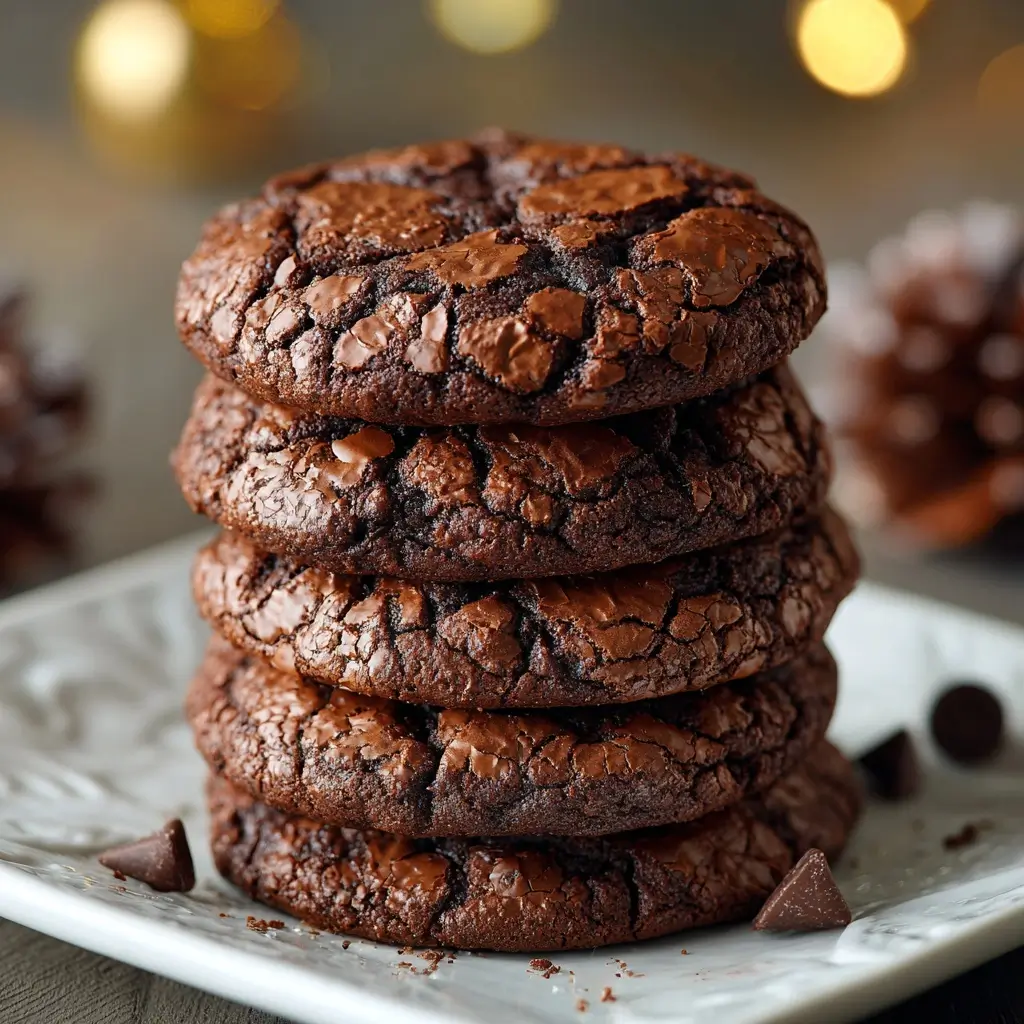
Brownie cookies—also affectionately dubbed “brookies,” “brownie-style cookies,” or “fudgy cookie hybrids”—represent the perfect marriage of two beloved dessert worlds: the dense, rich decadence of a classic brownie and the portable, chewy, slightly crisp-edged charm of a cookie. Unlike traditional drop cookies that rely on creamed butter and sugar for lift, brownie cookies derive their signature texture from a batter-based approach—thicker, less aerated, and intensely chocolate-forward. They bake up with a glossy, crackled top, a tender yet substantial crumb, and an irresistible fudgy center that yields just enough resistance to satisfy without crumbling. Whether served warm with a scoop of vanilla bean ice cream, packed into lunchboxes, or gifted in festive tins, brownie cookies occupy a cherished niche in modern baking culture—not quite cake, not quite cookie, but wholly unique in their indulgent appeal.
The History
The origins of the brownie cookie are delightfully ambiguous—a delicious case of culinary convergence rather than a single documented invention. The American brownie itself emerged in the late 19th century, with competing claims from Chicago (the 1893 World’s Columbian Exposition), Boston (Parker House Hotel’s 1896 recipe), and Maine (a 1904 Fannie Farmer cookbook version). Meanwhile, drop cookies gained popularity in the early 20th century as home bakers sought convenient, oven-friendly treats using readily available ingredients like shortening, eggs, and granulated sugar. The fusion likely began informally in home kitchens during the mid-20th century, as bakers experimented with adapting brownie batter for cookie sheets—reducing pan size, adjusting bake time, and adding slight structural tweaks (like a touch more flour or an extra egg) to ensure portionable integrity. The term “brookie” entered mainstream food lexicon in the 1990s and early 2000s, initially describing the layered dessert (brownie base + cookie dough swirl), but soon evolved to encompass standalone brownie-textured cookies. Food bloggers, viral social media posts (especially Instagram and Pinterest from 2015 onward), and bakery chains like Insomnia Cookies and Levain Bakery’s fudgy iterations further cemented their status. Today, brownie cookies appear in cookbooks by Martha Stewart, Dorie Greenspan, and Yotam Ottolenghi (in adapted forms), signaling their arrival as a globally recognized, genre-defying confection with deep American roots and ever-expanding international reinterpretations.
Ingredients Breakdown
Understanding each ingredient’s functional role is essential to mastering brownie cookies—not just for flavor, but for achieving that elusive balance of fudginess, structure, and shine:
- Unsweetened Chocolate (or High-Cocoa Baking Chocolate): Provides intense, unsweetened cocoa solids and cocoa butter—the backbone of deep chocolate flavor and moist density. Melting it with butter ensures even dispersion and emulsification. Opt for 100% cacao for maximum richness (adjust sugar accordingly) or 55–70% for balanced bitterness and sweetness.
- Butter (Unsalted, Preferably European-Style): Adds moisture, richness, and flakiness potential. Unsalted allows precise sodium control; high-fat European butter (82–86% fat) contributes superior tenderness and a luxurious mouthfeel. Melted (not browned, unless specified for variation) to integrate smoothly with chocolate.
- Granulated Sugar: Supplies sweetness, aids in crust formation via caramelization, and contributes to spread and tenderness. Its fine crystals dissolve easily in warm chocolate-butter mixture, creating a smooth base. Some recipes include a small portion of superfine sugar for enhanced gloss.
- Packed Brown Sugar (Light or Dark): Introduces molasses, which adds acidity (reacting with baking soda if used), moisture retention, chewiness, and nuanced caramel/toffee notes. Dark brown sugar intensifies flavor and softness; light offers subtler depth.
- Eggs (Large, Room Temperature): Act as binders, emulsifiers, and leavening agents (especially when whipped). The proteins set during baking to provide structure, while yolks contribute fat and richness. Using room-temperature eggs ensures uniform incorporation and prevents seizing the melted chocolate-butter mixture.
- Vanilla Extract (Pure, Not Imitation): Enhances and rounds out chocolate flavor with aromatic complexity. A high-quality Madagascar or Tahitian extract makes a discernible difference—especially important given the minimal ingredient list.
- All-Purpose Flour (Spooned & Levelled): The primary structural agent. Too much leads to cakey or dry cookies; too little causes excessive spread and fragility. Measuring by weight (120 g/cup) is strongly recommended over volume for consistency. Some bakers substitute up to 25% with cake flour for added tenderness.
- Cocoa Powder (Natural or Dutch-Process): Deepens chocolate intensity and color. Natural cocoa (acidic) works best with baking soda; Dutch-process (neutral pH) pairs well with baking powder or no chemical leavener. Sift before adding to prevent lumps and ensure even distribution.
- Leavening Agent (Baking Soda or Baking Powder—or None): Traditional brownie cookies often omit leaveners entirely for maximum density. When included, baking soda (¼ tsp) reacts with brown sugar’s molasses for subtle lift and spread control; baking powder (½ tsp) adds gentle puff without compromising fudginess. Overuse yields cakey results—avoid unless the recipe specifically calls for it.
- Salt (Fine Sea Salt or Kosher Salt): Not merely for seasoning—it heightens all other flavors, balances sweetness, and strengthens gluten bonds slightly for improved texture. Use ½ tsp fine sea salt or ¾ tsp Diamond Crystal kosher salt per batch.
- Chocolate Chips or Chunks (Semi-Sweet, Bittersweet, or Milk Chocolate): Provide melty pockets, textural contrast, and visual appeal. High-cocoa chips resist blooming; chopped chocolate bars offer superior melt and flavor. Mini chips distribute more evenly; large chunks create dramatic gooey centers.
- Optional Add-Ins: Toasted nuts (walnuts, pecans), flaky sea salt flakes (for finishing), espresso powder (½ tsp enhances chocolate without tasting like coffee), instant coffee granules, orange zest, or freeze-dried raspberries—each modifies flavor profile and mouthfeel in intentional ways.
Step-by-Step Recipe
- Prep Work (15 minutes): Position oven racks in upper and lower thirds. Preheat oven to 350°F (175°C). Line two large rimmed baking sheets with parchment paper or silicone baking mats—do not grease, as excess fat encourages spreading. Measure all ingredients precisely. Chop chocolate (if using bar chocolate) and toast nuts (if using) until fragrant (5–7 minutes at 350°F), then cool completely.
- Melt Chocolate & Butter (5 minutes): In a heatproof bowl set over a saucepan of barely simmering water (double boiler), combine chopped unsweetened chocolate and butter. Stir constantly with a silicone spatula until fully melted, smooth, and glossy—about 3–4 minutes. Remove from heat and let cool slightly (1–2 minutes) to avoid cooking eggs later.
- Cream Sugars & Eggs (3 minutes): In a large mixing bowl, whisk together granulated sugar, brown sugar, and cooled chocolate-butter mixture until fully combined and slightly thickened. Add eggs one at a time, whisking vigorously for 30 seconds after each addition until fully incorporated and mixture appears glossy and slightly ribbon-like. Whisk in vanilla extract until smooth.
- Dry Ingredients Integration (2 minutes): In a separate bowl, sift together flour, cocoa powder, salt, and baking soda (if using). Gently fold dry ingredients into wet mixture using a spatula in 3 additions, mixing only until no streaks of flour remain. Overmixing develops gluten and leads to toughness—stop as soon as combined.
- Final Fold & Chill (10–60 minutes): Gently fold in chocolate chips/chunks and any optional add-ins (nuts, etc.). For optimal texture and controlled spread, refrigerate dough for at least 30 minutes (up to 72 hours). Chilling solidifies fats, slows oven spread, enhances flavor development, and improves slice-and-bake consistency. Do not skip this step—it’s non-negotiable for professional-grade results.
- Portion & Bake (18–22 minutes): Using a 1.5–2 oz (45–60g) cookie scoop or two spoons, portion chilled dough into rounded mounds onto prepared sheets, spacing them 3 inches apart (they will spread). Optional: Press a few extra chocolate chunks or a flake of sea salt onto each mound for visual flair. Bake for 12 minutes, then rotate trays front-to-back and top-to-bottom. Continue baking 6–10 minutes more—until edges are set and appear dry, tops are cracked and shiny, and centers look *just* set (they will continue to firm as they cool). Avoid overbaking—centers should still look slightly soft and moist.
- Cool & Set (25–35 minutes): Remove sheets from oven and let cookies cool on pans for 10 minutes—this allows residual heat to finish cooking interiors and sets their structure. Then, carefully transfer cookies to wire racks using a thin spatula. Cool completely (15–25 minutes) before serving. They will be extremely soft when hot—patience yields perfect fudgy-chewy texture.
Tips
- Measure by Weight: Invest in a digital kitchen scale. Flour measured by volume varies wildly (80–140g per cup); 120g is the gold standard for brownie cookies. Even minor discrepancies cause major texture shifts.
- Use High-Quality Chocolate: The fewer ingredients, the more each matters. Choose chocolate with cocoa butter as the only fat—avoid “chocolatey chips” with palm oil or hydrogenated fats, which don’t melt or set properly.
- Chill Dough Religiously: Warm dough spreads uncontrollably, yielding thin, greasy, fragile cookies. Refrigeration is essential—not optional. For make-ahead convenience, portion dough balls before chilling and freeze for up to 3 months (bake straight from frozen, +2–3 minutes).
- Don’t Overbake: Pull cookies from the oven when centers still look slightly underdone. Carryover cooking will finish them perfectly. A toothpick inserted ½ inch from edge should come out with moist crumbs—not wet batter, not clean.
- Rotate Pans Mid-Bake: Home ovens have hot spots. Rotating ensures even browning and prevents burnt edges or pale centers.
- Cool on Sheet First: Skipping the 10-minute pan cool results in broken cookies. The residual heat firms the base while preserving the fudgy interior.
- Store Strategically: Keep in an airtight container at room temperature for up to 4 days. For longer storage, freeze baked cookies (layered with parchment) for up to 3 months. Thaw at room temperature or reheat in a 325°F oven for 3–4 minutes.
- Room-Temperature Ingredients Matter: Cold eggs can cause the chocolate-butter mixture to seize into grainy clumps. Let eggs sit in warm water for 5 minutes if forgotten.
- Use Light-Colored Baking Sheets: Dark sheets absorb more heat and promote over-browning on bottoms. If using dark pans, reduce oven temp by 25°F.
- Understand Your Oven: Calibrate it with an oven thermometer. Many run 25–50°F hotter or cooler than indicated—this dramatically affects spread and doneness.
Variations and Customizations
Brownie cookies are a masterclass in adaptable baking—easily tailored to dietary needs, seasonal ingredients, global flavors, or creative whims:
- Gluten-Free: Substitute 1:1 gluten-free all-purpose flour blend (with xanthan gum included) and add ¼ tsp additional xanthan gum for elasticity. Ensure cocoa powder and chocolate are certified GF.
- Vegan: Replace butter with refined coconut oil or vegan butter; use flax or chia “eggs” (1 tbsp ground seed + 2.5 tbsp water per egg, rested 10 mins); choose dairy-free chocolate. Add 1 tsp apple cider vinegar to react with baking soda for lift.
- Low-Sugar / Refined-Sugar-Free: Swap granulated and brown sugar with coconut sugar (same volume, slightly less sweet) or erythritol-based blends (follow package conversion ratios). Reduce total sugar by 25% and add 1 tbsp unsweetened applesauce for moisture retention.
- Protein-Packed: Add 2–3 tbsp unflavored collagen peptides or whey protein isolate (reduce flour by same amount). Include almond butter or tahini (2 tbsp) for binding and richness.
- Spiced & Global Twists: Add 1 tsp ground cinnamon + ¼ tsp cayenne (Mexican Hot Chocolate); 1 tbsp matcha powder + white chocolate chips (Japanese-inspired); ½ tsp cardamom + chopped pistachios (Middle Eastern); 1 tbsp finely grated ginger + crystallized ginger bits (Asian-spiced).
- Seasonal & Festive: Stir in dried cranberries + orange zest (holidays); pumpkin purée (¼ cup) + pumpkin spice (fall); freeze-dried strawberries + pink Himalayan salt (spring); toasted coconut + macadamia nuts (tropical).
- Boozy & Gourmet: Infuse melted butter with espresso beans (steep 10 mins, strain); add 1 tbsp bourbon, rum, or Grand Marnier to batter; top with dark chocolate ganache drizzle and edible gold dust.
- Mini & Bite-Sized: Portion using a 1-teaspoon scoop and bake 7–9 minutes. Ideal for parties, wedding favors, or portion control—yields ~60 mini cookies.
- Stuffed & Swirled: Roll dough around a square of caramel, peanut butter cup, or cream cheese filling. Or marble with a spoonful of raspberry jam or Nutella before baking.
- Breakfast-Style: Reduce sugar by ⅓, add ¼ cup rolled oats, 2 tbsp ground flaxseed, and ½ tsp cinnamon. Pair with Greek yogurt dip instead of ice cream.
Health Considerations and Nutritional Value
While brownie cookies are inherently indulgent, mindful preparation can enhance nutritional merit without sacrificing satisfaction. A standard 3-inch brownie cookie (approx. 65g, made with 70% dark chocolate, minimal added sugar, and walnuts) contains approximately:
- Calories: 220–260 kcal
- Total Fat: 13–16g (mostly unsaturated from cocoa butter, nuts, and quality butter)
- Saturated Fat: 7–9g
- Carbohydrates: 26–30g (including 18–22g sugars)
- Fiber: 2–3g (boosted significantly with added oats, flax, or whole-grain flour)
- Protein: 3–4g (enhance with nut butter, collagen, or egg whites)
- Key Micronutrients: Iron (from cocoa), magnesium (cocoa & nuts), antioxidants (flavanols in dark chocolate), zinc (nuts), and B vitamins (eggs, whole grains).
Health Notes & Considerations:
- Dark Chocolate Benefits: Cocoa flavanols support vascular health, cognitive function, and antioxidant activity—maximized with ≥70% cacao and minimal processing. Avoid Dutch-processed cocoa if seeking maximal flavanol retention (natural cocoa retains more).
- Sugar Moderation: Excess added sugar correlates with inflammation, insulin resistance, and dental caries. Substituting part of the sugar with mashed banana or unsweetened applesauce reduces glycemic load while maintaining moisture.
- Fat Quality Matters: Prioritize natural, minimally processed fats (butter, coconut oil, avocado oil) over hydrogenated shortenings or margarines containing trans fats.
- Allergen Awareness: Common allergens include dairy, eggs, wheat, soy (in chocolate), and tree nuts. Always label clearly when sharing or gifting.
- Portion Control Strategy: Making smaller cookies (1.5-inch) increases yield and naturally limits intake. Serve alongside fresh berries or plain Greek yogurt to balance sweetness and add satiety-promoting protein/fiber.
- Not a “Health Food”—But Can Be Health-Conscious: These are treats first—but with thoughtful tweaks, they can coexist within balanced, joyful eating patterns. Focus on ingredient integrity, mindful enjoyment, and occasional inclusion—not restriction or guilt.
Ingredients
- 8 oz (225g) high-quality unsweetened chocolate (or 55–70% dark chocolate), finely chopped
- 10 tbsp (140g) unsalted butter, cut into cubes
- 1 cup (200g) granulated sugar
- 1 cup (220g) packed light brown sugar
- 3 large eggs, room temperature
- 2 tsp pure vanilla extract
- 1 cup (120g) all-purpose flour, spooned & leveled (or weighed)
- ¾ cup (75g) unsweetened natural cocoa powder, sifted
- 1 tsp fine sea salt
- ¼ tsp baking soda (optional, for subtle lift)
- 1 ½ cups (270g) semi-sweet chocolate chips or chopped chocolate
- 1 cup (120g) toasted walnuts or pecans, roughly chopped (optional)
- Flaky sea salt, for finishing (optional)
Directions
- Preheat oven to 350°F (175°C). Line two large rimmed baking sheets with parchment paper.
- In a heatproof bowl set over a saucepan of barely simmering water, melt chocolate and butter, stirring constantly until smooth and glossy. Remove from heat; cool 2 minutes.
- In a large bowl, whisk together granulated sugar, brown sugar, and warm chocolate-butter mixture until combined. Add eggs one at a time, whisking 30 seconds vigorously after each. Whisk in vanilla.
- In another bowl, sift together flour, cocoa powder, salt, and baking soda (if using). Gently fold into wet ingredients in 3 additions—stopping as soon as no flour streaks remain.
- Fold in chocolate chips and nuts (if using). Cover bowl and refrigerate dough for at least 30 minutes (up to 72 hours).
- Using a 1.5-oz cookie scoop, portion chilled dough onto prepared sheets, 3 inches apart. Optional: Press extra chocolate on top; sprinkle with flaky salt.
- Bake 12 minutes, rotate pans, then bake 6–10 minutes more—until edges are set, tops are cracked and shiny, and centers look just set.
- Cool cookies on sheets for 10 minutes, then transfer to wire racks to cool completely (15–25 minutes) before serving.
FAQ
- Why did my brownie cookies spread too much?
- Likely causes: dough not chilled long enough, butter too warm during mixing, using dark baking sheets, expired leavener, or inaccurate flour measurement (too little). Always chill ≥30 minutes and measure flour by weight.
- Can I make these ahead and freeze?
- Absolutely! Portion dough balls, freeze on a tray until solid (2 hours), then transfer to freezer bags for up to 3 months. Bake from frozen—add 2–3 minutes to bake time.
- Why are my cookies cakey instead of fudgy?
- Overmixing the batter (develops gluten), too much flour, using baking powder instead of soda (or both), overbaking, or substituting oil for butter can all introduce air and dryness. Stick to the method: gentle folding, precise flour, and pulling early.
- Can I use Dutch-process cocoa?
- Yes—but omit baking soda if using Dutch-process, as it’s pH-neutral and won’t react. You may add ½ tsp baking powder for minimal lift if desired.
- How do I get that shiny, crackled top?
- Whisk the sugar-egg mixture thoroughly (until glossy and slightly thickened), use room-temp eggs, and avoid overmixing after adding flour. The surface tension created by proper emulsification yields the iconic crust.
- Are brownie cookies the same as brookies?
- No—“Brookies” traditionally refer to a layered bar dessert with brownie base + cookie dough swirl. Brownie cookies are standalone, batter-based cookies with brownie-like texture throughout.
- My cookies sank in the center—is that normal?
- A slight sink is typical and desirable—it signals a moist, fudgy interior. If deeply sunken or wet, they were likely underbaked or the dough was too warm. Trust the visual cues over timer alone.
- Can I double this recipe?
- Yes—but mix in two separate batches. Doubling increases mixing time and risk of overdevelopment. Also, bake one sheet at a time for even results (unless your oven has exceptional convection circulation).
- What’s the best way to store leftovers?
- In an airtight container at room temperature for up to 4 days. Place parchment between layers to prevent sticking. For longer freshness, freeze baked cookies for up to 3 months.
- Can I make them without eggs?
- Yes—with substitutions: 3 flax eggs (3 tbsp ground flax + 7.5 tbsp water, rested 10 mins) or ½ cup unsweetened applesauce + 1 tsp vinegar. Texture will be denser and less glossy; add 1 tbsp starch (tapioca or corn) for binding.
Summary
Brownie cookies are the ultimate fudgy, rich, and deeply chocolatey hybrid dessert—born from home kitchen experimentation and perfected through precise technique, quality ingredients, and patient chilling.
With endless customization options—from vegan and gluten-free adaptations to global spices and gourmet add-ins—they deliver decadent joy while inviting creativity, mindfulness, and joyful baking science into every batch.