
Introduction
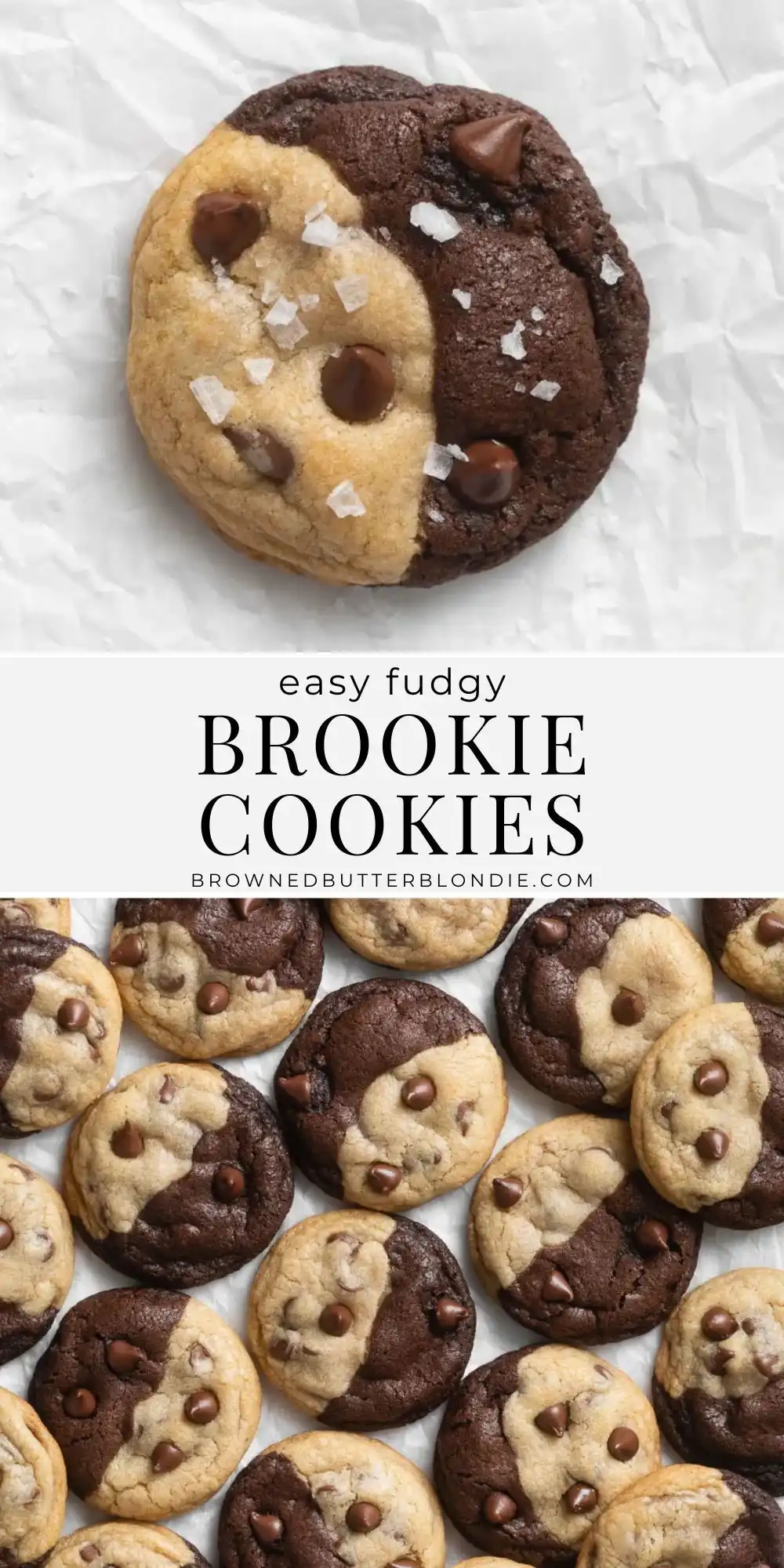
Brookies—short for “brownie-cookie”—are the ultimate dessert mashup, a decadent marriage of two beloved treats that delivers the best of both worlds: the chewy, caramelized richness of a blondie and the deep, fudgy intensity of a brownie. But when you elevate this hybrid with browned butter, you unlock an entirely new dimension of flavor—nutty, toasty, complex, and irresistibly aromatic. The Browned Butter Blondie Brookies aren’t just a clever fusion; they’re a masterclass in texture, temperature, and technique. Imagine a dense, golden-brown blondie layer infused with deeply caramelized butter and Madagascar vanilla, layered beneath a velvety, crackly-topped dark chocolate brownie—each bite yielding contrasting yet harmonious notes of butterscotch, roasted nuts, espresso-kissed cocoa, and a whisper of sea salt. This isn’t just dessert—it’s comfort redefined, nostalgia reinvented, and indulgence perfected.
The History
The concept of the brookie traces its roots to early 2000s food blogs and bakery experiments, where bakers began layering brownie batter over cookie dough (or vice versa) in search of textural contrast and visual appeal. While early versions often used standard chocolate chip cookie dough paired with classic fudge brownies, the true evolution came with the rise of the “blondie” as a sophisticated counterpart to the brownie—especially after the 2010s artisanal baking renaissance brought renewed attention to browned butter, high-quality vanilla, and precise sugar chemistry. The browned butter blondie itself owes much to chefs like Dorie Greenspan and Molly Yeh, whose explorations into Maillard-reaction-enhanced batters spotlighted how gently cooking butter until its milk solids toast transforms ordinary sweetness into something profoundly savory-sweet. The first documented browned butter blondie brookie appeared in a 2016 issue of Bon Appétit, credited to pastry chef Claire Saffitz, who deliberately engineered the layers to set at staggered rates—ensuring the blondie remained tender and slightly pull-apart while the brownie developed its signature crinkled crust. Since then, it has become a staple at boutique bakeries from Portland to Brooklyn, frequently featured at wedding dessert tables, holiday cookie exchanges, and even Michelin-starred tasting menus as a playful yet technically refined finale.
Ingredients Breakdown
Every ingredient in this recipe is chosen not only for function—but for layered intention:
- Browned Butter (Unsalted): 1 cup (2 sticks / 227g), cooled to lukewarm (≈90°F). Browning transforms butter’s lactose and milk proteins into hundreds of new aromatic compounds—think toasted hazelnut, butterscotch, and warm brioche. Cooling prevents scrambling eggs and preserves emulsion integrity.
- Granulated Sugar: ¾ cup (150g). Provides structure, crispness, and caramelization potential—critical for the blondie’s chew and the brownie’s shiny top.
- Packed Light Brown Sugar: ¾ cup (150g). Adds moisture, acidity (from molasses), and deep caramel notes that complement the browned butter without overpowering.
- Eggs (Large, Room Temperature): 3 whole eggs + 1 yolk. Extra yolk increases fat content and tenderness—essential for the blondie’s dense-yet-soft crumb. Room temperature ensures uniform emulsification and prevents seizing when added to warm butter.
- Pure Vanilla Extract: 2 tsp, plus 1 scraped vanilla bean (or 1½ tsp high-grade paste). Real Madagascar bourbon vanilla adds floral depth and balances the nuttiness of browned butter.
- All-Purpose Flour (Unbleached, Spooned & Levelled): 1¼ cups (165g). Provides gluten structure—but measured precisely to avoid toughness. Too much flour yields cakey blondies; too little causes spreading and collapse.
- Finely Ground Sea Salt: 1 tsp (plus flaky Maldon for finishing). Enhances all other flavors and counters sweetness. Fine grain dissolves evenly; flaky salt offers bursts of salinity on top.
- Baking Powder: ¼ tsp. A minimal amount aids slight lift without compromising the dense, fudgy integrity of both layers.
- Dark Chocolate (68–72% Cacao, Chopped or High-Quality Chips): 1¼ cups (210g). Used exclusively in the brownie layer for balanced bitterness, rich mouthfeel, and glossy sheen when melted properly.
- Unsweetened Natural Cocoa Powder (Dutch-Process Optional): ⅓ cup (30g). Dutch-process provides smoother, less acidic depth; natural cocoa offers brighter fruit notes—both work, but consistency matters.
- Espresso Powder (Optional but Highly Recommended): 1 tsp. Intensifies chocolate flavor without adding coffee taste—acts as a flavor amplifier through alkaloid interaction with cocoa polyphenols.
- Walnuts or Pecans (Toasted & Chopped): ¾ cup (90g). Toasted nuts add crunch, earthy contrast, and fat that marries seamlessly with browned butter. Optional but transformative.
Step-by-Step Recipe
- Brown the Butter: In a light-colored, heavy-bottomed saucepan (to monitor color), melt butter over medium-low heat. Swirl constantly as it foams, sputters, and clarifies. Continue cooking until foam subsides and golden-brown specks form on the bottom (~8–12 minutes). Immediately pour into a heatproof bowl, scraping every bit of toasted milk solids. Cool uncovered to lukewarm (90°F)—about 25–30 minutes. Do not refrigerate or rush cooling; cold butter will harden and prevent proper emulsification.
- Prepare the Blondie Batter: In a large bowl, whisk together cooled browned butter, granulated sugar, brown sugar, and salt until smooth and slightly thickened (~2 min). Add eggs one at a time, whisking vigorously after each addition until fully incorporated and glossy. Stir in vanilla and scraped seeds. Gently fold in flour and baking powder using a silicone spatula—just until no dry streaks remain. Fold in toasted nuts. Batter should be thick, glossy, and hold soft peaks. Set aside.
- Prepare the Brownie Batter: In a microwave-safe bowl or double boiler, combine chopped chocolate, cocoa powder, espresso powder, and a pinch of salt. Heat in 20-sec bursts (stirring between), or over simmering water, until melted and smooth. Let cool slightly (≈110°F). In another bowl, whisk together remaining 2 eggs, granulated sugar, brown sugar, and vanilla until thick and ribbon-like (~3 min). Gradually whisk warm chocolate mixture into egg-sugar mixture until homogeneous. Sift in remaining ¼ cup flour and gently fold—do not overmix. Batter should be fluid but coat the back of a spoon.
- Layer with Precision: Line a 9×13-inch metal baking pan with parchment paper, leaving 2-inch overhang on two opposite sides for easy removal. Spread blondie batter evenly into the pan using an offset spatula—press gently to eliminate air pockets and ensure flat surface. Carefully pour brownie batter over top. Use the back of a spoon or small offset spatula to spread gently—avoid dragging through blondie layer. For marbling (optional), drag a toothpick in figure-eights—only through the top brownie layer, not down to the blondie.
- Bake Strategically: Preheat oven to 325°F (convection off). Place rack in center position. Bake 42–48 minutes—until edges are deeply golden and set, center jiggles *very slightly* (like firm Jell-O) when nudged, and a toothpick inserted 1 inch from edge comes out with moist crumbs (not wet batter). Crucially: The blondie layer should be just set underneath, not pulling away from sides. Overbaking causes separation and dryness.
- Cool & Cure: Let brookies cool completely in pan on a wire rack—minimum 2 hours, ideally 4 hours or overnight. This allows starches to retrograde, fats to re-solidify, and layers to bond molecularly. Cutting while warm guarantees crumbling and layer slippage.
- Chill & Slice: For cleanest cuts, refrigerate pan for 30–45 minutes before slicing. Use a sharp, thin-bladed knife wiped clean between cuts. Dust with flaky sea salt immediately after cutting.
Tips
- Butter Browning Mastery: Use a stainless steel or light ceramic pan—you cannot accurately gauge color in dark cookware. Never walk away—even 15 seconds of inattention turns nutty to burnt. If specks darken past amber, discard and restart; burnt butter imparts acrid bitterness.
- Room Temperature Is Non-Negotiable: Cold eggs cause the browned butter to seize into grainy clumps. If rushed, submerge eggs in warm (not hot) water for 5 minutes.
- Flour Measurement Matters: Use the “spoon-and-level” method—not scooping. Too much flour = dry, crumbly blondie; too little = greasy, under-set base. Consider investing in a digital scale for 100% consistency.
- Oven Thermometer Required: Most home ovens run hot or cold. An inaccurate temperature is the #1 cause of cracked tops, sunken centers, or separated layers.
- Rotate Mid-Bake: At 25 minutes, rotate pan 180° for even baking—especially critical in gas ovens or older electric models with hot spots.
- Resting Is Baking: Skipping the full cool-down forfeits the signature chew and layer cohesion. Think of cooling as the final stage of controlled gelatinization and fat crystallization.
- Cutting Technique: Warm knife? Run under hot water, dry thoroughly, then slice. For ultra-clean edges, dip knife in hot water and wipe with a towel before each cut.
- Storage Wisdom: Keep uncut brookies in an airtight container at room temp up to 3 days—or wrap tightly and freeze for up to 3 months. Thaw overnight in fridge, then bring to room temp before serving.
Variations and Customizations
This foundational recipe is endlessly adaptable—without sacrificing structural integrity:
- Gluten-Free: Substitute 1:1 GF baking blend (like King Arthur Measure-for-Measure or Bob’s Red Mill) + ½ tsp xanthan gum. Increase browned butter by 1 tbsp to compensate for added starch dryness.
- Vegan: Replace eggs with flax eggs (3 Tbsp ground flax + 9 Tbsp water, rested 15 min) + 1 extra Tbsp aquafaba. Use vegan dark chocolate and browned coconut oil (simmered with 1 tsp nutritional yeast for umami depth).
- White Chocolate Raspberry: Swap dark chocolate for high-cocoa white chocolate in brownie layer; fold ¾ cup freeze-dried raspberry powder into blondie batter and top with fresh raspberries before baking.
- Salted Caramel Swirl: Drizzle ½ cup thick, cool homemade salted caramel (no corn syrup) over blondie layer before adding brownie batter. Use a chopstick to swirl *gently*—only 3–4 passes.
- Espresso Crunch: Add 2 Tbsp finely ground espresso beans to blondie batter and press ½ cup crushed toffee bits onto brownie layer 5 minutes before end of bake.
- Maple Browned Butter: Replace ¼ cup granulated sugar with Grade B maple syrup (reduce other liquids by 1 Tbsp) and add ½ tsp cinnamon to blondie batter.
- Boozy Luxe: Infuse browned butter with 1 Tbsp bourbon or dark rum while cooling; add 1 tsp orange zest to blondie batter and 1 oz chopped candied orange peel to brownie layer.
- Matcha White Chocolate: Whisk 1½ tsp ceremonial-grade matcha into blondie dry ingredients; use white chocolate in brownie layer and fold in ¼ cup white chocolate chunks.
Health Considerations and Nutritional Value
While undeniably indulgent, these Brookies can be contextualized thoughtfully within a balanced diet. Per standard 2″ × 2″ square (recipe yields ~24 pieces):
- Calories: ~285 kcal — moderate for a dessert portion, especially considering satiating fats and complex carbs.
- Fat: 18g total (10g unsaturated from browned butter and nuts), including beneficial oleic acid and conjugated linoleic acid (CLA) formed during butter browning.
- Carbohydrates: 29g (22g sugars). The brown sugar and molasses contribute trace minerals (calcium, potassium, iron), while the fiber from nuts and optional oats adds digestive support.
- Protein: 3.5g — modest but enhanced by egg yolks and nuts; supports sustained energy release.
- Phytonutrients: Dark chocolate contributes flavanols linked to improved endothelial function and antioxidant capacity—especially potent when paired with espresso powder, which boosts bioavailability.
- Reduced-Risk Modifications: Reduce total sugar by 2 tbsp (replace with 1 tbsp apple butter + 1 tbsp resistant dextrin); use 75% dark chocolate; increase walnuts to 1 cup for omega-3s; add 2 Tbsp ground flaxseed to blondie batter for lignans and fiber.
- Considerations: Naturally high in saturated fat (from butter and chocolate)—enjoy mindfully if managing cholesterol. Contains gluten and dairy; not suitable for those with severe allergies unless adapted. Low FODMAP in single serving if nuts omitted and lactose-free chocolate used.
Remember: Nutrition is not morality. These Brookies deliver joy, connection, and sensory nourishment—elements science increasingly confirms are vital to holistic well-being. Savor slowly, share generously, and honor your body’s wisdom in choosing what truly satisfies.
Ingredients
- 1 cup (227g / 2 sticks) unsalted butter, browned and cooled to 90°F
- ¾ cup (150g) granulated sugar
- ¾ cup (150g) packed light brown sugar
- 1 tsp fine sea salt, plus flaky sea salt for finishing
- 3 large eggs + 1 large egg yolk, room temperature
- 2 tsp pure vanilla extract + seeds from 1 vanilla bean (or 1½ tsp paste)
- 1¼ cups (165g) unbleached all-purpose flour, spooned & leveled
- ¼ tsp aluminum-free baking powder
- 1¼ cups (210g) high-quality dark chocolate (68–72% cacao), finely chopped
- ⅓ cup (30g) unsweetened natural or Dutch-process cocoa powder
- 1 tsp instant espresso powder (optional but recommended)
- ¾ cup (90g) toasted walnuts or pecans, coarsely chopped
Directions
- Preheat oven to 325°F (163°C). Line a 9×13-inch metal baking pan with parchment paper, leaving 2-inch overhang on two opposite sides.
- In a light-colored heavy-bottomed saucepan, melt butter over medium-low heat. Swirl constantly until butter foams, sputters, then calms. Continue cooking until golden-brown specks form and aroma is deeply nutty and toasty (~8–12 min). Immediately pour into a heatproof bowl, scraping all browned bits. Cool uncovered to lukewarm (90°F), ~25–30 min.
- In a large bowl, whisk browned butter, granulated sugar, brown sugar, and 1 tsp fine salt until smooth (~2 min). Add eggs and yolk one at a time, whisking vigorously after each until thick and glossy. Stir in vanilla and scraped seeds.
- Gently fold in flour and baking powder with a silicone spatula until just combined. Fold in toasted nuts. Batter will be thick and glossy. Spread evenly into prepared pan; press gently to level.
- In a microwave-safe bowl, combine chopped chocolate, cocoa powder, espresso powder, and pinch of salt. Microwave in 20-sec bursts, stirring between, until smooth (~1–1½ min total). Cool slightly to ~110°F.
- In another bowl, whisk remaining 2 eggs, granulated sugar, brown sugar, and vanilla until thick and ribbon-like (~3 min). Whisk warm chocolate mixture into egg mixture until smooth. Sift in remaining ¼ cup flour and fold gently—do not overmix.
- Carefully pour brownie batter over blondie layer. Spread gently with offset spatula—avoid dragging through base. Optional: marble lightly with toothpick.
- Bake 42–48 minutes—until edges are deeply golden, center jiggles *slightly*, and toothpick 1″ from edge shows moist crumbs. Do not overbake.
- Cool completely in pan on wire rack—minimum 2 hours, ideally 4+ hours or overnight.
- For clean slices, refrigerate 30–45 min. Lift out using parchment overhang. Cut into 24 squares with sharp, wiped knife. Finish with flaky sea salt.
FAQ
- Can I make these ahead?
- Absolutely—and highly recommended! Brookies improve in flavor and texture for up to 48 hours as flavors meld and moisture equilibrates. Store covered at room temperature. They also freeze beautifully: wrap tightly in parchment + foil, freeze up to 3 months. Thaw overnight in fridge, then bring to room temp before serving.
- Why did my layers separate?
- Most common causes: (1) Blondie batter was too warm when brownie layer was added—causing immediate partial cooking and poor adhesion; (2) Underbaking—blondie layer didn’t set enough before cooling; (3) Overmixing brownie batter, developing excess gluten that contracts upon cooling; (4) Pan not lined properly—parchment slipping creates shear plane. Solution: Ensure blondie batter is cool (not cold), bake to correct doneness, and use snug-fitting parchment.
- Can I use store-bought brownie mix?
- Technically yes—but strongly discouraged. Commercial mixes contain stabilizers, gums, and excessive leaveners that conflict with the delicate balance of browned butter and low-ratio blondie chemistry. You’ll likely get tunneling, greasiness, or layer collapse. Homemade brownie batter is faster than you think—and infinitely superior.
- What if I don’t have a light-colored pan for browning butter?
- Use a glass measuring cup or stainless steel skillet—never nonstick (coating degrades at browning temps). Alternatively, brown butter in a small saucepan, then carefully transfer to a clear glass Pyrex liquid measure to monitor color during cooling.
- Can I add mix-ins like chocolate chips to the blondie layer?
- Yes—but with caution. Fold in no more than ½ cup semi-sweet or milk chocolate chips *after* incorporating flour. Avoid adding to batter before flour, as melted chips create grease pockets. Better alternatives: white chocolate chunks, butterscotch morsels, or dried cranberries (soaked 10 min in warm orange juice).
- Why does the recipe call for both granulated and brown sugar in both batters?
- Granulated sugar promotes spread, crisp edges, and shine; brown sugar adds moisture, acidity, and complex molasses notes essential for balancing browned butter’s richness. Using both in each layer ensures textural harmony and dimensional sweetness—neither layer tastes “flat.”
- My brookies sank in the center—what happened?
- Sinking usually indicates either (1) underbaked center—structure hadn’t fully set before cooling contraction began; (2) opening oven too early (<25 min), causing thermal shock; or (3) using expired baking powder. Always test with the jiggle-and-toothpick method—not just time.
- Can I bake these in a different size pan?
- You can use an 8×8-inch for thicker, fudgier bars (bake 50–58 min), or a 9×9-inch for slightly taller layers (45–52 min). Avoid 13×9 glass—it insulates unevenly and causes overbrowning. Metal is mandatory for consistent heat conduction.
- Is there a way to make them less sweet?
- Yes—reduce total sugar by 3 tbsp (split between both batters), increase salt by ¼ tsp, and add 1 Tbsp instant coffee granules to brownie batter. The bitterness and umami will rebalance perception without sacrificing structure.
- Can I make mini brookies?
- Yes! Line a 12-cup muffin tin with parchment liners. Divide blondie batter evenly (2 Tbsp per cup), press down. Top with 1½ Tbsp brownie batter. Bake at 325°F for 22–26 min. Cool 15 min in tin before removing.
Summary
Browned Butter Blondie Brookies are a masterful, multi-layered dessert where deeply caramelized butter infuses chewy blondie and fudgy brownie layers with unparalleled nutty-sweet complexity—each element meticulously calibrated for texture, temperature, and taste harmony. With careful browning, precise mixing, strategic layering, and patient cooling, this recipe delivers restaurant-worthy results that celebrate craftsmanship, comfort, and culinary curiosity in every golden, crackly, salt-flecked square.