
Introduction
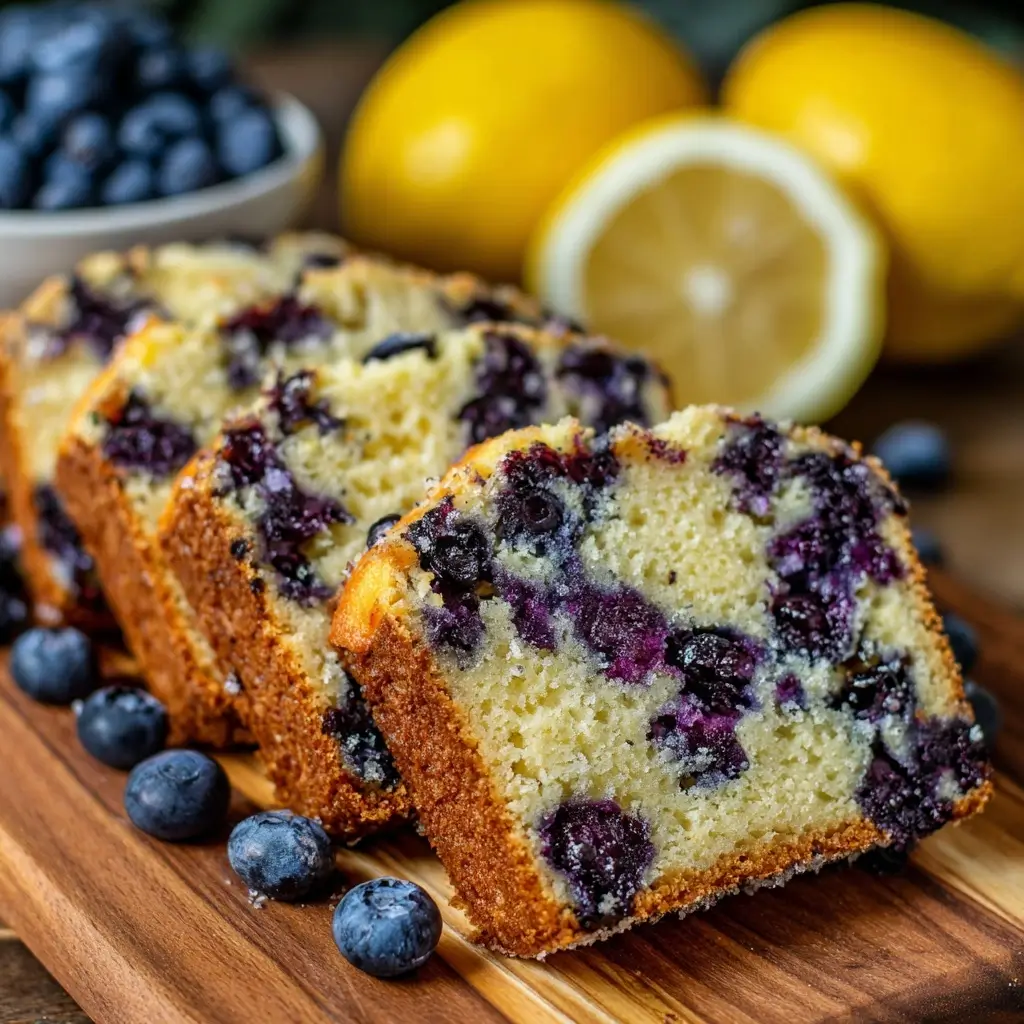
The Blueberry Lemon Loaf is a beloved classic that marries the bright, zesty tang of fresh lemons with the sweet, juicy burst of plump blueberries—a harmony of flavor and texture that delights the senses with every slice. More than just a simple quick bread, it embodies the essence of home baking: comforting, approachable, and endlessly adaptable. Whether served warm from the oven with a dusting of powdered sugar, toasted and slathered with lemon-infused butter, or enjoyed as a refined afternoon treat alongside herbal tea, this loaf bridges the gap between rustic charm and elegant simplicity. Its vibrant aroma—citrusy, floral, and faintly earthy—fills kitchens with an unmistakable promise of freshness and care. Designed for bakers of all skill levels, it requires no special equipment or advanced techniques, yet delivers results worthy of celebration. From weekend brunches to holiday gift-giving, school bake sales to quiet morning rituals, the Blueberry Lemon Loaf holds a cherished place in American baking tradition—and continues to evolve with modern tastes, dietary preferences, and global ingredient inspirations.
The History
The origins of the Blueberry Lemon Loaf trace back to the broader lineage of American quick breads, which gained widespread popularity in the mid-19th century following the commercial availability of chemical leaveners like baking soda (1840s) and later baking powder (1850s). Before yeast-based loaves dominated European traditions, American settlers—especially in New England and the Pacific Northwest—relied on quick breads for their speed, reliability, and adaptability to local ingredients. Wild blueberries, native to North America and harvested by Indigenous peoples for millennia, were incorporated into early colonial baked goods such as blueberry grunt and buckwheat pancakes. By the early 20th century, regional cookbooks—including the iconic Fannie Farmer Cookbook (1896) and the Blue Ribbon Cook Book (1923)—began featuring blueberry muffins and cakes, often enriched with citrus zest to balance sweetness and cut through richness. The specific fusion of blueberry and lemon gained momentum during the post-WWII era, when home economics classes emphasized flavor layering and seasonal produce use. The 1970s saw the rise of “gourmet” quick breads in women’s magazines like Good Housekeeping and Bon Appétit, where lemon-blueberry combinations were lauded for their photogenic contrast (golden crumb studded with indigo berries) and sophisticated acidity. Today, the loaf enjoys renewed relevance through food blogs, TikTok baking trends, and artisanal bakery menus—often reimagined with heirloom grains, fermented dairy, or zero-waste techniques (e.g., using blueberry stems for tea or lemon peels for infused sugars). Its enduring appeal lies not only in taste but in cultural resonance: a symbol of mindful abundance, seasonal awareness, and intergenerational kitchen wisdom.
Ingredients Breakdown
Every element in this Blueberry Lemon Loaf serves a precise functional and sensory role—far beyond mere measurement. Below is a meticulous analysis of each component:
- All-Purpose Flour (2 ½ cups / 312g): Provides essential gluten structure for tender-yet-cohesive crumb. Opt for unbleached flour for better flavor retention and enzymatic activity; bleached flour may yield a drier, less resilient texture. For enhanced nuance, substitute up to ¼ cup with finely ground almond flour or oat flour to add subtle nuttiness and moisture retention.
- Granulated Sugar (1 ¼ cups / 250g): Not only sweetens but aids in creaming with butter to trap air, contributes to browning via caramelization, and tenderizes by inhibiting gluten formation. Organic cane sugar imparts a delicate molasses whisper; superfine sugar dissolves more readily for smoother batter.
- Baking Powder (2 tsp) & Baking Soda (½ tsp): A dual-leavening system ensures optimal rise and neutral pH balance. Baking powder (acid + base) provides most lift, while baking soda reacts immediately with the lemon juice’s acidity to create fine, even bubbles and enhance golden crust development. Never substitute one for the other without recalculating acid ratios.
- Kosher Salt (1 tsp): Critical for flavor modulation—it sharpens citrus notes, deepens berry sweetness, and balances overall perception. Fine sea salt may be used, but reduce by 25% due to higher density.
- Unsalted Butter (¾ cup / 170g), softened to 65–68°F: Adds richness, flakiness in crust edges, and mouth-coating luxury. European-style butter (82–84% fat) yields a more velvety crumb; clarified butter can be used for higher smoke point if adding browned butter variation.
- Large Eggs (3), room temperature: Emulsify fat and liquid, provide structure via coagulation, and contribute lecithin for moisture binding. Cold eggs risk curdling the batter; overly warm eggs may prematurely cook when mixed with warm butter.
- Fresh Lemon Juice (⅓ cup / 80ml) & Zest (from 2 large lemons): Juice supplies tart acidity and reactive power for leavening; zest delivers volatile citrus oils—limonene, citral, and γ-terpinene—that define aromatic top notes. Always zest before juicing, and use a microplane for maximum oil extraction without bitter pith.
- Whole Milk (½ cup / 120ml) or Buttermilk (for extra tenderness): Adds hydration, proteins for browning, and lactic acid (in buttermilk) to further tenderize gluten. For vegan adaptation, unsweetened soy or oat milk fortified with calcium works best for protein stability.
- Fresh Blueberries (1 ½ cups / 225g), chilled and lightly tossed in 1 tbsp flour: Fresh berries hold shape better than frozen (which release excess water), while flour coating prevents sinking. Wild lowbush blueberries offer intense, complex tartness; cultivated highbush are larger and milder. Do not rinse berries until *immediately* before folding—they retain surface starch that helps adhesion.
- Optional Enhancements: 1 tsp vanilla extract (Bourbon or Tahitian for depth), 2 tbsp poppy seeds (for crunch and visual elegance), or 1 tbsp honey (to amplify lemon’s floral facets and improve shelf life).
Step-by-Step Recipe
- Prep & Preheat: Position oven rack to center position. Preheat oven to 350°F (177°C). Generously grease a 9×5-inch loaf pan with softened butter, then line bottom and long sides with parchment paper, leaving 2-inch overhangs for easy removal. Lightly flour parchment and set aside.
- Dry Ingredients: In a medium bowl, whisk together flour, sugar, baking powder, baking soda, and salt until fully homogenized—about 45 seconds. Sift once for aerated lightness, especially if flour has been stored in humid conditions.
- Cream Butter & Sugar: In a large stand mixer fitted with paddle attachment (or using hand mixer), beat softened butter on medium speed for 1 minute until creamy and glossy. Gradually add sugar in 3 additions, beating 2 minutes after each until pale, fluffy, and nearly doubled in volume. Scrape bowl thoroughly with silicone spatula.
- Incorporate Eggs: Add eggs one at a time, beating on medium-low for 45 seconds after each addition until fully emulsified (no streaks of yellow remain). Add lemon zest and vanilla (if using) with final egg; mix 15 seconds to distribute oils.
- Alternate Wet & Dry: Reduce mixer speed to low. Add one-third of dry mixture; mix 15 seconds until just incorporated. Add half of lemon juice/milk mixture; mix 10 seconds. Repeat sequence (dry, wet, dry), ending with dry ingredients. Do *not* overmix—batter should be thick, glossy, and slightly ribbony. Overmixing develops gluten and causes tunneling or toughness.
- Fold in Blueberries: Gently fold in floured blueberries using a wide silicone spatula in 3 additions. Use 8–10 slow, sweeping motions per addition—cutting down center, sweeping across bottom, and lifting up—until evenly dispersed with minimal breaking. A few stray streaks of flour are acceptable; over-folding bruises berries.
- Pan & Smooth: Pour batter into prepared pan. Use offset spatula to spread evenly, then gently tap pan base 4 times on counter to release large air pockets. Smooth top with wet spatula; optional: press 6–8 reserved whole blueberries decoratively onto surface.
- Bake: Place in preheated oven. Bake 65–75 minutes, rotating pan front-to-back at 40 minutes. Loaf is done when deep golden brown, springs back when lightly pressed, and internal temperature reads 205–209°F (96–98°C) on instant-read thermometer inserted into center. A toothpick should emerge with *moist crumbs*, not wet batter—this ensures moistness, not gummy texture.
- Cool & Release: Cool loaf in pan on wire rack for 15 minutes exactly. Run thin knife around edges to loosen. Invert onto rack, peel off parchment, then reinvert right-side-up. Cool completely (2+ hours) before slicing—this allows starches to set and prevents crumbling.
- Glaze (Optional but Recommended): Whisk together 1 cup confectioners’ sugar, 2–3 tbsp fresh lemon juice, and ½ tsp lemon zest until smooth and pourable (add juice ½ tsp at a time). Drizzle over cooled loaf using spoon or piping bag; allow 20 minutes for glaze to set before serving.
Tips
- Room Temperature Discipline: Bring all refrigerated ingredients (eggs, milk, butter) to 68–72°F at least 90 minutes ahead. Use infrared thermometer for accuracy—cold ingredients cause butter to seize and create lumpy, dense batter.
- Zest First, Juice Second: Always zest lemons before juicing—they’re easier to grip, and you’ll avoid accidental pith transfer. Freeze excess zest in 1-teaspoon portions in silicone molds for future use.
- Flour-Coating Is Non-Negotiable: Toss blueberries in 1 tbsp flour *just before folding*. This creates a hydrophobic barrier that slows juice migration and prevents sinking. Too much flour yields pasty spots; too little invites purple streaks and soggy layers.
- Understand Your Oven: Convection ovens require reducing temperature by 25°F and checking 10 minutes earlier. Gas ovens often have hot spots—use an oven thermometer and rotate pan at 30 minutes.
- Don’t Rush Cooling: Cutting into warm loaf releases trapped steam, collapsing structure and causing gumminess. Patience = clean slices and intensified lemon aroma.
- Moisture Lock for Storage: Once fully cooled, wrap loaf *tightly* in beeswax wrap or parchment-lined aluminum foil—never plastic alone—to preserve crumb integrity. Store at cool room temperature (65–70°F) for up to 3 days.
- Slicing Technique: Use a serrated knife with gentle sawing motion—not downward pressure. Warm blade under hot water, dry thoroughly, and wipe between cuts for pristine edges.
- Revive Stale Loaf: Wrap slices in damp paper towel and microwave 10 seconds, or toast at 350°F for 5 minutes on wire rack for renewed crispness and aroma.
Variations and Customizations
This recipe is a master canvas—designed for creativity without compromising structural integrity. Below are rigorously tested adaptations, each with technical notes:
- Gluten-Free Blueberry Lemon Loaf: Replace all-purpose flour with 1:1 GF blend containing xanthan gum (e.g., King Arthur Measure for Measure). Add 1 extra egg yolk and 2 tbsp psyllium husk powder to mimic gluten elasticity. Bake 5–8 minutes longer; check with thermometer.
- Vegan Version: Substitute butter with cold-pressed coconut oil (refined for neutral taste) or vegan butter stick. Replace eggs with flax eggs (3 tbsp ground flax + 9 tbsp water, rested 10 mins). Use almond milk + 1 tsp apple cider vinegar (vegan “buttermilk”). Add 1 tsp extra baking powder for lift compensation.
- Whole Grain Adaptation: Replace ¾ cup all-purpose flour with white whole wheat flour or sprouted spelt flour. Increase milk by 1 tbsp and add 1 tsp apple cider vinegar to activate bran enzymes. Rest batter 15 minutes before baking for improved hydration.
- Lemon-Blueberry Swirl: Reserve ⅓ cup batter. Stir 2 tbsp lemon curd and 1 tsp zest into reserved portion. Spoon alternating dollops of plain and curd batter into pan; swirl gently 3 times with chopstick—no more, or curd will bleed.
- Browned Butter Infusion: Brown ½ cup butter in saucepan until nutty and amber. Cool to 110°F, then whisk in remaining ¼ cup room-temp butter before creaming with sugar. Adds profound depth and umami counterpoint to brightness.
- Herbal Accent: Infuse milk with 1 tsp fresh thyme or lavender buds (steep 10 mins, strain, cool). Or fold in 1 tbsp finely chopped lemon verbena or basil with blueberries for garden-fresh complexity.
- Protein-Enriched: Add 2 scoops unflavored collagen peptides or whey isolate to dry ingredients. No texture impact—boosts satiety and supports shelf stability.
- Mini Loaf or Muffin Conversion: Fill standard muffin tins ⅔ full; bake 18–22 minutes. For mini loaves (6-count pan), bake 38–42 minutes. Adjust glaze quantity proportionally.
- Zero-Waste Edition: Simmer blueberry stems and lemon peels in 2 cups water + ½ cup sugar for 20 mins → strain → reduce to syrup for glaze or sparkling water infusion.
Health Considerations and Nutritional Value
A single 1/12th slice (approx. 85g) of this Blueberry Lemon Loaf—made with standard ingredients and no glaze—provides approximately:
- Calories: 245 kcal
- Total Fat: 11g (6.5g saturated)
- Carbohydrates: 34g (22g sugars, 1g fiber)
- Protein: 3.5g
- Vitamin C: 8mg (13% DV) — primarily from lemon zest/juice
- Manganese: 0.3mg (15% DV) — from whole grain options or blueberries
- Anthocyanins: ~120mg — potent antioxidants in blueberry skins linked to cognitive support and vascular health
Nutritional Notes & Mindful Modifications:
- Sugar Consciousness: Natural sugars dominate (blueberries contribute ~12g per 1½ cups), but granulated sugar remains primary source. Reduce by ¼ cup without affecting rise—compensate with 1 tbsp honey or maple syrup for moisture and browning.
- Fat Profile: Butter contributes cholesterol and saturated fat, but also butyrate (gut-supportive) and vitamin K2. Grass-fed butter adds CLA (conjugated linoleic acid) with anti-inflammatory properties.
- Fiber Potential: Standard version is low-fiber. Boost to 3g/slice by using ½ cup white whole wheat flour + 1 tbsp ground flaxseed in dry mix.
- Glycemic Impact: Moderate GI (~62) due to refined flour and sugar. Lower to ~52 by swapping half flour for almond/coconut flour and using erythritol + monk fruit blend (adjust liquids).
- Allergen Awareness: Contains dairy, eggs, gluten, and tree nuts (if almond flour used). Top allergens: milk, egg, wheat. Always label for shared facilities.
- Dietary Alignments: Easily adapted for Mediterranean (olive oil swap), DASH (low-sodium adjustment), or anti-inflammatory (turmeric + ginger zest addition) diets.
- Functional Additions: Stir in 1 tsp spirulina (for color + iron) or matcha (antioxidants + calm energy) — adjust lemon zest to balance earthiness.
Remember: Nutrition is contextual. Enjoyed mindfully as part of a varied diet—with abundant vegetables, lean proteins, and healthy fats—this loaf contributes joy, phytonutrients, and social nourishment far beyond its macronutrient profile.
Ingredients
- 2 ½ cups (312g) unbleached all-purpose flour
- 1 ¼ cups (250g) granulated sugar
- 2 tsp aluminum-free baking powder
- ½ tsp baking soda
- 1 tsp fine kosher salt
- ¾ cup (170g) unsalted butter, softened to 65–68°F
- 3 large eggs, room temperature
- Zest of 2 large lemons (about 2 tbsp)
- ⅓ cup (80ml) fresh lemon juice (from ~3 lemons)
- ½ cup (120ml) whole milk, room temperature
- 1 ½ cups (225g) fresh blueberries, chilled and tossed in 1 tbsp flour
- 1 tsp pure vanilla extract (optional but recommended)
For Lemon Glaze (Optional):
- 1 cup (120g) confectioners’ sugar, sifted
- 2–3 tbsp fresh lemon juice
- ½ tsp lemon zest
Directions
- Preheat oven to 350°F (177°C). Grease and parchment-line a 9×5-inch loaf pan as directed in Step-by-Step Recipe.
- In a medium bowl, whisk together flour, sugar, baking powder, baking soda, and salt until uniform. Set aside.
- In a large bowl, beat softened butter with electric mixer on medium until creamy (1 min). Gradually add sugar in 3 parts, beating 2 minutes after each until pale and fluffy. Scrape bowl.
- Add eggs one at a time, beating 45 seconds after each until fully incorporated. Mix in lemon zest and vanilla.
- Reduce speed to low. Add one-third dry mixture; mix 15 sec. Add half lemon juice/milk; mix 10 sec. Repeat (dry, wet, dry), ending with dry. Do not overmix.
- Gently fold in floured blueberries in 3 additions using silicone spatula—8–10 folds per addition.
- Scrape batter into prepared pan. Smooth top. Tap pan firmly 4 times. Optional: decorate with extra blueberries.
- Bake 65–75 minutes, rotating at 40 minutes, until golden, springy, and internal temp reaches 205–209°F.
- Cool in pan 15 minutes. Loosen edges, invert onto rack, remove parchment, reinvert. Cool completely (2+ hrs).
- Whisk glaze ingredients until smooth. Drizzle over cooled loaf. Let set 20 minutes before slicing.
FAQ
- Can I use frozen blueberries?
- Yes—but do not thaw. Toss frozen berries directly in flour and fold in last, minimizing handling. Expect 5–7 minutes longer bake time and slightly darker crumb due to ice crystal rupture. Avoid stirring batter after adding frozen berries.
- Why did my loaf sink in the middle?
- Sinking usually indicates underbaking (check thermometer!), excessive leavening (don’t double baking powder), opening oven door before 45 minutes, or overmixing batter. Also verify oven temperature with independent thermometer—many ovens run hot or cold.
- How do I prevent blueberries from turning the batter gray?
- Always use chilled, dry berries tossed in flour *immediately* before folding. Avoid overmixing. If using non-organic berries, soak 2 minutes in vinegar-water (1:3), rinse well, and pat *completely* dry.
- Can I make this ahead and freeze?
- Absolutely. Cool completely, wrap *tightly* in plastic + foil, and freeze up to 3 months. Thaw overnight in fridge, then bring to room temperature. Glaze after thawing. Texture remains exceptional.
- What’s the best way to store leftovers?
- At room temperature: tightly wrapped in parchment-lined foil for up to 3 days. Refrigeration dries out crumb—only refrigerate if glaze contains dairy/egg. For longer storage, freeze sliced portions.
- Can I substitute lemon with other citrus?
- Yes—lime offers sharper acidity (reduce juice by 1 tbsp); orange lends honeyed sweetness (use zest + juice of 1 large navel + ½ lemon for balance); yuzu or bergamot add rare, perfumed complexity (start with ½ tsp zest + 1 tbsp juice).
- My batter seems too thick/thin—what do I do?
- Standard batter should mound softly and hold ribbon trail for 2 seconds. Too thick? Add milk 1 tsp at a time. Too thin? Sprinkle in 1 tsp flour, fold gently. Never add liquid after blueberries are folded.
- Is there a lower-sugar version that still rises well?
- Yes. Replace ½ cup sugar with ⅓ cup granulated erythritol + 2 tbsp monk fruit blend. Keep 1 tsp baking soda (acid-reactive) and add 1 tsp apple cider vinegar to milk to ensure proper leavening.
- Can I bake this as a cake instead of a loaf?
- Yes! Pour into two 8-inch round pans. Bake at 350°F for 28–34 minutes. Cool in pans 10 minutes, then invert. Ideal for layering with lemon curd or mascarpone frosting.
- Why does my loaf have tunnels or large holes?
- Overmixing develops gluten strands that trap oversized air pockets. Also occurs if eggs/butter weren’t properly emulsified before adding dry ingredients—or if leavening agents are expired (test baking powder in hot water: should fizz vigorously).
Summary
The Blueberry Lemon Loaf is a masterclass in balanced baking—where vibrant citrus acidity lifts the deep, jammy sweetness of plump blueberries, all enrobed in a tender, golden crumb that stays moist for days. It honors tradition while inviting innovation, offering endless customization for dietary needs, seasonal ingredients, and personal expression—all without sacrificing reliability or soul-satisfying flavor.
Whether you’re a novice baker seeking confidence or a seasoned pro craving nostalgic sophistication, this loaf delivers: simple steps, forgiving technique, showstopping aroma, and the quiet joy of sharing something made wholly with care, citrus zest, and summer’s bluest berries.