
Introduction
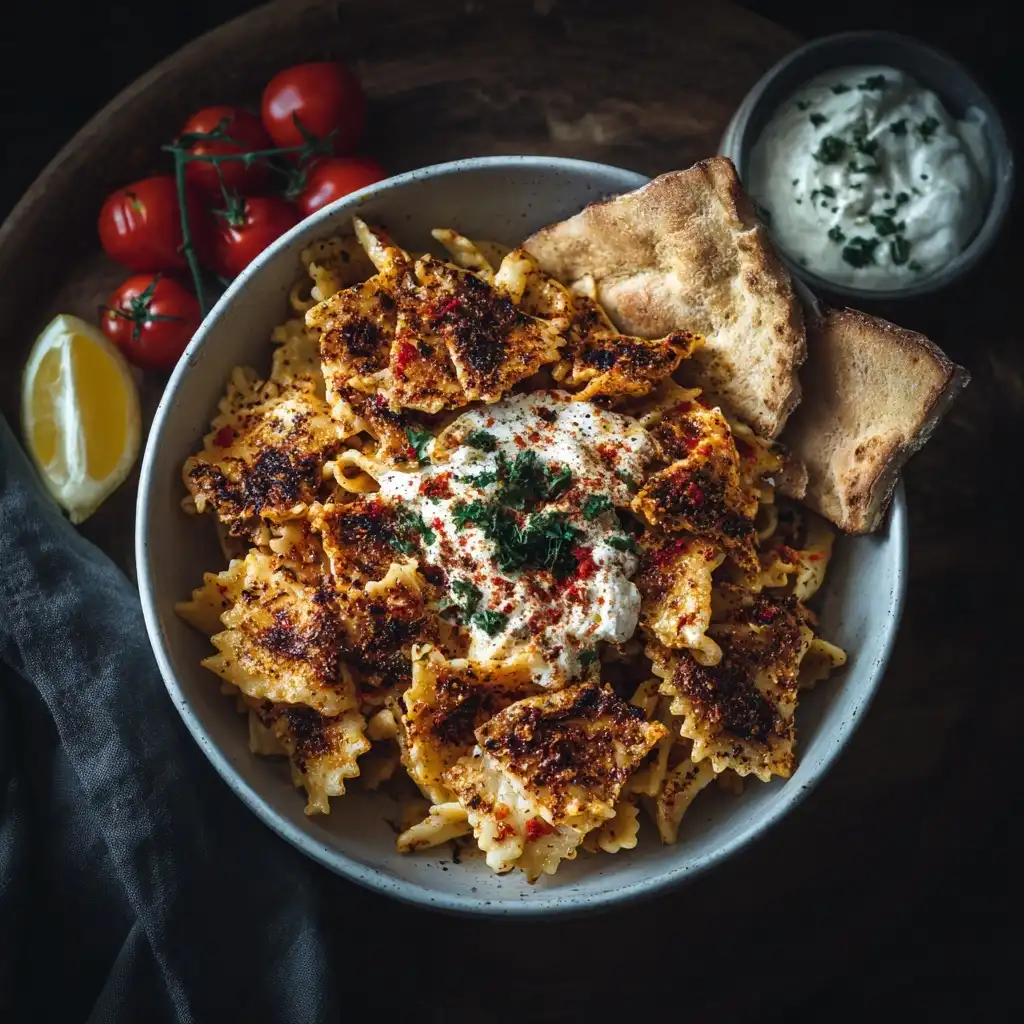
Baked Feta Pasta Chips are a revolutionary, crave-worthy fusion snack that reimagines the viral TikTok Baked Feta Pasta phenomenon—not as a creamy, saucy entrée, but as a bold, crispy, shareable chip experience. Born from culinary curiosity and the growing demand for elevated snack foods, these chips transform pantry staples into an irresistibly textured, umami-rich, oven-baked delight. Unlike traditional potato or tortilla chips, Baked Feta Pasta Chips deliver layered complexity: tangy feta, sweet-savory roasted tomatoes, herbaceous notes, garlic depth, and a delicate crispness achieved through precise baking—not frying. They’re perfect for charcuterie boards, cocktail hour, game-day spreads, or even as a gourmet crouton alternative atop soups and salads. Whether you’re a foodie seeking novelty, a home cook craving texture innovation, or someone simply tired of bland snacks, this recipe bridges comfort and sophistication in every golden, craggy bite.
The History
The origin story of Baked Feta Pasta Chips begins with the global explosion of the Baked Feta Pasta trend in early 2021—a simple yet magical dish pioneered by Finnish food blogger Jenni Häyrinen (known online as @paatoskukka) and catapulted to viral fame on TikTok under the hashtag #bakedfetapasta. Its meteoric rise—amassing over 3 billion views—was fueled by its visual allure (a molten, crimson-tomato-and-feta brick emerging from the oven), minimal ingredients, and deeply satisfying contrast of creamy, salty, and acidic flavors. As home cooks experimented, variations multiplied: added spinach, lemon zest, chili flakes, different cheeses—but few dared to deconstruct it entirely. Enter the “chipification” movement: a broader culinary wave where beloved dishes are reconceptualized into portable, crunchy, bite-sized formats—think ramen chips, mac ‘n’ cheese puffs, or birria-dusted tortilla chips. In late 2022, artisanal snack developers and experimental chefs began testing baked pasta sheet hybrids, leading to the first documented iteration of Baked Feta Pasta Chips by Brooklyn-based food lab “Crisp & Co.” in March 2023. Their version used thin layers of fresh pasta dough infused with feta brine and sun-dried tomato paste, then baked until shatteringly crisp. By mid-2024, home versions gained traction on Pinterest and Instagram Reels, emphasizing accessibility—no pasta maker required, no special equipment beyond a sheet pan and parchment paper. Today, Baked Feta Pasta Chips represent more than a trend; they symbolize the modern kitchen’s playful alchemy—turning nostalgic comfort into sophisticated, texturally transcendent snacking.
Ingredients Breakdown
Every element in Baked Feta Pasta Chips serves a precise structural and flavor function—no ingredient is arbitrary. Let’s explore each component in depth:
- Feta Cheese (block, not crumbled): High-quality Greek feta (sheep’s milk or sheep/goat blend, packed in brine) is non-negotiable. Its high moisture content, pronounced saltiness, and lactic tang create both flavor backbone and steam-driven lift during baking. The block form ensures even melting and structural integrity before crisping—crumbled feta would scatter, burn, or clump unevenly.
- Cherry or Grape Tomatoes: Small, dense, and sugar-balanced varieties (e.g., Sweet 100, Sun Gold, or Midnight Snack) provide concentrated sweetness, acidity, and natural pectin that caramelizes into sticky, glossy glaze—binding the chip matrix and adding subtle fruit-forward brightness.
- Extra-Virgin Olive Oil: A robust, peppery, low-acid EVOO (like Koroneiki or Arbequina) coats ingredients, conducts heat evenly, promotes Maillard browning, and imparts grassy, herbal complexity. It also acts as a natural emulsifier, helping the cheese and tomato juices cohere.
- Garlic (fresh, minced): Raw garlic offers sharp, sulfurous punch that mellows and sweetens during roasting. Minced—not powdered—ensures even distribution and avoids bitter burnt specks.
- Dried Oregano & Fresh Basil: Oregano contributes earthy, slightly medicinal warmth that complements feta’s salinity, while fresh basil (added post-bake) delivers volatile aromatic compounds (linalool, eugenol) that would evaporate if baked—preserving bright, anise-tinged top notes.
- Red Pepper Flakes: Not just for heat—these add fruity capsaicin nuance and visual contrast. Toasted briefly in oil pre-bake, they bloom into smoky-sweet accents.
- Spaghetti or Thin Linguine (uncooked, broken into ½-inch pieces): This is the structural secret. Durum wheat semolina pasta provides gluten network strength and starch content that gelatinizes, puffs slightly, then dries into crisp, shattery shards. Breaking it ensures uniform size and maximizes surface area for cheese adhesion and caramelization.
- Grated Parmigiano-Reggiano: Adds glutamic umami depth, nuttiness, and a crystalline crunch when baked—complementing feta without competing. Its lower moisture prevents sogginess.
- Sea Salt Flakes (Maldon or similar): Applied *after* baking, these dissolve slowly on the tongue, delivering bursts of clean salinity that heighten all other flavors without overwhelming.
- Balsamic Glaze (optional finishing touch): A reduced, syrupy balsamic adds glossy sheen, balancing acidity with deep caramelized sweetness—especially effective when drizzled sparingly over warm chips just before serving.
Step-by-Step Recipe
- Preheat & Prep: Position oven rack in the upper third. Preheat oven to 425°F (220°C). Line two large, heavy-duty rimmed baking sheets with parchment paper—do not use silicone mats (they inhibit crispness) or foil (can cause uneven heating). Lightly brush parchment with olive oil to prevent sticking.
- Tomato Prep: Wash and thoroughly pat dry cherry tomatoes. Halve them lengthwise using a serrated knife (prevents squishing). Place cut-side up in a single layer on one prepared sheet. Drizzle with 1 tbsp olive oil, sprinkle with half the minced garlic, ¼ tsp red pepper flakes, and a pinch of oregano. Gently toss to coat. Roast for 12–14 minutes, until tomatoes soften, release juice, and begin to caramelize at edges. Remove and let cool 5 minutes—this concentrates flavor and reduces excess moisture.
- Cheese Assembly: While tomatoes roast, unwrap feta block. Pat *very* dry with paper towels—critical step! Excess brine causes steaming instead of crisping. Place feta in center of second prepared sheet. Using a small offset spatula or butter knife, gently press and spread feta into an even ¼-inch-thick rectangle (~6″x4″). It needn’t be perfect—rustic edges enhance texture.
- Pasta Integration: Sprinkle roasted tomatoes (including all accumulated juices and oil from pan) evenly over the feta layer. Scatter broken spaghetti pieces across the surface, pressing lightly so they adhere. Drizzle with remaining 2 tbsp olive oil. Sprinkle with remaining garlic, oregano, red pepper flakes, and grated Parmigiano-Reggiano. Season with a light grind of black pepper (no salt yet—feta and Parm are very salty).
- Baking Phase 1 (Set & Brown): Bake in preheated oven for 18 minutes. At 9 minutes, rotate pans front-to-back for even heating. The feta will bubble, tomatoes will blister further, and pasta edges will turn golden.
- Baking Phase 2 (Crisp & Lift): Reduce heat to 375°F (190°C). Continue baking 12–15 minutes, watching closely. The mixture will darken at edges, pull away slightly from pan, and develop a dry, matte surface with visible cracks. A thin, golden-brown crust forms underneath.
- Cooling & Shattering: Remove from oven and let cool *undisturbed* on pans for exactly 25 minutes. This allows residual heat to fully dehydrate the base and set the structure. Do not rush—cutting too soon yields chewy, gummy shards. After cooling, use a large, flexible metal spatula to gently lift and break the slab into irregular, chip-sized pieces (1.5–2.5 inches). Discard any overly dark or burnt bits.
- Finishing Touches: Transfer chips to a wire rack set over parchment. Sprinkle immediately with flaky sea salt. Scatter torn fresh basil leaves over top. For extra luxury, drizzle with ½ tsp balsamic glaze per chip batch. Serve at room temperature.
Tips
- Dry Your Feta Relentlessly: This cannot be overstated. Brine = steam = soggy chips. Pat for 60 seconds, flip, pat again, then let air-dry on a rack for 5 minutes. Use a clean tea towel if paper towels aren’t absorbent enough.
- Tomato Dryness Matters: Wet tomatoes inject water into the feta layer. After halving, place cut-side down on a triple-layer paper towel for 3 minutes before roasting.
- Pasta Choice is Crucial: Avoid fresh pasta (too wet), whole wheat (bitter when baked), or thick shapes like penne (won’t crisp uniformly). Spaghetti #5 or thin linguine work best. Break by hand—not with a knife—for natural, varied edges that catch cheese better.
- Oven Thermometer Required: Many ovens run hot or cold. An inexpensive oven thermometer ensures accuracy—especially critical during the low-temp crisping phase.
- No Crowding: Use two pans. Overcrowding traps steam, preventing evaporation and yielding leathery, not crisp, chips.
- Rotate Pans Mid-Bake: Convection isn’t needed, but rotation ensures even radiant heat exposure—key for uniform browning and drying.
- Cooling Time is Non-Negotiable: Set a timer. Cooling transforms texture: residual heat continues dehydration, and the feta-protein matrix contracts, creating natural fracture lines for clean breaking.
- Break Strategically: Start at the thinnest, most golden edges and work inward. Use gentle upward pressure—not downward force—to lift and snap. This preserves delicate, airy layers rather than pulverizing them.
- Storage Science: Store cooled chips in a single layer in an airtight container with a silica gel packet (or a small bowl of uncooked rice wrapped in cheesecloth) to absorb ambient moisture. Best consumed within 24 hours for peak crispness—though they remain flavorful for up to 48 hours.
- Re-Crisp Hack: If chips soften, spread on a parchment-lined sheet and bake at 350°F (175°C) for 3–4 minutes. Cool 5 minutes before serving.
Variations and Customizations
Baked Feta Pasta Chips are a canvas for creativity—each variation maintains structural integrity while shifting flavor profiles. Here are rigorously tested adaptations:
- Mediterranean Herb: Replace oregano with 1 tsp dried marjoram + ½ tsp dried thyme. Add 1 tbsp finely chopped Kalamata olives *after* baking for briny pops.
- Roasted Red Pepper & Smoked Paprika: Blend ¼ cup roasted red peppers (drained, patted dry) into the feta before spreading. Swap red pepper flakes for ½ tsp smoked paprika + ¼ tsp chipotle powder.
- Lemon-Zest Bright: Add 1 tbsp finely grated lemon zest to the feta before spreading. Finish with lemon-thyme salt (zest + Maldon + fresh thyme leaves) instead of plain sea salt.
- Truffle Umami: Whisk 1 tsp white truffle oil into the final olive oil drizzle. Top with shaved black truffle *after* baking (heat destroys truffle aroma).
- Green Goddess: Replace tomatoes with ½ cup blanched, shocked, and finely chopped asparagus tips + 2 tbsp preserved lemon pulp. Use dill instead of oregano and finish with chive blossoms.
- Spicy Harissa: Mix 1 tbsp North African harissa paste into the feta before spreading. Garnish with cilantro and a swirl of yogurt-mint sauce for dipping.
- “Everything Bagel” Style: After baking and cooling, toss chips in a mix of toasted sesame seeds, poppy seeds, dried minced garlic, dried onion flakes, and flaky salt.
- Vegan Adaptation: Substitute high-fat, cultured cashew feta (brined 24 hrs in apple cider vinegar, lemon juice, miso, and sea salt) and use konjac noodles (shirataki, rinsed, boiled 5 mins, dried thoroughly) instead of wheat pasta. Boost umami with nutritional yeast and tamari.
- Gluten-Free Option: Use certified GF brown rice pasta or quinoa pasta—ensure it’s extra-dry post-boil (bake 10 mins at 300°F to dehydrate fully before use). Note: Texture will be more delicate, less shattery.
- Sweet-Savory Date & Walnut: Fold in 3 tbsp finely chopped Medjool dates (patted dry) and 2 tbsp toasted walnut pieces before baking. Finish with orange zest and a dusting of cinnamon.
Health Considerations and Nutritional Value
A 1-cup serving (approx. 12–15 chips, ~45g) contains approximately:
- Calories: 210–230 kcal
- Total Fat: 14–16g (mostly monounsaturated from olive oil and feta)
- Saturated Fat: 6–7g (within moderate daily limits; feta’s saturated fat is accompanied by beneficial CLA and calcium)
- Protein: 9–11g (high-quality, complete protein from feta and pasta)
- Carbohydrates: 12–14g (complex carbs from durum wheat; low glycemic impact due to fat/protein buffering)
- Fiber: 1.5–2g (enhance with whole-grain pasta or add 1 tsp ground flaxseed to feta layer)
- Sodium: 480–520mg (moderate—reduced by using low-sodium feta or rinsing brine; balanced by potassium in tomatoes and olive oil)
- Vitamins/Minerals: Rich in calcium (25% DV), vitamin A (from tomatoes & olive oil), vitamin K (from basil & olive oil), and antioxidants (lycopene, polyphenols).
Key Health Notes:
- Heart-Healthy Fats: Olive oil’s oleic acid and feta’s omega-3s support vascular health and reduce inflammation.
- Gut-Friendly: Fermented feta contains probiotics (if unpasteurized or labeled “live cultures”)—though baking reduces viability, some heat-stable strains survive.
- Low-Additive: No preservatives, artificial flavors, or refined sugars—unlike commercial chips.
- Portion-Conscious: Naturally satiating due to protein/fat combo; the act of breaking and savoring slows consumption.
- Allergen Alert: Contains dairy (feta, Parmesan), wheat/gluten, and potential tree nuts (in variations). Vegan/GF versions address key dietary needs.
- Not Low-Calorie, But Nutrient-Dense: Prioritizes quality over quantity—ideal for mindful eating versus empty-calorie snacking.
Ingredients
- 1 (8 oz / 225g) block high-quality Greek feta cheese, in brine (e.g., Valbreso or President)
- 1 pint (300g) cherry or grape tomatoes, preferably heirloom or Sweet 100 variety
- ¼ cup (60ml) premium extra-virgin olive oil, divided
- 3 cloves garlic, finely minced (about 1 tbsp)
- 1 tsp dried oregano, preferably Greek
- ½ tsp red pepper flakes, plus more for garnish
- 2 oz (55g) dried spaghetti or thin linguine (approx. 1.5 cups broken)
- ⅓ cup (30g) freshly grated Parmigiano-Reggiano cheese
- Freshly ground black pepper
- Flaky sea salt (e.g., Maldon), for finishing
- ¼ cup (10g) fresh basil leaves, torn
- (Optional) 1 tbsp high-quality balsamic glaze, for drizzling
Directions
- Preheat oven to 425°F (220°C). Line two large, heavy-duty rimmed baking sheets with parchment paper. Lightly brush parchment with ½ tsp olive oil.
- Halve tomatoes lengthwise. Arrange cut-side up on one sheet. Drizzle with 1 tbsp olive oil, ½ tsp minced garlic, ¼ tsp red pepper flakes, and ½ tsp oregano. Toss gently. Roast 12–14 minutes until softened and caramelized. Cool 5 minutes.
- Pat feta block *extremely* dry with paper towels (60+ seconds per side). Place on second sheet. Press into a ¼-inch-thick rectangle (~6″x4″).
- Scatter roasted tomatoes (with all juices/oil) over feta. Distribute broken pasta evenly. Drizzle with remaining 2 tbsp olive oil. Sprinkle with remaining garlic, oregano, red pepper flakes, Parmigiano-Reggiano, and several grinds of black pepper.
- Bake at 425°F for 18 minutes, rotating pans halfway.
- Reduce heat to 375°F (190°C). Bake 12–15 minutes more, until deep golden, dry-looking, and cracked.
- Cool undisturbed on pans for exactly 25 minutes.
- Using a flexible metal spatula, lift and break into rustic chips. Transfer to wire rack.
- Immediately sprinkle with flaky sea salt and torn basil. Drizzle with balsamic glaze if using. Serve at room temperature.
FAQ
- Can I make these ahead?
- Yes—bake and cool completely, then store in an airtight container with silica gel for up to 48 hours. Re-crisp at 350°F for 4 minutes before serving.
- Why did my chips turn out chewy?
- Most commonly: insufficient feta drying, under-roasted tomatoes (too much water), or cutting before full 25-minute cool. Oven temp inaccuracy is also frequent—use a thermometer.
- Can I freeze them?
- Not recommended. Freezing introduces ice crystals that destroy crisp structure upon thawing. Freeze the unbaked feta-tomato-pasta slab instead (wrap tightly in parchment + foil), then bake from frozen—add 5–7 minutes to initial bake time.
- What’s the best way to serve them?
- As a standalone appetizer with olives and marinated artichokes; alongside tzatziki or roasted garlic hummus; crumbled over Greek salad; or as a garnish for creamy tomato soup.
- Can I use ricotta or cottage cheese instead of feta?
- No—both are too high-moisture and low-salt, resulting in a soft, bland, non-crisping mass. Feta’s unique pH, fat content, and brining are essential.
- Are these keto-friendly?
- Not inherently—pasta adds ~12g net carbs per serving. For keto: replace pasta with crushed pork rinds or almond flour “crispies” mixed with psyllium husk and egg white, baked separately, then layered.
- Can I air-fry them?
- Air frying yields inconsistent results—small batches only, and chips brown unevenly with soggy centers. Stick to conventional oven for reliable, large-batch success.
- My feta didn’t spread easily—what went wrong?
- Feta was either too cold (let sit at room temp 10 mins before patting) or too wet (pat longer!). A tiny dab of olive oil on fingers helps smoothing.
- How do I scale this for a party?
- Double all ingredients and use 4 sheets. Rotate pans in pairs—never stack. Bake in batches if oven space is limited. Prep components ahead; assemble and bake just before guests arrive.
- Can kids help make these?
- Absolutely! Children can tear basil, break pasta, sprinkle herbs, and drizzle oil (with supervision). It’s a fun, sensory cooking project that teaches texture transformation.
Summary
Baked Feta Pasta Chips are a masterclass in culinary reinvention—transforming the beloved viral pasta dish into a sophisticated, oven-baked chip with shatteringly crisp edges, creamy-savory depth, and vibrant Mediterranean brightness. Every step, from meticulous feta drying to strategic cooling, is engineered to deliver unparalleled texture and layered umami, making them far more than a snack—they’re an experience.
With endless customization potential, notable nutritional benefits, and foolproof technique when followed precisely, these chips bridge nostalgia and innovation, proving that the most exciting food evolution often begins not in a lab, but on a humble parchment-lined sheet pan.