
Introduction
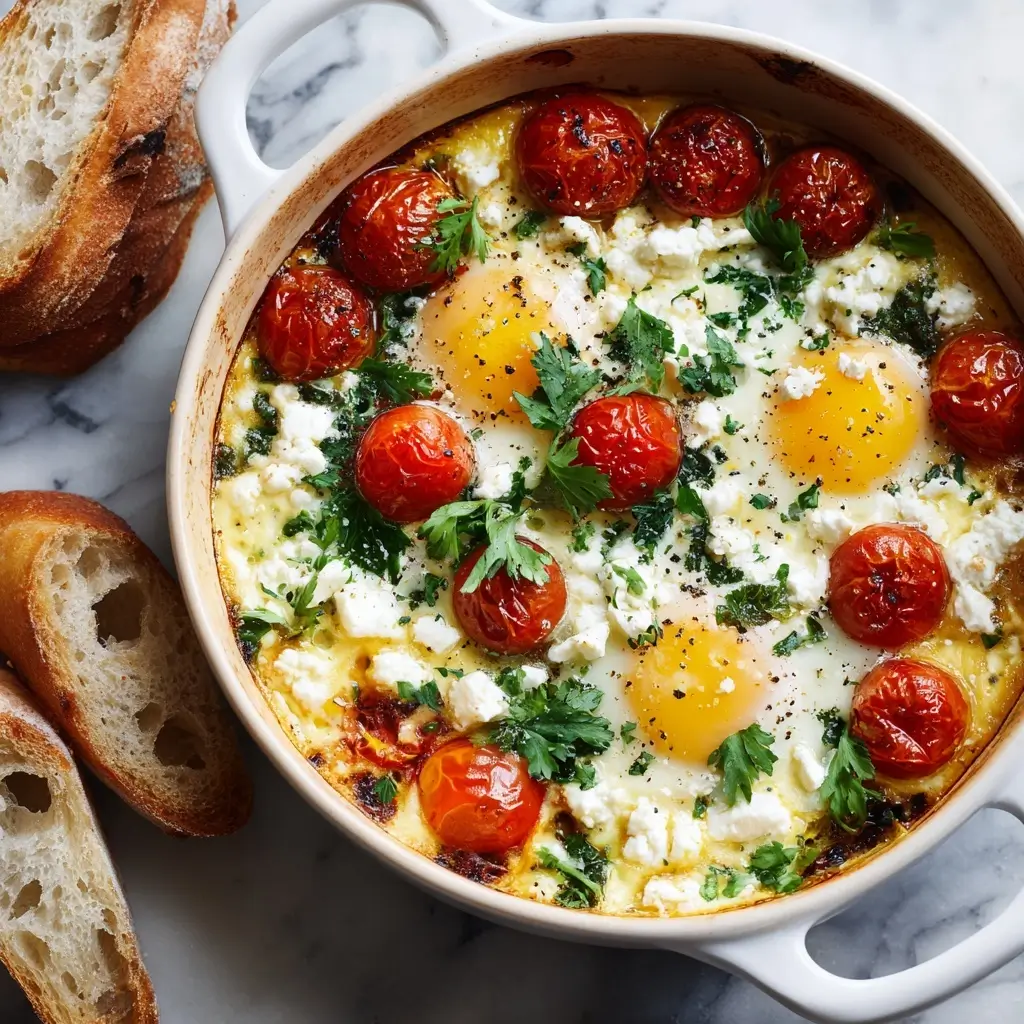
Baked Feta Eggs is a vibrant, restaurant-worthy breakfast or brunch dish that has taken the culinary world—and especially social media—by storm. At its core, it’s a stunningly simple yet deeply flavorful combination of creamy feta cheese, ripe cherry tomatoes, aromatic garlic, olive oil, and eggs, all roasted together until the tomatoes burst, the feta softens into a luscious, tangy pool, and the eggs set to silken perfection. With its bold Mediterranean profile, minimal prep time, and one-pan convenience, this dish effortlessly bridges rustic simplicity and gourmet appeal. Whether you’re hosting guests, seeking a nourishing weeknight dinner, or craving a comforting yet sophisticated meal, Baked Feta Eggs delivers rich umami depth, bright acidity, and creamy texture—all in under 30 minutes.
The History
Though baked egg-and-cheese dishes have existed across Mediterranean and Middle Eastern cuisines for centuries—from Greek avgoletino to Turkish menemen—the specific iteration known today as “Baked Feta Eggs” owes its global fame to Finnish food blogger Jenni Häkkinen. In early 2020, she shared her version—called “uunifetaputket” (oven-baked feta tubes)—on Instagram, featuring feta nestled among tomatoes, garlic, and herbs, baked until molten and served with crusty bread. The post went viral during pandemic lockdowns, resonating with home cooks craving comforting, approachable, and visually captivating meals. Within weeks, the recipe was adapted, translated, and reimagined worldwide—sparking thousands of variations across TikTok, Pinterest, and food blogs. While not an ancient heirloom recipe, its meteoric rise reflects a broader cultural embrace of Mediterranean pantry staples, minimalist cooking philosophies, and the power of social media to democratize culinary innovation. Today, it stands as a modern classic: humble in ingredients, profound in flavor, and deeply rooted in the timeless tradition of baking seasonal produce with artisanal cheese.
Ingredients Breakdown
Every element in Baked Feta Eggs plays a distinct, harmonious role—no ingredient is arbitrary. Understanding their function deepens both technique and taste:
- Feta Cheese (block, not crumbled): A high-quality, brine-cured Greek feta made from sheep’s (or sheep/goat) milk is essential. Its saltiness, tang, and firm-yet-crumbly texture allow it to hold shape while softening luxuriously in the oven—not melting away, but blooming into a creamy, savory base. Avoid pre-crumbled feta, which contains anti-caking agents and dries out.
- Cherry or Grape Tomatoes: These small, sweet, thin-skinned tomatoes burst easily, releasing juices that create a natural, glossy sauce. Their high sugar content caramelizes slightly, balancing feta’s sharpness. Roma or plum tomatoes can substitute but require halving and longer roasting; heirlooms add complexity but may yield excess water.
- Extra-Virgin Olive Oil: Not just fat—it’s a flavor foundation. A robust, peppery, fruit-forward EVOO contributes polyphenols, aroma, and richness. It coats ingredients, conducts heat evenly, and emulsifies with tomato juices to form a silky, golden sauce.
- Garlic: Fresh, minced or thinly sliced garlic infuses the oil and tomatoes with pungent warmth. Roasting mellows its bite while amplifying sweetness—crucial for depth without harshness.
- Dried Oregano (preferably Greek): Earthy, floral, and slightly minty, oregano is the quintessential herb of Greek cuisine. It withstands heat better than delicate fresh herbs and imparts unmistakable Mediterranean character. Marjoram or thyme can complement but shouldn’t fully replace it.
- Red Pepper Flakes (optional but recommended): A pinch adds subtle, lingering heat that enhances other flavors without overwhelming. Toast them lightly in oil before baking for maximum aroma.
- Salt & Freshly Ground Black Pepper: Salt intensifies tomato sweetness and rounds out feta’s saltiness (use judiciously—feta is already salty). Coarse black pepper adds aromatic spice and textural contrast.
- Fresh Herbs (for garnish): Bright, tender herbs like basil, parsley, or dill added post-bake provide freshness, color, and a volatile top note that cuts through richness.
- Crusty Bread (for serving): Not an ingredient *in* the bake—but non-negotiable for experience. A sturdy sourdough, ciabatta, or pita soaks up the sauce and offers textural counterpoint.
Step-by-Step Recipe
- Preheat & Prep Pan: Position oven rack in center position. Preheat oven to 400°F (200°C). Lightly grease a 9×13-inch (or similar 3–4 quart) ovenproof baking dish or cast-iron skillet with olive oil. For best results, use a dish with low, straight sides to maximize surface area and promote even roasting.
- Arrange Tomatoes: Spread cherry tomatoes in a single, snug layer across the bottom of the dish. Gently press them down to ensure contact with the pan—this helps them roast rather than steam.
- Add Aromatics: Scatter minced garlic evenly over tomatoes. Sprinkle dried oregano and red pepper flakes (if using) over the top. Drizzle generously with ¼ cup extra-virgin olive oil, ensuring tomatoes are glistening and coated. Season lightly with freshly ground black pepper (hold off on added salt for now—the feta provides ample sodium).
- Infuse (Optional but Recommended): Place dish in preheated oven for 10 minutes. This brief “pre-roast” softens tomatoes slightly, releases early juices, and gently cooks the garlic—reducing raw pungency and building foundational flavor. Remove and carefully pat tomatoes dry with paper towels if excess liquid pools (prevents steaming later).
- Position the Feta: Pat the block of feta dry with paper towels (critical for browning, not sogginess). Place it squarely in the center of the tomato mixture. Gently press down just enough to nestle it—do not submerge.
- Final Drizzle & Season: Drizzle another 1–2 tablespoons of olive oil over the feta. Grind additional black pepper over top. Optional: tuck a few whole garlic cloves around the feta for deeper, roasted-garlic nuance.
- Bake with Precision: Return dish to oven. Bake for 25–35 minutes, rotating halfway, until tomatoes are deeply blistered, shrunken, and jammy; feta is soft, golden at the edges, and slightly puffed; and eggs (added next) will cook perfectly. Do not open oven early—heat loss disrupts roasting.
- Add Eggs (Timing is Key): After 25 minutes of total bake time—or when tomatoes are blistered and feta is visibly softened—carefully remove dish. Using a spoon or small ladle, make four shallow, evenly spaced indentations in the hot tomato mixture surrounding the feta. Crack one large egg into each indentation. Gently spoon a little of the surrounding oil-tomato mixture over each egg white to help set edges and prevent spreading. Return immediately to oven.
- Finish Baking: Bake 8–12 more minutes, depending on desired yolk consistency: 8 minutes for jammy, runny yolks; 10 minutes for softly set yolks with slight jiggle; 12 minutes for fully set (but still tender) yolks. Watch closely—the eggs cook rapidly in the residual heat and hot oil.
- Rest & Garnish: Remove from oven and let rest 3–5 minutes. This allows eggs to gently finish cooking and sauces to settle. Sprinkle generously with flaky sea salt (like Maldon), freshly chopped herbs (basil or parsley), and a final drizzle of high-quality olive oil. Optional: a squeeze of lemon juice for brightness.
- Serve Immediately: Bring the hot dish directly to the table. Provide spoons and plenty of crusty bread for scooping. Encourage communal serving—part of the joy is breaking into the feta and swirling yolks into the vibrant sauce.
Tips
- Room-Temperature Eggs: Cold eggs can lower the pan temperature drastically when added, leading to uneven cooking or rubbery whites. Let eggs sit out for 15–20 minutes before cracking.
- Feta Must Be Dry: Excess moisture = steamed, not baked, feta. Always pat the block thoroughly with clean paper towels before placing in the dish.
- Tomato Quality Is Paramount: Use vine-ripened, in-season cherry tomatoes. Underripe or mealy ones lack sweetness and won’t caramelize well. If off-season, opt for high-quality canned San Marzano tomatoes (drained and patted dry) for depth—but fresh is superior.
- Don’t Skip the Pre-Roast: That initial 10-minute roast transforms garlic and jumpstarts tomato breakdown—resulting in a richer, less watery sauce and preventing undercooked aromatics.
- Use a Light-Colored Pan: Dark or nonstick pans absorb too much heat, risking burnt bottoms or uneven feta browning. A light ceramic or enameled cast iron dish offers ideal heat distribution and visual monitoring.
- Resist Stirring: Once assembled, never stir or mix—this breaks the feta and muddies the layers. Let the oven do the work through radiant and conductive heat.
- Watch the Eggs Like a Hawk: The final 5 minutes are critical. Set a timer, and check at 7 minutes—eggs go from perfect to overdone in under 60 seconds due to carryover heat.
- Acidity Is Your Friend: A tiny splash of good red wine vinegar or lemon zest stirred in *after* baking (not before) lifts the entire dish, cutting richness and adding dimension.
- Low-Sodium Adjustment: If using low-salt feta, increase finishing flaky salt by 50% and consider a light sprinkle of kosher salt before baking.
- Make-Ahead Friendly: Assemble everything *except* the eggs up to 1 day ahead. Cover tightly and refrigerate. Bring to room temp for 30 minutes before baking, then proceed—add eggs as directed.
Variations and Customizations
This recipe is a brilliant canvas—adaptable across seasons, diets, and palates—without sacrificing its soul. Here’s how to personalize it thoughtfully:
Vegetable Twists
- Roasted Veggie Medley: Add ½ cup diced zucchini, eggplant, or bell peppers (tossed in oil and roasted 10 min before tomatoes) for heartier texture and earthy notes.
- Spring Herb Edition: Replace oregano with 1 tbsp fresh dill + 1 tsp lemon zest pre-bake; finish with chives and microgreens.
- Spiced North African: Swap oregano for ras el hanout, add ¼ tsp ground cumin and cinnamon, and top with preserved lemon strips and olives.
Protein Enhancements
- Seafood Infusion: Nestle 6–8 cooked, peeled shrimp or scallops around the feta after pre-roast; add eggs as usual. Finish with cilantro and lime.
- Smoky Sausage: Brown ½ cup crumbled feta-friendly chorizo or merguez before adding tomatoes—infusing oil with paprika and spice.
- Legume Boost: Stir in ½ cup rinsed, drained chickpeas or white beans during pre-roast for plant-powered protein and creaminess.
Dietary Adaptations
- Vegan Version: Substitute feta with a high-fat, brined vegan feta (almond or tofu-based); use flax “eggs” (1 tbsp ground flax + 2.5 tbsp water per egg, set 5 min) added in last 10 minutes; boost umami with sun-dried tomato paste and nutritional yeast.
- Dairy-Free: Omit feta entirely and build richness with ½ cup marinated artichoke hearts + ¼ cup toasted pine nuts + extra olive oil. Add eggs as normal.
- Lower-Carb/Keto: Double the tomatoes (they’re low-carb!) and add avocado slices post-bake. Skip bread; serve with roasted cauliflower “steaks” or zucchini ribbons.
Global Inspirations
- Greek Meze Style: Add Kalamata olives, capers, and a dusting of crumbled dried mint post-bake.
- Levantine Twist: Stir 1 tbsp tahini into the tomato mixture pre-bake; finish with pomegranate molasses drizzle and toasted pistachios.
- Italian Rustica: Swap oregano for fresh rosemary and basil; add 2 tbsp torn fresh mozzarella pearls beside feta before final bake.
Breakfast & Brunch Upgrades
- Avocado Smash Base: Spread ½ ripe avocado on toasted sourdough before topping with baked feta eggs for creamy contrast.
- Everything Bagel Style: Sprinkle bagel seasoning (sesame, poppy, garlic, onion, salt) over feta pre-bake and again post-bake.
- Breakfast Grain Bowl: Spoon baked feta eggs over farro, freekeh, or quinoa pilaf with sautéed spinach and roasted sweet potato.
Health Considerations and Nutritional Value
Baked Feta Eggs is not only delicious—it’s nutritionally intelligent when prepared mindfully. A standard serving (¼ of recipe, approx. 1.5 cups including sauce and 1 slice bread) provides approximately:
- Calories: 380–450 kcal (varies with oil amount and bread choice)
- Protein: 16–18g (high-quality complete protein from eggs + feta)
- Fat: 28–32g (predominantly heart-healthy monounsaturated fats from EVOO and feta; ~5g saturated)
- Carbohydrates: 12–15g (mostly from tomatoes and bread; fiber ~3g)
- Vitamins & Minerals: Exceptionally rich in Vitamin A (from tomatoes/beta-carotene), Vitamin K (EVOO, herbs), Calcium (feta), Choline (eggs), Lycopene (bioavailable, heat-enhanced antioxidant in roasted tomatoes), and Polyphenols (EVOO).
Key Health Notes:
- Feta’s Sodium Content: Traditional feta contains ~300–400mg sodium per 1-oz serving. While sodium is essential, those on low-sodium diets (e.g., hypertension management) should use reduced-sodium feta or reduce added salt significantly—and balance with potassium-rich tomatoes and herbs.
- Egg Yolks & Cholesterol: One large egg yolk contains ~186mg dietary cholesterol. Current science shows dietary cholesterol has minimal impact on blood cholesterol for most people; eggs remain a nutrient-dense superfood. Those with familial hypercholesterolemia should consult their healthcare provider.
- Olive Oil Benefits: Extra-virgin olive oil is loaded with oleocanthal (a natural anti-inflammatory compound), antioxidants, and healthy fats linked to reduced cardiovascular risk and improved endothelial function.
- Lycopene Bioavailability: Cooking tomatoes dramatically increases lycopene absorption—up to 4x more than raw. Paired with healthy fats (EVOO), absorption jumps further—making this dish a functional food powerhouse.
- Gluten Considerations: Naturally gluten-free (excluding bread). Serve with gluten-free crusty loaf or seed crackers for celiac-safe enjoyment.
- Weight Management Friendly: High protein and healthy fats promote satiety; moderate portions align well with balanced eating patterns like Mediterranean or DASH diets.
Ingredients
- 1 (8 oz / 225g) block high-quality Greek feta cheese, brine-packed (not pre-crumbled)
- 2 pints (about 500g) ripe cherry or grape tomatoes, stems removed
- 4–5 large garlic cloves, finely minced or thinly sliced
- ⅓ cup (80ml) extra-virgin olive oil, plus more for drizzling
- 1½ tsp dried oregano (preferably Greek)
- ¼–½ tsp red pepper flakes (to taste)
- Freshly ground black pepper, to taste (about 1 tsp)
- 4 large eggs, preferably pasture-raised or organic
- Flaky sea salt (e.g., Maldon), for finishing
- ¼ cup fresh basil leaves, roughly torn, or flat-leaf parsley
- Crusty sourdough or rustic bread, for serving
Optional additions: Lemon zest, lemon juice, kalamata olives, toasted pine nuts, crumbled dried mint, microgreens.
Directions
- Preheat oven to 400°F (200°C). Lightly grease a 9×13-inch (or 3–4 quart) ovenproof baking dish or cast-iron skillet with olive oil.
- In the prepared dish, spread cherry tomatoes in a single, even layer. Scatter minced garlic, dried oregano, and red pepper flakes over top. Drizzle with ¼ cup olive oil and grind black pepper generously. Toss gently with hands or spoon to coat tomatoes evenly. Do not add salt yet.
- Place dish in preheated oven and roast for 10 minutes. Remove, carefully drain any excess liquid with a spoon, and pat tomatoes lightly with paper towels if very juicy.
- Pat feta block completely dry with paper towels. Place it gently in the center of the tomato mixture. Drizzle with remaining 1–2 tbsp olive oil and additional black pepper.
- Return dish to oven and bake for 25 minutes, rotating halfway through, until tomatoes are blistered, shrunken, and glistening, and feta is softened with golden edges.
- Remove dish carefully. Using a spoon, make four shallow indentations in the hot tomato mixture surrounding the feta. Crack one egg into each indentation. Gently spoon a little of the surrounding oil-tomato mixture over each egg white.
- Return to oven and bake for 8–12 minutes, until egg whites are fully set and yolks reach desired doneness (8 min = runny; 10 min = jammy; 12 min = softly set).
- Let rest 3–5 minutes. Sprinkle generously with flaky sea salt, fresh herbs, and a final drizzle of olive oil. Optional: add lemon zest or a squeeze of lemon juice.
- Serve immediately, straight from the dish, with plenty of warm, crusty bread for scooping.
FAQ
- Can I use crumbled feta instead of a block?
- No—crumbled feta contains anti-caking starches and dries out or burns. A solid block melts luxuriously and holds structural integrity. If only crumbled is available, press it firmly into a small ramekin lined with parchment, chill 30 minutes, then unmold carefully before baking.
- Why did my feta turn grainy or hard?
- Most commonly: 1) Feta wasn’t patted dry, causing steam instead of roasting; 2) Oven temperature was too low (<375°F), preventing proper emulsification; 3) Used low-fat or “feta-style” cheese lacking sufficient fat content for melting.
- Can I make this ahead and reheat?
- Best enjoyed fresh—the eggs lose ideal texture upon reheating. However, you can fully assemble (minus eggs) up to 24 hours ahead, refrigerate covered, then bring to room temperature before baking. Add eggs as directed.
- What if I don’t have oregano?
- Dried marjoram or thyme are closest substitutes (use same amount). Avoid basil or rosemary—they overpower. For fresher flavor, add 1 tbsp chopped fresh oregano *after* baking.
- Can I bake this in individual ramekins?
- Absolutely! Divide tomatoes, garlic, herbs, and oil among four 6-oz ramekins. Place a 2-inch cube of feta in each. Bake 20 min, then add 1 egg per ramekin and bake 8–10 more minutes. Perfect for portion control or gifting.
- Is there a dairy-free version that still feels indulgent?
- Yes—use a high-fat, fermented almond-based feta (like Violife or Follow Your Heart), double the olive oil, add 1 tbsp sun-dried tomato paste to the tomatoes pre-bake, and finish with toasted walnuts and capers for umami depth.
- My sauce turned watery—what went wrong?
- Excess tomato water is usually caused by: 1) Skipping the 10-minute pre-roast; 2) Using overripe or greenhouse tomatoes with high water content; 3) Not draining pooled liquid after pre-roast; 4) Overcrowding the pan. Next time, roast tomatoes solo first and reduce liquid before adding feta.
- Can I freeze leftovers?
- Eggs do not freeze well in this context. However, the roasted tomato-feta mixture (without eggs) freezes beautifully for up to 3 months. Thaw overnight, reheat gently on stove, and add fresh eggs to poach or fry alongside.
- What wines pair best with Baked Feta Eggs?
- A crisp, high-acid white shines: Assyrtiko (Greek), Vermentino (Sardinian), or Sauvignon Blanc. For red lovers, try a light, low-tannin option like chilled Frappato or Gamay. Non-alcoholic: sparkling lemon-water with mint and a splash of pomegranate juice.
- How do I scale this for a crowd?
- Double or triple using a larger roasting pan (e.g., half-sheet tray). Maintain same oven temp. Increase pre-roast time by 2–3 minutes, then add eggs in batches if needed—keeping finished portions warm in a low oven (200°F) while others bake.
Summary
Baked Feta Eggs is a deceptively simple, vibrantly flavored Mediterranean-inspired dish where roasted cherry tomatoes, aromatic garlic, and high-quality feta meld into a rich, tangy, umami-packed base—crowned with perfectly baked eggs and finished with fresh herbs and flaky salt.
It celebrates pantry staples, requires under 10 minutes of active prep, delivers exceptional nutrition (lycopene, healthy fats, complete protein), and adapts effortlessly to dietary needs, seasonal produce, and global flavor profiles—making it a timeless, beloved staple for breakfast, brunch, lunch, or even a light supper.