
Introduction
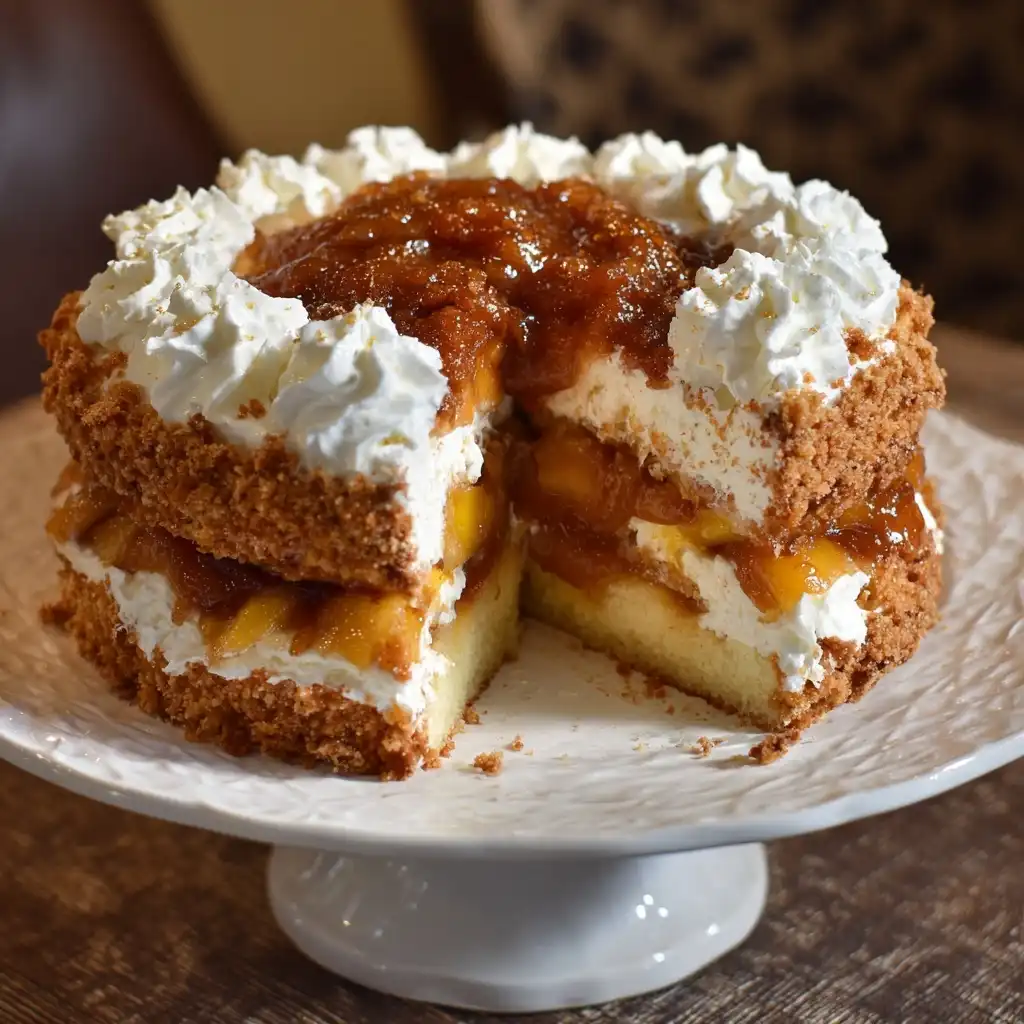
Aunt Polly’s Peach Cobbler Cake is more than just a dessert—it’s a warm, nostalgic embrace in every bite. This beloved Southern classic marries the rustic charm of a traditional peach cobbler with the tender, cake-like structure of a buttery vanilla batter, resulting in a harmonious, two-layered marvel: a golden, slightly crisp sugary crust crowning a luscious, bubbling fruit filling infused with cinnamon, nutmeg, and real Georgia peaches. Whether served warm with a scoop of homemade vanilla bean ice cream or enjoyed cold the next morning with a drizzle of buttermilk glaze, Aunt Polly’s Peach Cobbler Cake evokes front-porch summers, church potlucks, handwritten recipe cards stained with butter and juice, and generations gathered around worn oak tables. Its enduring popularity lies not only in its irresistible flavor profile—sweet, tangy, spiced, and deeply comforting—but also in its forgiving nature: it welcomes substitutions, adapts to seasonal fruit availability, and rewards both novice bakers and seasoned pastry chefs alike with consistent, soul-satisfying results.
The History
The origins of Aunt Polly’s Peach Cobbler Cake are steeped in oral tradition, regional ingenuity, and the practical magic of Depression-era resourcefulness. While the broader concept of “cobbler” traces back to 17th-century England (where it referred to a crude, “cobbled-together” fruit pie topped with biscuit dough), the American South transformed it into something uniquely hearty and homegrown—often baked in cast iron skillets over wood stoves. The evolution into a *cake-style* cobbler began gaining traction in the mid-20th century, particularly across Georgia, South Carolina, and Tennessee, where abundant peach harvests inspired creative adaptations. “Aunt Polly” herself is widely believed to be a composite figure—a loving amalgamation of countless Southern matriarchs: Polly Henderson of Griffin, GA (whose 1953 church cookbook featured an early version titled “Peach Drop Cake”), Polly Whitaker of Columbia, SC (famous for her “upside-down cobbler cake” technique at the 1962 State Fair), and even folklore references to “Aunt Polly’s Pantry,” a beloved roadside stand near Peachtree City that operated from 1948 to 1979. What unites these stories is a shared ethos: simplicity, generosity, and reverence for ripe, local fruit. Over decades, the recipe was refined—butter replaced lard for tenderness, buttermilk added tang and lift, brown sugar deepened caramel notes, and a secret splash of pure almond extract emerged as a hallmark “Aunt Polly touch.” Today, the cake appears in Junior League cookbooks, Southern Living archives, and viral TikTok recreations—but its heart remains unchanged: a humble, joyful celebration of peaches, patience, and kinship.
Ingredients Breakdown
Every ingredient in Aunt Polly’s Peach Cobbler Cake serves a precise, interdependent purpose—no element is arbitrary. Below is a meticulous analysis of each component and its functional role:
- Fresh, Ripe Peaches (6–7 medium, ~2½ lbs whole): Not just flavor—their natural pectin thickens the filling, their acidity balances sweetness, and their water content creates steam that lifts the cake layer. Freestone varieties (e.g., Elberta, Red Haven) are ideal for easy pit removal and superior texture.
- Granulated Sugar (1 cup, plus 2 tbsp for topping): Provides baseline sweetness and aids in caramelization of the top crust. The extra 2 tbsp sprinkled pre-bake ensures a delicate, crackly sugar crust.
- Packed Light Brown Sugar (¾ cup): Adds molasses depth, moisture retention, and rich caramel undertones—critical for the signature “butterscotch-tinged” syrup that pools beneath the cake layer.
- All-Purpose Flour (1¾ cups): The structural backbone. Bleached flour is preferred for its finer texture and optimal tenderness; unbleached may yield a slightly denser crumb.
- Baking Powder (2 tsp) & Baking Soda (½ tsp): A dual-leavening system: baking powder provides primary lift, while baking soda reacts with the buttermilk’s acidity for enhanced rise, browning, and subtle tang.
- Ground Cinnamon (1½ tsp), Ground Nutmeg (¼ tsp), and Allspice (⅛ tsp): The sacred Southern spice trinity. Cinnamon offers warmth, nutmeg adds floral complexity, and allspice delivers clove-like depth—never omit the allspice; it’s Aunt Polly’s “secret harmony note.”
- Salt (¾ tsp): Not just for seasoning—it intensifies sweetness, controls gluten development, and balances the fruit’s acidity.
- Unsalted Butter (½ cup, 1 stick, melted & cooled): Imparts richness, tenderness, and flakiness potential. Melted (not hot) ensures even dispersion without cooking the eggs.
- Buttermilk (1 cup, full-fat, well-shaken): The MVP for moisture, tang, and activation of leaveners. Its acidity tenderizes gluten while contributing to the cake’s signature moist-yet-sturdy crumb. Substitute: 1 cup whole milk + 1 tbsp white vinegar, rested 5 minutes.
- Large Eggs (2, room temperature): Bind ingredients, add structure, and contribute to golden color and fine crumb. Cold eggs can cause batter separation.
- Pure Vanilla Extract (2 tsp) & Pure Almond Extract (½ tsp): Vanilla grounds the flavor; almond extract—used sparingly—is Aunt Polly’s non-negotiable signature, lending a subtle marzipan nuance that elevates the peach without overpowering it.
- Unsalted Butter (2 tbsp, for greasing & dotting): Ensures non-stick release and adds luxurious richness directly into the fruit layer.
- Optional Garnish: Whipped Cream, Vanilla Ice Cream, or Buttermilk Glaze (1 cup powdered sugar + 2–3 tbsp buttermilk + ¼ tsp vanilla).
Step-by-Step Recipe
Follow this meticulously tested, foolproof sequence for flawless results—timing, temperature, and technique are all essential:
- Preheat & Prep: Position oven rack in the lower third. Preheat oven to 350°F (175°C). Generously grease a 9×13-inch metal baking pan (NOT glass or ceramic—they conduct heat differently and risk over-browning) with 1 tbsp unsalted butter. Set aside.
- Prepare the Peaches: Bring a large pot of water to boil. Score an “X” on the bottom of each peach. Blanch for 45 seconds, then plunge into ice water. Slip off skins. Halve, pit, and slice into ½-inch thick wedges (~6–7 cups). In a large bowl, gently toss peaches with 1 cup granulated sugar, ¾ cup brown sugar, 1½ tsp cinnamon, ¼ tsp nutmeg, ⅛ tsp allspice, and ¾ tsp salt. Let macerate 15 minutes—this draws out juices and concentrates flavor.
- Build the Fruit Base: Pour the macerated peaches (including all liquid) into the prepared pan. Dot evenly with 2 tbsp cold unsalted butter, cut into small pieces. Bake uncovered for 20 minutes. This pre-baking step softens the peaches, reduces excess liquid, and begins caramelizing sugars—preventing a soggy cake layer later.
- Make the Batter: While peaches bake, whisk together flour, baking powder, baking soda, and remaining ¼ tsp salt in a medium bowl. In a large bowl, whisk melted (cooled) butter, buttermilk, eggs, vanilla, and almond extract until smooth. Gradually fold dry ingredients into wet ingredients using a spatula—mix *just until no dry streaks remain*. Do NOT overmix; a few small lumps are ideal. Batter will be thick but pourable.
- Assemble with Precision: Remove hot pan from oven. Carefully pour batter evenly over the hot peach mixture. Tilt pan gently to spread batter; it will sink slightly and partially submerge—this is correct! Do NOT stir. Sprinkle the top evenly with the remaining 2 tbsp granulated sugar—this creates the iconic sparkling, crisp crust.
- Bake to Perfection: Return pan to oven. Bake 45–55 minutes, or until a toothpick inserted into the *cake layer* (not the fruit) comes out clean or with moist crumbs (not wet batter), and the top is deeply golden brown with visible cracks and a firm, set surface. Edges should pull slightly from the pan. Crucial Note: Oven temps vary—start checking at 45 minutes. Underbaking yields gummy cake; overbaking dries out the fruit.
- Cool & Set: Place pan on a wire rack. Cool for *at least 45 minutes* before serving. This resting time allows the syrup to thicken, the cake layer to fully set, and flavors to meld. Serving too soon results in a runny, separated dessert.
Tips
- Peach Selection is Paramount: Use peak-season, fragrant, slightly yielding peaches. Underripe peaches lack sweetness and aroma; overripe ones turn mushy. If using frozen (unsweetened, thawed & drained), reduce added sugar by ¼ cup and add 1 tsp lemon juice for brightness.
- Room Temperature Matters: Ensure eggs and buttermilk are truly room temp (65–70°F). Cold ingredients cause the melted butter to seize, leading to a curdled batter and dense texture.
- Don’t Skip the Pre-Bake: That 20-minute head start transforms the fruit layer—reducing water, concentrating flavor, and preventing the cake from steaming instead of baking.
- Grease Strategically: Use butter—not shortening or spray—for superior non-stick performance and flavor. For extra insurance, line the bottom of the pan with parchment paper, leaving 2-inch overhangs for easy lifting.
- Rotate for Even Baking: At the 30-minute mark, rotate the pan 180 degrees front-to-back for uniform browning, especially in older ovens.
- Test the Cake, Not the Filling: Insert the toothpick into the *center of the golden cake layer*, avoiding fruit pockets. Juicy fruit is desirable; wet batter is not.
- Cooling is Non-Negotiable: Rushing this step disrupts the delicate balance between cake and syrup. Set a timer—45 minutes minimum.
- Storage Wisdom: Cool completely, cover tightly with plastic wrap, and refrigerate for up to 5 days. Reheat individual servings in the microwave (20–30 sec) or oven (325°F for 10 min) to restore warmth and syrup liquidity.
- Freezing Success: Freeze unbaked assembled cobbler (covered tightly) for up to 3 months. Thaw overnight in fridge, then bake as directed, adding 5–10 minutes to total time.
- Golden Crust Secret: For extra crunch, sprinkle 1 tbsp coarse turbinado sugar over the final 2 tbsp granulated sugar before baking.
Variations and Customizations
Aunt Polly’s recipe is gloriously adaptable—here are beloved, tested variations that honor its spirit while offering delightful twists:
- Georgia Peach & Bourbon Swirl: Add 2 tbsp high-quality bourbon to the macerating peaches. After pre-baking, swirl ¼ cup bourbon-infused brown sugar butter (1 tbsp butter + 2 tbsp brown sugar + 1 tbsp bourbon, microwaved 20 sec) into the batter before spreading.
- Blackberry-Peach Fusion: Replace 2 cups of peaches with fresh, tart blackberries. Reduce granulated sugar to ¾ cup to balance acidity. Add 1 tsp lemon zest to batter.
- Oatmeal-Pecan Streusel Top: Replace the final 2 tbsp sugar with a streusel: ½ cup old-fashioned oats, ¼ cup chopped toasted pecans, 2 tbsp brown sugar, 1 tbsp cold butter, ¼ tsp cinnamon. Sprinkle over batter pre-bake.
- Spiced Ginger-Peach: Add 1 tbsp finely grated fresh ginger and ½ tsp ground ginger to the peach mixture. Increase cinnamon to 2 tsp and add ¼ tsp ground cardamom to dry ingredients.
- Gluten-Free Adaptation: Substitute 1¾ cups King Arthur Gluten-Free Measure-for-Measure Flour. Add ½ tsp xanthan gum if not included in blend. Use GF-certified oats if making streusel.
- Vegan Version: Use 2 flax eggs (2 tbsp ground flax + 6 tbsp water, rested 5 min), plant-based butter (Miyoko’s or Earth Balance), and unsweetened soy or oat buttermilk (1 cup + 1 tbsp lemon juice). Ensure sugar is vegan.
- Mini Individual Cobblers: Divide peach mixture and batter among 6 greased 6-oz ramekins. Bake at 350°F for 32–38 minutes. Perfect for portion control and elegant presentation.
- Breakfast Cobbler Cake: Reduce granulated sugar to ½ cup, omit almond extract, add ½ cup rolled oats and ¼ cup chopped walnuts to batter. Serve warm with Greek yogurt.
- Brandy-Soaked Dried Peach Version: Soak 1½ cups dried peaches in ¼ cup brandy + 2 tbsp hot water for 1 hour. Drain (reserve liquid), chop, and use in place of fresh. Simmer reserved liquid with 2 tbsp brown sugar until syrupy; drizzle over baked cake.
- Maple-Peach with Candied Ginger: Replace brown sugar with pure maple syrup (¾ cup) and add ¼ cup finely chopped crystallized ginger to peaches.
Health Considerations and Nutritional Value
While undeniably indulgent, Aunt Polly’s Peach Cobbler Cake offers meaningful nutritional benefits when viewed contextually and enjoyed mindfully. A standard 9×13-inch pan yields approximately 12 generous servings. Per serving (1/12th of recipe, approx. 320g), nutritional estimates are as follows:
- Calories: ~385 kcal (moderate for a dessert; comparable to a slice of banana bread)
- Total Fat: 12g (7g saturated—primarily from butter; balanced by heart-healthy monounsaturated fats)
- Carbohydrates: 65g (42g sugars—of which ~28g are naturally occurring fructose from peaches; 14g added sugars)
- Dietary Fiber: 3g (from peaches and whole grain options in variations—excellent for digestive health and satiety)
- Protein: 5g (from eggs, dairy, and flour—supports muscle maintenance)
- Vitamins & Minerals: Exceptionally high in Vitamin C (peaches provide ~15% DV per serving), Vitamin A (beta-carotene for eye health), Potassium (supports blood pressure regulation), and antioxidants like chlorogenic acid (anti-inflammatory).
Considerations for Dietary Needs:
- Diabetes-Friendly Approach: Reduce total sugar by ¼ cup, use erythritol or monk fruit blend (1:1 ratio), increase cinnamon to 2 tsp (natural blood sugar modulator), and serve with a protein source (Greek yogurt, cottage cheese) to slow glucose absorption.
- Lower-Fat Option: Replace ¼ cup butter with unsweetened applesauce, but retain ¼ cup butter for flavor and texture. Expect a slightly denser, moister crumb.
- Reduced Sodium: Decrease salt to ½ tsp without compromising flavor or function.
- Allergen Notes: Contains gluten (wheat), dairy (butter, buttermilk), and eggs. Tree nuts (almond extract) are present—though highly diluted, those with severe allergies should use imitation extract.
- Mindful Enjoyment: Savor one modest portion (about 1 cup) alongside herbal tea or sparkling water. The fiber and natural fruit sugars promote longer-lasting satisfaction compared to ultra-processed sweets.
Ingredients
For the Peach Filling:
• 6–7 medium ripe freestone peaches (about 2½ lbs whole), peeled, pitted, and sliced ½-inch thick (~6–7 cups)
• 1 cup granulated sugar, divided
• ¾ cup packed light brown sugar
• 1½ teaspoons ground cinnamon
• ¼ teaspoon ground nutmeg
• ⅛ teaspoon ground allspice
• ¾ teaspoon fine sea salt
• 2 tablespoons unsalted butter, cold and cut into small pieces
For the Cake Batter:
• 1¾ cups all-purpose flour (bleached recommended)
• 2 teaspoons baking powder
• ½ teaspoon baking soda
• ¼ teaspoon fine sea salt
• ½ cup unsalted butter, melted and cooled to lukewarm
• 1 cup full-fat buttermilk, well-shaken
• 2 large eggs, room temperature
• 2 teaspoons pure vanilla extract
• ½ teaspoon pure almond extract
For Finishing:
• 2 tablespoons granulated sugar (for sprinkling)
Directions
- Preheat oven to 350°F (175°C). Position rack in lower third. Generously grease a 9×13-inch metal baking pan with 1 tablespoon unsalted butter.
- In a large bowl, combine sliced peaches, 1 cup granulated sugar, ¾ cup brown sugar, 1½ tsp cinnamon, ¼ tsp nutmeg, ⅛ tsp allspice, and ¾ tsp salt. Gently toss. Let macerate 15 minutes.
- Pour peach mixture (with all liquid) into prepared pan. Dot evenly with 2 tbsp cold butter pieces.
- Bake uncovered for 20 minutes. Remove from oven; set aside on wire rack. Increase oven temp to 350°F if lowered.
- Meanwhile, in a medium bowl, whisk together flour, baking powder, baking soda, and ¼ tsp salt.
- In a large bowl, whisk melted (cooled) butter, buttermilk, eggs, vanilla, and almond extract until smooth and emulsified.
- Gradually fold dry ingredients into wet ingredients using a silicone spatula. Mix *just until no dry flour remains*—do not overmix. Batter will be thick and slightly lumpy.
- Carefully pour batter evenly over hot peaches. Tilt pan gently to spread batter; it will sink and partially cover fruit. Sprinkle evenly with remaining 2 tbsp granulated sugar.
- Bake 45–55 minutes, rotating pan halfway, until a toothpick inserted into the *center of the cake layer* (avoiding fruit pockets) comes out clean or with moist crumbs, and top is deep golden with visible cracks.
- Remove pan from oven. Cool on wire rack for *at least 45 minutes* before serving. Serve warm or at room temperature, optionally with vanilla ice cream or buttermilk glaze.
FAQ
- Can I use canned peaches?
- Yes, but with caveats: Use 4 (15-oz) cans of *peaches in 100% juice* (not syrup), drained WELL. Reduce added granulated sugar to ¾ cup and add 1 tsp lemon juice to filling for brightness. Fresh is always superior for texture and depth.
- Why did my cake layer sink or become gummy?
- Most common causes: 1) Underbaking—check early and often; 2) Skipping the 20-minute pre-bake, leaving too much fruit water; 3) Overmixing batter, developing excess gluten; 4) Using cold eggs/buttermilk, causing fat to solidify.
- Can I make this ahead of time?
- Absolutely! Assemble completely (through step 8) up to 24 hours ahead. Cover tightly and refrigerate. Let sit at room temperature for 30 minutes before baking, then add 5–8 minutes to bake time. Fully baked cake keeps beautifully refrigerated for 5 days.
- My syrup is too runny. How do I fix it?
- Let it cool completely—the syrup thickens significantly as it chills. If still too thin after cooling, gently reheat the entire pan in a 325°F oven for 10–15 minutes to encourage further reduction. Next time, ensure peaches are well-drained after maceration and don’t skip the pre-bake.
- Is the almond extract necessary?
- It’s the signature “Aunt Polly” note—providing an ethereal, complementary nuance to peach. Omitting it yields a delicious, traditional cobbler cake, but you’ll miss that distinctive, cherished character. For allergy concerns, use ¼ tsp imitation almond extract (more stable) or omit entirely.
- Can I double the recipe?
- Not recommended for a single pan. Instead, bake two separate 9×13-inch batches. Doubling risks uneven baking, overflow, and inconsistent texture due to varying heat distribution.
- What’s the best way to peel peaches easily?
- Blanching is foolproof: Score an “X,” boil 45 seconds, then ice bath 1 minute. Skins slip off effortlessly. For small batches, a serrated peeler works well on ripe fruit.
- Can I use a different pan size?
- A 9×13-inch metal pan is ideal. An 8×12-inch will yield thicker layers and require +5–8 minutes. A 9×9-inch square pan will be very deep—reduce bake time by 5 minutes and check early. Avoid glass/ceramic unless adjusted (reduce temp to 325°F and +10 min bake time).
- Why does my cake have a “tunneling” or hole-y texture?
- This indicates overmixing the batter or using expired leaveners. Always sift or whisk dry ingredients thoroughly, and test baking powder/soda freshness (baking powder fizzes vigorously in hot water; baking soda bubbles with vinegar).
- Can I add nuts or oats to the batter?
- Yes! Fold in ½ cup chopped toasted pecans or walnuts, or ⅓ cup old-fashioned oats, into the batter *after* mixing. This adds delightful texture and nutrition without compromising structure.
Summary
Aunt Polly’s Peach Cobbler Cake is a timeless Southern heirloom dessert that masterfully layers tender, spiced peach filling beneath a golden, subtly crisp cake crust—infused with the warm nostalgia of porch swings, summer harvests, and generations of love baked into every bite. Its brilliance lies in its perfect balance: rustic yet refined, sweet yet bright, simple in ingredients yet profound in comfort, and endlessly adaptable without ever losing its soulful, peach-perfumed heart.