
Introduction
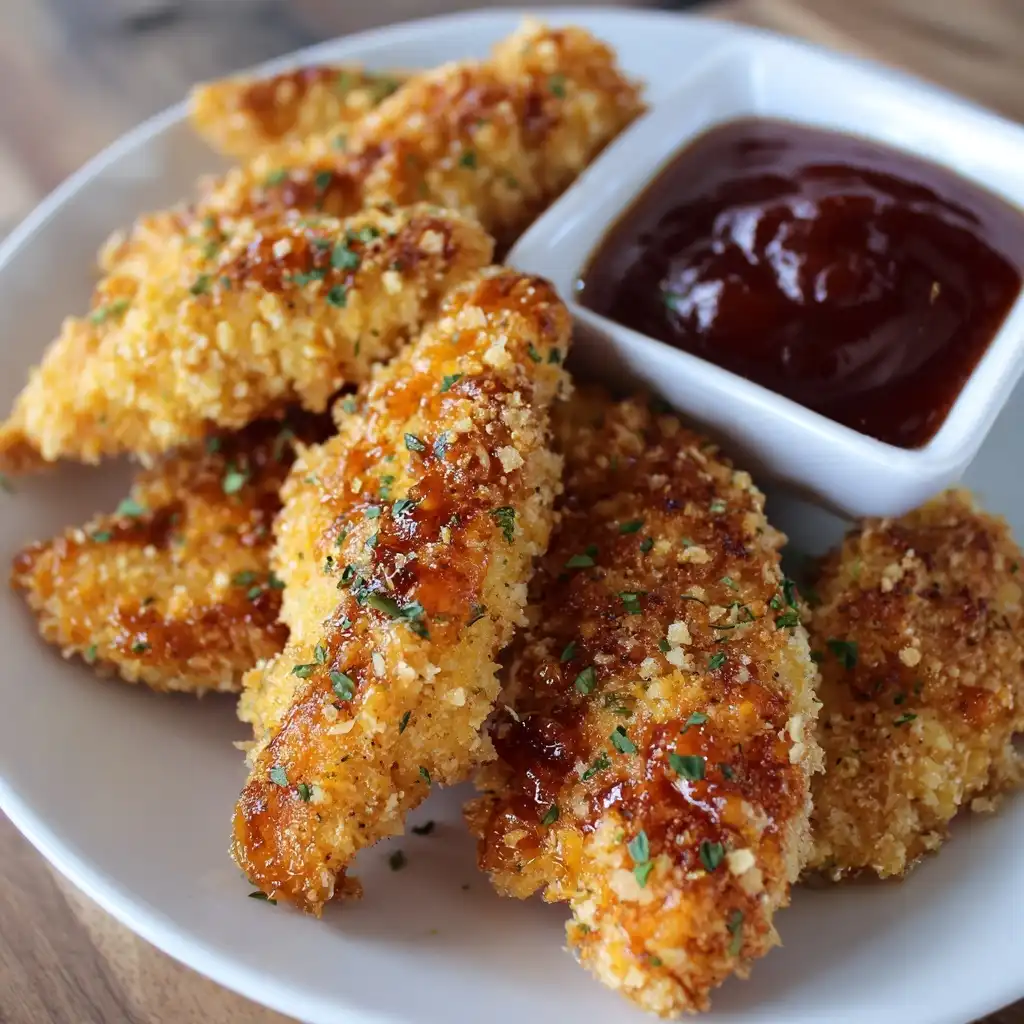
Air Fryer Chicken Tenders are the modern home cook’s answer to crispy, golden, restaurant-quality poultry without the guilt—or the grease. Combining the beloved texture and flavor of classic fried chicken strips with the health-conscious convenience of rapid-air technology, these tender morsels deliver maximum crunch, juicy interior, and minimal oil usage—all in under 20 minutes. Whether you’re meal prepping for busy weeknights, satisfying picky eaters, or seeking a protein-packed snack that aligns with keto, gluten-free, or lower-calorie lifestyles, air fryer chicken tenders rise to the occasion—literally and deliciously.
The History
Chicken tenders trace their roots to the mid-20th century, evolving from early breaded chicken strips served in American diners and school cafeterias. While often credited to restaurateur Robert C. Baker—who pioneered boneless, breaded chicken innovations at Cornell University in the 1950s—the commercialized version gained mass popularity in the 1980s with fast-food chains like Chick-fil-A (introducing “Chick-fil-A Nuggets” in 1984) and later Tyson Foods’ frozen tenders. The traditional preparation relied heavily on deep-frying—yielding irresistible crispness but also high fat absorption and inconsistent results at home. Fast forward to the 2010s: the advent and mainstream adoption of countertop air fryers revolutionized this staple. Inspired by convection oven principles, air fryers circulate superheated air at high velocity, creating a Maillard-rich crust with as little as one teaspoon of oil—ushering in an era of “guilt-free indulgence.” Today, air fryer chicken tenders symbolize culinary innovation meeting practicality: a humble dish reimagined for wellness, speed, sustainability (less oil waste), and accessible gourmet results.
Ingredients Breakdown
Every exceptional batch begins with intentionality—not just measurement. Here’s why each component matters:
- Chicken Breast (or Tenderloins): Lean, mild-flavored, and naturally tender, boneless, skinless chicken breast is ideal. For optimal texture, cut against the grain into uniform 1-inch-wide, 3–4-inch-long strips (~½ inch thick). Using pre-packaged chicken tenderloins saves time but verify they’re not injected with broth or sodium solutions, which hinder browning.
- All-Purpose Flour (or Gluten-Free Alternative): Acts as the foundational “glue” layer—helping the egg wash adhere and supporting even breading. For GF versions, use a 1:1 certified gluten-free blend (e.g., Bob’s Red Mill) with xanthan gum for binding integrity.
- Eggs & Dairy/Non-Dairy Liquid: A whisked egg base (often enhanced with 1 tbsp milk, buttermilk, or unsweetened almond milk) adds moisture, richness, and protein-based binding. Buttermilk is especially prized for its lactic acid, which gently tenderizes while promoting golden browning.
- Breading Components: A dual-layer system ensures crunch retention: fine panko breadcrumbs provide airy, shatteringly crisp texture; all-purpose or crushed cornflakes add structural heft and visual appeal. Optional additions include grated Parmesan (umami depth), nutritional yeast (vegan savory note), or toasted sesame seeds (nutty aroma).
- Seasonings: Beyond salt and black pepper, key players include garlic powder (not garlic salt—too much sodium), onion powder, smoked paprika (for warmth and color), dried oregano or thyme (earthy balance), and a pinch of cayenne or chipotle for subtle heat. Fresh herbs are omitted here—they burn at high air fryer temps.
- Oil: Crucial—but minimal. 1–2 tsp of high-smoke-point oil (avocado, grapeseed, or refined coconut) tossed *with the breading* (not brushed on chicken) ensures even crisping without sogginess. Never spray oil directly onto the air fryer basket before cooking—it can damage nonstick coatings over time.
- Optional Enhancements: A splash of hot sauce or Dijon mustard in the egg wash adds tang and complexity; a dusting of cornstarch (1 tsp per cup of flour) in the dredge boosts crispness; lemon zest in the breading lends brightness.
Step-by-Step Recipe
- Prep the Chicken: Pat chicken strips *extremely dry* with paper towels—moisture is the #1 enemy of crispiness. Trim any excess fat or sinew. Place on a wire rack set over a baking sheet and refrigerate uncovered for 15–30 minutes. This air-chills the surface, further reducing steam during cooking.
- Set Up Your Breading Station: Use three shallow, wide dishes (pie plates work perfectly):
• Dish 1: Flour + 1 tsp each garlic powder, onion powder, smoked paprika, ½ tsp salt, ¼ tsp black pepper, optional ½ tsp cornstarch. Whisk thoroughly.
• Dish 2: Whisk 2 large eggs + 1 tbsp buttermilk (or milk) + 1 tsp Dijon mustard + ½ tsp hot sauce (optional).
• Dish 3: 1½ cups panko + ½ cup crushed cornflakes (or all panko) + ¼ cup grated Parmesan + 1 tsp dried oregano + ½ tsp salt. Toss with 1½ tsp avocado oil until evenly moistened—this is the secret to consistent crunch. - Dredge with Precision: Working with 2–3 pieces at a time:
→ Coat in flour mixture, shaking off excess.
→ Dip fully into egg wash, letting excess drip off (a 2-second pause helps).
→ Press firmly into breading, turning and patting gently to ensure full, even coverage—no bare spots! Transfer to a parchment-lined plate. Repeat. Refrigerate breaded tenders for 10 minutes—this sets the coating and prevents slippage. - Preheat & Load the Air Fryer: Set to 400°F (204°C) for 5 minutes. Lightly line the basket with perforated parchment (cut to fit, *never* covering vents) or use a silicone air fryer liner—this prevents sticking *and* simplifies cleanup without impeding airflow. Arrange tenders in a single layer with at least ½ inch space between each piece. Overcrowding causes steaming, not frying.
- Air Fry with Strategic Flipping: Cook at 400°F for 8 minutes. At the 4-minute mark, carefully flip each tender using tongs—this ensures symmetrical browning and eliminates pale undersides. For extra-crispy results, rotate basket front-to-back halfway through second half (at 6 minutes). Total cook time is typically 7–9 minutes, depending on thickness and air fryer model. Tendons are done when internal temperature reaches 165°F (74°C) and exterior is deep golden brown.
- Rest & Serve: Transfer immediately to a wire rack (not paper towels—steam softens crust). Let rest 2–3 minutes. This allows residual heat to finish cooking while stabilizing juices. Serve hot with dipping sauces.
Tips
- Dryness is Non-Negotiable: Wet chicken = soggy coating. Pat twice—before cutting and again before dredging.
- Cold Chicken, Cold Coating: Chilling breaded tenders firms the breading bond. Skipping this step risks coating fallout mid-cook.
- No Spray Oil on Basket Before Cooking: It degrades nonstick surfaces. Instead, toss breading with oil or lightly mist *after* placing in basket—but only if your model permits (check manual).
- Flip Midway, Not Just Once: For ultra-even crispness, flip at 4 minutes, then gently nudge/rotate each tender at 6 minutes to expose new surface area to hot air.
- Avoid Opening Too Early: Resist checking before the 4-minute flip—temperature drop extends cook time and invites sogginess.
- Batch Smartly: Most air fryers max out at 1 lb of chicken for optimal results. Cook in batches rather than overcrowd—even if it takes 2 minutes longer.
- Wire Rack > Paper Towels: Post-cook resting on a wire rack preserves crunch far better than absorbent paper, which traps steam.
- Clean Immediately: Soak basket in warm, soapy water right after use—breading residue hardens quickly and becomes abrasive to scrub.
- Calibrate Your Machine: Analog dials vary wildly. Use an infrared thermometer to verify actual basket temp—many run 25°F hotter or cooler than displayed.
- Preheat Religiously: Skipping preheat means uneven browning and longer cook times—your first batch may be underwhelming.
Variations and Customizations
Adaptability is this recipe’s superpower. Explore these globally inspired twists—each tested for air fryer success:
- Keto/Low-Carb: Replace flour with almond flour + 1 tsp psyllium husk powder; swap breadcrumbs for crushed pork rinds + grated Parmesan + nutritional yeast. Use heavy cream instead of milk in egg wash.
- Gluten-Free: Use certified GF flour blend and GF panko (like Ian’s or Schar). Add ½ tsp xanthan gum to flour mix if blend lacks it. Verify all seasonings are GF-certified (some paprikas contain anti-caking agents).
- Spicy Nashville Hot: After air frying, toss hot tenders in a brush-on glaze: 3 tbsp melted butter + 1 tbsp cayenne + 1 tsp brown sugar + ½ tsp garlic powder + ¼ tsp cayenne-infused oil. Serve with pickles and buttermilk ranch.
- Asian-Inspired: In breading, add 1 tsp grated ginger + 1 tsp white pepper + ½ tsp five-spice powder. Serve with sweet chili sauce or gingery soy dip (soy sauce + rice vinegar + sesame oil + minced scallions).
- Herb & Lemon Zest: Add 1 tbsp finely chopped fresh parsley + 1 tsp lemon zest + ½ tsp dried dill to breading. Pair with lemon-dill aioli (mayo + lemon juice + dill + garlic).
- Buffalo Style: Toss cooked tenders in ¼ cup Frank’s RedHot + 2 tbsp melted butter + 1 tsp Worcestershire. Top with crumbled blue cheese and celery sticks.
- Everything Bagel: Mix 1 tbsp everything bagel seasoning into final breading. Serve with scallion cream cheese dip.
- Smoky Chipotle: Add 1 tsp chipotle powder + ½ tsp cocoa powder (unsweetened) to breading for deep, complex heat. Dip in avocado-lime crema.
- Child-Friendly Mild: Omit all heat enhancers; boost umami with 1 tbsp powdered cheddar + ½ tsp onion powder. Serve with ketchup, honey mustard, or BBQ sauce.
- Vegan “Tenders”: Substitute 1 block extra-firm tofu (pressed 30 mins) or 1 cup vital wheat gluten + ¾ cup vegetable broth (seitan). Marinate in soy sauce, liquid smoke, and nutritional yeast before breading. Cook at 375°F for 12–14 minutes, flipping at 6.
Health Considerations and Nutritional Value
A 4-ounce serving (approx. 4–5 medium tenders, made with 1 skinless chicken breast, 1 egg, ¼ cup panko, 1 tsp oil) delivers approximately:
- Calories: 220–250 kcal
- Protein: 32–36g (excellent complete protein source)
- Total Fat: 7–9g (mostly unsaturated from avocado oil)
- Saturated Fat: 1.5–2g
- Carbohydrates: 8–10g (varies with breading type; GF or keto versions reduce to 3–5g)
- Fiber: 0.5g (boost with oat fiber or flaxseed meal in breading)
- Sodium: 380–450mg (control by omitting added salt in flour/breading and using low-sodium soy sauce in variations)
Key Health Advantages vs. Deep-Fried:
- ~70–80% Less Oil Absorption: Deep-fried tenders soak up 12–15g oil per serving; air-fried uses <2g—significantly lowering saturated fat and calorie load.
- Reduced Acrylamide Formation: Air frying produces lower levels of this potential carcinogen (formed when starchy foods bake/fry above 248°F) compared to conventional oven baking or deep frying—especially when avoiding over-browning.
- No Trans Fats: Eliminates hydrogenated oils common in commercial frying.
- Better Vitamin Retention: Shorter cook time and no submersion in hot oil preserve heat-sensitive B vitamins (B6, niacin) and selenium in chicken.
- Dietary Flexibility: Easily adapted for Mediterranean (olive oil + oregano), DASH (low-sodium, potassium-rich herbs), or PCOS-friendly (high-protein, low-glycemic) eating patterns.
Cautions: Monitor sodium if using pre-seasoned breadcrumbs or soy-based marinades. Those with GERD may prefer mild seasonings (skip cayenne, black pepper). Always verify gluten-free status for celiac disease—cross-contamination in facilities is common. For kidney disease patients, consult a dietitian on phosphorus content (chicken is moderate; avoid added phosphate preservatives).
Ingredients
- 1 lb boneless, skinless chicken breast, cut into 1-inch-wide × 3–4-inch-long strips (~½ inch thick)
- ½ cup all-purpose flour (or certified gluten-free 1:1 blend)
- 2 large eggs
- 1 tbsp buttermilk or whole milk
- 1 tsp Dijon mustard (optional but recommended)
- 1½ cups panko breadcrumbs
- ½ cup crushed cornflakes (or additional panko)
- ¼ cup grated Parmesan cheese (omit for dairy-free)
- 1½ tsp avocado oil or high-heat oil (divided: ½ tsp for egg wash, 1 tsp for breading)
- 1 tsp garlic powder
- 1 tsp onion powder
- 1 tsp smoked paprika
- ½ tsp dried oregano
- ½ tsp fine sea salt (plus more to taste)
- ¼ tsp freshly ground black pepper
- Pinch of cayenne pepper (optional)
Directions
- Thoroughly pat chicken strips dry with paper towels. Place on a wire rack over a baking sheet and refrigerate uncovered for 15–30 minutes.
- In a shallow dish, combine flour, garlic powder, onion powder, smoked paprika, oregano, salt, black pepper, and cayenne. Whisk well.
- In a third dish, combine panko, cornflakes, Parmesan, and remaining 1 tsp oil. Toss with fingers until evenly moistened and clumping slightly.
- Working with 2–3 pieces at a time, dredge chicken in flour (shake off excess), dip in egg wash (let excess drip), then press firmly into breading mixture, turning to coat completely. Place on a parchment-lined plate.
- Refrigerate breaded tenders for 10 minutes.
- Preheat air fryer to 400°F (204°C) for 5 minutes.
- Line basket with perforated parchment or silicone liner. Arrange tenders in a single layer with space between.
- Air fry at 400°F for 8 minutes total: flip carefully at 4 minutes, then rotate/nudge at 6 minutes.
- Check doneness: internal temp must read 165°F (74°C); exterior should be deep golden and crisp.
- Transfer to a wire rack. Rest 2–3 minutes before serving.
FAQ
- Can I use frozen chicken tenders?
- Yes—but thaw completely first. Cooking from frozen leads to uneven doneness (burnt outside, raw inside) and excessive moisture release. If pressed, increase time by 3–4 minutes and flip at 5 and 8 minutes—but quality suffers.
- Why did my breading fall off?
- Top causes: chicken wasn’t dry enough; skipped chilling step; didn’t press breading on firmly; overcrowded basket; flipped too aggressively; used old or stale breadcrumbs lacking binding starch.
- Can I make these ahead and reheat?
- Absolutely. Cool completely, store in airtight container with parchment layers for up to 3 days. Reheat in air fryer at 375°F for 3–4 minutes—crispness returns beautifully. Avoid microwaving (makes them rubbery).
- What’s the best dipping sauce?
- Classic pairings include honey mustard (1:1 Dijon + honey), ranch (buttermilk-based, not mayo-heavy), BBQ (smoky tomato), or sriracha mayo (½ cup mayo + 1 tbsp sriracha + 1 tsp lime juice). For health-conscious options, try Greek yogurt herb dip (nonfat yogurt + dill + lemon zest + garlic powder).
- My air fryer doesn’t have a 400°F setting—what do I do?
- Use the highest available temperature (usually 390°F or 400°F). If max is 375°F, extend cook time to 10–11 minutes and flip at 5 minutes. Always verify internal temp.
- Can I cook vegetables alongside the tenders?
- Yes—with caveats. Add quick-cooking veggies (zucchini coins, bell pepper strips, cherry tomatoes) in last 4–5 minutes. Avoid watery or dense items (like broccoli florets or potatoes) unless pre-roasted—they’ll steam the chicken.
- How do I prevent smoking?
- Ensure no oil drips into heating element. Never exceed 400°F with high-oleic oils. Clean basket after every use—residue burns and smokes. If smoking occurs, turn off immediately, unplug, and cool before cleaning.
- Are air fryer tenders safe for kids?
- Yes—when fully cooked to 165°F. Cut into age-appropriate sizes. Avoid whole peppercorns or whole spices for toddlers. Serve with cooling dips to prevent burns.
- Can I double the recipe?
- Only if your air fryer basket accommodates double without crowding. Otherwise, cook in batches. Doubling ingredients without adjusting technique guarantees steamed, not fried, results.
- Why use buttermilk instead of regular milk?
- Buttermilk’s acidity tenderizes proteins, improves browning via Maillard reaction, and adds subtle tang. Regular milk works, but results are less flavorful and slightly less crisp.
Summary
Air Fryer Chicken Tenders redefine convenience without compromise—delivering golden, shatter-crisp exteriors and succulently juicy interiors using minimal oil, zero deep-frying, and under 20 minutes from prep to plate. With endless customization for dietary needs, global flavors, and health goals—and backed by food science, real-world testing, and chef-approved techniques—they’re not just a recipe, but a versatile, reliable cornerstone of modern home cooking.
Whether you’re reviving weeknight dinners, packing lunchboxes, hosting game-day spreads, or exploring allergen-free alternatives, this method empowers consistent, restaurant-worthy results every single time—proving that healthier choices need never sacrifice crave-worthy texture, bold taste, or joyful simplicity.