
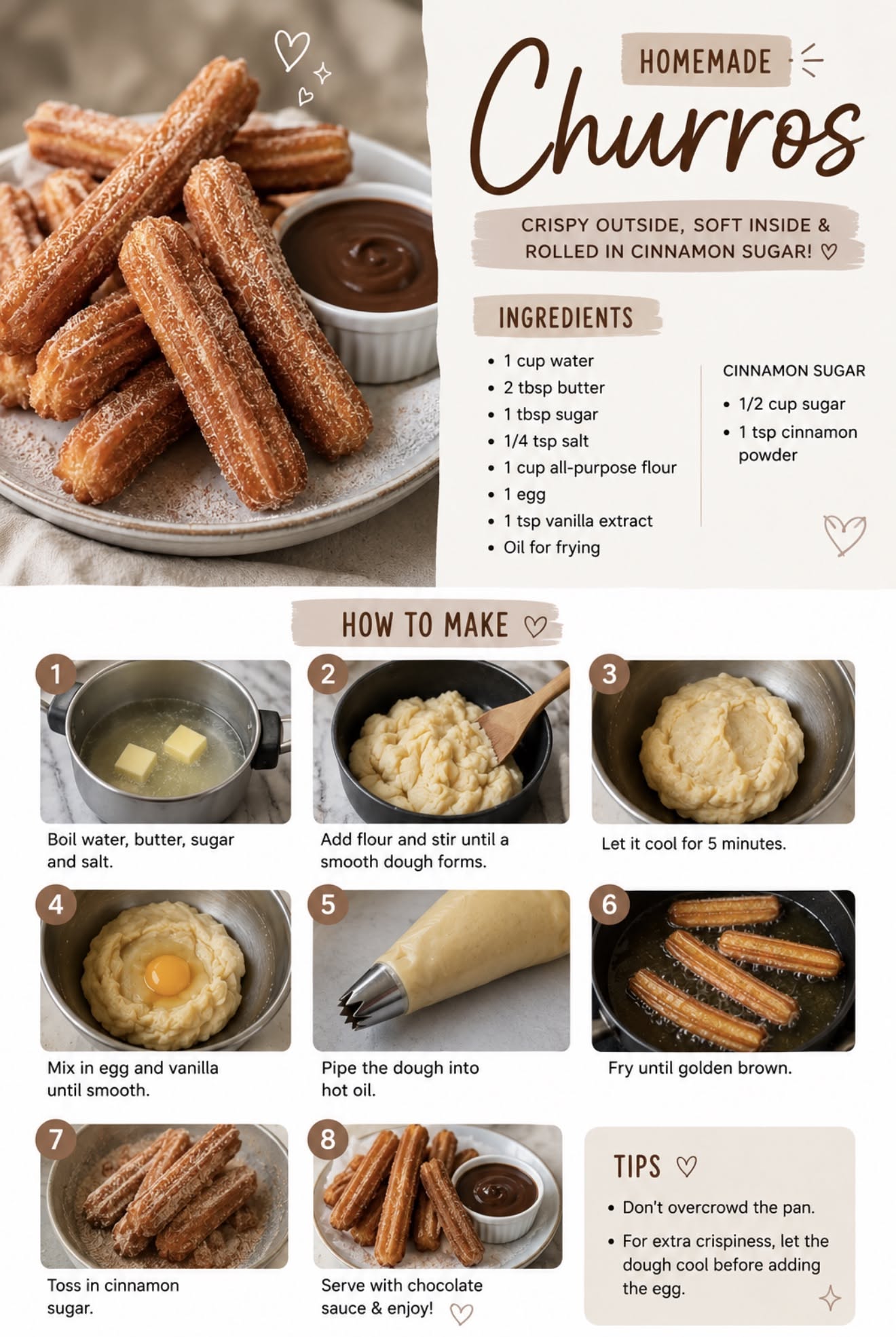
There is something universally comforting about the aroma of fried dough mingling with warm cinnamon and sugar. Crispy homemade churros offer the perfect contrast of a deeply ridged, golden-brown exterior shattering into a tender, airy interior. Whether you are hosting a weekend brunch, planning a festive holiday gathering, or simply craving a nostalgic movie night snack, these classic Spanish-inspired treats are always a crowd-pleaser. Making them from scratch allows you to control the quality of the ingredients and ensures every single bite is served at peak freshness, delivering a bakery-quality experience right in your own kitchen.
The foundation of an exceptional churro lies in its dough, a simple choux pastry that relies on the steam generated during cooking to puff up and create those signature hollow centers. Unlike cake batters, this dough is cooked on the stovetop first, gelatinizing the starches in the flour and giving the final fried pastry its structural integrity. When dropped into hot oil, the moisture rapidly evaporates, resulting in a remarkably crisp crust that holds up beautifully under a generous coating of cinnamon sugar, making it the ultimate textural delight.
Understanding the Choux Pastry Base
The secret to a churro that is crisp on the outside but wonderfully light on the inside is the choux pastry method. This technique begins by bringing water, butter, a touch of sugar, and salt to a rolling boil. Once the butter is fully melted and the liquid is bubbling vigorously, all-purpose flour is added all at once. The mixture is stirred energetically over medium heat until it forms a smooth, cohesive ball that pulls away from the sides of the saucepan. This crucial step cooks the raw flour and gelatinizes its starches, which allows the dough to absorb a significant amount of liquid later without becoming soggy.
After the dough has cooled just enough so it will not scramble the eggs, they are incorporated one at a time. The eggs provide the necessary moisture to create steam during frying, while also contributing to the rich structure and slight eggy flavor of the pastry. The final dough should be thick, glossy, and hold its shape firmly when piped. If the dough is too stiff, the churros will be dense; if it is too loose, they will spread out in the oil and lose their characteristic ridges. Achieving the right consistency is the first major step toward churro perfection.
The Importance of Oil Temperature
Frying is both an art and a science, and maintaining the correct oil temperature is the single most important factor in achieving the ideal churro. The oil should be heated to exactly 375°F (190°C). Using a reliable deep-fry or candy thermometer is highly recommended, as visual cues can be deceiving. If the oil is too cool, the dough will absorb excess fat before the exterior can set, resulting in a greasy, heavy pastry. Conversely, if the oil is too hot, the outside will burn and turn bitter before the inside has a chance to cook through and puff properly.
When piping the dough into the hot oil, it is best to work in small batches of three or four churros at a time. Adding too much dough to the fryer at once will cause the oil temperature to drop dramatically, leading to uneven cooking. A large star piping tip is essential for this recipe. The deep ridges created by the star tip are not just for traditional aesthetics; they significantly increase the surface area of the dough, which maximizes the crispy texture and provides more nooks and crannies for the cinnamon sugar to cling to.
Achieving the Perfect Cinnamon Sugar Crust
The finishing touch that transforms a simple fried dough into a legendary treat is the cinnamon sugar coating. The classic ratio is typically one tablespoon of ground cinnamon to every half cup of granulated sugar, though this can be adjusted based on personal preference. For a more complex flavor profile, some bakers like to add a tiny pinch of fine sea salt or a dash of ground nutmeg to the sugar mixture.
The timing of the coating process is critical. The churros must be tossed in the cinnamon sugar while they are still hot and glistening with a thin layer of surface oil. This residual heat and oil act as a natural adhesive, ensuring the sugar mixture sticks evenly to every ridge. If you wait until the churros have completely cooled, the sugar will simply slide off, leaving you with a less flavorful and visually appealing result. Use a pair of tongs to roll the churros gently in the sugar mixture until they are thoroughly and evenly coated.
Classic Dipping Sauces and Pairings
While churros are undeniably delicious on their own, they are traditionally served with a rich dipping sauce that complements the spicy sweetness of the cinnamon coating. The most iconic pairing is a thick, velvety hot chocolate. In Spain, churros are often enjoyed for breakfast or a late-night snack alongside a cup of chocolate that is so thick it is almost pudding-like, designed specifically for dipping. You can easily recreate this at home by melting high-quality dark chocolate with a splash of heavy cream and a pinch of cornstarch to thicken the consistency.
For those who prefer a different flavor profile, dulce de leche or a warm caramel sauce offers a buttery, complex sweetness that pairs beautifully with the crispy exterior. A simple café con leche or a strong cup of black coffee also makes an excellent accompaniment, as the bitterness of the coffee perfectly balances the rich, sweet notes of the fried pastry. Serving the churros warm alongside your chosen dipping sauce creates an interactive and highly satisfying dessert experience.
Storing and Reheating Leftovers
Churros are unquestionably at their best immediately after frying and coating, when the contrast between the hot, crispy exterior and the soft interior is at its peak. However, if you happen to have leftovers, they can be stored in an airtight container at room temperature for up to two days. It is important not to refrigerate them, as the cold, humid environment of the fridge will quickly cause the crispy exterior to become unpleasantly soggy.
To restore the freshly fried texture, reheat the leftover churros in a conventional oven or an air fryer. Place them on a baking sheet in a preheated 350°F (175°C) oven for about five to seven minutes, or until they are heated through and crisp again. Avoid using the microwave, as it will steam the pastry and ruin the texture entirely. Once reheated, you may want to give them a very light toss in a little extra cinnamon sugar to refresh the coating before serving.
Making crispy homemade churros is a rewarding culinary project that brings warmth and joy to any occasion. By understanding the simple science behind the choux dough and paying close attention to your frying technique, you can easily achieve professional-quality results in your own kitchen. Gather your ingredients, heat the oil, and enjoy the delightful process of creating this timeless treat.
Crispy Homemade Churros
Golden, ridged, and perfectly crisp on the outside with a tender, airy interior. These classic cinnamon-sugar churros are made from a simple choux pastry dough and fried to perfection for the ultimate homemade treat.
4 servings
Ingredients
- 1 cup water
- 1/2 cup (1 stick) unsalted butter
- 1 tablespoon granulated sugar
- 1/4 teaspoon fine sea salt
- 1 cup all-purpose flour
- 3 large eggs, at room temperature
- Vegetable or canola oil, for frying
- 1/2 cup granulated sugar (for coating)
- 1 tablespoon ground cinnamon (for coating)
Instructions
- Prepare the dough base: In a medium saucepan, combine the water, butter, 1 tablespoon of sugar, and salt. Place over medium-high heat and bring to a rolling boil. Ensure the butter is completely melted before it reaches a full boil.
- Cook the flour: Reduce the heat to low. Add the all-purpose flour all at once and stir vigorously with a wooden spoon. Continue to cook and stir for about 2 to 3 minutes until the mixture forms a smooth, cohesive ball that pulls away from the sides of the pan and leaves a thin film on the bottom.
- Incorporate the eggs: Transfer the dough to a large mixing bowl or the bowl of a stand mixer. Let it cool for about 5 minutes so it is warm but not piping hot. Add the eggs one at a time, mixing thoroughly after each addition until the dough is completely smooth, glossy, and thick.
- Heat the oil: While the dough is cooling, pour about 2 inches of oil into a heavy-bottomed pot or Dutch oven. Heat the oil over medium-high heat until it reaches exactly 375°F (190°C). Use a deep-fry thermometer to monitor the temperature accurately.
- Pipe the churros: Transfer the choux dough to a piping bag fitted with a large open star tip. Carefully pipe 4 to 5-inch strips of dough directly into the hot oil, using scissors to snip the ends. Fry in batches of 3 or 4 to prevent the oil temperature from dropping.
- Fry until golden: Fry the churros for 3 to 4 minutes per side, turning them occasionally with a spider slotted spoon or tongs, until they are deeply golden brown and crisp. Remove them from the oil and drain briefly on a plate lined with paper towels.
- Coat in cinnamon sugar: In a wide, shallow bowl, whisk together the remaining 1/2 cup of granulated sugar and the ground cinnamon. While the churros are still hot, roll them generously in the cinnamon sugar mixture until evenly coated. Serve immediately.
Helpful Tips
- Star Tip is Essential: The deep ridges created by the star piping tip are not just for looks; they increase the surface area, ensuring maximum crispiness and providing more texture for the cinnamon sugar to adhere to.
- Monitor Oil Temperature: Keeping the oil at a steady 375°F (190°C) is the key to non-greasy churros. If the temperature drops below 350°F, pause frying and let the oil recover before adding the next batch.
- Safety First: Never pipe the dough directly over the hot oil to avoid splashing. Keep the piping bag close to the surface of the oil, and snip the dough cleanly with scissors to minimize oil splatter.