
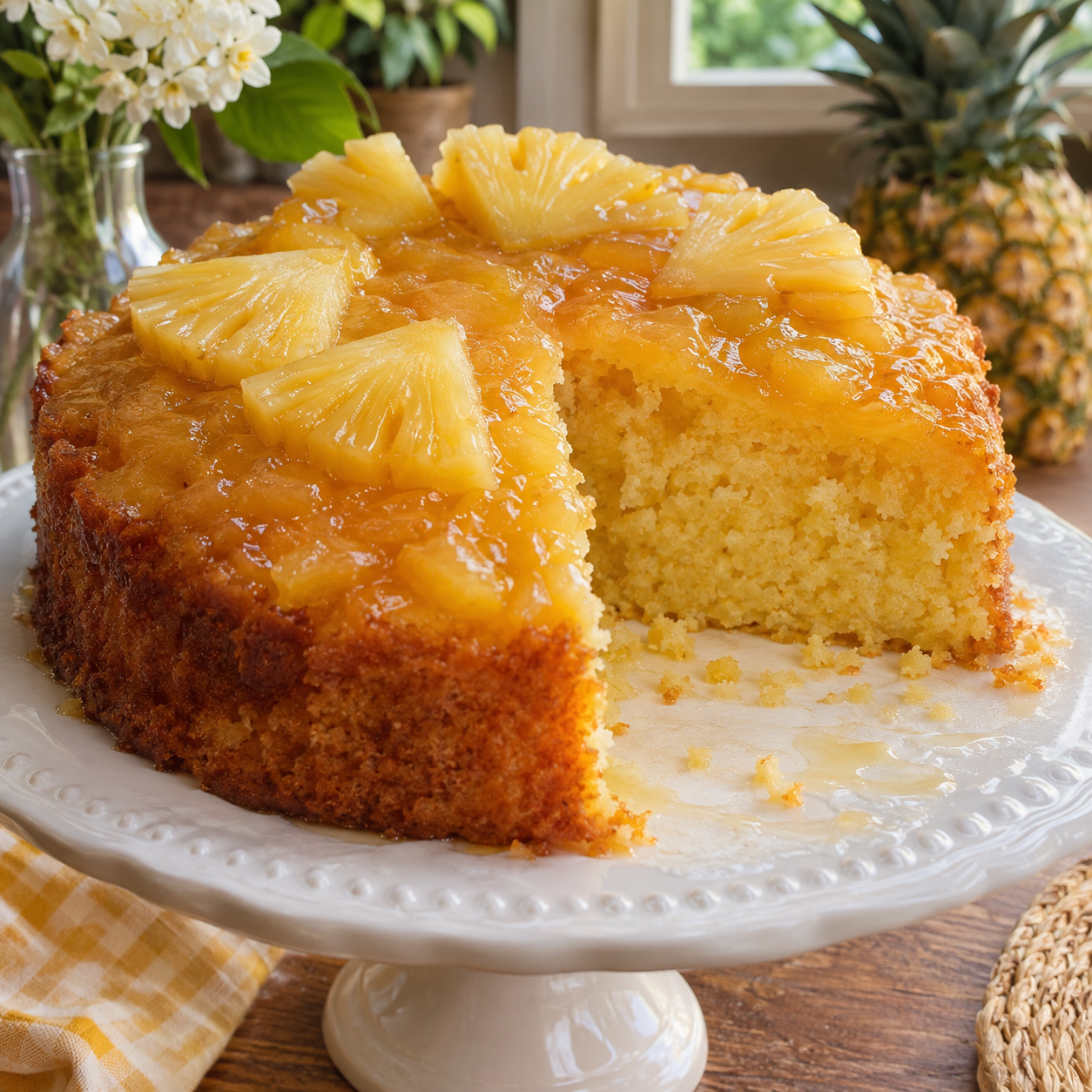
Introduction
Welcome to the definitive guide on crafting the perfect Pineapple Juice Cake, a dessert that marries the tropical sweetness of sun-ripened pineapples with the comforting, buttery richness of a classic homemade cake. This confection is not merely a treat; it is an experience that transports your palate to a sunny island breeze with every moist, tender crumb. Whether you are planning a summer gathering, looking for a unique centerpiece for a holiday table, or simply craving a slice of something extraordinary to accompany your afternoon coffee, this recipe delivers unparalleled flavor and texture. The unique incorporation of pure pineapple juice into the batter ensures that the cake remains incredibly moist days after baking, while the natural enzymes and sugars caramelize beautifully in the oven to create a golden, inviting crust. Beyond its taste, this cake represents a versatility in baking that allows for numerous adaptations, making it a staple recipe for bakers of all skill levels to master and enjoy repeatedly.
The History
The origins of the Pineapple Juice Cake are deeply rooted in the mid-20th century American baking tradition, where tropical fruits began to gain popularity following increased importation and cultivation in regions like Hawaii and the Philippines. During the 1950s and 1960s, home economists and cookbook authors started experimenting with canned pineapple products, which were becoming increasingly accessible to the average household. This era marked a shift from traditional spice cakes and fruitcakes to lighter, fruit-infused sponge cakes that highlighted the exotic flavor profile of the pineapple. The specific use of pineapple juice, rather than just crushed fruit, was a innovation designed to infuse the entire structure of the cake with flavor without altering the texture too drastically with solid chunks. Over the decades, the recipe evolved from simple community cookbook exchanges to a beloved standard in Southern baking and tropical cuisine, often served at church potlucks and family reunions. Today, it stands as a testament to the era of convenience baking meeting gourmet flavor, preserving a legacy of sweetness that continues to delight generations of cake lovers who appreciate the harmonious balance of acidity and sugar.
Ingredients Breakdown
Understanding the science and function of each component in your Pineapple Juice Cake is crucial for achieving bakery-quality results at home. Each ingredient plays a specific role in the chemical reaction that occurs during mixing and baking, contributing to the final texture, rise, and flavor profile of the dessert. Below is a comprehensive analysis of what goes into this masterpiece and why each element is indispensable.
All-Purpose Flour
The foundation of any cake structure, all-purpose flour provides the necessary gluten network to hold the cake together. While cake flour is softer, all-purpose flour offers a sturdy yet tender crumb that supports the weight of the moisture provided by the juice. It is essential to sift this ingredient to aerate it, ensuring a lighter final product that does not feel dense or heavy on the palate.
Granulated Sugar
Sugar serves multiple purposes beyond mere sweetness. It tenderizes the cake by interfering with gluten formation, retains moisture to keep the cake fresh longer, and aids in the browning of the crust through caramelization. In this recipe, the sugar balances the natural acidity of the pineapple juice, creating a harmonious flavor profile that is neither too tart nor overly sweet.
Unsalted Butter
High-quality unsalted butter is the source of richness and flavor depth in this cake. Using unsalted butter allows you to control the exact amount of salt in the recipe, preventing the cake from becoming too savory. When creamed correctly with sugar, butter traps air bubbles that expand during baking, contributing to the cake’s lift and fluffy texture.
Fresh Pineapple Juice
This is the star ingredient that defines the character of the cake. Freshly squeezed juice offers the most vibrant flavor, though high-quality bottled juice is an acceptable substitute. The liquid content replaces some of the milk or water typically found in cake recipes, infusing every cell of the crumb with tropical essence. The natural acids in the juice also react with leavening agents to help the cake rise.
Eggs
Eggs act as the primary binding agent, holding the flour, sugar, and liquids together. They also provide structure and emulsification, ensuring that the fat and water-based ingredients do not separate during the mixing process. Room temperature eggs incorporate more easily into the batter, resulting in a smoother, more homogeneous mixture.
Leavening Agents (Baking Powder and Baking Soda)
These agents are responsible for the cake’s rise. Baking powder provides a steady lift throughout the baking process, while baking soda reacts immediately with the acidity in the pineapple juice to create carbon dioxide bubbles. This dual-action ensures the cake is light and airy rather than flat and dense.
Vanilla Extract
While subtle, vanilla extract enhances the overall flavor profile by rounding out the sharpness of the pineapple and the richness of the butter. It adds a warm, aromatic background note that makes the cake smell as incredible as it tastes, elevating the sensory experience of every slice.
Step-by-Step Recipe
Creating the perfect Pineapple Juice Cake requires attention to detail and a methodical approach to ensure consistency. This narrative guide walks you through the process from preparation to the final cooling stage, highlighting critical moments where technique influences the outcome. Follow these steps closely to guarantee a successful bake.
- Preparation of the Workspace: Begin by clearing your counter and ensuring all ingredients are measured and ready. Preheat your oven to 350 degrees Fahrenheit (175 degrees Celsius) to ensure it is fully heated when the batter goes in. Grease and flour two 9-inch round cake pans or one Bundt pan thoroughly to prevent sticking.
- Creaming the Butter and Sugar: In a large mixing bowl, combine the softened unsalted butter and granulated sugar. Using an electric mixer on medium speed, beat these ingredients together for at least five minutes. This step is crucial for incorporating air into the mixture, which will later expand to give the cake its volume. The mixture should appear pale yellow and fluffy.
- Incorporating the Eggs: Add the eggs one at a time to the butter and sugar mixture. Beat well after each addition to ensure full emulsification. Scrape down the sides of the bowl with a spatula to ensure no unmixed butter remains at the bottom, which could cause uneven baking.
- Adding the Flavorings: Mix in the vanilla extract and a portion of the pineapple juice. At this stage, the batter may look slightly curdled due to the liquid adding to the fat; this is normal and will resolve once the dry ingredients are added.
- Combining Dry Ingredients: In a separate medium bowl, whisk together the all-purpose flour, baking powder, baking soda, and salt. Sifting these ingredients together ensures they are evenly distributed and free of lumps, which is vital for a uniform texture.
- Alternating Mixtures: Gradually add the dry ingredient mixture to the wet ingredients, alternating with the remaining pineapple juice. Begin and end with the dry ingredients. Mix on low speed just until combined; overmixing at this stage can develop too much gluten, resulting in a tough cake.
- Pan Preparation and Pouring: Divide the batter evenly between the prepared pans. Smooth the tops with a spatula to ensure they bake evenly. Tap the pans gently on the counter to release any large air bubbles trapped in the batter.
- Baking: Place the pans in the center rack of the preheated oven. Bake for 30 to 35 minutes for round pans, or 45 to 50 minutes for a Bundt pan. Avoid opening the oven door during the first 25 minutes to prevent the cake from collapsing.
- Testing for Doneness: Insert a wooden toothpick into the center of the cake. If it comes out clean or with a few moist crumbs, the cake is done. If wet batter sticks to the toothpick, continue baking in two-minute increments.
- Cooling and Serving: Allow the cakes to cool in the pans for 10 minutes before turning them out onto a wire rack. Let them cool completely before frosting or serving to prevent the icing from melting.
Tips
To elevate your baking experience and ensure the highest quality result, consider these professional tips and tricks gathered from experienced bakers. These insights address common pitfalls and offer solutions for achieving perfection.
- Ingredient Temperature: Ensure all refrigerated ingredients, such as butter and eggs, are brought to room temperature before mixing. Cold ingredients can shock the batter and prevent proper emulsification, leading to a dense texture.
- Juice Quality: Use 100% pure pineapple juice without added sugars or concentrates. The natural sugar content varies by brand, so tasting the juice beforehand can help you adjust the sugar in the recipe slightly if needed.
- Pan Selection: Lighter colored aluminum pans conduct heat more evenly than dark non-stick pans, which can cause the edges to brown too quickly. If using dark pans, reduce the oven temperature by 25 degrees.
- Storage: This cake stays moist for up to five days when stored in an airtight container at room temperature. For longer storage, wrap individual slices tightly in plastic wrap and freeze them for up to three months.
- Frosting Adhesion: If you plan to frost the cake, apply a thin crumb coat first and chill it for 30 minutes before applying the final layer of icing. This traps loose crumbs and creates a smooth surface.
Variations and Customizations
The beauty of the Pineapple Juice Cake lies in its adaptability. You can modify the base recipe to suit dietary needs, flavor preferences, or occasion-specific themes without compromising the integrity of the dessert. Here are several ways to customize your bake.
Gluten-Free Option: Substitute the all-purpose flour with a high-quality 1-to-1 gluten-free baking blend. Ensure the blend contains xanthan gum to mimic the elasticity of gluten, otherwise, the cake may crumble excessively.
Vegan Adaptation: Replace the butter with coconut oil or a vegan butter stick substitute. Use flax eggs (one tablespoon of ground flaxseed mixed with three tablespoons of water per egg) to replace the chicken eggs, ensuring the binding properties remain intact.
Tropical Twist: Enhance the tropical profile by adding half a cup of shredded coconut to the batter. You can also fold in small chunks of fresh pineapple, though be aware this may increase the moisture content and require a slightly longer baking time.
Spiced Variation: Add a teaspoon of ground cinnamon and a quarter teaspoon of nutmeg to the dry ingredients. These warm spices complement the acidity of the pineapple and create a flavor profile reminiscent of a tropical spice cake.
Glaze Options: Instead of a traditional buttercream, consider a simple glaze made from powdered sugar and additional pineapple juice. For a richer finish, a cream cheese frosting pairs exceptionally well with the fruitiness of the cake.
Health Considerations and Nutritional Value
While this cake is a indulgent treat, understanding its nutritional profile allows for mindful consumption. Pineapple juice offers certain health benefits, primarily due to its vitamin content, but the sugar and fat content should be considered within the context of a balanced diet.
Pineapple juice is rich in Vitamin C, which supports immune function, and contains bromelain, an enzyme known for aiding digestion and reducing inflammation. However, the processing of juice removes much of the fiber found in whole fruit. The cake itself is energy-dense, providing carbohydrates for quick energy and fats for satiety. A standard slice contains a significant amount of sugar, so it is best enjoyed in moderation. For those monitoring caloric intake, reducing the sugar in the recipe by 10% is often possible without affecting the texture significantly. Additionally, using egg whites instead of whole eggs can reduce the cholesterol and fat content, though it may slightly alter the richness of the crumb.
Ingredients
- 3 cups all-purpose flour, sifted
- 2 cups granulated sugar
- 1 cup unsalted butter, softened to room temperature
- 1 cup pure pineapple juice, room temperature
- 4 large eggs, room temperature
- 2 teaspoons baking powder
- 1 teaspoon baking soda
- 1/2 teaspoon salt
- 2 teaspoons pure vanilla extract
- Optional: 1/2 cup shredded coconut for texture
Directions
- Preheat oven to 350°F (175°C) and grease two 9-inch round cake pans.
- Cream together butter and sugar until light and fluffy (approx. 5 minutes).
- Beat in eggs one at a time, mixing well after each addition.
- Stir in vanilla extract and half of the pineapple juice.
- In a separate bowl, whisk together flour, baking powder, baking soda, and salt.
- Gradually add dry ingredients to the wet mixture, alternating with remaining juice.
- Divide batter evenly into prepared pans and smooth the tops.
- Bake for 30-35 minutes or until a toothpick inserted comes out clean.
- Cool in pans for 10 minutes, then transfer to a wire rack to cool completely.
- Frost with cream cheese icing or pineapple glaze before serving.
FAQ
Can I use canned pineapple juice?
Yes, canned pineapple juice works well, but ensure it is 100% juice and not a cocktail blend with added high fructose corn syrup, as this can make the cake overly sweet.
Why did my cake sink in the middle?
This usually occurs if the cake was underbaked or if the oven door was opened too early. Ensure your leavening agents are fresh and do not open the oven during the first 25 minutes of baking.
Can I freeze this cake?
Absolutely. Wrap the cooled cake layers tightly in plastic wrap and then aluminum foil. They can be frozen for up to three months. Thaw in the refrigerator overnight before frosting.
How do I make the cake more moist?
To increase moisture, you can brush the cooled cake layers with a simple syrup made from equal parts pineapple juice and sugar before applying the frosting.
Is this cake suitable for a wedding?
Yes, it is a popular choice for tropical-themed weddings. However, ensure the frosting is stable at room temperature, or keep the cake refrigerated until shortly before serving.
Summary
This Pineapple Juice Cake offers a moist, tropical flavor perfect for any occasion using simple pantry staples.
Follow the detailed steps and tips provided to bake a delicious, golden cake that delights every palate.