
Introduction
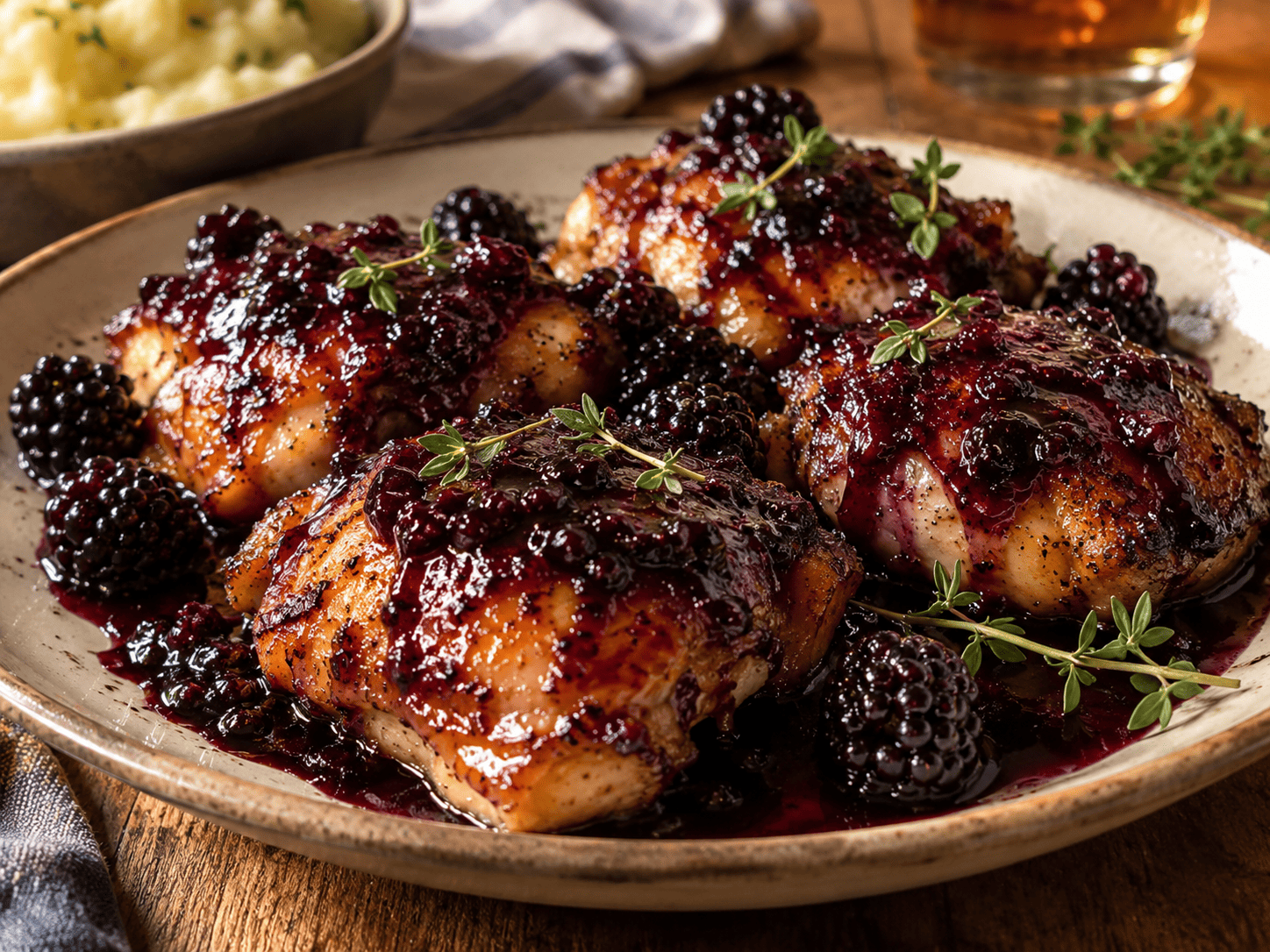
There is a specific kind of magic that happens when sweet fruit meets savory meat, elevated by the complex, oak-aged notes of fine spirits. Bourbon Blackberry Glazed Chicken Thighs represent the pinnacle of this culinary alchemy, offering a dish that is simultaneously rustic and refined. The richness of the chicken thigh, with its higher fat content and robust flavor profile, provides the perfect canvas for a sticky, glossy glaze that balances the tartness of fresh blackberries with the caramel vanilla undertones of bourbon. This dish is not merely a weeknight dinner; it is an experience that transforms ordinary poultry into a centerpiece worthy of a celebration.
When you bite into these chicken thighs, you are greeted first by the crisp, rendered skin, followed by the juicy, tender meat beneath. Then, the glaze hits—a symphony of sweet, sour, salty, and smoky flavors that cling to every bite. The blackberries break down during cooking to create a natural pectin-rich sauce, while the bourbon adds a depth that vinegar or wine simply cannot replicate. Whether you are hosting a summer barbecue, planning an elegant autumn dinner, or simply seeking to elevate your regular meal rotation, this recipe delivers consistent, mouth-watering results.
Beyond the flavor, the practicality of this dish cannot be overstated. Chicken thighs are forgiving, difficult to overcook, and generally more affordable than breast meat. The glaze comes together in a single pan, minimizing cleanup and maximizing flavor infusion. As the sauce reduces, it coats the chicken in a lacquer-like finish that glistens under the kitchen lights, promising a dining experience that engages all the senses. Prepare to discover why this combination has become a modern classic in contemporary American cooking.
The History
The origins of fruit-glazed meats can be traced back through various culinary traditions, from the sweet and sour dishes of ancient China to the fruit-based sauces of medieval Europe. However, the specific marriage of bourbon and blackberries with poultry is a distinctly American innovation, rooted deeply in the Southern culinary landscape. Bourbon, legally defined as American whiskey made primarily from corn and aged in new charred oak barrels, has been a staple of Kentucky since the 18th century. Historically, it was used primarily as a beverage, but cooks eventually realized that its robust flavor profile could withstand high heat and complement savory ingredients.
Blackberries, on the other hand, have a long history of foraging in the American South. They grow wild along roadsides and fields, making them an accessible source of sweetness for early settlers and home cooks. The tradition of making blackberry preserves and sauces dates back generations, often served alongside game meats or roasted poultry. As culinary fusion progressed in the late 20th century, chefs began experimenting with reducing fruit sauces with alcohol to create gastriques and glazes. The bourbon blackberry combination emerged as a favorite due to the way the tannins in the whiskey cut through the sweetness of the berries.
In recent decades, the popularity of chicken thighs has surged. For years, chicken breasts were the default choice for health-conscious eaters, but chefs and home cooks alike rediscovered the superior moisture and flavor of thighs. This shift coincided with the rise of “comfort food gourmet,” where classic flavors are elevated with premium ingredients like aged bourbon. The Bourbon Blackberry Glazed Chicken Thighs recipe is a testament to this evolution, blending heritage ingredients with modern cooking techniques to create a dish that honors the past while satisfying the contemporary palate.
Ingredients Breakdown
Understanding the role of each component in this recipe is crucial for achieving the perfect balance of flavors. Here is a detailed look at what goes into the dish and why each ingredient matters.
- Chicken Thighs (Bone-in, Skin-on): The foundation of the dish. Bone-in thighs retain moisture better during cooking, and the skin provides necessary fat for rendering. This fat is essential for achieving a crispy texture and adds richness to the overall mouthfeel. While boneless thighs can be used, they cook faster and may dry out if not monitored closely.
- Fresh Blackberries: The star of the glaze. Fresh berries provide natural juices and pectin, which helps thicken the sauce without excessive cornstarch. They offer a tart contrast to the sweet elements. If fresh berries are out of season, high-quality frozen blackberries can be substituted, though they may release more water, requiring a longer reduction time.
- Bourbon: The complexity agent. A mid-range bourbon is ideal; you want something drinkable but not so expensive that you hesitate to cook with it. The aging process in oak barrels imparts vanilla, caramel, and spice notes that survive the cooking process. Avoid “cooking whiskey” as it often contains added salts and inferior flavor profiles.
- Brown Sugar: Provides sweetness and aids in caramelization. The molasses content in brown sugar adds a deeper, more robust sweetness than white sugar, complementing the bourbon’s oak notes. It also helps create the sticky viscosity characteristic of a good glaze.
- Soy Sauce: The source of umami and salt. Soy sauce balances the sweetness of the fruit and sugar. It adds a dark color to the glaze and introduces savory depth that prevents the dish from tasting like dessert. Low-sodium versions can be used to control salt levels.
- Garlic and Shallots: The aromatic base. Shallots offer a milder, sweeter onion flavor compared to regular onions, while garlic provides pungency. Sautéing these at the beginning builds the flavor foundation upon which the glaze is constructed.
- Apple Cider Vinegar: Adds acidity. The acid is necessary to brighten the heavy flavors of the meat and sugar. It helps break down the fruit fibers during simmering and prevents the glaze from becoming cloyingly sweet.
- Thyme and Rosemary: Herbal notes. These woody herbs stand up well to long cooking times. Thyme adds an earthy lemony note, while rosemary contributes a piney aroma that pairs exceptionally well with both chicken and bourbon.
- Chicken Broth: Adds volume and savory depth. It deglazes the pan, lifting the fond (browned bits) from the searing process, and ensures there is enough liquid to create a substantial sauce without reducing it to nothing but sugar.
- Cornstarch Slurry: The thickener. While the fruit provides some thickening, a cornstarch slurry ensures the glaze coats the back of a spoon. It should be added at the end to avoid breaking down during long simmering.
Step-by-Step Recipe
Creating this dish is a process of layering flavors. Each step builds upon the previous one to ensure maximum taste and texture.
Phase 1: Preparation and Seasoning
Begin by removing the chicken thighs from the refrigerator at least 30 minutes before cooking. Allowing the meat to come to room temperature ensures even cooking. Pat the chicken thighs completely dry with paper towels; moisture is the enemy of crisp skin. Generously season both sides of the chicken with salt and freshly cracked black pepper. Do not be shy with the seasoning, as the glaze is sweet and will need a strong savory base to counterbalance it.
Phase 2: Searing the Chicken
Heat a large, heavy-bottomed skillet or cast-iron pan over medium-high heat. Add a tablespoon of neutral oil with a high smoke point, such as canola or avocado oil. Once the oil shimmers, place the chicken thighs skin-side down into the pan. Do not overcrowd the pan; work in batches if necessary. Press the chicken down gently to ensure full contact with the hot surface. Sear for 5-7 minutes without moving them until the skin is deep golden brown and crispy. Flip the chicken and sear the other side for 2-3 minutes. Remove the chicken from the pan and set it aside on a plate. Leave the rendered fat in the pan.
Phase 3: Building the Aromatic Base
Reduce the heat to medium. Into the same pan with the chicken fat, add minced shallots and garlic. Sauté for 1-2 minutes until fragrant but not browned, scraping up any browned bits from the chicken searing process. These bits, known as fond, are packed with flavor and will dissolve into the sauce. Add the fresh thyme and rosemary sprigs now to infuse the oil with their essential oils.
Phase 4: Creating the Glaze
Pour in the bourbon carefully. Be cautious, as the alcohol vapors may ignite if the pan is very hot. Allow the bourbon to simmer for 2 minutes to cook off the harsh alcohol bite while retaining the flavor. Add the blackberries, brown sugar, soy sauce, apple cider vinegar, and chicken broth. Stir gently to combine, being careful not to crush all the blackberries immediately; you want some texture to remain. Bring the mixture to a gentle boil, then reduce the heat to low.
Phase 5: Simmering and Reduction
Return the chicken thighs to the pan, nestling them into the sauce skin-side up. Ensure the liquid comes about halfway up the sides of the chicken. Cover the pan partially with a lid to prevent splattering while allowing steam to escape. Simmer gently for 20-25 minutes. The chicken should reach an internal temperature of 165°F (74°C). During this time, the blackberries will break down, and the sauce will begin to thicken naturally.
Phase 6: Final Glazing and Thickening
Once the chicken is cooked, remove it from the pan temporarily. Increase the heat to medium-high to reduce the sauce further. Mix cornstarch with a little cold water to create a slurry and whisk it into the simmering sauce. Cook for another 2-3 minutes until the sauce is glossy and coats a spoon. Return the chicken to the pan and spoon the thickened glaze over the thighs repeatedly. Garnish with fresh herbs before serving.
Tips
To ensure your Bourbon Blackberry Glazed Chicken Thighs turn out perfectly every time, consider these professional tips and troubleshooting techniques.
- Control the Heat: Sugar burns easily. When reducing the glaze, keep a close eye on the heat. If you notice the sauce smoking or turning dark black quickly, lower the temperature immediately. A burnt glaze will taste bitter and ruin the dish.
- Alcohol Safety: When adding bourbon to a hot pan, remove the pan from the heat source momentarily to prevent uncontrolled flare-ups. If you prefer a flambé effect, tilt the pan away from you to ignite the vapors safely.
- Crispy Skin Secret: If the skin loses its crispiness during the simmering process, you can place the glazed chicken under the broiler for 2-3 minutes before serving. Watch closely to prevent the sugar in the glaze from burning.
- Straining the Sauce: If you prefer a smooth, refined sauce without blackberry seeds or herb stems, strain the glaze through a fine-mesh sieve after reducing it and before spooning it over the chicken.
- Make Ahead: The glaze can be made up to two days in advance and stored in the refrigerator. Reheat it gently before adding the cornstarch slurry and glazing the freshly cooked chicken.
- Resting the Meat: Allow the chicken to rest for 5 minutes after cooking. This allows the juices to redistribute throughout the meat, ensuring every bite is moist rather than dry.
- Quality Check: Taste your bourbon before cooking. If you wouldn’t drink it, don’t cook with it. The flavor concentrates during reduction, so poor-quality alcohol will result in a harsh final taste.
Variations and Customizations
One of the beauties of this recipe is its versatility. You can adapt it to suit different dietary needs, flavor preferences, or seasonal ingredients.
- Spicy Kick: Add a teaspoon of crushed red pepper flakes or a diced fresh jalapeño when sautéing the shallots. This creates a sweet-heat profile that pairs wonderfully with the bourbon.
- Citrus Twist: Incorporate the zest of one orange or lemon into the glaze. The citrus oils brighten the heavy flavors and add a fresh aroma that complements the blackberries.
- Alternative Fruits: While blackberries are classic, you can substitute them with raspberries, cherries, or even diced peaches. Each fruit will impart a slightly different sweetness and acidity level.
- Gluten-Free: Ensure you use a gluten-free soy sauce or substitute with coconut aminos. Verify that your bourbon is certified gluten-free, though most distilled spirits are naturally safe.
- Slow Cooker Method: Sear the chicken first, then transfer everything to a slow cooker. Cook on low for 4-5 hours. Thicken the sauce at the end using the cornstarch slurry method on the stovetop.
- Grilled Version: Marinate the chicken in the glaze ingredients (without cornstarch) for a few hours. Grill the chicken over indirect heat, brushing with the reserved glaze during the last few minutes of cooking.
- Herb Variations: Swap thyme and rosemary for sage or oregano. Sage pairs exceptionally well with bourbon and adds an earthy, autumnal flavor profile.
- Dairy Enrichment: For a creamier sauce, stir in a tablespoon of cold butter at the very end of the cooking process. This technique, called mounting with butter, adds shine and richness.
Health Considerations and Nutritional Value
While this dish is indulgent, it can be part of a balanced diet when consumed in moderation. Chicken thighs are a nutrient-dense protein source, and the fruit glaze offers some beneficial compounds.
Protein Content: Chicken thighs are an excellent source of high-quality protein, essential for muscle repair and growth. A single serving provides a significant portion of the daily recommended intake.
Fat Profile: Thighs contain more fat than breasts, but much of this is unsaturated fat. Leaving the skin on adds saturated fat, which can be removed before eating if you are monitoring cholesterol levels. However, the fat is necessary for the absorption of fat-soluble vitamins.
Antioxidants: Blackberries are rich in anthocyanins and Vitamin C, which are powerful antioxidants that help combat oxidative stress in the body. Cooking them preserves some of these nutrients, though heat can degrade Vitamin C.
Sugar and Sodium: The primary health considerations are the added brown sugar and soy sauce. To make this healthier, reduce the sugar by half and rely on the natural sweetness of the fruit. Use low-sodium soy sauce to manage blood pressure concerns.
Alcohol Content: Most of the alcohol evaporates during cooking, but trace amounts may remain. Those avoiding alcohol entirely should substitute the bourbon with additional chicken broth and a splash of vanilla extract to mimic the flavor notes.
Caloric Density: This is a calorie-dense meal due to the skin, oil, and sugar. Pairing it with low-calorie vegetables like steamed broccoli or a fresh green salad can help balance the overall meal composition.
Ingredients
- 8 bone-in, skin-on chicken thighs
- 1 teaspoon salt (plus more for seasoning)
- 1/2 teaspoon black pepper (plus more for seasoning)
- 1 tablespoon vegetable oil
- 1/2 cup shallots, minced
- 3 cloves garlic, minced
- 1 cup fresh blackberries
- 1/2 cup bourbon
- 1/3 cup brown sugar, packed
- 1/4 cup soy sauce
- 2 tablespoons apple cider vinegar
- 1 cup chicken broth
- 2 sprigs fresh thyme
- 1 sprig fresh rosemary
- 1 tablespoon cornstarch mixed with 2 tablespoons cold water
- Fresh parsley or chives for garnish
Directions
- Pat the chicken thighs dry with paper towels and season generously on both sides with salt and pepper. Let them sit at room temperature for 30 minutes.
- Heat vegetable oil in a large skillet over medium-high heat. Place chicken thighs skin-side down and sear for 5-7 minutes until golden and crispy. Flip and sear for 2-3 minutes. Remove chicken and set aside.
- Reduce heat to medium. Add shallots and garlic to the pan drippings. Sauté for 2 minutes until fragrant, scraping up browned bits.
- Carefully pour in the bourbon. Simmer for 2 minutes to reduce the alcohol content.
- Add blackberries, brown sugar, soy sauce, vinegar, chicken broth, thyme, and rosemary. Stir to combine.
- Return chicken to the pan, nestling it into the sauce. Cover partially and simmer for 20-25 minutes until chicken reaches 165°F internally.
- Remove chicken again. Increase heat to medium-high. Whisk in the cornstarch slurry and simmer for 2-3 minutes until thickened.
- Return chicken to the pan and spoon the glaze over the thighs. Garnish with fresh herbs and serve immediately.
FAQ
Can I use chicken breasts instead of thighs?
Yes, but you must adjust the cooking time. Chicken breasts cook faster and can dry out easily. Reduce the simmering time to 15 minutes and monitor the internal temperature closely to ensure it does not exceed 165°F.
Does the alcohol cook off completely?
Most of the alcohol evaporates during the simmering process, especially after the initial reduction. However, trace amounts may remain. If serving to someone who cannot consume any alcohol, substitute the bourbon with extra broth and a drop of vanilla extract.
Can I freeze the leftovers?
Yes, this dish freezes well. Store the chicken and sauce in an airtight container for up to 3 months. Thaw in the refrigerator overnight and reheat gently on the stove to prevent the sauce from separating.
Why is my glaze too thin?
If the sauce hasn’t reduced enough, continue simmering without the lid to evaporate excess liquid. Alternatively, add a bit more cornstarch slurry, whisking constantly to avoid lumps.
Why is my glaze too thick?
If the sauce becomes too gelatinous, whisk in a splash of chicken broth or water until you reach the desired consistency. Reheat gently after adding liquid.
What side dishes pair well with this?
This dish pairs beautifully with starches that can soak up the glaze, such as mashed potatoes, rice pilaf, or crusty bread. Roasted vegetables like asparagus, Brussels sprouts, or carrots also complement the sweet and savory flavors.
Can I make this without fresh blackberries?
Frozen blackberries work well, but do not thaw them before adding them to the pan. Add them directly from the freezer and extend the simmering time by 5 minutes to account for the extra liquid released.
Summary
Bourbon Blackberry Glazed Chicken Thighs offer a perfect balance of sweet, savory, and smoky flavors using simple ingredients.
This versatile dish is easy to prepare, rich in protein, and guaranteed to impress guests at any dinner table.