
Introduction
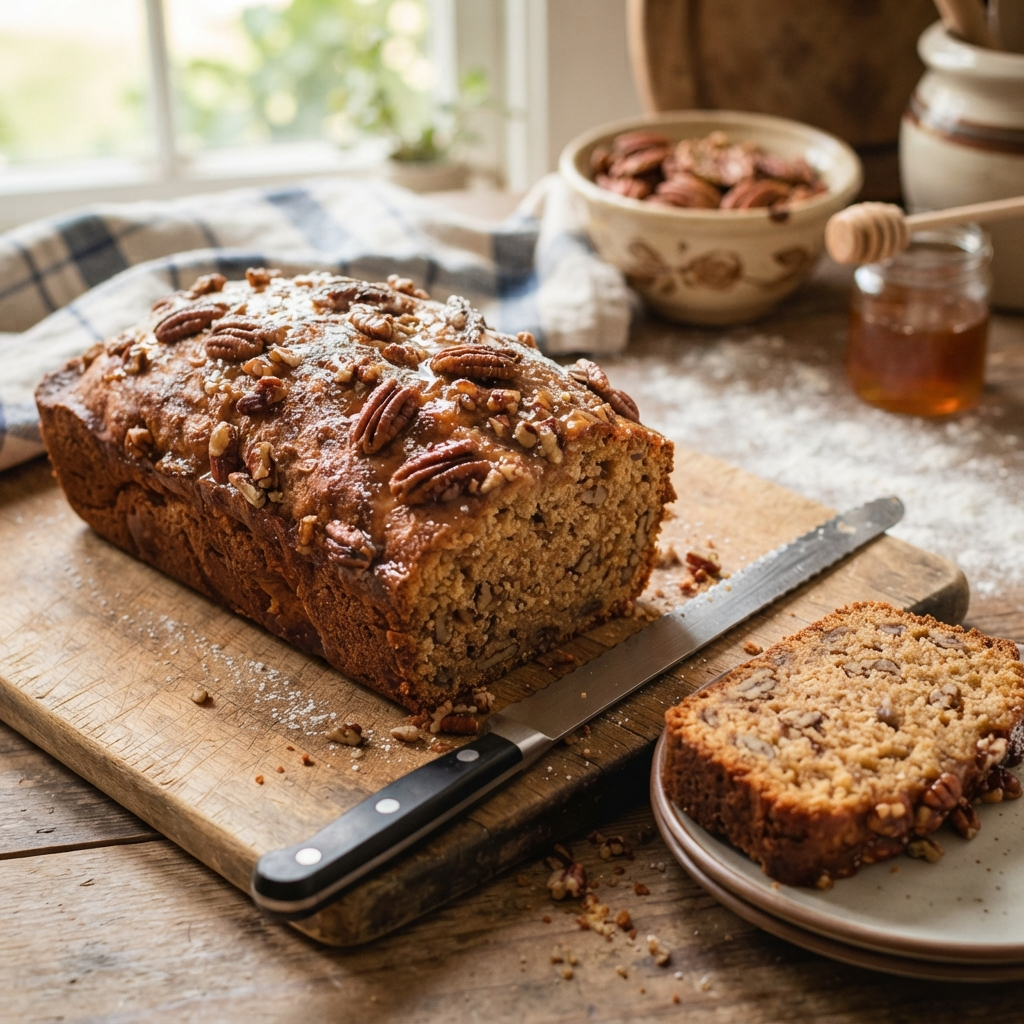
There is something profoundly comforting about the aroma of warm bread baking in the oven, but when that scent is infused with the rich, buttery essence of toasted pecans and a hint of Southern sweetness, it transcends mere comfort and becomes a memory etched into the soul. Irresistible Alabama Pecan Bread is not just a quick bread; it is a culinary embodiment of hospitality, a golden loaf that speaks of slow mornings, family gatherings, and the abundant orchards of the Deep South. This bread strikes a perfect balance between a tender, cake-like crumb and a satisfyingly crunchy texture provided by generous clusters of nuts. Whether served slathered with creamy butter at breakfast, paired with a sharp cheddar for a savory snack, or presented as a gift wrapped in linen during the holidays, this recipe stands as a testament to the power of simple, high-quality ingredients transformed through careful technique. The following guide will walk you through every nuance of creating this masterpiece, ensuring that your kitchen becomes the heart of the home, filled with the intoxicating smell of caramelized sugar and roasted nuts.
The History
To understand the significance of Alabama Pecan Bread, one must first delve into the agricultural and cultural heritage of Alabama itself. The pecan tree is not merely a crop in this region; it is a symbol of resilience and abundance, officially recognized as the state nut of Alabama. Historically, pecan cultivation in the South dates back to the late 19th century, but it was during the early 20th century that pecan farming became a cornerstone of the rural economy. As orchards flourished across the fertile soils of the Tennessee Valley and the Black Belt region, home bakers began experimenting with ways to incorporate this plentiful harvest into their daily sustenance. During the Great Depression, pecan bread emerged as a resourceful way to stretch flour supplies while adding essential fats and proteins to the diet. It was a staple in church cookbooks and community fundraisers, often passed down through generations of women who guarded their specific ratios of sugar to nuts as family secrets. Over time, the recipe evolved from a dense, survivalist loaf to the lighter, sweeter quick bread we cherish today, yet it retains the rustic charm of its origins. Baking this bread is a participation in a living history, connecting the modern baker to the legacy of Southern agrarian life and the enduring tradition of sharing food as an act of love.
Ingredients Breakdown
Understanding the chemical and functional role of each component in Alabama Pecan Bread is crucial for achieving the perfect texture and flavor profile. All-Purpose Flour serves as the structural backbone; its moderate protein content allows for enough gluten development to hold the loaf together without making it tough or chewy like yeast bread. Granulated Sugar does more than sweeten; it tenderizes the crumb by interfering with gluten formation and contributes to the browning of the crust through caramelization. Unsalted Butter is preferred over oil because water content in butter creates steam during baking, leading to a better rise, while the milk solids contribute a distinct richness that oil cannot mimic. Eggs act as the emulsifier and leavening agent; the proteins coagulate to set the structure, while the yolks add fat for moisture and richness. Baking Powder and Baking Soda are the chemical leaveners; the powder provides immediate lift, while the soda reacts with the acidity in the buttermilk to create a tender, open crumb. Buttermilk is the secret weapon here; its acidity tang balances the sweetness and activates the baking soda, resulting in a loaf that stays moist for days. Finally, the Pecans are the star; toasting them before incorporation releases their essential oils, intensifying their flavor and ensuring they remain crunchy rather than becoming soggy within the batter.
Step-by-Step Recipe
Creating the perfect loaf requires attention to detail at every stage of the process. Step 1: Preparation. Begin by preheating your oven to 350°F (175°C). This ensures the leavening agents activate immediately upon entering the heat. Grease a 9×5 inch loaf pan thoroughly with butter and dust it with flour, or line it with parchment paper leaving an overhang for easy removal. Step 2: Toasting the Nuts. Spread your pecan halves on a baking sheet and toast them in the oven for 5 to 7 minutes until fragrant. Allow them to cool completely before chopping; warm nuts can melt the butter in the batter prematurely. Step 3: Dry Ingredients. In a large mixing bowl, whisk together the flour, baking powder, baking soda, and salt. Whisking aerates the flour and ensures even distribution of leaveners, preventing uneven rising. Step 4: Wet Ingredients. In a separate bowl, cream the butter and sugar together until light and fluffy. This incorporates air bubbles that will expand during baking. Beat in the eggs one at a time, ensuring each is fully incorporated before adding the next. Stir in the vanilla extract and buttermilk. Step 5: Combining. Pour the wet mixture into the dry ingredients. Use a spatula to fold gently until just combined. Overmixing at this stage develops gluten too much, leading to a tough bread. Step 6: Folding. Toss the chopped pecans in a teaspoon of flour to prevent them from sinking, then fold them into the batter. Step 7: Baking. Pour the batter into the prepared pan and smooth the top. Bake for 55 to 65 minutes. Test for doneness by inserting a toothpick into the center; it should come out with a few moist crumbs but no wet batter. Step 8: Cooling. Let the bread cool in the pan for 10 minutes before transferring to a wire rack. This prevents the bottom from becoming soggy due to trapped steam.
Tips
To elevate your baking from good to exceptional, consider these professional insights. First, ensure all your refrigerated ingredients, such as eggs and buttermilk, are at room temperature before mixing. Cold ingredients can shock the butter, causing the batter to curdle and resulting in a dense loaf. Second, do not skip the toasting step for the pecans; raw pecans have a muted flavor compared to the robust, nutty depth of toasted ones. Third, when measuring flour, spoon it into the measuring cup and level it off rather than scooping directly from the bag, which packs the flour down and leads to using too much, drying out the bread. Fourth, if you notice the top of the bread browning too quickly during the last 15 minutes of baking, loosely tent a piece of aluminum foil over the pan to prevent burning while the center finishes cooking. Fifth, allow the bread to cool completely before slicing; quick breads are fragile when warm and slicing too early can cause the loaf to crumble. Lastly, for an extra layer of flavor, brush the warm loaf with a simple syrup made of equal parts sugar and water infused with a splash of bourbon.
Variations and Customizations
While the classic recipe is timeless, there is ample room for creativity to suit different palates and dietary needs. For a Chocolate Pecan Twist, fold in semi-sweet chocolate chips along with the nuts for a dessert-like experience. A Spiced Apple Version can be created by adding finely diced apples and a teaspoon of cinnamon and nutmeg to the dry ingredients, evoking the flavors of fall. For those seeking a Gluten-Free Option, substitute the all-purpose flour with a high-quality 1-to-1 gluten-free baking blend that includes xanthan gum to mimic the structure of gluten. A Vegan Adaptation is possible by replacing the butter with coconut oil, the eggs with flax eggs (ground flaxseed mixed with water), and the buttermilk with almond milk mixed with lemon juice. For a Savory Breakfast Loaf, reduce the sugar by half and add cooked, crumbled bacon and a sprinkle of black pepper, serving it alongside eggs. You can also experiment with the glaze; a cream cheese glaze adds tangy sweetness, while a simple powdered sugar and milk drizzle keeps it classic. For an adult-oriented version, soak the pecans in bourbon or rum for an hour before folding them into the batter to infuse the entire loaf with sophisticated warmth.
Health Considerations and Nutritional Value
While this bread is a treat, understanding its nutritional profile helps in enjoying it mindfully. Pecans are nutritionally dense, rich in monounsaturated fats which are heart-healthy, and they provide a good source of fiber, protein, and antioxidants like vitamin E. However, the bread does contain significant amounts of refined sugar and carbohydrates from the flour, which can impact blood sugar levels. A typical slice contains approximately 250 to 300 calories, depending on the size of the cut and the amount of butter used. To make the recipe healthier, you can substitute half of the all-purpose flour with whole wheat pastry flour to increase fiber content without sacrificing tenderness. Reducing the sugar by 25% often goes unnoticed in taste tests due to the natural sweetness of the pecans and vanilla. Using Greek yogurt instead of some of the butter can lower the saturated fat content while maintaining moisture. It is best enjoyed in moderation as part of a balanced diet, perhaps paired with a source of protein like eggs or yogurt to slow the absorption of sugars. For those with nut allergies, sunflower seeds can be substituted, though the flavor profile will change significantly.
Ingredients
- 2 cups all-purpose flour, spooned and leveled
- 1 cup granulated white sugar
- 1 teaspoon baking powder
- 1/2 teaspoon baking soda
- 1/2 teaspoon fine sea salt
- 1/2 cup unsalted butter, softened to room temperature
- 2 large eggs, room temperature
- 1 teaspoon pure vanilla extract
- 3/4 cup buttermilk, room temperature
- 1 1/2 cups pecan halves, toasted and coarsely chopped
- 1 teaspoon flour (for tossing with pecans)
- Optional: Powdered sugar for dusting or bourbon glaze
Directions
- Preheat your oven to 350°F (175°C) and position the rack in the center of the oven.
- Grease a 9×5 inch loaf pan with butter and dust with flour, or line with parchment paper.
- Spread pecans on a baking sheet and toast for 5-7 minutes until fragrant; let cool and chop.
- In a medium bowl, whisk together 2 cups flour, baking powder, baking soda, and salt.
- In a large bowl, cream the softened butter and sugar until light and fluffy (about 3 minutes).
- Beat in eggs one at a time, then stir in the vanilla extract.
- Alternately add the flour mixture and buttermilk to the butter mixture, beginning and ending with the flour.
- Toss the chopped pecans with 1 teaspoon of flour to coat, then fold gently into the batter.
- Pour the batter into the prepared pan and smooth the top evenly.
- Bake for 55 to 65 minutes, or until a toothpick inserted in the center comes out clean.
- Cool in the pan for 10 minutes, then remove to a wire rack to cool completely before slicing.
FAQ
Can I make this bread ahead of time?
Yes, this bread actually improves in flavor after a day. You can bake it up to 3 days in advance if stored properly in an airtight container at room temperature.
How do I store leftover pecan bread?
Wrap the cooled loaf tightly in plastic wrap or store it in a bread box. For longer storage, you can freeze the loaf for up to 3 months; slice it before freezing for easy single-serving thawing.
Why did my bread sink in the middle?
This usually happens if the bread was underbaked or if too much leavening was used. Ensure your oven temperature is accurate with an oven thermometer and do not open the oven door during the first 40 minutes of baking.
Can I use salted butter?
You can, but you should omit the added salt in the recipe to prevent the bread from becoming too salty. Unsalted butter is preferred to control the sodium levels precisely.
What if I don’t have buttermilk?
You can make a substitute by adding 1 tablespoon of lemon juice or white vinegar to 3/4 cup of regular milk and letting it sit for 5 minutes to curdle before using.
Is this bread suitable for high-altitude baking?
At higher altitudes, you may need to reduce the sugar slightly and increase the oven temperature by 15-25 degrees to prevent the bread from rising too quickly and collapsing.
Summary
Irresistible Alabama Pecan Bread is a timeless Southern classic that combines toasted nuts, rich butter, and buttermilk for a moist, flavorful loaf.
Perfect for breakfast or gifting, this recipe honors tradition while offering versatile customizations for every baker.