
Introduction
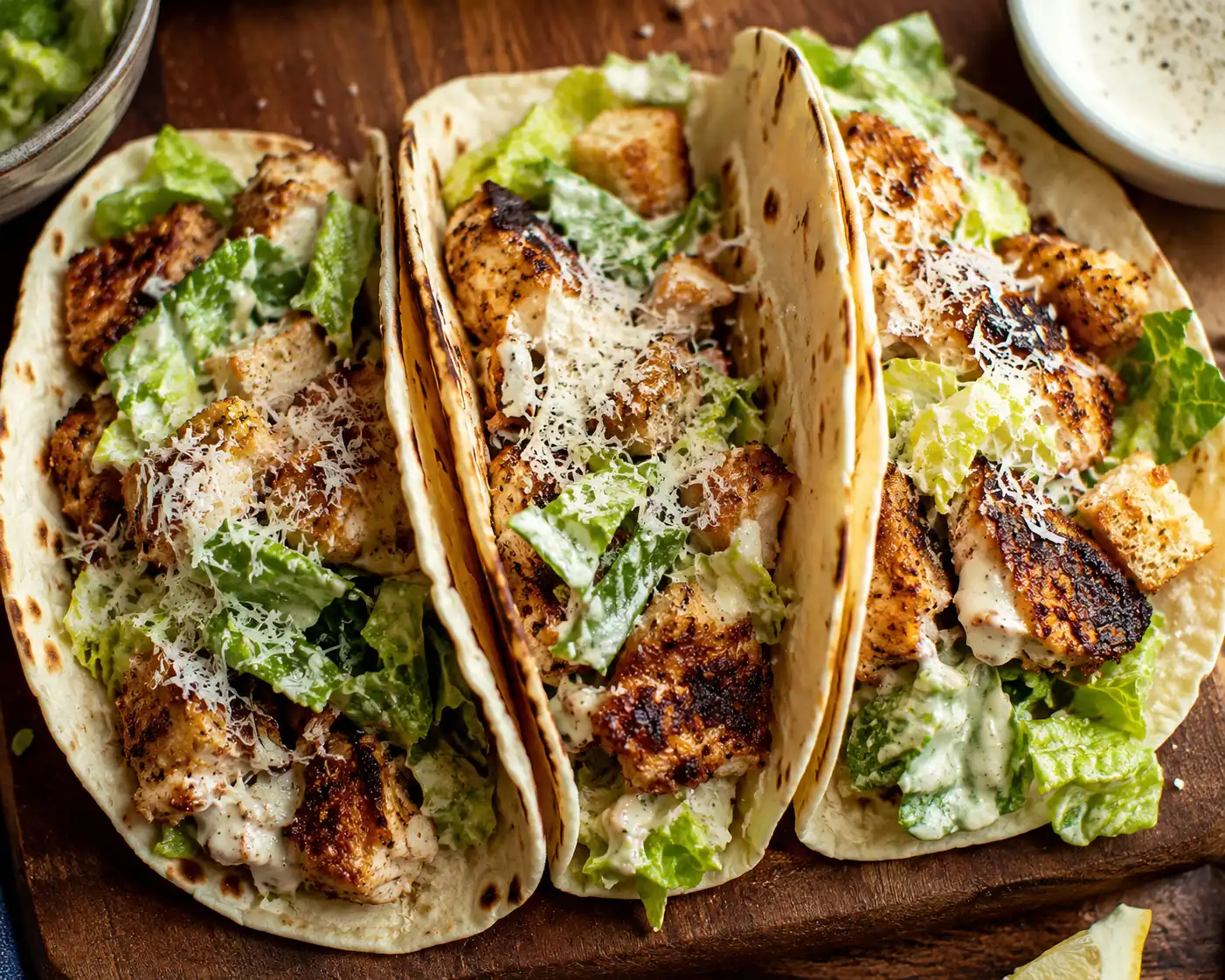
Smash chicken Caesar tacos are a bold, modern fusion that marries the crispy, savory magic of smashed chicken with the creamy, umami-rich allure of classic Caesar dressing—and wraps it all in a warm, pliable tortilla for handheld indulgence. Born from the viral “smash burger” technique and elevated by chef-driven experimentation, this dish reimagines taco night with restaurant-quality texture, layered flavor, and unexpected sophistication. Unlike traditional shredded or grilled chicken tacos, smash chicken delivers an ultra-crispy, golden-brown crust formed under high heat and firm pressure—creating a deeply caramelized exterior while locking in juicy tenderness within. Paired with garlicky Parmesan-laced Caesar (often enhanced with anchovy paste, Dijon, lemon zest, and freshly grated Romano), crisp romaine ribbons, pickled red onions, and toasted croutons—even the garnishes are intentional—the result is a textural symphony: crunchy, creamy, salty, tangy, and herbaceous—all in one bite. Whether served at a backyard fiesta, a weeknight dinner with minimal cleanup, or as an elevated appetizer at a gathering, smash chicken Caesar tacos embody culinary ingenuity without demanding professional skills—just patience, heat control, and attention to detail.
The History
The origins of smash chicken Caesar tacos trace back to multiple converging food movements over the past decade. The “smash” technique itself is rooted in Midwestern diner culture and gained explosive popularity through social media platforms like TikTok and Instagram around 2020–2021, where home cooks replicated the fast-food-style sear of smash burgers using ground beef—then adapted it to boneless, skinless chicken breasts. Chefs and food bloggers soon recognized the potential: chicken’s mild flavor profile and lean structure responded beautifully to high-heat smashing—especially when brined or butterflied—yielding superior browning and moisture retention compared to standard pan-searing. Simultaneously, the “deconstructed Caesar” trend surged across upscale casual concepts, with chefs serving Caesar elements separately—dressing, croutons, anchovy oil, shaved cheese—as modular components to heighten freshness and contrast. The taco format entered the equation through the broader “gourmet taco renaissance,” fueled by chefs like Roy Choi (Kogi BBQ), Alex Stupak (Empellón), and local taqueria innovators who proved that non-traditional proteins and global dressings could coexist authentically within the taco’s cultural framework. By 2022, food publications including Bon Appétit, Food & Wine, and The Kitchn featured variations of “Caesar chicken tacos,” often noting their appeal to both keto dieters (low-carb tortilla alternatives) and flexitarians seeking satisfying, veg-forward protein dishes. Today, smash chicken Caesar tacos represent more than a recipe—they’re a cultural artifact of digital-era cooking: iterative, cross-genre, visually arresting, and relentlessly optimized for flavor density and shareability.
Ingredients Breakdown
Every component in smash chicken Caesar tacos serves a precise functional and sensory role—no ingredient is arbitrary. Let’s dissect them with culinary intentionality:
- Chicken Breast (boneless, skinless): Opt for air-chilled, antibiotic-free breasts weighing 5–6 oz each. Air-chilling preserves moisture better than water-chilled alternatives, and the slight natural firmness aids in clean smashing. Thickness matters: aim for ~¾-inch pre-smash; too thick yields uneven cook, too thin burns before crisping.
- Smash Fat Blend: A 50/50 mix of clarified butter and high-smoke-point avocado oil (or refined coconut oil). Clarified butter contributes Maillard-rich nuttiness and lactose-free browning; avocado oil ensures stability at 450°F+ without acrid smoke. Never use extra-virgin olive oil—it breaks down and tastes bitter.
- Brine & Seasoning Base: A 30-minute dry brine of kosher salt (1½% of chicken weight), garlic powder, onion powder, white pepper, and smoked paprika enhances moisture retention and adds subtle depth—not heat, but aroma. No liquid brine needed; excess water inhibits crust formation.
- Caesar Dressing (Homemade): Far superior to bottled. Built on a foundation of pasteurized egg yolk (for emulsification), fresh lemon juice (brightness to cut fat), Dijon mustard (stabilizer + tang), minced garlic (raw punch), anchovy paste (umami backbone—not fishiness), Worcestershire (fermented complexity), grated Parmigiano-Reggiano (salty granular texture), and finely grated Pecorino Romano (sharper, saltier finish). Emulsified slowly with extra-virgin olive oil and a touch of neutral oil for sheen and stability.
- Romaine Hearts: Only inner, pale-green ribs—crisp, sweet, low-fiber, and structurally resilient enough to hold up against dressing without wilting. Outer dark leaves are too fibrous and bitter; iceberg lacks flavor nuance.
- House-Made Croutons: Day-old sourdough or ciabatta, cubed, tossed in garlic-infused olive oil, rosemary, and flaky sea salt—baked until golden and hollow-sounding (not just brown). Texture must be *audibly* crunchy—soft croutons collapse into mush.
- Pickled Red Onions: Quick-pickled in apple cider vinegar, honey, black peppercorns, and coriander seeds for 20 minutes minimum. Adds acidity, floral sweetness, and vibrant magenta hue—cutting through richness while adding visual drama.
- Tortillas: Dual-format flexibility: 6-inch double-layered corn tortillas (warmed on a comal until pliable and slightly blistered) for authenticity and earthy chew, OR low-carb almond-flour or coconut-flour tortillas for keto compliance. Flour tortillas are discouraged—they steam rather than crisp and lack structural integrity under wet fillings.
- Finishing Elements: Freshly cracked black pepper (not pre-ground), micro-planed lemon zest (oily citrus essence), torn fresh chervil or flat-leaf parsley (anise-herbal lift), and optional crispy capers or fried shallots for briny/crispy punctuation.
Step-by-Step Recipe
- Prep & Dry Brine (30 min ahead): Pat chicken breasts *extremely* dry with paper towels—moisture is the enemy of crust. Butterfly each breast horizontally, then gently pound between parchment to ¾-inch uniform thickness. Mix brine spices; rub evenly over both sides. Rest uncovered on a wire rack set over a tray in the fridge for 30 minutes (no plastic wrap—airflow prevents surface condensation).
- Make Pickled Onions (20 min ahead): Thinly slice 1 small red onion. Submerge in ½ cup apple cider vinegar, 1 tbsp honey, 1 tsp whole black peppercorns, ½ tsp coriander seeds, and ¼ tsp flaky salt. Stir, cover, and let sit at room temp—stirring once halfway. Drain before use, reserving 1 tsp pickling liquid for dressing brightness.
- Prepare Caesar Dressing: In a chilled bowl, whisk 1 pasteurized egg yolk, 1 tsp Dijon, 1 minced garlic clove, 1 tsp anchovy paste, ½ tsp Worcestershire, 1 tbsp lemon juice, and 1 tsp reserved pickling liquid until smooth. Slowly drizzle in ⅓ cup extra-virgin olive oil and 2 tbsp neutral oil, whisking constantly until thick and glossy. Fold in 3 tbsp grated Parmigiano and 2 tbsp grated Pecorino. Refrigerate 15 minutes to meld—do not chill longer than 1 hour (dressing tightens and loses vibrancy).
- Toast Croutons: Preheat oven to 375°F. Toss 2 cups ½-inch sourdough cubes with 2 tbsp garlic-infused olive oil, 1 tsp chopped fresh rosemary, and ½ tsp flaky salt. Spread on parchment-lined sheet. Bake 12–15 min, tossing halfway, until golden and hollow-sounding. Cool completely—warm croutons soften tacos.
- Smash & Sear Chicken: Heat a heavy 12-inch cast-iron skillet over medium-high until smoking lightly (~450°F). Add 1 tbsp clarified butter + 1 tbsp avocado oil. Once shimmering, place 1 brined chicken breast in center. Immediately press FIRMLY with a sturdy, heat-resistant smash tool (a wide-bottomed stainless steel ramekin works perfectly) for 5 seconds—apply even downward pressure, no sliding. Cook undisturbed 2 min 30 sec—until edges curl and release easily. Flip, smash again lightly (to reseal crust), and cook 1 min 45 sec more. Internal temp must hit 165°F (check with instant-read thermometer in thickest part). Repeat for remaining chicken—wipe skillet clean between batches to prevent carbon buildup.
- Rest & Slice: Transfer cooked chicken to a wire rack (never plate—it steams the crust). Rest 4 minutes—critical for juice redistribution. Slice against the grain into ½-inch strips—this maximizes tenderness and creates ideal taco-width pieces.
- Assemble Tacos: Warm corn tortillas directly over gas flame (2 sec per side) or on dry comal until pliable and lightly charred. Spread 1 tbsp Caesar dressing thinly across center of each tortilla. Layer: 2–3 chicken strips, ¼ cup romaine ribbons, 1 tbsp croutons, 1 tsp pickled onions, a grating of lemon zest, cracked black pepper, and optional chervil. Fold gently—not tightly—to preserve crunch. Serve immediately.
Tips
- Smash Tool Matters: Avoid spatulas or forks—they tear meat. Use a flat, heavy, heat-safe disc (like a small cast-iron press or inverted stainless bowl) with a smooth bottom. Rough surfaces cause sticking and uneven contact.
- Skillet Temperature Calibration: Test heat by flicking a drop of water—if it skitters and evaporates instantly, you’re ready. Too cool = gray, steamed chicken. Too hot = burnt crust, raw center. Adjust heat mid-cook if needed—cast iron retains heat aggressively.
- Dressing Consistency Hack: If dressing thickens too much after chilling, whisk in ½ tsp cold water or lemon juice—never oil, which breaks emulsion.
- Corn Tortilla Integrity: Stack two 6-inch tortillas per taco. Single tortillas tear under wet fillings. Warm them *just before assembling*—cold tortillas crack; over-warmed ones become gummy.
- Crouton Storage: Keep in an airtight container at room temp up to 3 days. Revive stale ones by toasting 2 minutes at 350°F—but never refrigerate (condensation ruins crunch).
- Chicken Doneness Precision: Pull chicken at 160°F—carryover cooking will bring it to 165°F during rest. Overcooking dries out even smashed chicken.
- Acidity Balance: Taste dressing before assembling. If overly sharp, add ¼ tsp honey. If flat, add ¼ tsp lemon zest—zest contains aromatic oils absent in juice alone.
- No-Stick Skillet Secret: After wiping skillet between batches, add fresh fat *and* swirl to coat *before* adding chicken. This creates a thermal barrier preventing weld-adhesion.
- Make-Ahead Strategy: Brine chicken and make dressing/pickled onions/croutons up to 2 days ahead. Store separately: chicken covered in fridge, dressing in jar with tight lid, onions in their liquid, croutons at room temp. Assemble only at service—maximizes texture contrast.
- Leftover Magic: Shredded leftover smash chicken makes exceptional Caesar salad, Caesar-stuffed baked potatoes, or Caesar chicken melt sandwiches on sourdough.
Variations and Customizations
This recipe thrives on thoughtful adaptation—here’s how to tailor it for dietary needs, flavor preferences, and seasonal availability:
- Keto/Low-Carb Version: Swap corn tortillas for almond-flour or coconut-flour tortillas (look for brands with <3g net carbs per serving). Boost fat with ½ tsp truffle oil drizzled over assembled tacos and extra grated cheese. Omit croutons; replace with crushed pork rinds or roasted sunflower seeds.
- Pescatarian Twist: Replace chicken with 6 oz wild-caught Alaskan cod fillets, skin-on. Score skin, season lightly, and smash skin-side down first for ultimate crispness. Finish with lemon-dill Caesar variation (substitute capers for anchovies, add fresh dill).
- Vegan Adaptation: Use pressed, marinated extra-firm tofu or seitan cutlets. Brine in tamari, liquid smoke, and nutritional yeast. Smash and pan-fry in same fat blend. Dressing becomes vegan Caesar: sub silken tofu + lemon + Dijon + capers + garlic + nori flakes + nutritional yeast + olive oil.
- Spicy Kick: Add chipotle powder to brine, or fold 1 tsp adobo sauce into Caesar dressing. Top with pickled jalapeños instead of red onions—and finish with a sprinkle of Tajín.
- Herb-Forward Summer Version: Fold 2 tbsp chopped tarragon and 1 tbsp lemon thyme into dressing. Garnish with edible flowers (nasturtiums, pansies) and grilled zucchini ribbons alongside romaine.
- Breakfast Taco Edition: Serve warm in flour tortillas with soft-scrambled eggs folded into Caesar dressing, crumbled bacon, and cheddar-jack blend. Smashed chicken becomes optional—swap for chorizo or keep as protein anchor.
- Greek-Inspired Fusion: Replace Caesar with tzatziki (cucumber, garlic, Greek yogurt, lemon, dill). Use grilled chicken instead of smashed, but keep croutons (pita-based) and add kalamata olives and crumbled feta.
- Umami Bomb Upgrade: Brush smashed chicken with mushroom-dashi glaze (reduced shiitake soaking liquid + tamari + mirin) before resting. Fold dried porcini powder into Caesar dressing.
- Gluten-Free Assurance: Verify all ingredients—some Worcestershire and anchovy pastes contain gluten. Use certified GF tamari instead of soy sauce in brine if adding depth. Corn tortillas are naturally GF, but confirm facility certification if severe sensitivity exists.
- Meal Prep Friendly: Cook and slice chicken; portion into containers with dressing on the side. Pack croutons, romaine, and onions separately. Assemble cold or quickly warmed in toaster oven—takes <90 seconds.
Health Considerations and Nutritional Value
When crafted mindfully, smash chicken Caesar tacos offer notable nutritional benefits—far surpassing typical fast-food or takeout alternatives. A standard serving (2 tacos, using 1 medium chicken breast, ¼ cup dressing, ½ cup romaine, 2 tbsp croutons, 1 tbsp pickled onions, and two 6-inch corn tortillas) provides approximately:
- Calories: ~520–580 kcal (varies by dressing oil volume and tortilla type)
- Protein: 42–46g — high-quality, complete protein from chicken supports muscle maintenance, satiety, and metabolic function. The smash method preserves moisture, reducing need for added fats during cooking.
- Fat: 24–28g — predominantly unsaturated (from olive oil, avocado oil, cheese), supporting heart health and nutrient absorption. Saturated fat remains moderate (~7g) due to lean chicken and controlled cheese use.
- Carbohydrates: 32–38g — primarily complex carbs from corn tortillas and fiber-rich romaine. Net carbs drop to ~22g with low-carb tortillas.
- Fiber: 6–8g — from romaine (vitamin K, folate), pickled onions (prebiotic inulin), and whole-grain or sprouted corn tortillas (if used). Supports gut microbiome diversity and digestive regularity.
- Sodium: ~780–920mg — well below FDA’s 2,300mg daily limit. Controlled via measured brining (no table salt sprinkling) and reduced-sodium Parmigiano (aged cheeses naturally contain less sodium than processed alternatives).
- Vitamins & Minerals: Exceptionally rich in Vitamin A (romaine), Vitamin C (lemon, onions), Calcium (cheese, greens), Iron (chicken), and B-complex vitamins (chicken, nutritional yeast in vegan versions). Anchovies contribute bioavailable Omega-3s (EPA/DHA) — anti-inflammatory and neuroprotective.
Key Health Notes:
- Dressing Quality Is Critical: Bottled Caesar often contains high-fructose corn syrup, preservatives, and excessive sodium (1,100mg+ per 2 tbsp). Homemade version cuts sugar to zero and sodium by 40%.
- Crunch Without Compromise: House-made croutons use whole-grain bread and minimal oil—unlike commercial versions loaded with hydrogenated fats and MSG.
- Food Safety First: Pasteurized eggs in dressing eliminate salmonella risk. Chicken cooked to 165°F meets USDA safety standards—smashing does not compromise internal doneness when thermometers are used.
- Anti-Inflammatory Alignment: Garlic, lemon, anchovies, olive oil, and romaine collectively deliver polyphenols, flavonoids, and omega-3s shown in clinical studies to reduce systemic inflammation markers (CRP, IL-6).
- Not for Everyone: Those with severe dairy allergies should omit cheese and use vegan Caesar. Low-FODMAP versions require garlic-infused oil (not raw garlic), omitting onions and anchovies, and using lactose-free cheese.
Ingredients
- 2 (5–6 oz) boneless, skinless chicken breasts, air-chilled preferred
- 1½ tsp kosher salt (for dry brine)
- 1 tsp garlic powder
- 1 tsp onion powder
- ½ tsp white pepper
- ¼ tsp smoked paprika
- 2 tbsp clarified butter
- 2 tbsp avocado oil (or refined coconut oil)
- 1 large pasteurized egg yolk
- 1 tbsp fresh lemon juice (plus zest of 1 lemon)
- 1 tsp Dijon mustard
- 1 garlic clove, finely minced
- 1 tsp anchovy paste
- ½ tsp Worcestershire sauce (gluten-free if needed)
- ⅓ cup extra-virgin olive oil
- 2 tbsp neutral oil (grapeseed or safflower)
- 3 tbsp finely grated Parmigiano-Reggiano
- 2 tbsp finely grated Pecorino Romano
- 1 small red onion, very thinly sliced
- ½ cup apple cider vinegar
- 1 tbsp raw honey
- 1 tsp black peppercorns, lightly crushed
- ½ tsp coriander seeds
- ¼ tsp flaky sea salt (for pickling)
- 2 cups day-old sourdough or ciabatta, cut into ½-inch cubes
- 2 tbsp garlic-infused olive oil (for croutons)
- 1 tsp fresh rosemary, finely chopped
- 1 head romaine lettuce, inner pale ribs only, thinly sliced crosswise
- 4 (6-inch) corn tortillas, preferably stone-ground
- Freshly cracked black pepper, to taste
- Micro-planed lemon zest, for garnish
- Fresh chervil or flat-leaf parsley leaves, for garnish
Directions
- Place chicken breasts on a cutting board. Using a sharp knife, butterfly each horizontally—slice almost through, then open like a book. Cover with parchment and gently pound with a meat mallet or rolling pin to ¾-inch even thickness. Combine salt, garlic powder, onion powder, white pepper, and smoked paprika in a small bowl. Rub mixture thoroughly over both sides of chicken. Place on a wire rack set over a baking sheet. Refrigerate uncovered for 30 minutes.
- In a small non-reactive jar, combine apple cider vinegar, honey, crushed peppercorns, coriander seeds, and flaky salt. Add sliced red onion, seal, and shake vigorously. Set aside at room temperature for 20 minutes, shaking once halfway. Drain onions thoroughly, reserving 1 tsp pickling liquid.
- In a chilled medium bowl, whisk egg yolk, lemon juice, Dijon, minced garlic, anchovy paste, Worcestershire, and reserved pickling liquid until smooth and slightly frothy (about 1 minute). Slowly drizzle in olive oil and neutral oil, whisking constantly in one direction until thick and emulsified (about 3–4 minutes). Fold in grated cheeses. Cover and refrigerate 15 minutes.
- Preheat oven to 375°F. In a medium bowl, toss bread cubes with garlic-infused oil and rosemary. Spread on parchment-lined baking sheet. Bake 12–15 minutes, stirring halfway, until deep golden and crisp. Cool completely on wire rack.
- Heat 12-inch cast-iron skillet over medium-high heat until lightly smoking (450°F). Add 1 tbsp clarified butter and 1 tbsp avocado oil. When oil shimmers, place 1 chicken breast in center. Immediately press firmly with smash tool for 5 seconds. Cook undisturbed 2 minutes 30 seconds. Flip, lightly smash again, and cook 1 minute 45 seconds—or until internal temperature reaches 165°F. Transfer to wire rack. Rest 4 minutes. Repeat with remaining chicken, wiping skillet clean and re-oiling between batches.
- While chicken rests, warm tortillas individually over gas flame for 2 seconds per side—or on dry comal until pliable and lightly blistered. Stack two per taco.
- Slice rested chicken against the grain into ½-inch strips. Assemble tacos: spread 1 tbsp Caesar dressing on center of each tortilla stack. Top with 2–3 chicken strips, ¼ cup romaine, 1 tbsp croutons, 1 tsp pickled onions, a pinch of lemon zest, cracked black pepper, and herbs. Fold gently and serve immediately.
FAQ
- Can I use chicken thighs instead of breasts?
- Yes—but adjust technique. Thighs are higher in fat and collagen, so they benefit from lower initial heat (medium) and longer cook time (3 min per side). Smash gently—they’re more delicate. Skin-on thighs yield extraordinary crispness; remove skin post-cook if desired. Note: thighs increase calories/fat by ~30% but add richness and moisture.
- Why not use store-bought Caesar dressing?
- Bottled versions typically contain modified food starch, xanthan gum, artificial flavors, high-fructose corn syrup, and sodium levels exceeding 300mg per tablespoon—undermining health goals and muddying flavor. Homemade offers superior mouthfeel, brightness, and control over allergens and preservatives. It takes <10 minutes and keeps 5 days refrigerated.
- My croutons got soggy—how do I prevent that?
- Sogginess stems from moisture migration. Always assemble tacos *immediately* before serving. Never dress romaine ahead—it weeps. Store croutons separately in airtight container with silica packet (or a few grains of dry rice) to absorb ambient humidity. Toast them again 1 minute before use if stored >24 hours.
- Can I grill the chicken instead of smashing?
- You can—but you’ll lose the defining textural hallmark. Grilled chicken lacks the intense, caramelized crust and dense, juicy interior of smashed chicken. If grilling is essential, use a ridged grill pan, press chicken with foil-covered brick while cooking, and brush with Caesar glaze in last minute for flavor carryover.
- Is this dish safe for pregnancy?
- Yes—with precautions. Use pasteurized eggs in dressing and ensure chicken reaches 165°F internally. Avoid raw garlic or unpasteurized cheeses unless verified safe. Anchovy paste is safe—mercury levels in anchovies are negligible due to tiny size and short lifespan.
- How do I reheat leftovers without losing crunch?
- Reheat chicken only: place slices on wire rack over baking sheet, broil 6 inches from heat for 60–90 seconds per side. Do NOT microwave—steam destroys crust. Assemble fresh with cold dressing and crisp toppings.
- What wine or beverage pairs best?
- A chilled, high-acid white wine complements the richness: try Vermentino (Sardinia), Albariño (Spain), or unoaked Chardonnay. For non-alcoholic: sparkling lemon-lime agua fresca with a pinch of Tajín, or cold-brew green tea with lemon wedge.
- Can I freeze smashed chicken?
- Freezing is not recommended—refreezing destroys the delicate crust structure and causes moisture loss upon thawing, resulting in rubbery texture. Better to freeze raw, brined chicken breasts flat for up to 3 months, then smash and cook fresh.
- Why is my dressing breaking or separating?
- Emulsion failure usually occurs from adding oil too fast, using cold ingredients, or insufficient whisking
Advertisment