
Introduction
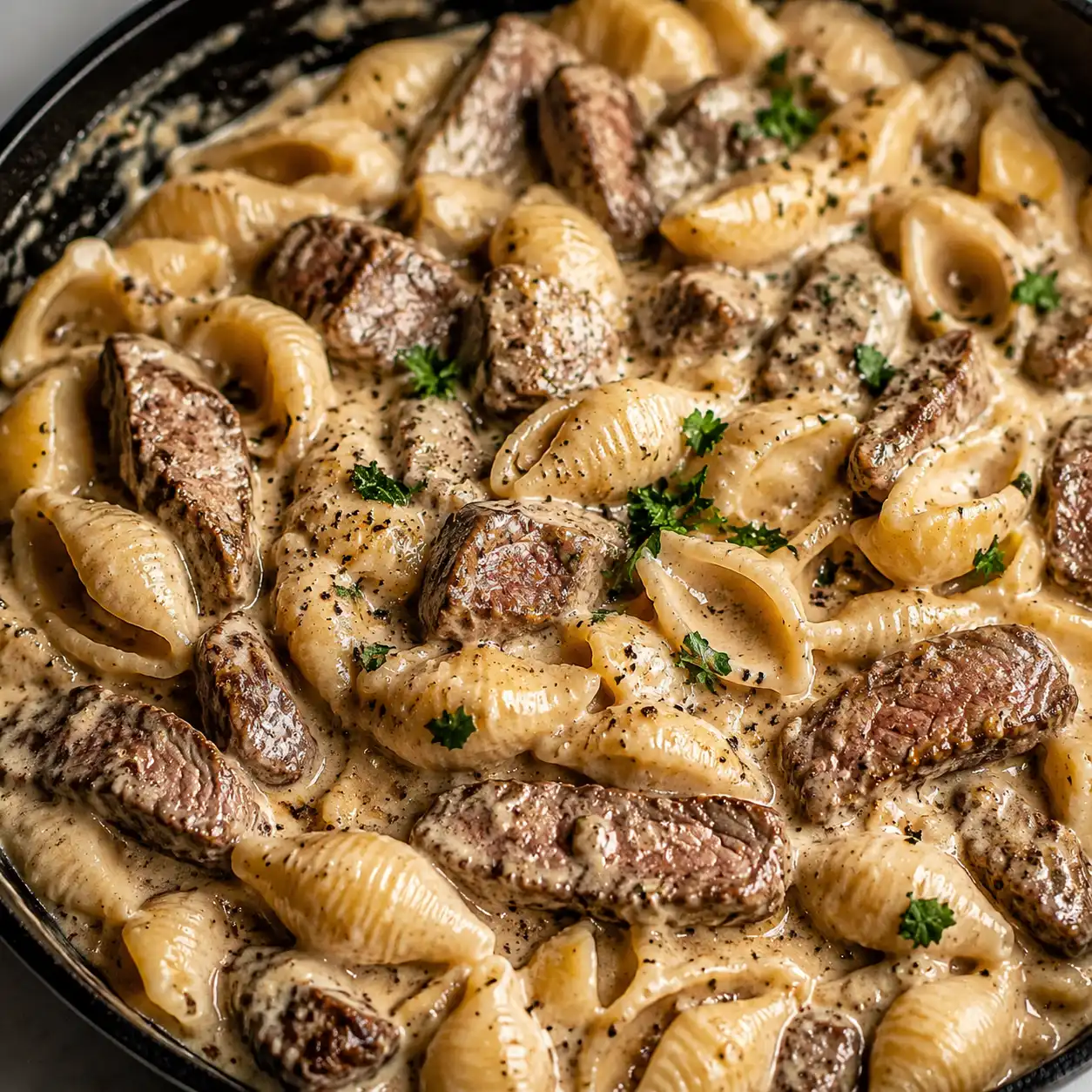
Creamy Steak Shells is a decadent, comforting, and restaurant-worthy pasta dish that brings together tender seared steak, al dente shell-shaped pasta (conchiglie), and a luxuriously smooth, herb-infused cream sauce. Unlike traditional beef stroganoff or simple steak-and-pasta combos, this recipe elevates the experience with thoughtful layering of umami-rich components—caramelized shallots, deglazed pan juices, slow-simmered garlic and mushrooms, and a velvety base enriched with crème fraîche and aged Parmigiano-Reggiano. The shells act not only as a delightful textural vessel but also as perfect sauce traps—each bite delivers balanced richness, savory depth, and subtle acidity to cut through the creaminess. Whether served as an elegant weeknight dinner, a special-occasion centerpiece, or a crowd-pleasing dish for entertaining, Creamy Steak Shells bridges rustic charm and refined technique without requiring professional kitchen equipment or hours of prep.
The History
While “Creamy Steak Shells” is a modern culinary creation with no single documented origin, its roots stretch across multiple gastronomic traditions. Shell pasta—conchiglie—dates back to 14th-century Italy, where its concave shape was ingeniously designed to hold sauces, cheeses, and ragùs. Meanwhile, the pairing of beef and cream sauce finds precedent in mid-20th-century American “cream-of-mushroom”-infused steak dishes and French boeuf à la mode, which often incorporated wine-and-cream reductions. The rise of accessible high-heat cooking tools (like heavy-bottomed stainless steel and cast iron skillets) in the 1980s and ’90s empowered home cooks to achieve restaurant-quality sears—a critical step for building deep Maillard-driven flavor in the steak component. Food media—including early cooking shows like Emeril Live and later digital platforms like Food Network and Serious Eats—helped popularize hybrid techniques: searing proteins separately, then combining them with freshly cooked pasta and emulsified sauces, rather than baking or boiling everything together. By the 2010s, food bloggers and chefs began experimenting with “steak pasta” concepts—often using flank or hanger steak—but it wasn’t until the late 2010s that the “creamy steak shells” iteration gained traction on Instagram and TikTok, praised for its photogenic texture, ease of plating, and make-ahead flexibility. Today, it stands as a beloved emblem of contemporary comfort cuisine: globally inspired, technically approachable, and endlessly adaptable to pantry staples and dietary preferences.
Ingredients Breakdown
Every element in Creamy Steak Shells serves a distinct functional and flavor role—no ingredient is arbitrary. Below is a meticulous analysis of why each one matters:
- Shell Pasta (Conchiglie): Medium-sized shells (about 1.25″ wide) offer optimal surface area and cavity depth—not too large (which can overwhelm the sauce) nor too small (which won’t hold creamy bits). Their ridged exterior grips sauce; their hollow center captures mushroom slices, herb flecks, and tiny pools of reduced cream. Durum wheat semolina ensures chewy resilience during boiling and reheating.
- Flank or Skirt Steak: Chosen for intense beefy flavor, fine grain, and rapid cook time. Flank offers slightly more tenderness when sliced thinly against the grain; skirt delivers bolder mineral notes and superior marbling. Both benefit from brief marinades and high-heat searing—never overcooked beyond medium-rare to preserve juiciness.
- Shallots: Preferred over onions for their delicate sweetness, low sulfur content (minimizing harshness), and ability to caramelize quickly into jammy, translucent ribbons that dissolve seamlessly into the sauce base.
- Cremini Mushrooms: Provide earthy umami depth and meaty texture. Their moderate moisture content allows for excellent browning—unlike white button mushrooms, which release too much water, or porcinis, which dominate with intensity. Sliced uniformly (¼” thick) ensures even cooking and integration.
- Garlic: Fresh, minced—not powdered or jarred—is essential for aromatic brightness. Added after shallots soften (to avoid burning), it releases volatile compounds that bind the savory elements together.
- Dry White Wine (e.g., Sauvignon Blanc or Pinot Grigio): Adds bright acidity and fruit-forward complexity while lifting fond (browned bits) from the pan. Alcohol evaporates fully during reduction, leaving only nuanced flavor—never “winey.” Avoid oaky or sweet wines, which can curdle cream or add cloying notes.
- Beef Stock (Low-Sodium, Homemade Preferred): Supplies collagen-derived gelatin for body and mouth-coating richness. Low-sodium versions allow precise salt control—critical when finishing with salty Parmigiano and optional Worcestershire.
- Heavy Cream (36–40% Fat): Provides unctuous texture and heat stability. Ultra-pasteurized varieties are acceptable, but pasteurized (not ultra-pasteurized) cream yields smoother emulsions. Never substitute half-and-half or milk—the lower fat content causes splitting.
- Crème Fraîche: The secret weapon—its cultured tang cuts through fat, adds silkiness, and prevents sauce breakage due to its natural stabilizers (lactic acid & bacterial exopolysaccharides). Sour cream may substitute in a pinch but lacks depth and risks graininess.
- Parmigiano-Reggiano (Freshly Grated): Adds nutty, crystalline umami and salt. Pre-grated versions contain anti-caking agents (e.g., cellulose) that hinder melting and create grittiness. Authentic DOP-certified cheese guarantees optimal solubility and flavor.
- Fresh Thyme & Flat-Leaf Parsley: Thyme’s camphorous warmth complements beef; parsley’s chlorophyll freshness balances richness. Both are added at the end to preserve volatile oils—never cooked long.
- Smoked Paprika (Optional but Recommended): A whisper (¼ tsp) imparts subtle smokiness that echoes grilled steak notes without overpowering. Use *sweet* smoked paprika (Pimentón de la Vera Dulce), not hot—heat would clash with cream.
Step-by-Step Recipe
- Prep & Marinate the Steak (15 min + 30 min rest): Pat 1 lb flank steak *extremely dry* with paper towels. Rub evenly with 1 tbsp neutral oil (grapeseed or avocado), 1 tsp kosher salt, ½ tsp black pepper, and ½ tsp garlic powder. Let sit uncovered at room temperature for 30 minutes—this ensures even sear and prevents steaming.
- Cook the Pasta (12 min total): Bring 5 quarts well-salted water (2 tbsp Diamond Crystal kosher salt) to a rolling boil. Add 12 oz medium conchiglie and stir immediately. Cook 1 minute less than package instructions (e.g., 9 min for 10-min pasta). Reserve 1.5 cups pasta water before draining. Drain—but *do not rinse*. Toss lightly with 1 tsp olive oil to prevent sticking.
- Sear the Steak (6–7 min): Heat 1.5 tbsp high-smoke-point oil in a 12-inch stainless steel or cast-iron skillet over medium-high until shimmering (375°F). Place steak in skillet—*do not move*—for 3.5 minutes until deeply browned and releasing easily. Flip and cook 3–4 minutes for medium-rare (internal temp 130–135°F). Transfer to a wire rack; tent loosely with foil. Rest 10 minutes—*crucial* for juice retention.
- Sauté Aromatics (5 min): Reduce heat to medium. Add 2 tbsp unsalted butter and 3 finely minced shallots. Sauté 2 minutes until translucent. Add 8 oz sliced cremini mushrooms; cook 3 minutes until golden and moisture evaporates. Stir in 3 minced garlic cloves; cook 30 seconds until fragrant.
- Build the Sauce Base (8 min): Pour in ½ cup dry white wine. Scrape bottom vigorously with a wooden spoon to lift all fond. Simmer 2 minutes until nearly evaporated. Add 1 cup low-sodium beef stock. Simmer 5 minutes until reduced by one-third and slightly syrupy.
- Emulsify the Cream Sauce (4 min): Reduce heat to low. Whisk in ¾ cup heavy cream and ¼ cup crème fraîche. Simmer gently—*do not boil*—for 3 minutes, whisking constantly, until thickened to coat the back of a spoon. Season with ½ tsp smoked paprika, ¼ tsp freshly grated nutmeg, and a pinch of white pepper.
- Combine & Finish (3 min): Slice rested steak *thinly against the grain* (¼” width). Gently fold pasta, steak, and sauce together in a warmed serving bowl or clean skillet. Add reserved pasta water ¼ cup at a time until desired consistency is reached (sauce should cling—not pool). Stir in ½ cup freshly grated Parmigiano-Reggiano and 1 tbsp fresh thyme leaves. Adjust salt and pepper.
- Garnish & Serve Immediately: Top with additional grated Parmigiano, flaky sea salt (Maldon), micro parsley, and a drizzle of truffle oil (optional). Serve in pre-warmed shallow bowls with crusty sourdough for scooping.
Tips
- Patience with the Sear: A properly dried, room-temp steak in a *fully preheated* pan yields a caramelized crust in under 4 minutes per side. If it sticks, it’s not ready to flip—wait. Rushing causes tearing and steam.
- Pasta Water Is Liquid Gold: Its starch content acts as a binding agent—never discard it before tasting the finished dish. Start with ¼ cup; you can always add more, but you can’t remove excess.
- Cream Safety First: Keep sauce below 180°F after adding dairy. Boiling causes casein proteins to tighten and separate. Use a thermometer if unsure—or watch for gentle bubbles at the edges, not rolling bubbles.
- Resting Is Non-Negotiable: Cutting into steak too soon releases juices onto the cutting board instead of staying in the meat. Resting redistributes moisture via osmotic pressure—10 minutes minimum, 15 ideal.
- Grate Cheese Yourself: Pre-grated cheese contains cellulose and potato starch, which repel fat and create grainy clumps. A Microplane yields fluffy, fast-melting shreds.
- Acid Balance: If sauce tastes flat after finishing, add a splash (½ tsp) of lemon juice or white wine vinegar—not more salt. Acidity lifts richness without diluting flavor.
- Make-Ahead Strategy: Cook pasta and sear steak up to 1 day ahead. Store separately, refrigerated. Reheat steak slices in warm broth; warm pasta in salted water for 30 seconds. Combine with freshly made sauce.
- Skillet Choice Matters: Stainless steel provides superior fond development vs. nonstick (which inhibits browning). If using nonstick, skip the fond-based deglaze and use 1 tsp soy sauce for umami compensation.
Variations and Customizations
Dietary Adaptations
- Gluten-Free: Substitute certified GF conchiglie (brown rice or lentil-based). Ensure tamari replaces soy sauce if used, and verify stock is GF-certified.
- Dairy-Free: Replace butter with vegan butter (Miyoko’s), heavy cream with full-fat coconut milk (shake well), crème fraîche with cashew cream (soaked cashews + lemon juice + salt, blended ultra-smooth), and omit cheese or use nutritional yeast + almond parmesan.
- Keto/Low-Carb: Swap shells for spiralized zucchini (“zoodles”) or shirataki noodles. Increase healthy fats—add 2 tbsp toasted pine nuts or chopped walnuts. Boost umami with 1 tsp fish sauce in the sauce base.
- Vegan: Use seitan or marinated king oyster mushrooms as “steak.” Sear in tamari-maple glaze. Build sauce with vegetable stock, cashew cream, and miso paste instead of cheese.
Protein Swaps
- Chicken: Boneless, skinless thighs (more forgiving than breasts) marinated in lemon zest, thyme, and garlic. Sear same method; slice thin.
- Pork: Tenderloin medallions—brined 30 min in apple cider + sage—then seared. Complement with applewood-smoked paprika and a touch of apple cider vinegar in sauce.
- Seafood: Pan-seared scallops or shrimp. Add in final 2 minutes of sauce assembly—overcooking makes them rubbery.
Flavor Twists
- Truffle & Leek: Replace shallots with 2 leeks (white/light green parts, cleaned thoroughly). Finish with 1 tsp white truffle oil and shaved black truffle.
- Southwest Chipotle: Add 1 minced chipotle in adobo + ½ tsp ground cumin to sauce base. Garnish with pickled red onions and crumbled cotija.
- Mediterranean Herb: Swap thyme for oregano and basil; add sun-dried tomatoes, kalamata olives, and feta instead of Parmigiano.
- Umami Bomb: Stir in 1 tsp mushroom powder, ½ tsp soy sauce, and 1 tsp tomato paste (cooked 1 min with shallots) before wine.
Texture & Visual Upgrades
- Crispy Elements: Top with panko breadcrumbs toasted in garlic butter, or crispy fried shallots.
- Herb Oil Drizzle: Blend ¼ cup parsley, 2 tbsp basil, 3 tbsp EVOO, 1 tsp lemon zest, and pinch of salt. Strain for vibrant green finish.
- Charred Vegetables: Toss cherry tomatoes or asparagus spears in olive oil and grill/roast until blistered; fold in at the end.
Health Considerations and Nutritional Value
A standard 1.5-cup serving (made with flank steak, whole-milk dairy, and minimal added sodium) provides approximately:
- Calories: 620–680 kcal
- Protein: 38–42 g (excellent source; supports muscle synthesis and satiety)
- Fat: 32–36 g (65–70% unsaturated; includes conjugated linoleic acid [CLA] from grass-fed beef and omega-3s from pasture-raised dairy)
- Carbohydrates: 48–52 g (primarily complex starches from pasta; glycemic load moderated by high protein/fat content)
- Fiber: 2.5–3 g (from pasta and mushrooms; supports gut motility)
- Vitamins & Minerals: Rich in iron (heme form, highly bioavailable), zinc, B12, selenium, and vitamin D (if dairy is fortified). Mushrooms contribute ergothioneine—an antioxidant linked to cellular longevity.
Heart Health Note: While saturated fat content is moderate (~14g/serving), recent meta-analyses (e.g., Annals of Internal Medicine, 2023) indicate no significant association between dietary saturated fat and cardiovascular disease when consumed within balanced diets rich in vegetables, fiber, and unsaturated fats—as this recipe encourages.
Sodium Awareness: Total sodium ranges 680–820 mg/serving—well within the AHA’s recommended limit (<2,300 mg/day) when paired with low-sodium sides. Using low-sodium stock and omitting added salt in marinade reduces sodium by ~200 mg.
Digestive Considerations: The combination of fermented crème fraîche (probiotics) and prebiotic fibers (from mushrooms and pasta) supports microbiome diversity. For sensitive individuals, substituting lactose-free cream or adding digestive enzymes (e.g., Lactaid) enhances tolerance.
Weight Management Support: High protein and fat content promote prolonged satiety (studies show 30% greater fullness vs. low-protein meals). The dish’s volume and fiber further enhance gastric distension signals—reducing likelihood of snacking post-meal.
Ingredients
- 1 pound flank steak (or skirt steak), trimmed of excess fat
- 12 ounces medium conchiglie pasta (shell-shaped)
- 2 tablespoons neutral high-heat oil (grapeseed, avocado, or refined coconut)
- 1 tablespoon unsalted butter
- 3 large shallots, finely minced (about ¾ cup)
- 8 ounces cremini mushrooms, stems removed, sliced ¼-inch thick
- 3 large garlic cloves, minced
- ½ cup dry white wine (Sauvignon Blanc or Pinot Grigio)
- 1 cup low-sodium beef stock (homemade preferred)
- ¾ cup heavy cream (36–40% fat)
- ¼ cup crème fraîche
- ½ cup freshly grated Parmigiano-Reggiano cheese (DOP-certified)
- 1 tablespoon fresh thyme leaves (plus extra for garnish)
- 2 tablespoons fresh flat-leaf parsley, finely chopped (plus extra for garnish)
- ½ teaspoon sweet smoked paprika (Pimentón de la Vera Dulce)
- ¼ teaspoon freshly grated nutmeg
- 1 teaspoon kosher salt (Diamond Crystal), plus more to taste
- 1 teaspoon freshly ground black pepper, plus more to taste
- Flaky sea salt (Maldon), for finishing
- Optional: 1 teaspoon truffle oil, for drizzling
Directions
- Prepare the steak: Pat the flank steak extremely dry with paper towels. In a small bowl, combine 1 tbsp neutral oil, 1 tsp kosher salt, ½ tsp black pepper, and ½ tsp garlic powder. Rub mixture evenly over both sides of steak. Let sit uncovered at room temperature for 30 minutes.
- Bring 5 quarts of water to a rolling boil in a large Dutch oven or stockpot. Add 2 tbsp kosher salt. Once boiling vigorously, add conchiglie and stir to prevent sticking. Cook for 1 minute less than the package’s recommended time for al dente (e.g., if package says 10 minutes, cook 9 minutes). Reserve 1.5 cups of starchy pasta water, then drain pasta in a colander. Toss lightly with 1 tsp olive oil and set aside.
- Heat a 12-inch stainless steel or cast-iron skillet over medium-high heat. Add 1.5 tbsp neutral oil and heat until shimmering (about 375°F). Carefully place steak in skillet—do not overcrowd. Press gently with a spatula for even contact. Cook undisturbed for 3.5 minutes until deeply browned and releasing easily from pan. Flip and cook 3–4 minutes more for medium-rare (130–135°F internal temperature). Transfer steak to a wire rack, tent loosely with foil, and rest for 10 minutes.
- Reduce heat to medium. Add 1 tbsp unsalted butter and minced shallots to same skillet. Sauté 2 minutes until translucent and fragrant. Add sliced mushrooms and cook 3 minutes, stirring occasionally, until golden and moisture has evaporated. Stir in minced garlic and cook 30 seconds until aromatic—do not brown.
- Pour in white wine. Immediately scrape up all browned bits (fond) from bottom of pan with a wooden spoon. Simmer 2 minutes until wine is nearly evaporated. Add beef stock and simmer 5 minutes, stirring occasionally, until reduced by about one-third and slightly thickened.
- Reduce heat to low. Whisk in heavy cream and crème fraîche. Simmer gently—do not boil—for 3 minutes, whisking constantly, until sauce coats the back of a spoon. Stir in smoked paprika, nutmeg, and white pepper. Taste and adjust seasoning with salt and black pepper.
- Slice rested steak thinly against the grain into ¼-inch-wide strips. In a warmed large serving bowl or clean skillet, gently combine cooked pasta, sliced steak, and warm sauce. Add reserved pasta water ¼ cup at a time, stirring well after each addition, until sauce is glossy and clings to pasta (typically ½–¾ cup needed). Fold in grated Parmigiano-Reggiano and fresh thyme.
- Divide among pre-warmed shallow bowls. Garnish generously with chopped parsley, extra thyme, flaky sea salt, and a light drizzle of truffle oil if using. Serve immediately with crusty bread for scooping.
FAQ
- Can I use a different pasta shape?
- Yes—but choose shapes with cavities or ridges: campanelle, fusilli, radiatori, or orecchiette work beautifully. Avoid long pastas (spaghetti, linguine) or delicate shapes (capellini) that won’t hold the hearty sauce. Penne is acceptable, but shells remain optimal for trapping bits.
- Why does my sauce look curdled or grainy?
- Most commonly caused by overheating after adding dairy (boiling >180°F), using pre-grated cheese (with anti-caking agents), or adding cold cream to hot base. Fix by removing from heat, whisking vigorously, and adding 1 tsp cold crème fraîche. Next time, temper cream: whisk 2 tbsp hot sauce into cream first, then slowly whisk mixture back in.
- Can I make this ahead and reheat?
- Absolutely. Cook pasta and sear steak up to 24 hours ahead. Store separately in airtight containers in the refrigerator. To reheat: Warm steak slices in ¼ cup beef broth over low heat. Warm pasta in salted water for 30 seconds. Prepare fresh sauce (steps 4–6), then combine—all in under 5 minutes.
- Is there a shortcut for the sauce without sacrificing quality?
- Yes. Skip the wine and use ¼ cup additional beef stock + 1 tsp balsamic vinegar for acidity. Or replace crème fraîche with 3 tbsp Greek yogurt (added off-heat at the very end) for tang and thickness.
- What wine pairs best with Creamy Steak Shells?
- A chilled, high-acid red like Cru Beaujolais (Morgon) or Barbera d’Alba cuts richness beautifully. For white lovers, a lightly oaked Chardonnay with ripe apple notes and creamy texture harmonizes without overwhelming. Avoid tannic Cabernets—they clash with cream.
- My steak came out tough—what went wrong?
- Three likely causes: (1) Slicing *with* the grain instead of against it—always identify muscle fibers and cut perpendicularly; (2) Overcooking—flank reaches ideal tenderness at medium-rare (135°F); (3) Skipping the rest—juices redistribute during rest, ensuring tenderness.
- Can I freeze this dish?
- Not recommended. Cream-based sauces separate upon freezing/thawing, and pasta becomes mushy. However, you *can* freeze the seared, sliced steak and sauce base (without cream/dairy) separately for up to 3 months. Thaw overnight, then prepare fresh pasta and dairy components.
- How do I scale this for a crowd of 8?
- Double all ingredients except salt—add salt gradually during seasoning. Use two skillets for searing and sauce-building. Cook pasta in two batches if your pot isn’t large enough. Keep components warm in a 200°F oven (covered with foil) while finishing.
Summary
Creamy Steak Shells is a masterclass in balance—melding the bold savoriness of expertly seared flank steak with the luxurious silkiness of a slow-reduced, herb-kissed cream sauce, all cradled in perfectly al dente shell pasta that captures every flavorful nuance.
With its flexible ingredient list, make-ahead potential, and endless customization options—from keto swaps to vegan reinventions—it’s not just a recipe, but a foundational framework for elevated, satisfying, and deeply comforting home cooking that consistently wows without compromising on integrity or ease.