
Introduction
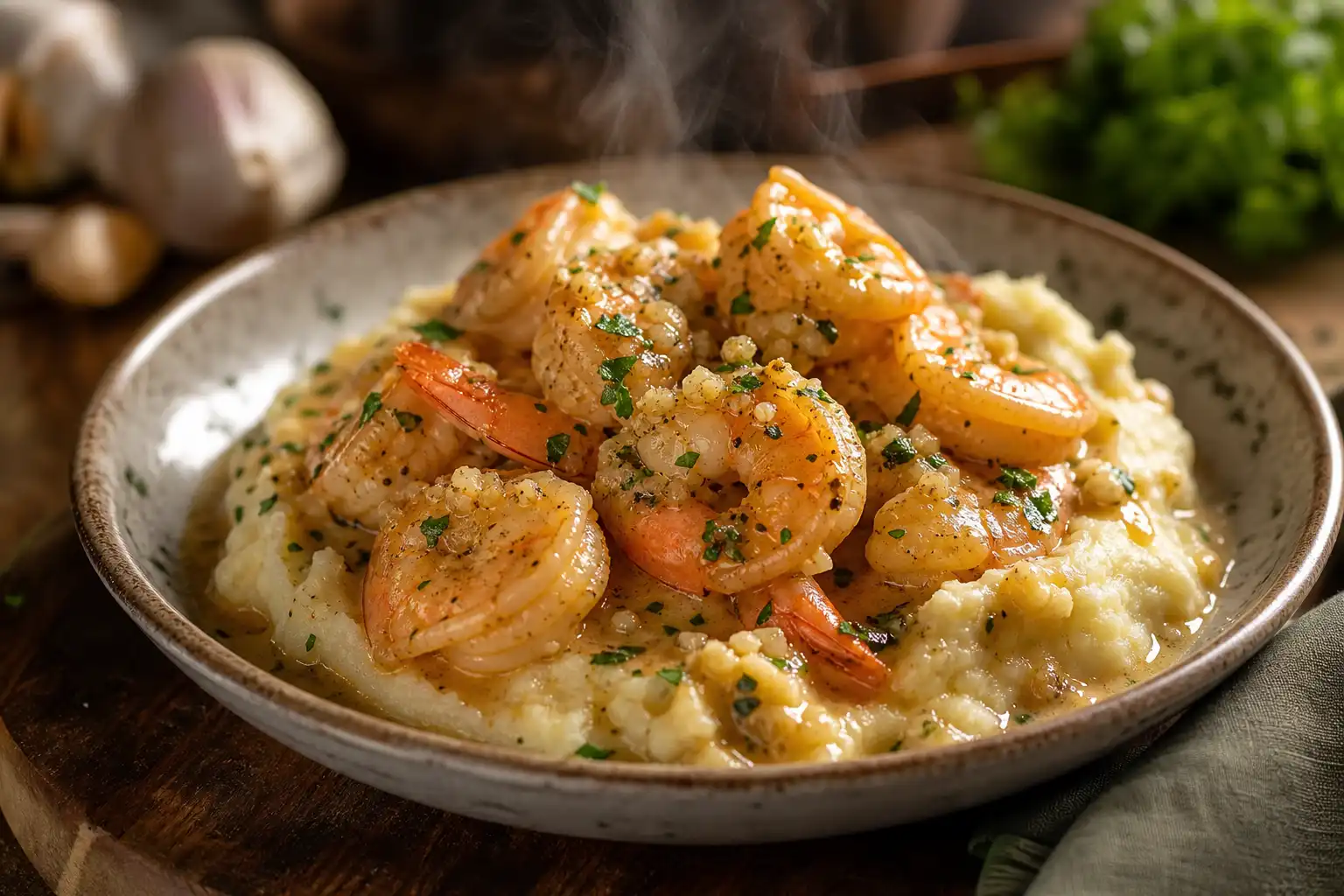
Creamy Garlic Shrimp Over Mashed Potatoes is the quintessential comfort food dish that marries elegance with homestyle warmth—a restaurant-quality meal you can effortlessly recreate in your own kitchen. This luscious, aromatic entrée features plump, tender shrimp enveloped in a rich, velvety garlic-infused sauce, generously draped over creamy, buttery mashed potatoes that serve as both a canvas and a complement. Whether served for a cozy weeknight dinner, a romantic date night at home, or as the centerpiece of a holiday spread, this dish delivers depth of flavor, luxurious texture, and nostalgic satisfaction—all in one elegant, cohesive plate. Its simplicity belies its sophistication: minimal ingredients, intuitive techniques, and maximum impact.
The History
While shrimp and potatoes have long been staples across global cuisines—from Spanish gazpacho to Peruvian papa a la huancaína—the specific union of creamy garlic shrimp over mashed potatoes emerged from mid-20th-century American culinary evolution. It reflects the post-war boom in convenience cooking, where canned evaporated milk, jarred garlic paste, and instant mashed potato flakes were widely adopted—but also the simultaneous rise of “continental” home cooking inspired by French bistro fare and Italian-American cream-based sauces. Chefs like James Beard and Julia Child helped popularize garlic-infused dairy sauces (think beurre blanc and aioli), while home economists translated those techniques into accessible, family-friendly formats. The dish gained renewed traction in the 2010s via food blogs and viral social media videos, praised for its “5-ingredient elegance” and “30-minute gourmet” appeal. Today, it stands as a beloved hybrid: rooted in classical technique, elevated by modern pantry staples, and endlessly adaptable to dietary preferences and seasonal produce.
Ingredients Breakdown
Understanding each component—not just as a list but as a functional player—is key to mastering this dish:
- Shrimp: Large (21–25 count) or jumbo (16–20 count) peeled and deveined shrimp are ideal—sufficiently meaty to hold up to sautéing without overcooking, yet tender enough to absorb flavor. Wild-caught Gulf or Pacific shrimp offer superior sweetness and firmness; frozen, sustainably sourced options work beautifully when thawed properly (under cold running water or overnight in the fridge).
- Garlic: Fresh minced garlic is non-negotiable for brightness and complexity. Avoid pre-minced jarred garlic—it lacks nuance and can taste metallic or sour. One full head (8–10 cloves) may seem bold, but slow-sautéing mellows its pungency into deep, nutty savoriness.
- Heavy Cream: Provides unctuous body and stabilizes the emulsion. Full-fat (36–40% milk fat) ensures the sauce clings luxuriously to shrimp and potatoes without breaking. For lighter versions, half-and-half or whole milk *can* be used—but require careful thickening with a roux or cornstarch slurry and yield a less resilient, more delicate sauce.
- Butter: Unsalted European-style butter (82–84% fat) adds richness, sheen, and a subtle tang. Its milk solids caramelize slightly when sautéing garlic, building foundational flavor. Reserve a final “finish” knob (1–2 tbsp) off-heat to enrich the sauce’s mouthfeel and gloss.
- Dry White Wine: A crisp, high-acid wine (e.g., Sauvignon Blanc, Pinot Grigio, or dry Vermouth) deglazes the pan, lifts fond, balances cream’s richness, and adds aromatic lift. Alcohol fully cooks off, leaving only bright, herbal notes—never “boozy.” Substitute with low-sodium chicken broth + ½ tsp lemon juice if avoiding alcohol.
- Potatoes: Starchy varieties like Russet or Yukon Gold are optimal. Russets yield ultra-fluffy, cloud-like mash; Yukon Golds deliver natural buttery sweetness and creamy density. Avoid waxy potatoes (Red Bliss, Fingerlings)—they resist fluffing and can turn gluey.
- Warm Milk or Cream for Mashing: Heated to just below simmering (160°F/71°C), warm dairy integrates smoothly without shocking the potatoes or causing lumping. Cold liquid causes starch to seize and creates a gummy texture.
- Fresh Herbs & Acid: Chopped fresh parsley adds color and grassy freshness; lemon zest brightens the entire dish; a final squeeze of lemon juice cuts through richness and lifts the garlic’s earthiness. These aren’t garnishes—they’re essential flavor modulators.
Step-by-Step Recipe
- Prep Everything First (Mise en Place): Peel and devein shrimp, pat *very* dry with paper towels (critical for proper searing). Mince 8–10 garlic cloves. Chop ¼ cup fresh flat-leaf parsley. Zest and juice 1 lemon. Measure all liquids and seasonings. This prevents rushed steps and ensures control during fast-paced cooking.
- Cook the Potatoes: Place 2 lbs peeled, cubed Yukon Gold or Russet potatoes in a large pot. Cover with cold, salted water (2 tsp kosher salt per quart). Bring to a gentle boil, then reduce to a simmer. Cook 15–20 minutes until fork-tender but not falling apart. Drain thoroughly in a colander; return to hot pot for 1–2 minutes to evaporate excess moisture. Transfer to a large bowl.
- Mash to Perfection: Using a potato ricer, food mill, or hand masher (never a blender or food processor—overworking releases excess starch and creates glue), mash potatoes until smooth. Gradually whisk in ¾ cup warm whole milk or half-and-half, 4 tbsp unsalted butter, 1 tsp kosher salt, and ½ tsp freshly ground white pepper. Taste and adjust—potatoes should be luxuriously creamy, deeply savory, and subtly sweet. Keep covered with a damp towel to retain heat and moisture.
- Sear the Shrimp: Heat 1 tbsp olive oil and 1 tbsp butter in a wide, heavy-bottomed skillet (12-inch stainless or cast iron) over medium-high heat until shimmering. Season shrimp with ½ tsp salt and ¼ tsp black pepper. Add in a single layer—do not crowd. Sear 1–1.5 minutes per side until opaque and lightly golden at the edges. Remove immediately to a clean plate—shrimp will finish cooking in the sauce. Discard any accumulated liquid.
- Build the Garlic Base: Reduce heat to medium-low. Add remaining 3 tbsp butter to the same skillet. Once melted and foaming subsides, add minced garlic. Stir constantly for 60–90 seconds—just until fragrant and pale gold (not brown!). Overcooking burns garlic, turning it bitter.
- Deglaze & Simmer: Pour in ½ cup dry white wine, scraping vigorously with a wooden spoon to release all browned bits (fond). Simmer 2–3 minutes until reduced by half and alcohol smell dissipates. Stir in 1 cup heavy cream, ¼ tsp nutmeg (optional but traditional), and a pinch of cayenne for warmth. Bring to a gentle simmer—do not boil vigorously, or cream may separate.
- Finish the Sauce: Return shrimp (and any juices) to the skillet. Gently fold to coat. Simmer 2–3 minutes until shrimp are heated through and sauce thickens slightly to coat the back of a spoon. Remove from heat. Stir in reserved 1 tbsp cold butter, lemon zest, lemon juice, and chopped parsley. Taste and adjust seasoning—more salt? A touch more acid? A whisper of black pepper?
- Plate with Intention: Spoon a generous mound (¾–1 cup) of warm mashed potatoes into each shallow bowl or wide-rimmed plate. Use the back of a spoon to create a slight well in the center. Ladle shrimp and abundant creamy sauce directly over the potatoes, allowing it to pool around and soak in slightly. Garnish with extra parsley, a lemon wedge, and optional microgreens or chive blossoms.
Tips
- Dry Shrimp Thoroughly: Wet shrimp steam instead of sear, resulting in gray, rubbery texture. Pat twice—first with a towel, then again with a fresh one.
- Control Garlic Heat: Garlic burns in seconds. If your pan feels too hot, remove it from heat while adding garlic, then return. Err on the side of under-toasted—it finishes cooking in the warm cream.
- Use a Whisk for Sauce: A whisk incorporates air and prevents lumps when adding cream to hot butter/garlic. A spoon works, but a whisk guarantees silkiness.
- Don’t Skip the Final Butter: That last tablespoon of cold butter, stirred in off-heat, is called “monter au beurre”—a classic French technique that adds shine, richness, and an incomparable velvety finish.
- Keep Mashed Potatoes Warm & Fluffy: Place the bowl over a pot of barely simmering water (bain-marie) or cover tightly with foil and a damp kitchen towel. Stir gently before serving to refresh texture.
- Sauce Consistency Rescue: Too thin? Simmer 1–2 minutes longer. Too thick? Whisk in 1–2 tbsp warm milk or broth, 1 tsp at a time. Never add cold liquid.
- Timing is Everything: Start potatoes first (they take longest). While they cook and mash, prep shrimp and aromatics. Sear shrimp last—its total cook time is under 5 minutes.
- Rest Before Serving: Let the finished dish sit 2 minutes before plating. This allows flavors to meld and sauce to settle, preventing runaway creaminess on the plate.
Variations and Customizations
This recipe is a master template—infinitely adaptable to taste, season, culture, and pantry:
- Herbaceous Twist: Swap parsley for fresh dill, chives, or tarragon. Add 1 tsp dried oregano or thyme with the garlic for Mediterranean depth.
- Spice It Up: Stir in 1 tsp smoked paprika with the garlic, or add ½ tsp harissa paste or gochujang to the cream for North African or Korean flair. Top with pickled jalapeños.
- Umami Boost: Add 1 tbsp finely grated Parmesan or Pecorino Romano to the sauce at the end—or stir 1 tsp white miso paste into warm cream before adding.
- Veggie-Forward: Fold in 1 cup sautéed spinach, roasted cherry tomatoes, caramelized leeks, or wilted Swiss chard just before serving.
- Seafood Medley: Replace half the shrimp with scallops, calamari rings, or flaked cooked salmon. Adjust cooking times accordingly (scallops sear in 90 seconds per side).
- Gluten-Free & Grain-Free: Naturally GF—just verify wine and broth labels. For grain-free diets, serve over cauliflower mash, celery root purée, or sweet potato mash.
- Vegan Adaptation: Use king oyster mushroom “scallops” or hearts of palm “shrimp,” vegan butter, cashew cream (soaked & blended), nutritional yeast, and garlic-infused olive oil. Finish with lemon and capers.
- Low-Carb/Keto: Double down on healthy fats—add extra butter, use full-fat coconut cream, and top with crumbled bacon or toasted pine nuts.
- Make-Ahead Friendly: Mashed potatoes hold beautifully refrigerated for 2 days (reheat with splash of milk). Sauce base (garlic + wine + cream) can be made 1 day ahead—store covered in fridge, then reheat gently and add shrimp last minute.
Health Considerations and Nutritional Value
When prepared mindfully, Creamy Garlic Shrimp Over Mashed Potatoes offers notable nutritional benefits alongside its indulgent profile. A standard serving (1 cup mashed potatoes + 6 oz shrimp + ½ cup sauce) contains approximately 520–580 calories, with 32–38g protein (shrimp is a complete, lean protein source rich in selenium, vitamin B12, and omega-3s), 28–35g carbohydrates (primarily complex, fiber-rich potatoes), and 26–30g total fat (mostly unsaturated from olive oil and butter, plus beneficial monounsaturated fats). Key health highlights include:
- Potassium Powerhouse: Potatoes contain more potassium per serving than bananas—supporting healthy blood pressure and nerve function.
- Antioxidant-Rich Garlic: Contains allicin, linked to reduced inflammation, improved circulation, and immune support—especially potent when crushed and rested 10 minutes before cooking.
- Brain-Boosting Omega-3s: Shrimp provides DHA and EPA, supporting cognitive health and reducing systemic inflammation.
- Limited Added Sugar: This recipe contains zero added sugars—relying solely on natural sweetness from potatoes and shrimp.
- Customizable Sodium: Control salt precisely—unlike processed meals, you decide sodium levels. Opt for low-sodium broth if substituting wine.
Considerations: Heavy cream and butter contribute saturated fat—moderation is wise for those managing cholesterol. To lighten: replace half the cream with evaporated skim milk, use grass-fed butter (higher in CLA), or add 1 tbsp Greek yogurt at the end for tang and protein. Those with shellfish allergies must avoid entirely; consult a healthcare provider for personalized guidance.
Ingredients
- 2 lbs Yukon Gold or Russet potatoes (peeled, 1-inch cubes)
- 2 tsp kosher salt (plus more to taste)
- ¾ cup whole milk or half-and-half, warmed
- ¼ cup (½ stick) unsalted butter, plus 1 tbsp cold, for finishing
- ½ tsp freshly ground white pepper
- 1 lb large (21–25 count) peeled and deveined shrimp, tails removed
- 1 tbsp olive oil
- 1 head garlic (8–10 cloves), finely minced
- ½ cup dry white wine (e.g., Sauvignon Blanc or Pinot Grigio)
- 1 cup heavy cream (36% fat)
- ¼ tsp freshly grated nutmeg (optional but recommended)
- Pinch of cayenne pepper
- 1 lemon (zested and juiced)
- ¼ cup fresh flat-leaf parsley, finely chopped
- Freshly ground black pepper, to taste
Directions
- In a large pot, cover potatoes with cold water by 2 inches. Add 2 tsp kosher salt. Bring to a boil over high heat, then reduce to a gentle simmer. Cook 15–20 minutes, until tender when pierced with a fork but not mushy.
- Drain potatoes thoroughly in a colander. Return empty pot to stove over low heat for 1 minute to evaporate residual moisture. Transfer potatoes to a large bowl.
- Using a potato ricer or masher, mash potatoes until smooth and lump-free. Gradually whisk in warm milk, ¼ cup butter, white pepper, and additional salt to taste. Cover and set aside.
- Heat olive oil and 1 tbsp butter in a 12-inch skillet over medium-high heat until shimmering. Pat shrimp extremely dry. Season with ½ tsp salt and ¼ tsp black pepper. Sear in single layer for 1–1.5 minutes per side until opaque and lightly golden. Transfer to a plate; discard any liquid.
- Reduce heat to medium-low. Add remaining ¼ cup butter to skillet. Once melted and foaming subsides, add minced garlic. Stir constantly 60–90 seconds until fragrant and pale gold.
- Pour in wine, scraping bottom to lift fond. Simmer 2–3 minutes until reduced by half. Stir in heavy cream, nutmeg, and cayenne. Simmer gently 3–4 minutes until slightly thickened.
- Return shrimp and any juices to skillet. Gently fold to coat. Simmer 2–3 minutes until heated through and sauce coats spoon.
- Remove from heat. Stir in cold butter, lemon zest, lemon juice, and parsley. Taste and adjust salt, pepper, or acid.
- Spoon warm mashed potatoes into bowls. Top generously with shrimp and sauce. Garnish with extra parsley and lemon wedge. Serve immediately.
FAQ
- Can I use frozen shrimp?
- Absolutely—and often recommended for consistent quality. Thaw overnight in the refrigerator in a sealed container, or submerge sealed bag in cold water for 15–20 minutes. Never thaw at room temperature or in warm water, which encourages bacterial growth and mushiness.
- Why does my sauce break or curdle?
- Cream separates when overheated (boiling), shocked by cold ingredients, or mixed with highly acidic components too quickly. Prevent it by: (1) Keeping heat at a gentle simmer, never a rolling boil; (2) Warming cream before adding; (3) Whisking constantly; (4) Adding lemon juice *off-heat*, at the very end.
- Can I make this dairy-free?
- Yes—with thoughtful swaps: use refined coconut oil or avocado oil instead of butter, full-fat coconut milk or cashew cream instead of heavy cream, and unsweetened almond or oat milk for mashing. Add 1 tsp nutritional yeast for umami depth and ½ tsp apple cider vinegar for tang.
- How do I prevent gummy mashed potatoes?
- Avoid overmixing—use a ricer or hand masher, never a blender. Ensure potatoes are fully drained and dried in the hot pot. Use warm (not cold) dairy. Choose starchy potatoes. And never add salt to the cooking water *after* boiling starts—it toughens skins.
- Can I double this recipe?
- You can—but scale the sauce separately. Doubling the shrimp is fine in batches; however, doubling the sauce in one pan risks uneven heating and separation. Instead, prepare sauce in two batches or use two skillets. Potatoes scale easily—just increase cooking time by 2–3 minutes.
- What wine should I cook with if I don’t drink?
- Choose a wine you’d enjoy drinking—it impacts flavor significantly. Avoid “cooking wine” (high in salt and preservatives). Dry Vermouth is an excellent shelf-stable alternative. Or substitute with ½ cup low-sodium chicken broth + 1 tsp lemon juice + ½ tsp white wine vinegar.
- How long does leftovers keep?
- Store mashed potatoes and sauce/shrimp separately in airtight containers. Refrigerate up to 3 days. Reheat potatoes gently with milk; reheat sauce with shrimp in a skillet over low heat, stirring constantly. Do not freeze—the cream sauce may separate upon thawing.
- Can I add cheese?
- Yes! Stir in ¼ cup grated Gruyère, fontina, or sharp white cheddar into the warm mashed potatoes. Or fold 2 tbsp crumbled feta or goat cheese into the finished sauce for tang and contrast.
Summary
Creamy Garlic Shrimp Over Mashed Potatoes is a harmonious, restaurant-worthy dish built on foundational techniques—proper searing, controlled emulsification, and mindful mashing—that transforms humble ingredients into something profoundly comforting and deeply flavorful. With its velvety garlic-cream sauce, succulent shrimp, and pillowy potatoes, it delivers luxury, nutrition, and versatility—all while remaining approachable for cooks of every skill level.
Whether you’re seeking a weeknight triumph, a crowd-pleasing centerpiece, or a canvas for creative customization, this dish rewards attention to detail, celebrates seasonal and sustainable seafood, and reminds us that true elegance often lies in simplicity, balance, and soul-warming satisfaction.