
Introduction
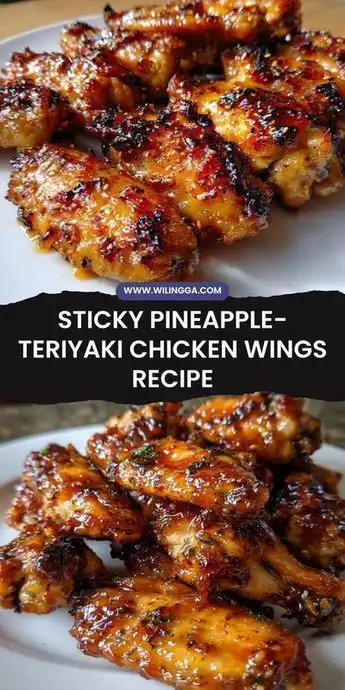
Sticky Pineapple-Teriyaki Chicken Wings are the ultimate fusion appetizer—sweet, savory, tangy, and irresistibly glossy. Combining the tropical brightness of fresh pineapple with the deep umami richness of traditional teriyaki, these wings deliver bold flavor in every bite. Perfect for game day gatherings, summer barbecues, holiday buffets, or even as a showstopping weeknight dinner, they strike the ideal balance between restaurant-quality indulgence and home-kitchen accessibility. Their signature sticky glaze clings luxuriously to crispy, golden-brown wings—creating a textural symphony that’s both comforting and adventurous. Whether you’re new to Asian-inspired cooking or a seasoned griller, this recipe invites creativity, encourages layering of flavors, and rewards patience with unforgettable results.
The History
The evolution of Sticky Pineapple-Teriyaki Chicken Wings reflects a rich tapestry of culinary cross-pollination spanning centuries and continents. Teriyaki itself originates from Japan, where the word combines teri (luster or shine) and yaki (grilling or broiling)—a cooking technique dating back to the 17th century Edo period. Early teriyaki involved simmering fish or meat in a simple mixture of soy sauce, mirin, and sugar to create a glossy, caramelized finish. As Japanese immigrants settled in Hawaii in the late 19th and early 20th centuries, they adapted traditional techniques using locally abundant ingredients—most notably pineapple, introduced to the islands by Spanish explorers and later commercialized by James Dole in 1901. The marriage of sweet pineapple juice and syrup with savory-salty teriyaki became a hallmark of Hawaiian regional cuisine, later popularized across the U.S. mainland through tiki culture, mid-century supper clubs, and 1970s frozen food innovations. Meanwhile, chicken wings rose to national prominence after the 1964 invention of the Buffalo wing in Buffalo, NY—sparking decades of global wing experimentation. The fusion of teriyaki and pineapple with chicken wings gained momentum in the 1990s and 2000s via food television, Asian-American chefs redefining fusion, and the rise of gourmet wing chains. Today, Sticky Pineapple-Teriyaki Chicken Wings represent more than a recipe—they’re a delicious testament to migration, adaptation, innovation, and the universal joy of communal eating.
Ingredients Breakdown
Every exceptional dish begins with intentionality—and this recipe is no exception. Each ingredient plays a precise, synergistic role in building complexity, texture, and balance:
- Chicken wings (3–4 lbs): Use whole wings (flats and drumettes) for optimal meat-to-skin ratio and structural integrity during cooking. Skin-on is non-negotiable—it renders beautifully, crisps up, and carries the glaze. Avoid pre-cut or thawed-from-frozen wings with excess ice crystals, which inhibit browning.
- Soy sauce (low-sodium preferred): Provides foundational umami and saltiness. Low-sodium versions give better control over final salinity, especially when combined with salty elements like fish sauce or fermented black bean paste (optional).
- Unseasoned rice vinegar: Adds bright acidity to cut through richness and prevent cloying sweetness. Never substitute with apple cider or white vinegar—the delicate, mellow tartness of rice vinegar is essential.
- Fresh pineapple juice (not from concentrate): The soul of the glaze. Freshly pressed juice delivers enzymatic brightness (bromelain), subtle floral notes, and natural pectin for viscosity. Canned or bottled juice often contains added sugars, preservatives, and diminished aromatic compounds.
- Pineapple chunks (fresh or grilled): Used both in the glaze (blended for body) and as garnish. Fresh pineapple contributes fiber, vitamin C, and bromelain—which also tenderizes proteins subtly during marination.
- Light brown sugar: Offers molasses depth and moisture retention. Dark brown sugar can be used for richer notes, but may darken the glaze excessively. Coconut sugar is an excellent unrefined alternative with lower glycemic impact.
- Garlic and fresh ginger (grated, not powdered): Raw aromatics provide volatile oils and enzymatic heat. Grating releases maximum flavor; minced garlic oxidizes quickly and turns bitter, while powdered versions lack nuance and freshness.
- Neutral high-smoke-point oil (avocado, grapeseed, or refined peanut): Essential for initial searing and achieving ultra-crisp skin without burning. Olive oil’s low smoke point makes it unsuitable for high-heat wing preparation.
- Optional umami boosters: A teaspoon of fish sauce (nam pla), fermented black bean paste, or shiitake powder deepens savoriness without detectable “fishiness.” Just ¼ tsp of toasted sesame oil stirred in at the end adds nutty fragrance.
- Garnishes (toasted sesame seeds, thinly sliced scallions, cilantro, lime wedges, micro mint): Provide visual contrast, textural pop, aromatic lift, and palate-refreshing acidity.
Step-by-Step Recipe
- Prep & Dry-Brine (1–24 hours ahead): Pat wings *extremely* dry with paper towels—moisture is the enemy of crispness. Place in a large bowl and toss with 1 tbsp baking powder (aluminum-free), 1 tsp kosher salt, and ½ tsp white pepper. Refrigerate uncovered on a wire rack over a baking sheet. This alkaline step breaks down peptide bonds in the skin, yielding unprecedented crunch and helping the glaze adhere.
- Make the Glaze (30 minutes ahead): In a heavy-bottomed saucepan, combine 1 cup fresh pineapple juice, ½ cup finely chopped fresh pineapple, ⅓ cup low-sodium soy sauce, ¼ cup light brown sugar, 2 tbsp rice vinegar, 3 cloves grated garlic, 1 tbsp grated ginger, and 1 tsp grated lemon zest. Bring to a gentle simmer over medium-low heat. Reduce by ⅓ (about 12–15 min), stirring frequently. Strain through a fine-mesh sieve into a clean bowl, pressing solids to extract all liquid. Discard solids. Let cool slightly, then whisk in 1 tsp toasted sesame oil and optional umami boosters. Reserve ⅓ cup for basting; refrigerate remainder for serving.
- Initial Roast (Crisp the Skin): Preheat oven to 425°F (220°C) with rack in lowest position. Line a rimmed baking sheet with foil and top with a wire rack. Arrange wings in single layer, skin-side up. Roast 45–50 minutes, flipping halfway, until deeply golden, puffed, and crispy—internal temp should reach 165°F (74°C) in thickest part. Do *not* glaze yet—glazing too early causes burning and steaming.
- Glaze & Finish (Stovetop Caramelization): Heat reserved glaze in a wide, shallow skillet over medium heat until bubbling. Add roasted wings in a single layer. Cook 2–3 minutes per side, gently turning with tongs, until glaze thickens into a viscous, lacquered coating that clings tightly. For extra gloss and char: broil 60 seconds skin-side up under high broiler (watch closely!).
- Rest & Serve: Transfer wings to a clean wire rack set over parchment for 3–5 minutes—this prevents soggy bottoms and allows glaze to set. Garnish generously and serve immediately with lime wedges and extra glaze on the side.
Tips
- Dryness is everything: Even 15 minutes of air-drying wings on a rack before baking dramatically improves crispness. For best results, dry-brine overnight.
- Don’t overcrowd the pan: Crowding creates steam instead of roasting—use two racks or bake in batches.
- Low-and-slow reduces splatter: When adding wings to hot glaze, reduce heat to medium-low and add gradually to avoid violent bubbling and spitting.
- Reserve glaze for finishing only: Never use raw glaze as a marinade unless boiled for 3+ minutes to kill bacteria—especially important with poultry.
- Double-glaze for intensity: After first coat sets, brush lightly with additional warmed glaze and return to warm oven (200°F) for 2 minutes—creates a glass-like sheen.
- Use a candy thermometer: Ideal glaze consistency hits 220–225°F (104–107°C)—the “firm ball” stage—ensuring perfect cling without dripping.
- Grill variation tip: Sear wings over direct high heat (450°F+), then move to indirect zone to finish. Baste only in last 5 minutes to avoid flare-ups.
- Crisp leftover wings: Reheat in air fryer at 375°F for 5–6 minutes—glaze will re-adhere beautifully without drying out meat.
Variations and Customizations
This recipe is a vibrant canvas—adaptable to dietary needs, seasonal produce, global pantry staples, and personal taste preferences:
- Spicy-Sweet Version: Add 1–2 tbsp sambal oelek, gochujang, or sriracha to glaze. Garnish with pickled jalapeños and crushed red pepper.
- Honey-Ginger Variation: Replace half the brown sugar with local raw honey and increase fresh ginger to 2 tbsp. Adds floral sweetness and warming spice.
- Smoky Bourbon-Pineapple: Stir 1 tbsp aged bourbon and ½ tsp smoked paprika into warm glaze. Deepens complexity with woody, caramelized notes.
- Vegan “Wings” Option: Use king oyster mushroom “scallops” or seitan cut into wing-shaped strips. Marinate 30 min in glaze + 1 tsp liquid smoke, then air-fry or roast.
- Low-Carb/Keto Adaptation: Substitute erythritol or allulose for sugar; use coconut aminos instead of soy sauce; thicken glaze with xanthan gum (¼ tsp) instead of reduction.
- Paleo/Whole30 Compliant: Use coconut aminos, date paste instead of brown sugar, and omit fish sauce. Thicken with simmered-down pineapple puree.
- Char Siu-Inspired Twist: Add 1 tsp Chinese five-spice powder, ½ tsp star anise (steeped & removed), and 1 tbsp hoisin sauce to glaze.
- Coconut-Teriyaki Fusion: Replace ¼ cup pineapple juice with full-fat canned coconut milk; garnish with toasted coconut flakes and kaffir lime leaves.
- Herbal Brightness: Infuse glaze with lemongrass stalks or Thai basil stems while reducing; finish with torn Thai basil leaves.
- Breakfast Wing Board: Serve alongside coconut rice, mango salsa, soft-boiled eggs, and nori strips for an elevated brunch experience.
Health Considerations and Nutritional Value
While traditionally viewed as indulgent, Sticky Pineapple-Teriyaki Chicken Wings can be crafted with thoughtful nutrition in mind—without sacrificing satisfaction. A standard serving (4–5 medium wings, ~250g) provides approximately:
- Calories: 380–420 kcal (varies by skin crispness and glaze thickness)
- Protein: 32–36g (high-quality complete protein supporting muscle maintenance and satiety)
- Fat: 22–26g (mostly unsaturated from healthy oils; skin contributes monounsaturated fats)
- Carbohydrates: 18–22g (primarily from natural fruit sugars and minimal added sweeteners)
- Vitamin C: ~45mg (≈50% DV from fresh pineapple—supports immunity and collagen synthesis)
- Manganese: ~0.8mg (≈35% DV—essential for bone health and antioxidant enzyme function)
- Bromelain: Active proteolytic enzyme in fresh pineapple aids digestion and exhibits anti-inflammatory properties.
Smart Swaps for Wellness Goals:
- Lower Sodium: Use tamari or coconut aminos; rinse brined wings before roasting; skip added salt in glaze.
- Blood Sugar Balance: Pair with fiber-rich sides (shredded cabbage slaw, edamame, quinoa) to slow glucose absorption.
- Gut Health Boost: Add fermented pineapple chutney on the side or serve with kimchi for probiotics.
- Heart-Friendly: Choose pasture-raised wings (higher omega-3s); use avocado oil; include garlic and ginger known for cardiovascular benefits.
- Allergen-Conscious: Ensure gluten-free tamari is used if avoiding wheat; verify pineapple juice has no sulfite preservatives for sensitive individuals.
Note: While moderate consumption fits well within balanced diets, those managing hypertension, diabetes, or kidney disease should consult a registered dietitian to personalize portions and ingredient choices.
Ingredients
- 3–4 lbs whole chicken wings (flats and drumettes), tips removed
- 1 tbsp aluminum-free baking powder
- 1 tsp kosher salt
- ½ tsp freshly ground white pepper
- 2 tbsp neutral high-smoke-point oil (avocado, grapeseed, or refined peanut)
- 1 cup freshly pressed pineapple juice (from ~2 cups fresh pineapple chunks)
- ½ cup finely chopped fresh pineapple (reserve remaining for garnish)
- ⅓ cup low-sodium soy sauce (or tamari for gluten-free)
- ¼ cup light brown sugar (or coconut sugar)
- 2 tbsp unseasoned rice vinegar
- 3 cloves garlic, finely grated
- 1 tbsp fresh ginger, finely grated
- 1 tsp finely grated lemon zest
- 1 tsp toasted sesame oil
- Optional umami boosters: 1 tsp fish sauce, ½ tsp fermented black bean paste, or ¼ tsp shiitake powder
- Garnishes: Toasted white sesame seeds, thinly sliced scallions, fresh cilantro leaves, lime wedges, micro mint
Directions
- Prep Wings: Pat wings *thoroughly* dry with paper towels. Place in large bowl; toss with baking powder, salt, and white pepper until evenly coated. Arrange in single layer on wire rack set over baking sheet. Refrigerate uncovered for minimum 1 hour, up to 24 hours.
- Make Glaze: In heavy-bottomed saucepan, combine pineapple juice, chopped pineapple, soy sauce, brown sugar, rice vinegar, grated garlic, grated ginger, and lemon zest. Bring to gentle simmer over medium-low heat. Reduce by one-third (12–15 minutes), stirring occasionally. Strain through fine-mesh sieve into bowl, pressing solids. Cool 10 minutes, then whisk in toasted sesame oil and optional umami boosters. Set aside ⅓ cup for basting; refrigerate rest.
- Roast Wings: Preheat oven to 425°F (220°C) with rack in lowest position. Line rimmed baking sheet with foil; place wire rack on top. Arrange wings skin-side up in single layer. Brush lightly with oil. Roast 45–50 minutes, flipping halfway, until deeply golden, puffed, and crispy. Internal temperature must reach 165°F (74°C). Remove and let rest 5 minutes.
- Glaze & Finish: Heat reserved ⅓ cup glaze in wide skillet over medium heat until bubbling. Carefully add roasted wings in single layer. Cook 2–3 minutes, gently turning once, until glaze thickens and coats wings uniformly. For extra shine and slight char, transfer to broiler-safe pan and broil 60 seconds skin-side up—watch constantly.
- Serve: Transfer wings to clean wire rack for 3–5 minutes to set glaze. Garnish lavishly with sesame seeds, scallions, cilantro, lime wedges, and reserved pineapple chunks. Serve immediately with extra chilled glaze on the side.
FAQ
- Can I make these wings ahead of time?
- Yes! Roast wings up to 2 days ahead and refrigerate. Re-crisp in air fryer at 375°F for 5–6 minutes, then glaze and finish just before serving. Glaze keeps refrigerated for up to 10 days or frozen for 3 months.
- Why use baking powder on wings?
- Baking powder (sodium bicarbonate + acid) raises skin pH, accelerating the Maillard reaction and breaking down collagen—resulting in dramatically crispier, blistered skin without frying. It’s a chef-secret technique validated by food science (see J. Kenji López-Alt’s experiments).
- Can I use canned pineapple juice?
- It works in a pinch—but expect muted flavor, higher sodium, added preservatives (like sulfites), and less enzymatic activity. If using, choose 100% juice with no added sugar or citric acid.
- My glaze isn’t sticking—what went wrong?
- Three common causes: (1) Wings were glazed while still cold or damp—always glaze hot, dry wings; (2) Glaze wasn’t reduced enough—simmer until thickened to coat the back of a spoon; (3) Excess oil on wings—pat dry again before glazing.
- Are chicken wing flats or drumettes better?
- Both offer distinct experiences: drumettes have more meat and a familiar “bone-in wing” feel; flats have higher skin-to-meat ratio and crisp more uniformly. For authenticity and texture balance, use a 50/50 mix.
- Can I grill these instead of bake?
- Absolutely. Sear over direct high heat (450–500°F) for 8–10 minutes per side until skin blisters, then move to indirect zone. Glaze only in final 3–4 minutes to prevent burning. Use a spray bottle of water to tame flare-ups.
- How do I keep wings warm for a party?
- Place finished wings on a wire rack over a sheet pan in a 200°F oven for up to 30 minutes. Avoid covering—they’ll steam and lose crispness. Refresh under broiler 60 seconds before serving.
- Is there a vegetarian version that mimics the texture?
- King oyster mushrooms, sliced lengthwise into “wings,” marinated in glaze + 1 tsp liquid smoke, then air-fried at 400°F for 18–20 minutes (flip halfway) yields astonishingly meaty, chewy, and glossy results.
- What sides pair best with these wings?
- Balance the richness with cooling, crunchy, and acidic accompaniments: cucumber-mint salad with rice vinegar, quick-pickled daikon radish, coconut-lime slaw, steamed bok choy with sesame-ginger drizzle, or jasmine rice infused with pandan leaf.
- Can I freeze glazed wings?
- Not recommended—freezing breaks down the glaze’s emulsion and makes skin rubbery. Freeze *un-glazed* roasted wings instead; thaw overnight, re-crisp, then glaze fresh.
Summary
Sticky Pineapple-Teriyaki Chicken Wings are a masterclass in balance—where the bright acidity of fresh pineapple harmonizes with the deep umami of slow-simmered soy and ginger, all clinging to impossibly crisp, golden-brown chicken skin achieved through scientific dry-brining. They’re endlessly adaptable, nutritionally thoughtful, steeped in cultural storytelling, and guaranteed to spark conversation, cravings, and repeat requests.
Whether you’re honoring tradition, experimenting boldly, or simply craving something deeply flavorful and undeniably satisfying, this recipe delivers restaurant-caliber results with approachable technique—proving that extraordinary taste begins with respect for ingredients, patience in process, and joy in sharing.