
Introduction
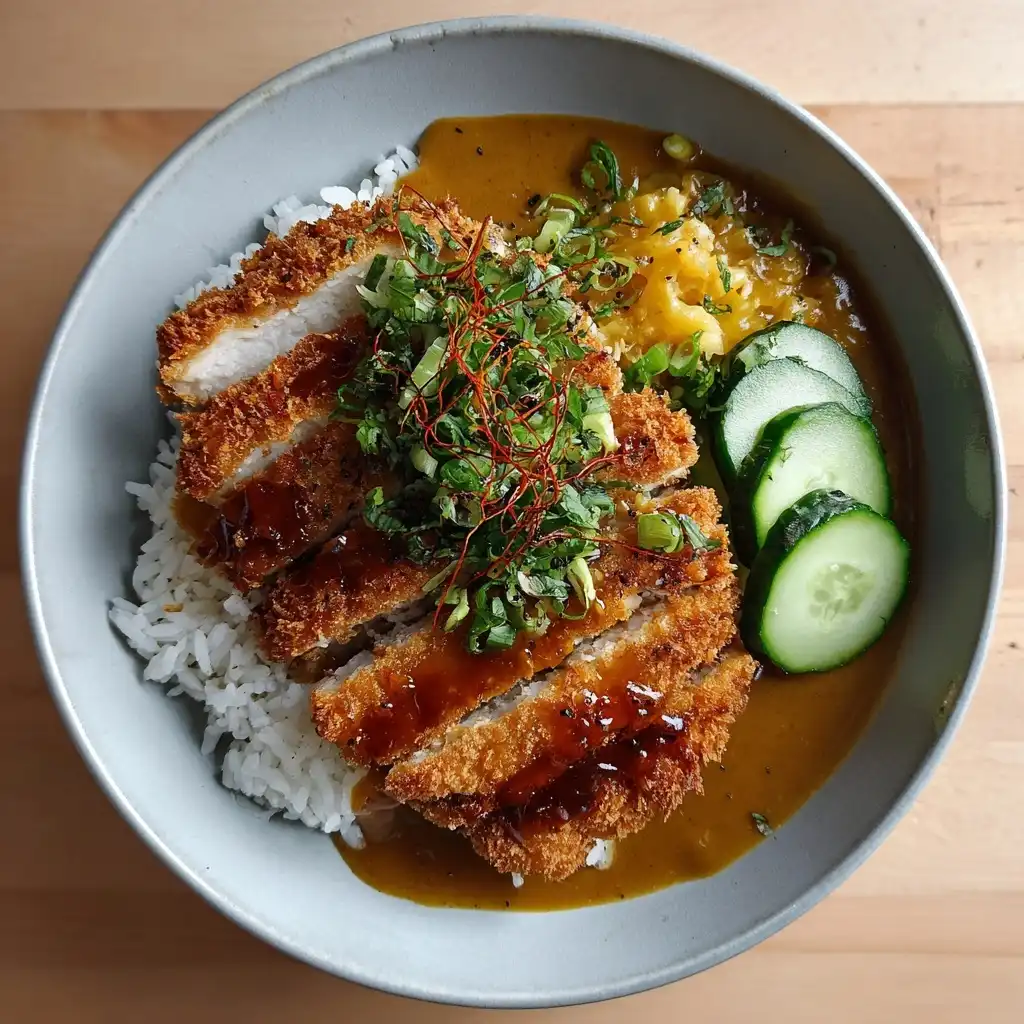
Chicken Katsu Curry is a beloved fusion dish that epitomizes the harmonious marriage of Japanese culinary tradition and Western-influenced comfort food. At its heart lies a crispy, golden-breaded chicken cutlet—inspired by the iconic Japanese katsu (derived from the English word “cutlet”)—served atop or nestled within a rich, aromatic, mildly spiced Japanese-style curry sauce. Unlike its Indian or Thai counterparts, Japanese curry is thick, velvety, subtly sweet, deeply savory, and gently warming—not fiery—making it exceptionally approachable for all ages and palates. This dish is a staple in homes, school cafeterias, family restaurants (shokudō), and convenience stores across Japan, and has surged in global popularity thanks to its satisfying texture contrast, comforting warmth, and remarkable versatility. Whether enjoyed as a weeknight dinner, bento box centerpiece, or weekend treat, Chicken Katsu Curry delivers soul-soothing satisfaction with every bite—and it’s surprisingly accessible to prepare at home with just a few key techniques and quality ingredients.
The History
The origins of Chicken Katsu Curry trace back to the late 19th and early 20th centuries during Japan’s Meiji Restoration—a period marked by rapid modernization and deliberate cultural exchange with Europe and North America. British naval influence introduced the concept of breaded, fried cutlets (similar to British “escalope” or German “Wiener Schnitzel”) to Japan in the 1860s. By the 1890s, Japanese chefs adapted this technique using local poultry and pork, giving rise to tonkatsu (pork katsu) and later torikatsu (chicken katsu). Simultaneously, curry—originally brought to Japan by the British Royal Navy in the 1870s—was embraced and profoundly localized. The Japanese Imperial Navy adopted curry as a nutritious, anti-scurvy meal for sailors; cooks thickened it with roux, added apples and honey for sweetness, and balanced heat with soy sauce and miso. By the 1920s, pre-made curry roux blocks (like S&B Golden Curry and House Vermont Curry) revolutionized home cooking, making curry accessible and consistent. The pairing of katsu with curry emerged organically in postwar Japan: street vendors and small eateries began serving the crunchy cutlet alongside the hearty sauce—both individually popular, but together forming an irresistible textural and flavor synergy. Over time, this combination evolved into a national comfort food icon, symbolizing Japan’s culinary ingenuity in adapting foreign influences into something uniquely, unmistakably Japanese.
Ingredients Breakdown
Understanding each component of Chicken Katsu Curry is essential—not only for authenticity but also for mastering balance, texture, and depth. The dish consists of three core elements: the chicken katsu, the curry sauce, and the supporting base (typically steamed Japanese short-grain rice). Each plays a distinct role:
- For the Chicken Katsu: Boneless, skinless chicken breasts or thighs (thighs offer superior juiciness and forgiveness), all-purpose flour (for initial dredging and adhesion), eggs (preferably at room temperature for even coating), panko breadcrumbs (the defining ingredient—light, airy, ultra-crisp, and irregularly shaped for maximum crunch), neutral high-smoke-point oil (like canola, vegetable, or rice bran oil) for frying, plus seasonings like salt, white pepper, garlic powder, and sometimes grated ginger or yuzu zest for aromatic nuance.
- For the Japanese Curry Sauce: Aromatics (onion, carrot, potato—diced uniformly for even cooking), garlic and fresh ginger (minced or grated), Japanese curry roux blocks (the cornerstone—containing wheat flour, fat, spices like turmeric, cumin, coriander, cinnamon, and sweeteners like sugar or honey), liquid base (dashi-infused water or low-sodium chicken broth for umami depth), soy sauce (for saltiness and color), mirin (for subtle sweetness and gloss), and optional enhancements like apple purée (for natural sweetness and body), tomato paste (for acidity and richness), or a splash of coconut milk (for creaminess).
- For Serving & Garnish: Steamed Japanese short-grain rice (sticky, slightly sweet, and essential for soaking up sauce), pickled vegetables (fukujinzuke or tsukemono) for brightness and palate cleansing, nori strips or toasted sesame seeds for visual appeal and nuttiness, and optional garnishes like finely chopped scallions, shichimi togarashi (Japanese seven-spice) for gentle heat, or a wedge of lemon or lime for acidity.
Crucially, Japanese curry roux is not interchangeable with Indian or Thai curry pastes—it’s a proprietary blend designed to thicken, flavor, and unify the sauce in one step. Its composition varies by brand (mild “mild,” robust “spicy,” fruity “Vermont,” or rich “Java”), allowing cooks to tailor intensity and character.
Step-by-Step Recipe
- Prepare the Chicken: Pound chicken breasts to an even ½-inch thickness using a meat mallet or rolling pin (place between parchment paper to prevent splatter). Season both sides generously with salt and white pepper. Let rest 10 minutes for seasoning absorption.
- Set Up Breading Station: Arrange three shallow dishes: (1) All-purpose flour seasoned with a pinch of salt and garlic powder; (2) Beaten eggs mixed with 1 tbsp water or milk for tenderness; (3) Panko breadcrumbs—lightly crushed with fingers for extra fluffiness (optional but recommended). For optimal adhesion, chill the breaded chicken on a wire rack for 15–20 minutes before frying.
- Bread the Chicken: Dredge each piece thoroughly in flour (shaking off excess), dip fully into egg mixture (letting excess drip), then press firmly into panko—coating evenly and ensuring full coverage. Flip and repeat for the other side. Gently shake off loose crumbs.
- Fry to Perfection: Heat ½ inch of oil in a heavy-bottomed skillet (cast iron preferred) to 340–350°F (170–175°C)—use a thermometer for accuracy. Carefully lower chicken into hot oil, skin-side down if using thighs, and fry undisturbed for 3–4 minutes until deep golden and crisp. Flip and cook another 3–4 minutes until internal temperature reaches 165°F (74°C) and crust is uniformly bubbly and bronzed. Drain vertically on a wire rack over paper towels—not a plate—to preserve crunch. Rest 2–3 minutes before slicing.
- Prepare the Curry Base: While chicken rests, sauté diced onions in a separate pot over medium-low heat with 1 tbsp oil until translucent (~5 min). Add minced garlic and ginger; cook 30 seconds until fragrant. Stir in carrots and potatoes; cook 3–4 minutes to soften edges. Pour in 3 cups warm dashi or broth, bring to a simmer, cover, and cook 12–15 minutes until vegetables are tender but not mushy.
- Thicken & Flavor the Curry: Reduce heat to low. Whisk in curry roux blocks one at a time, breaking them into small pieces. Stir constantly for 3–5 minutes until fully dissolved and sauce thickens to a glossy, coat-the-back-of-a-spoon consistency. Add 1 tsp soy sauce, 1 tsp mirin, and 1 tbsp apple purée (if using); simmer gently for 5 more minutes, stirring frequently to prevent sticking. Adjust thickness with reserved broth or water if too thick; thin with a cornstarch slurry if too thin.
- Assemble & Serve: Spoon generous portions of hot, fluffy Japanese rice into wide, shallow bowls. Place 1–2 sliced katsu cutlets diagonally across the rice. Ladle warm curry sauce generously over and around the chicken—ensuring some pools beside the rice for dipping. Garnish with fukujinzuke, nori, scallions, and a dusting of shichimi togarashi.
Tips
- Panko is Non-Negotiable: Regular breadcrumbs yield a dense, mealy crust. Authentic panko—especially Japanese brands like Yamasa or Kikkoman—is airy, flaky, and delivers unparalleled crunch. Store unused panko in an airtight container in the freezer to maintain freshness and prevent sogginess.
- Temperature Control is Key: Oil that’s too cool leads to greasy, soggy katsu; oil that’s too hot burns the exterior before the interior cooks. Use a deep-fry thermometer—and reheat oil between batches to maintain 340–350°F. Never overcrowd the pan—fry one piece at a time for even browning.
- Rest Before Slicing: Let fried katsu rest 2–3 minutes before cutting. This allows residual heat to finish cooking the center and prevents juices from escaping, keeping it moist. Slice against the grain at a 45° angle for tender, elegant pieces.
- Curry Roux Mastery: Always add roux off direct heat or over lowest possible flame. Whisk vigorously in one direction to avoid lumps. If sauce separates, whisk in 1 tsp warm broth and continue stirring over low heat until emulsified.
- Dashi Elevates Everything: Even a simple kombu-dashi (soaked dried kelp in cold water, gently heated to 170°F, then removed) adds profound umami depth to the curry base—far surpassing plain water. Instant dashi granules are acceptable, but avoid overly salty versions.
- Make-Ahead Friendly: Breaded, uncooked katsu can be frozen on a parchment-lined tray, then transferred to bags for up to 3 months. Fry from frozen—add 1–2 minutes per side. Curry sauce tastes better the next day; refrigerate up to 5 days or freeze for 3 months.
- Rice Matters: Use Japanese short-grain rice (e.g., Koshihikari or Calrose), rinsed until water runs clear, cooked with a 1:1.1 rice-to-water ratio, and rested covered for 10 minutes before fluffing. Sticky texture holds sauce beautifully.
Variations and Customizations
Chicken Katsu Curry is wonderfully adaptable—reflecting regional preferences, dietary needs, and creative flair. Here are widely celebrated and innovative variations:
- Protein Swaps: Tonkatsu Curry (breaded, fried pork loin or tenderloin), Menchi Katsu Curry (minced meat-and-onion croquettes), Shrimp Katsu Curry (large tiger shrimp coated in panko), or Vegetarian Katsu (breaded tofu, seitan, or king oyster mushroom “scallops”).
- Curry Style Twists: Vermont Curry (fruit-forward, mildly sweet with apple and banana notes), Java Curry (richer, spicier, with deeper caramelization), Golden Curry Mild (ideal for children or spice-sensitive palates), or Homemade Roux (a labor-of-love blend of butter, flour, garam masala, turmeric, cinnamon, brown sugar, and cocoa powder for complexity).
- Textural Enhancements: Double-fried katsu (like Japanese karaage) for extreme crunch; tempura-battered katsu for lighter airiness; or panko mixed with crushed melon soda crackers (ringo senbei) for nostalgic sweetness.
- Sauce Innovations: Miso-curry fusion (stir in 1 tbsp red miso at the end), coconut curry (replace ½ cup broth with light coconut milk), yuzu-kissed curry (finish with yuzu juice and zest), or black garlic curry (infuse oil with black garlic before sautéing aromatics).
- Global Fusions: Katsu Curry Udon (serve over hot udon noodles instead of rice), Katsu Curry Pizza (top pizza dough with curry sauce, katsu strips, mozzarella, and scallions), Katsu Curry Croquettes (mix leftover katsu and curry into mashed potato balls, bread, and fry), or Katsu Curry Ramen (broth infused with curry, topped with sliced katsu, nori, and soft-boiled egg).
- Dietary Adaptations: Gluten-free katsu (use rice flour + GF panko + tamari), air-fryer katsu (spray breaded chicken with oil, air-fry at 400°F for 12–15 mins, flipping halfway), keto/low-carb (almond flour + crushed pork rinds crust, cauliflower rice base), or vegan (tofu katsu + vegan curry roux + mushroom dashi).
Health Considerations and Nutritional Value
Chicken Katsu Curry offers a balanced profile when prepared mindfully—but its nutritional impact hinges significantly on preparation methods and ingredient choices. A standard restaurant serving (1 katsu + 1 cup curry + 1 cup rice) ranges from 650–850 kcal, with ~35–45g protein, 70–90g carbohydrates, and 20–30g fat. The chicken breast provides lean, complete protein rich in B vitamins (especially B6 and niacin), selenium, and phosphorus. Potatoes and carrots contribute potassium, vitamin A (as beta-carotene), and dietary fiber—especially when skins are left on. Japanese curry roux contains added sugars (often 3–5g per serving) and sodium (600–900mg), so portion control and label reading are advised for those managing blood pressure or diabetes. Health-conscious modifications include: baking or air-frying katsu (reducing fat by 30–50%), using whole-grain or mixed rice (brown + white) for increased fiber and slower glucose release, boosting vegetable content (adding spinach, bell peppers, or green beans to curry), reducing roux by 25% and enhancing umami with dried shiitake or nutritional yeast, and choosing low-sodium soy sauce or tamari. Notably, the dish naturally contains zero trans fats when made with quality oils, and the ginger-garlic-onion base offers anti-inflammatory and immune-supportive phytonutrients. As with any comfort food, moderation and mindful pairing—such as serving with a side of miso soup and a small portion of pickled vegetables—enhance overall nutritional harmony without sacrificing enjoyment.
Ingredients
For the Chicken Katsu (Serves 4):
• 4 boneless, skinless chicken breasts (about 6 oz / 170g each), or chicken thighs for extra juiciness
• 1 tsp fine sea salt, divided
• ½ tsp freshly ground white pepper
• 1 cup all-purpose flour
• 2 large eggs, room temperature
• 2 tbsp milk or water
• 2 cups Japanese-style panko breadcrumbs (not Italian-style)
• 1 tsp garlic powder (optional, for depth)
• Neutral frying oil (canola, rice bran, or grapeseed), for frying (~1–1.5 cups)
For the Japanese Curry Sauce (Serves 4–6):
• 2 tbsp neutral oil (for sautéing)
• 1 large yellow onion (about 2 cups diced)
• 3 medium carrots (about 1.5 cups diced)
• 2 medium Yukon Gold or Japanese potatoes (about 1.5 cups diced, peeled or unpeeled)
• 4 cloves garlic, finely minced
• 1 tbsp fresh ginger, grated or finely minced
• 3 cups warm dashi (or low-sodium chicken broth)
• 1 (100g) block Japanese curry roux (e.g., S&B Golden Curry Mild or House Vermont Curry)
• 1 tbsp soy sauce (or tamari for gluten-free)
• 1 tsp mirin
• 1 tbsp unsweetened apple purée or very finely grated Fuji apple (optional, for balance)
• 1 tsp tomato paste (optional, for richness)
For Serving:
• 4–6 cups hot, freshly cooked Japanese short-grain rice
• Fukujinzuke (Japanese mixed pickle) or quick-pickled daikon/carrot
• Toasted nori strips or black sesame seeds
• Thinly sliced scallions
• Shichimi togarashi (Japanese seven-spice blend), to taste
• Lime or lemon wedges (optional, for brightness)
Directions
- Prepare Chicken: Place chicken breasts between two sheets of parchment paper. Using a meat mallet or heavy skillet, pound evenly to ½-inch thickness. Sprinkle both sides with ½ tsp salt and white pepper. Let sit at room temperature for 10 minutes.
- Set Up Breading Station: In three separate shallow bowls: (1) Flour + remaining ½ tsp salt + garlic powder; (2) Eggs + milk, whisked until uniform; (3) Panko breadcrumbs. For best results, spread panko on a tray and lightly crush with fingertips—this creates varied crumb sizes for enhanced crunch.
- Bread the Chicken: Working with one piece at a time: dredge thoroughly in flour, shaking off excess. Dip fully into egg mixture, letting surplus drip off. Press firmly into panko, turning and pressing to coat all sides evenly. Transfer to a wire rack. Repeat. Chill breaded chicken, uncovered, for 15–20 minutes—this sets the crust and prevents slippage during frying.
- Heat Oil & Fry: In a heavy 12-inch skillet (cast iron ideal), heat ½ inch oil to 340–350°F over medium heat. Test with a wooden chopstick—if bubbles form steadily around it, temperature is ready. Carefully lower one chicken piece into oil—do not splash. Fry 3–4 minutes until deep golden and crisp on bottom. Flip and fry another 3–4 minutes until internal temperature reaches 165°F and crust is uniformly blistered. Transfer to a wire rack set over paper towels. Repeat with remaining chicken, reheating oil to target temp between batches.
- Make Curry Base: In a heavy-bottomed Dutch oven or deep pot, heat 2 tbsp oil over medium-low heat. Add onions and sauté 5–6 minutes until soft and translucent. Stir in garlic and ginger; cook 30 seconds until fragrant. Add carrots and potatoes; stir 3–4 minutes to lightly caramelize edges. Pour in warm dashi/broth, increase heat to medium-high, and bring to a gentle simmer. Reduce heat to low, cover, and cook 12–15 minutes—stirring once—until vegetables pierce easily with a fork but retain shape.
- Finish Curry Sauce: Lower heat to bare minimum. Break curry roux into small pieces. Whisk in one piece at a time, waiting for each to dissolve fully before adding the next. Stir constantly for 4–5 minutes until sauce thickens, glistens, and coats the back of a spoon. Stir in soy sauce, mirin, apple purée, and tomato paste (if using). Simmer uncovered for 5 minutes, stirring frequently. Taste and adjust—add a pinch of sugar if too sharp, a splash of broth if too thick, or a few drops of vinegar if too flat.
- Assemble & Serve: Portion hot rice into four wide, shallow bowls. Slice rested katsu on a sharp diagonal into ½-inch strips. Arrange 1–2 slices per bowl over rice. Ladle ¾–1 cup warm curry sauce generously over chicken and alongside rice. Top with fukujinzuke, nori, scallions, and a light sprinkle of shichimi togarashi. Serve immediately with chopsticks and a spoon.
FAQ
- Can I make Chicken Katsu Curry ahead of time?
- Absolutely. Breaded, uncooked katsu freezes beautifully for up to 3 months—just place on a parchment-lined tray, freeze solid, then transfer to a freezer bag. Fry directly from frozen, adding 1–2 minutes per side. Curry sauce tastes even better after 1–2 days in the fridge (up to 5 days) or frozen for 3 months. Reheat gently on the stove—never boil, as roux may separate.
- Why does my katsu crust fall off?
- Most commonly due to insufficient resting time after breading (chill for 15–20 min!), excess moisture on chicken (pat dry thoroughly before flouring), or oil that’s too cool (causing steam to lift the crust). Also ensure you’re pressing panko firmly onto the chicken—not just dusting it on.
- Can I bake or air-fry the katsu instead of frying?
- Yes—with caveats. For baking: preheat oven to 425°F, place breaded chicken on a wire rack over a baking sheet, spray generously with oil, and bake 15–18 minutes, flipping halfway. For air-frying: preheat to 400°F, spray basket and katsu with oil, cook 12–15 minutes, flipping at 7 minutes. Both methods yield less crunch than deep-frying but are significantly lower in fat.
- What’s the difference between Japanese curry and Indian curry?
- Japanese curry is thicker, sweeter (from fruit, sugar, or honey), milder in heat, and uses roux for binding—resulting in a stew-like consistency. Indian curry relies on spice blends (garam masala), yogurt or cream, tomatoes, and slow-simmered aromatics, yielding a more complex, layered, and often hotter profile. They’re distinct traditions—not derivatives.
- Is Chicken Katsu Curry gluten-free?
- Not traditionally—panko, flour, and most curry roux contain wheat. However, it’s easily adapted: use rice flour, certified GF panko (like Ian’s or Kinnikun), tamari instead of soy sauce, and gluten-free curry roux (Kikkoman offers a GF version in Japan; or make your own roux with GF flour and spices).
- Can I use leftover curry for other dishes?
- Brilliant idea! Leftover curry shines in curry rice balls (curry onigiri), curry-filled omelets (curry tamagoyaki), curry mac and cheese, curry-stuffed pancakes (okonomiyaki), or as a braising liquid for tofu or chickpeas. Freeze in ice cube trays for instant flavor boosts in soups and stews.
- What sides pair well with Chicken Katsu Curry?
- Classic accompaniments include miso soup, sunomono (cucumber salad), edamame, blanched spinach with sesame, or a simple green salad with ponzu dressing. For authenticity, serve with a small dish of Japanese pickles (tsukemono) to cut through richness.
- My curry turned out too sweet/salty/bland—how do I fix it?
- Too sweet? Add a splash of rice vinegar or citrus juice, or a pinch of cayenne. Too salty? Dilute with extra broth or dashi, or add a peeled, boiled potato to absorb salt (discard after 10 minutes). Too bland? Boost umami with ½ tsp soy sauce or miso, a pinch of MSG (optional), or a dash of fish sauce. Always adjust gradually and taste after each addition.
Summary
Chicken Katsu Curry is a masterclass in Japanese comfort food—melding the satisfying crunch of expertly breaded, golden-fried chicken with the rich, subtly sweet, and deeply savory embrace of house-simmered Japanese curry, all anchored by perfectly steamed short-grain rice.
With its storied Meiji-era roots, flexible customization, and forgiving yet technique-rewarding preparation, it’s a dish that welcomes beginners and inspires lifelong mastery—equally at home in a Tokyo kitchen and your own.