
Introduction
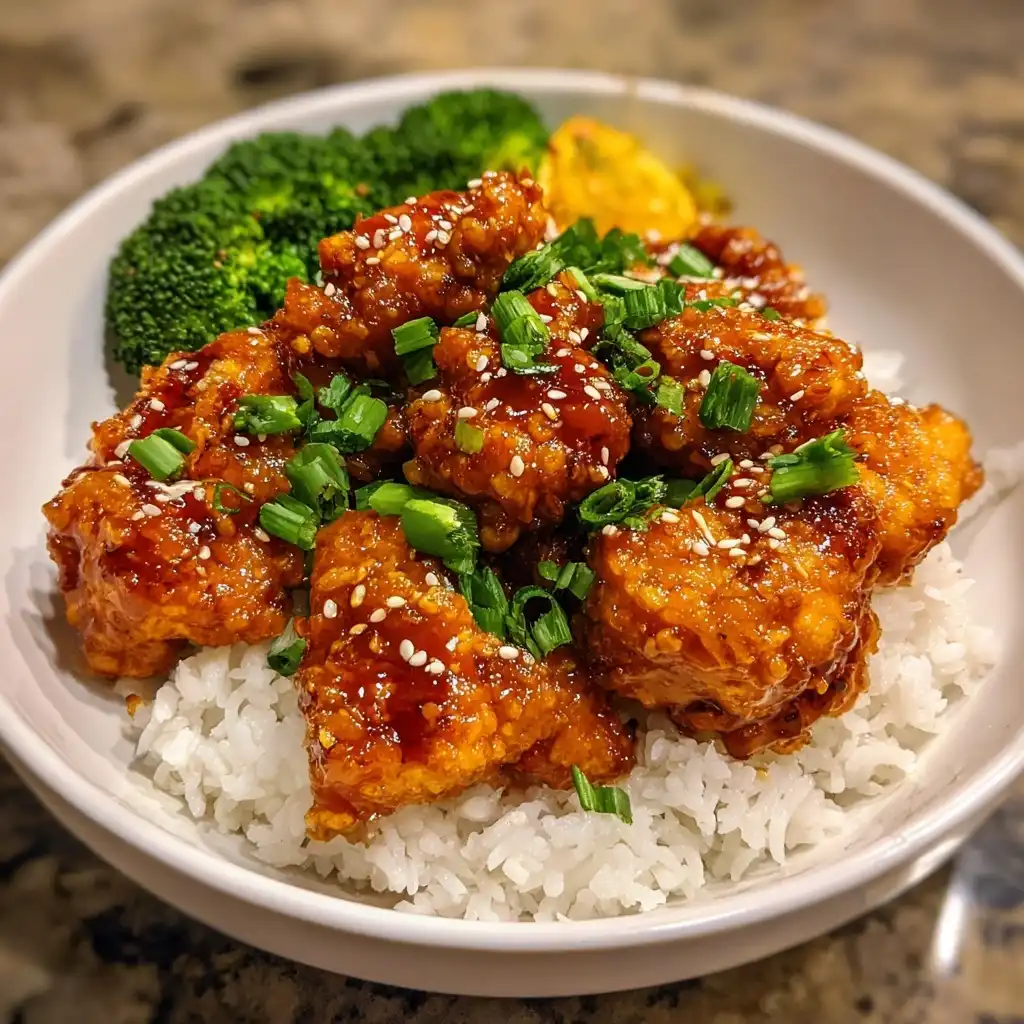
General Tso’s Chicken is a beloved staple of American Chinese cuisine — a dazzling fusion dish that marries bold, sweet-and-spicy flavors with tender, crispy chicken. Though rarely found in mainland China, it has become an iconic symbol of culinary adaptation, comfort food nostalgia, and the ingenuity of immigrant chefs who reimagined traditional techniques for new palates. Its glossy, amber-hued sauce clings luxuriously to golden-brown morsels of chicken, punctuated by the gentle heat of dried chilies and the aromatic depth of ginger and garlic. Whether served over steamed jasmine rice, nestled beside stir-fried broccoli, or enjoyed straight from the takeout container, General Tso’s Chicken delivers an irresistible balance of crunch, tang, heat, and umami — a dish that transcends its humble origins to occupy a cherished place in dinner rotations across North America and beyond.
The History
The origins of General Tso’s Chicken are steeped in myth, migration, and culinary reinvention. Contrary to popular belief, the dish bears no historical connection to Zuo Zongtang (1812–1885), the Qing Dynasty general and statesman after whom it is named. General Zuo was a celebrated military leader and regional governor known for his administrative reforms and suppression of rebellions — not for founding a spicy chicken recipe. In fact, there is no record of this dish existing in Hunan province (Zuo’s native region) prior to the mid-20th century.
The dish is widely attributed to Chef Peng Chang-kuei (1919–2016), a renowned Hunanese chef who fled mainland China for Taiwan in 1949 following the Communist revolution. In Taipei during the 1950s, Chef Peng created a dish he called “General Tso’s Chicken” as a tribute to the esteemed general — a gesture blending cultural reverence with gastronomic storytelling. His original version was notably spicier, less sweet, and more savory, featuring lightly battered, pan-fried chicken tossed in a fiery, garlic-forward sauce with pickled vegetables — reflecting authentic Hunan “gan guo” (dry pot) cooking principles.
The dish crossed the Pacific when Chef Peng opened a restaurant in New York City in 1973. To appeal to American tastes — which at the time favored milder, sweeter, and more texturally indulgent foods — the recipe evolved dramatically. Sugar increased, chili heat moderated, batter became thicker and crispier, and deep-frying replaced pan-frying. The addition of sesame oil, rice vinegar, and cornstarch slurry yielded the glossy, clingy sauce we know today. By the 1980s, General Tso’s Chicken had proliferated through national chains and local takeout joints alike, becoming so ubiquitous that it inspired parodies, academic analyses, and even diplomatic curiosity — including a 2011 visit by then-U.S. Secretary of State Hillary Clinton to Chef Peng’s Taipei restaurant.
Today, the dish stands as a powerful testament to culinary diaspora: a transnational artifact shaped by displacement, entrepreneurship, cultural negotiation, and evolving consumer preferences — simultaneously foreign and familiar, invented yet deeply authentic in its own context.
Ingredients Breakdown
Understanding each component reveals why General Tso’s Chicken achieves such remarkable harmony:
- Chicken Breast or Thighs: Boneless, skinless chicken breast offers lean tenderness, while thighs provide richer flavor and superior moisture retention during frying. Many chefs prefer a 50/50 blend for optimal texture and juiciness.
- Marinade (Shaoxing Wine, Soy Sauce, Egg White, Cornstarch): Shaoxing wine deodorizes and adds subtle complexity; light soy sauce seasons without overwhelming; egg white tenderizes and helps binding; cornstarch creates a velvety surface that promotes crispness and sauce adhesion.
- Batter (Cornstarch + Potato Starch or Arrowroot): A dual-starch blend maximizes crunch and minimizes sogginess. Cornstarch provides structural integrity and sheen, while potato starch yields exceptional lightness and blistering crispness upon frying. Some versions include a small amount of baking powder for extra lift and airiness.
- Frying Oil (Peanut, Canola, or Vegetable Oil): High smoke point is essential for achieving golden-brown, non-greasy results. Peanut oil contributes a mild nuttiness, while refined canola offers neutrality and consistency.
- Aromatics (Fresh Ginger, Garlic, Dried Red Chilies): Ginger imparts bright, zesty warmth; garlic delivers pungent depth; dried chilies (such as arbol or cayenne flakes) supply controlled, smoky heat — toasted briefly to release capsaicin oils without burning.
- Sauce Base (Soy Sauce, Rice Vinegar, Shaoxing Wine, Brown Sugar or Honey): Light soy sauce anchors with saltiness and umami; dark soy adds color and molasses-like depth; rice vinegar lends clean acidity to cut richness; Shaoxing wine enhances aromatic complexity; brown sugar contributes caramel notes and viscosity, while honey adds gloss and floral nuance.
- Thickener (Cornstarch Slurry): A precise ratio of cornstarch to cold water ensures rapid, even thickening without lumps. Over-thickening yields gummy sauce; under-thickening results in pooling and poor adherence.
- Finishing Touches (Toasted Sesame Oil, Green Onions, Roasted Sesame Seeds): Sesame oil — added *off-heat* — preserves volatile aromatics; scallions add freshness and visual contrast; sesame seeds contribute nutty crunch and authenticity.
Step-by-Step Recipe
- Prepare the Chicken: Cut 1.5 lbs boneless, skinless chicken (breast, thigh, or combination) into 1–1.5-inch bite-sized pieces. Pat thoroughly dry with paper towels — moisture is the enemy of crispness.
- Marinate: In a bowl, combine chicken with 1 tbsp light soy sauce, 1 tsp Shaoxing wine, 1 egg white, and 1 tsp cornstarch. Gently mix until evenly coated. Refrigerate for 20–30 minutes (no longer — egg white can begin to “cook” and toughen).
- Make the Batter: In a separate bowl, whisk together ½ cup cornstarch, ¼ cup potato starch, ½ tsp baking powder, ½ tsp white pepper, and ½ tsp salt. Gradually drizzle in ⅓ cup ice-cold water while whisking continuously until smooth and slightly viscous — like heavy cream. Let rest 5 minutes.
- Batter & Rest: Add marinated chicken to the batter, using chopsticks or fingers to coat thoroughly. Let excess drip off, then place on a wire rack set over parchment. Refrigerate for 15 minutes — this firms the coating and prevents slippage during frying.
- Heat the Oil: Fill a wok or deep, heavy-bottomed pot with 2–3 inches of oil. Heat to 350°F (175°C). Use a deep-fry thermometer for accuracy — temperature control is critical.
- First Fry (Blanching): Working in small batches to avoid crowding, gently lower battered chicken into hot oil. Fry for 2–3 minutes until pale gold and just cooked through. Remove with a spider strainer, drain on a wire rack over paper towels. Let cool slightly (3–5 minutes) — this sets the crust and prepares for crisping.
- Second Fry (Crisping): Increase oil temperature to 375°F (190°C). Return chicken in batches and fry for 45–60 seconds until deeply golden, ultra-crisp, and puffed. Drain thoroughly.
- Prep Aromatics: While chicken fries, mince 2 tbsp fresh ginger and 4 cloves garlic. Stem and roughly chop 6–8 dried red chilies (adjust for heat preference). Slice 3 green onions diagonally.
- Make the Sauce: In a small bowl, whisk together ¼ cup light soy sauce, 2 tbsp dark soy sauce, 3 tbsp rice vinegar, 3 tbsp brown sugar, 2 tbsp Shaoxing wine, 1 tsp sesame oil (set aside for finishing), and ¼ tsp white pepper. In another bowl, prepare slurry: 2 tbsp cornstarch + 3 tbsp cold water.
- Stir-Fry Sauce Base: Heat 1 tbsp neutral oil in a clean wok or large skillet over medium-high heat. Add dried chilies and toast 20 seconds until fragrant but not smoking. Add ginger and garlic; stir-fry 30–45 seconds until aromatic but not browned.
- Thicken & Simmer: Pour in sauce mixture and bring to a gentle simmer. Stir constantly. Slowly drizzle in cornstarch slurry while whisking vigorously. Cook 1–2 minutes until sauce thickens to a glossy, spoon-coating consistency — it should bubble gently but not boil violently.
- Combine & Toss: Reduce heat to low. Add fried chicken to the wok. Using two spatulas or tongs, gently fold and toss for 60–90 seconds until every piece is evenly coated and glistening. Avoid aggressive stirring to preserve crispness.
- Finish & Serve: Remove from heat. Drizzle with reserved 1 tsp toasted sesame oil. Garnish generously with sliced green onions and 1 tbsp roasted sesame seeds. Serve immediately — ideally within 5 minutes — to maintain peak texture.
Tips
- Dry Chicken is Non-Negotiable: Excess surface moisture causes batter to slide off and oil to splatter. Pat chicken *twice*: before marinating and again before battering.
- Cold Batter = Crispier Coating: Ice-cold water and refrigeration tighten gluten-free starch networks, resulting in lighter, crisper crusts. Never skip the 15-minute chill.
- Double-Fry Like a Pro: The first fry cooks; the second fry crisps. Skipping either step yields soggy or greasy results. Let chicken rest between fries — this allows steam to escape and prevents mushiness.
- Oil Temperature Matters: Too cool → greasy, pale chicken. Too hot → burnt exterior, raw interior. Use a thermometer — guesswork leads to inconsistency.
- Toast Chilies First: Brief toasting unlocks essential oils and deepens flavor without excessive bitterness. Watch closely — they burn in seconds.
- Control Acidity with Vinegar Timing: Rice vinegar is added to the sauce *before* thickening. Adding it late can destabilize the cornstarch gel network.
- Low Heat for Tossing: High heat during final tossing causes sauce to break and chicken to steam rather than glaze. Gentle folding preserves crunch and ensures even sheen.
- Serve Immediately: This dish degrades quickly. Steam softens the crust; sauce pools and dilutes. Have rice plated and ready before starting the sauce stage.
- Batch Wisely: Fry in portions no larger than fits comfortably in a single layer. Overcrowding drops oil temperature and causes uneven cooking.
- Taste & Adjust Before Tossing: Dip a fried piece into warm sauce and taste. Adjust sweetness (more sugar), heat (more chilies or chili paste), or tang (more vinegar) before combining.
- Rest Sauce Off-Heat: Let thickened sauce sit off flame for 30 seconds before adding chicken — this prevents premature breakdown and allows flavors to meld.
- Use a Wok for Superior Heat Control: Its shape concentrates heat at the base while allowing quick tossing — ideal for flash-cooking sauces and preventing over-reduction.
Variations and Customizations
General Tso’s Chicken is wonderfully adaptable — a canvas for creativity, dietary needs, and regional flair. Here are thoughtfully curated variations grounded in technique and tradition:
- Hunan-Style Authentic: Omit sugar entirely. Use fermented black beans, Sichuan peppercorns, and fresh Thai chilies. Replace batter with simple cornstarch dusting. Pan-fry instead of deep-fry. Sauce features doubanjiang (chili bean paste) and pickled mustard greens for funk and fire.
- Health-Conscious Air-Fryer Version: Marinate and batter as usual. Spray generously with avocado oil. Air-fry at 400°F (200°C) for 12–15 minutes, flipping halfway, until golden and crisp. Sauce remains identical — toss post-air-fry. Reduces oil by ~80% with minimal texture sacrifice.
- Gluten-Free Adaptation: Substitute tamari or certified GF soy sauce. Use GF rice flour or tapioca starch in batter (avoid malt-based flours). Ensure Shaoxing wine is GF (some contain barley — opt for GF rice wine or dry sherry).
- Vegan “General Tso’s Tofu”: Use extra-firm tofu, pressed 30+ minutes. Marinate in GF tamari, maple syrup, ginger, garlic, and cornstarch. Batter with rice flour + chickpea flour blend. Fry or air-fry until crisp. Sauce uses maple syrup instead of sugar, and nutritional yeast for umami depth.
- Spicy Szechuan Twist: Add 1 tsp Sichuan peppercorn powder to sauce. Include 1 tbsp chili oil infused with sichuan peppers. Garnish with crushed roasted peanuts and cilantro.
- Pineapple Fusion (Hawaiian-Inspired): Add ½ cup diced fresh pineapple to sauce during final simmer. Reduce sugar by 1 tbsp. Garnish with toasted coconut flakes — balances heat with tropical brightness.
- Umami Bomb Version: Stir 1 tsp mushroom powder or ½ tsp MSG into sauce base. Add 1 tbsp rehydrated shiitake soaking liquid for profound savoriness without overpowering.
- Keto/Low-Carb Option: Replace batter with almond flour + psyllium husk + egg white blend. Sweeten sauce with erythritol or allulose (note: these don’t caramelize like sugar — add ½ tsp xanthan gum to stabilize sauce). Track net carbs carefully.
- Quick-Stovetop “No-Fry” Method: Skip battering. Sear chicken cubes in hot oil until golden. Remove. Sauté aromatics. Add sauce and simmer until reduced by ⅓. Return chicken, simmer 2 minutes. Texture differs (less crisp), but deeply flavorful and weeknight-friendly.
- Meal-Prep Friendly Batch Sauce: Double or triple the sauce recipe (without slurry). Freeze in ½-cup portions. Thaw, reheat, thicken with fresh slurry, and toss with freshly fried chicken — perfect for consistent quality over multiple meals.
Health Considerations and Nutritional Value
While undeniably delicious, traditional General Tso’s Chicken presents several nutritional considerations worth understanding — especially for those managing weight, blood sugar, cardiovascular health, or sodium intake. A standard restaurant serving (about 1 cup chicken + sauce, no rice) typically contains:
- Calories: 550–750 kcal — primarily from frying oil and sugar-laden sauce.
- Total Fat: 25–35g, with 4–7g saturated fat — largely from deep-frying and oil absorption.
- Sodium: 1,200–2,200mg (50–90% DV) — driven by soy sauce, dark soy, and pre-marinated ingredients. Excessive sodium intake correlates with hypertension and cardiovascular strain.
- Total Carbohydrates: 45–65g, with 35–50g added sugars — significantly exceeding the American Heart Association’s recommended daily limit of 25g for women and 36g for men.
- Protein: 25–35g — a high-quality, complete protein source, supporting muscle maintenance and satiety.
- Key Micronutrients: Moderate zinc (from chicken), B-vitamins (especially B6 and niacin), selenium, and trace iron. Minimal fiber, vitamins A/C/K, or calcium unless paired with vegetable sides.
Strategic Modifications for Wellness:
- Reduce Sodium: Use low-sodium soy sauce, omit added salt in batter, rinse canned chilies, and boost flavor with citrus zest, toasted spices, and fresh herbs instead of salt.
- Lower Sugar: Replace half the brown sugar with monk fruit or allulose; enhance sweetness perception with cinnamon, star anise, or a splash of orange juice concentrate.
- Increase Fiber & Nutrients: Serve over cauliflower rice or quinoa. Add broccoli, snap peas, bell peppers, or bok choy directly to the wok during sauce stage — stir-fry 1 minute before adding chicken.
- Improve Fatty Acid Profile: Choose heart-healthy oils like avocado or high-oleic sunflower oil for frying. Limit frequency of deep-fried meals to 1–2x/week.
- Portion Awareness: Restaurant portions often exceed 2 cups. At home, serve 1 cup chicken over 1 cup brown rice and 1.5 cups steamed vegetables to balance macros and volume.
- MSG Considerations: While extensively studied and deemed safe by FDA, WHO, and EFSA, some individuals report sensitivity (e.g., “Chinese Restaurant Syndrome”). Opt for natural umami sources (dried shiitakes, tomato paste, miso) if preferred.
- Allergen Notes: Contains eggs, soy, wheat (in soy sauce), and potential tree nuts (if using peanut oil). Always verify labels for hidden allergens in pre-made sauces or wines.
When prepared mindfully, General Tso’s Chicken can absolutely fit into a balanced, varied diet — emphasizing quality ingredients, portion discipline, and thoughtful pairing. It’s not inherently “unhealthy”; rather, its nutritional impact reflects preparation choices and context.
Ingredients
Makes 4–6 servings
- 1.5 lbs boneless, skinless chicken breast and/or thighs, cut into 1–1.5-inch pieces
- 1 tbsp light soy sauce (low-sodium optional)
- 1 tsp Shaoxing wine (or dry sherry)
- 1 large egg white
- 1 tsp cornstarch
- ½ cup cornstarch
- ¼ cup potato starch (or arrowroot)
- ½ tsp baking powder
- ½ tsp freshly ground white pepper
- ½ tsp fine sea salt
- ⅓ cup ice-cold water
- 2–3 cups neutral frying oil (peanut, canola, or high-oleic sunflower)
- 2 tbsp fresh ginger, minced (about 1-inch knob)
- 4 large garlic cloves, minced
- 6–8 dried red chilies (such as chile de árbol or Korean gochugaru), stems removed
- ¼ cup light soy sauce
- 2 tbsp dark soy sauce
- 3 tbsp unseasoned rice vinegar
- 3 tbsp packed dark brown sugar (or sub 2 tbsp honey + 1 tbsp maple syrup)
- 2 tbsp Shaoxing wine (or dry sherry)
- 1 tsp toasted sesame oil (for finishing — NOT for cooking)
- ¼ tsp white pepper
- 2 tbsp cornstarch
- 3 tbsp cold water
- 3 green onions, thinly sliced on diagonal (green and white parts)
- 1 tbsp toasted sesame seeds
Directions
- Marinate the Chicken: In a medium bowl, combine chicken pieces with 1 tbsp light soy sauce, 1 tsp Shaoxing wine, egg white, and 1 tsp cornstarch. Mix gently but thoroughly until chicken is evenly coated. Cover and refrigerate for 20–30 minutes.
- Prepare Batter: In a separate bowl, whisk together ½ cup cornstarch, ¼ cup potato starch, baking powder, white pepper, and salt. Gradually whisk in ice-cold water until smooth and the consistency of heavy cream. Let rest 5 minutes.
- Batter the Chicken: Add marinated chicken to batter, using your hands or chopsticks to coat each piece completely. Allow excess batter to drip off, then arrange on a wire rack set over parchment paper. Refrigerate for 15 minutes.
- Heat Oil: Pour oil into a wok or heavy-bottomed Dutch oven to a depth of 2–3 inches. Heat over medium-high heat to 350°F (175°C). Use a deep-fry thermometer for precision.
- First Fry (Par-Cook): Carefully lower chicken in a single layer (do not overcrowd) into hot oil. Fry for 2–3 minutes, gently turning once, until pale gold and cooked through. Remove with a spider strainer and drain on a wire rack over paper towels. Let cool 5 minutes.
- Second Fry (Crisp): Increase oil temperature to 375°F (190°C). Return chicken in batches and fry for 45–60 seconds until deeply golden, puffed, and ultra-crisp. Drain thoroughly on fresh paper towels or a wire rack.
- Prep Sauce Aromatics: While chicken fries, mince ginger and garlic. Roughly chop dried chilies.
- Whisk Sauce Base: In a small bowl, combine ¼ cup light soy sauce, 2 tbsp dark soy sauce, 3 tbsp rice vinegar, 3 tbsp brown sugar, 2 tbsp Shaoxing wine, 1 tsp sesame oil (reserve for finish), and ¼ tsp white pepper. Whisk until sugar dissolves.
- Make Slurry: In another small bowl, whisk 2 tbsp cornstarch with 3 tbsp cold water until completely smooth — no lumps.
- Stir-Fry Aromatics: Heat 1 tbsp oil in a clean wok or large skillet over medium-high heat. Add dried chilies and toast 15–20 seconds until fragrant. Add ginger and garlic; stir-fry 30–45 seconds until aromatic but not browned.
- Simmer & Thicken Sauce: Pour in sauce mixture. Bring to a gentle simmer. Reduce heat to medium. Slowly drizzle in cornstarch slurry while whisking constantly. Cook 1–2 minutes, stirring continuously, until sauce thickens to a glossy, coating consistency — it should cling to the back of a spoon and bubble softly.
- Combine Chicken & Sauce: Reduce heat to low. Add all fried chicken to the wok. Using two spatulas or tongs, gently fold and toss for 60–90 seconds until each piece is fully enveloped in sauce and glistening.
- Finish & Garnish: Remove from heat immediately. Drizzle with remaining 1 tsp toasted sesame oil. Sprinkle generously with sliced green onions and toasted sesame seeds.
- Serve Immediately: Plate over steamed jasmine or brown rice. For best texture and flavor, serve within 3–5 minutes of tossing. Optional accompaniments: blanched broccoli, steamed baby bok choy, or quick-pickled cucumbers.
FAQ
- Q: Can I make General Tso’s Chicken without deep-frying?
- A: Yes — excellent alternatives exist. Air-frying yields ~80% less oil with impressive crispness (spray generously, flip halfway). Oven-baking at 425°F (220°C) on a wire rack works well (18–22 min, flip at 10 min). Pan-frying in shallow oil gives a hybrid result — less crisp than deep-fry but more satisfying than bake. Texture varies, but flavor remains stellar.
- Q: Why does my sauce turn out watery or gloopy?
- A: Watery sauce usually means insufficient thickening — either too little cornstarch, inadequate simmer time after adding slurry, or adding cold chicken that lowers sauce temperature. Gloppy or stringy sauce suggests overcooking after thickening (causing starch retrogradation) or using too much slurry. Always add slurry gradually and stop as soon as sauce coats the spoon.
- Q: Can I prep this ahead of time?
- A: Absolutely — smart prep is key! Marinate chicken up to 24 hours ahead. Batter and refrigerate up to 4 hours before frying. Fry chicken up to 2 hours ahead — keep uncovered at room temp (not in fridge — condensation ruins crispness). Re-crisp in 375°F oven for 5 minutes before saucing. Sauce can be made and refrigerated up to 5 days — reheat gently and re-thicken with a touch of slurry if needed.
- Q: What’s the difference between General Tso’s and Sesame Chicken?
- A: While both feature battered, fried chicken in sweet sauce, key distinctions exist: General Tso’s emphasizes heat (dried chilies, ginger, garlic) and tang (rice vinegar); Sesame Chicken is milder, nuttier, and sweeter — often containing sesame paste or tahini, garnished heavily with sesame seeds, and rarely spicy. Texture-wise, Sesame Chicken tends toward softer, more lacquered sauce; General Tso’s is sharper, glossier, and more assertive.
- Q
Advertisment