
Introduction
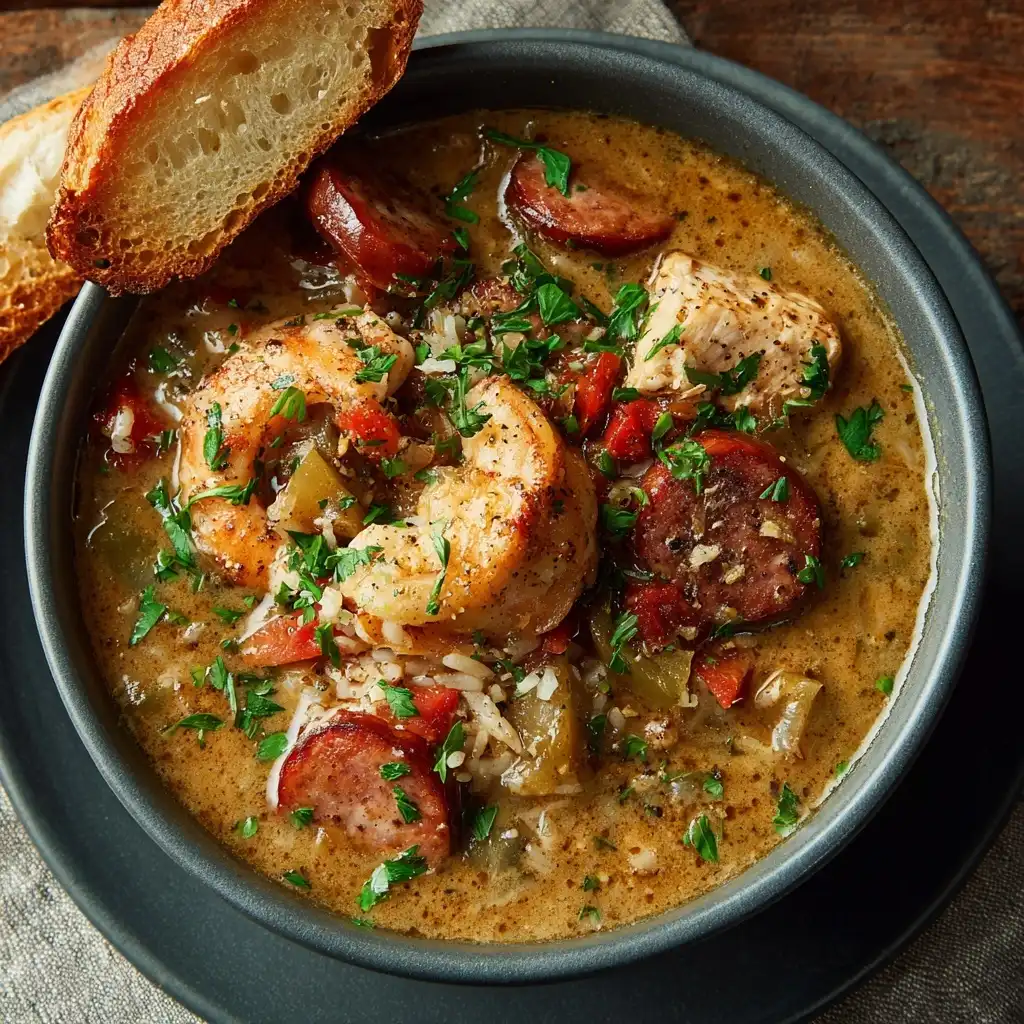
Chicken and Sausage Gumbo is more than just a dish—it’s a soulful expression of Southern hospitality, Creole ingenuity, and centuries-old culinary tradition. A rich, deeply flavorful stew simmered to perfection, gumbo embodies the cultural mosaic of Louisiana: West African techniques, French roux-making, Spanish spices, Native American filé powder, and Acadian resourcefulness all converge in one steaming, aromatic pot. This iconic dish serves as both comfort food and ceremonial centerpiece—gracing family Sunday dinners, Mardi Gras tables, funeral repasts, and community gatherings with equal reverence. Whether served over steamed white rice or with a side of warm cornbread, Chicken and Sausage Gumbo delivers layers of umami depth, smoky warmth, and herbaceous brightness that lingers long after the last spoonful.
The History
Gumbo’s origins are as complex and layered as its flavor profile. The word “gumbo” is derived from the West African Bantu word *ki ngombo*, meaning “okra”—a key thickening agent historically used by enslaved Africans in the Lower Mississippi Valley. By the early 18th century, French colonists in Louisiana adopted and adapted African, Choctaw, and Spanish cooking methods, integrating local ingredients like sassafras leaves (ground into filé powder by the Choctaw), native seafood, game birds, and cultivated vegetables. The Acadians—French-speaking exiles from Nova Scotia who arrived in the 1750s—brought their rustic stews and roux-based techniques, further shaping gumbo’s evolution. Over time, regional distinctions emerged: Creole gumbos (often tomato-influenced, city-dwelling, with diverse proteins) and Cajun gumbos (darker roux, no tomatoes, country-style, emphasizing smoked meats and wild game). Chicken and Sausage Gumbo sits comfortably at the intersection—honoring both traditions—by combining tender chicken breast or thighs with robust, garlic-and-paprika-laced Andouille sausage, a staple introduced by German settlers in the 1720s who settled near New Orleans and adapted their knackwurst into what would become Louisiana’s most beloved smoked sausage. Today, this gumbo stands as a testament to resilience, adaptation, and the unifying power of shared meals across racial, linguistic, and generational lines.
Ingredients Breakdown
Every ingredient in Chicken and Sausage Gumbo plays a deliberate role—not merely for taste, but for texture, aroma, color, and structural integrity:
- Roux: A 1:1 mixture of fat (traditionally vegetable oil, lard, or duck fat) and all-purpose flour, cooked slowly until deep mahogany brown (30–45 minutes). This is the soul of the gumbo—providing nutty depth, velvety mouthfeel, and natural thickening power. A properly dark roux adds complexity without bitterness; undercooked roux tastes raw and pasty, overcooked roux turns acrid.
- The Holy Trinity: Finely diced onion, green bell pepper, and celery—the foundational aromatic base of nearly all Louisiana cuisine. Unlike mirepoix (which uses carrots), the Trinity reflects local produce availability and provides a brighter, grassier, more vegetal backbone.
- Garlic: Minced fresh garlic added late in the sauté stage preserves its pungent, floral notes and prevents scorching.
- Andouille Sausage: A coarse-grained, heavily smoked, spicy pork sausage seasoned with garlic, cayenne, black pepper, and thyme. Authentic Louisiana Andouille is double-smoked and contains visible chunks of pork shoulder—never pre-cooked or overly processed. Its fat renders beautifully into the roux, enriching the entire broth.
- Chicken: Boneless, skinless thighs are preferred over breasts for superior moisture retention, richer flavor, and resistance to drying during long simmers. Some chefs sear whole chicken pieces with bones for extra collagen and body, then debone before serving.
- Stock: Homemade chicken stock (preferably from roasted bones) forms the ideal liquid base—adding gelatinous richness and clean poultry essence. Low-sodium store-bought stock works, but avoid bouillon cubes high in MSG or artificial flavors.
- Tomatoes: Optional but traditional in many Creole versions—a small amount of crushed San Marzano or fire-roasted tomatoes adds subtle acidity and fruit-forward balance against the smoke and earthiness.
- Okra: Sliced fresh or frozen (not canned), added mid-simmer to release its mucilaginous thickener while retaining slight crunch. Pre-cooking okra separately (blanched or sautéed) minimizes sliminess.
- Spices & Herbs: Bay leaves, dried thyme, oregano, filet powder (ground sassafras—added only at the end, off-heat), cayenne pepper, white and black peppercorns, and sometimes a whisper of ground clove or allspice for warmth. Fresh parsley and green onions garnish at service.
- Heat Elements: A balanced trio—cayenne for forward heat, black pepper for sharp bite, and optional hot sauce (like Crystal or Tabasco) stirred in at the table for personalized fire.
Step-by-Step Recipe
- Prepare Ingredients Mise en Place: Dice 1 large yellow onion, 1 green bell pepper, and 2 ribs celery into ¼-inch pieces (“trinity”). Mince 6 cloves garlic. Slice 1 lb smoked Andouille into ½-inch half-moons. Cube 1.5 lbs boneless, skinless chicken thighs (or use 2 split chicken breasts, skin-on, seared and shredded later). Measure 1 cup all-purpose flour and 1 cup neutral oil (e.g., canola or grapeseed). Gather 6 cups low-sodium chicken stock, 1 (14.5 oz) can crushed tomatoes (optional), 1 cup sliced fresh okra, 3 bay leaves, 1 tsp dried thyme, ½ tsp dried oregano, 1 tsp kosher salt, ½ tsp white pepper, ¼–½ tsp cayenne (to taste), and 1 tbsp filé powder.
- Make the Roux: In a heavy-bottomed Dutch oven (cast iron preferred), heat oil over medium-low heat. Whisk in flour gradually until smooth. Cook, stirring constantly with a flat wooden spatula, scraping corners and bottom. Reduce heat if smoking occurs. Continue for 30–45 minutes until roux reaches a deep milk-chocolate or dark copper hue—richly fragrant, nutty, and slightly sweet. Never walk away—roux can burn in seconds once it reaches this stage.
- Sauté the Trinity: Carefully add trinity to hot roux (it will bubble vigorously). Stir constantly for 8–10 minutes until vegetables soften and edges begin to caramelize—but do not let roux cool below 250°F or it may seize. Add minced garlic and stir 1 minute until fragrant.
- Add Protein & Brown: Push vegetables to the side; add Andouille slices. Cook 4–5 minutes, stirring occasionally, until edges crisp and fat renders. Nestle chicken pieces into the mixture, skin-side down if using whole breasts. Sear 3–4 minutes per side until golden. If using boneless thighs, cook through (165°F internal temp) and set aside.
- Build the Broth: Slowly whisk in warm chicken stock, ½ cup at a time, ensuring no lumps form. Add crushed tomatoes (if using), bay leaves, thyme, oregano, salt, white pepper, and cayenne. Bring to a gentle simmer—not a boil—then reduce heat to low.
- Simmer & Develop Flavor: Partially cover and simmer gently for 1 hour, skimming foam or excess fat as needed. Stir every 15 minutes. At 45 minutes, add sliced okra and continue simmering. After 1 hour, return cooked chicken to pot (shred larger pieces now) and adjust seasoning.
- Incorporate Filé Powder: Remove gumbo from heat. Stir in 1 tbsp filé powder—this must be done off-heat to prevent stringiness. Let rest covered for 10 minutes to allow filé to fully hydrate and thicken.
- Final Adjustments & Serve: Taste and correct: more salt? A splash of lemon juice or vinegar for brightness? A pinch more cayenne? Ladle hot gumbo over ½ cup steamed long-grain white rice per bowl. Garnish generously with chopped fresh parsley and green onions. Offer hot sauce and crusty French bread on the side.
Tips
- Roux Patience Pays Off: Rushing the roux is the #1 cause of failed gumbo. Use a timer, keep heat low, and stir with intention. If unsure of color, drip a small amount onto a white plate—it should look like melted dark chocolate, not peanut butter or burnt coffee.
- Control the Heat: A heavy pot retains heat evenly. Avoid thin aluminum or nonstick pans—they encourage scorching. If roux starts smoking excessively, immediately remove from heat and stir in 1 tbsp cold oil to lower temperature.
- Okra Prep Matters: To minimize sliminess, blanch fresh okra in boiling salted water for 2 minutes, drain well, and pat dry before adding. Or sauté okra separately in olive oil until edges blister, then stir in during final 20 minutes.
- Stock Temperature Is Key: Always add warmed (not cold) stock to hot roux to prevent shocking and clumping. Cold liquid causes roux to seize and form lumps that won’t dissolve.
- Rest Before Serving: Gumbo tastes even better the next day. Cool completely, refrigerate overnight, then skim solidified fat from surface before reheating gently. Flavors meld, spices bloom, and textures harmonize.
- No Boiling After Filé: Once filé is added, never return gumbo to a boil—this breaks down the mucilage and creates a stringy, unpleasant texture. Reheat only to steaming (180°F).
- Layer Your Seasoning: Salt in stages—when sautéing trinity, when adding stock, and again at the end. This ensures balanced penetration rather than surface-only seasoning.
- Acid Is Your Friend: A final ½ tsp apple cider vinegar or fresh lemon juice just before serving lifts the entire profile, cutting through fat and enhancing spice perception without adding sourness.
- Texture Contrast: For restaurant-quality presentation, reserve a few perfectly crisped Andouille pieces and some reserved okra for garnish—adds visual appeal and textural interest.
- Freeze Smart: Freeze gumbo (without rice) in portion-sized, airtight containers for up to 6 months. Thaw overnight in fridge and reheat slowly on stove—never microwave from frozen, as it promotes uneven heating and graininess.
Variations and Customizations
While Chicken and Sausage Gumbo honors tradition, it joyfully invites innovation—respecting roots while embracing creativity:
- Cajun-Style (No Tomato): Omit tomatoes entirely; deepen flavor with 1 tsp smoked paprika and a splash of liquid smoke (use sparingly). Add ½ cup diced smoked turkey neck meat or tasso ham for extra depth.
- Seafood Infusion: Stir in 1 lb peeled, deveined shrimp (tail-on for presentation) and ½ lb lump crabmeat during the last 5 minutes of simmering. Replace 1 cup chicken stock with light fish or shrimp stock.
- Vegetarian Gumbo: Substitute smoked tofu or seitan for sausage, king oyster mushrooms for chicken, and smoked sea salt + chipotle powder for smoke. Use roasted vegetable stock and double the okra and filé. Top with avocado crema and pickled red onions.
- Game Bird Gumbo: Replace chicken with 1 lb diced quail, dove, or pheasant (soaked in buttermilk first for tenderness); add ½ cup diced smoked duck confit for richness.
- Smoky Blackened Version: Blacken chicken and Andouille in a cast-iron skillet before adding to roux—intensifies char and complexity. Finish with a dusting of ancho chile powder.
- Low-Carb/Keto Adaptation: Use xanthan gum (¼ tsp) instead of filé; serve over cauliflower rice or shirataki noodles. Boost fat with 2 tbsp duck fat in roux and finish with a swirl of infused garlic oil.
- Instant Pot Shortcut: Sauté trinity and protein using “Sauté” mode; make roux directly in pot (3 min on “More” setting); pressure cook 25 minutes on High with quick release. Stir in filé after cooking.
- Gluten-Free Gumbo: Substitute brown rice flour or sweet rice flour for all-purpose in roux (ratio remains 1:1); verify sausage and stock are GF-certified. Thicken with additional okra or pureed roasted eggplant if needed.
- Breakfast Gumbo: Add 4 large eggs, whisked with a splash of cream, stirred in off-heat at the end (like a savory custard). Top with crispy fried shallots and chive blossoms.
- Dessert Gumbo (Yes, Really!): A playful homage—swap roux for toasted pecan–brown sugar paste, use sweet potato “chicken,” spiced apple “sausage,” and cinnamon–nutmeg “filé.” Serve warm with vanilla bean ice cream.
Health Considerations and Nutritional Value
A 1-cup serving (without rice) of traditionally prepared Chicken and Sausage Gumbo contains approximately:
- Calories: 280–320 kcal
- Protein: 22–26 g (excellent source—chicken thighs and Andouille provide complete amino acid profile)
- Fat: 16–20 g (mostly unsaturated from oil and chicken skin; Andouille contributes saturated fat—choose nitrate-free, pasture-raised versions when possible)
- Carbohydrates: 10–14 g (primarily from vegetables and roux; low glycemic impact due to fiber and fat content)
- Fiber: 3–4 g (from okra, bell pepper, celery, and filé powder—supports gut health and satiety)
- Vitamins & Minerals: Rich in B6 and B12 (chicken, sausage), Vitamin C (bell peppers, tomatoes), potassium (okra, tomatoes), iron (dark meat, smoked sausage), and antioxidants (thyme, oregano, cayenne)
Health Notes:
✅ Anti-inflammatory potential: Cayenne contains capsaicin; garlic offers allicin; thyme and oregano contain rosmarinic acid—all linked to reduced oxidative stress.
✅ Gut-friendly: Okra’s soluble fiber feeds beneficial bifidobacteria; slow-simmered collagen from bone-in prep supports intestinal lining integrity.
⚠️ Sodium awareness: Traditional Andouille and store-bought stocks can be high in sodium (800–1,200 mg per serving). Mitigate by using low-sodium stock, rinsing sausage briefly, or making your own uncured version.
⚠️ Advanced glycation end-products (AGEs): Prolonged high-heat roux-making generates AGEs. Counteract with antioxidant-rich garnishes (parsley, green onions, lemon zest) and moderate portion sizes.
🌱 Heart-conscious option: Substitute half the Andouille with lean grilled chicken sausage or turkey kielbasa; use avocado oil for roux; add ¼ cup chopped kale during final 10 minutes for extra folate and nitrates.
Ingredients
- 1 cup neutral oil (canola, grapeseed, or refined coconut oil)
- 1 cup all-purpose flour (or brown rice flour for GF)
- 1 large yellow onion, finely diced
- 1 green bell pepper, finely diced
- 2 ribs celery, finely diced
- 6 cloves garlic, minced
- 1 lb smoked Andouille sausage, sliced ½-inch thick
- 1.5 lbs boneless, skinless chicken thighs, cubed (or 2 split chicken breasts, skin-on)
- 6 cups low-sodium chicken stock (preferably homemade)
- 1 (14.5 oz) can crushed San Marzano tomatoes (optional, for Creole style)
- 1 cup fresh or frozen (thawed & drained) okra, sliced ¼-inch thick
- 3 large bay leaves
- 1 tsp dried thyme
- ½ tsp dried oregano
- 1 tsp kosher salt (plus more to taste)
- ½ tsp freshly ground white pepper
- ¼–½ tsp cayenne pepper (adjust to heat preference)
- 1 tbsp filé powder (sassafras), added off-heat
- Steamed long-grain white rice, for serving
- Fresh parsley and green onions, chopped (for garnish)
- Hot sauce (Crystal, Tabasco, or Louisiana brand), for serving
Directions
- Set a heavy-bottomed 6–8 quart Dutch oven over medium-low heat. Add oil and heat until shimmering but not smoking (about 3 minutes).
- Gradually whisk in flour until fully incorporated and smooth. Cook, whisking constantly, for 30–45 minutes until roux reaches a deep, glossy mahogany brown—richly aromatic with notes of toasted nuts and dark caramel. Reduce heat as needed to prevent burning.
- Add diced onion, bell pepper, and celery. Stir continuously for 8–10 minutes until vegetables soften and begin to take on golden edges.
- Add minced garlic and stir 1 minute until fragrant.
- Add Andouille slices and sear 4–5 minutes, stirring occasionally, until lightly crisped and fat has rendered.
- Nestle chicken pieces into the pot. If using skin-on breasts, sear 4 minutes skin-side down, flip, and sear 3 more minutes. Remove chicken, let cool slightly, then shred or cube. If using thighs, cook through (165°F), then set aside.
- Slowly whisk in warm chicken stock, ½ cup at a time, ensuring each addition is fully incorporated before adding more. Stir in crushed tomatoes (if using), bay leaves, thyme, oregano, salt, white pepper, and cayenne.
- Bring mixture to a gentle simmer—small bubbles breaking at edges, not rolling boil. Reduce heat to low, partially cover, and simmer for 1 hour, stirring every 15 minutes and skimming foam or excess fat.
- At 45 minutes, add sliced okra. Continue simmering.
- After 1 hour, return cooked/shredded chicken to pot. Simmer uncovered for 10 more minutes.
- Remove pot from heat. Stir in filé powder thoroughly. Cover and let rest 10 minutes.
- Taste and adjust seasoning—add more salt, cayenne, or a splash of apple cider vinegar if desired.
- Ladle gumbo over steamed rice in shallow bowls. Garnish generously with parsley and green onions. Serve hot with hot sauce and crusty French bread on the side.
FAQ
- Can I make gumbo without a roux?
- Technically yes—but you’ll lose authenticity and depth. Alternatives include okra-only (West African style), filé-only (Choctaw style), or modern thickeners like xanthan gum. However, roux is non-negotiable for true Louisiana gumbo—it defines the dish’s character, mouthfeel, and heritage.
- Why does my gumbo taste bitter?
- Bitterness almost always signals an overcooked roux. If the roux turned black, smells acrid, or tastes burnt, discard it and start over. Never try to “rescue” a scorched roux—it contaminates the entire batch.
- Can I use frozen okra?
- Absolutely—and often preferable for consistency. Thaw completely, rinse under cold water, and squeeze dry in a clean kitchen towel to remove excess moisture before adding.
- What’s the difference between filé powder and gumbo file?
- No difference—“gumbo file” is simply the common name for ground sassafras leaf. Ensure it’s 100% pure, with no fillers or additives. Store in an airtight container in the freezer to preserve volatile oils and prevent staleness.
- My gumbo is too thin—even after hours of simmering. What went wrong?
- Possible causes: undercooked roux (not enough starch gelatinization), too much liquid added too quickly causing separation, insufficient okra/filé, or boiling after filé addition. Fix by simmering uncovered 15–20 minutes longer, then whisk in 1 tsp slurry of filé + cold water—or stir in ½ cup cooked, mashed okra.
- Is gumbo supposed to be soupy or thick?
- Authentic gumbo has the consistency of creamy bisque—not runny broth, not stiff stew. It should coat the back of a spoon but flow easily when ladled. Think “velvet river,” not “mud puddle.”
- Can I add seafood to chicken and sausage gumbo?
- Yes—but add delicate seafood like shrimp and crab only in the final 5 minutes to avoid rubberiness. For best results, prepare a separate seafood stock and replace 1–2 cups of chicken stock with it.
- How long does gumbo last in the fridge?
- Properly cooled and stored in airtight containers, gumbo keeps for 4–5 days refrigerated. The flavor improves on Days 2–3. Always reheat to 165°F throughout before serving.
- Can I can gumbo at home?
- No—home canning of gumbo is unsafe due to low acidity, variable density, and presence of meat/fat. Pressure canning guidelines do not account for roux-based viscosity or okra’s unpredictable pH shift. Freeze instead.
- What wine pairs well with Chicken and Sausage Gumbo?
- A chilled, off-dry Riesling or Gewürztraminer balances heat and smoke. For red lovers, try a low-tannin, fruity Beaujolais Villages or chilled Zinfandel. Avoid oaky, high-alcohol wines that clash with spice.
Summary
Chicken and Sausage Gumbo is a masterclass in patience, balance, and cultural synthesis—where a slow-cooked roux becomes the canvas for smoky Andouille, tender chicken, the aromatic Holy Trinity, and time-honored thickeners like okra and filé powder. More than a recipe, it’s a living heirloom passed hand-to-hand, pot-to-pot, generation-to-generation across the bayous and boulevards of Louisiana.
Whether you’re honoring ancestral technique or crafting your own modern variation, every bowl tells a story of survival, celebration, and the profound truth that the most meaningful meals are never rushed—they’re simmered, shared, and savored with love.