
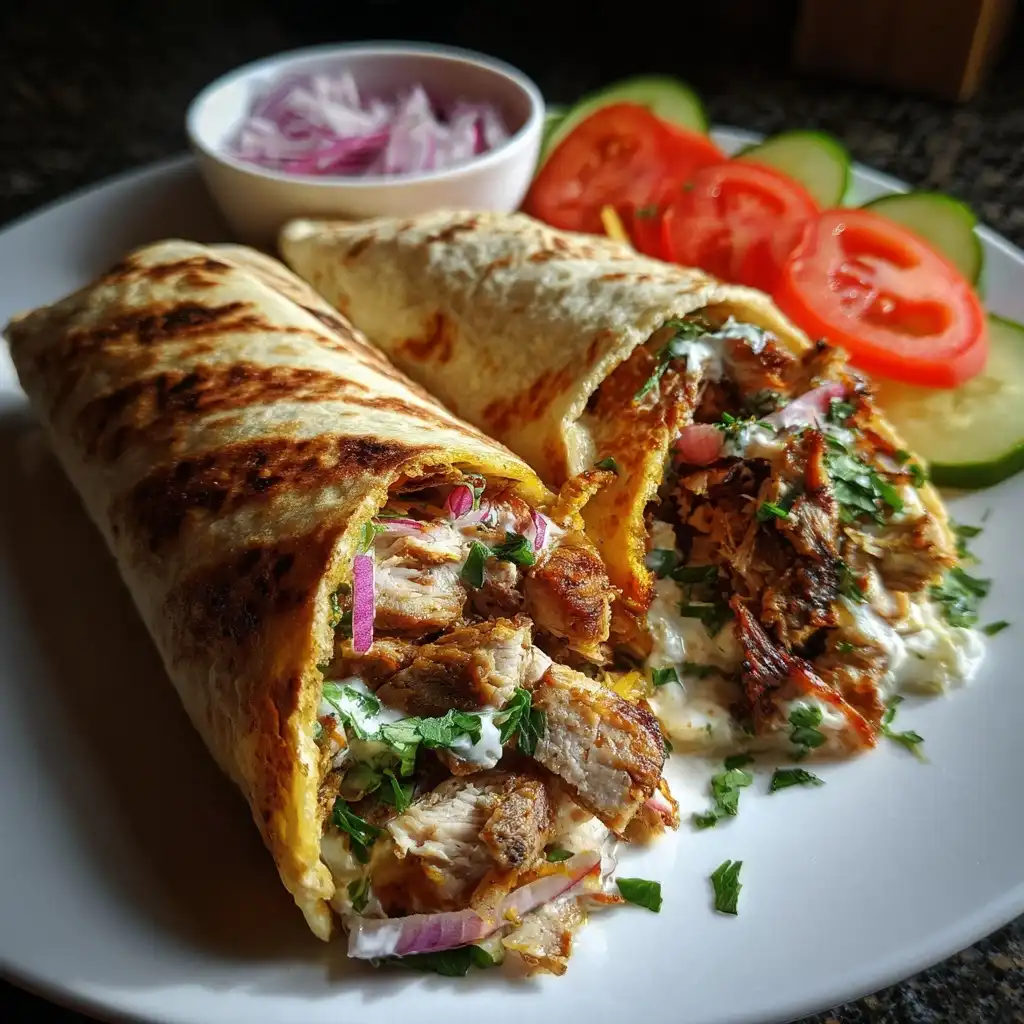
Introduction
The Chicken Shawarma Wrap is a beloved Middle Eastern street food sensation that has captivated palates worldwide with its irresistible blend of tender, spiced chicken, vibrant fresh vegetables, and creamy, tangy sauces—all wrapped snugly in warm, pliable flatbread. More than just a quick meal, it’s a culinary experience rooted in centuries-old traditions of slow-roasting and communal dining, now reimagined for modern kitchens and on-the-go lifestyles. Whether enjoyed from a bustling Beirut food cart, a Dubai souk stall, or your own home kitchen, the shawarma wrap delivers bold flavors, aromatic warmth, and textural harmony in every bite—making it an enduring favorite for lunch, dinner, late-night cravings, and everything in between.
The History
Shawarma’s origins trace back to the Ottoman Empire in the 19th century, evolving from the earlier Turkish dish *döner kebab*—a method of vertically roasting stacked, seasoned meat on a rotating spit. As the empire expanded across the Levant, the technique was adopted and refined by Arab cooks in Lebanon, Syria, Palestine, Jordan, and Egypt, who adapted it using local spices, breads (like saj and markook), and accompaniments such as garlic sauce (*toum*), pickled turnips, and parsley-heavy salads. The word “shawarma” itself derives from the Arabic root *shāwir*, meaning “to turn”—a direct nod to the rotating cooking method. While traditionally made with lamb or beef, chicken shawarma emerged widely in the mid-to-late 20th century as a leaner, more affordable, and globally accessible alternative—especially gaining traction in North America and Europe through immigrant-owned restaurants and food trucks beginning in the 1980s. Today, the chicken shawarma wrap represents a beautiful fusion of heritage craftsmanship and contemporary culinary innovation—honoring tradition while embracing accessibility, dietary diversity, and creative expression.
Ingredients Breakdown
Every exceptional Chicken Shawarma Wrap begins with thoughtfully selected, high-quality components—each playing a distinct role in building layers of flavor, aroma, moisture, texture, and balance:
- Chicken: Boneless, skinless chicken thighs are preferred over breasts for their superior marbling, tenderness, and ability to retain juiciness during marinating and cooking—even under high-heat grilling or pan-searing. Thighs also absorb spices more deeply and resist drying out.
- Marinade Base: A combination of full-fat plain yogurt (for tenderness and tang), lemon juice (brightness and enzymatic tenderizing), and neutral oil (such as grapeseed or avocado) creates the ideal emulsion for spice adhesion and moisture retention.
- Aromatic Spices: Ground cumin, coriander, paprika (smoked or sweet), turmeric (for golden hue and earthiness), cinnamon (warmth and complexity), cardamom (floral depth), and a touch of cayenne or Aleppo pepper provide the signature shawarma soul—warm, slightly sweet, subtly pungent, and deeply savory.
- Fresh Aromatics: Minced garlic, grated ginger, and finely chopped onion infuse the marinade with pungent, fragrant intensity that penetrates deep into the chicken fibers.
- Flatbread: Authentic options include thin, stretchy Lebanese saj, soft laffa, or pillowy pita—ideally warmed just before wrapping to enhance pliability and prevent tearing. Whole wheat or gluten-free alternatives are viable with adjustments to heating time and moisture control.
- Vegetable Accoutrements: Shredded romaine or butter lettuce adds crisp freshness; thinly sliced red onions bring sharpness and color; pickled turnips (vibrant pink, tart-sweet) offer brightness and visual appeal; diced tomatoes contribute juicy acidity; and fresh parsley or mint lend herbal lift.
- Signature Sauces: Garlic toum (a Lebanese emulsified garlic sauce made with lemons, salt, and oil), tahini sauce (sesame-based, nutty and creamy), or a hybrid “shawarma mayo” (garlic + lemon + mayo + toum) form the luscious, unifying backbone of the wrap.
- Finishing Touches: A light drizzle of olive oil, sumac sprinkled over onions for tangy citrus notes, toasted pine nuts or sesame seeds for crunch, and a final pinch of flaky sea salt elevate both taste and presentation.
Step-by-Step Recipe
- Prepare the Marinade: In a large non-reactive bowl, whisk together 1 cup full-fat plain yogurt, ¼ cup fresh lemon juice, 3 tbsp neutral oil, 6 minced garlic cloves, 1 tbsp grated fresh ginger, ½ cup finely minced yellow onion, 2 tsp ground cumin, 2 tsp ground coriander, 1½ tsp smoked paprika, 1 tsp ground turmeric, 1 tsp ground cinnamon, ½ tsp ground cardamom, ¼ tsp cayenne pepper, 1½ tsp kosher salt, and ½ tsp freshly ground black pepper until smooth and fully combined.
- Marinate the Chicken: Add 1.5 lbs (680g) boneless, skinless chicken thighs—cut into ½-inch thick strips—to the marinade. Use clean hands to coat each piece thoroughly. Cover and refrigerate for a minimum of 4 hours—but ideally 12–24 hours—for optimal flavor infusion and tenderness. Avoid marinating longer than 48 hours, as excessive acid can begin to break down the meat’s structure.
- Cook the Chicken: Heat a heavy-bottomed cast-iron skillet or grill pan over medium-high heat until shimmering. Lightly oil the surface. Working in batches to avoid steaming, cook the marinated chicken strips undisturbed for 3–4 minutes per side, or until deeply caramelized, cooked through (internal temperature of 165°F/74°C), and slightly crisped at the edges. Transfer to a wire rack set over a baking sheet to drain excess oil and rest for 5 minutes—this allows juices to redistribute and prevents sogginess in the wrap.
- Warm the Flatbread: Heat a dry skillet over medium heat. Warm each flatbread individually for 20–30 seconds per side—just until pliable and lightly puffed. Stack wrapped in a clean kitchen towel or foil to retain steam and flexibility.
- Prepare the Sauces & Veggies: While chicken rests, prepare garlic toum (or use high-quality store-bought), tahini sauce (mix ¼ cup tahini paste + 3 tbsp lemon juice + 2–3 tbsp cold water + ½ tsp salt until pourable), and assemble fresh toppings: shred lettuce, thinly slice red onion, dice tomato, chop parsley, and prepare pickled turnips.
- Assemble the Wrap: Lay a warm flatbread flat on a clean surface. Spread 2 tbsp toum in a horizontal stripe across the center third. Layer ⅓ cup shredded lettuce, followed by ¾ cup cooked chicken strips arranged evenly. Top with 2 tbsp red onion slices, 1 tbsp pickled turnips, 2 tbsp diced tomato, a generous sprinkle of chopped parsley, and a light dusting of sumac. Drizzle with 1 tsp tahini sauce and a final ½ tsp olive oil.
- Wrap with Precision: Fold the bottom edge up over the filling, then fold in both sides tightly. Roll forward firmly but gently, tucking in loose ends as you go. For carry-friendly integrity, wrap the finished shawarma in parchment paper, then aluminum foil—or secure with butcher’s twine if serving immediately.
Tips
- Marinating Matters: Always marinate chicken in the refrigerator—not at room temperature—and use non-reactive containers (glass, ceramic, or stainless steel) to prevent metallic off-flavors from acidic marinades.
- Pat Dry Before Cooking: For maximum sear and caramelization, gently pat marinated chicken strips dry with paper towels right before hitting the pan—excess surface moisture inhibits browning.
- Don’t Crowd the Pan: Overloading the skillet lowers temperature and causes steaming instead of searing. Cook in batches and wipe the pan between rounds if needed.
- Rest Before Slicing (If Needed): If prepping ahead, let cooked chicken cool completely, then store airtight in the fridge for up to 4 days—or freeze for up to 3 months. Reheat gently in a skillet or air fryer (350°F for 3–4 minutes) to restore crispness.
- Bread Temperature Is Key: Cold or room-temp flatbread cracks easily. Always warm just before assembling—and keep a stack covered with a damp towel to maintain pliability during service.
- Sauce Consistency Control: Toum and tahini thicken when chilled. Bring to room temperature and stir vigorously—or thin with a few drops of lemon juice or cold water—until silky and spreadable.
- Build Smart for Structural Integrity: Place wet ingredients (tomatoes, sauces) directly on the bread first to create a moisture barrier; layer drier elements (chicken, onions, herbs) above to prevent sogginess. Keep fillings centered and compact—not heaped near the edges.
- Double-Wrap for To-Go: For food delivery or packed lunches, wrap first in parchment (to absorb minor grease), then in foil (for insulation and rigidity). This preserves heat, minimizes leakage, and maintains shape.
- Taste & Adjust Mid-Process: Before assembling, taste a small piece of cooked chicken and adjust seasoning with a pinch of salt or squeeze of lemon—flavors evolve during cooking, and fine-tuning ensures balance.
- Acid Balance: If your wrap tastes overly rich or heavy, a final bright garnish—extra lemon zest, sumac, or a splash of pomegranate molasses—cuts through fat and lifts the entire profile.
Variations and Customizations
The beauty of the Chicken Shawarma Wrap lies in its remarkable adaptability—serving as a flavorful canvas for regional interpretations, dietary needs, seasonal ingredients, and personal preferences:
- Dietary Adaptations: For gluten-free eaters, use certified GF flatbreads like cassava or almond-flour wraps—or serve as a deconstructed bowl over cauliflower rice. Vegan versions swap chicken for marinated grilled portobello mushrooms, spiced chickpeas, or seitan, using vegan toum (made with aquafaba instead of egg yolk).
- Regional Twists: Lebanese-style adds fresh mint and radishes; Egyptian versions feature cumin-heavy spice blends and dukkah topping; Turkish-inspired shawarma may include grilled peppers and feta crumbles; Gulf iterations often incorporate saffron-infused marinades and date syrup drizzles.
- Protein Swaps: While chicken reigns supreme, try turkey breast (marinated similarly), shrimp (marinated 30 min max to avoid overcooking), or even marinated tofu cubes for plant-forward flair.
- Low-Carb/Keto Options: Skip the flatbread entirely and serve as a “shawarma lettuce wrap” using large butter or romaine leaves—or present as a loaded shawarma salad with tabbouleh, roasted veggies, and extra tahini dressing.
- Flavor Infusions: Add 1 tbsp harissa paste to the marinade for North African heat; stir in 1 tsp rosewater or orange blossom water for floral elegance; incorporate 2 tbsp pomegranate molasses for sweet-tart depth; or finish with za’atar-spiced fried shallots for aromatic crunch.
- Breakfast Shawarma: Transform it into a morning meal by adding scrambled eggs or a soft-scrambled omelet layer, avocado slices, and a drizzle of chili oil—perfect for weekend brunch or post-gym fuel.
- Meal Prep Friendly: Marinate chicken in individual portion bags; pre-chop veggies and store in separate airtight containers with damp paper towels; batch-make sauces and freeze in ice cube trays for single-serve thawing.
- Kid-Friendly Version: Reduce garlic and cayenne; add mild shredded cheddar or mozzarella; include apple matchsticks or roasted sweet potato ribbons; serve with ketchup-toum swirl for familiar sweetness.
- Gourmet Elevations: Top with preserved lemon rind, marinated artichoke hearts, labneh dollops, edible flowers, or microgreens. Serve alongside house-pickled carrots and daikon for contrast.
- Global Fusion Concepts: Mexican Shawarma (chipotle-lime marinade + cotija + pickled red onion + cilantro); Japanese-Inspired (mirin-soy marinade + nori strips + wasabi-tahini); or Indian-Inflected (garam masala + mango chutney + cucumber raita).
Health Considerations and Nutritional Value
A well-crafted Chicken Shawarma Wrap can be a nutrient-dense, balanced meal—offering high-quality protein, healthy fats, fiber-rich vegetables, and beneficial phytonutrients—though mindful preparation is essential to maximize wellness benefits and minimize potential drawbacks:
- Protein Powerhouse: Chicken thighs provide ~25g of complete protein per 4-oz serving—including all nine essential amino acids crucial for muscle repair, immune function, and satiety. Marinating in yogurt further enhances digestibility and bioavailability.
- Smart Fat Profile: Using heart-healthy oils (avocado, olive) and moderate amounts of full-fat yogurt contributes monounsaturated and polyunsaturated fats—supporting cholesterol balance and anti-inflammatory pathways—while avoiding trans fats common in many fast-food versions.
- Spice-Based Benefits: Turmeric contains curcumin (a potent antioxidant and anti-inflammatory compound); garlic supports cardiovascular health and immune modulation; cinnamon helps regulate postprandial blood sugar; cumin aids digestion and iron absorption.
- Fiber & Micronutrient Density: Fresh vegetables supply vitamins A, C, K, folate, potassium, and dietary fiber—especially when including dark leafy greens, tomatoes, onions, and parsley. Pickled turnips add gut-friendly probiotics and vitamin C.
- Considerations for Sodium & Sugar: Store-bought toum, sauces, or pickles may contain added sodium or preservatives. Opt for low-sodium tamari in marinades, unsweetened yogurt, and homemade pickles to maintain control. Avoid commercial “shawarma sauce” blends laden with high-fructose corn syrup and MSG.
- Carbohydrate Awareness: Traditional flatbreads range from 30–45g net carbs per wrap. Choose sprouted grain, sourdough, or low-carb alternatives for blood sugar management. Portion control (e.g., one wrap + side salad instead of two) supports weight maintenance goals.
- Allergen Transparency: Common allergens include dairy (yogurt, toum), sesame (tahini), garlic (in toum), and gluten (flatbread). Clearly label substitutions for guests with sensitivities—e.g., coconut yogurt, sunflower seed “tahini,” or garlic-infused oil instead of raw garlic.
- Food Safety First: Ensure chicken reaches 165°F internally and is stored properly. Discard marinade used on raw chicken unless boiled for 3+ minutes to kill pathogens. Refrigerate assembled wraps within 2 hours—or freeze unfilled components separately for longer shelf life.
- Balanced Blood Sugar Strategy: Pair with vinegar-based dressings (lemon/tahini), high-fiber veggies, and healthy fats to slow glucose absorption—ideal for those managing prediabetes or insulin resistance.
- Mindful Indulgence: While delicious, frequent consumption of heavily charred or oil-laden versions may increase advanced glycation end products (AGEs). Prioritize gentle searing over blackening, and blot excess oil post-cook for cleaner eating.
Ingredients
- 1.5 lbs (680 g) boneless, skinless chicken thighs, cut into ½-inch strips
- 1 cup (240 g) full-fat plain Greek yogurt
- ¼ cup (60 ml) fresh lemon juice (about 2 large lemons)
- 3 tbsp (45 ml) neutral oil (avocado, grapeseed, or light olive oil)
- 6 large garlic cloves, minced
- 1 tbsp (15 g) fresh ginger, grated
- ½ cup (75 g) yellow onion, finely minced
- 2 tsp ground cumin
- 2 tsp ground coriander
- 1½ tsp smoked paprika
- 1 tsp ground turmeric
- 1 tsp ground cinnamon
- ½ tsp ground cardamom
- ¼ tsp cayenne pepper (adjust to taste)
- 1½ tsp kosher salt (or 1 tsp table salt)
- ½ tsp freshly ground black pepper
- 8–10 (12–14 cm) Lebanese flatbreads, saj, or whole wheat pitas
- 1 cup (40 g) shredded romaine or butter lettuce
- ½ medium red onion, very thinly sliced
- ½ cup (75 g) pickled pink turnips, drained and roughly chopped
- 1 medium tomato, seeded and finely diced
- ¼ cup (15 g) fresh flat-leaf parsley, finely chopped
- 1 tbsp sumac (optional, for garnish)
- 2 tbsp (30 ml) extra-virgin olive oil (for finishing)
- For Garlic Toum (makes ~1 cup):
- 1 cup (130 g) peeled garlic cloves (about 2 heads)
- 1 cup (240 ml) neutral oil (refined avocado or grapeseed)
- ¼ cup (60 ml) fresh lemon juice
- 1 tsp kosher salt
- For Tahini Sauce (makes ~¾ cup):
- ¼ cup (60 g) well-stirred tahini paste
- 3 tbsp (45 ml) fresh lemon juice
- 2–3 tbsp (30–45 ml) cold water
- ½ tsp kosher salt
Directions
- In a large glass or stainless-steel bowl, combine yogurt, lemon juice, oil, garlic, ginger, onion, cumin, coriander, paprika, turmeric, cinnamon, cardamom, cayenne, salt, and black pepper. Whisk vigorously until completely smooth and uniformly blended—no lumps or separation.
- Add chicken strips to the marinade. Using clean hands, massage marinade into every piece until fully coated. Cover bowl tightly with plastic wrap or a lid and refrigerate for 12–24 hours (minimum 4 hours, maximum 48 hours).
- When ready to cook, remove chicken from fridge 20 minutes prior. Pat each strip thoroughly dry with paper towels—this step is critical for achieving caramelization.
- Heat a heavy cast-iron or stainless-steel skillet over medium-high heat until a drop of water sizzles and evaporates instantly. Lightly coat surface with 1 tsp oil.
- Add chicken in a single layer—do not overcrowd. Cook undisturbed for 3–4 minutes, until deeply browned and lifted easily from pan. Flip and cook opposite side 3–4 minutes more, until internal temperature reads 165°F (74°C) on an instant-read thermometer. Transfer to a wire rack over a baking sheet to rest and drain excess oil.
- While chicken rests, prepare sauces: For toum, place garlic and salt in food processor; pulse until paste forms. With motor running, slowly drizzle in oil drop-by-drop until thick and white, then add lemon juice in steady stream until glossy and stiff. For tahini sauce, whisk tahini and lemon juice until thick and grainy, then gradually whisk in cold water 1 tbsp at a time until smooth, creamy, and pourable. Season with salt.
- Warm flatbreads one at a time in a dry skillet over medium heat for 20–30 seconds per side—flip once—until soft, pliable, and slightly puffed. Stack wrapped in a clean kitchen towel to hold steam.
- To assemble: Lay one warm flatbread flat. Spread 2 tbsp toum horizontally across center third. Layer ⅓ cup lettuce, then ¾ cup chicken, followed by 2 tbsp red onion, 1 tbsp pickled turnips, 2 tbsp tomato, and 1 tbsp parsley. Sprinkle lightly with sumac. Drizzle 1 tsp tahini sauce and ½ tsp olive oil.
- Fold bottom edge up over filling, fold left and right sides inward snugly, then roll forward tightly. Tuck ends as you go. Wrap completed shawarma in parchment paper, then foil for serving or transport.
- Let rest 2–3 minutes before cutting in half diagonally (if desired). Serve immediately with extra toum, lemon wedges, and a small side of pickles or tabbouleh.
FAQ
- Can I make this recipe without a grill or cast-iron skillet?
- Yes! A nonstick skillet works well—just reduce heat to medium to prevent burning the marinade sugars. You can also bake: arrange marinated chicken on a parchment-lined sheet pan and roast at 425°F (220°C) for 18–22 minutes, flipping halfway, until golden and cooked through. Air frying is another excellent option—400°F (200°C) for 12–15 minutes, shaking basket halfway.
- Why use chicken thighs instead of breasts?
- Thighs have higher fat content (10–12% vs. 1–3% in breasts), which translates to unmatched juiciness, richer flavor absorption, and resilience against overcooking—especially important given the acidic, long-duration marinade. Breasts often become stringy or dry, even with careful timing.
- Can I freeze marinated chicken shawarma?
- Absolutely. Place marinated strips in a freezer-safe bag, press out air, and freeze up to 3 months. Thaw overnight in the fridge before cooking—never at room temperature. Note: yogurt-based marinades may separate slightly upon freezing but remain safe and flavorful.
- What if I can’t find pickled turnips?
- No problem. Substitute with quick-pickled red onions (soak thin slices in ½ cup apple cider vinegar + 1 tbsp sugar + 1 tsp salt for 30+ minutes), fermented sauerkraut, or even kimchi for probiotic tang. Avoid sweet pickle relish—it lacks authentic brightness and adds unwanted sugar.
- Is toum necessary—or can I use store-bought garlic sauce?
- Toum is traditional and irreplaceable for authenticity—but quality store-bought versions exist. Read labels carefully: avoid those with soybean oil, artificial preservatives, or garlic powder. When in doubt, make a simplified version using roasted garlic blended with olive oil and lemon for milder flavor.
- How do I prevent my wrap from falling apart?
- Three keys: (1) Warm flatbread thoroughly—it must be pliable, not brittle; (2) Don’t overfill—stick to recommended amounts; (3) Wrap tightly and tuck ends inward as you roll. Double-wrapping in parchment + foil adds structural reinforcement for travel.
- Can I prep this ahead for meal prep?
- Yes—with smart staging: Marinate and cook chicken up to 4 days ahead; store cooled chicken airtight in fridge. Pre-chop veggies (store with damp paper towel); make sauces (toum lasts 10 days refrigerated; tahini sauce up to 1 week). Assemble wraps only up to 2 hours before eating to preserve texture.
- What’s the best way to reheat leftover shawarma?
- Reheat components separately: chicken in skillet or air fryer (350°F/175°C, 3–4 min) to revive crisp edges; flatbread wrapped in damp paper towel, microwaved 15 sec; sauces served cold. Never microwave assembled wrap—it turns soggy and rubbery.
- Are there vegetarian or vegan alternatives that still feel like shawarma?
- Yes! Try marinated and grilled king oyster mushrooms (they mimic chicken’s chew), spiced baked cauliflower florets, or smoky chickpea-walnut “faux chicken.” Use vegan toum (aquafaba-based) and tahini, plus lemony cashew cream instead of yogurt marinade. Add smoked paprika and liquid smoke for depth.
- How spicy is this recipe—and can I adjust heat level?
- This version is mildly aromatic—not fiery. Cayenne is optional and adjustable: omit for zero heat, use ⅛ tsp for subtle warmth, or add ½ tsp plus 1 tsp harissa for serious kick. Serve with cooling tzatziki or labneh on the side to balance heat.
Summary
The Chicken Shawarma Wrap is a masterclass in layered Middle Eastern flavor—where slow-marinated, expertly seared chicken meets aromatic spices, vibrant produce, and luxuriously creamy sauces, all encased in supple, warm flatbread.
Rooted in Ottoman culinary ingenuity and continuously reinvented across generations and geographies, it remains a timeless, nourishing, and infinitely customizable celebration of balance, tradition, and joyful eating.