
Introduction
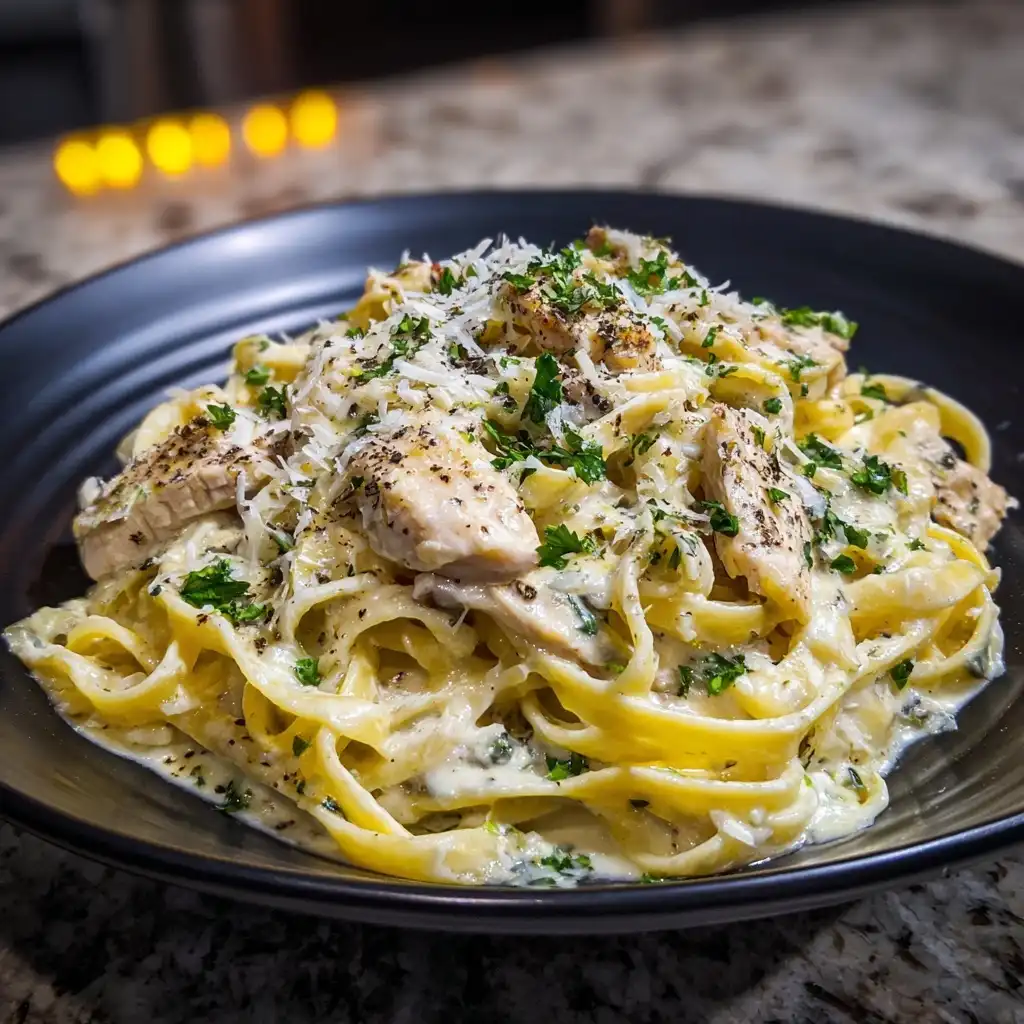
Chicken Alfredo Pasta is a beloved American-Italian fusion classic—creamy, comforting, and deeply satisfying. Though not authentically Italian in origin (as traditional Italian cuisine rarely combines cream-based sauces with pasta in this manner), it has earned its place as a staple in homes, restaurants, and dinner tables across North America and beyond. Its irresistible combination of tender grilled or sautéed chicken, rich Parmesan-infused Alfredo sauce, and perfectly cooked fettuccine (or other long-cut pasta) delivers a luxurious mouthfeel and balanced savory depth that appeals to both children and adults alike. Whether served as a cozy weeknight dinner, an impressive date-night entrée, or a crowd-pleasing dish for potlucks and family gatherings, Chicken Alfredo Pasta represents indulgence done right—with room for creativity, health-conscious tweaks, and personal flair.
The History
The origins of Chicken Alfredo Pasta are rooted in early 20th-century Rome—but not quite as most assume. The original Fettuccine Alfredo was invented around 1914 by Roman restaurateur Alfredo di Lelio, who created a simple, butter-and-Parmesan-rich pasta dish to help his wife recover her appetite after childbirth. His version contained only fresh fettuccine, copious amounts of high-quality unsalted butter, and aged Parmigiano-Reggiano—no cream, no garlic, no chicken. It was a minimalist, elegant preparation meant to highlight purity of ingredients.
The dish gained international fame in the 1920s when American silent-film stars Douglas Fairbanks and Mary Pickford dined at Alfredo’s restaurant and were so enamored they gifted him a golden fork and spoon inscribed “To Alfredo the King of Noodles.” Upon returning home, they popularized the concept—but American chefs, unfamiliar with the delicate balance of Italian technique, began adapting it: adding heavy cream for stability and richness, incorporating garlic and onions for flavor depth, and later, topping it with grilled chicken to transform it into a complete protein-forward meal. Thus, “Chicken Alfredo” was born—not in Italy, but in mid-century American diners, supper clubs, and frozen-food aisles. Today, it stands as a testament to culinary globalization: a dish that honors tradition in spirit while evolving boldly to meet modern tastes, dietary preferences, and kitchen realities.
Ingredients Breakdown
Understanding each component of Chicken Alfredo Pasta is essential—not just for replication, but for mastery, customization, and troubleshooting. Below is a detailed, chef-level breakdown of every ingredient, including its functional role, quality considerations, and substitution rationale:
- Pasta (typically fettuccine): A flat, ribbon-like egg noodle with sufficient surface area and structural integrity to hold up to creamy sauces without becoming mushy. Fettuccine’s slight chew (al dente texture) provides textural contrast against the velvety sauce. Alternatives like linguine, pappardelle, or even fresh tagliatelle work beautifully; gluten-free options (brown rice, quinoa, or lentil-based fettuccine) require careful timing to avoid overcooking.
- Chicken breast or thighs: Breast offers lean, mild flavor and clean texture—ideal for those watching fat intake—but can dry out if overcooked. Boneless, skinless thighs provide superior juiciness, richer flavor, and greater forgiveness during cooking due to higher fat content. For maximum tenderness, consider brining (30 minutes in ¼ cup salt + 4 cups water) or marinating in buttermilk or olive oil + lemon zest + herbs.
- Heavy cream (36–40% milkfat): The backbone of authentic Alfredo-style richness and emulsification. Its high fat content prevents curdling, ensures silkiness, and carries fat-soluble flavors (like garlic and cheese). Substitutes like half-and-half or whole milk yield thinner, less stable sauces prone to separation—unless thickened properly with roux or reduction.
- Unsalted butter: Adds mouth-coating richness, gloss, and subtle sweetness. Unsalted allows full control over sodium levels. European-style butter (82–86% fat) imparts even more luxurious mouthfeel and nuttier aroma when lightly browned.
- Freshly grated Parmigiano-Reggiano: Non-negotiable for depth, umami, and granular texture that melts smoothly into the sauce. Pre-grated “Parmesan” in plastic shakers contains anti-caking agents (e.g., cellulose) that inhibit melting and create graininess. Authentic DOP-certified Parmigiano-Reggiano provides lactic tang, crystalline crunch, and complex fermented notes.
- Garlic: Fresh minced garlic (not powder or jarred) delivers aromatic pungency and sweetness when gently sautéed in butter. Too much raw garlic overwhelms; too little leaves the sauce flat. For layered flavor, use a two-stage approach: infuse smashed cloves in warm butter pre-sauce, then add minced garlic for final aroma.
- Onion (optional but recommended): Finely diced yellow or white onion adds foundational sweetness and savory complexity. Sauté until translucent—not brown—to avoid bitterness. Shallots offer a more refined, wine-friendly alternative.
- Dry white wine (e.g., Pinot Grigio or Sauvignon Blanc): An optional but transformative ingredient. Deglazes the pan, lifts fond (caramelized bits), adds brightness to cut through richness, and contributes subtle acidity for balance. Alcohol cooks off, leaving only nuanced fruit and mineral notes.
- Fresh herbs (parsley, chives, or basil): Added at the end for aromatic lift and visual freshness. Flat-leaf parsley provides grassy, peppery nuance; chives lend mild onion essence; basil introduces summery sweetness (best with lemon-infused variations).
- Salt and freshly ground black pepper: Salt enhances all other flavors and is critical for seasoning each layer—chicken, pasta water, and sauce. Coarse sea salt or kosher salt is preferred for even distribution. Freshly cracked black pepper adds volatile oils and warmth missing from pre-ground versions.
- Nutmeg (a whisper): A traditional Italian secret weapon in béchamel and cheese sauces. Just ⅛ tsp freshly grated nutmeg deepens the dairy profile with warm, slightly sweet, almost floral undertones—without tasting “spicy.”
Step-by-Step Recipe
- Prepare the Chicken: Pat boneless, skinless chicken breasts or thighs very dry with paper towels. Season generously on both sides with salt, black pepper, and optionally, a light dusting of garlic powder or smoked paprika for depth. Heat 1 tbsp olive oil or clarified butter in a large stainless steel or cast-iron skillet over medium-high heat until shimmering. Carefully place chicken in the pan without crowding. Cook undisturbed for 5–6 minutes until a deep golden crust forms, then flip and cook another 4–5 minutes (for breasts) or 6–7 minutes (for thighs), until internal temperature reaches 165°F (74°C) when measured with an instant-read thermometer. Transfer to a cutting board, tent loosely with foil, and rest for 5 minutes before slicing thinly against the grain.
- Cook the Pasta Al Dente: Bring a large pot (6–8 quarts) of water to a rolling boil. Add 2 tbsp Diamond Crystal kosher salt (or 1½ tbsp Morton’s) —this seasons the pasta from within. Add 12 oz (340 g) dried fettuccine and stir immediately to prevent sticking. Cook for 1 minute less than package instructions (e.g., if box says 12 minutes, cook 11). Reserve 1½ cups of starchy pasta water before draining. Do NOT rinse—starch is vital for sauce adhesion.
- Build the Sauce Base: In the same skillet used for chicken (or a clean 3-qt heavy-bottomed saucepan), melt 3 tbsp unsalted butter over medium-low heat. Add ½ cup finely diced yellow onion and cook, stirring frequently, for 4–5 minutes until soft and translucent. Add 3 minced garlic cloves and cook 60–90 seconds until fragrant—but do not let brown. Optional: Pour in ¼ cup dry white wine, scraping the bottom vigorously with a wooden spoon to release all browned bits (fond). Simmer 1–2 minutes until alcohol evaporates.
- Emulsify the Cream & Cheese: Reduce heat to low. Pour in 1½ cups cold heavy cream, whisking constantly. Bring to a gentle simmer (small bubbles at edges, not a rolling boil). Let reduce slightly for 2–3 minutes, stirring occasionally. Gradually whisk in 1½ cups (6 oz) freshly grated Parmigiano-Reggiano, ¼ cup at a time, allowing each addition to fully melt before adding more. Stir continuously in a figure-eight motion to encourage emulsion. If sauce begins to look greasy or separates, remove from heat and whisk vigorously while adding 2–3 tbsp reserved pasta water—one tablespoon at a time—until smooth and cohesive.
- Season & Finish: Stir in ⅛ tsp freshly grated nutmeg, ½ tsp freshly ground black pepper, and additional salt to taste (start with ¼ tsp and adjust—you’ll likely need more than expected due to cream’s buffering effect). Taste and refine: if too rich, add a squeeze of lemon juice (½ tsp); if too thick, thin with pasta water, 1 tbsp at a time.
- Combine Everything: Return drained pasta to its hot pot or large serving bowl. Pour warm Alfredo sauce over top. Gently fold using tongs or a large silicone spatula, adding reserved pasta water (¼ cup at a time) until sauce coats every strand luxuriously—not swimming, not dry. Slice rested chicken and nestle evenly throughout. Garnish generously with extra Parmigiano-Reggiano, chopped fresh parsley, and a crack of black pepper.
Tips
- Never boil the sauce: High heat causes dairy proteins to tighten and separate, resulting in grainy, oily, or curdled sauce. Keep heat low and maintain a bare simmer—just shy of bubbling.
- Grate your own cheese: Pre-shredded cheeses contain starches and cellulose that resist melting and introduce grittiness. Use a microplane or box grater for ultra-fine, cold, dry Parmigiano-Reggiano.
- Use starchy pasta water religiously: That cloudy, salty liquid is nature’s perfect emulsifier and thickener. It binds fat and water, creates silkiness, and adjusts consistency without diluting flavor. Save it before draining—and keep it warm in a small saucepan or thermos.
- Rest the chicken: Skipping the 5-minute rest leads to dry, stringy meat. Resting allows juices to redistribute—so every slice stays moist and flavorful.
- Undercook the pasta intentionally: Pasta continues to cook from residual heat and sauce warmth. Overcooked noodles turn gummy and absorb too much sauce, leaving you with a gluey, unbalanced dish.
- Warm your serving bowl or plates: Cold surfaces rapidly cool the sauce, causing it to thicken unevenly and lose its glossy sheen. Place bowls in a low oven (200°F) for 10 minutes or rinse with hot water before plating.
- Add cheese off-heat: Adding Parmesan directly to boiling-hot cream encourages clumping. Remove from burner, then whisk in cheese gradually while residual heat does the work.
- Layer your seasonings: Salt the chicken, salt the pasta water, and season the sauce separately. Each layer builds dimension—don’t rely on one “big salt moment” at the end.
- Keep garnishes fresh and last-minute: Herbs added too early lose vibrancy and aroma. Stir in parsley or chives just before serving for maximum color, fragrance, and textural contrast.
- Double the recipe? Scale carefully: Cream-based sauces don’t always scale linearly. When doubling, increase dairy and cheese proportionally—but cook in two batches or use a wide, shallow Dutch oven to ensure even heat distribution and prevent scorching.
Variations and Customizations
Chicken Alfredo Pasta is remarkably adaptable—making it ideal for dietary needs, seasonal produce, pantry constraints, and adventurous palates. Here’s an expansive guide to reinventing the dish while honoring its soul:
Protein Variations
- Shrimp Alfredo: Sauté peeled, deveined shrimp in garlic-butter until pink and curled (90 seconds per side). Add at the end to avoid rubberiness.
- Mushroom & Spinach Alfredo: Sauté cremini or wild mushrooms until golden, then wilt baby spinach in the same pan before building sauce. Vegan-friendly base.
- Smoked Gouda & Bacon Alfredo: Replace half the Parmesan with smoky, creamy smoked Gouda; top with crispy pancetta or applewood-smoked bacon.
- Buffalo Chicken Alfredo: Toss sliced chicken in ⅓ cup buffalo sauce before adding to pasta. Swirl in 2 tbsp blue cheese crumbles and garnish with celery ribbons.
- Herb-Crusted Chicken Alfredo: Coat chicken in panko, lemon zest, dried oregano, and grated Parmesan before pan-searing for extra crunch and aroma.
Pasta Alternatives
- Gluten-Free: Try Barilla GF Fettuccine (corn/rice blend), Jovial Cassava Fettuccine (grain-free, neutral flavor), or Banza Chickpea Fettuccine (higher protein/fiber).
- Whole Grain/High-Fiber: DeBoles Whole Wheat Fettuccine or Pastificio Di Martino Whole Grain Egg Fettuccine deliver nutty depth and staying power.
- Fresh Pasta: Homemade or store-bought fresh fettuccine cooks in 90–120 seconds—add directly to sauce to finish cooking.
- Low-Carb/Keto: Spiralized zucchini (“zoodles”), shirataki noodles (rinse thoroughly!), or spaghetti squash roasted and teased into strands. Sauté briefly to remove excess moisture before saucing.
Sauce Twists
- Lemon-Herb Alfredo: Add zest of 1 lemon + 1 tbsp lemon juice at the end; stir in 2 tbsp chopped dill and 1 tbsp chives.
- Roasted Garlic Alfredo: Roast a whole head of garlic (drizzled with olive oil, wrapped in foil, baked at 400°F for 40 minutes) and mash cloves into warm sauce for mellow, caramelized depth.
- Truffle Alfredo: Whisk in 1 tsp white truffle oil or ½ tsp truffle paste at the end. Top with shaved black truffle (if budget allows) and extra Parmigiano.
- Green Alfredo (Pesto-Inspired): Blend 1 cup fresh basil, ½ cup baby spinach, 2 tbsp toasted pine nuts, 1 garlic clove, and 2 tbsp olive oil; swirl into finished sauce.
- Spicy Arrabbiata Alfredo: Sauté 1 tsp red pepper flakes with garlic; finish with 1 tbsp tomato paste for subtle tang and warmth.
Dietary & Lifestyle Adaptations
- Dairy-Free/Vegan: Use cashew cream (soaked raw cashews blended with water until silky), nutritional yeast (for cheesy umami), coconut milk (full-fat, canned), and vegan butter. Thicken with cornstarch slurry if needed.
- Lower-Calorie/Lighter: Substitute half the heavy cream with evaporated skim milk or silken tofu purée; use reduced-fat Parmesan (in moderation); boost volume with sautéed broccoli, peas, or asparagus.
- High-Protein Boost: Stir in ½ cup cottage cheese (blended smooth) or ¼ cup powdered egg white protein—adds creaminess and ~15g extra protein per serving.
- Kid-Friendly: Hide pureed cauliflower or white beans into the sauce for added nutrients without altering flavor. Serve with fun-shaped pasta like fusilli or campanelle.
- Meal-Prep Friendly: Cook pasta al dente, chill separately. Store sauce and chicken in airtight containers for up to 4 days. Reheat sauce gently with splash of milk; toss hot pasta in warmed sauce just before serving.
Health Considerations and Nutritional Value
Chicken Alfredo Pasta is often labeled “unhealthy”—but with mindful ingredient selection and portion awareness, it can be part of a balanced, nutrient-dense diet. Below is a detailed, evidence-informed analysis based on a standard 1-serving recipe (12 oz pasta, 6 oz chicken breast, full dairy, no substitutions):
Nutrition Snapshot (per ~2-cup serving):
- Calories: ~850–950 kcal (varies with cheese quantity and butter)
- Protein: ~52–58 g (excellent source—supports muscle maintenance, satiety, metabolic health)
- Total Fat: ~42–50 g (of which ~24–28 g saturated fat from cream/butter/cheese)
- Carbohydrates: ~60–68 g (primarily from refined wheat pasta; fiber ~2–3 g)
- Sodium: ~850–1,100 mg (highly dependent on added salt and cheese sodium content)
- Calcium: ~450–520 mg (~45% DV from Parmigiano-Reggiano)
- Vitamin B12, Riboflavin, Choline, Selenium: Abundant from eggs in pasta and chicken—critical for energy metabolism, nerve function, and antioxidant defense.
Health Highlights & Benefits:
- High-Quality Complete Protein: Chicken breast and Parmesan together supply all nine essential amino acids—supporting tissue repair, immune function, and healthy aging.
- Bone-Supportive Calcium & Vitamin K2: Aged Parmigiano-Reggiano contains bioavailable calcium and menaquinone-8 (K2), which directs calcium to bones—not arteries.
- Conjugated Linoleic Acid (CLA): Found naturally in grass-fed dairy butter and cheese—linked in studies to improved body composition and anti-inflammatory effects.
- Choline-Rich: Eggs in pasta and chicken liver (if included in variation) support brain health, methylation, and liver detox pathways.
Considerations & Mitigation Strategies:
- Saturated Fat: While once vilified, current science shows saturated fat in whole-food context (not ultra-processed snacks) poses minimal cardiovascular risk for most people. Still, those with familial hypercholesterolemia or LDL >190 mg/dL may benefit from lighter adaptations (e.g., swapping half cream for evaporated milk).
- Sodium: Restaurant versions often exceed 1,800 mg/serving. At home, control salt at every stage—and rely on herbs, lemon, garlic, and umami-rich cheese for flavor instead of excess sodium.
- Refined Carbs: Traditional fettuccine lacks fiber and polyphenols. Upgrade to legume-based pasta (chickpea, lentil) for 3x the protein and fiber—or pair with a large side salad rich in polyphenols and antioxidants.
- Calorie Density: This is a calorie-dense dish—ideal post-workout or for underweight individuals, but portion awareness matters for weight management. Serve in a wide, shallow bowl (creates visual fullness), and include ≥1 cup non-starchy vegetables (broccoli, cherry tomatoes, sautéed kale) on the plate.
- Lactose Sensitivity: Aged cheeses like Parmigiano-Reggiano contain <0.1g lactose per ounce—well below the 12g threshold most lactose-intolerant individuals tolerate. Heavy cream has ~1g lactose per ¼ cup—generally well-tolerated in moderate portions.
Who Might Benefit Most?
- Active individuals seeking recovery nutrition (carbs + protein + fat synergy)
- Older adults combating age-related muscle loss (sarcopenia)
- Pregnant/nursing people needing extra calories, choline, and calcium
- Those healing from illness or surgery (easy-to-digest, nutrient-dense comfort food)
Ingredients
- 12 oz (340 g) dried fettuccine pasta (or preferred pasta shape)
- 2 (6-oz) boneless, skinless chicken breasts or 3 (5-oz) boneless, skinless chicken thighs
- 2 tbsp extra-virgin olive oil or clarified butter, divided
- 1½ tsp Diamond Crystal kosher salt, divided (or 1 tsp Morton’s)
- 1 tsp freshly ground black pepper, divided
- 3 tbsp unsalted butter
- ½ cup (75 g) finely diced yellow onion
- 3 large garlic cloves, minced
- ¼ cup (60 ml) dry white wine (e.g., Pinot Grigio or Sauvignon Blanc) — optional but recommended
- 1½ cups (360 ml) cold heavy cream (minimum 36% fat)
- 1½ cups (150 g) freshly grated Parmigiano-Reggiano cheese (do not substitute pre-shredded)
- ⅛ tsp freshly grated nutmeg
- ¼ cup (60 ml) reserved starchy pasta water (plus more as needed)
- ¼ cup (10 g) fresh flat-leaf parsley, finely chopped
- Additional freshly cracked black pepper and extra Parmigiano-Reggiano for garnish
Directions
- Season chicken generously with 1 tsp salt and ½ tsp black pepper. Heat 1 tbsp olive oil in a large skillet over medium-high heat until shimmering. Add chicken and cook undisturbed for 5–6 minutes until deeply golden. Flip and cook 4–7 more minutes until internal temperature reaches 165°F (74°C). Transfer to a cutting board, tent with foil, and rest 5 minutes. Slice thinly against the grain.
- Meanwhile, bring 6–8 quarts water to a rolling boil. Add 2 tbsp kosher salt. Add pasta and cook 1 minute less than package directions. Reserve 1½ cups pasta water, then drain—do not rinse.
- In same skillet (or clean heavy-bottomed saucepan), melt 3 tbsp butter over medium-low heat. Add onion; cook 4–5 minutes until soft. Add garlic; cook 60–90 seconds until fragrant. Optional: Add wine, scrape pan, simmer 1–2 minutes until evaporated.
- Reduce heat to low. Pour in cold heavy cream, whisking constantly. Simmer gently 2–3 minutes until slightly thickened. Gradually whisk in Parmigiano-Reggiano, ¼ cup at a time, until fully melted and smooth. Stir in nutmeg and remaining ½ tsp salt and ½ tsp pepper.
- Taste and adjust seasoning. If too thick, whisk in reserved pasta water 1 tbsp at a time. If too rich, add ½ tsp lemon juice.
- Return drained pasta to hot pot or large bowl. Pour warm sauce over top. Gently fold with tongs, adding pasta water as needed until glossy and clingy. Nestle sliced chicken throughout.
- Garnish with fresh parsley, extra Parmigiano-Reggiano, and a generous crack of black pepper. Serve immediately in warmed bowls.
FAQ
- Can I make Chicken Alfredo ahead of time?
- Yes—with caveats. Cook pasta al dente and chill separately. Store sauce and chicken in airtight containers for up to 4 days. Reheat sauce gently over low heat with a splash of milk or cream to restore fluidity. Toss hot pasta in warmed sauce just before serving—never refrigerate fully assembled dish (pasta absorbs sauce and becomes gummy).
- Why does my Alfredo sauce break or look greasy?
- Most commonly due to overheating (boiling cream), adding cold cheese to hot liquid, or using pre-shredded cheese with anti-caking agents. Fix it by removing from heat, whisking vigorously, and adding 1–2 tbsp warm pasta water to re-emulsify.
- Can I freeze Chicken Alfredo?
- Not recommended. Dairy-based sauces separate upon freezing/thawing—cream turns grainy, cheese becomes rubbery, and pasta turns mushy. Better to freeze cooked chicken and basic sauce components separately, then assemble fresh.
- What’s the best pasta water ratio to use?
- Start with ¼ cup per serving (so ~½ cup for 2 servings) and add more as needed—1 tbsp at a time. Starchy water should be added *after* cheese is fully incorporated and sauce is warm—not cold or boiling.
- Is Chicken Alfredo safe for kids?
- Absolutely—with modifications. Reduce salt, omit wine, add hidden veggies (pureed carrots or cauliflower in sauce), and serve with whole-grain or legume pasta. Ensure chicken is cut into bite-sized pieces and pasta is well-cooked but still holds shape.
-
Advertisment