
Introduction
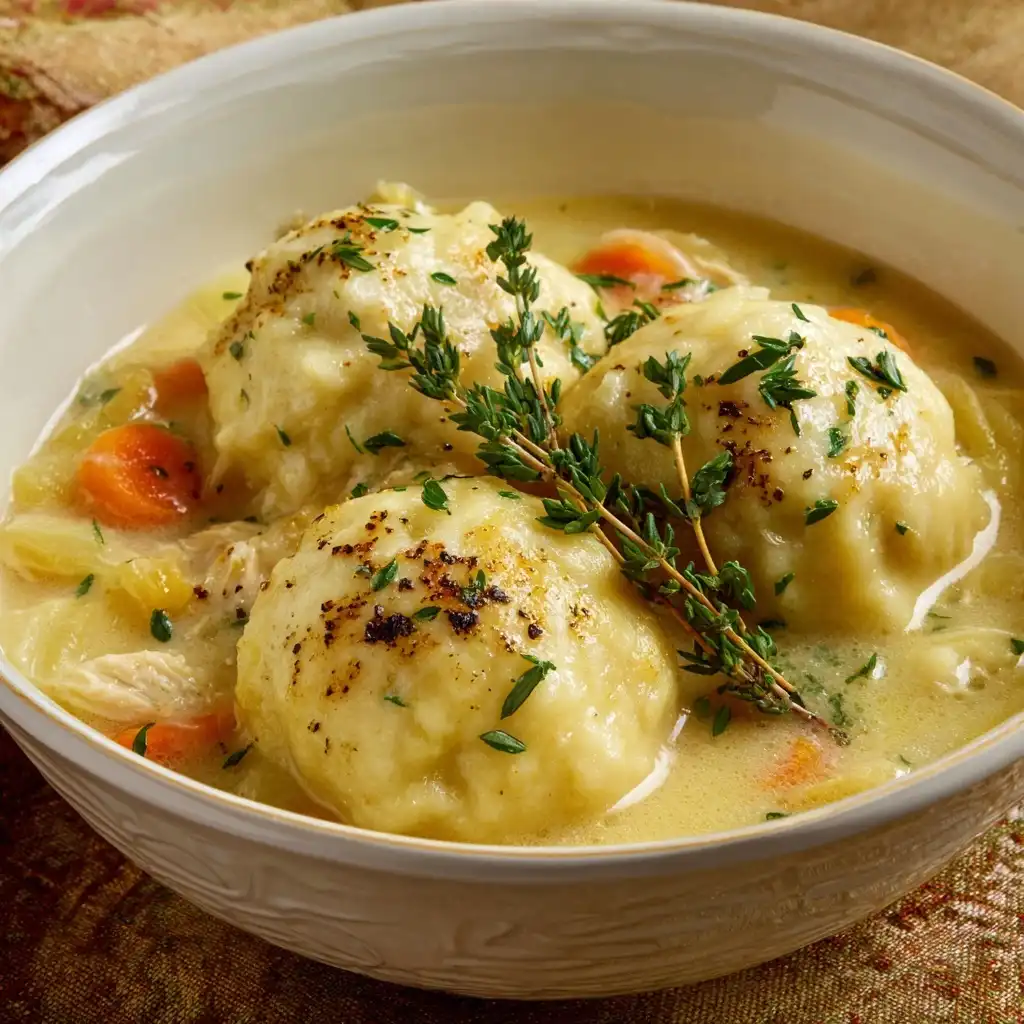
Chicken and dumplings is more than just a dish—it’s a cherished culinary heirloom, a soul-soothing embrace in bowl form. Revered across generations and regions, this classic comfort food marries tender, slow-simmered chicken in a rich, velvety broth with soft, pillowy dumplings that gently poach to ethereal lightness. Whether served on a frost-kissed winter evening, at a Sunday family supper, or as a restorative meal during times of illness or celebration, chicken and dumplings evokes nostalgia, care, and culinary tradition at its most heartfelt. Its enduring appeal lies not only in its simplicity and accessibility but also in its remarkable adaptability—each cook adds their own signature: a splash of cream, a hint of thyme, a pinch of cayenne, or even a secret dumpling technique passed down through handwritten recipe cards and whispered kitchen wisdom. This guide dives deep into every dimension of the dish—its origins, its science, its soul—so you can master it with confidence, creativity, and reverence.
The History
The roots of chicken and dumplings stretch back centuries, intertwining European, African, and Indigenous American foodways on North American soil. Its earliest ancestors likely emerged from medieval English “dumplins”—dense, boiled dough parcels served in stews—and Scottish “clapshot”-style broths thickened with oat or barley dumplings. As British settlers brought these techniques to colonial America, resourcefulness transformed them: frugal cooks used inexpensive, readily available ingredients—stewing hens too tough for roasting, leftover broth, and pantry staples like flour, lard, and buttermilk—to create nourishing, one-pot meals. In the American South, enslaved African cooks profoundly shaped the dish’s evolution, introducing techniques such as using rendered fat for richer dumpling tenderness, incorporating herbs like sage and parsley for layered flavor, and mastering the delicate balance between broth clarity and dumpling integrity—a skill honed through generations of intuitive, hands-on cooking. By the 19th century, chicken and dumplings had become a cornerstone of Appalachian, Deep South, and Midwest home kitchens, often prepared for large gatherings, church suppers, and harvest celebrations. It gained national recognition in the early 20th century through community cookbooks, agricultural extension bulletins, and later, mid-century television chefs who championed “homestyle” cooking. Today, regional interpretations abound: the Pennsylvania Dutch favor wide, flat “slick” dumplings; Southern cooks often use buttermilk and baking powder for lift; Midwestern versions may include carrots and celery in the broth; while coastal variations sometimes add tarragon or lemon zest. Despite its humble beginnings, chicken and dumplings endures as a symbol of resilience, hospitality, and the quiet artistry of everyday cooking.
Ingredients Breakdown
Every exceptional pot of chicken and dumplings begins with intentionality—not just in measurement, but in understanding *why* each ingredient matters:
- Whole Chicken (3–4 lbs) or Bone-In Chicken Pieces: Preferred over boneless breasts for depth of flavor and collagen-rich gelatin that naturally thickens the broth. A stewing hen offers unmatched richness, while a mix of thighs, drumsticks, and backs delivers optimal balance of meat, fat, and marrow. Skin-on pieces contribute essential flavor and body.
- Chicken Stock or Broth (6–8 cups): Homemade stock—simmered for 3–4 hours with bones, aromatics, and herbs—is ideal. Store-bought low-sodium broth works well when enhanced with additional roasted chicken bones, dried porcini mushrooms, or a spoonful of Better Than Bouillon Roasted Chicken base for umami depth.
- Aromatics (Mirepoix + Extras): Onions (yellow or sweet), carrots, and celery form the foundational trinity. Add garlic (minced fresh, not jarred), leeks (white and light green parts, finely sliced), and a small parsnip for subtle sweetness and complexity. For warmth, include a bay leaf, 4–5 black peppercorns, and a small bundle of fresh thyme and parsley stems (tied with kitchen twine).
- Fat for Sautéing: Unsalted butter (for richness and nutty aroma), rendered chicken schmaltz (for authenticity and depth), or neutral oil (like avocado or grapeseed) for high-heat stability. Avoid olive oil for initial sautéing unless using a very mild, refined version—its low smoke point and assertive flavor can overwhelm.
- Thickening Agents: A classic roux (equal parts fat and flour, cooked to pale blond) provides silkiness and sheen without cloudiness. Alternatively, a slurry (cornstarch + cold broth) yields a glossy, lighter texture—ideal for gluten-free adaptations. Some traditionalists use a “beurre manié” (kneaded paste of softened butter + flour) whisked in at the end for last-minute thickening and gloss.
- Dumpling Flour Blend: All-purpose flour remains the gold standard for structure and tenderness. For elevated texture, substitute 25% of the flour with soft wheat pastry flour or cake flour to reduce gluten development. Whole-wheat pastry flour adds nuttiness and fiber—but limit to 15% to avoid toughness.
- Liquid for Dumplings: Buttermilk is the quintessential choice—its acidity tenderizes gluten and reacts with baking powder for gentle lift. Alternatives include whole milk + 1 tsp vinegar (let sit 5 min), unsweetened almond or oat milk (for dairy-free), or even the reserved warm broth (for ultra-integrated flavor). Avoid skim milk—it lacks the fat needed for tenderness.
- Leavening: Double-acting baking powder (not baking soda alone) ensures reliable rise. Always check expiration date—old powder yields dense, gummy dumplings. For extra fluff, add ¼ tsp baking soda *only if* using an acidic liquid like buttermilk or sour cream.
- Fat for Dumplings: Cold, solid fat is critical: unsalted butter (cut into small cubes and chilled), lard (traditional, yields unparalleled tenderness), or full-fat cream cheese (surprisingly effective for richness and moisture retention). Never substitute oil—it won’t create the necessary steam pockets.
- Seasonings: Fine sea salt and freshly ground white or black pepper are non-negotiable. Freshly grated nutmeg (a pinch) enhances savory depth. Optional accents: 1 tsp dried poultry seasoning, a dash of smoked paprika, or chopped fresh chives folded into the dumpling dough.
- Finishing Touches: Heavy cream or half-and-half (2–3 tbsp, stirred in off-heat), a splash of dry sherry or Madeira (½ tbsp), lemon juice (½ tsp, brightens richness), and a generous handful of fresh dill, parsley, or chives added just before serving.
Step-by-Step Recipe
- Prepare the Chicken & Broth Base: Rinse chicken pieces and pat *very* dry. Season generously with salt and pepper. In a heavy-bottomed Dutch oven (6–7 qt), heat 2 tbsp fat over medium-high heat until shimmering. Brown chicken in batches—do not crowd—until deeply golden on all sides (6–8 min per batch). Transfer to a plate. Pour off excess fat, leaving ~1 tbsp.
- Sauté Aromatics: Reduce heat to medium. Add onions, carrots, and celery; cook 6–8 min until softened and lightly caramelized. Stir in garlic, leeks, and parsnip; cook 2 min more until fragrant. Sprinkle in ¼ cup flour; stir constantly 2 min to cook out raw taste, forming a smooth, sandy roux.
- Build the Broth: Gradually whisk in 6 cups warm stock, scraping up all browned bits. Add bay leaf, peppercorns, thyme bundle, and browned chicken (plus any accumulated juices). Bring to a gentle simmer—not a boil. Partially cover and simmer 45–60 min, skimming foam occasionally, until chicken is fall-off-the-bone tender.
- Shred & Strain: Remove chicken with tongs; cool slightly. Discard skin and bones; shred meat into bite-sized pieces, discarding cartilage. Strain broth through a fine-mesh sieve into a large bowl, pressing solids to extract maximum flavor. Discard solids. Skim excess fat from broth surface using a ladle or fat separator.
- Finish the Broth: Return defatted broth to Dutch oven. Stir in shredded chicken. Simmer gently 10 min. Adjust seasoning—taste critically: it should be well-salted, balanced, and deeply savory. If thin, thicken with a slurry (1 tbsp cornstarch + 2 tbsp cold broth) or beurre manié (1 tbsp butter + 1 tbsp flour, kneaded smooth). Simmer 3 min until glossy and cohesive.
- Make Dumpling Dough: In a large bowl, whisk together 2 cups flour, 1½ tsp baking powder, 1 tsp salt, ¼ tsp white pepper, and optional nutmeg. Grate ½ cup *very cold* butter (or lard) directly into flour; use fingertips or a pastry cutter to work fat into pea-sized crumbs. Stir in ¾ cup cold buttermilk *just until* a shaggy dough forms—do not overmix. Let rest 10 min (hydrates flour, relaxes gluten).
- Drop Dumplings: Bring broth to a steady, gentle simmer (small bubbles breaking surface, not rolling). Using two spoons or a cookie scoop (1.5 tbsp size), drop dumplings onto broth surface—leave space between (they’ll expand). Do *not* stir after adding.
- Steam, Don’t Boil: Cover Dutch oven *tightly* with lid. Reduce heat to low. Steam dumplings 18–22 min—*do not lift lid* for first 15 min (steam escape ruins texture). Dumplings are done when puffed, firm to touch, and a toothpick inserted comes out clean.
- Rest & Finish: Remove from heat. Let stand, covered, 5 min—this allows dumplings to finish cooking gently and absorb broth flavor. Gently stir in cream, sherry (if using), lemon juice, and half the herbs. Taste and adjust salt/pepper. Ladle into warm bowls; garnish with remaining herbs and a crack of white pepper.
Tips
- Browning is Non-Negotiable: Deep Maillard reaction = flavor foundation. Pat chicken *bone-dry*, heat fat until shimmering (not smoking), and resist moving pieces until they release easily.
- Low & Slow Simmering: A vigorous boil breaks down collagen unevenly and makes chicken stringy. Maintain tiny bubbles—use a flame tamer if your stove runs hot.
- Broth Clarity vs. Body: For clear broth, chill overnight and skim solidified fat. For richer mouthfeel, retain some emulsified fat—just skim excess.
- Dumpling Consistency is Key: Dough should be sticky but hold shape when scooped—if too wet, add 1 tsp flour; too dry, add ½ tsp buttermilk. Overmixing = tough dumplings.
- Cold Fat, Cold Liquid: Warm butter melts prematurely, coating flour instead of creating steam pockets. Chill dough 10 min if kitchen is warm.
- Steam, Not Boil: Lifting the lid releases steam pressure, causing dumplings to collapse or become gummy. Set a timer—and resist temptation!
- Don’t Crowd the Pot: Too many dumplings lower broth temperature, leading to soggy bottoms. Cook in batches if needed.
- Taste Before Dumplings: Broth must be perfectly seasoned *before* adding dumplings—they absorb salt but don’t add flavor.
- Leftover Magic: Reheat gently on stove with a splash of broth—microwaving makes dumplings rubbery. Freeze broth separately; dumplings are best fresh.
- Acid is Your Friend: A final squeeze of lemon or dash of vinegar lifts heaviness and balances fat—never skip this step.
Variations and Customizations
Regional & Cultural Twists
- Pennsylvania Dutch “Slick” Dumplings: Roll dough ⅛-inch thick, cut into 1-inch squares, and drop directly into simmering broth. Yields flat, tender, ribbon-like dumplings.
- Southern Buttermilk Drop Dumplings: Add 1 tbsp chopped fresh sage and ½ tsp cayenne to dough; serve with hot sauce on the side.
- Appalachian Sour Cream Dumplings: Replace buttermilk with equal parts full-fat sour cream + milk; enriches flavor and guarantees tenderness.
- Creole-Inspired: Sauté holy trinity (onion, bell pepper, celery), add smoked sausage (andouille) with chicken, and finish with file powder and green onions.
- Asian-Fusion: Use ginger-garlic paste, star anise, and soy sauce in broth; dumplings made with rice flour + tapioca starch; garnish with scallions and sesame oil.
Dietary Adaptations
- Gluten-Free: Use 1:1 GF flour blend (with xanthan gum); replace buttermilk with GF oat milk + vinegar; add ½ tsp psyllium husk for binding.
- Dairy-Free: Substitute lard or refined coconut oil for butter; use unsweetened almond or cashew milk + lemon juice; omit cream finish or use coconut cream.
- Low-Carb/Keto: Broth-only version (no dumplings); serve with keto-friendly “cloud dumplings” (whipped egg whites + cream cheese + almond flour, steamed).
- Vegetarian “Chicken” & Dumplings: Use king oyster mushrooms (shredded, marinated in tamari + liquid smoke + nutritional yeast) and vegetable broth enriched with miso and dried shiitakes.
- Instant Pot Version: Sauté chicken and aromatics, pressure cook 25 min, quick release, then use “Saute” mode to thicken and steam dumplings (cover with foil under lid to trap steam).
Gourmet Elevations
- Truffle Infusion: Whisk ½ tsp white truffle oil into finished broth; fold black truffle zest into dumpling dough.
- Herb-Infused Broth: Steep fresh tarragon, chervil, and lemon verbena in hot broth 10 min before straining—remove before adding chicken.
- Smoked Chicken: Cold-smoke chicken pieces (hickory or applewood) for 30 min before browning for complex depth.
- Wine-Braised: Deglaze pot with ½ cup dry Riesling or Chenin Blanc after sautéing aromatics; reduce by half before adding stock.
- Umami Bomb: Add 1 tsp fish sauce (secret weapon!) or 1 tbsp rehydrated dried porcini soaking liquid to broth.
Health Considerations and Nutritional Value
A single 1.5-cup serving (chicken, broth, and 4 dumplings) provides approximately 420–480 calories, with notable nutritional benefits when prepared thoughtfully:
- High-Quality Protein: ~32g per serving—supports muscle maintenance, satiety, and immune function. Chicken thighs offer more iron and B12 than breasts; bone-in cooking adds collagen peptides beneficial for joint and gut health.
- Collagen & Gelatin: Long-simmered broth contains glycine and proline—amino acids linked to improved skin elasticity, reduced inflammation, and digestive healing (especially for leaky gut syndrome).
- Low Added Sugar: Naturally sugar-free when no sweeteners are added—ideal for low-glycemic diets.
- Customizable Sodium: Using low-sodium broth and controlling added salt makes it suitable for hypertension management. Herbs and spices (garlic, turmeric, black pepper) provide anti-inflammatory benefits without sodium.
- Fiber Potential: Adding diced zucchini, spinach, or kale boosts fiber (3–5g/serving) and phytonutrients. Whole-grain dumpling flour increases fiber further.
- Healthy Fats: Using pasture-raised chicken and grass-fed butter/lard provides omega-3s and CLA (conjugated linoleic acid), associated with metabolic health.
- Considerations: Dumplings contribute refined carbs—opt for whole-grain blends or portion control. Cream finish adds saturated fat; use sparingly or substitute Greek yogurt for tang and protein. Those with gluten sensitivity must use certified GF flour and avoid cross-contamination.
- Functional Additions: Stir in 1 tsp ground flaxseed (omega-3s), ½ tsp turmeric + black pepper (curcumin absorption), or chopped kale (vitamin K, lutein) for enhanced wellness support.
Ingredients
For the Broth & Chicken
- 1 (3.5–4 lb) whole pastured chicken, cut into 8 pieces (or 2 lbs bone-in, skin-on chicken thighs + 2 lbs drumsticks)
- 2 tbsp unsalted butter or rendered chicken fat (schmaltz)
- 1 large yellow onion, diced (about 1.5 cups)
- 2 large carrots, peeled and diced (1 cup)
- 2 ribs celery, diced (¾ cup)
- 1 medium leek (white/light green), cleaned and thinly sliced (½ cup)
- 1 small parsnip, peeled and diced (½ cup)
- 4 cloves garlic, minced
- ¼ cup all-purpose flour (for roux)
- 6–8 cups low-sodium chicken stock (preferably homemade)
- 1 bay leaf
- 5 black peppercorns
- 1 small bundle fresh thyme + parsley stems, tied
- 1½ tsp fine sea salt (adjust to taste)
- Freshly ground white or black pepper
For the Dumplings
- 2 cups all-purpose flour (or 1.5 cups AP + ½ cup pastry flour)
- 1½ tsp double-acting baking powder
- 1 tsp fine sea salt
- ¼ tsp freshly ground white pepper
- ¼ tsp freshly grated nutmeg (optional but recommended)
- ½ cup (1 stick) unsalted butter, very cold and cubed—or ⅓ cup lard
- ¾ cup cold buttermilk (or milk + 1 tsp vinegar, rested 5 min)
For Finishing
- 2–3 tbsp heavy cream or half-and-half
- ½ tbsp dry sherry or Madeira (optional)
- ½ tsp fresh lemon juice
- ¼ cup finely chopped fresh dill, parsley, or chives
- Additional flaky sea salt and white pepper for garnish
Directions
- Prep Chicken: Pat chicken pieces extremely dry with paper towels. Season generously with 1 tsp salt and ½ tsp pepper.
- Brown Chicken: Heat butter/fat in a 6–7 quart Dutch oven over medium-high heat until shimmering. Working in batches, add chicken skin-side down. Press gently with spatula. Cook 6–8 min per side until deeply golden brown. Transfer to plate; pour off all but 1 tbsp fat.
- Sauté Aromatics: Reduce heat to medium. Add onion, carrots, celery, leek, and parsnip. Cook 7 min, stirring occasionally, until softened and edges begin to caramelize. Add garlic; cook 2 min until fragrant.
- Make Roux: Sprinkle flour over vegetables. Stir constantly 2 min until flour is fully incorporated and mixture smells nutty (do not let brown).
- Build Broth: Gradually whisk in 6 cups warm stock, ensuring no lumps remain. Scrape bottom to lift browned bits. Add bay leaf, peppercorns, herb bundle, browned chicken, and any juices. Bring to gentle simmer.
- Simmer: Partially cover. Simmer 45–60 min, skimming foam. Chicken should be fork-tender and nearly falling off bones.
- Shred & Strain: Remove chicken; cool slightly. Discard skin/bones; shred meat. Strain broth through fine-mesh sieve into bowl; press solids. Skim fat. Return broth + chicken to pot.
- Season Broth: Simmer 10 min. Taste and adjust salt/pepper. If too thin, whisk in slurry (1 tbsp cornstarch + 2 tbsp cold broth); simmer 3 min until glossy.
- Make Dumpling Dough: In large bowl, whisk dry ingredients. Cut in cold butter/lard with pastry cutter or fingers until pea-sized crumbs form. Stir in buttermilk with fork until shaggy dough forms—no dry flour, no overmixing. Rest 10 min.
- Steam Dumplings: Bring broth to gentle simmer. Drop dough by 1.5-tbsp portions onto surface. Cover *tightly*. Reduce heat to low. Steam 18–22 min—do NOT lift lid for first 15 min.
- Rest & Finish: Turn off heat. Let stand covered 5 min. Stir in cream, sherry, lemon juice, and half herbs. Taste. Ladle into bowls; garnish with remaining herbs and white pepper.
FAQ
- Can I use boneless, skinless chicken breasts?
- Yes—but they’ll yield less flavorful, thinner broth and drier meat. Simmer only 20–25 min to prevent toughness. For best results, supplement with chicken wings or necks for collagen.
- Why are my dumplings gummy or dense?
- Overmixing dough, using warm fat/liquid, lifting the lid too soon, or boiling (not simmering) broth are the top causes. Ensure cold ingredients, gentle folding, tight lid, and low heat.
- Can I make dumplings ahead?
- Dumpling dough can be refrigerated (covered) up to 24 hours. Cooked dumplings don’t reheat well—they turn rubbery. Prepare broth ahead; steam dumplings fresh.
- How do I thicken broth without flour?
- Reduce uncovered 15–20 min; add 1 tbsp tomato paste (simmer 5 min); or stir in 1 tsp unflavored gelatin bloomed in 1 tbsp cold water.
- Can I freeze chicken and dumplings?
- Freeze broth + chicken for up to 3 months. Dumplings disintegrate when frozen/thawed. Thaw broth overnight, reheat gently, and make fresh dumplings.
- What’s the difference between drop dumplings and rolled dumplings?
- Drop dumplings are softer, more biscuit-like, and quicker. Rolled dumplings (cut from sheeted dough) are firmer, chewier, and hold shape better in long simmers—ideal for leftovers.
- My broth is too salty—how can I fix it?
- Add a peeled potato chunk and simmer 10 min (it absorbs salt); dilute with unsalted broth or water; or balance with acid (lemon juice) and fat (cream).
- Can I use an air fryer for dumplings?
- No—dumplings require steam to cook properly. Air fryers dry them out. Stick to stovetop or Instant Pot (with steam function).
- Are dumplings supposed to be doughy inside?
- No—they should be cooked through: light, fluffy, and springy. Undercooked centers indicate insufficient steaming time or too-low heat. Insert toothpick—if wet batter clings, steam 2–3 min longer.
- What wine pairs well with chicken and dumplings?
- A creamy Chardonnay (unoaked or lightly oaked), Pinot Gris, or dry Riesling complements richness. For red lovers, try a light-bodied Pinot Noir or Gamay.
Summary
Chicken and dumplings is a timeless, technique-driven masterpiece where patience, precision, and respect for humble ingredients converge to create profound comfort and nourishment.
From its multicultural roots to its infinite variations—from Appalachian hearths to modern gourmet kitchens—it remains a living tradition, inviting every cook to leave their mark while honoring the generations who perfected its soulful alchemy.