
Introduction
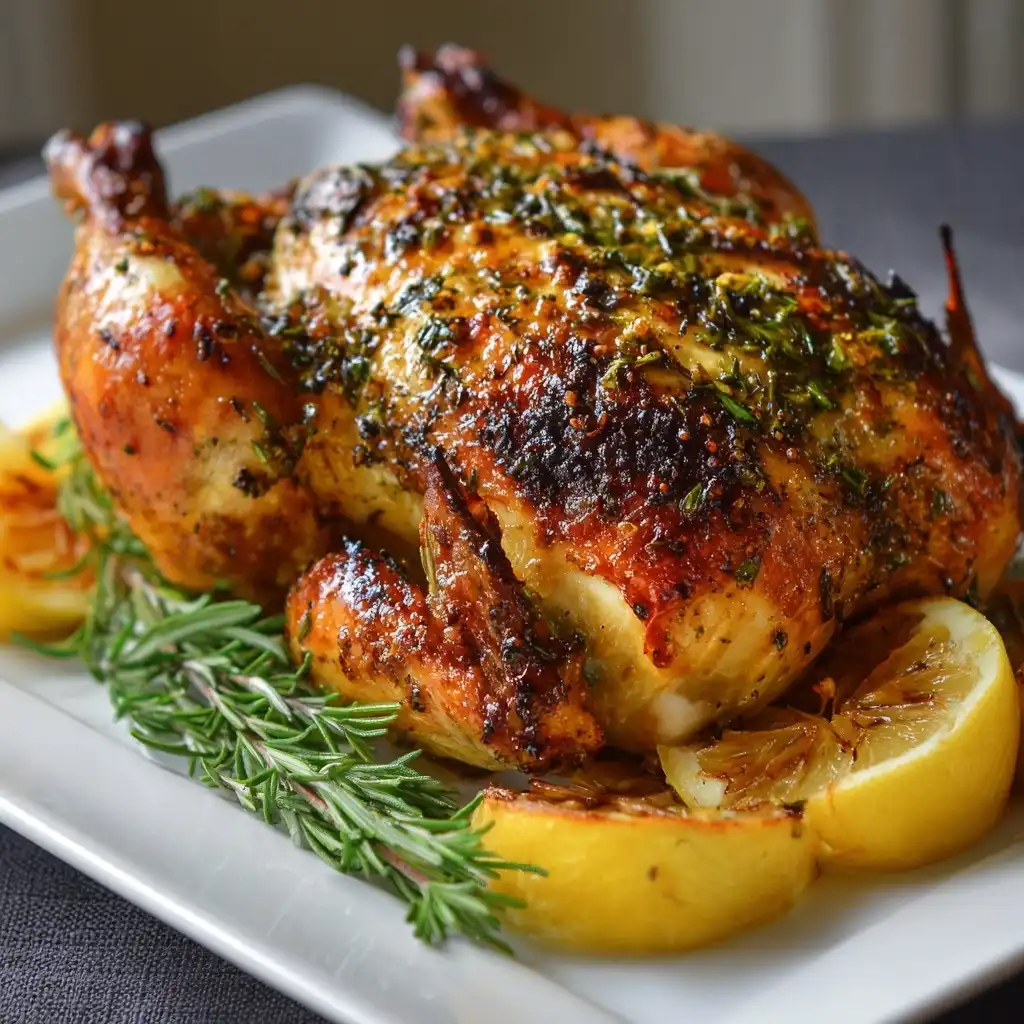
Lemon Herb Roasted Chicken is a timeless, elegant, and deeply flavorful dish that effortlessly bridges rustic home cooking with refined dinner-party sophistication. With its golden, crackling skin, tender and juicy interior, and an aromatic symphony of citrus brightness and earthy herbs, this recipe has earned its place as a cornerstone of modern roasting traditions. Whether served on a weeknight with simple roasted vegetables or elevated with seasonal garnishes for Sunday suppers and holiday gatherings, it delivers consistent excellence—balancing simplicity in technique with extraordinary depth in taste. Its universal appeal lies not only in its approachable ingredients and forgiving method but also in its remarkable adaptability: it welcomes pantry staples or gourmet upgrades, accommodates dietary preferences, and transforms based on regional interpretations and personal creativity. This guide goes beyond the basics—it’s a comprehensive, chef-informed exploration designed to empower both novice cooks and seasoned home chefs to master, personalize, and savor every facet of this beloved classic.
The History
The origins of lemon herb roasted chicken stretch across continents and centuries—woven into the culinary DNA of Mediterranean, Middle Eastern, and European traditions. Roasting whole birds over open flames or in clay ovens dates back to ancient Rome and Persia, where herbs like rosemary, thyme, and sage were prized for both flavor and preservation. Citrus—particularly lemons—entered widespread European cooking after Arab traders introduced them to the Iberian Peninsula and Sicily during the 10th–12th centuries. By the Renaissance, lemon-infused poultry appeared in Italian trattoria kitchens and French provincial households alike, often stuffed with garlic, lemon halves, and wild herbs before being spit-roasted over wood coals. In the 19th century, British cookbooks such as Eliza Acton’s Modern Cookery for Private Families (1845) included “Chicken à la Provençale,” featuring lemon zest, parsley, and olive oil—an early precursor to today’s version. The dish gained mainstream popularity in mid-20th-century America through iconic food magazines like Bon Appétit and Julia Child’s televised demonstrations, which emphasized technique, temperature control, and the transformative power of fat, acid, and aromatics. Today, Lemon Herb Roasted Chicken stands as a global comfort standard—honoring ancestral methods while embracing contemporary wellness trends, sustainability practices (e.g., pasture-raised birds), and multicultural infusions—from za’atar and sumac in Levantine adaptations to gochujang-lemon glazes in Korean-American fusions.
Ingredients Breakdown
Every ingredient in this recipe plays a precise, purposeful role—no element is merely decorative. Understanding their functions deepens your control over flavor, texture, moisture retention, and browning:
- Whole Chicken (3.5–4.5 lbs / 1.6–2 kg): Opt for air-chilled, organic, or pasture-raised birds when possible—their denser muscle structure and richer fat marbling yield superior juiciness and deeper flavor. A bird within this weight range ensures even cooking; smaller chickens risk drying out, while larger ones may undercook internally before the skin crisps.
- Fresh Lemons (2–3 medium): Not just for acidity—lemons contribute volatile oils (in the zest), citric acid (for tenderizing muscle fibers), and aromatic compounds that volatilize during roasting. One lemon is zested and juiced for the marinade/rub; one or two are quartered and stuffed into the cavity to create internal steam and infuse aroma from within.
- Extra-Virgin Olive Oil (¼ cup + extra for basting): Acts as a flavor carrier, heat conductor, and moisture sealant. High-quality EVOO adds grassy, peppery notes and promotes Maillard browning. Avoid refined or light olive oils—they lack nuance and smoke at lower temperatures.
- Fresh Herbs (1/4 cup each finely chopped): Rosemary (piney, camphorous), thyme (earthy, floral), and parsley (bright, chlorophyll-rich) form the aromatic trinity. Freshness is non-negotiable—dried herbs lack volatile oils and can turn bitter under high heat. Reserve some whole sprigs for cavity stuffing and garnish.
- Garlic (6–8 cloves, unpeeled or lightly crushed): Raw garlic burns easily, so we use whole, unpeeled cloves nestled under the skin or around the pan—they slowly caramelize, mellowing into sweet, nutty depth without bitterness.
- Shallots or Yellow Onions (1 large, quartered): Provide natural sugars that caramelize and form the base of a rich, savory pan sauce. Their mild allium flavor enhances umami without overpowering.
- Sea Salt (1.5–2 tsp fine or 2–2.5 tsp flaky): Essential for seasoning meat at a cellular level. Apply generously under and over the skin—salt draws out moisture initially, then reabsorbs it with dissolved proteins, enhancing tenderness and flavor penetration.
- Freshly Ground Black Pepper (1 tsp): Adds warmth and subtle fruitiness. Whole peppercorns ground just before use retain volatile oils far longer than pre-ground.
- Optional Enhancers: Anchovy paste (½ tsp—umami booster, undetectable in final flavor), Dijon mustard (1 tbsp—emulsifies marinade and deepens crust), honey or maple syrup (1 tsp—accelerates caramelization), or capers (1 tbsp—added post-roast for briny contrast).
Step-by-Step Recipe
- Prep the Chicken (1 hour ahead minimum, ideally overnight): Remove chicken from fridge 30 minutes before prep. Pat *extremely* dry inside and out with paper towels—moisture is the enemy of crisp skin. Using your fingers, gently loosen the skin over the breasts and thighs, taking care not to tear it. Tuck 2–3 sprigs each of rosemary and thyme, half the garlic cloves (unpeeled), and half the lemon zest under the skin. Rub the entire surface—including cavity—with olive oil. Combine remaining zest, juice of 1 lemon, chopped herbs, salt, pepper, and optional enhancers (e.g., anchovy paste or mustard) into a paste; rub liberally over the outside and inside cavity. Refrigerate uncovered for at least 1 hour—or up to 24 hours—for maximum flavor infusion and skin dehydration (critical for crunch).
- Preheat & Prep Pan (20 minutes before roasting): Position oven rack in lowest third. Preheat oven to 425°F (220°C). Place a heavy-duty rimmed baking sheet or cast-iron roasting pan in the oven while heating—this creates immediate sear upon contact.
- Stuff & Arrange (5 minutes): Quarter remaining lemons and stuff tightly into cavity with remaining herb sprigs and garlic cloves. Tuck wingtips behind back and tie legs together with kitchen twine (prevents splaying and ensures even cooking). Scatter shallot quarters and remaining unpeeled garlic cloves around the pan.
- Roast (Initial High-Heat Phase – 30 minutes): Carefully place chicken breast-side up onto the hot pan. Roast at 425°F for 30 minutes—this jumpstarts skin rendering and browning.
- Reduce Heat & Continue Roasting (45–60 minutes): Without opening oven, reduce temperature to 375°F (190°C). Continue roasting until an instant-read thermometer inserted into the thickest part of the thigh (avoiding bone) reads 165°F (74°C)—typically 45–60 more minutes depending on size. Baste every 20 minutes with pan juices (and optional extra olive oil) for extra gloss and flavor.
- Rest (Essential 25–30 minutes): Transfer chicken to a wire rack over a cutting board or platter. Tent *very loosely* with foil—never seal tightly, or steam will soften the skin. Resting allows juices to redistribute; cutting too soon releases up to 30% of moisture. Use this time to make pan sauce (see Tips).
- Carve & Serve: Remove twine. Carve using a sharp chef’s knife: remove legs/thighs first, then slice breasts against the grain. Spoon warm pan sauce and roasted lemon-garlic-shallot confit over servings. Garnish with fresh herb leaves and lemon wedges.
Tips
- Skin-Crisping Science: For ultra-crisp, shatteringly golden skin, try the “dry-brine + air-dry” method: salt chicken heavily 24–48 hours ahead, refrigerate uncovered on a rack, and let surface moisture fully evaporate. This yields restaurant-level crunch.
- Thermometer Non-Negotiable: Visual cues (golden color, leg wiggle) are unreliable. An accurate instant-read thermometer prevents overcooking—a single degree above 165°F begins drying out delicate breast meat.
- Pan Sauce Perfection: After removing chicken, place roasting pan over medium heat. Pour off excess fat, leaving ~1 tbsp. Add ¼ cup dry white wine or chicken stock, scraping vigorously with a wooden spoon to lift browned bits (fond). Simmer 2–3 minutes, then whisk in 1 tbsp cold butter, swirling until emulsified. Finish with a squeeze of fresh lemon juice and chopped parsley.
- No-Stick Roasting Hack: Line your pan with parchment paper *before* preheating—prevents sticking, simplifies cleanup, and doesn’t interfere with browning. Avoid aluminum foil—it reflects heat and inhibits caramelization.
- Even Cooking Trick: If breasts are browning too fast, tent *only* the breast area with foil during the last 20 minutes—leave legs exposed to ensure thorough cooking.
- Leftover Magic: Shred cooled meat for lemon-herb chicken salad (with Greek yogurt, celery, and toasted almonds), enchilada filling, or add to grain bowls with farro, roasted squash, and arugula.
- Herb Substitutions: Swap rosemary for savory (peppery, minty) or marjoram (mild oregano); thyme for lemon thyme (intensifies citrus notes); parsley for cilantro if serving with Latin or Asian accents.
Variations and Customizations
This recipe is a vibrant canvas—here are inspired, tested variations spanning global flavors and dietary needs:
- Mediterranean-Inspired: Add ½ tsp crumbled dried oregano + 1 tbsp chopped sun-dried tomatoes (oil-packed) to herb rub; stuff cavity with kalamata olives and lemon slices; serve with tzatziki and lemon-dill quinoa.
- Provençal Twist: Replace half the olive oil with herbes de Provence-infused oil; add 1 minced anchovy fillet and 1 tsp tomato paste to marinade; finish with lavender honey drizzle.
- Asian-Fusion: Substitute 2 tbsp toasted sesame oil + 1 tbsp grated fresh ginger + 1 minced scallion for half the olive oil and herbs; marinate with 1 tbsp tamari and 1 tsp rice vinegar; garnish with sesame seeds and micro-cilantro.
- Spicy Harissa Version: Mix 2 tbsp North African harissa paste into herb-oil rub; add ½ tsp smoked paprika and 1 tsp ground cumin; serve with preserved lemon–couscous and roasted carrots.
- Dairy-Free & Paleo: Use ghee instead of olive oil; omit optional butter in pan sauce—replace with coconut aminos and arrowroot slurry for thickening.
- Keto-Friendly: Boost healthy fats—add 2 tbsp MCT oil to marinade; serve with cauliflower “potato” gratin and sautéed spinach in garlic-infused avocado oil.
- Vegetarian “Chicken” Alternative: Use a whole roasted cauliflower or king oyster mushroom “steak”—marinate similarly, roast at same temps, and serve with identical pan sauce (vegetable stock base).
- One-Pan Sheet Pan Dinner: Arrange chicken pieces (thighs/drumsticks) alongside baby potatoes, broccoli florets, and red onion wedges tossed in same lemon-herb oil; roast at 425°F for 35–40 minutes.
Health Considerations and Nutritional Value
A 6-ounce (170g) serving of skin-on Lemon Herb Roasted Chicken (without pan sauce) provides approximately:
- Calories: 320–360 kcal
- Protein: 42–46g (complete, highly bioavailable source with all 9 essential amino acids)
- Fat: 16–19g (mostly unsaturated from olive oil and chicken fat; includes heart-healthy oleic acid)
- Carbohydrates: 0.5g (negligible, unless sweeteners added)
- Vitamins & Minerals: Exceptionally rich in B6, B12, niacin, selenium, phosphorus, and zinc—supporting immunity, metabolism, and neurological function. Lemon zest contributes flavonoids (hesperidin, eriocitrin) with antioxidant and anti-inflammatory properties.
Dietary Notes:
- Sodium-Conscious Cooks: Reduce added salt by 25% and rely on lemon, herbs, and garlic for flavor; rinse chicken briefly before patting dry to remove surface brine (if store-bought).
- Low-FODMAP Adaptation: Omit garlic and shallots; substitute infused garlic oil (FODMAP-safe) and green onion tops (scallion greens only); use chives and lemon verbena for herbal notes.
- Heart-Healthy Focus: Remove skin before eating (cuts ~3g saturated fat per serving) or choose skinless, bone-in thighs for higher collagen and monounsaturated fat content.
- Food Safety Reminder: Always wash hands, utensils, and surfaces after handling raw poultry. Never rinse chicken under water (aerosolizes bacteria). Use separate cutting boards for raw meat and produce.
Ingredients
- 1 (3.5–4.5 lb / 1.6–2 kg) whole chicken, giblets removed
- 2–3 medium lemons, preferably organic
- ¼ cup extra-virgin olive oil, plus more for basting
- ¼ cup fresh rosemary leaves, finely chopped (about 4–5 sprigs)
- ¼ cup fresh thyme leaves, finely chopped (about 8–10 sprigs)
- ¼ cup fresh flat-leaf parsley, finely chopped
- 6–8 garlic cloves, unpeeled
- 1 large shallot or yellow onion, quartered
- 2 tsp fine sea salt (or 2.5 tsp flaky salt)
- 1 tsp freshly ground black pepper
- Kitchen twine, for trussing
- Optional: ½ tsp anchovy paste, 1 tbsp Dijon mustard, 1 tsp honey
Directions
- Pat chicken *thoroughly* dry with paper towels—inside cavity and all over skin. Let sit at room temperature 30 minutes.
- In a small bowl, combine zest of 1 lemon, juice of 1 lemon, olive oil, chopped rosemary, thyme, parsley, salt, pepper, and any optional enhancers. Mix into a cohesive paste.
- Gently loosen skin over breasts and thighs. Tuck 2–3 sprigs rosemary, 2–3 sprigs thyme, and 3–4 unpeeled garlic cloves underneath. Rub half the herb paste under skin.
- Rub remaining paste all over exterior and inside cavity. Refrigerate uncovered for 1–24 hours.
- Preheat oven to 425°F (220°C). Place heavy roasting pan in oven to heat.
- Quarter remaining lemons. Stuff cavity tightly with lemon quarters, remaining herb sprigs, and remaining garlic cloves. Truss legs with twine. Tuck wings.
- Arrange shallot quarters around pan. Carefully place chicken breast-up onto hot pan.
- Roast at 425°F for 30 minutes. Reduce heat to 375°F. Roast 45–60 more minutes, basting every 20 minutes, until thigh registers 165°F.
- Transfer chicken to rack; loosely tent with foil. Rest 25–30 minutes.
- Meanwhile, make pan sauce: pour off excess fat, deglaze with wine/stock, reduce, swirl in cold butter.
- Carve chicken. Serve with pan sauce, roasted aromatics, and lemon wedges.
FAQ
- Can I use chicken pieces instead of a whole bird?
- Absolutely. Use bone-in, skin-on thighs and drumsticks (2–2.5 lbs). Marinate 30+ minutes. Roast at 425°F for 35–45 minutes until 165°F. Reduce basting frequency—pieces cook faster and dry more easily.
- Why does my skin stay rubbery—not crispy?
- Three main causes: 1) Inadequate drying before roasting—moisture must be eliminated; 2) Oven temperature too low—start high (425°F+) to render fat quickly; 3) Covering too tightly during rest—steam softens skin. Try dry-brining + air-drying for foolproof crunch.
- Can I make this ahead and reheat?
- Yes—but texture changes. For best results: roast fully, cool completely, refrigerate up to 3 days. Reheat *gently*: place in 325°F oven, covered with parchment (not foil), for 20–25 minutes until warmed through. Crisp skin separately under broiler for 2–3 minutes.
- What sides pair best?
- Classic: Garlic-rosemary roasted potatoes, lemon-asparagus sauté, wild rice pilaf with dried cherries. Lighter: Arugula salad with lemon vinaigrette and shaved fennel. Hearty: Creamy polenta with gremolata or roasted root vegetable medley.
- Is it safe to stuff the cavity?
- Yes—when done correctly. Cavity stuffing (with aromatics only, *not* rice or bread-based stuffing) does not impede safe cooking. Ensure internal temp reaches 165°F in thigh. Never stuff with perishable mixtures unless cooked to 165°F throughout (risk of bacterial growth).
- Can I use dried herbs?
- Not recommended for primary flavor—dried herbs lack volatile oils and can turn acrid. If necessary, use 1 tsp dried rosemary + 1 tsp dried thyme (crushed fine) *in addition to* fresh parsley. Never substitute dried for all fresh.
- How do I know when it’s done without a thermometer?
- Unreliable—but if essential: cut between leg and body—if juices run clear (not pink), and leg moves easily in socket, it’s likely done. However, this risks overcooking. A $12 instant-read thermometer is the single best investment for consistent poultry success.
- Can I freeze leftovers?
- Yes—shred or carve meat, cool completely, store in airtight container with 2 tbsp pan sauce. Freeze up to 4 months. Thaw overnight in fridge. Reheat gently in saucepan with splash of broth.
Summary
Lemon Herb Roasted Chicken is a masterclass in balance—where bright citrus cuts through rich poultry, fragrant herbs elevate without overwhelming, and precise roasting technique delivers succulent meat beneath irresistibly crisp, golden skin. It’s a dish rooted in centuries of tradition yet endlessly adaptable to modern tastes, dietary needs, and creative expression.
By understanding the science behind each step—from dry-brining and high-heat searing to strategic resting and pan-sauce alchemy—you don’t just follow a recipe—you cultivate confidence, consistency, and joy in the ritual of roasting.