
Introduction
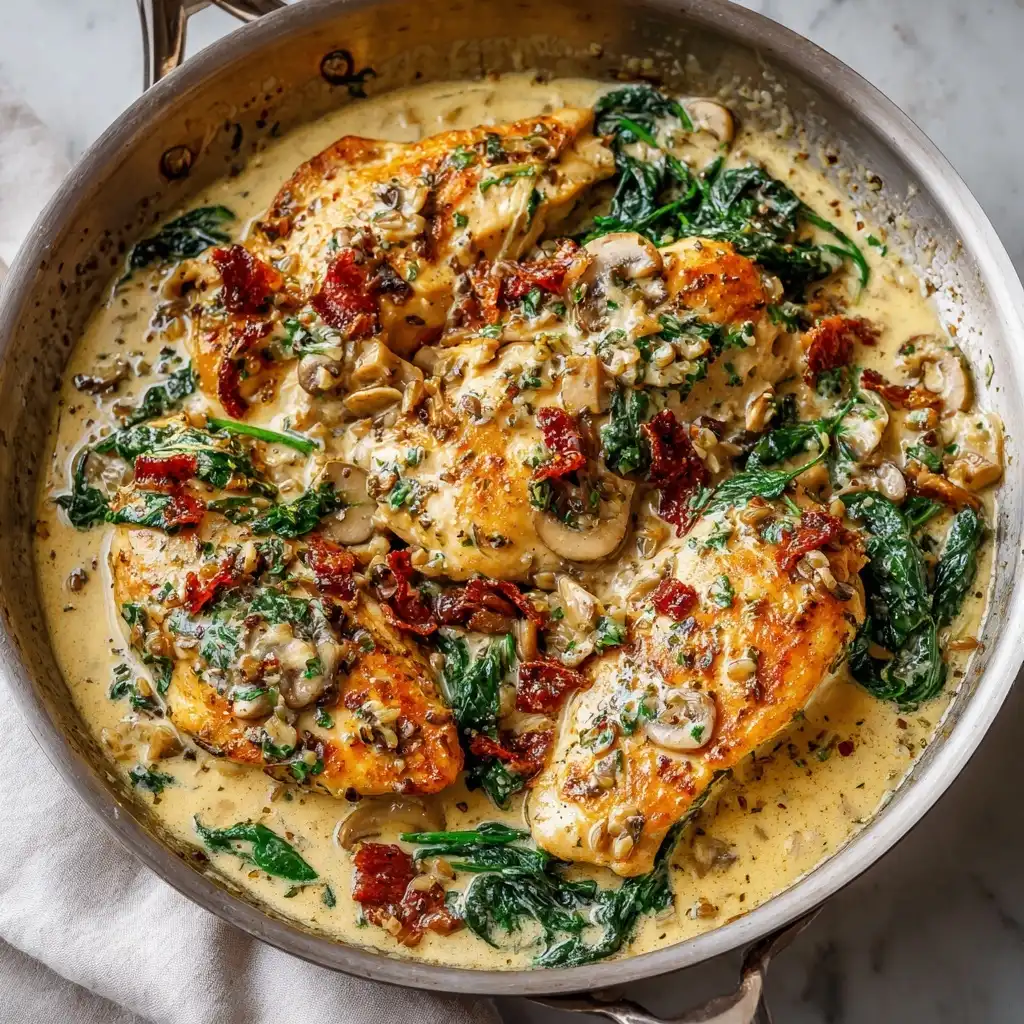
Creamy Tuscan Garlic Chicken is a restaurant-worthy dish that brings the rustic elegance of Italian countryside cooking straight to your home kitchen. With its luscious, velvety sauce infused with roasted garlic, sun-dried tomatoes, fresh herbs, and Parmesan cheese—and tender, golden-brown chicken breasts at its heart—this dish strikes the perfect balance between comfort and sophistication. It’s rich without being heavy, aromatic without overwhelming, and versatile enough to suit weeknight dinners, date nights, or even holiday entertaining. Whether you’re a seasoned cook or just discovering the joys of pan-searing and deglazing, this recipe delivers consistent, crowd-pleasing results every time.
The History
While “Creamy Tuscan Garlic Chicken” isn’t a documented classic from 15th-century Tuscany (where traditional preparations favored olive oil, tomatoes, beans, and simple grilling over cream-based sauces), it is a beloved modern American-Italian fusion creation inspired by the flavors and spirit of Tuscany. The region’s culinary identity centers on *cucina povera*—“poor kitchen”—emphasizing seasonal, local, and minimally processed ingredients: garlic, rosemary, sage, extra-virgin olive oil, San Marzano tomatoes, and pecorino cheese. As Italian immigrants adapted their recipes abroad—and as American home cooks embraced European-inspired techniques—the creamy variant emerged in the late 20th century, likely influenced by French *créme fraîche* and *beurre blanc* traditions, combined with accessible pantry staples like heavy cream and grated Parmigiano-Reggiano. Its popularity exploded in the early 2000s via food blogs, cable cooking shows, and glossy magazines, becoming a staple of meal-prep communities and keto/low-carb circles alike—proof that authenticity evolves, and deliciousness transcends geography.
Ingredients Breakdown
Every exceptional dish begins with intention behind each ingredient—not just measurements, but purpose:
- Chicken Breasts (boneless, skinless): Opt for air-chilled, antibiotic-free, and preferably organic or pasture-raised for superior texture and flavor. Pounding to an even ½-inch thickness ensures uniform cooking and prevents dryness.
- Garlic: Fresh, plump cloves are non-negotiable. Roasting half the garlic beforehand adds deep, caramelized sweetness that balances the sharp raw notes used later for brightness.
- Heavy Cream (36–40% fat): Provides luxurious body and emulsifying stability. Ultra-pasteurized versions work but may require longer simmering to thicken; avoid low-fat or “cooking cream” substitutes—they can curdle or lack richness.
- Parmigiano-Reggiano (freshly grated): Not pre-grated! The cellulose and anti-caking agents in store-bought shreds inhibit melting and create graininess. Real Parmigiano adds umami depth, nuttiness, and natural saltiness—making additional table salt often unnecessary.
- Sun-Dried Tomatoes (oil-packed, not dry): Contribute concentrated sweetness, tang, and chewy texture. Reserve 1 tbsp of the flavorful oil for searing—it imparts a subtle tomato essence into the chicken crust.
- Fresh Spinach: Adds color, nutrients, and a gentle earthy contrast. Baby spinach wilts instantly; mature leaves may need 30 extra seconds.
- White Wine (dry, high-acid): A splash of Sauvignon Blanc or Pinot Grigio lifts the sauce with brightness and cuts through fat. Alcohol cooks off, leaving only aromatic complexity—never skip unless avoiding alcohol entirely (see substitutions).
- Fresh Herbs (rosemary + thyme): Rosemary offers pine-like intensity; thyme brings floral, lemony nuance. Use whole sprigs for infusion, then remove before serving—or finely chop for garnish.
- Unsalted Butter: Added at the end for gloss, mouthfeel, and a final layer of richness. Clarified butter works for higher smoke point if finishing with a torch or broiler.
Each component plays a distinct role in aroma, texture, acidity, fat balance, and visual appeal—transforming a simple skillet dinner into a layered, memorable experience.
Step-by-Step Recipe
- Prep & Marinate (15 min): Pound chicken breasts to ½-inch evenness. Pat *extremely* dry with paper towels—moisture is the enemy of browning. Season both sides generously with kosher salt and freshly ground black pepper. Let rest uncovered at room temperature for 10 minutes while prepping aromatics.
- Roast the Garlic (20 min, optional but highly recommended): Preheat oven to 400°F (200°C). Slice top ¼ inch off a whole garlic head, drizzle with olive oil, wrap in foil, and roast for 20 minutes until soft and golden. Cool slightly, then squeeze out 4–5 soft cloves. Mash with a fork into a paste.
- Sear the Chicken (6–7 min): Heat 1 tbsp reserved sun-dried tomato oil + 1 tbsp olive oil in a heavy-bottomed stainless steel or enameled cast-iron skillet over medium-high heat until shimmering. Place chicken in pan without crowding—work in batches if needed. Press gently with a spatula for full surface contact. Sear undisturbed for 4–5 minutes until deeply golden and easily releases. Flip and cook 2–3 more minutes until internal temp reaches 155°F (68°C). Transfer to a warm plate, tent loosely with foil.
- Build the Aromatics (3 min): Reduce heat to medium. Add 1 tbsp unsalted butter. Once melted, add minced fresh garlic (2 tsp), 1 tsp finely chopped rosemary, and ½ tsp thyme leaves. Stir constantly 60 seconds until fragrant—do not brown. Add roasted garlic paste and stir 30 seconds to bloom.
- Deglaze & Simmer Base (4 min): Pour in ½ cup dry white wine, scraping vigorously with a wooden spoon to lift all golden fond from the pan bottom. Simmer 2 minutes until reduced by half. Stir in ¼ cup sun-dried tomatoes (chopped) and ¼ cup low-sodium chicken broth. Simmer 1 minute more.
- Emulsify the Cream Sauce (5–6 min): Reduce heat to low. Whisk in ¾ cup heavy cream in a slow, steady stream. Bring to the gentlest simmer—tiny bubbles at edges only. Cook, whisking frequently, for 4 minutes until slightly thickened and coating the back of a spoon.
- Incorporate Cheese & Greens (2 min): Remove from heat. Gradually whisk in ½ cup freshly grated Parmigiano-Reggiano, one tablespoon at a time, allowing each addition to melt fully before adding more. Stir in 3 cups fresh baby spinach—fold gently until just wilted (about 90 seconds).
- Finish & Rest (2 min): Return chicken (and any accumulated juices) to the pan. Spoon sauce over tops. Dot with 1 tbsp cold unsalted butter. Cover and let rest off-heat for 2 minutes—this allows carryover cooking to reach safe 165°F (74°C) while reabsorbing juices into the sauce.
- Serve Immediately: Garnish with extra Parmigiano, flaky sea salt, cracked black pepper, and a sprinkle of fresh thyme leaves. Serve with crusty sourdough, roasted fingerling potatoes, or buttered egg noodles.
Tips
- Dry Chicken = Golden Chicken: Moisture causes steaming, not searing. Pat chicken *twice*: once before seasoning, again right before hitting the pan.
- Thermometer is Essential: Visual cues mislead. Insert an instant-read thermometer horizontally into the thickest part—remove at 155°F. Carryover heat will bring it to 165°F safely during resting.
- Low-and-Slow Cream Reduction: Boiling cream breaks the emulsion and causes separation. Maintain a bare simmer—adjust heat downward the moment bubbles appear.
- Grate Cheese Yourself: Pre-shredded cheeses contain potato starch or cellulose that prevents smooth melting and creates stringy, greasy textures.
- Wine Substitution Wisdom: If omitting wine, replace with equal parts low-sodium broth + 1 tsp fresh lemon juice to preserve acidity and brightness.
- Rest Before Cutting: Slicing too soon releases precious juices into the pan instead of staying in the meat. Wait full 2 minutes covered.
- Sauce Thickness Control: Too thin? Simmer 1–2 more minutes off the heat, stirring. Too thick? Whisk in warm broth, 1 tsp at a time, until desired consistency returns.
- Skillet Choice Matters: Stainless steel or enameled cast iron provides superior fond development vs. nonstick, which inhibits browning and limits sauce depth.
- Make-Ahead Friendly: Roast garlic and chop herbs up to 2 days ahead. Cook chicken and sauce separately, then combine and reheat gently on day-of—cream sauces reheat best with a splash of broth and constant stirring.
Variations and Customizations
This recipe is a canvas—easily adapted to dietary needs, seasonal produce, pantry constraints, or global inspirations:
- Keto/Low-Carb: Naturally compliant! Just verify broth and sun-dried tomatoes have no added sugar. Boost fats with extra Parmigiano or a swirl of truffle oil.
- Dairy-Free: Swap heavy cream for full-fat coconut milk (add 1 tsp cornstarch slurry to prevent splitting) and use nutritional yeast + white miso (1 tsp) for umami instead of Parmigiano.
- Vegetarian Version: Replace chicken with 2 large portobello caps (marinated in balsamic + garlic) or pan-seared tofu cutlets. Use vegetable broth and add ¼ cup toasted pine nuts for richness.
- Spicy Arrabbiata Twist: Stir in ½ tsp red pepper flakes with aromatics and finish with a drizzle of chili oil.
- Mediterranean Fusion: Add ¼ cup kalamata olives, 2 tbsp crumbled feta, and swap rosemary for oregano.
- Spring Herb Edition: Replace sun-dried tomatoes with ½ cup blanched asparagus tips and 2 tbsp fresh peas. Use chives and tarragon instead of rosemary/thyme.
- Creamy Mushroom Tuscan: Sauté 8 oz sliced cremini mushrooms in the same pan after chicken, before garlic—cook until deeply browned and moisture evaporates.
- One-Pan Sheet Bake: Arrange seasoned chicken on parchment-lined sheet pan. Top with garlic paste, herbs, tomatoes, and dot with butter. Roast at 425°F (220°C) for 20 minutes. Whisk cream, cheese, and spinach separately, then pour over hot chicken and broil 1 minute to melt.
- Meal-Prep Batch: Double the sauce base (without spinach), portion into jars, and freeze up to 3 months. Thaw overnight, reheat gently, stir in fresh spinach and cooked chicken breast slices.
Health Considerations and Nutritional Value
A single 6-oz serving (chicken + ⅔ cup sauce) provides approximately:
- Calories: ~520 kcal
- Protein: 42g (excellent source—supports muscle maintenance, satiety, and metabolic health)
- Fat: 32g (mostly unsaturated from olive oil, sun-dried tomato oil, and Parmigiano; includes ~16g saturated fat—moderation advised for cardiovascular wellness)
- Carbohydrates: 6g (primarily from tomatoes and spinach; net carbs ~4g)
- Fiber: 1.5g (from spinach and tomatoes)
- Vitamins & Minerals: Rich in Vitamin B6 (chicken), Vitamin K (spinach), Calcium & Phosphorus (Parmigiano), Selenium (garlic), Lycopene (sun-dried tomatoes), and antioxidants from rosemary and thyme.
Considerations:
- Sodium: Naturally moderate (~480mg/serving) when using low-sodium broth and unsalted butter—but check labels on sun-dried tomatoes and Parmigiano, which can vary widely. Rinse oil-packed tomatoes briefly to reduce sodium by ~15%.
- Saturated Fat: While dairy fats have been re-evaluated in recent nutrition science, those managing cholesterol may opt for half-and-half instead of heavy cream (slightly less rich, but still creamy) or increase spinach volume to boost fiber and dilute fat density.
- Gluten-Free: Naturally GF—just verify broth and wine are certified gluten-free if highly sensitive.
- Heart-Healthy Swaps: Use Greek yogurt (full-fat, strained) instead of ¼ cup cream for added protein and probiotics—whisk in *off heat* to prevent curdling.
- Anti-Inflammatory Boost: Garlic, rosemary, thyme, spinach, and olive oil all contain compounds studied for antioxidant and anti-inflammatory activity—making this dish a functional food choice beyond mere indulgence.
Ingredients
- 2 (6–7 oz) boneless, skinless chicken breasts, pounded to ½-inch thickness
- 1 tbsp reserved oil from oil-packed sun-dried tomatoes
- 1 tbsp extra-virgin olive oil
- 1 head garlic, roasted (see Step-by-Step), or 1 tbsp roasted garlic paste
- 2 tsp freshly minced garlic (raw)
- 1 tsp fresh rosemary, finely chopped (or ½ tsp dried)
- ½ tsp fresh thyme leaves (or ¼ tsp dried)
- ½ cup dry white wine (e.g., Sauvignon Blanc or Pinot Grigio)
- ¼ cup low-sodium chicken broth
- ¼ cup oil-packed sun-dried tomatoes, drained and chopped
- ¾ cup heavy cream (36–40% fat)
- ½ cup freshly grated Parmigiano-Reggiano cheese (not pre-shredded)
- 3 cups fresh baby spinach
- 1 tbsp unsalted butter, cold and cubed
- Kosher salt and freshly ground black pepper, to taste
- Flaky sea salt and extra thyme for garnish
Directions
- Prepare chicken: Pound to even thickness, pat extremely dry, season generously with salt and pepper, and let sit at room temperature 10 minutes.
- Roast garlic: Preheat oven to 400°F. Slice top off garlic head, drizzle with oil, wrap in foil, and roast 20 minutes. Cool, squeeze out cloves, and mash into paste.
- Sear chicken: Heat sun-dried tomato oil and olive oil in heavy skillet over medium-high. When shimmering, add chicken without crowding. Sear 4–5 minutes per side until golden and internal temp reaches 155°F. Transfer to warm plate; tent with foil.
- Build aromatics: Reduce heat to medium. Melt 1 tbsp butter. Add raw garlic, rosemary, and thyme; sauté 60 seconds. Stir in roasted garlic paste; cook 30 seconds.
- Deglaze: Pour in wine, scrape pan vigorously, and simmer 2 minutes until reduced by half. Add broth and sun-dried tomatoes; simmer 1 minute.
- Emulsify sauce: Reduce heat to low. Whisk in heavy cream slowly. Simmer gently 4 minutes, whisking often, until thickened and nappe consistency.
- Incorporate cheese & greens: Off heat, whisk in Parmigiano, 1 tbsp at a time, until melted and smooth. Fold in spinach until just wilted (~90 seconds).
- Finish: Return chicken (and juices) to pan. Spoon sauce over. Dot with cold butter. Cover and rest off-heat 2 minutes.
- Serve immediately, garnished with flaky salt, black pepper, and fresh thyme.
FAQ
- Can I use chicken thighs instead of breasts?
- Absolutely—and highly recommended for deeper flavor and foolproof tenderness. Use boneless, skinless thighs; sear 5–6 minutes per side until internal temp hits 175°F (79°C). They hold up beautifully in creamy sauces and won’t dry out.
- Why does my sauce break or look curdled?
- Cream sauces separate when overheated (boiling), shocked by cold cheese, or stirred too vigorously while hot. Always add cheese off-heat, whisk gradually, and never let cream boil. If separation occurs, remove from heat, whisk in 1 tsp cold cream or broth, and gently re-emulsify.
- Can I make this ahead and reheat?
- Yes—with caveats. Store chicken and sauce separately. Reheat sauce gently in a saucepan over low heat, whisking constantly and adding 1–2 tsp warm broth if too thick. Add chicken in the last minute to warm through—avoid overcooking. Do not microwave cream sauces uncovered (they splatter and separate).
- What’s the best wine to cook with?
- Choose a wine you’d happily drink—a dry, crisp white with bright acidity. Avoid “cooking wine” (loaded with salt and preservatives). Sauvignon Blanc, Pinot Grigio, or unoaked Chardonnay are ideal. No alcohol? Use ¼ cup broth + 1 tsp lemon juice + ½ tsp white vinegar.
- My sauce is too thin—even after simmering. What now?
- Make a slurry: Whisk 1 tsp cornstarch with 1 tbsp cold broth until smooth. Whisk into warm (not boiling) sauce and simmer 1–2 minutes until thickened. Alternatively, simmer uncovered 2–3 more minutes—but watch closely to avoid scorching.
- Is there a way to lighten this dish without sacrificing flavor?
- Yes! Substitute half the heavy cream with whole milk + 1 tsp Dijon mustard (for emulsification and tang), or use ½ cup full-fat coconut milk + ¼ cup Greek yogurt (added off-heat). Boost umami with a dash of white miso or nutritional yeast instead of some cheese.
- Can I freeze Creamy Tuscan Garlic Chicken?
- Sauces with dairy don’t freeze well long-term due to fat separation. However, you *can* freeze the base (wine, broth, aromatics, tomatoes) for up to 3 months. Thaw, reheat, then stir in fresh cream, cheese, spinach, and cooked chicken just before serving.
- What sides pair best with this dish?
- Classic pairings include crusty artisan bread for sauce-mopping, buttered wide egg noodles, creamy polenta, roasted root vegetables (like parsnips or carrots), or a simple arugula salad with lemon vinaigrette to cut richness.
- How do I prevent garlic from burning?
- Burnt garlic turns bitter. Always add minced raw garlic *after* butter melts and *just before* it foams—then stir constantly and reduce heat if sizzling intensifies. For deeper flavor without risk, rely on roasted garlic paste as the primary garlic element, using raw garlic only for brightness at the end.
- Can I use dried spinach or frozen?
- Fresh is strongly preferred for texture and color. If using frozen spinach, thaw completely and *squeeze out every drop of water*—excess liquid will thin the sauce and dilute flavor. Dried spinach lacks the delicate texture and should be avoided.
Summary
Creamy Tuscan Garlic Chicken is a masterclass in balancing rich indulgence with vibrant, herbaceous freshness—featuring perfectly seared chicken enveloped in a luxuriously smooth, garlicky Parmesan sauce studded with sweet-tart sun-dried tomatoes and tender spinach.
Rooted in Italian flavor principles yet perfected for modern kitchens, it’s endlessly adaptable, nutritionally thoughtful, and consistently impressive—whether served on a Tuesday night or presented at a dinner party with flourish.