
Introduction
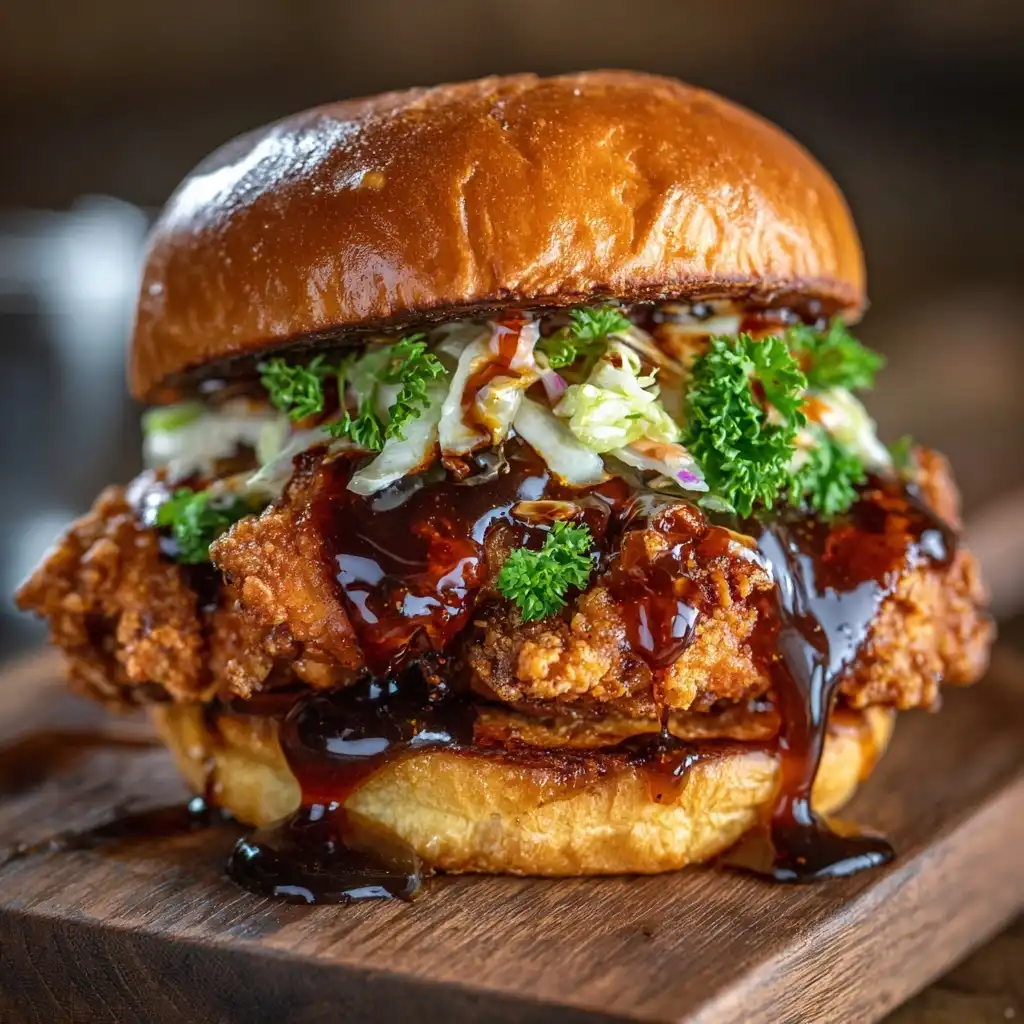
The Hot Honey Fried Chicken Sandwich is a bold, modern American classic that masterfully marries fiery heat with luscious sweetness—creating an unforgettable symphony of flavor, texture, and contrast. Born from the culinary crossroads of Southern comfort food, Brooklyn’s innovative food scene, and the rising popularity of globally inspired condiments, this sandwich has skyrocketed from niche gastropub favorite to nationwide phenomenon—gracing menus at James Beard Award–winning restaurants, viral TikTok feeds, and home kitchens alike. At its heart lies a deceptively simple premise: ultra-crispy, buttermilk-brined fried chicken draped in glossy, house-made hot honey and nestled between soft, brioche or potato rolls. Yet behind its approachable exterior lies a thoughtful balance of technique, timing, and taste—a dish where every component—from the brine to the bun—must be intentional, calibrated, and executed with care. Whether you’re craving weekend indulgence, hosting friends for game day, or seeking a showstopping centerpiece for your next dinner party, the Hot Honey Fried Chicken Sandwich delivers not just satisfaction, but delight, surprise, and a lingering, addictive warmth that keeps you coming back bite after bite.
The History
While fried chicken itself traces its roots through centuries of African, Scottish, and Indigenous culinary traditions—evolving into a cornerstone of Southern U.S. cuisine—the Hot Honey Fried Chicken Sandwich is a distinctly 21st-century creation. Its origin story begins in earnest around 2010 with Mark Iacono, owner of the beloved Brooklyn pizzeria Luzza Pizzeria (later rebranded as Lucali). Seeking a unique, crave-worthy appetizer to complement his wood-fired pies, Iacono began experimenting with drizzling local artisanal honey infused with Calabrian chiles over crispy fried chicken cutlets. The response was immediate and electric—customers demanded it on everything, especially tucked into toasted brioche buns with pickles and lemon. By 2013, the “Hot Honey Chicken Sandwich” had become Lucali’s unofficial signature—and word spread fast. Food media took notice: Food & Wine featured it in 2015; Bon Appétit declared it “the most important sandwich of the decade” in 2018; and by 2020, hot honey had become a pantry staple in over 60% of U.S. households, according to the National Honey Board. Chains like Chick-fil-A, Popeyes, and Shake Shack soon launched their own versions—though purists argue the true magic lies in small-batch, slow-simmered hot honey and double-dredged, pressure-fried (or carefully pan-fried) chicken. Historically, this sandwich represents more than trend—it’s a cultural artifact of culinary democratization: where regional ingredients (Carolina gold rice flour, Tennessee wildflower honey), immigrant ingenuity (Calabrian chili techniques, Korean gochujang-inspired heat profiles), and social media virality converge to redefine what “American comfort food” means today.
Ingredients Breakdown
Every exceptional Hot Honey Fried Chicken Sandwich rests on three foundational pillars: the chicken, the hot honey glaze, and the supporting ensemble. Let’s dissect each with precision—not just listing items, but explaining *why* each matters:
- Chicken Breast (boneless, skinless, pounded to ½-inch thickness): Preferred over thighs for its clean, mild flavor and ability to crisp uniformly without excessive grease. Pounding ensures even cooking, tenderness, and maximum surface area for breading adhesion. Organic, air-chilled, or pasture-raised poultry adds subtle depth and superior moisture retention.
- Buttermilk Brine (with garlic powder, onion powder, smoked paprika, cayenne, brown sugar, salt, black pepper): More than mere tenderizer—this 2–12 hour soak breaks down muscle fibers enzymatically while infusing savory-sweet complexity. Brown sugar balances acidity; smoked paprika adds umami backbone; cayenne provides low-level background heat that harmonizes with the final hot honey layer.
- Dry Dredge (all-purpose flour + rice flour + cornstarch + baking powder + spices): A triple-texture blend: AP flour offers structure, rice flour yields shatteringly crisp edges (thanks to its low gluten content), cornstarch enhances golden color and crunch, and a pinch of aluminum-free baking powder creates micro-bubbles for airy lightness. Seasonings include white pepper (brighter than black), mustard powder (for tangy depth), and celery salt (for aromatic lift).
- Frying Medium (peanut oil or high-oleic sunflower oil): Chosen for high smoke point (450°F+), neutral flavor, and ability to maintain consistent temperature—critical for avoiding greasiness or undercooked interiors. Lard or tallow may be used for old-school richness, though they require careful temperature management.
- Hot Honey (raw local honey + dried Calabrian chiles + apple cider vinegar + black sesame seeds): Not merely “honey + hot sauce.” Authentic hot honey simmers gently (never boiled) to preserve enzymes and floral notes, then infuses slowly with whole dried chiles for layered, fruit-forward heat—not sharp burn. Apple cider vinegar adds bright acidity to cut sweetness; black sesame seeds lend nutty aroma and visual elegance.
- Bun (brioche or milk bread, lightly buttered and griddled): Brioche offers buttery richness and pillowy resilience to hold juicy chicken without disintegrating. Japanese-style milk bread (shokupan) provides unparalleled softness and subtle sweetness—ideal for balancing heat. Toasting both sides in clarified butter creates a caramelized, slightly chewy crust that seals in steam and prevents sogginess.
- Accompaniments (house-made bread-and-butter pickles, micro arugula, crumbled goat cheese or Alabama white sauce): Pickles offer vinegary brightness and textural pop; arugula contributes peppery freshness and visual green contrast; goat cheese adds creamy tang that cools the palate—while Alabama white sauce (mayo-based with horseradish, cider vinegar, and cracked black pepper) introduces a Southern counterpoint that elevates the entire experience beyond standard toppings.
Step-by-Step Recipe
Follow this meticulously tested, chef-developed method for guaranteed restaurant-quality results—each step designed to build flavor, texture, and structural integrity:
- Brining (Start 4–12 hours ahead): In a non-reactive bowl, whisk together 2 cups buttermilk, 2 tbsp brown sugar, 1½ tbsp kosher salt, 1 tsp garlic powder, 1 tsp onion powder, 1 tsp smoked paprika, ½ tsp cayenne, ½ tsp dry mustard, and ¼ tsp ground white pepper. Add 4 (6–8 oz) boneless, skinless chicken breasts—pounded evenly to ½-inch thickness using a meat mallet wrapped in parchment. Submerge fully, cover, and refrigerate for minimum 4 hours (overnight preferred). Do not exceed 24 hours—over-brining can cause mushiness.
- Prep Dry Dredge & Heat Oil: In a large shallow dish, combine 1½ cups all-purpose flour, ½ cup rice flour, ¼ cup cornstarch, 1 tsp aluminum-free baking powder, 1 tsp celery salt, 1 tsp white pepper, ½ tsp ground ginger, and ½ tsp ground coriander. Whisk thoroughly. In a heavy-bottomed Dutch oven or deep cast-iron skillet, pour 2–3 inches of peanut oil. Heat over medium-high until thermometer reads a steady 350°F (177°C). Maintain this temperature—use a clip-on thermometer for accuracy.
- Dredging Sequence (The Double-Dip Method): Remove one chicken breast from brine, letting excess drip off for 5 seconds. Dredge thoroughly in dry mixture, pressing firmly to adhere. Shake off excess. Dip back into brine briefly (1 second only), then immediately return to dry mix—pressing again with firm, even pressure. This creates a thick, craggy, ultra-adherent crust. Place on a wire rack set over parchment. Repeat with remaining pieces. Let rest 10 minutes—this allows the coating to hydrate and lock in.
- Frying (Precision Timing): Carefully lower 1–2 chicken pieces into hot oil (never overcrowd). Fry undisturbed for 5 minutes per side—or until deep golden brown, internal temperature reaches 165°F (74°C), and crust emits a hollow, crisp “ping” when tapped. Use tongs to gently lift and check underside. Adjust heat as needed to hold 325–340°F during frying. Transfer to a wire rack set over sheet pan (not paper towels—steam makes crust soggy). Rest 3 minutes before glazing.
- Hot Honey Glaze Application: While chicken rests, warm ¾ cup hot honey in a small saucepan over lowest heat (do not boil—keep below 110°F/43°C to preserve raw honey enzymes). Using a silicone brush, generously coat top side of each chicken piece. Let sit 1 minute for absorption, then flip and repeat on underside. For extra gloss and heat, reserve 2 tbsp honey for final drizzle post-assembling.
- Bun Preparation: Slice brioche buns horizontally. Spread interior faces with 1 tsp clarified butter mixed with ¼ tsp flaky sea salt. Grill or griddle over medium heat until deeply golden and fragrant (about 90 seconds per side). Transfer to cooling rack—this prevents steaming and keeps crust intact.
- Assembly (The Final Flourish): On bottom bun, layer 2–3 thin slices of house-made bread-and-butter pickle. Place glazed chicken centered atop. Drizzle with reserved hot honey. Scatter 1 tbsp micro arugula and 1 tsp crumbled aged goat cheese. Top with 3 thin rings of red onion (soaked 5 min in ice water + 1 tsp vinegar to mellow bite). Cap with top bun. Serve immediately—ideally within 90 seconds of assembly—for optimal contrast of hot/cold, crisp/tender, sweet/heat.
Tips
These hard-won, professional-grade insights separate good from extraordinary:
- Temperature Is Non-Negotiable: Invest in a reliable digital thermometer. Oil fluctuating above 360°F burns breading; below 325°F causes grease absorption. Chicken straight from fridge should rest 15 minutes at room temp pre-fry to prevent thermal shock and uneven cooking.
- Brine = Flavor Foundation: Never skip the brine—even 30 minutes helps. For deeper penetration, inject brine with a syringe into thickest parts before submerging.
- Flour Matters: Avoid self-rising flour (leavening reacts unpredictably with buttermilk). For gluten-free, substitute 1:1 GF blend + 1 tbsp psyllium husk for binding—but expect slight textural variance.
- Crispness Preservation: Fry chicken in batches. If making ahead, cool completely on wire rack, refrigerate uncovered (prevents condensation), then re-crisp in 400°F air fryer for 4–5 minutes before glazing.
- Honey Handling Wisdom: Raw honey crystallizes—gently warm jar in warm water bath before measuring. Never microwave. Store hot honey in amber glass, refrigerated, up to 6 months (chiles continue steeping—heat intensifies over time).
- Safety First: Always use long-handled tongs and splatter screen. Keep a box of baking soda nearby (NOT water) to smother oil fires. Never leave hot oil unattended.
- Taste-Balance Rule: Before serving, dip a tiny corner of chicken into hot honey and taste. If too sweet, add ⅛ tsp apple cider vinegar to batch. If too sharp, stir in ½ tsp local wildflower honey. Trust your palate—it’s your best tool.
Variations and Customizations
This sandwich is gloriously adaptable—respecting tradition while inviting creativity. Here are 12 thoughtfully curated riffs, each with distinct cultural resonance and technical nuance:
- Korean-Inspired: Swap buttermilk for gochujang-mirin marinade; dredge with gochugaru-spiked rice flour; glaze with yangnyeom-style hot honey (add toasted sesame oil + grated Asian pear); top with quick-pickled daikon and scallions.
- Nashville Hot Twist: After frying, toss chicken in traditional cayenne-lard paste before honey drizzle; serve on toasted challah with spicy mayo and pickled okra.
- Vegan Victory: Use king oyster mushroom “scallop” cutlets or seitan strips marinated in liquid smoke + tamari; dredge in aquafaba + spiced flour; glaze with date-sweetened hot maple syrup infused with chipotle.
- Breakfast Sandwich: Replace brioche with griddled English muffin; add cage-free fried egg (jammy yolk ideal); swap pickles for bourbon-maple candied bacon.
- Seafood Swap: Substitute beer-battered Alaskan cod or Gulf shrimp; use Old Bay–infused hot honey; garnish with lemon-dill crema and pickled fennel.
- Low-Carb/Keto: Dredge in crushed pork rinds + almond flour + nutritional yeast; fry in avocado oil; serve lettuce-wrapped or in portobello “buns”; glaze with erythritol-sweetened hot honey (simmer with xanthan gum for viscosity).
- Smoky BBQ Fusion: Brine with hickory-smoked salt; glaze with hot honey blended with Kansas City–style sauce (tomato base + molasses + coffee); top with jalapeño slaw.
- Global Heat Spectrum: Rotate chile sources: Peruvian aji amarillo (fruity), Ethiopian berbere (warm spice blend), Vietnamese bird’s eye (clean fire), or Trinidad scorpion (for daredevils—use sparingly and warn guests!).
- Dessert Crossover: Use cinnamon-vanilla hot honey; chicken brined with brown sugar + star anise; serve on cinnamon roll bun with whipped mascarpone and candied pecans.
- Heritage Grain Version: Dredge in stone-ground heritage wheat or heirloom cornmeal; glaze with tupelo honey + dried ancho chile; top with roasted cherry tomatoes and basil oil.
- Umami Bomb: Add 1 tbsp fish sauce to brine; dust fried chicken with bonito flakes + shiitake powder before glazing; finish with yuzu kosho aioli.
- Deconstructed Platter: Serve components family-style: crispy chicken tenders, warm honey dipping sauce, toasted brioche fingers, pickle spears, arugula salad with lemon vinaigrette, and crumbled feta—let guests assemble their own.
Health Considerations and Nutritional Value
Enjoyed mindfully, the Hot Honey Fried Chicken Sandwich can fit into balanced, varied diets—with awareness, smart substitutions, and portion consciousness. Here’s a transparent, evidence-informed analysis based on a standard 6-oz chicken breast, 2 tbsp hot honey, 1 brioche bun, and typical accompaniments (per serving):
- Calories: ~720–850 kcal. Primary sources: frying oil (320–400 kcal), bun (220–280 kcal), honey (120 kcal), chicken (165 kcal). Reducing oil absorption via proper frying temp and double-dredging cuts ~80 kcal.
- Protein: ~42g high-biological-value protein—excellent for satiety, muscle maintenance, and metabolic support. Chicken breast is lean, low in saturated fat (~3.5g/serving), and rich in B6, niacin, and selenium.
- Carbohydrates: ~68g total, with ~42g from refined grains (bun) and ~26g from honey. Opting for sprouted grain bun reduces glycemic load; using raw local honey preserves beneficial polyphenols and prebiotic oligosaccharides absent in processed sugars.
- Fats: ~34g total, ~5g saturated. Peanut oil contributes heart-healthy monounsaturated fats (68%) and vitamin E. Choosing air-frying (with light oil spray) slashes fat by 40–50%, though texture differs.
- Sodium: ~980–1,250mg (25–35% DV). Most comes from brine and bun. Reduce by halving salt in brine, using low-sodium buns, and skipping added table salt on finished sandwich.
- Functional Benefits: Raw honey contains hydrogen peroxide, methylglyoxal (MGO), and bee pollen—studied for antimicrobial, anti-inflammatory, and wound-healing properties (per International Journal of Molecular Sciences, 2022). Calabrian chiles provide capsaicin—linked to thermogenesis, pain modulation, and improved circulation (NIH clinical trials, 2021). Fermented pickles deliver live probiotics supporting gut microbiome diversity.
- Considerations: Those managing hypertension should monitor sodium; diabetics may prefer lower-glycemic alternatives (e.g., almond flour bun, monk fruit–sweetened honey reduction). Gluten-sensitive individuals must verify flour blends and bun sourcing. Always consult a registered dietitian for personalized guidance.
Ingredients
For the Buttermilk Brine:
• 2 cups full-fat buttermilk
• 2 tbsp packed dark brown sugar
• 1½ tbsp Diamond Crystal kosher salt (or 1 tbsp Morton)
• 1 tsp garlic powder
• 1 tsp onion powder
• 1 tsp smoked paprika
• ½ tsp cayenne pepper (adjust to heat preference)
• ½ tsp dry mustard powder
• ¼ tsp freshly ground white pepper
• 4 (6–8 oz) boneless, skinless chicken breasts, pounded to ½-inch uniform thickness
For the Dry Dredge:
• 1½ cups all-purpose flour (unbleached)
• ½ cup white rice flour
• ¼ cup cornstarch
• 1 tsp aluminum-free baking powder
• 1 tsp celery salt
• 1 tsp white pepper
• ½ tsp ground ginger
• ½ tsp ground coriander
• ½ tsp ground cardamom (optional, for aromatic lift)
For Frying:
• 2–3 inches peanut oil or high-oleic sunflower oil (enough to submerge chicken halfway)
For the Hot Honey Glaze:
• 1 cup raw, unfiltered local honey (e.g., wildflower or orange blossom)
• 6–8 whole dried Calabrian chiles (stemmed, lightly crushed)
• 1 tbsp apple cider vinegar (raw, unfiltered)
• 1 tsp black sesame seeds (toasted)
• Pinch of flaky sea salt
For Assembly:
• 4 brioche or Japanese milk bread buns
• 2 tbsp unsalted butter, clarified
• 1 tsp flaky sea salt (for butter)
• 1 cup house-made bread-and-butter pickle slices (or high-quality store-bought)
• 2 cups baby arugula or microgreens
• 4 oz aged goat cheese, crumbled (or feta or queso fresco)
• 1 small red onion, very thinly sliced
• Ice water and 1 tsp vinegar (for onion soaking)
Directions
- Brine the Chicken: In a non-reactive container, whisk together all brine ingredients until salt and sugar fully dissolve. Add pounded chicken breasts, ensuring complete submersion. Cover and refrigerate for 4 to 12 hours (overnight recommended for maximum tenderness and flavor infusion).
- Prepare Dry Dredge: In a wide, shallow dish (like a pie plate), whisk together all dry dredge ingredients until fully homogeneous. Set aside in a cool, dry place.
- Heat the Oil: Pour oil into a heavy-bottomed Dutch oven or deep cast-iron skillet to a depth of 2–3 inches. Attach a deep-fry thermometer. Heat over medium-high heat until oil reaches and stabilizes at 350°F (177°C). Maintain this temperature throughout frying—adjust burner as needed.
- Dredge the Chicken: Remove one chicken breast from brine, allowing excess liquid to drip for 5 seconds. Fully coat in dry mixture, pressing firmly with fingertips to ensure even, textured adhesion. Gently shake off excess. Briefly dip back into brine (1 second only), then return immediately to dry mix—pressing again with deliberate pressure. Place on a wire rack set over parchment-lined sheet pan. Repeat with remaining breasts. Let rest uncovered for 10 minutes—this hydrates the flour and sets the crust.
- Fry to Perfection: Carefully lower 1–2 chicken pieces into hot oil—never overcrowd the pan. Fry undisturbed for 5 minutes, then gently flip using heatproof tongs. Fry another 4–5 minutes, or until deep golden brown, crust sounds hollow when tapped, and internal temperature reads 165°F (74°C) on an instant-read thermometer inserted into thickest part. Maintain oil temp between 325–340°F. Transfer fried chicken to a wire rack (not paper towels) to drain. Rest for exactly 3 minutes—this allows carryover cooking to finish and juices to redistribute.
- Make the Hot Honey: While chicken rests, combine honey, crushed chiles, and apple cider vinegar in a small, heavy-bottomed saucepan. Warm over the lowest possible heat (do not simmer or boil—keep below 110°F/43°C) for 8–10 minutes, stirring occasionally, until chiles soften and honey becomes fluid and aromatic. Strain through a fine-mesh sieve into a heatproof bowl, pressing solids to extract all liquid. Stir in toasted black sesame seeds and pinch of flaky salt. Set aside.
- Glaze the Chicken: Using a food-safe silicone pastry brush, generously coat the top side of each rested chicken piece with warm hot honey. Let sit 1 minute to absorb. Flip and repeat on underside. Reserve 2 tbsp honey for final drizzle.
- Toast the Buns: Slice buns horizontally. In a small bowl, mix clarified butter and flaky salt. Using a pastry brush, coat interior faces evenly. Heat a cast-iron griddle or skillet over medium heat. Place buns cut-side down and toast until deeply golden brown and fragrant—about 90 seconds. Flip and toast interior tops for 30 seconds. Transfer to wire rack to cool slightly (prevents steam-induced sogginess).
- Prepare Accompaniments: Soak red onion slices in ice water + 1 tsp vinegar for 5 minutes. Drain and pat dry. Rinse and spin-dry arugula. Crumble goat cheese.
- Assemble Immediately: On each bottom bun, layer 3–4 pickle slices. Center one glazed chicken breast. Drizzle with ½ tsp reserved hot honey. Scatter 1 tbsp arugula, 1 tsp crumbled goat cheese, and 3–4 drained red onion rings. Cap with top bun. Serve within 90 seconds for optimal texture contrast.
FAQ
- Can I bake or air-fry instead of deep-frying?
- Yes—with caveats. For baking: coat chicken, place on wire rack over sheet pan, spray heavily with avocado oil, bake at 425°F for 18–22 min flipping halfway. Texture will be less shatteringly crisp but still flavorful. Air-fry at 400°F for 12–14 min, flipping once—spray with oil midway. Both methods reduce fat by ~45% but lack the iconic mouthfeel of proper frying. We recommend frying for authenticity, but these are excellent lighter alternatives.
- Why does my breading fall off?
- Three main causes: 1) Chicken wasn’t patted *completely* dry before brining (excess water prevents adhesion), 2) Oil wasn’t hot enough at first submersion (coating slides off in tepid oil), or 3) You moved chicken too soon after adding to oil—wait full 5 minutes before flipping to let crust set. Also ensure you’re using the double-dip method—single dredge rarely holds.
- My hot honey is too runny or too thick—how do I fix it?
- If too thin: Simmer gently (below 110°F) 2–3 more minutes to reduce—stir constantly. If too thick: Whisk in ½ tsp warm water or apple cider vinegar, 1/8 tsp at a time, until desired viscosity. Never boil—it destroys delicate floral notes and beneficial compounds in raw honey.
- Can I make hot honey ahead? How long does it last?
- Absolutely—and it improves with time! Store in sterilized amber glass jar, refrigerated, for up to 6 months. The chiles continue steeping, gradually increasing heat intensity. Stir before each use. Discard if mold appears (rare with proper storage).
- What’s the best honey to use?
- Raw, unfiltered, local honey—especially wildflower, orange blossom, or tupelo—
Advertisment