
Introduction
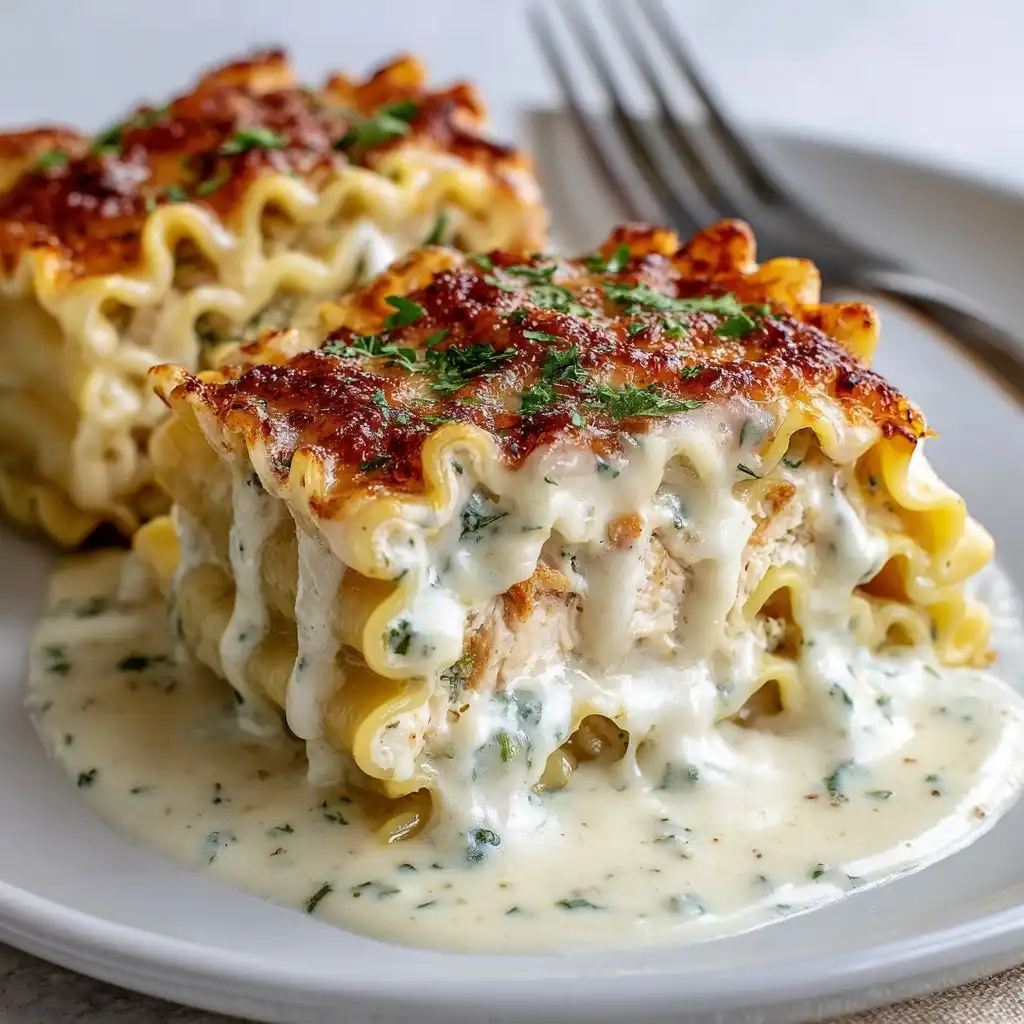
Chicken Alfredo Lasagna Roll-Ups are a decadent, crowd-pleasing fusion dish that marries the comforting richness of classic lasagna with the elegant convenience of rolled pasta. Unlike traditional layered lasagna baked in a casserole dish, this innovative twist features tender oven-ready or boiled lasagna noodles wrapped around a luscious filling of shredded roasted chicken, creamy homemade (or high-quality store-bought) Alfredo sauce, and a blend of melty cheeses—typically ricotta, mozzarella, and Parmesan. Each roll-up is arranged snugly in a baking dish, generously topped with more Alfredo and cheese, then baked until golden, bubbly, and irresistibly fragrant. Perfect for weeknight dinners with gourmet flair, impressive potlucks, holiday side dishes, or meal-prep-friendly freezer meals, these roll-ups deliver restaurant-quality satisfaction with surprisingly approachable technique. Their versatility, visual appeal, and deeply satisfying flavor profile have earned them a permanent place in modern American home kitchens—and for good reason.
The History
While lasagna itself traces its roots to medieval Italy—with early versions appearing in 13th-century texts like the De honesta voluptate et valetudine by Bartolomeo Platina—the concept of “lasagna roll-ups” is a distinctly American innovation born from mid-20th-century culinary experimentation. As convenience cooking surged post-WWII, home cooks began adapting traditional recipes to suit smaller families, limited oven space, and evolving tastes. The rise of no-boil lasagna noodles in the 1970s (pioneered by brands like Barilla and Ronzoni) was pivotal: their pliability when softened made rolling feasible without tearing. Simultaneously, creamy, butter-laden Alfredo sauce—originally an Italian-American creation popularized by Roman restaurateur Alfredo di Lelio in the early 1900s and later adapted by New York’s Alfredo’s Restaurant in the 1940s—became a pantry staple. Chicken, once a luxury protein, gained widespread affordability and popularity in the U.S. during the 1950s–60s, making it a natural addition to hearty pasta dishes. By the 1990s and early 2000s, food blogs, cable cooking shows (like Rachael Ray’s *30 Minute Meals*), and recipe-sharing platforms accelerated the evolution of the roll-up format—transforming it from a niche variation into a viral kitchen favorite. Today’s Chicken Alfredo Lasagna Roll-Ups reflect decades of cross-cultural adaptation, ingredient innovation, and home cook ingenuity—honoring tradition while embracing practicality, indulgence, and personalization.
Ingredients Breakdown
Understanding each component deepens both flavor and technique. Here’s an in-depth analysis of the core ingredients—and why they matter:
- Oven-Ready Lasagna Noodles (12 sheets): Preferred for their no-boil convenience and structural integrity. They soften perfectly during baking without turning mushy—critical for clean, stable rolls. If using traditional noodles, boil until just pliable (al dente), drain thoroughly, and lay flat on parchment to prevent sticking. Gluten-free or whole-wheat alternatives work well but may require slight adjustments in bake time or moisture balance.
- Cooked Chicken Breast (3 cups shredded): Rotisserie chicken offers convenience and depth; poached or grilled breast provides leaner, more controlled seasoning. Avoid canned or heavily brined chicken, which can add excess sodium and water. Shred against the grain for tenderness. For maximum flavor, season the chicken with garlic powder, onion powder, dried oregano, salt, and black pepper before shredding—or sauté shredded chicken briefly in olive oil with minced garlic and fresh herbs.
- Homemade Alfredo Sauce (3 cups): Far superior to most jarred versions in richness and balance. A true Alfredo begins with a roux (butter + flour), enriched with warm heavy cream, freshly grated Parmigiano-Reggiano (not pre-grated, which contains anti-caking agents), and a touch of nutmeg. Optional enhancements include a splash of whole milk for silkiness, a teaspoon of Dijon mustard for brightness, or a pinch of white pepper for warmth. Jarred sauces can be upgraded: simmer with extra butter, a handful of fresh parsley, and ¼ cup grated Parmesan to deepen flavor and thicken consistency.
- Ricotta Cheese (1½ cups): The binding agent and textural anchor. Whole-milk ricotta delivers creaminess and subtle sweetness; low-fat versions risk graininess and separation. For optimal smoothness, drain ricotta in a fine-mesh strainer for 15–30 minutes to remove excess whey—this prevents soggy roll-ups. Stirring in one large egg yolk (not whole egg) adds richness and helps set the filling without rubberiness.
- Mozzarella Cheese (2 cups shredded): Low-moisture, part-skim mozzarella melts evenly and provides stretch. Fresh mozzarella pearls (drained and patted dry) offer luxurious creaminess but require careful layering to avoid excess moisture. Avoid pre-shredded “bagged” mozzarella unless labeled “no cellulose”—cellulose powder inhibits melting and creates greasy pools.
- Parmesan Cheese (1 cup freshly grated): Non-negotiable for umami depth and salty complexity. Authentic Parmigiano-Reggiano or Grana Padano provides crystalline texture and nutty aroma. Pre-grated “Parmesan-style” blends lack intensity and often contain fillers that mute flavor.
- Fresh Spinach (2 cups packed, finely chopped): Adds color, nutrients, and earthy contrast. Sauté lightly in olive oil with garlic until wilted and moisture evaporates—raw spinach releases too much water, causing separation. Baby spinach works best; mature spinach requires tougher stems removed.
- Aromatics & Seasonings: Minced garlic (3 cloves), shallots or yellow onion (¼ cup finely diced), fresh parsley (¼ cup chopped), nutmeg (⅛ tsp), black pepper (½ tsp freshly ground), kosher salt (¾ tsp, adjusted to taste). These build foundational layers—garlic and shallots sautéed in butter before mixing into the ricotta ensure even distribution and mellow sharpness.
- Butter (2 tbsp) & Olive Oil (1 tbsp): Used for sautéing aromatics and brushing noodle edges to aid adhesion. Unsalted butter preserves seasoning control.
- Optional Garnishes: Fresh basil ribbons, lemon zest, toasted pine nuts, microgreens, or a drizzle of truffle oil elevate presentation and add aromatic brightness that cuts through richness.
Step-by-Step Recipe
- Prep the Noodles: Preheat oven to 375°F (190°C). Lightly grease a 9×13-inch baking dish with butter or non-stick spray. If using oven-ready noodles, place them in a single layer on a clean, damp kitchen towel—this keeps them pliable and prevents drying while assembling. If using traditional noodles, cook per package instructions until al dente (about 8–9 minutes), drain, rinse under cool water, and lay flat on parchment-lined trays.
- Sauté Aromatics: In a medium skillet over medium heat, melt 1 tbsp butter and 1 tbsp olive oil. Add diced shallots and sauté for 2 minutes until translucent. Add minced garlic and cook 30 seconds until fragrant—do not brown. Remove from heat and let cool slightly.
- Prepare Filling: In a large bowl, combine drained ricotta, shredded chicken, 1½ cups mozzarella, ¾ cup grated Parmesan, cooled shallot-garlic mixture, chopped spinach, parsley, nutmeg, black pepper, and salt. Whisk in one egg yolk until fully incorporated and creamy. Taste and adjust seasoning—filling should be rich but balanced, not overly salty.
- Assemble Roll-Ups: Lay one noodle flat on a clean surface. Spread ~⅓ cup filling evenly across the center third, leaving ½-inch borders on all sides. Gently lift the bottom edge over the filling, tuck tightly, then roll forward into a compact cylinder. Place seam-side down in the prepared baking dish. Repeat with remaining noodles and filling, arranging roll-ups snugly side-by-side. If filling is too wet, refrigerate assembled roll-ups for 15 minutes to firm up before baking.
- Top & Bake: Pour remaining 1½ cups Alfredo sauce evenly over roll-ups, tilting dish gently to allow sauce to pool beneath and around them. Sprinkle with remaining ½ cup mozzarella and ¼ cup Parmesan. Dot with 1 tbsp butter cut into small pieces for golden, glossy finish. Cover dish tightly with aluminum foil (tent slightly to prevent cheese from sticking).
- Bake Covered: Bake at 375°F for 25 minutes to steam and heat through.
- Uncover & Brown: Remove foil and bake uncovered for 12–15 minutes, until top is deeply golden, edges bubble vigorously, and internal temperature reaches 165°F (74°C) when checked with an instant-read thermometer inserted into center of a roll-up.
- Rest Before Serving: Let rest uncovered for 10–12 minutes. This crucial step allows residual heat to finish cooking, starches to set, and sauce to reabsorb—preventing messy, sliding roll-ups and enhancing slice integrity.
- Garnish & Serve: Sprinkle with fresh parsley, lemon zest, or basil. Serve warm with garlic bread, a crisp arugula salad dressed in lemon vinaigrette, or roasted cherry tomatoes.
Tips
- Prevent Soggy Bottoms: Always drain ricotta and sauté spinach thoroughly. Excess moisture is the #1 cause of watery, separated roll-ups. For extra insurance, sprinkle 1 tbsp cornstarch over the bottom of the baking dish before adding roll-ups—it absorbs stray liquid during baking.
- Roll Tight, Not Tighter: Over-rolling stresses noodles and causes cracking. Apply gentle, even pressure—think “firm hug,” not “vice grip.” If a noodle tears, patch with a small piece of overlapping noodle or extra cheese.
- Alfredo Sauce Consistency Matters: Ideal sauce coats the back of a spoon thickly but still drips slowly. Too thin? Simmer 3–5 minutes to reduce. Too thick? Whisk in 1–2 tbsp warm milk or cream. Refrigerated Alfredo thickens—warm gently before pouring.
- Make-Ahead Magic: Assemble roll-ups up to 24 hours ahead, cover tightly with plastic wrap, and refrigerate. Add 5–8 minutes to covered bake time. For freezer prep: assemble, freeze uncovered until solid (2 hours), then wrap dish in double-layer foil + plastic. Freeze up to 3 months. Thaw overnight in fridge before baking—add 10–15 minutes total bake time.
- Perfect Slice Every Time: Use a serrated knife dipped in hot water and wiped dry between cuts. Saw gently—not press down—to preserve shape and prevent cheese drag.
- Golden Top Secret: For deeper browning without burning, broil uncovered for the final 1–2 minutes—but watch constantly. Alternatively, mix 1 tbsp melted butter + 1 tsp garlic powder + 1 tsp dried oregano and brush over top before final bake.
- Flavor Layering: Don’t skip seasoning the chicken separately—even if using rotisserie. Toss shredded chicken with 1 tsp lemon juice, ½ tsp garlic powder, and ¼ tsp smoked paprika for dimension that shines through the creamy filling.
- Texture Contrast: Stir ¼ cup toasted walnuts or pecans into the filling for crunch, or fold in 2 tbsp sun-dried tomato paste for tangy depth.
Variations and Customizations
This recipe is a canvas—endlessly adaptable to dietary needs, seasonal produce, global flavors, and pantry constraints:
- Vegetarian Version: Omit chicken; boost protein with 1 cup crumbled firm tofu (pressed & sautéed with tamari), 1½ cups cooked lentils, or 1 cup chopped portobello mushrooms (sautéed until dry). Add ½ cup roasted red peppers and 2 tbsp capers for umami pop.
- Gluten-Free: Use certified GF oven-ready lasagna noodles (Tinkyada or Jovial). Ensure Alfredo sauce is GF—many store-bought versions contain wheat-based thickeners. Make your own with GF flour or cornstarch.
- Low-Carb/Keto: Replace noodles with blanched, thinly sliced zucchini ribbons (use a mandoline) or wide strips of eggplant (salted, pressed, and grilled). Reduce ricotta to ¾ cup and increase mozzarella to 2½ cups for structure. Use heavy cream-based Alfredo only—no flour or milk.
- Spicy Arrabbiata Twist: Stir 2 tbsp Calabrian chile paste or 1 tsp crushed red pepper flakes into the Alfredo. Add ¼ cup chopped fresh basil and 2 tbsp balsamic glaze to filling. Top with crumbled feta instead of Parmesan.
- Mediterranean Style: Swap chicken for flaked cooked salmon or grilled shrimp. Replace spinach with chopped artichoke hearts (well-drained) and kalamata olives. Use feta + goat cheese instead of ricotta/mozzarella. Finish with lemon zest and dill.
- Smoky Chipotle: Blend 1–2 chipotle peppers in adobo sauce into the Alfredo. Mix 1 tsp ground cumin and ½ tsp cocoa powder into filling. Top with cotija cheese and pickled red onions.
- Breakfast Roll-Ups: Use scrambled eggs instead of chicken, add crumbled cooked bacon or sausage, cheddar instead of mozzarella, and fold in caramelized onions. Serve with hollandaise drizzle.
- Dessert-Inspired: For a sweet twist: replace savory elements with mascarpone, cinnamon-spiced apples, toasted pecans, and a brown sugar–butter Alfredo (substitute cream with half-and-half and add 2 tbsp brown sugar). Top with powdered sugar and caramel drizzle.
Health Considerations and Nutritional Value
Chicken Alfredo Lasagna Roll-Ups are undeniably indulgent—but with mindful modifications, they can align with balanced eating patterns. A standard serving (2 roll-ups) contains approximately 580–650 calories, 32–38g protein, 30–35g carbohydrates (of which 2–3g fiber), and 34–42g total fat (18–22g saturated). Sodium ranges from 750–1,100mg depending on cheese, broth, and added salt—making portion control and smart ingredient swaps essential.
Nutritional Highlights:
- High-Quality Protein: Chicken breast and cheeses supply all nine essential amino acids, supporting muscle maintenance, satiety, and metabolic health.
- Calcium & Vitamin D: Mozzarella and Parmesan provide bioavailable calcium (≈30% DV per serving); fortified dairy adds vitamin D for bone and immune support.
- B-Vitamins: Chicken is rich in B6 and niacin—crucial for energy metabolism and nervous system function.
- Antioxidants: Garlic, spinach, and parsley contribute allicin, lutein, and vitamin C—supporting cellular health and inflammation modulation.
Smart Swaps for Health-Conscious Cooks:
- Reduce Saturated Fat: Use part-skim ricotta, reduced-fat mozzarella, and replace half the heavy cream in Alfredo with unsweetened almond or oat milk (add 1 tsp cornstarch to maintain thickness).
- Increase Fiber: Opt for whole-wheat or legume-based lasagna noodles (adds 4–6g fiber/serving). Stir 2 tbsp ground flaxseed or chia seeds into ricotta mixture.
- Lower Sodium: Choose low-sodium rotisserie chicken or poach breasts in homemade low-sodium broth. Use unsalted butter and limit added salt—rely on herbs, citrus zest, and nutritional yeast for flavor.
- Add Omega-3s: Fold in ¼ cup chopped walnuts or 2 tbsp hemp hearts. Use omega-3-enriched eggs in filling.
- Portion Mindfully: Serve one roll-up alongside a large mixed green salad with lemon-tahini dressing and roasted vegetables—boosting volume, nutrients, and fiber without excess calories.
Who Should Modify With Caution? Individuals managing hypertension should monitor sodium closely. Those with lactose intolerance may tolerate aged cheeses (Parmesan, mozzarella) better than ricotta—opt for lactose-free ricotta or blended silken tofu. For GERD or acid reflux, minimize garlic, onion, and heavy cream; use ginger-infused milk in Alfredo and add soothing fennel seeds to filling.
Ingredients
- 12 oven-ready lasagna noodles (or 12 traditional lasagna noodles, cooked al dente)
- 3 cups cooked, shredded chicken breast (rotisserie or poached)
- 3 cups homemade or high-quality store-bought Alfredo sauce (see breakdown above)
- 1½ cups whole-milk ricotta cheese, well-drained
- 2 cups low-moisture mozzarella cheese, shredded (divided)
- 1 cup freshly grated Parmigiano-Reggiano or Grana Padano (divided)
- 2 cups fresh baby spinach, finely chopped and sautéed until wilted & dry
- ¼ cup fresh flat-leaf parsley, finely chopped
- 3 cloves garlic, minced
- ¼ cup finely diced shallot or yellow onion
- 2 tbsp unsalted butter
- 1 tbsp olive oil
- 1 large egg yolk
- ⅛ tsp freshly grated nutmeg
- ½ tsp freshly ground black pepper
- ¾ tsp kosher salt (adjust to taste)
- Optional garnishes: fresh basil, lemon zest, toasted pine nuts
Directions
- Preheat oven to 375°F (190°C). Grease a 9×13-inch baking dish with butter or non-stick spray.
- In a medium skillet over medium heat, melt 1 tbsp butter and 1 tbsp olive oil. Add shallots and sauté 2 minutes until soft. Add garlic and cook 30 seconds until fragrant. Remove from heat; cool 5 minutes.
- In a large bowl, combine ricotta, shredded chicken, 1½ cups mozzarella, ¾ cup Parmesan, sautéed shallot-garlic mixture, chopped spinach, parsley, nutmeg, black pepper, and salt. Whisk in egg yolk until smooth and cohesive. Taste and adjust seasoning.
- Lay one lasagna noodle flat. Spread ~⅓ cup filling evenly across center third. Gently roll into a tight cylinder, seam-side down. Place in prepared dish. Repeat with remaining noodles and filling, packing snugly.
- Pour remaining 1½ cups Alfredo sauce over roll-ups, ensuring coverage and pooling underneath. Sprinkle with remaining ½ cup mozzarella and ¼ cup Parmesan. Dot with 1 tbsp butter.
- Cover dish tightly with foil. Bake 25 minutes.
- Remove foil. Bake uncovered 12–15 minutes until golden, bubbling, and internal temp reaches 165°F.
- Let rest 10–12 minutes before serving. Garnish and enjoy.
FAQ
- Can I make these ahead and freeze them?
- Yes! Assemble roll-ups, cover tightly with plastic wrap, then double-wrap with foil. Freeze up to 3 months. Thaw overnight in refrigerator before baking. Add 10–15 minutes to total bake time (start covered).
- Why did my roll-ups fall apart or leak sauce?
- Most commonly due to excess moisture. Ensure ricotta is well-drained, spinach is thoroughly sautéed and dried, and Alfredo isn’t too thin. Also, avoid overfilling—stick to ~⅓ cup per noodle. Resting 10+ minutes after baking is critical for structural integrity.
- Can I use cottage cheese instead of ricotta?
- You can—but texture suffers. Blend 1½ cups small-curd cottage cheese with 1 tbsp lemon juice and 1 tsp olive oil until smooth, then drain 15 minutes. It won’t be as rich, but works in a pinch.
- What if I don’t have Alfredo sauce?
- Make a quick stovetop version: Melt 4 tbsp butter, whisk in ¼ cup all-purpose flour, cook 1 minute. Gradually whisk in 2 cups warm heavy cream and 1 cup grated Parmesan until smooth and thickened (5–7 minutes). Season with salt, pepper, and nutmeg.
- Can I bake these in individual ramekins?
- Absolutely! Lightly grease 6–8 ramekins (6-oz size). Fill each halfway with sauce, add one roll-up, top with sauce and cheese. Bake covered 25 min, uncovered 10 min. Great for portion control and gifting.
- How do I reheat leftovers without drying them out?
- Place roll-ups in an oven-safe dish, cover with foil, add 1 tbsp cream or broth, and bake at 350°F for 15–18 minutes. Microwave reheating works—but cover with damp paper towel and heat in 30-second bursts.
- Are these suitable for kids?
- Yes—they’re mild, creamy, and familiar. For picky eaters, hide pureed carrots or cauliflower in the Alfredo, or swap spinach for finely grated zucchini (squeezed dry). Serve with apple slices and yogurt dip.
- Can I use turkey instead of chicken?
- Yes—roasted or smoked turkey breast works beautifully and adds a subtly sweeter, richer note. Avoid deli turkey, which is too salty and moist.
- What wine pairs well with Chicken Alfredo Roll-Ups?
- A medium-bodied white like buttery Chardonnay, Viognier, or Pinot Grigio complements the creaminess. For red lovers, try a low-tannin option like chilled Beaujolais or Dolcetto.
- My Alfredo sauce broke (separated). Can I fix it?
- Yes! Remove from heat, whisk in 1 tsp cold butter or 1 tbsp warm cream, and gently reheat while whisking constantly. Adding a teaspoon of Dijon mustard also helps emulsify.
Summary
Chicken Alfredo Lasagna Roll-Ups are an elegant, customizable, and deeply satisfying fusion dish that transforms humble pantry staples into a showstopping centerpiece—combining tender pasta, savory roasted chicken, velvety homemade Alfredo, and a trio of premium cheeses in a beautifully presented, easy-to-serve format. With thoughtful ingredient selection, moisture management, and smart make-ahead strategies, they deliver restaurant-worthy luxury for weeknight dinners, holiday feasts, or freezer-friendly meal prep—proving that comfort food can be both indulgent and intentionally crafted.