
Introduction
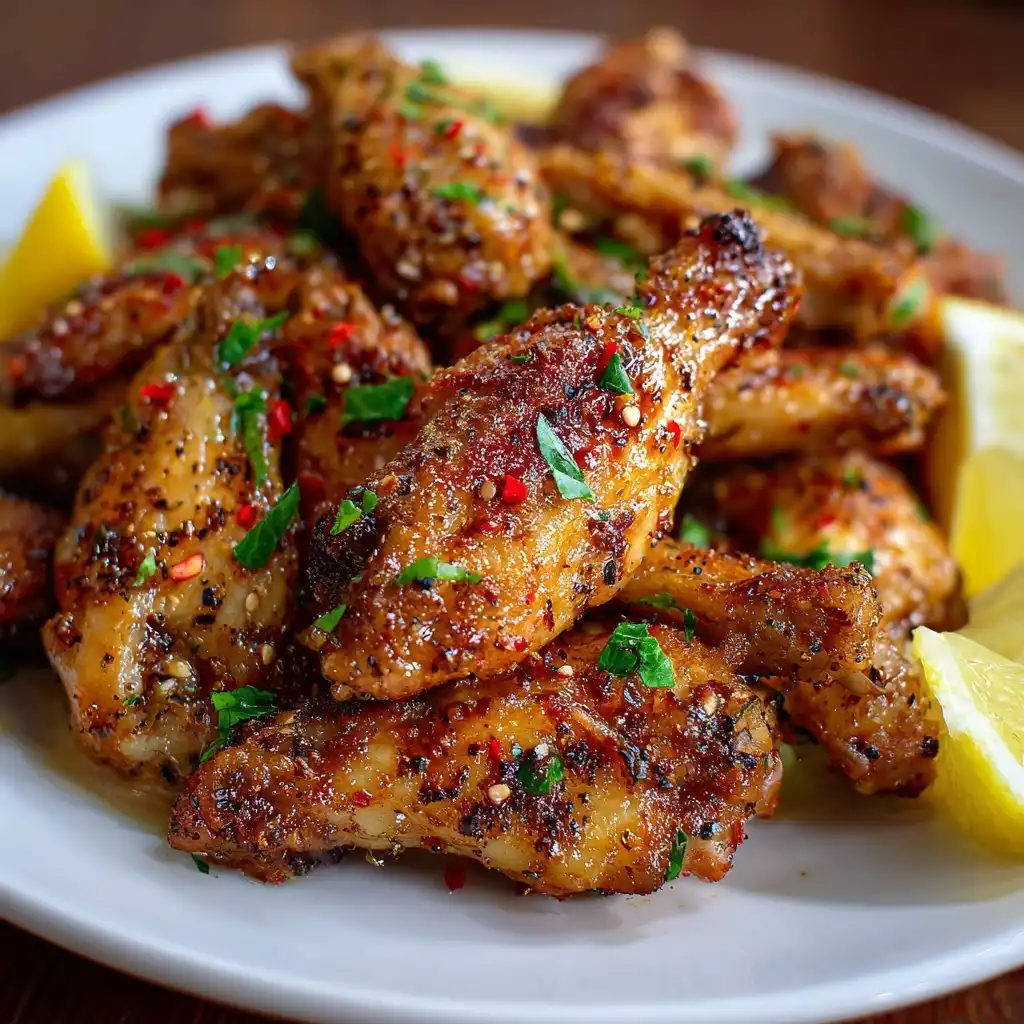
Lemon Pepper Wet Wings are a vibrant, bold, and irresistibly zesty twist on classic buffalo-style chicken wings—melding the bright acidity of fresh lemon with the aromatic warmth of cracked black pepper and a luscious, glossy sauce that clings to every bite. Unlike dry-rubbed lemon pepper wings, the “wet” designation refers to a rich, emulsified glaze—typically built from melted butter, lemon juice and zest, garlic, herbs, and just enough heat to awaken the palate without overwhelming it. This dish strikes a masterful balance: tangy yet savory, creamy yet refreshing, indulgent yet surprisingly bright. Whether served at backyard cookouts, game-day spreads, or elevated appetizer platters, Lemon Pepper Wet Wings have surged in popularity across food blogs, TikTok kitchens, and upscale sports bars alike—not just for their addictive flavor, but for their remarkable versatility and crowd-pleasing appeal. They represent a modern evolution of American wing culture: less about fiery intensity, more about layered complexity, freshness, and textural harmony.
The History
While traditional buffalo wings trace their roots to the Anchor Bar in Buffalo, New York (1964), the lemon pepper variation emerged organically through regional adaptations and home kitchen experimentation in the 1980s and ’90s—particularly across the Mid-Atlantic and Southeastern U.S., where citrus-forward seasoning blends gained traction in seafood and poultry preparations. The iconic “lemon pepper” spice blend itself was popularized by Lawry’s in the 1930s, but its application to wings remained niche until the 2000s, when chefs began marrying its bright, peppery profile with rich dairy-based sauces instead of dry rubs. The “wet” iteration—distinct from the now-ubiquitous dry-rubbed version—gained critical momentum around 2015–2017 via viral food videos showcasing glossy, slow-dripping wings tossed tableside in steamy, herb-flecked lemon-butter glazes. Atlanta-based restaurants like Ticonderoga Club and Washington D.C.’s The Salt Line helped elevate it into a signature bar snack, while food scientists at major sauce manufacturers (e.g., Frank’s RedHot, Louisiana Brand) developed stabilized lemon emulsions to prevent curdling—addressing a longstanding challenge in commercial production. Today, Lemon Pepper Wet Wings symbolize a broader culinary shift toward balanced acidity, umami depth, and restaurant-quality technique adapted for home cooks—blending Southern comfort, Italian-inspired lemon-butter traditions, and contemporary American fusion sensibilities.
Ingredients Breakdown
Every exceptional Lemon Pepper Wet Wing begins not with a list—but with intentionality behind each component. Below is a meticulous, chef-level analysis of the core ingredients and their functional roles:
- Chicken Wings (whole, split into flats and drummettes): Opt for air-chilled, never-frozen wings with tight, slightly tacky skin—this ensures optimal crisping. Skin integrity matters: excess moisture inhibits browning; too much fat renders poorly. A 2:1 flat-to-drum ratio yields ideal texture contrast.
- Neutral High-Smoke-Point Oil (e.g., avocado, grapeseed, or refined peanut oil): Essential for achieving shatter-crisp skin without off-flavors. Avoid olive oil (low smoke point) or unrefined coconut oil (strong aroma).
- Unsalted Butter: Provides luxurious mouthfeel, carries fat-soluble flavors (lemon zest oils, pepper volatiles), and contributes to sauce emulsion stability. European-style (82–86% butterfat) yields richer sheen and slower separation.
- Fresh Lemons (preferably Meyer or Eureka): Juice supplies tart acidity to cut richness; zest delivers concentrated citrus terpenes (limonene, γ-terpinene) responsible for aromatic brightness. Bottled juice lacks enzymatic complexity and oxidizes rapidly.
- Coarsely Cracked Black Peppercorns: Freshly ground using a burr grinder or mortar & pestle—heat-activated piperine compounds peak within 2 minutes of crushing. Pre-ground pepper loses >70% volatile oils in 24 hours.
- Garlic (fresh, microplaned or pressed): Raw garlic adds pungent alliinase-driven sharpness; lightly sautéed garlic lends sweetness and umami. Microplaning maximizes surface area for infusion without bitter granules.
- Shallots (finely minced): Provide delicate onion-sweetness and fructan-derived depth—superior to yellow onions for subtlety and emulsion integration.
- Fresh Herbs (parsley, chives, dill): Added *off-heat* to preserve volatile oils. Flat-leaf parsley contributes chlorophyll bitterness that balances fat; chives lend sulfur notes; dill offers anise-tinged freshness.
- Heavy Cream or Half-and-Half (optional but recommended): Acts as an emulsifier and stabilizer—casein proteins bind water and fat, preventing sauce “breaking.” Also adds subtle sweetness and velvety body.
- White Wine Vinegar or Champagne Vinegar: Reinforces acidity while adding nuanced esters (fruity, floral). Apple cider vinegar can dominate; distilled white is too harsh.
- Red Pepper Flakes or Cayenne (for controlled heat): Not essential, but a ¼ tsp bridges tradition and modernity—capsaicin binds to fat, so it integrates seamlessly into the butter base without floating heat.
- Sea Salt (Maldon or flaky Celtic): Applied in two stages: pre-fry for protein denaturation (juicier meat), post-sauce for textural pop and surface salinity that enhances all other flavors.
Step-by-Step Recipe
- Prep & Dry-Brine (12–24 hours ahead): Pat wings *extremely* dry with triple-layered paper towels. Place on a wire rack over a baking sheet. Generously season both sides with 1 tsp kosher salt per pound. Refrigerate uncovered—this dehydrates the skin surface, enabling unparalleled crispness and promoting Maillard reaction.
- Blanch for Even Cooking (Optional but transformative): Submerge wings in 160°F (71°C) water for 5 minutes—this gently renders subcutaneous fat without cooking meat, resulting in shorter fry time and crisper skin. Drain, re-dry thoroughly.
- Double-Fry Method: Heat oil to 275°F (135°C). Fry wings 8–10 minutes until par-cooked and pale gold. Remove, drain, rest 10 minutes. Raise oil to 375°F (190°C). Fry again 3–4 minutes until deep golden, ultra-crisp, and blistered. Drain vertically on a wire rack—not paper towels—to preserve crunch.
- Build the Wet Sauce (Simultaneously): In a heavy-bottomed saucepan, melt butter over low heat. Add minced shallots and garlic; sweat 2–3 minutes until translucent (do NOT brown). Stir in lemon zest, cracked pepper, red pepper flakes, and a splash of vinegar. Whisk in heavy cream. Gradually stream in fresh lemon juice (reserve 1 tbsp), whisking constantly. Simmer gently 4–5 minutes until reduced by 15% and slightly thickened. Remove from heat; stir in fresh herbs and reserved lemon juice.
- Toss with Precision: While wings are piping hot, place in a large stainless-steel bowl. Pour warm (not hot—ideally 120–130°F) sauce over top. Using heatproof tongs, gently fold for 45–60 seconds until every surface glistens uniformly. Over-tossing cools wings and softens skin.
- Rest & Finish: Transfer sauced wings to a fresh wire rack for 2 minutes—excess sauce drips off, preventing sogginess. Finish with flaky sea salt and extra lemon zest. Serve immediately.
Tips
- Skin Is Everything: Never skip the overnight dry-brine—it’s non-negotiable for crackling texture. If short on time, use a hair dryer on cool setting for 5 minutes pre-fry to remove surface moisture.
- Oil Temperature Mastery: Use a calibrated deep-fry thermometer. Fluctuations >10°F cause greasiness (too cool) or burnt skin (too hot). Keep a heat diffuser under your pot for consistent control.
- Lemon Juice Timing: Always add half the juice at the beginning of sauce prep (for cooked depth) and the remainder *off-heat* (for raw vibrancy). This dual-layer acidity prevents flatness.
- No-Break Sauce Secret: Whisk sauce constantly while adding lemon juice. If sauce threatens to separate, remove from heat and whisk in 1 tsp cold cream—its casein rescues emulsions instantly.
- Wing Geometry Matters: Separate flats and drummettes before frying—they cook at different rates. Drummettes need ~30 seconds longer in the final fry.
- Acid Balance Hack: If sauce tastes overly sharp, add ¼ tsp honey or maple syrup—not sugar—to round acidity while preserving brightness.
- Crispness Preservation: Serve on a pre-warmed ceramic platter (microwave 30 sec), not cold metal or wood, which draws heat and moisture from wings.
- Garnish Strategically: Scatter micro-planed lemon zest *after* tossing—not before—to prevent bitterness from oxidized oils. Fresh chive blossoms add visual elegance and mild onion essence.
- Leftover Revival: Re-crisp in an air fryer at 400°F for 4 minutes. Refresh sauce separately and toss *just* before serving—never reheat sauced wings.
Variations and Customizations
Lemon Pepper Wet Wings are a canvas for creativity—rooted in tradition but endlessly adaptable. Explore these chef-curated variations:
- Herb-Forward Mediterranean: Substitute 1 tbsp chopped oregano + 1 tsp dried mint for half the parsley; finish with crumbled feta and kalamata olives.
- Umami Bomb: Add 1 tsp white miso paste and ½ tsp mushroom powder to sauce; garnish with toasted sesame and scallion oil.
- Smoky Citrus: Infuse butter with ½ tsp smoked paprika + 1 chipotle in adobo (minced); replace 1 tbsp lemon juice with yuzu juice.
- Asian-Inspired: Replace half butter with toasted sesame oil; add 1 tsp grated ginger, 1 tbsp rice vinegar, and 1 tsp tamari. Garnish with nori strips and pickled daikon.
- Spicy Honey-Lime: Swap lemon for key lime; add 2 tbsp local wildflower honey and ½ tsp gochujang. Toasted pepitas add crunch.
- Truffle Elegance
: Finish sauce with ½ tsp white truffle oil and 1 tsp finely grated Parmigiano-Reggiano rind (simmered in butter).
- Low-Carb/Keto: Replace butter with ghee; use powdered erythritol-blend instead of honey if sweetening; serve with celery sticks and blue cheese crumbles.
- Vegetarian “Wings”: Use king oyster mushrooms (cut into wing-shaped pieces), roasted at 425°F until edges curl and crisp. Toss in same sauce—umami-rich and shockingly meaty.
- Breakfast Wings: Add ¼ tsp ground cardamom and 1 tbsp maple syrup to sauce; garnish with crumbled bacon and chives.
- Global Fusion: Incorporate 1 tsp za’atar, sumac, or everything bagel seasoning into the final toss for Middle Eastern, Levantine, or New York deli flair.
Health Considerations and Nutritional Value
A 6-piece serving (approx. 180g) of homemade Lemon Pepper Wet Wings (fried in avocado oil, made with unsalted butter and no added sugar) provides approximately:
- Calories: 420–480 kcal (highly dependent on oil absorption and sauce volume)
- Protein: 32–36g (excellent complete protein source; wings contain collagen-rich connective tissue)
- Fat: 30–34g (60–70% unsaturated fats from avocado oil and butter; includes conjugated linoleic acid [CLA] linked to metabolic benefits)
- Carbohydrates: 1–2g (naturally low-carb; negligible unless sweeteners added)
- Vitamin C: ~18mg (from lemon juice—20% DV; supports immunity and iron absorption)
- Vitamin A: ~350 IU (from butter and lemon zest—supports vision and skin health)
- Calcium & Phosphorus: Bone-supportive minerals naturally abundant in chicken skin and connective tissue
- Piperine (from black pepper): Enhances bioavailability of turmeric, selenium, and beta-carotene by up to 2000%—a functional synergy often overlooked
Dietary Notes: Naturally gluten-free and dairy-free options exist (substitute ghee or vegan butter; verify sauce thickeners). Low-sodium adaptation: omit pre-brine salt, use lemon zest generously, and boost pepper/acid/herbs. For heart-conscious eaters: air-fry wings (390°F, 22 min, flip halfway) to reduce fat by 40% while retaining 95% of crispness. Note: Frying temperature directly impacts acrylamide formation—keeping oil ≥365°F minimizes this compound. Lemon’s citric acid also inhibits lipid oxidation in fried foods, acting as a natural preservative and reducing inflammatory byproducts.
Ingredients
- 2 lbs (900g) whole chicken wings, split into flats and drummettes, tips removed
- 1 cup (240ml) refined avocado oil (or high-smoke-point alternative)
- 1 cup (225g) unsalted butter, cut into tablespoon-sized pieces
- ⅓ cup (80ml) freshly squeezed lemon juice (from 3–4 lemons)
- 2 tbsp finely grated lemon zest (from 2 lemons)
- 3 tbsp freshly cracked black peppercorns (coarse grind)
- 4 cloves garlic, microplaned or pressed
- 2 medium shallots, finely minced (about ¼ cup)
- 2 tbsp heavy cream or half-and-half
- 1 tbsp white wine vinegar or champagne vinegar
- ¼ tsp red pepper flakes (optional, for gentle heat)
- 1 tsp kosher salt (for brining)
- ½ tsp flaky sea salt (for finishing)
- ¼ cup fresh flat-leaf parsley, finely chopped
- 2 tbsp fresh chives, thinly sliced
- Lemon wedges and extra zest, for serving
Directions
- Prepare Wings: Pat wings completely dry with paper towels. Place on a wire rack set over a baking sheet. Sprinkle evenly with 1 tsp kosher salt per pound (total 1 tsp). Refrigerate uncovered for 12–24 hours.
- Blanch (Optional): Bring 2 quarts water to 160°F (use thermometer). Gently add wings; maintain temp for 5 minutes. Drain well, then pat *extremely* dry again.
- First Fry: Heat oil in a heavy Dutch oven or deep fryer to 275°F. Carefully add wings in batches (don’t overcrowd). Fry 8–10 minutes until opaque and pale gold. Remove with spider strainer; drain on wire rack. Rest 10 minutes.
- Second Fry: Increase oil temp to 375°F. Return wings to hot oil. Fry 3–4 minutes until deeply golden, blistered, and ultra-crisp. Drain vertically on wire rack. Let rest 2 minutes.
- Make Sauce: In a medium saucepan, melt butter over low heat. Add shallots and garlic; cook 2–3 minutes until fragrant and softened. Stir in lemon zest, cracked pepper, red pepper flakes, and vinegar. Whisk in heavy cream. Gradually pour in ¼ cup lemon juice, whisking constantly. Simmer gently 4–5 minutes until slightly reduced and cohesive. Remove from heat. Stir in parsley, chives, and remaining 2 tbsp lemon juice.
- Toss & Serve: Place hot wings in large stainless-steel bowl. Pour warm sauce (120–130°F) over top. Gently fold with tongs for 45–60 seconds until fully coated and glistening. Transfer to fresh wire rack for 2 minutes. Sprinkle with flaky sea salt and extra lemon zest. Serve immediately with lemon wedges and extra sauce on the side.
FAQ
- Can I bake or air-fry instead of deep-frying?
- Absolutely—with caveats. For oven: Arrange wings on a wire rack over sheet pan. Bake at 425°F for 45–50 minutes, flipping halfway, until skin blisters and internal temp reaches 175°F. Air-fry at 390°F for 22 minutes, shaking basket every 7 minutes. Both methods yield excellent flavor but ~15% less crispness than double-frying. Brush with 1 tsp oil pre-cook for improved browning.
- Why does my sauce break or look greasy?
- Sauces break due to temperature shock (adding cold lemon juice to hot butter) or insufficient emulsification. Solution: Warm lemon juice slightly before adding; whisk constantly; include heavy cream; and never boil the finished sauce. If broken, whisk in 1 tsp cold cream off-heat—it will re-emulsify instantly.
- Can I make this ahead of time?
- The sauce keeps refrigerated for 5 days or frozen for 3 months. Reheat gently in a saucepan over low heat, whisking. Wings are best fried and sauced same-day—but you can par-fry, freeze, and finish later: thaw overnight, then second-fry and sauce as directed.
- What’s the best side to serve with these?
- Classic pairings include chilled celery sticks with blue cheese dip, pickled red onions, or cucumber-radish salad. For heartier meals: lemon-herb roasted potatoes, farro pilaf with preserved lemon, or grilled asparagus with shaved pecorino.
- Is there a dairy-free version?
- Yes. Substitute high-quality vegan butter (e.g., Miyoko’s or Melt Organic) and full-fat coconut milk (canned, stirred well) for cream. Ensure lemon juice is fresh—bottled versions destabilize plant-based emulsions.
- How do I adjust heat level?
- For milder wings: omit red pepper flakes entirely and use only white pepper (less pungent). For bolder heat: add ½ tsp cayenne with the black pepper, or infuse butter with 1 deseeded jalapeño while melting.
- Can I use frozen wings?
- Only if individually frozen and *thawed completely* in the refrigerator—never at room temperature. Pat *aggressively* dry; excess ice crystals create steam and prevent crispness. Expect 1–2 minutes longer fry time.
- Why use cracked pepper instead of ground?
- Cracked pepper delivers bursts of aromatic piperine and textural contrast. Ground pepper disperses evenly but loses volatile oils quickly and can taste dusty or bitter when heated too long.
- What makes these “wet” versus dry lemon pepper wings?
- “Wet” refers to the glossy, butter-based glaze that coats and adheres to wings. “Dry” versions use only the spice blend rubbed onto wings pre-cook—no sauce involved. The wet style emphasizes richness, cling, and complex layering; dry highlights pepper’s sharpness and skin texture.
- Can I grill these?
- Yes—with precision. Grill over indirect medium-high heat (375–400°F) on a clean, oiled grate. Cook 25–30 minutes, turning every 5 minutes, until crispy and 175°F internally. Toss in warm sauce immediately after grilling—grilled wings absorb sauce beautifully but require careful timing to avoid steaming.
Summary
Lemon Pepper Wet Wings are a masterclass in balanced indulgence—where vibrant lemon acidity, aromatic cracked black pepper, and velvety butter unite over impossibly crisp, double-fried chicken to create a dish that is simultaneously nostalgic and refreshingly modern.
Rooted in regional ingenuity and elevated by technique-driven details—from overnight dry-brining and precise oil thermometry to emulsion science and fresh-herb timing—these wings reward attention to craft while remaining deeply accessible to home cooks seeking restaurant-worthy results.