
Introduction
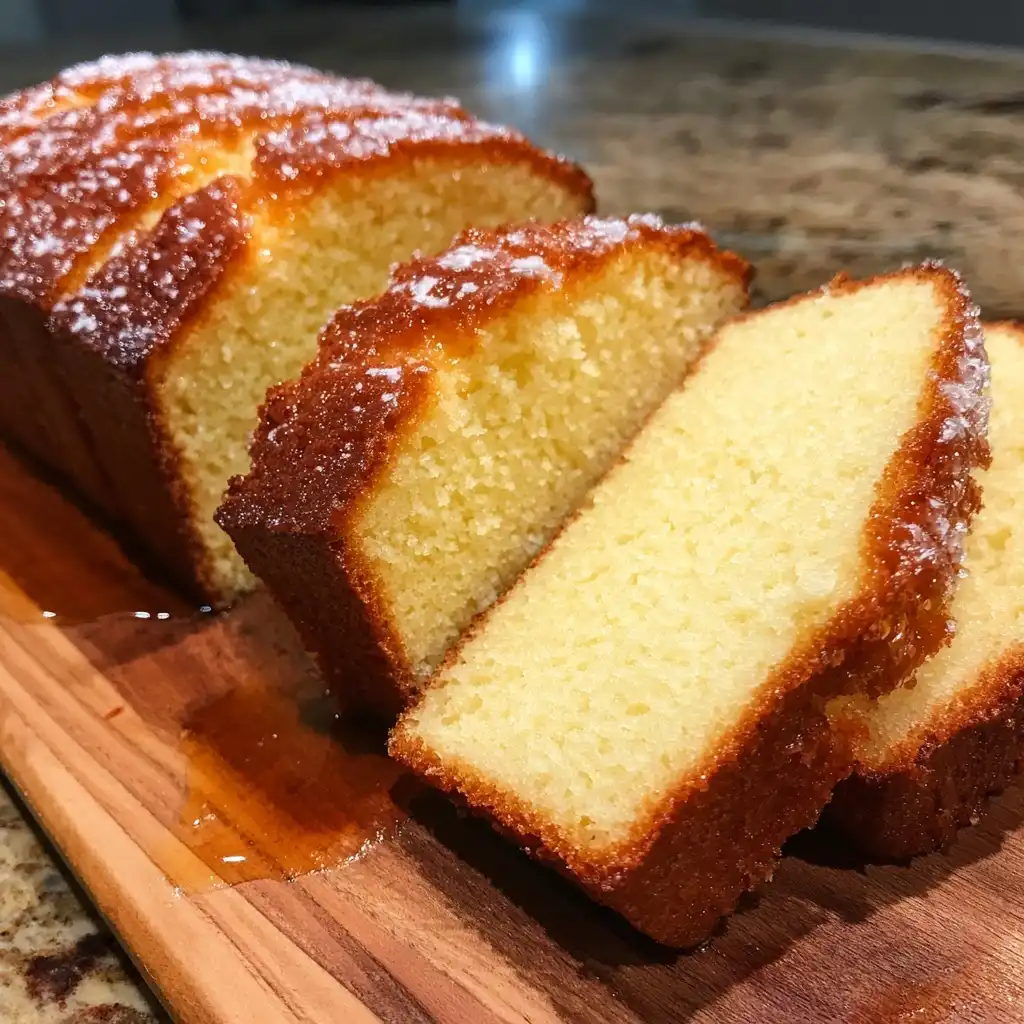
Buttermilk Pound Cake—often hailed as the “Never Fails” version—is a beloved American classic that marries old-world tradition with modern reliability. Unlike many finicky cakes that demand precise oven calibration or exact room-temperature ingredients, this rendition delivers consistent, velvety results every single time: dense yet tender, moist without sogginess, rich without heaviness, and crowned with a delicate golden crust that crackles ever so slightly when sliced. Its magic lies not in complexity, but in thoughtful technique, balanced chemistry, and the transformative power of cultured buttermilk—making it a go-to for bakers of all levels, from nervous beginners to seasoned professionals setting out for potlucks, holidays, or Sunday afternoon tea.
The History
The origins of pound cake trace back to early 18th-century Europe, where recipes were memorized by ratio rather than measurement: “a pound of butter, a pound of sugar, a pound of eggs, and a pound of flour”—hence the name. These dense, long-lasting cakes were ideal for preservation and celebration alike. As the recipe crossed the Atlantic with English colonists, American bakers began adapting it to local ingredients and tastes. The pivotal evolution came with the widespread availability of buttermilk—initially a byproduct of churning butter, later cultivated through lactic acid fermentation. By the mid-19th century, Southern cooks especially embraced buttermilk for its tangy lift and tenderizing properties, replacing some or all of the milk or water in traditional pound cakes. The “Never Fails” moniker emerged organically over decades—from church cookbooks, Junior League collections, and handwritten index cards passed between neighbors—each iteration refined through trial, error, and generational trust. This particular version gained legendary status in the 1950s–70s, often attributed to home economists at dairy cooperatives (like the Kentucky-based “Bluegrass Buttermilk Council”) who standardized methods for home ovens, tested altitude adjustments, and emphasized foolproof creaming and temperature discipline—ensuring success whether baked in a vintage gas oven or a modern convection model.
Ingredients Breakdown
Every ingredient in this Buttermilk Pound Cake serves a precise functional role—no filler, no afterthoughts:
- Unsalted Butter (2 cups / 454g, room temperature): Provides richness, structure, and mouthfeel. Room temperature (65–68°F) is non-negotiable—it traps air during creaming, enabling proper leavening and even crumb development. Cold butter yields greasiness; melted butter collapses structure.
- Granulated Sugar (3 cups / 600g): Sweetens, tenderizes (by inhibiting gluten formation), and aids browning via caramelization. The fine crystals dissolve easily into the butter-sugar matrix, creating microscopic air pockets essential for rise.
- Eggs (6 large, room temperature): Act as emulsifiers, binders, and leaveners. Their proteins coagulate to set the crumb; yolks add fat and richness; whites contribute lift. Room-temp eggs incorporate more uniformly and reduce batter curdling risk.
- Pure Vanilla Extract (2 tbsp): Not imitation—real Madagascar bourbon vanilla adds depth, warmth, and aromatic complexity that cuts through richness. Alcohol content also helps distribute fat-soluble flavor compounds evenly.
- All-Purpose Flour (3 cups / 360g, spooned & leveled): Provides gluten structure—but measured correctly (spooned into cup, then leveled—not scooped!) to avoid compaction and excess gluten. Too much flour = dry, tough cake.
- Full-Fat Buttermilk (1 cup / 240ml, cold or straight from fridge): The star performer. Its acidity reacts with baking soda (if used) and weakens gluten bonds, yielding tenderness. Lactic acid also enhances flavor nuance and extends shelf life by lowering pH. Full-fat (not low-fat or powdered reconstituted) ensures optimal moisture retention and creamy texture.
- Baking Soda (1 tsp): Activated instantly by buttermilk’s acid, producing carbon dioxide bubbles *during mixing and early baking*—giving subtle lift without compromising the pound cake’s signature density. It also neutralizes excess acidity and promotes golden-brown crust development.
- Fine Sea Salt (1 tsp): Balances sweetness, heightens all other flavors, and subtly strengthens gluten for better slice integrity—without tasting salty.
Note: No baking powder is used here—a deliberate choice. Traditional pound cakes rely on mechanical aeration (creaming) and chemical lift (soda + acid), avoiding the double-acting unpredictability of powder, which can cause uneven doming or collapse.
Step-by-Step Recipe
- Preheat & Prep (15 min ahead): Position oven rack in center. Preheat to 325°F (163°C)—not 350°. Lower temperature prevents rapid crust formation before interior sets, eliminating cracks and sinkholes. Grease a 10-cup Bundt pan *thoroughly*: use softened butter or shortening (not oil), then dust generously with flour—tapping out excess. For extra security, line the tube hole bottom with parchment round. Let pan sit at room temp while oven preheats.
- Cream Butter & Sugar (6–8 min): In a large bowl of stand mixer fitted with paddle attachment, beat butter on medium-low 1 min until smooth. Increase to medium-high; gradually add sugar in 3 additions, beating 2–2.5 min after each until mixture is very pale, thick, fluffy, and nearly tripled in volume. Scrape bowl and paddle thoroughly midway. This step is the foundation—if under-creamed, cake will be dense and gummy; if over-creamed, it may collapse.
- Incorporate Eggs (4–5 min): Add eggs one at a time on medium speed, beating 1 full minute after each addition until fully absorbed and glossy. Pause to scrape bowl. After final egg, beat 30 sec more. Batter should be homogenous, slightly ribbony, and hold soft peaks briefly when paddle is lifted. If mixture looks curdled, don’t panic—continue; it will recover once dry ingredients are added.
- Add Flavor (30 sec): Beat in vanilla extract on low until just combined.
- Whisk Dry Ingredients (1 min): In separate bowl, whisk flour, baking soda, and salt until fully aerated and lump-free. Sift if flour has been stored long-term.
- Alternate Dry & Wet (3 min): On lowest mixer speed, add ⅓ dry mix → beat 15 sec until mostly incorporated. Add ½ buttermilk → beat 15 sec. Repeat: ⅓ dry → 15 sec; remaining buttermilk → 15 sec; final ⅓ dry → 20 sec. Stop *immediately* when no dry streaks remain. Overmixing develops gluten = toughness. Batter will be thick, glossy, and pourable—like soft peanut butter.
- Pan & Bake (1 hr 20 min–1 hr 40 min): Pour batter into prepared pan, smoothing top with offset spatula. Tap pan sharply 3x on counter to release air bubbles. Bake 1 hr 20 min—then begin checking: insert long wooden skewer into thickest part near center. If wet batter clings, continue baking in 5-min increments. Cake is done when skewer emerges with *moist crumbs* (not wet batter, not completely clean). Total bake time varies by oven accuracy, pan color (dark pans bake faster), and altitude (add 1–2 tbsp flour per 1,000 ft above sea level).
- Cool Strategically (2 hrs minimum): Remove cake from oven. Let rest in pan on wire rack exactly 15 minutes—no more, no less. This allows steam to relax structure without sticking. Then invert onto rack, carefully remove pan, and flip cake upright (so top is up). Cool *completely* (1.5–2 hrs) before slicing—cutting warm cake compresses crumb and releases steam, causing gumminess.
Tips
- Oven Thermometer Essential: Built-in oven dials are notoriously inaccurate—±25°F is common. A standalone oven thermometer placed on the center rack is the single most impactful tool for “never fails” consistency.
- Room-Temp Discipline: Take butter and eggs out 90–120 minutes before baking. To speed eggs: place in warm (not hot) water for 10 minutes. Never microwave butter—it separates and ruins creaming.
- Measure Flour Like a Pro: Fluff flour in bag, spoon gently into measuring cup until heaping, then level *horizontally* with straight edge. Scooping packs flour—adding up to 25% excess—and guarantees dryness.
- Don’t Rush Cooling: That 15-minute pan rest is critical for structural integrity. Skipping it risks broken edges or collapsed centers. And never wrap or frost a warm cake—it sweats and turns soggy.
- Altitude Adjustments: Above 3,000 ft? Reduce sugar by 1 tbsp, increase flour by 2 tbsp, raise oven temp to 330°F, and extend bake time by ~5 minutes. Egg count remains unchanged.
- Bundt Pan Care: Use a high-quality, non-coated aluminum or ceramic-coated pan (avoid cheap nonstick with scratches). Wash by hand only—dishwasher heat degrades coatings. Dry thoroughly before storing.
- Testing Doneness Correctly: Skewer test > toothpick test—longer reach catches center accurately. Also press top gently: it should spring back slowly, leaving faint indentation. If it stays dented, bake 3–5 more minutes.
- Storing for Peak Freshness: Once fully cooled, wrap *tightly* in plastic wrap, then in foil. Keeps moist 4 days at room temp, 1 week refrigerated, or 3 months frozen (thaw wrapped at room temp 6 hours before serving).
Variations and Customizations
This foundational recipe welcomes elegant, reliable adaptations—each tested to preserve the “never fails” integrity:
- Lemon-Buttermilk Pound Cake: Add 2 tbsp finely grated lemon zest + 2 tsp fresh lemon juice to buttermilk. Replace 1 tsp vanilla with lemon extract. Optional: brush cooled cake with lemon syrup (½ cup sugar + ¼ cup lemon juice, simmered 3 min).
- Almond-Orange Pound Cake: Substitute 1 tsp almond extract + 1 tbsp orange zest for vanilla. Fold in ¾ cup toasted sliced almonds after final dry addition.
- Chocolate Swirl: Reserve ⅓ cup batter. Mix with 3 tbsp unsweetened cocoa powder + 2 tbsp hot coffee + 1 tbsp sugar until smooth. Alternate dollops into pan, then swirl gently with knife—not overmixed.
- Maple-Walnut: Replace ½ cup granulated sugar with pure maple syrup (reduce buttermilk by 2 tbsp). Fold in 1 cup toasted walnuts with final dry ingredients.
- Gluten-Free Version: Use 1:1 GF blend *with xanthan gum* (e.g., King Arthur Measure for Measure). Add ½ tsp xanthan gum if blend lacks it. Increase buttermilk by 1 tbsp. Rest batter 20 min before baking to hydrate flours.
- Mini Loaves or Muffins: Fill lined muffin tins ⅔ full. Bake at 325°F: jumbo muffins 28–32 min; standard muffins 22–26 min; mini loaves (6-count) 45–52 min. Cool in pan 5 min before transferring.
- Marbled Sour Cream Variation: Replace ½ cup buttermilk with full-fat sour cream for enhanced tang and silkiness. Proceed identically.
Pro Tip: Always test one variation at a time—combining multiple changes (e.g., GF + lemon + nuts) increases variables and risks deviation from the proven method.
Health Considerations and Nutritional Value
Per standard slice (1/12 of cake, approx. 125g), nutrition estimates are:
- Calories: ~420 kcal
- Total Fat: 22g (13g saturated)
- Carbohydrates: 53g (38g sugars)
- Protein: 5g
- Fiber: 0.5g
- Sodium: 290mg
Nutritional Notes:
- Buttermilk Benefits: Contains probiotics (live cultures in unpasteurized or cultured varieties), calcium (28% DV per cup), vitamin B12, and potassium. Its lower pH improves mineral absorption (e.g., iron from fortified flour).
- Sugar Context: While high in added sugar, this is a *dessert cake*—not a daily food. Portion control (1 slice) fits within AHA guidelines (<25g added sugar/day for women, <36g for men). For reduced sugar: decrease by ¼ cup max—any more disrupts creaming, moisture, and shelf life.
- Butter vs. Alternatives: Unsalted butter provides superior flavor, texture, and stability. Substituting oil or margarine sacrifices structure, browning, and mouthfeel—leading to greasy, flat, or crumbly results. Ghee may work but removes milk solids crucial for browning.
- Gluten Sensitivity: Not suitable for celiac disease unless certified GF flour and strict cross-contamination protocols are followed. Standard AP flour contains gluten essential for crumb cohesion.
- Dairy-Free Option? Not recommended for “never fails” integrity. Non-dairy milks lack lactic acid and fat profile to replicate buttermilk’s function. Coconut milk + vinegar creates inconsistent acidity and coconut flavor overwhelms.
- Heart-Healthy Tweaks: Replace ¼ cup butter with avocado puree (adds fiber, monounsaturated fats) —but expect denser crumb and greenish tint. Best for occasional experimentation, not reliability.
Bottom Line: Enjoy mindfully—as a celebratory treat rooted in real food (whole eggs, cultured dairy, unrefined sugar)—not a health food, but not nutritionally void either. Its simplicity means zero artificial preservatives, colors, or hydrogenated oils.
Ingredients
- 2 cups (454g) unsalted butter, room temperature (65–68°F)
- 3 cups (600g) granulated sugar
- 6 large eggs, room temperature
- 2 tablespoons pure vanilla extract
- 3 cups (360g) all-purpose flour, spooned & leveled
- 1 cup (240ml) full-fat buttermilk, cold
- 1 teaspoon baking soda
- 1 teaspoon fine sea salt
Directions
- Preheat oven to 325°F (163°C). Generously grease and flour a 10-cup Bundt pan. Set aside.
- In the bowl of a stand mixer fitted with paddle attachment, beat butter on medium-low for 1 minute until smooth. Increase speed to medium-high. Gradually add sugar in 3 additions, beating 2–2.5 minutes after each until pale, thick, and fluffy. Scrape bowl and paddle thoroughly halfway through.
- Add eggs one at a time on medium speed, beating 1 full minute after each until fully incorporated and glossy. Scrape bowl well after each addition. After last egg, beat 30 seconds more.
- Beat in vanilla extract on low until combined.
- In a separate bowl, whisk together flour, baking soda, and salt until uniform.
- On lowest mixer speed, add one-third of flour mixture; beat 15 seconds until mostly incorporated. Add half of buttermilk; beat 15 seconds. Repeat with second third flour, remaining buttermilk, and final third flour—beating 15 seconds after each addition, then 20 seconds after final flour—until batter is smooth and no dry streaks remain. Do not overmix.
- Pour batter into prepared pan. Smooth top. Tap pan firmly on counter 3 times.
- Bake 1 hour 20 minutes, then begin checking with long skewer. Continue baking in 5-minute increments until skewer inserted in center comes out with moist crumbs (not wet batter). Total time typically ranges 1 hour 25 minutes to 1 hour 40 minutes.
- Remove cake from oven. Let cool in pan on wire rack for exactly 15 minutes.
- Run thin knife around outer and inner edges. Invert onto wire rack, remove pan, then carefully flip cake upright. Cool completely (1.5–2 hours) before slicing.
FAQ
- Can I use low-fat or powdered buttermilk?
- No. Low-fat lacks the fat needed for moisture and tenderness; powdered buttermilk (even reconstituted) lacks live cultures and precise acidity balance, resulting in inconsistent rise and flavor. Always use cultured, full-fat, refrigerated buttermilk.
- Why is my cake cracking on top?
- Most commonly due to oven too hot (verify with thermometer), pan overfilled, or opening oven door before 75 minutes. A slight hairline crack is normal; deep fissures indicate thermal shock. Try lowering temp to 320°F or placing pan on lower rack.
- Can I make this ahead and freeze?
- Absolutely. Cool completely, wrap *tightly* in plastic wrap, then in heavy-duty foil. Freeze up to 3 months. Thaw overnight in fridge, then bring to room temperature (unwrapped) 2 hours before serving. Frost or glaze only after thawing.
- My cake sank in the middle—what went wrong?
- Underbaking is #1 cause—skewer test is essential. Also check: expired baking soda (test by mixing ¼ tsp with 2 tsp vinegar—if no vigorous fizz, replace); opening oven too early; or cooling in pan beyond 15 minutes, trapping steam.
- Can I substitute sour cream for buttermilk?
- Yes—with caveats. Use full-fat sour cream, but reduce amount to ¾ cup and add ¼ cup whole milk to match buttermilk’s fluidity and acidity. Expect slightly denser, tangier result.
- Is there a way to make it lighter in texture?
- For a “softer pound cake” effect: replace ½ cup flour with ½ cup cornstarch (total flour + starch = 3 cups). This reduces gluten development while maintaining volume. Do not exceed this ratio—structure suffers.
- Why no baking powder?
- Baking soda + buttermilk provides precise, immediate leavening perfectly suited to this dense batter. Baking powder’s double-activation (heat + moisture) can cause uneven rise, coarse crumb, or bitter aftertaste—compromising reliability.
- Can I bake this in two 9-inch round pans?
- Yes—but adjust time: bake at 325°F for 35–45 minutes. Cool in pans 15 minutes, then invert onto racks. Note: layers will be thicker and may dome more; level tops with serrated knife if stacking.
Summary
This Buttermilk Pound Cake—tested across generations, geographies, and oven models—delivers incomparable, consistent excellence: a luxuriously moist, fine-grained crumb, golden caramelized crust, and balanced sweet-tangy richness that satisfies without overwhelming.
Its “Never Fails” reputation rests on science-backed technique, uncompromising ingredient quality, and respect for time-honored ratios—making it not just a recipe, but a trusted ritual in kitchens from coast to coast.