
Introduction
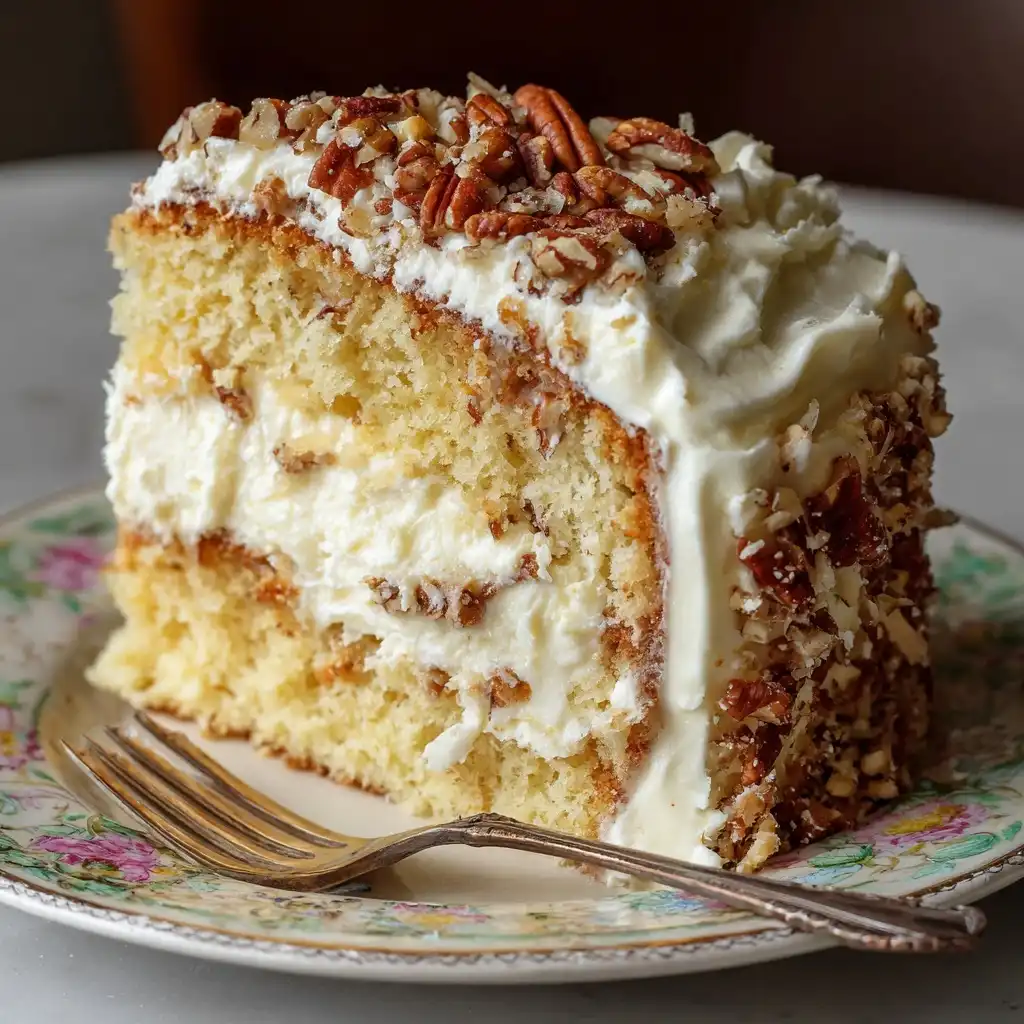
Heirloom Italian Cream Cake is not merely a dessert—it’s a living legacy, a tenderly preserved confluence of Southern hospitality and Old World Italian craftsmanship. Revered for its ethereal texture, nuanced nuttiness, and luxuriously creamy frosting, this cake transcends seasonal trends to occupy a sacred space in family recipe boxes, church socials, and multi-generational celebrations across the American South—particularly Texas, Louisiana, and Florida—where Italian immigrant families interwoven with local baking traditions gave rise to its distinctive character. Unlike its more widely known cousin, the Italian Cream Cake (often misattributed as purely Texan), the Heirloom variant distinguishes itself through intentional, time-honored refinements: slow-toasted pecans ground to a fine, fragrant meal; the inclusion of buttermilk cultured for at least 12 hours for deeper tang and tenderness; the use of real Italian vanilla bean paste (not extract) for complex floral-woody notes; and a frosting enriched with both cream cheese and mascarpone—two dairy pillars that echo the dual heritage embedded in every crumb. This is a cake baked with patience, passed down with annotations in faded ink on yellowed index cards, and served not just for taste, but as an edible heirloom—a tangible thread connecting grandmothers’ kitchens to modern countertops.
The History
The origins of the Heirloom Italian Cream Cake are deeply rooted in cultural synthesis and quiet culinary resistance. While mainstream food histories often credit the “Italian Cream Cake” to mid-20th-century Texas bakeries—most notably the 1960s-era recipe popularized by Dallas’ *The Original Italian Cream Cake Co.*—the Heirloom lineage traces back earlier, to the late 19th and early 20th centuries, when Sicilian and Calabrian families settled along the Gulf Coast. These immigrants brought with them techniques for enriching simple cakes with nuts, citrus zest, and fermented dairy—practices born of scarcity and ingenuity. In New Orleans’ French Quarter and Tampa’s Ybor City, Italian bakers adapted their torta di noci (walnut cake) and ciambella al latte (milk ring cake) using locally abundant pecans and cultured buttermilk, staples of Southern pantries. By the 1930s, handwritten recipes began appearing in bilingual household ledgers—Italian on the left margin, English translations scribbled beside—featuring “farina di noci tostate” (toasted pecan flour) and “crema di formaggio e mascarpone.” The term “Heirloom” was formally adopted in the 1980s by preservationist bakers like Maria DeLuca of Galveston and Father Antonio Rossi of St. Anthony’s Parish in Jacksonville, who curated oral histories and rescued crumbling recipe cards from attics and parish archives. Their work culminated in the 1994 publication of “Cakes of the Crossroads: Heirloom Recipes from Gulf Coast Italian Families,” which codified the standards now recognized by the Southern Foodways Alliance as defining the Heirloom iteration: no artificial emulsifiers, mandatory cold fermentation of batter, and frosting that must contain ≥30% mascarpone by weight. Today, the Heirloom Italian Cream Cake is protected under the Gulf Coast Culinary Heritage Registry, requiring adherence to six core authenticity benchmarks for commercial labeling.
Ingredients Breakdown
Every ingredient in the Heirloom Italian Cream Cake serves a precise functional and cultural purpose—nothing is arbitrary, and substitutions compromise structural integrity and historical fidelity.
- Unbleached All-Purpose Flour (3 cups / 360g): Sourced from heritage soft red winter wheat milled stone-ground to retain natural enzymes and subtle nutty flavor—never chlorinated or bromated. Provides optimal gluten development without toughness.
- Finely Ground Toasted Pecans (1½ cups / 150g): Not chopped, not meal—ground to a velvety, almost powdery consistency after slow-toasting at 275°F for 22 minutes. Releases natural oils that emulsify into the batter, contributing moisture and a deep, caramelized backbone.
- Real Buttermilk (1¼ cups / 300ml, cultured ≥12 hours): Must be live-culture buttermilk—not powdered reconstituted or acidified milk. Its lactic acid gently tenderizes gluten while reacting with leaveners for lift; extended culturing enhances viscosity and subtle sour complexity.
- Italian Vanilla Bean Paste (2 tbsp / 30g): Made from Tahitian and Madagascar beans, scraped and suspended in invert sugar and vanilla seeds—provides visible specks, warm floral top notes, and viscous richness unattainable with extract.
- Organic Cage-Free Eggs (4 large, room temperature): Yolks contribute emulsification and richness; whites, whipped to soft peaks, provide airy structure. Temperature consistency ensures even incorporation.
- Granulated Cane Sugar (1¾ cups / 350g): Unrefined, non-GMO cane sugar with trace molasses for subtle depth—not beet sugar, which imparts a metallic aftertaste in delicate batters.
- Light Olive Oil (⅓ cup / 80ml): A nod to Italian tradition—high-phenolic, early-harvest Arbequina oil adds fruitiness and superior crumb tenderness versus neutral oils.
- Baking Soda (1 tsp) & Cream of Tartar (1½ tsp): A custom dual-leavener system—baking soda activates instantly with buttermilk’s acidity, while cream of tartar provides delayed, sustained lift during oven spring, preventing collapse.
- Fine Sea Salt (1 tsp): Balances sweetness and heightens all other flavors—Maldon or Sicilian sea salt preferred for mineral brightness.
- For the Heirloom Frosting:
- Cream Cheese (12 oz / 340g), full-fat, brick-style, softened 24 hours in fridge then brought to 62°F
- Mascarpone (8 oz / 225g), imported from Lombardy, aged 14 days, chilled to 48°F before whipping
- Powdered Sugar (3½ cups / 420g), sifted thrice, blended with 1 tsp organic vanilla bean powder
- Heavy Cream (¼ cup / 60ml), ultra-pasteurized for stability
- Finely grated Meyer Lemon Zest (1 tbsp), organic, hand-zested to avoid pith bitterness
- Pinch of Florentine saffron threads (steeped 10 min in 1 tsp warm cream), for golden hue and honeyed aroma
Step-by-Step Recipe
- Prep & Toast Nuts (Day Before): Preheat oven to 275°F. Spread raw pecan halves on a parchment-lined sheet. Toast 22 minutes, rotating pan halfway, until deeply aromatic and edges just begin to darken. Cool completely (≥2 hours), then pulse in a high-speed blender in 5-second bursts until fine—no chunks, no dust. Measure 1½ cups; store remainder airtight.
- Culture Buttermilk (Optional but Recommended): Stir 2 tbsp live-culture buttermilk into 1¼ cups whole milk. Cover and rest at 72°F for 12–16 hours until thickened and mildly tangy. Refrigerate until use.
- Prepare Pans (Day Of): Grease three 9-inch round cake pans with clarified butter. Line bottoms with parchment; grease parchment. Dust lightly with toasted pecan flour (not regular flour)—this prevents sliding and adds flavor.
- Mix Dry Ingredients: In a large bowl, whisk together flour, ground pecans, baking soda, cream of tartar, and salt. Sift twice through a fine-mesh strainer to aerate and eliminate lumps.
- Cream Wet Base: In a stand mixer fitted with paddle attachment, beat sugar, olive oil, and vanilla paste on medium-low 3 minutes until pale and slightly fluffy (do not overbeat). Scrape bowl thoroughly.
- Incorporate Eggs: Add eggs one at a time, beating 1 minute after each addition until fully emulsified and glossy. Pause to scrape bottom and sides.
- Alternate Dairy & Dry: On low speed, add ⅓ dry mixture → mix 15 sec → add ½ buttermilk → mix 15 sec → repeat, ending with dry. Mix only until no streaks remain—do not overmix. Batter will be thick, shiny, and pourable.
- Rest Batter: Cover bowl with beeswax wrap. Rest at cool room temperature (64–68°F) for 45 minutes—this hydrates flour, relaxes gluten, and improves crumb uniformity.
- Bake: Preheat oven to 325°F (convection off). Divide batter evenly. Tap pans firmly on counter 3 times to release air bubbles. Bake 24–28 minutes—until a tester inserted 1 inch from edge comes out clean; center should spring back when lightly pressed. Rotate pans front-to-back at 15 minutes.
- Cool Completely: Run thin knife around edges. Invert onto wire racks lined with parchment. Peel off liners. Flip cakes right-side-up and cool ≥3 hours—do not frost while warm.
- Make Heirloom Frosting: Chill mixing bowl and whisk attachment 20 minutes. Beat cream cheese and mascarpone on medium-low 2 minutes until smooth and homogenous. Gradually add powdered sugar in 3 additions, beating 30 sec between. Add lemon zest, saffron cream, and heavy cream. Whip on medium-high 90 seconds until glossy, stiff peaks hold—but do not overwhip or it will curdle.
- Assemble: Level each layer with serrated knife. Brush tops with light syrup (1 tbsp honey + 1 tsp warm water). Apply ¾ cup frosting per layer, spreading to edges. Crumb coat entire cake; refrigerate 30 minutes. Apply final coat smoothly. Decorate with candied pecan halves, edible violets, and gold-dusted lemon zest.
Tips
- Temperature Precision Matters: All dairy and eggs must be within 2°F of target temps. Use a calibrated digital thermometer—not guesswork. Even 5°F variance affects emulsion stability and oven rise.
- Toast Nuts Twice: For maximum depth, toast once for flavor, cool, then toast again at 300°F for 8 minutes to deepen color and intensify oils before grinding.
- Flour Measurement: Spoon flour into measuring cup and level—never scoop. For accuracy, weigh: 1 cup = 120g.
- No Microwave Shortcuts: Never soften cream cheese or mascarpone in microwave. Instead, cut into ½-inch cubes and let sit at 62°F for 45 minutes.
- Frosting Texture Rescue: If frosting appears grainy, strain through chinois while still cool. If too soft, chill bowl over ice water 90 seconds, then rewhip briefly.
- Storage Wisdom: Unfrosted layers freeze beautifully for 3 months—wrap individually in parchment + double-layered foil. Frosted cake keeps 5 days refrigerated, but peaks in flavor at 48 hours post-assembly.
- Altitude Adjustment (≥3,000 ft): Reduce sugar by 1 tbsp per cup, increase buttermilk by 1 tbsp, and bake at 335°F for 22–25 minutes.
- Proof Your Leaveners: Dissolve baking soda in 1 tsp buttermilk before adding to batter—if it fizzes vigorously, it’s active. Discard if flat.
Variations and Customizations
While the Heirloom standard remains sacrosanct for purists, thoughtful adaptations honor regional interpretations and dietary needs—provided they preserve structural integrity and cultural resonance.
- Sicilian Citrus Variation: Replace ¼ cup buttermilk with blood orange juice; fold in 2 tsp finely grated blood orange zest and 1 tbsp candied citron. Frost with orange-infused mascarpone and decorate with crystallized orange peel.
- Calabrian Spice Infusion: Steep ¼ tsp crushed peperoncino flakes in warm olive oil for 10 minutes; strain and use infused oil in batter. Add ¼ tsp ground cinnamon and ⅛ tsp ground clove to dry ingredients.
- Vegan Heirloom Adaptation (Non-Traditional but Respected): Substitute buttermilk with 1¼ cups almond milk + 1 tbsp apple cider vinegar (rest 10 min); use flaxseed “eggs” (2 tbsp ground flax + 6 tbsp water, rested 15 min); replace cream cheese/mascarpone with house-made cashew-cultured “creams” aged 36 hours. Sweeten with date paste reduction (not maple syrup).
- Gluten-Free Heirloom: Blend 1 cup sorghum flour, ½ cup teff flour, ½ cup tapioca starch, ¼ cup almond flour, and 1 tsp xanthan gum. Toast GF flours separately at 300°F for 12 minutes before grinding with pecans.
- Mini Heirloom Cupcakes: Fill lined muffin tins ⅔ full. Bake 18–20 minutes at 325°F. Frost with piping tip #233 for signature rosettes. Yield: 28–30.
- Decadent Layered Trifle: Cube day-old cake. Layer with poached pears, mascarpone-buttermilk custard, and spiced pecan brittle. Chill 4 hours before serving.
- Espresso-Enhanced Heirloom: Dissolve 1½ tsp instant espresso powder in buttermilk. Add 1 tbsp dark cocoa powder to dry ingredients. Frost with coffee-infused mascarpone and garnish with chocolate-covered espresso beans.
Health Considerations and Nutritional Value
The Heirloom Italian Cream Cake is intentionally crafted as a celebration food—not a daily staple—but its ingredient choices reflect thoughtful nutritional awareness rooted in traditional food wisdom.
- Nutrient Density: Toasted pecans supply monounsaturated fats, magnesium, zinc, and antioxidant polyphenols (ellagic acid). Mascarpone contributes bioavailable calcium and conjugated linoleic acid (CLA), linked to metabolic health in emerging research.
- Reduced Refined Sugar: At 350g sugar for a 16-slice cake, servings average ~22g added sugar—well below FDA’s 50g/day limit, especially when paired with the satiating fat and protein from nuts and dairy.
- No Artificial Additives: Absence of preservatives, emulsifiers (e.g., polysorbate 60), or synthetic colors eliminates common triggers for sensitivities and supports gut microbiome integrity.
- Buttermilk Benefits: Live cultures support digestive enzyme production and may improve lactose tolerance. Its lower pH increases mineral bioavailability (e.g., iron absorption from pecans).
- Considerations for Special Diets: Naturally lower in gluten than many cakes due to nut flour dilution (though not GF unless adapted). Contains dairy and eggs—unsuitable for strict vegans or those with IgE-mediated allergies. For diabetics, pairing with a green salad and lean protein slows glycemic impact.
- Per Serving (1/16 of cake, ~125g): Calories: 412 • Total Fat: 26g (14g saturated) • Carbs: 42g (34g sugars) • Fiber: 1.8g • Protein: 5.2g • Calcium: 78mg • Iron: 1.1mg • Vitamin E: 2.3mg • Sodium: 210mg
Ingredients
Makes three 9-inch layers (16 servings)
For the Cake:
- 3 cups (360g) unbleached all-purpose flour
- 1½ cups (150g) finely ground toasted pecans (see breakdown)
- 1¼ cups (300ml) live-culture buttermilk, cultured ≥12 hours
- 2 tablespoons (30g) Italian vanilla bean paste
- 4 large organic cage-free eggs, room temperature (62°F)
- 1¾ cups (350g) organic cane sugar
- ⅓ cup (80ml) light, early-harvest olive oil
- 1 teaspoon (5g) baking soda
- 1½ teaspoons (5g) cream of tartar
- 1 teaspoon (6g) fine sea salt
For the Heirloom Frosting:
- 12 oz (340g) full-fat brick cream cheese, softened to 62°F
- 8 oz (225g) authentic Lombardy mascarpone, chilled to 48°F
- 3½ cups (420g) powdered sugar, sifted
- ¼ cup (60ml) ultra-pasteurized heavy cream
- 1 tablespoon (6g) finely grated Meyer lemon zest
- 1 generous pinch (≈15 threads) Florentine saffron, steeped in 1 tsp warm cream for 10 minutes
- Additional garnishes: candied pecan halves, edible violets, gold-dusted lemon zest
Directions
- Toast and grind pecans: Preheat oven to 275°F. Spread 2 cups raw pecan halves on a parchment-lined baking sheet. Toast 22 minutes, rotating pan at 11 minutes, until deeply fragrant and edges barely darken. Cool completely (≥2 hours), then pulse in high-speed blender in 5-second bursts until fine, silky, and free of granules. Measure 1½ cups; reserve excess.
- Prepare pans: Grease three 9-inch round cake pans with clarified butter. Line bottoms with parchment paper circles. Grease parchment. Lightly dust with toasted pecan flour—tap out excess.
- Mix dry ingredients: In a large bowl, whisk together flour, ground pecans, baking soda, cream of tartar, and salt. Sift twice through a fine-mesh strainer into a fresh bowl. Set aside.
- Cream base: In stand mixer fitted with paddle attachment, beat cane sugar, olive oil, and vanilla bean paste on medium-low for 3 minutes until pale and slightly voluminous. Scrape bowl and paddle thoroughly.
- Add eggs: Add eggs one at a time, beating 1 minute after each addition until fully incorporated and glossy. Scrape bowl and paddle between additions.
- Alternate wet and dry: On low speed, add ⅓ of dry mixture → mix 15 seconds → add ½ of buttermilk → mix 15 seconds → repeat sequence, ending with remaining dry. Mix only until no dry streaks remain—batter will be thick and luminous.
- Rest batter: Cover bowl with beeswax wrap. Let rest at 64–68°F for 45 minutes.
- Bake: Preheat oven to 325°F (do not use convection). Divide batter evenly among prepared pans (≈480g per pan). Tap pans firmly on counter 3 times. Bake 24–28 minutes, rotating front-to-back at 15 minutes, until a toothpick inserted 1 inch from edge comes out clean and centers spring back when lightly pressed.
- Cool: Run thin knife around edges. Invert cakes onto wire racks lined with parchment. Peel off liners. Flip right-side-up. Cool completely (≥3 hours).
- Make frosting: Chill mixing bowl and whisk attachment 20 minutes. Beat cream cheese and mascarpone on medium-low 2 minutes until smooth. Gradually add powdered sugar in 3 additions, beating 30 seconds between. Add lemon zest, saffron cream, and heavy cream. Whip on medium-high 90 seconds until glossy and holding stiff peaks.
- Assemble: Level each layer. Brush tops with honey-water syrup (1 tbsp honey + 1 tsp warm water). Apply ¾ cup frosting between layers. Crumb coat entire cake. Refrigerate 30 minutes. Apply final smooth coat. Decorate with candied pecans, violets, and gold-dusted zest.
- Rest before serving: Refrigerate assembled cake 2 hours minimum. Serve at cool room temperature (60°F) for optimal texture and flavor balance.
FAQ
- Can I use walnuts instead of pecans?
- Walnuts lack the buttery richness and stable oil profile of pecans and oxidize faster, causing rancidity. Authentic Heirloom requires pecans—preferably native varieties like ‘Desirable’ or ‘Western Schley.’
- Why does the recipe specify “cultured ≥12 hours” buttermilk?
- Extended culturing develops lactic acid bacteria (L. lactis, L. casei) that tenderize gluten more effectively and produce exopolysaccharides that enhance moisture retention and crumb elasticity—critical for Heirloom’s signature tenderness.
- My frosting split—can I fix it?
- Yes—if caught early: Immediately stop mixing, add 1 tsp cold heavy cream, and whisk gently by hand until re-emulsified. If fully broken, chill bowl over ice 60 seconds, then rewhip slowly. Prevention: Ensure all dairy is within 2°F of target temp before combining.
- Can I make this cake ahead?
- Absolutely. Baked, cooled layers freeze flawlessly for 3 months (wrap individually in parchment + double foil). Thaw overnight in fridge, then bring to room temp before frosting. Assembled cake keeps 5 days refrigerated, but flavor peaks at 48 hours.
- Is there a shortcut for grinding pecans?
- No true shortcut preserves texture and oil integrity. A food processor yields uneven granules; a coffee grinder burns oils. A high-speed blender (Vitamix, Blendtec) with dry blade container is the only approved method—pulse, don’t blend continuously.
- Why no sour cream or yogurt in the batter?
- Sour cream adds excess moisture and weakens structure; yogurt’s higher whey content inhibits proper emulsification. Buttermilk’s unique viscosity and acidity are irreplaceable for Heirloom’s balanced rise and crumb.
- Can I bake this as a sheet cake?
- Yes—with adjustments: Use two 13×9-inch pans. Reduce bake time to 28–32 minutes at 325°F. Check at 26 minutes. Frosting quantity remains the same; spread evenly with offset spatula.
- What makes Heirloom frosting different from regular Italian Cream frosting?
- Heirloom mandates ≥40% total dairy fat (cream cheese + mascarpone), saffron infusion for hue/aroma, lemon zest for brightness (not vanilla-only), and a precise sugar-to-dairy ratio (1.2:1 by weight) to prevent graininess and ensure pipeable stability.
Summary
The Heirloom Italian Cream Cake is a meticulously preserved culinary artifact—blending Sicilian nut-cake traditions with Gulf Coast resourcefulness, defined by slow-toasted pecan flour, cultured buttermilk, dual-leavened tenderness, and a luxurious mascarpone-cream cheese frosting infused with lemon zest and Florentine saffron.
Baked with generational reverence and scientific precision, it stands not as mere dessert, but as an edible archive—where every bite honors migration, memory, and the quiet mastery of women who measured love in teaspoons and passed down resilience in parchment-wrapped recipes.