
Introduction
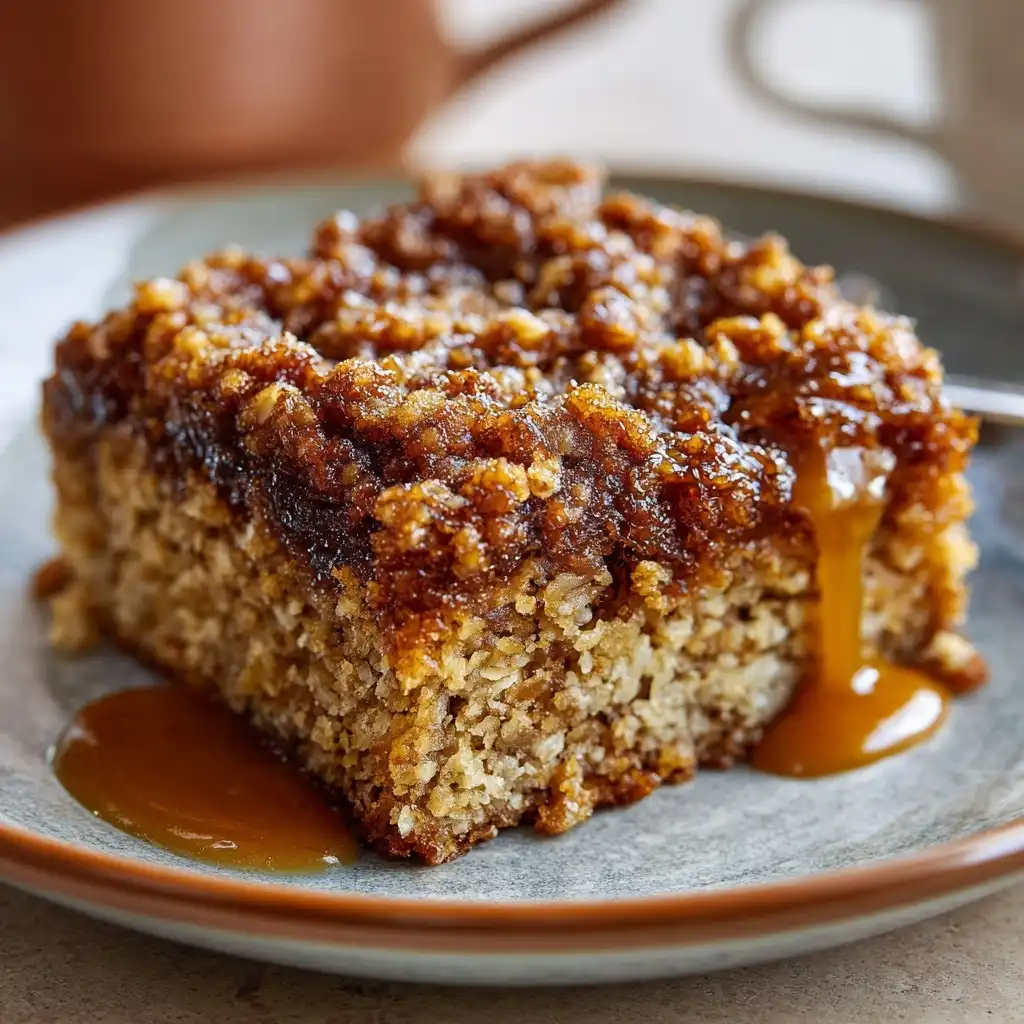
Old-Fashioned Oatmeal Cake with Broiled Topping is a beloved classic dessert that evokes the warmth of hearth-baked traditions, cozy autumn afternoons, and generations-old family recipes passed down in stained, handwritten notebooks. This tender, moist cake combines the humble comfort of rolled oats with rich brown sugar, warm spices, and a luscious, caramelized broiled topping that transforms an otherwise simple dessert into something truly special. Unlike modern layer cakes or elaborate confections, this recipe embraces simplicity, rustic charm, and deep, nuanced flavor—relying not on fancy techniques but on time-honored methods like soaking oats in hot liquid, gentle mixing, and the transformative magic of broiling. Whether served warm from the oven with a scoop of vanilla ice cream or enjoyed cold with morning coffee, it delivers nostalgia in every bite—and remains a steadfast favorite at church suppers, potlucks, holiday tables, and quiet Sunday gatherings.
The History
The origins of oatmeal cake trace back to 19th-century American and British home kitchens, where resourceful bakers sought economical, nourishing desserts using pantry staples: oats (often leftover from breakfast), molasses or brown sugar (more accessible than refined white sugar), and readily available spices. In the U.S., oatmeal cake gained particular popularity during the Great Depression and World War II, when rationing made eggs, butter, and refined flour scarce—prompting substitutions like sour milk, buttermilk, applesauce, and rolled oats to add moisture and structure. The “old-fashioned” designation emerged in mid-20th-century cookbooks (notably the 1950s–60s era) as a nostalgic marketing term distinguishing homestyle, unfrosted, one-bowl cakes from newer, more elaborate desserts. The broiled topping—a hallmark of this version—likely evolved from earlier “brown sugar glaze” or “oven-broiled crumb” variations found in regional community cookbooks from Appalachia, the Midwest, and New England. It reflects a practical innovation: rather than baking a separate streusel or frosting, home cooks simply sprinkled a spiced brown sugar–butter mixture over the cake batter and finished it under the broiler for a quick, glossy, slightly crunchy finish. This method ensured consistent caramelization without overbaking the delicate crumb—a testament to intuitive, experience-based baking long before digital timers and convection ovens.
Ingredients Breakdown
Every ingredient in this Old-Fashioned Oatmeal Cake serves both functional and flavorful purposes—nothing is included merely for tradition’s sake. Let’s explore them in detail:
- Old-Fashioned Rolled Oats: Not instant or quick oats—these are whole oat groats that have been steamed and flattened. They absorb liquid slowly, lending chewy texture, structural integrity, and nutty depth. Their high soluble fiber (beta-glucan) also contributes to the cake’s moistness and shelf life.
- Hot Water or Strong Brewed Coffee: Used to plump and partially gelatinize the oats before mixing. Hot liquid hydrates the starches, releasing natural gums that help bind the batter and enhance tenderness. Coffee, while optional, deepens the molasses/brown sugar notes without adding bitterness—especially effective if using unsweetened cocoa in variations.
- Brown Sugar (Packed): Both light and dark work, though dark brown sugar adds more molasses intensity and acidity, which reacts with baking soda for optimal lift. Its hygroscopic nature locks in moisture and promotes caramelization in both the cake and the topping.
- Vegetable Oil (or Melted Butter): Oil yields a supremely tender, fine-grained crumb and extends freshness; butter adds richer flavor and subtle dairy notes. Many traditional versions use oil for reliability and economy—but a hybrid (e.g., ¼ cup oil + 2 tbsp melted butter) offers the best of both worlds.
- Eggs: Provide emulsification, structure, and leavening support. Room-temperature eggs incorporate more evenly and trap air for better volume. For egg-free adaptations, flax or chia “eggs” can be used—but expect denser texture and reduced rise.
- Buttermilk or Sour Milk: The acid reacts with baking soda to produce carbon dioxide—essential for lift—while also tenderizing gluten and imparting subtle tang. If buttermilk isn’t available, add 1 tsp vinegar or lemon juice to ½ cup whole or low-fat milk and let sit 5–10 minutes until curdled.
- Spices (Cinnamon, Nutmeg, Allspice): Warm, aromatic, and deeply complementary to oats and brown sugar. Cinnamon is dominant; freshly grated nutmeg adds floral complexity; allspice lends clove-like warmth and depth. Toasting whole spices and grinding them just before use dramatically intensifies aroma.
- Baking Soda & Baking Powder: A dual-leavening system ensures reliable rise—soda for immediate reaction with acid (buttermilk), powder for secondary lift during baking. Too much soda yields a soapy aftertaste; too little results in dense, gummy layers.
- Salt: Not just for seasoning—it balances sweetness, enhances spice perception, and strengthens gluten networks for better crumb cohesion.
- For the Broiled Topping: Brown sugar (again, packed), butter (unsalted, for precise salinity control), heavy cream or evaporated milk (for richness and controlled bubbling), cinnamon, and a pinch of salt. The ratio is critical: too much sugar burns; too little cream yields dry, grainy topping. Heavy cream provides ideal fat-to-liquid balance for smooth, glossy caramelization.
Step-by-Step Recipe
- Preheat & Prep: Position oven rack in center position. Preheat oven to 350°F (175°C). Grease a 9×13-inch metal baking pan *very well*—preferably with shortening or softened butter, then dust lightly with flour or oats (for extra texture and non-stick security). Avoid nonstick spray alone; the topping’s high sugar content can cause sticking.
- Hydrate the Oats: In a medium heatproof bowl, combine 1 ½ cups old-fashioned rolled oats and 1 cup hot water (or hot strong coffee). Stir gently, cover with a clean kitchen towel or plate, and let stand for 15–20 minutes until oats are fully absorbed and porridge-like. This step is non-negotiable—it develops viscosity and prevents gritty texture.
- Cream Wet Ingredients: In a large mixing bowl, whisk together 1 ½ cups packed dark brown sugar, ½ cup vegetable oil (or melted butter), 2 large room-temperature eggs, and 1 tsp pure vanilla extract until smooth and slightly thickened (~2 minutes by hand or 1 minute with mixer on medium). Scrape down sides thoroughly.
- Combine Dry Ingredients: In a separate bowl, whisk 1 ½ cups all-purpose flour (spooned & leveled), 1 tsp baking soda, 1 ½ tsp ground cinnamon, ¼ tsp freshly grated nutmeg, ⅛ tsp ground allspice, and ½ tsp fine sea salt until fully homogenous. Sift if flour is lumpy.
- Alternate Incorporation: Add half the dry ingredients to the wet mixture and stir with a silicone spatula just until streaks disappear. Pour in the soaked oat mixture and stir gently until mostly combined. Add remaining dry ingredients and fold *just* until no dry patches remain—do not overmix. Batter will be thick, glossy, and slightly sticky. Overmixing develops gluten, leading to toughness.
- Pan & Bake Base: Spread batter evenly into prepared pan using an offset spatula. Smooth top with a damp bench scraper. Bake at 350°F for 25–30 minutes—or until a toothpick inserted 1 inch from edge comes out with moist crumbs (center may look slightly underdone—that’s ideal; residual heat finishes cooking). Do not open oven door before 22 minutes to prevent collapse.
- Prepare Topping While Cake Bakes: In a small saucepan over medium-low heat, melt ¼ cup (½ stick) unsalted butter. Whisk in ½ cup packed dark brown sugar, 2 tbsp heavy cream, ½ tsp cinnamon, and ⅛ tsp salt. Bring to a gentle simmer, stirring constantly, for 1 minute until thickened and glossy. Remove from heat; stir in 1 tsp vanilla. Let cool 3–4 minutes (so it doesn’t melt the cake surface).
- Apply & Broil: Carefully remove hot cake from oven. Immediately pour warm topping evenly over surface. Tilt pan gently to distribute. Place pan on upper-middle rack, ~6 inches below broiler element. Broil on HIGH for 2–3 minutes—watch *constantly*. Topping should bubble vigorously and turn deep amber with scattered golden-brown spots. Rotate pan halfway through for even browning. Remove when bubbles slow and surface looks set—not wet, not blackened.
- Cool & Serve: Let cake cool in pan on a wire rack for *at least 45 minutes* before cutting. This allows topping to fully set and cake crumb to stabilize. For clean slices, dip knife in hot water and wipe between cuts. Best served slightly warm or at room temperature.
Tips
- Oats Matter: Use only certified gluten-free old-fashioned oats if serving celiacs—“oat flour” or “quick oats” yield mushy, flat results. Steel-cut oats won’t soften enough and create unpleasant chewiness.
- Temperature Control: Ensure eggs and buttermilk are room temperature before mixing—cold ingredients cause premature setting and uneven texture. Let them sit out 30 minutes before starting.
- No Overmixing Zone: Once dry ingredients hit the wet, switch to a spatula and use a folding motion—not beating or stirring. Mix until you see *no dry flour*, then stop—even if small lumps remain. The batter will smooth out as it rests in the pan.
- Broiler Vigilance: Broiling happens fast. Set a timer for 90 seconds, then check every 20 seconds. Keep your oven light on and stay within arm’s reach. If topping smokes or darkens too quickly, pull pan out immediately—it’s salvageable with a quick stir and re-broil for 30 seconds.
- Pan Choice: Metal pans conduct heat best for even baking and broiling. Glass or ceramic retain too much heat and risk overbaking edges while center remains soft. If using dark nonstick, reduce oven temp by 25°F.
- Timing Is Everything: Apply topping *within 60 seconds* of removing cake from oven. Too soon = topping melts into batter; too late = cake surface cools and topping slides off or pools.
- Storage Wisdom: Cover tightly with foil or store in airtight container at room temperature up to 3 days. Refrigeration dries out the crumb. To refresh, microwave individual slices 10–15 seconds or warm in 300°F oven for 8 minutes.
- Make-Ahead Option: Bake cake base up to 24 hours ahead. Cool completely, cover, and refrigerate. Bring to room temp 1 hour before broiling topping—then proceed as directed. Never broil a chilled cake; condensation interferes with caramelization.
Variations and Customizations
This recipe is wonderfully adaptable—both for dietary needs and creative flair—without sacrificing its soulful, comforting essence:
- Nutty Delight: Fold ¾ cup chopped toasted walnuts or pecans into batter before spreading. Toasting unlocks oils and prevents soggy nuts. For crunch contrast, sprinkle 2 tbsp extra on topping before broiling.
- Fruit-Infused: Add 1 cup finely grated Granny Smith apple (unpeeled, excess moisture squeezed out) or ¾ cup drained crushed pineapple (pat dry) to soaked oats. Adds brightness and subtle tartness that balances sweetness.
- Chocolate Swirl: After spreading batter, drizzle ¼ cup melted semisweet chocolate and 2 tbsp creamy peanut butter in zigzags. Use a skewer to marble lightly—don’t over-blend. Broil topping as usual; chocolate will set into ribbons.
- Spice Upgrade: Add ¼ tsp ground ginger and ⅛ tsp ground cloves to dry spices for deeper warmth. Or infuse the hot water with 1 star anise pod and 1 cinnamon stick—steep 5 minutes, then strain before soaking oats.
- Gluten-Free Version: Substitute 1:1 gluten-free all-purpose flour blend (with xanthan gum). Add 1 tbsp ground flaxseed to oat soak for binding. Verify oats are certified GF. Texture will be slightly denser but still moist.
- Vegan Adaptation: Replace eggs with 2 flax eggs (2 tbsp ground flax + 6 tbsp water, rested 10 min); use plant-based butter and unsweetened almond or soy milk soured with 1 tsp lemon juice. Choose maple syrup–sweetened brown sugar (some brands use bone char). Topping uses coconut cream instead of heavy cream.
- Mini-Muffin Format: Fill lined muffin tins ⅔ full. Bake at 350°F for 18–20 minutes. Spoon ½ tsp topping per muffin, then broil 1–1.5 minutes. Perfect for portion control or party favors.
- Boozy Twist: Add 2 tbsp bourbon or dark rum to the soaked oats. Reduce hot water by 2 tbsp. Enhances molasses notes and adds sophisticated depth—especially lovely with pecan variation.
- Maple-Pecan Topping: Replace brown sugar in topping with ⅓ cup pure maple syrup + ¼ cup brown sugar; add ¼ cup chopped toasted pecans to topping mixture before broiling.
- Coconut Crumble Finish: After broiling, while topping is still warm, sprinkle generously with unsweetened shredded coconut. Return to broiler for 20 seconds until golden—adds tropical nuance and chewy texture.
Health Considerations and Nutritional Value
While undeniably a dessert, this Old-Fashioned Oatmeal Cake offers meaningful nutritional advantages over many conventional cakes—especially when prepared mindfully. A standard 2″ × 2″ square (1/16th of the full pan, approx. 120g) contains roughly:
- Calories: 220–240 kcal (moderate for a dessert—less than most frosted layer cakes)
- Dietary Fiber: 2.5–3g (10–12% DV), primarily from beta-glucan-rich oats—clinically shown to support healthy cholesterol levels and promote satiety and digestive regularity.
- Protein: ~3g—modest but enhanced by oats’ complete amino acid profile (including methionine, often low in grains).
- Healthy Fats: Primarily monounsaturated (from oil or butter), with zero trans fats and minimal saturated fat (especially if using light oil or avocado oil).
- Minerals: Good source of manganese (from oats and brown sugar), magnesium (supporting muscle and nerve function), and iron (non-heme, enhanced by vitamin C in optional additions like apples).
- No Artificial Additives: Naturally free of preservatives, artificial colors, or flavors when made from scratch with whole-food ingredients.
Considerations for Special Diets:
- Diabetes-Friendly Modifications: Reduce brown sugar in cake batter by ¼ cup; replace half with monk fruit–erythritol blend (tested for baking). Use unsweetened applesauce for ¼ cup oil. Monitor portion size and pair with protein (e.g., Greek yogurt) to blunt glycemic response.
- Low-Sodium Option: Cut salt in half (¼ tsp) and omit added salt in topping—rely on spice complexity for flavor. Still meets “low sodium” definition (<140mg/serving).
- Allergen Notes: Naturally nut-free, soy-free (if using dairy butter), and corn-free (avoid corn syrup–based brown sugar—check labels). Easily adapted for tree nut, peanut, and dairy allergies with careful substitutions.
- Weight-Conscious Tweaks: Swap ¼ cup oil for ¼ cup unsweetened applesauce + 2 tbsp oil. Increase oats to 1 ¾ cups for extra bulk/fiber. Top with fresh berries instead of extra topping.
- Why It’s “Better-for-You” Without Being “Health Food”: This cake doesn’t pretend to be salad—it honors dessert’s role in joy and connection. Its advantage lies in whole-food foundations, absence of ultra-processing, and inherent nutrients from minimally refined ingredients. It satisfies cravings *and* nourishes—proving indulgence and wellness need not be mutually exclusive.
Ingredients
For the Cake:
- 1 ½ cups old-fashioned rolled oats (not instant or quick)
- 1 cup hot water or hot strong brewed coffee (195–200°F)
- 1 ½ cups packed dark brown sugar (firmly pressed into measuring cup)
- ½ cup vegetable oil or melted unsalted butter (or combination)
- 2 large eggs, room temperature
- 1 tsp pure vanilla extract
- 1 ½ cups all-purpose flour (spooned into cup and leveled—do not scoop)
- 1 tsp baking soda
- 1 ½ tsp ground cinnamon
- ¼ tsp freshly grated nutmeg (or high-quality pre-ground)
- ⅛ tsp ground allspice
- ½ tsp fine sea salt
- ½ cup buttermilk or sour milk (see note above)
For the Broiled Topping:
- ¼ cup (½ stick) unsalted butter
- ½ cup packed dark brown sugar
- 2 tbsp heavy cream or evaporated milk
- ½ tsp ground cinnamon
- ⅛ tsp fine sea salt
- 1 tsp pure vanilla extract
Directions
- Position oven rack in center. Preheat oven to 350°F (175°C). Generously grease and flour a 9×13-inch metal baking pan.
- In a heatproof bowl, combine oats and hot water (or coffee). Stir, cover, and let stand 15–20 minutes until thickened and absorbed.
- In a large bowl, whisk brown sugar, oil (or melted butter), eggs, and vanilla until smooth and slightly thickened (~2 min).
- In another bowl, whisk flour, baking soda, cinnamon, nutmeg, allspice, and salt until uniform.
- Add half the dry mixture to wet ingredients; stir until just blended. Stir in soaked oats until mostly combined. Add remaining dry mixture; fold gently until no dry flour remains—do not overmix.
- Stir in buttermilk just until incorporated. Batter will be thick and glossy.
- Spread evenly into prepared pan. Smooth top. Bake 25–30 minutes, until toothpick near edge has moist crumbs (center may look soft).
- Meanwhile, prepare topping: In small saucepan, melt butter over medium-low heat. Whisk in brown sugar, cream, cinnamon, and salt. Simmer 1 minute, stirring constantly, until thickened and glossy. Remove from heat; stir in vanilla. Cool 3–4 minutes.
- Immediately upon removing cake from oven, pour warm topping evenly over surface. Tilt pan to spread.
- Place pan 6 inches below broiler element. Broil on HIGH 2–3 minutes, watching closely, until topping bubbles vigorously and turns deep amber with golden spots. Rotate pan halfway.
- Let cool in pan on wire rack for at least 45 minutes before slicing. Serve at room temperature or slightly warmed.
FAQ
- Can I make this cake ahead of time?
- Yes! Bake the cake base up to 24 hours in advance. Cool completely, cover tightly, and refrigerate. Bring to room temperature 1 hour before applying and broiling the topping. Do not broil a cold cake—the topping won’t adhere or caramelize properly.
- Why did my topping burn or become grainy?
- Burning usually occurs from broiler distance too close, excessive time, or topping applied too hot (causing rapid sugar crystallization). Graininess happens when sugar isn’t fully dissolved before broiling—always simmer topping until glossy and smooth, stirring constantly. Also ensure heavy cream is at room temperature before adding.
- Can I freeze this cake?
- Absolutely. Cool completely, wrap pan tightly in plastic wrap, then foil. Freeze up to 3 months. Thaw overnight in fridge, then bring to room temp. Re-crisp topping under broiler for 60–90 seconds if desired. Individual slices freeze well too—wrap in parchment + foil.
- What if I don’t have buttermilk?
- Make sour milk: Add 1 tsp white vinegar or lemon juice to ½ cup whole or 2% milk. Stir and let sit 5–10 minutes until slightly curdled and tangy. Avoid skim milk—it lacks fat needed for tenderness.
- Can I use quick oats or oat flour?
- Not recommended. Quick oats break down too much, creating a gummy, dense texture. Oat flour lacks the structural fiber and chew of rolled oats and absorbs liquid unpredictably. Stick with old-fashioned for authentic texture and rise.
- Is there a way to make it less sweet?
- Yes—reduce brown sugar in cake by ¼ cup. Compensate with 2 tbsp unsweetened applesauce or mashed banana for moisture. You may also cut topping sugar to ⅓ cup—but do not omit entirely, as sugar is essential for caramelization and texture.
- Can I bake this in a different pan?
- You can use two 9-inch round pans (bake 20–25 min) or a 10×15-inch jelly roll pan (reduce time to 20–22 min). Adjust broiling time accordingly—smaller surface area browns faster. Avoid bundt or loaf pans; the topping won’t distribute evenly.
- Why does my cake sink in the center?
- Most common causes: opening oven too early (before 22 min), underbaking (toothpick pulled too soon), too much leavener (measure baking soda carefully), or drastic temperature drop (don’t place hot cake on cold surface). Also ensure accurate oven temp with an oven thermometer.
- Can I add cocoa powder for chocolate oatmeal cake?
- Yes! Replace ¼ cup flour with ¼ cup unsweetened natural cocoa powder (not Dutch-process, which is alkalized and alters leavening). Add 1 extra tbsp hot water to batter to compensate for cocoa’s dryness. Proceed otherwise as directed.
- How do I keep the topping from sliding off when serving?
- Let cake cool fully (45+ min) so topping sets completely. Use a sharp, thin-bladed knife dipped in hot water and wiped clean between cuts. If topping seems loose, chill cake 20 minutes before slicing—it firms significantly when cold.
Summary
Old-Fashioned Oatmeal Cake with Broiled Topping is a timeless, tender, and deeply flavorful dessert rooted in resourceful, home-centered baking traditions—where humble oats, brown sugar, and broiling transform simplicity into celebration. With its moist, spiced crumb and glossy, caramelized crown, it delivers nostalgic comfort, surprising nutrition, and endless adaptability—all without compromising on soul-satisfying richness or rustic charm.