
Introduction
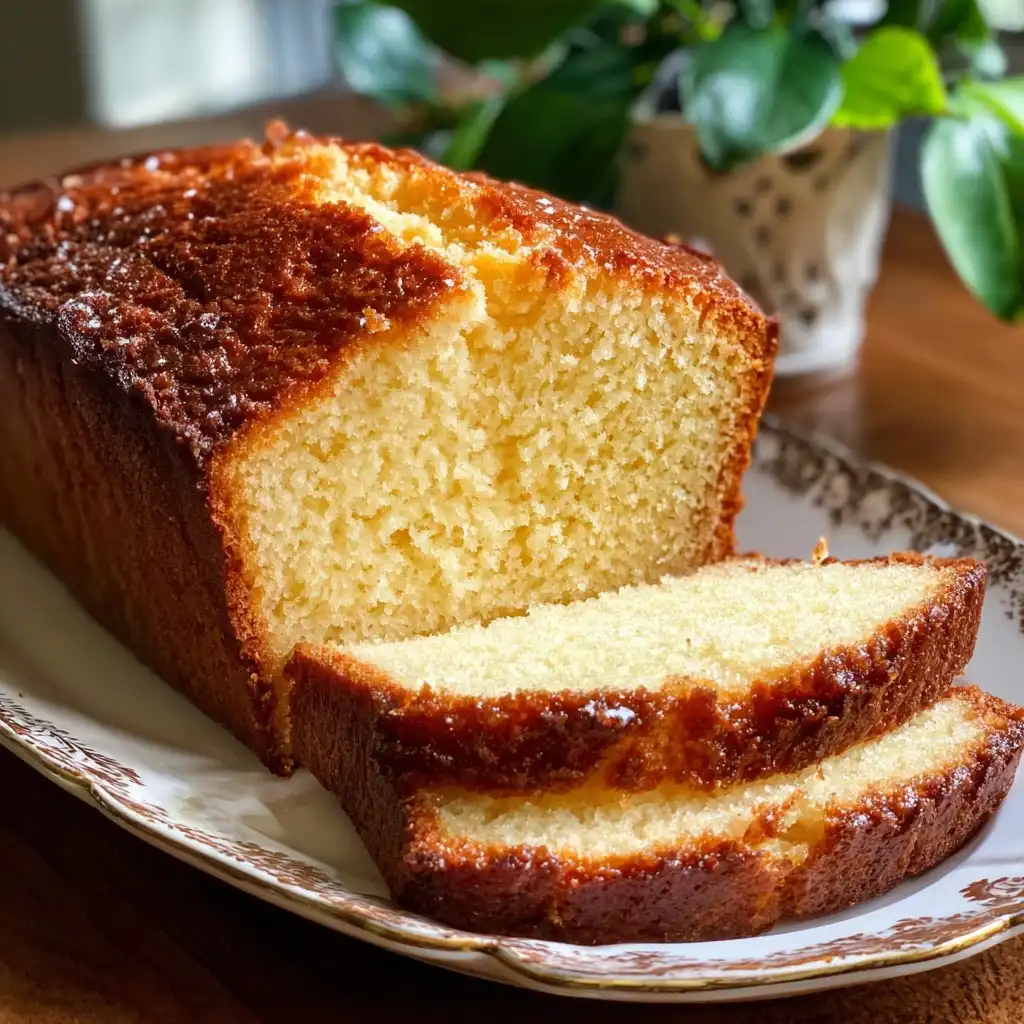
The Old-Fashioned Sour Cream Pound Cake is more than just a dessert—it’s a warm, buttery embrace from generations past. With its dense yet tender crumb, rich vanilla-laced aroma, and luxuriously moist texture, this timeless classic evokes Sunday suppers, holiday gatherings, and handwritten recipes passed down in faded ink on index cards. Unlike modern shortcuts or oil-based cakes, the traditional sour cream pound cake honors patience, quality ingredients, and the alchemy of simple components transformed through careful technique. Its velvety mouthfeel and subtle tang—courtesy of full-fat sour cream—set it apart from other pound cakes, offering depth without heaviness and richness without cloying sweetness. Whether served plain with a dusting of powdered sugar, crowned with fresh berries and whipped cream, or toasted and buttered for breakfast, this cake is a masterclass in comforting nostalgia, grounded in authenticity and unapologetically unhurried.
The History
The origins of pound cake trace back to early 18th-century Europe, where the name itself was a recipe: “a pound of flour, a pound of sugar, a pound of butter, and a pound of eggs”—hence “pound” cake. English cookbooks such as *Mrs. Mary Eales’s Receipts* (1718) documented this straightforward, ingredient-balanced formula, prized for its reliability and shelf-stable density. As the recipe crossed the Atlantic with colonial settlers, American bakers began adapting it to local resources and evolving tastes. By the mid-19th century, leaveners like pearl ash and later baking powder were introduced, softening the once-stodgy texture. The pivotal innovation came in the early-to-mid 20th century, when home economists and regional cookbook authors—especially in the American South—began substituting part of the butter or milk with cultured dairy. Sour cream, readily available from farmhouse dairies and prized for its acidity and fat content, proved revolutionary: it tenderized gluten, enhanced moisture retention, and added a delicate lactic brightness that balanced the cake’s inherent richness. Iconic publications like *The Joy of Cooking* (1931, revised through the decades) and community cookbooks from church groups and Junior Leagues helped cement the sour cream variation as *the* definitive Southern-style pound cake. It became a staple at potlucks, funeral repasts, bridal showers, and Thanksgiving tables—not merely for its flavor, but for its symbolic warmth, resilience, and quiet elegance. Today, the Old-Fashioned Sour Cream Pound Cake stands as both heirloom and benchmark—a culinary artifact that continues to evolve while fiercely guarding its roots.
Ingredients Breakdown
Every ingredient in this Old-Fashioned Sour Cream Pound Cake plays a precise, non-negotiable role—no component is merely filler or afterthought. Understanding their individual contributions deepens both appreciation and mastery:
- Unsalted Butter (1 cup / 2 sticks / 227g): High-fat, European-style (82–84% butterfat) is ideal. Must be softened to cool room temperature (65–68°F)—not melted, not greasy. Provides structure, flakiness in crumb, and that unmistakable golden richness. Salt is omitted here to control sodium precisely; we’ll add fine sea salt separately.
- Granulated Sugar (2 cups / 400g): Not just for sweetness—its coarse crystals act as tiny abrasives during creaming, incorporating air and building volume. Superfine sugar yields a finer crumb but sacrifices some structural lift; standard granulated delivers optimal balance.
- Eggs (5 large, room temperature): Cold eggs can seize butter; room-temp eggs emulsify smoothly and trap air more effectively. Yolks contribute fat and emulsifiers (lecithin); whites add protein structure and lift. Using five whole eggs—not four or six—is calibrated to match the batter’s hydration and density.
- Pure Vanilla Extract (2 tsp) + Vanilla Bean Paste (1 tsp, optional but highly recommended): Alcohol-based extract offers volatile top notes; bean paste adds viscous, seed-flecked depth and caramelized undertones. Avoid imitation vanillas—they taste harsh and flat when baked at length.
- Full-Fat Sour Cream (1 cup / 240g): Non-negotiable. Low-fat or “light” versions lack sufficient fat and acidity, resulting in dryness or curdling. Cultured, preservative-free brands (e.g., Daisy, Hood, or local dairy) yield superior tang and silkiness. Its lactic acid gently tenderizes gluten, while its water content hydrates without diluting flavor.
- All-Purpose Flour (3 cups / 360g), spooned & leveled: Not scooped! Spooning prevents compaction. King Arthur or Bob’s Red Mill are consistently milled and protein-balanced (~11.7% protein). Too much protein = toughness; too little = collapse. Cake flour produces an overly delicate, crumbly texture inappropriate for pound cake’s proud heft.
- Baking Powder (1½ tsp) + Baking Soda (¼ tsp): A dual-leavener system. Baking powder provides steady, heat-activated lift; baking soda neutralizes sour cream’s acidity *and* accelerates browning via Maillard reaction—deepening color and caramel notes. Omitting either results in pale, dense, or slightly sour-tasting cake.
- Fine Sea Salt (1 tsp): Enhances all flavors, suppresses bitterness, and balances sweetness. Kosher salt varies by brand and volume—fine sea salt ensures consistency.
- Heavy Cream (2 tbsp, optional but transformative): Added last, only if batter seems thick or resistant. Not for thinning—but for final emulsion polish. Gives the crumb an extra sheen and silkiness no other liquid replicates.
Note: This recipe intentionally omits nuts, fruit, or swirls—not because they’re forbidden, but because purity of texture and flavor is paramount in true old-fashioned execution. Add-ins belong in variations—not the foundational formula.
Step-by-Step Recipe
This method follows time-tested, low-error-margin techniques used by professional pastry kitchens and multi-generational home bakers alike. Precision in sequence and timing is essential—not for rigidity, but for predictable, glorious results.
- Preheat & Prep (15 min ahead): Position oven rack in center position. Preheat to 325°F (163°C)—not 350°F. Lower temperature ensures even baking from edge to core, preventing doming, cracking, or burnt crust before center sets. Grease a 10-cup Bundt pan (or two 8½ x 4½-inch loaf pans) with unsalted butter, then line bottom(s) with parchment. Dust generously with flour, tapping out excess. For Bundt: ensure every crevice—including the tube—is coated. Chill pan in freezer for 5 minutes to set fat.
- Cream Butter & Sugar (5–7 min): In a stand mixer fitted with paddle attachment, beat softened butter on medium-low 1 minute until creamy. Gradually add sugar in 3 additions, beating 2 minutes after each until mixture is pale, thick, and fluffy—like wet sand. Scrape bowl thoroughly with silicone spatula. Under-creaming = dense cake. Over-creaming = greasy, collapsed cake.
- Incorporate Eggs (3–4 min): Add eggs one at a time, beating 1 minute after each addition until fully absorbed and glossy. Pause mixer between eggs. After fourth egg, add vanilla and bean paste; beat 30 seconds. Add fifth egg; beat just until incorporated—do not overmix. Batter will thicken and lighten further.
- Whisk Dry Ingredients (2 min): In separate bowl, whisk together flour, baking powder, baking soda, and salt for full 60 seconds—this aerates and evenly distributes leaveners. Sift once for insurance.
- Alternate Wet & Dry (4 min): Reduce mixer speed to low. Add ⅓ dry mix → beat 15 sec until just blended. Add ½ sour cream → beat 15 sec. Repeat: ⅓ dry → ½ sour cream → final ⅓ dry. End with dry ingredients. Scrape bowl twice. Batter will be thick, glossy, and hold a ribbon when lifted—never runny or broken.
- Final Enrichment (30 sec): Drizzle in heavy cream (if using). Mix on lowest speed just until homogenous—no more than 10 seconds. Overmixing now develops gluten and causes tunneling.
- Pan & Rest (2 min): Pour batter into chilled pan, smoothing top with offset spatula. Tap pan firmly on counter 3 times to release air pockets. Let rest at room temp 20 minutes—this relaxes gluten and equalizes temperature for even oven spring.
- Bake with Discipline (75–90 min): Place pan in center rack. Bake 75 minutes, then rotate pan front-to-back. Insert long skewer into thickest part near center: if it emerges with *moist crumbs* (not wet batter, not clean), cake is done. If unsure, bake 5 more minutes and retest. Resist opening oven before 60 minutes—steam loss causes collapse.
- Cool with Patience (2+ hours): Remove cake from oven. Let cool in pan on wire rack for exactly 20 minutes. Then invert onto rack, remove parchment, and flip upright to cool completely—minimum 2 hours, ideally overnight. This allows starches to set, moisture to redistribute, and crumb to firm without gumminess.
Tips
- Room Temperature Is Non-Negotiable: Butter must indent slightly with thumb pressure—not oily or melty. Eggs should feel like skin, not fridge-cold. Sour cream should pour slowly, not drip. Cold ingredients cause curdling, poor emulsion, and uneven baking.
- Weigh Your Flour: Volume measurements vary wildly. 360g flour = perfect hydration. Too much flour is the #1 cause of dry, crumbly pound cake—even if every other step is flawless.
- Don’t Skip the Rest: That 20-minute bench rest before baking allows flour to fully hydrate and gluten to relax—critical for tenderness and even rise.
- Thermometer > Timer: Oven thermostats lie. An instant-read thermometer inserted into center should read 208–210°F (98–99°C) when done. Below 205°F = underbaked; above 212°F = dried out.
- Chill Your Bundt Pan: Freezing the greased pan sets the fat so batter doesn’t slide down crevices—and promotes even release.
- Flip Timing Matters: 20 minutes in pan is science—not suggestion. Too short = cake sticks. Too long = steam condenses, making crust soggy and clingy.
- Cool Overnight for Best Texture: Sliceability, moisture distribution, and flavor depth all peak after 12–16 hours wrapped in parchment + foil at room temp.
- No Convection: Fan-forced ovens accelerate surface drying and cause premature crust formation. Use conventional bake only.
- Skewer Test Mastery: “Clean skewer” is a myth for pound cake. You want *damp, fine crumbs* clinging—not batter, not dry crumbs. Wipe skewer clean between tests.
- Resist Frosting (At First): Let the cake speak for itself for 24 hours before glazing or topping. Its intrinsic flavor and texture need no disguise.
Variations and Customizations
Once you’ve mastered the foundation, thoughtful variations honor tradition while inviting creativity—always respecting the cake’s structural integrity and sensory harmony:
- Lemon-Infused: Add zest of 2 large organic lemons to sugar before creaming. Replace 2 tbsp sour cream with fresh lemon juice. Finish with lemon glaze (1½ cups powdered sugar + 3 tbsp lemon juice + ½ tsp zest).
- Old-Fashioned Brown Sugar: Substitute 1 cup dark brown sugar (packed) for 1 cup granulated. Adds molasses depth and chewier crumb. Reduce salt to ¾ tsp.
- Almond-Enhanced: Add 1 tsp pure almond extract with vanilla. Toast ½ cup sliced almonds; fold in gently after final mixing. Garnish with candied almonds.
- Spiced Heritage: Whisk 1½ tsp ground cinnamon, ½ tsp freshly grated nutmeg, and ¼ tsp ground cloves into dry ingredients. Serve with bourbon-spiked whipped cream.
- Maple-Butter Swirl: After pouring batter, drizzle ⅓ cup pure maple syrup mixed with 2 tbsp melted butter and a pinch of flaky salt. Cut through with knife once for marbling—don’t over-swirl.
- Tea-Brined Sour Cream: Steep 2 bags Earl Grey or Darjeeling in ¼ cup hot cream for 10 minutes. Cool completely, strain, then use in place of heavy cream. Imparts floral, bergamot complexity.
- Orange-Cardamom: Add zest of 1 large navel orange + 1½ tsp finely ground green cardamom to dry mix. Fold in ⅓ cup dried currants soaked in Grand Marnier.
- Chocolate Ribbon: Melt 4 oz bittersweet chocolate (60–70%) with 1 tbsp butter. Cool to room temp. After pouring batter, spoon chocolate in zigzag; marble gently once.
- Coconut-Lime (Tropical Twist): Replace sour cream with full-fat coconut yogurt. Add zest of 2 limes + 1 tsp lime oil. Toast ½ cup unsweetened coconut flakes; press onto sides pre-bake.
- Boozy Caramel Pecan: Soak ¾ cup chopped toasted pecans in 3 tbsp bourbon + 1 tbsp dark corn syrup for 30 min. Drain well; fold in at end. Drizzle with salted bourbon caramel post-cool.
Important: Never replace >25% of sour cream with fruit purées, yogurt, or buttermilk—they alter pH and fat ratios too drastically. And always test new variations with a single loaf pan first.
Health Considerations and Nutritional Value
This Old-Fashioned Sour Cream Pound Cake is, by design, a celebratory, nutrient-dense indulgence—not a health food. However, understanding its composition supports mindful enjoyment and informed adaptation:
- Nutrition Facts (per 1/12th slice, ~115g, unfrosted): Calories: 425 | Total Fat: 22g (13g sat) | Cholesterol: 115mg | Sodium: 280mg | Total Carbs: 53g (33g sugars) | Protein: 6g | Fiber: 0.5g
- Key Nutrients: Provides appreciable vitamin A (from butter, eggs), choline (eggs), calcium (sour cream), and selenium (eggs, flour). Contains no artificial preservatives, colors, or hydrogenated oils when made traditionally.
- Sugar Context: While 33g per slice may sound high, it’s comparable to many artisanal bakery pound cakes (often 38–45g). The slow digestion from high fat/protein mitigates glycemic impact versus low-fat, high-sugar alternatives.
- Gluten Note: Contains wheat gluten. For gluten-free adaptation, use a 1:1 GF flour blend *with added xanthan gum* and increase sour cream by 2 tbsp—though texture will be less dense and crumb more fragile.
- Dairy Sensitivity: Sour cream’s culturing reduces lactose by ~25–30%, making it more tolerable for some with mild lactose sensitivity than milk or cream. Butter contains negligible lactose.
- Lower-Sugar Option: Reduce granulated sugar to 1¾ cups and add 2 tbsp inulin (chicory root fiber) for bulk and prebiotic benefit. Expect slightly paler crust and 10% less sweetness—still deeply flavorful.
- Vegan Adaptation Warning: True vegan pound cake cannot replicate the structural and textural role of eggs + butter + sour cream. Flax eggs, coconut oil, and cashew cream yield acceptable quick breads—but not authentic pound cake. Honor the tradition or reimagine entirely.
- Storage & Food Safety: Due to high moisture and dairy, refrigerate after 2 days. Freeze unfrosted, tightly wrapped, for up to 4 months. Thaw at room temp, still wrapped, to prevent condensation.
Ultimately, this cake embodies “nutrient density over empty calories”—every gram serves purpose, flavor, and function. Enjoyed in moderation—with real butter, real eggs, and real sour cream—it aligns beautifully with whole-food, traditional dietary patterns.
Ingredients
- 1 cup (227g / 2 sticks) unsalted butter, softened to 65–68°F
- 2 cups (400g) granulated sugar
- 5 large eggs, room temperature
- 2 teaspoons pure vanilla extract
- 1 teaspoon vanilla bean paste (optional but recommended)
- 1 cup (240g) full-fat sour cream, room temperature
- 3 cups (360g) all-purpose flour, spooned and leveled
- 1½ teaspoons double-acting baking powder
- ¼ teaspoon baking soda
- 1 teaspoon fine sea salt
- 2 tablespoons heavy cream (optional, for finishing)
Directions
- Preheat oven to 325°F (163°C). Generously grease and flour a 10-cup Bundt pan (or two 8½ x 4½-inch loaf pans). Chill pan in freezer for 5 minutes.
- In stand mixer with paddle attachment, beat butter on medium-low 1 minute until creamy. Gradually add sugar in 3 additions, beating 2 minutes after each until pale, thick, and fluffy. Scrape bowl thoroughly.
- Add eggs one at a time, beating 1 minute after each until fully incorporated and glossy. After fourth egg, add vanilla and bean paste; beat 30 seconds. Add fifth egg; beat just until combined.
- In separate bowl, whisk flour, baking powder, baking soda, and salt for 60 seconds. Sift once.
- Reduce mixer to low. Add ⅓ flour mixture → beat 15 sec. Add ½ sour cream → beat 15 sec. Repeat: ⅓ flour → ½ sour cream → final ⅓ flour. Scrape bowl twice.
- Drizzle in heavy cream (if using). Mix on lowest speed 10 seconds until just uniform.
- Pour batter into chilled pan. Smooth top. Tap pan firmly on counter 3 times. Rest at room temperature 20 minutes.
- Bake 75–90 minutes (Bundt) or 60–75 minutes (loaves), rotating halfway. Cake is done when skewer inserted in center emerges with moist crumbs (not wet batter, not clean). Internal temp: 208–210°F.
- Cool in pan on wire rack 20 minutes exactly. Invert onto rack, remove parchment, flip upright. Cool completely—minimum 2 hours, preferably overnight—before slicing.
FAQ
- Can I use Greek yogurt instead of sour cream?
- Not interchangeably. Full-fat Greek yogurt has higher protein and lower fat, yielding drier, tighter crumb. If substituting, use ¾ cup Greek yogurt + ¼ cup melted butter to restore fat balance—and expect subtle texture shift.
- Why does my cake crack on top?
- Cracking usually stems from too-high oven temp, over-creaming butter/sugar, or opening oven too early. Also common with Bundt pans if batter is overfilled (>⅔ capacity) or oven rack is too high.
- My cake sank in the middle—what went wrong?
- Most often: underbaking (skewer test failed), cold eggs/butter causing curdling, or opening oven before 60 minutes. Less commonly: expired leaveners or excessive mixing after adding flour.
- Can I make this in a regular round cake pan?
- Yes—but adjust expectations. Use three 8-inch round pans lined and floured. Reduce bake time to 30–38 minutes. Layers will be lighter, less dense—more “layer cake” than “pound cake.” Stack with buttercream, not glaze.
- How do I store leftovers?
- Wrap tightly in parchment, then aluminum foil. Store at cool room temperature up to 4 days. Refrigerate beyond that (up to 10 days). For longest life, freeze—sliced or whole—for up to 4 months.
- Can I add blueberries or raspberries?
- Yes—but toss 1 cup fresh or frozen (unthawed) berries in 1 tbsp flour before folding in *gently* at the very end. Expect slight color bleed and marginally shorter shelf life (refrigerate after day one).
- Why does this recipe use both baking powder AND baking soda?
- Baking powder provides primary lift; baking soda neutralizes sour cream’s acidity *and* boosts browning. Removing either alters texture, color, and subtle flavor balance—don’t omit.
- Can I halve the recipe?
- Technically yes—but not recommended. Halving increases measurement error risk (especially eggs and leaveners) and changes heat dynamics. Better to bake full batch and freeze half.
- What’s the best way to slice neatly?
- Use a long, thin-bladed serrated knife (like a bread knife). Wipe blade clean between slices. For cleanest cuts, chill cake 30 minutes first—or use dental floss for ultra-precise portions.
- Is there a dairy-free version that truly works?
- A faithful dairy-free pound cake remains elusive due to butter/sour cream synergy. Best approximation: clarified butter (ghee) + cashew-sour cream blend (soaked cashews + apple cider vinegar + lemon juice), but texture will be softer and less resilient. Manage expectations.
Summary
The Old-Fashioned Sour Cream Pound Cake is a triumph of restraint, respect for ingredients, and unhurried craft—where full-fat sour cream tenderizes, room-temperature discipline ensures emulsion, and low-and-slow baking yields a mahogany crust hugging a cloud-soft, butter-vanilla crumb flecked with real vanilla bean.
It is not merely dessert—it is lineage in loaf form: a cake that demands attention, rewards patience, and tastes, unmistakably, like coming home.