
Introduction
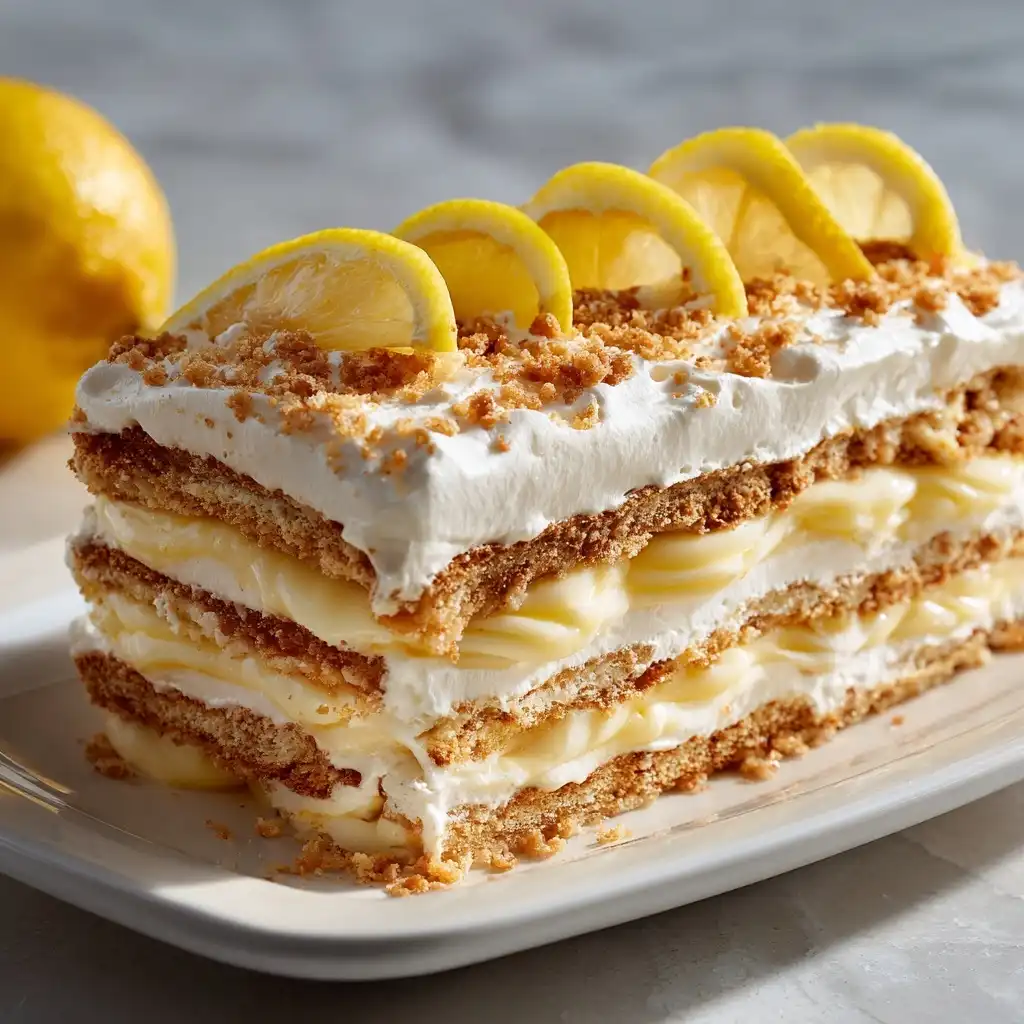
The No-Bake Lemon Icebox Cake is a refreshing, effortlessly elegant dessert that marries the bright zing of fresh lemons with the cool, creamy richness of whipped cream and the subtle softness of wafer cookies. Unlike traditional cakes requiring ovens, timers, and precise temperature control, this chilled masterpiece relies entirely on refrigeration to transform simple, pantry-friendly ingredients into a luxuriously layered confection. Its origins trace back to mid-20th-century American home kitchens—where resourcefulness, seasonal produce, and the rise of refrigeration converged—but its modern resurgence speaks to today’s demand for minimal-effort, maximum-flavor desserts. Whether served at a sun-drenched summer brunch, a sophisticated dinner party finale, or as a soothing weeknight treat after a long day, this lemon icebox cake delivers vibrant citrus notes, delicate textural contrast, and an uncanny resemblance to a professionally assembled layer cake—all without turning on your oven.
The History
The icebox cake tradition dates to the early 1900s, emerging alongside the widespread adoption of insulated “iceboxes” — precursors to electric refrigerators — in American households. Early versions were humble affairs: layers of crisp graham crackers or sponge cake slices alternated with whipped cream or custard, then chilled overnight to allow moisture to gently soften the layers into a cohesive, sliceable cake. The concept gained national prominence in the 1920s–1940s through women’s magazines like Good Housekeeping and Ladies’ Home Journal, which published accessible recipes emphasizing convenience, economy, and elegance. Lemon entered the icebox repertoire naturally: its tartness cut through the richness of dairy-based fillings, and its aromatic oils offered natural flavor depth without artificial additives. By the postwar era, lemon icebox cakes often featured pre-packaged vanilla wafers (like Nabisco’s Nilla Wafers, introduced in 1898), stabilized whipped cream (aided by newly available gelatin and later instant pudding), and freshly squeezed citrus juice — reflecting both innovation and nostalgia. Today’s no-bake lemon iteration honors this legacy while embracing contemporary preferences: organic ingredients, reduced sugar options, plant-based alternatives, and heightened emphasis on brightness, balance, and visual appeal — all rooted in the same ingenious principle: time + cold = transformation.
Ingredients Breakdown
Every component of this lemon icebox cake serves a distinct structural, textural, or flavor purpose — and understanding their roles empowers confident customization and troubleshooting:
- Vanilla Wafers (or Lemon-Infused Wafers): Provide the foundational “cake” structure. Their light sweetness and crisp-yet-slightly-porous texture absorb just enough cream to soften without disintegrating. Opt for high-quality, buttery wafers — avoid overly dense or overly sweet varieties that may turn mushy or cloying. Gluten-free or vegan-certified wafers work seamlessly if needed.
- Heavy Whipping Cream (36–40% fat): The backbone of richness and stability. High fat content ensures thick, billowy peaks that hold shape over 8–24 hours of chilling. Ultra-pasteurized cream may take longer to whip but offers superior shelf life; pasteurized cream whips faster and yields a silkier texture.
- Full-Fat Cream Cheese (Cold, Cubed): Adds tangy depth, luxurious mouthfeel, and critical structural integrity. Cold cream cheese blends smoothly without overheating or curdling. Low-fat versions lack sufficient fat and stabilizers, risking graininess and poor setting.
- Fresh Lemon Juice (Filtered & Chilled): Provides essential acidity and volatile citrus oils for brightness. Bottled juice lacks complexity and contains preservatives that can dull flavor and interfere with emulsification. Always strain to remove pulp and seeds — excess fiber can compromise cream smoothness.
- Lemon Zest (From Organic Lemons): Contains aromatic lemon oil concentrated in the yellow peel. Zesting before juicing maximizes yield and prevents bitter pith contamination. Microplane graters yield fine, even zest that disperses evenly without textural grit.
- Powdered Sugar (Confectioners’ Sugar): Sweetens while contributing cornstarch — a gentle stabilizer that helps prevent weeping and improves cream resilience during extended chilling. Granulated sugar won’t dissolve fully and can create graininess.
- Pure Vanilla Extract (Alcohol-Based, Not Imitation): Enhances warmth and roundness, bridging lemon’s sharpness with cream’s richness. Alcohol evaporates during chilling, leaving only nuanced floral notes.
- Pinch of Fine Sea Salt: A crucial flavor amplifier — it heightens sweetness, tempers acidity, and balances fat perception without tasting salty.
- Optional Garnishes: Candied lemon slices (for glossy presentation), toasted coconut flakes (for nutty contrast), edible flowers (for elegance), lemon verbena leaves (for herbal nuance), or a dusting of freeze-dried lemon powder (for intense, tart pop).
Step-by-Step Recipe
- Prep Your Workspace (15 minutes): Chill your mixing bowl, beaters/whisk attachment, and cream cheese for at least 30 minutes in the freezer. Line an 8×8-inch or 9×9-inch metal or glass baking dish with parchment paper, leaving 2-inch overhangs on two opposite sides for easy removal. Wipe lemons clean with vinegar-water solution, dry thoroughly, and zest before juicing. Strain juice through a fine-mesh sieve lined with cheesecloth to remove any remaining pulp or membrane fragments.
- Whip the Cream Base (8–10 minutes): In the chilled bowl, combine cold heavy cream, powdered sugar, vanilla extract, and salt. Begin whipping on low speed for 1 minute to incorporate, then increase to medium-high. Whip until soft peaks form (about 3–4 minutes). Do not over-whip — stiff, grainy peaks indicate separation and will ruin texture. Transfer ⅓ of the whipped cream to a separate bowl and set aside.
- Prepare the Lemon-Cream Cheese Filling (5 minutes): In the same bowl (no need to wash), add cold, cubed cream cheese. Beat on medium speed for 1–2 minutes until completely smooth and lump-free. Scrape down sides. Gradually add lemon zest and strained lemon juice, beating 30 seconds until fully incorporated and glossy. Reduce speed to low and gently fold in the reserved ⅓ of whipped cream using a silicone spatula — this lightens the mixture and prevents deflation. Then, carefully fold in the remaining ⅔ whipped cream in two additions, using slow, sweeping motions from bottom to top until just combined. Overmixing causes thinning and loss of volume.
- Layer the Cake (12–15 minutes): Arrange a single, tight layer of vanilla wafers on the parchment-lined dish — break wafers as needed to fill gaps snugly, avoiding overlaps. Immediately spoon and spread ½ of the lemon filling evenly over the wafers using an offset spatula or the back of a spoon. Smooth gently — don’t press down hard. Repeat with a second wafer layer, followed by the remaining filling. Top with a final, decorative layer of whole wafers pressed lightly into the surface for visual polish and textural finish.
- Chill and Set (Minimum 12 Hours, Ideally 24): Cover the dish tightly with plastic wrap, pressing it directly onto the surface to prevent condensation and skin formation. Refrigerate for at least 12 hours — but 18–24 hours yields optimal texture: wafers become tender yet distinct, layers meld harmoniously, and flavors deepen significantly. Avoid freezing — it destabilizes the emulsion and causes water separation upon thawing.
- Unmold and Serve (5 minutes): After chilling, lift the cake using parchment overhangs and place on a cutting board. Run a thin, flexible knife under hot water, dry thoroughly, and glide it around the inner edges to loosen. Invert onto a serving platter, peel off parchment, then re-invert right-side-up onto a cake stand or plate. Slice with a hot, dry knife wiped between cuts for clean, defined layers.
Tips
- Temperature Is Non-Negotiable: Every dairy component must be cold — room-temperature cream won’t whip, and warm cream cheese won’t emulsify properly. Chill bowls, tools, and ingredients for ≥30 minutes before beginning.
- Whip Smart, Not Hard: Use a stand mixer with whisk attachment or hand mixer on medium-high. Stop whipping as soon as soft peaks hold their shape when the beater is lifted — over-whipping creates butter granules and breaks the emulsion.
- Zest First, Juice Second: Zesting a dry lemon yields more oil and prevents bitter pith transfer. A microplane grater is ideal; avoid box graters, which tear pith.
- Strain Relentlessly: Even “fresh-squeezed” juice contains microscopic pulp and membranes that can cause grittiness or curdling. Double-straining ensures velvety smoothness.
- Fold, Don’t Stir: When combining whipped cream with denser fillings, use a large silicone spatula and cut-and-fold motion — reaching to the bottom, lifting, and turning over — to preserve air bubbles.
- Wafer Wisdom: If wafers feel stale, briefly toast them at 325°F for 3–4 minutes until fragrant — cooled wafers absorb cream more evenly. For extra lemon infusion, toss wafers in 1 tsp lemon zest + ½ tsp juice before layering.
- Chill Time Matters: While 12 hours is functional, 24 hours develops deeper lemon flavor, better layer cohesion, and ideal “sliceability.” Plan ahead — this cake improves overnight and keeps beautifully for up to 4 days.
- Cut Cleanly: Warm your knife in hot water, dry completely, and slice with gentle sawing motion — rewarm and dry between each cut. A serrated knife works best for clean wafer separation.
- Avoid Condensation: Press plastic wrap directly onto the surface before chilling. This prevents moisture droplets from forming and diluting the top layer.
- Texture Troubleshooting: If filling feels too loose, chill mixture 15 minutes before folding in cream. If too thick, fold in 1 tbsp cold cream. If wafers are oversoftened after chilling, next time reduce juice by ½ tsp and ensure wafers are fully covered by cream.
Variations and Customizations
This recipe is a canvas — adaptable to seasons, dietary needs, cultural preferences, and creative whims:
- Blueberry-Lemon Swirl: Fold ¾ cup mashed, drained macerated blueberries (tossed with 1 tbsp sugar and 1 tsp lemon juice) into the filling before layering.
- Earl Grey Infusion: Steep 2 tsp loose-leaf Earl Grey tea in ¼ cup warm cream for 5 minutes, strain, cool completely, then use in place of plain cream.
- Coconut-Lime Twist: Substitute ¼ cup full-fat coconut milk (canned, stirred well) for part of the heavy cream; replace lemon zest/juice with equal parts lime; use toasted coconut wafers or sprinkle toasted coconut between layers.
- Berry Compote Layer: Add a ¼-inch layer of seedless raspberry or blackberry compote (simmered berries + sugar + lemon juice + 1 tsp chia seeds for thickness) between wafer layers.
- Herbal Elegance: Infuse cream with 2 tbsp fresh thyme or lavender buds (steep 1 hour, strain, chill); pair with lemon zest and a touch of honey instead of powdered sugar.
- Gluten-Free: Use certified GF vanilla wafers (like Kinnikinnick or Glutino) and verify all extracts/powders are GF. Texture remains identical.
- Vegan Adaptation: Replace heavy cream with chilled full-fat coconut cream (solid portion only); use vegan cream cheese (Kite Hill or Miyoko’s); swap powdered sugar for organic cane sugar-based version; add 1 tsp agar-agar dissolved in 1 tbsp hot water to filling for stability.
- Protein-Packed: Blend 2 scoops high-quality unflavored collagen peptides or whey protein isolate into powdered sugar before adding to cream — adds structure and satiety without altering taste.
- Mini Individual Servings: Layer in 4-ounce mason jars or ramekins: 3 wafers → ⅓ filling → 3 wafers → remaining filling → top wafer. Chill 8 hours minimum.
- Boozy Upgrade: Add 1–2 tbsp limoncello or vodka (alcohol inhibits freezing and enhances aroma) to the lemon-cream cheese mixture — reduces perceived sweetness and lifts citrus notes.
Health Considerations and Nutritional Value
While undeniably indulgent, this lemon icebox cake offers surprising nutritional nuance when prepared mindfully — and understanding its composition supports informed enjoyment:
- Calorie Context: A standard 9×9-inch cake yields ~12 servings. Each slice (approx. 180g) contains ~280–320 calories — comparable to a modest slice of classic lemon cake but without refined flour, eggs, or added oils from baking. Calories derive primarily from healthy dairy fats and natural sugars.
- Fat Profile: Heavy cream and cream cheese provide saturated fat — once vilified, now recognized as part of balanced intake when sourced from pasture-raised, grass-fed dairy. These fats carry fat-soluble vitamins (A, D, K2) and support satiety and nutrient absorption. For lower saturated fat, substitute half the cream with cold whole-milk Greek yogurt (strained 1 hr in cheesecloth) — maintains tang and thickness.
- Sugar Awareness: Powdered sugar contributes ~18g per serving. Reduce by 25% (using ¾ cup instead of 1 cup) without sacrificing structure — lemon’s acidity makes sweetness less perceptible. Alternatively, use monk fruit–erythritol blend (1:1 ratio) for zero-glycemic impact.
- Lemon Benefits: Rich in vitamin C (immune support, collagen synthesis), flavonoids (anti-inflammatory, antioxidant), and citric acid (natural preservative, aids digestion). Zest provides limonene — studied for potential mood-enhancing and detox-supportive properties.
- Dairy Digestibility: Fermented elements (cream cheese) contain probiotics; lactic acid aids lactose breakdown. Lactose-intolerant individuals often tolerate small amounts of aged or cultured dairy better than milk — but vegan versions remain excellent alternatives.
- No Artificial Additives: Free from preservatives, emulsifiers, hydrogenated oils, or synthetic dyes common in store-bought desserts — making it inherently cleaner and more bioavailable.
- Portion Mindfulness: Its rich density promotes slower eating and earlier satiety cues — serving smaller portions (1.5″x2″) on decorative plates enhances satisfaction without excess intake.
- Allergen Notes: Naturally nut-free and egg-free. Contains dairy and gluten (unless GF wafers used). Always verify wafer ingredients — some contain soy lecithin or natural flavors derived from allergens.
Ingredients
- 2 cups heavy whipping cream (cold, 36–40% fat)
- 1 (8 oz) block full-fat cream cheese (cold, cubed)
- 1 cup powdered sugar (plus extra for garnish, optional)
- ¼ cup fresh lemon juice (from ~3–4 organic lemons, chilled & double-strained)
- 2 tbsp finely grated lemon zest (from same lemons, using microplane)
- 1½ tsp pure vanilla extract
- ¼ tsp fine sea salt
- 24–30 high-quality vanilla wafers (about 7 oz; Nilla Wafers, Newman-O’s, or GF equivalent)
- Parchment paper
- Plastic wrap
Directions
- Chill mixing bowl, beaters, cream cheese, and heavy cream in freezer for 30 minutes. Line an 8×8-inch or 9×9-inch baking dish with parchment paper, allowing 2-inch overhangs on two opposite sides.
- In chilled bowl, combine cold heavy cream, powdered sugar, vanilla extract, and salt. Whip on low 1 minute, then medium-high 3–4 minutes until soft peaks form. Transfer ⅓ (about 1 cup) to separate bowl; set aside.
- In same bowl, beat cold cream cheese on medium 1–2 minutes until smooth. Add lemon zest and juice; beat 30 seconds until glossy. Reduce speed to low; gently fold in reserved ⅓ whipped cream until just combined. Fold in remaining whipped cream in two additions until uniform — do not overmix.
- Arrange single tight layer of wafers in dish (break to fit). Spread ½ lemon filling evenly. Top with second wafer layer. Spread remaining filling. Finish with decorative top layer of whole wafers, gently pressed in.
- Cover tightly with plastic wrap, pressing directly onto surface. Refrigerate ≥12 hours (ideally 24) — do not freeze.
- To serve: Lift cake using parchment overhangs. Run hot knife around edges, invert onto platter, peel off parchment, re-invert. Slice with warm, dry knife. Garnish with extra zest, powdered sugar, or candied lemon.
FAQ
- Can I make this ahead?
- Absolutely — and you should! It keeps impeccably for up to 4 days refrigerated. Flavor peaks at 24–36 hours. Prepare up to 2 days before serving.
- Why did my filling separate or look grainy?
- Most commonly: cream cheese wasn’t cold enough (causing uneven emulsification) or was over-beaten after adding lemon juice (curdling due to acidity + heat friction). Also possible: lemon juice added too quickly or not strained — pulp interferes with smooth blending.
- Can I use low-fat cream cheese or whipped topping?
- Not recommended. Low-fat cream cheese lacks sufficient fat and stabilizers, resulting in watery, unstable filling. Cool Whip or similar contains gums and hydrogenated oils that prevent proper layer cohesion and impart artificial taste.
- My wafers turned mushy — what went wrong?
- Over-chilling beyond 48 hours, excessive lemon juice, or using stale, porous wafers accelerates breakdown. Next time, reduce juice by ½ tsp, ensure wafers are fresh and buttery, and stick to 24-hour chill.
- Is there a way to stabilize it for outdoor events?
- Yes — add 1 tsp unflavored gelatin (bloomed in 1 tbsp cold water, then microwaved 5 sec to dissolve and cooled) to the lemon-cream cheese mixture before folding in cream. Or use 2 tbsp instant vanilla pudding mix blended into powdered sugar before adding to cream.
- Can I freeze leftovers?
- Technically yes, but not advised. Dairy emulsions separate upon freezing/thawing, causing graininess, weeping, and compromised texture. Best enjoyed fresh from the refrigerator.
- What if I don’t have vanilla wafers?
- Acceptable substitutes: shortbread cookies (avoid overly buttery ones), graham crackers (slightly sweeter, more crumbly), or Biscoff cookies (adds caramelized spice). Avoid chocolate or strongly flavored wafers unless intentionally pursuing fusion.
- How do I prevent lemon flavor from fading?
- Freshness is key — use lemons within 3 days of purchase, zest immediately before juicing, and never substitute bottled juice. Adding zest twice — once to filling, once sprinkled between layers — intensifies aroma.
- Can kids help make this?
- Yes! It’s exceptionally kid-friendly: no oven, no raw eggs, no complex techniques. Children can zest lemons (with supervision), measure ingredients, layer wafers, and fold cream (with guidance). A joyful, sensory-rich cooking experience.
- Why does it taste better the next day?
- Chilling allows lemon’s volatile compounds to mellow and integrate, tannins in zest to soften, and dairy fats to fully hydrate the wafer starches — creating deeper, rounder, more harmonious flavor and seamless texture.
Summary
The No-Bake Lemon Icebox Cake is a masterclass in minimalist elegance — transforming just seven core ingredients into a stunning, refreshingly tart, cloud-soft dessert through the alchemy of cold, time, and thoughtful technique. With no oven required, no eggs to worry over, and make-ahead ease, it delivers restaurant-worthy sophistication straight from your refrigerator.
Bright, balanced, and endlessly adaptable — whether you’re catering to dietary needs, celebrating seasonal fruit, or simply craving a moment of citrusy calm — this cake proves that the most memorable desserts are often the ones that ask the least of you, and give the most in return.