
Introduction
If you’ve ever scrolled through Pinterest late at night—coffee in hand, craving something sweet but utterly unwilling to sift flour or hunt down obscure spices—you’ve likely stumbled upon the viral sensation known as Cake Mix Cookies. Dubbed “The Secret Pinterest Trick,” this ingenious baking hack has taken the internet by storm—not because it’s complicated, but because it’s *stupidly simple*, wildly adaptable, and delivers bakery-worthy cookies with minimal effort, zero culinary expertise required, and about 15 minutes from pantry to plate. Forget hours of chilling dough or troubleshooting flat, greasy, or cakey results: this method leverages the perfectly balanced leavening, emulsifiers, and flavor base already engineered into your favorite boxed cake mix—and transforms it into soft, chewy, tender, and deeply satisfying cookies that taste far more sophisticated than their humble origins suggest. Whether you’re a time-crunched parent packing school lunches, a college student surviving on dorm-room appliances, a novice baker building confidence, or even a seasoned pastry chef looking for a lightning-fast base to riff on, Cake Mix Cookies are your new secret weapon—and yes, they *really do* work (and no, you’re not cheating… you’re optimizing).
The History
While the exact origin of the cake mix cookie phenomenon is delightfully untraceable—like many kitchen hacks born from frugality, experimentation, and shared desperation—it gained explosive traction around 2016–2017, fueled by food bloggers, home economists, and thrifty moms posting variations on Facebook groups and early food-focused subreddits. However, its true cultural ignition came in 2020–2021, when pandemic-era baking booms collided with Pinterest’s algorithm favoring high-engagement, low-barrier-to-entry content. A single pin—featuring golden-brown chocolate chip cookies labeled “3-Ingredient Cake Mix Cookies?!”—garnered over 2 million saves in under six months. Historically, cake mixes themselves were revolutionary: introduced by General Mills’ Betty Crocker in 1947 (originally requiring the addition of fresh eggs, oil, and milk), they democratized baking during post-war America. But it wasn’t until home cooks began treating them not as endpoints—but as *foundational batters*—that their versatility exploded. The shift from “cake-in-a-box” to “cookie-in-a-bowl” represented a quiet culinary rebellion: rejecting rigid recipe dogma in favor of intuitive, resourceful, and joyful improvisation. Today, #CakeMixCookies boasts over 1.8 billion views on TikTok, appears in mainstream publications like Food & Wine and Real Simple, and has inspired entire cookbooks—proving that sometimes, the most beloved innovations aren’t invented in test kitchens… they’re discovered in the snack aisle.
Ingredients Breakdown
What makes this trick so reliable—and so endlessly customizable—is its brilliantly minimal core formula, built on three non-negotiable components and an elegant layer of optional enhancements:
- The Foundation (Non-Negotiable Triad):
- Cake Mix (1 box, ~15.25 oz / 432g): Not just any mix—choose one with complementary flavor notes (e.g., yellow, white, funfetti, red velvet, or chocolate for classic cookies; lemon, strawberry, or spiced carrot for bright or earthy twists). Avoid “just add water” or “bake-ready” varieties with pre-added oil/eggs—they disrupt moisture balance. Opt for standard, shelf-stable mixes with dry ingredients only. The mix provides structure (flour + leaveners), sweetness (sugar + corn syrup solids), fat emulsification (soy lecithin), and concentrated flavor (vanilla, cocoa, or fruit powders).
- Eggs (2 large): Act as binders, add richness, contribute to chewiness via protein coagulation, and help aerate the batter slightly. Room temperature eggs incorporate more smoothly and yield more consistent spread.
- Vegetable Oil (⅓ to ½ cup / 80–120ml): The magic moisture multiplier. Unlike butter (which adds flavor but requires creaming and precise temperature control), neutral oil ensures ultra-tender crumb, prevents excessive spreading *or* doming, and creates that signature soft-yet-sturdy texture. Canola, grapeseed, or light olive oil work best; avoid strongly flavored oils like coconut (unless intentional) or unrefined sesame.
- The Flavor & Texture Enhancers (Highly Recommended Additions):
- Vanilla Extract (1–2 tsp): Deepens warmth and rounds out sweetness—especially crucial if using plain cake mix.
- Salt (¼ tsp fine sea salt or kosher salt): Balances sugar intensity and amplifies all other flavors. Never skip—even in sweet recipes, salt is the conductor of the flavor orchestra.
- Mix-Ins (1 to 1½ cups total): The canvas for creativity: semi-sweet or dark chocolate chips (classic), white chocolate + dried cranberries, peanut butter cups + pretzel pieces, toasted nuts + espresso beans, or even crushed Oreos + rainbow sprinkles. Fold in gently *after* batter is fully mixed to avoid overworking.
- The Pro-Tier Upgrades (Optional but Impactful):
- Brown Sugar (¼ cup packed): Adds molasses depth, chewiness, and subtle acidity—especially transformative in yellow or spice cake mixes.
- Instant Espresso Powder (1 tsp): Enhances chocolate notes without adding bitterness—ideal for devil’s food or red velvet versions.
- Ground Cinnamon or Nutmeg (¼ tsp): Elevates spice or carrot cake mixes into warmly aromatic treats.
- Extra Egg Yolk (1): Boosts richness, tenderness, and golden hue—great for “luxury” batches.
Crucially, no additional flour, baking soda, or baking powder is needed—the cake mix already contains precisely calibrated leavening agents. Adding more risks bitter aftertaste or uneven rise. This self-contained chemistry is what makes the trick so foolproof.
Step-by-Step Recipe
- Preheat & Prep: Position oven rack in center position. Preheat oven to 350°F (175°C). Line two large baking sheets with parchment paper or silicone baking mats—do not grease (greasing causes excessive spread and thin, crispy edges).
- Mix Dry Base: In a large mixing bowl, pour the entire box of cake mix. Whisk vigorously for 30 seconds to break up any lumps and evenly distribute leaveners and flavorings. This step is vital—lumpy mix leads to uneven cookies.
- Wet Ingredients Integration: Add the two large eggs and the vegetable oil (start with ⅓ cup for thicker, puffier cookies; use ½ cup for thinner, crisper-edged, chewier results) to the dry mix. Using a sturdy silicone spatula or wooden spoon (not a mixer—overmixing develops gluten and causes toughness), stir in a folding motion—scraping bottom and sides—until *just combined*. Batter will be thick, glossy, and slightly sticky—similar to brownie batter. It should hold its shape when scooped but not be stiff or dry. Do not overmix; stop as soon as no dry streaks remain (typically 45–60 seconds).
- Flavor Infusion: Stir in vanilla extract and salt until fully incorporated. Then, gently fold in your chosen mix-ins using the same folding motion—just until evenly distributed (10–15 folds max). Overmixing here can cause chips to break or nuts to clump.
- Scoop & Space: Use a standard 1.5-tablespoon cookie scoop (or a heaping tablespoon) to portion dough. Roll each portion lightly between palms to form a smooth ball—this minimizes cracks and encourages even baking. Place balls at least 3 inches apart on prepared sheets (they spread significantly). For uniformity, chill scooped dough for 10–15 minutes—this prevents runaway spread and yields rounder, taller cookies (optional but recommended for perfectionists).
- Bake with Precision: Bake one sheet at a time in the center rack for 8–11 minutes, rotating pan halfway through. Watch closely: cookies are done when edges are set and lightly golden, centers look *just barely* puffed and still appear soft and slightly underdone (they’ll firm up as they cool). Overbaking leads to dryness—remember, carryover heat continues cooking for 2–3 minutes post-oven.
- Cool Strategically: Remove sheet from oven. Let cookies rest on hot pan for 5 full minutes—this allows internal structure to set without collapsing. Then, carefully transfer to a wire cooling rack using a thin spatula. Cool completely (15–20 minutes) before serving. They’ll transform from soft-set to perfectly chewy as they release steam.
Tips
- Room Temperature Is Non-Negotiable: Cold eggs or chilled oil cause batter to seize, leading to dense, greasy cookies. Pull eggs from fridge 30 minutes ahead; measure oil at room temp.
- Parchment > Grease > Nothing: Greased pans = flat, lacy cookies. Unlined pans = stuck, broken cookies. Parchment ensures easy release, even browning, and zero cleanup.
- Measure Oil by Volume, Not Weight: Oil density varies—always use liquid measuring cup, not kitchen scale, for accuracy.
- Chill Before Baking (For Best Shape): While not mandatory, chilling scooped dough for 15–30 minutes dramatically improves height, reduces spread, and deepens flavor. Don’t skip if aiming for café-quality appearance.
- Rotate & Monitor Relentlessly: Ovens lie. Rotate pans at 5 minutes, and start checking at 7 minutes—even 30 seconds too long ruins texture.
- Underbake, Then Trust: If centers look moist and slightly shiny, they’re perfect. They’ll set up beautifully while cooling. Err on the side of underdone.
- Use Fresh Cake Mix: Check expiration date. Stale mixes lose leavening power, yielding dense, gummy cookies.
- No Mixer Needed—Seriously: Electric mixers overdevelop gluten and incorporate too much air, causing puff-and-collapse. Hand-mixing gives total control.
- Double-Batch Smart: Mix dry and wet separately, then combine only what you’ll bake immediately. Refrigerate unused batter (covered) up to 48 hours—stir well before scooping.
- Cooling Rack = Texture Savior: Leaving cookies on hot pans steams them, making bottoms soggy. Wire racks allow airflow for crisp edges and chewy centers.
Variations and Customizations
The true genius of Cake Mix Cookies lies in its infinite adaptability—each variation unlocks a completely new cookie experience while keeping the core technique intact. Here are 12 tested, beloved iterations—plus pro customization frameworks:
- Classic Chocolate Chip: Yellow cake mix + 1½ cups semi-sweet chips + 1 tsp vanilla + ¼ tsp salt.
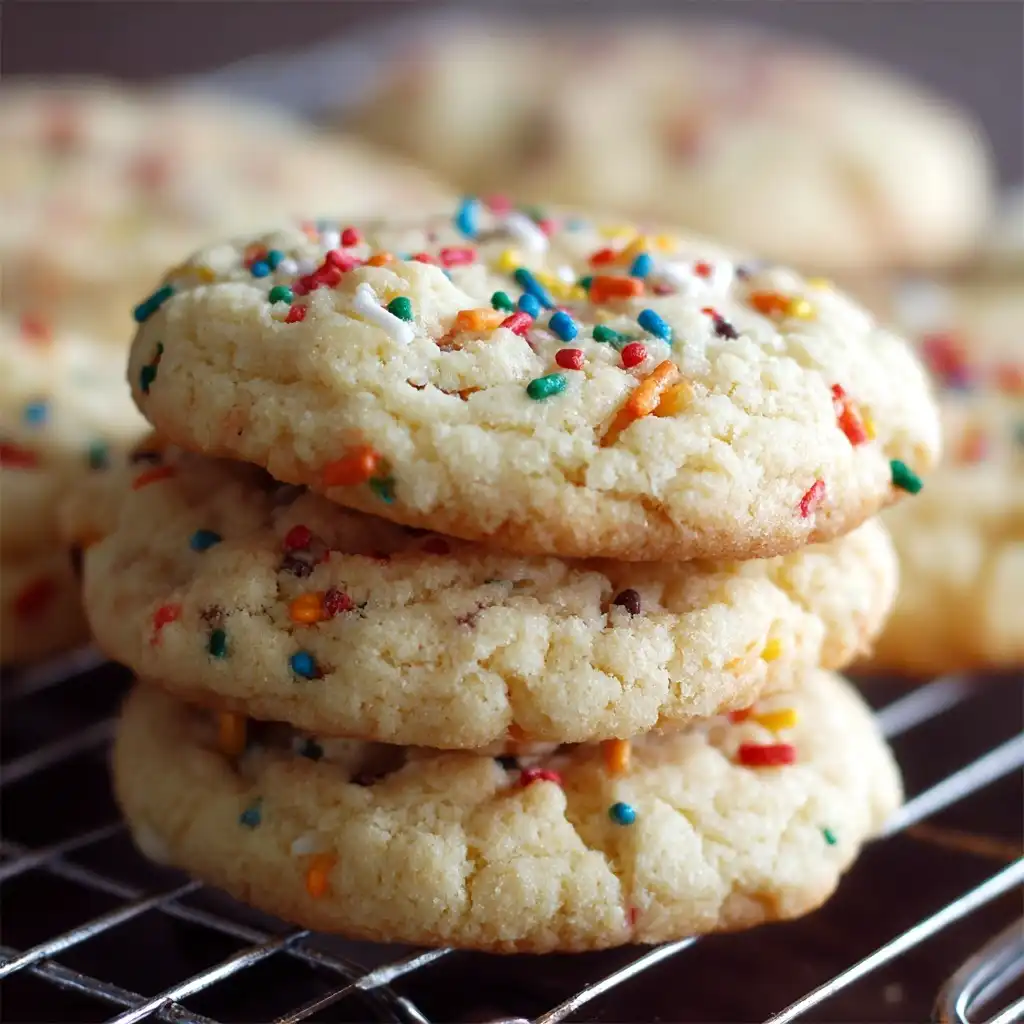
- Funfetti Confetti: Funfetti cake mix + 1 cup white chocolate chips + ½ cup rainbow sprinkles (add sprinkles last, fold gently).
- Red Velvet Crinkles: Red velvet cake mix + 1 cup white chocolate chips + 1 tsp white vinegar (reacts with cocoa for tang) + 1 tbsp unsweetened cocoa (for deeper color).
- Lemon Blueberry Bliss: Lemon cake mix + 1 cup fresh or frozen (unthawed) blueberries + zest of 1 lemon + 1 tsp poppy seeds.
- Snickerdoodle Swirl: Yellow cake mix + 1 tsp cinnamon + ½ tsp cream of tartar + 2 tbsp granulated sugar for rolling + optional swirl of cinnamon-sugar paste before baking.
- Peanut Butter Cup Crunch: Devil’s food cake mix + 1 cup chopped peanut butter cups + ½ cup roasted peanuts + 1 tbsp creamy peanut butter (melted, added with oil).
- Oatmeal Raisin Revival: Spice cake mix + 1 cup old-fashioned oats + ¾ cup raisins (plumped in hot water 5 min, drained) + ½ tsp ground ginger.
- S’mores Delight: Graham cracker or yellow cake mix + 1 cup mini marshmallows + ½ cup milk chocolate chips + ¼ cup crushed graham crackers (folded in last).
- Maple Pecan: Yellow or spice cake mix + ½ cup pure maple syrup (reduce oil to ¼ cup) + 1 cup toasted pecans + 1 tsp maple extract.
- Espresso Chocolate Chunk: Devil’s food cake mix + 1 tsp instant espresso powder + 1½ cups bittersweet chocolate chunks + flaky sea salt on top pre-bake.
- Vegan Version: Use vegan cake mix (e.g., Duncan Hines Classic Yellow) + 2 flax eggs (2 tbsp ground flax + 5 tbsp water, rested 10 min) + ½ cup refined coconut oil (melted & cooled).
- Gluten-Free Adaptation: Use certified GF cake mix (e.g., King Arthur or Pamela’s) + 1 tsp xanthan gum (if not included) + ensure all mix-ins are GF-certified.
Customization Frameworks:
- Texture Matrix: For chewier: add ¼ cup brown sugar + 1 egg yolk. For crispier edges: increase oil to ½ cup + bake 1–2 min longer. For cakey-soft: reduce oil to ¼ cup + add 1 tbsp milk.
- Flavor Amplification: Match extracts to cake mix (almond with white, peppermint with chocolate, coconut with funfetti). Bloom spices in warm oil for 30 seconds before adding.
- Visual Wow Factor: Press extra chips, nuts, or candy on top pre-bake. Sprinkle with colored sugar, flaky salt, or edible glitter. Drizzle with melted chocolate post-cool.
- Dietary Tweaks: Reduce sugar by swapping ¼ cup cake mix for oat flour (adds fiber, cuts sweetness). Boost protein with 2 tbsp unflavored collagen peptides (no taste/texture change).
Health Considerations and Nutritional Value
Let’s address the elephant in the (kitchen) room: Cake Mix Cookies are, by design, a treat—not a health food. However, understanding their nutritional profile empowers mindful enjoyment and informed modifications:
- Typical Nutrition (Per Cookie, based on yellow cake mix, 2 eggs, ½ cup oil, no add-ins): ~180–210 calories | 22–26g carbs (16–19g sugars) | 10–12g fat (1.5–2g saturated) | 2–3g protein | 0g fiber. Sodium ranges 140–180mg per cookie—largely from cake mix’s added salt and leaveners.
- Key Considerations:
- Added Sugars: Standard cake mixes contain significant refined sugar (often 20–24g per serving). To reduce: choose “reduced sugar” cake mixes (e.g., Pillsbury Reduced Sugar Yellow) or swap ¼ cup cake mix for unsweetened applesauce (adds moisture + natural sweetness).
- Refined Carbohydrates: The primary flour is enriched wheat—low in fiber and nutrients. Boost fiber/nutrients by replacing ¼ cup cake mix with almond flour, oat flour, or ground flaxseed (adds healthy fats + omega-3s).
- Oil Quality Matters: Using heart-healthy oils (avocado, grapeseed) instead of generic vegetable oil increases monounsaturated fats and reduces inflammatory omega-6s.
- Sodium Awareness: High sodium comes from baking powder (sodium acid pyrophosphate) and added salt. Low-sodium options are rare, but rinsing mix-ins like pretzels or salted nuts helps.
- Allergen Transparency: Most cake mixes contain wheat, soy, eggs (in some), and dairy derivatives (whey, casein). Always check labels—especially for nut-free or vegan needs. Cross-contamination warnings are common.
- When Are They “Healthier”? Compared to scratch cookies loaded with butter, brown sugar, and multiple cups of chocolate, Cake Mix Cookies often contain less saturated fat and fewer total calories per batch due to oil’s lower calorie density vs. butter (120 cal/tbsp oil vs. 102 cal/tbsp butter—but butter is 80% fat, oil is 100%). They also eliminate raw egg safety concerns and reduce risk of over-creaming (a common source of excess air = dryness).
- Mindful Indulgence Tips:
- Portion control: Use a 1-tablespoon scoop for bite-sized cookies (~90 calories each).
- Pair smartly: Serve with Greek yogurt, fresh berries, or a small glass of milk to slow sugar absorption.
- Frequency framing: Enjoy as a planned, savoring ritual—not mindless snacking.
- Homegrown upgrades: Grow your own vanilla bean for extract, toast your own nuts, or make homemade sprinkles from dried fruit.
Ultimately, nutrition is contextual. These cookies excel as occasional joy—not daily fuel. Their real “health benefit” may be stress reduction, creative expression, and the profound satisfaction of making something delicious with almost no friction.
Ingredients
- 1 box (15.25 oz / 432g) standard yellow, white, chocolate, or funfetti cake mix (avoid “just add water” varieties)
- 2 large eggs, room temperature
- ⅓ to ½ cup (80–120ml) neutral vegetable oil (canola, grapeseed, or light olive oil)
- 1–2 teaspoons pure vanilla extract
- ¼ teaspoon fine sea salt or kosher salt
- 1 to 1½ cups mix-ins of choice (e.g., chocolate chips, nuts, dried fruit, candies)
Directions
- Preheat oven to 350°F (175°C). Line two large baking sheets with parchment paper.
- In a large bowl, whisk cake mix for 30 seconds to aerate and de-lump.
- Add eggs and oil (start with ⅓ cup for thicker cookies; use ½ cup for chewier, thinner ones). Stir with a silicone spatula using a folding motion until *just combined* and no dry streaks remain—about 45–60 seconds. Do not overmix.
- Stir in vanilla and salt until incorporated. Gently fold in mix-ins until evenly distributed (10–15 folds).
- Scoop 1.5-tablespoon portions, roll into smooth balls, and place 3 inches apart on prepared sheets. Optional: chill dough balls for 15 minutes for improved shape.
- Bake one sheet at a time in center rack for 8–11 minutes, rotating pan at 5 minutes. Cookies are done when edges are golden and set, and centers appear soft and slightly underdone.
- Let cookies rest on hot pan for 5 minutes, then transfer to wire rack to cool completely (15–20 minutes) before serving.
FAQ
- Can I use butter instead of oil?
- Technically yes—but not recommended. Butter introduces water and milk solids, which cause unpredictable spread, greasiness, or cakey texture. Oil’s 100% fat content guarantees consistent tenderness. If you must: melt and cool ½ cup unsalted butter, but expect flatter, crisper cookies and potential greasiness.
- Why did my cookies spread too much?
- Top causes: (1) Oil measured incorrectly (too much), (2) Pan was greased (never grease!), (3) Dough wasn’t chilled (especially in warm kitchens), (4) Oven temperature is inaccurate (use oven thermometer), (5) Cake mix is old/leavening expired.
- Can I make these gluten-free or vegan?
- Absolutely—with caveats. For gluten-free: use certified GF cake mix + verify all add-ins are GF. For vegan: use vegan cake mix + flax or chia eggs + plant-based oil. Note: texture may be slightly more delicate—chill dough thoroughly and bake on parchment.
- How do I store them?
- Cool completely, then store in airtight container at room temperature for up to 5 days. For longer freshness: freeze baked cookies (up to 3 months) or freeze unbaked dough balls (up to 2 months—bake frozen, add 1–2 min to time). Do not refrigerate—they’ll dry out.
- Can I double the batch?
- Yes—but mix in two separate bowls. Combining all ingredients in one huge bowl risks overmixing and inconsistent texture. Also, avoid baking more than one sheet at a time; overcrowding lowers oven temp and causes uneven baking.
- What if my batter is too dry or too wet?
- Too dry? Add oil 1 tsp at a time until cohesive. Too wet? Add 1 tbsp cake mix at a time—never flour. Remember: batter should be thick, glossy, and scoopable—not runny or crumbly.
- Can I add baking soda or powder?
- No. Cake mixes contain precise amounts of leaveners (usually sodium aluminum sulfate + sodium bicarbonate). Adding more causes bitter metallic aftertaste, tunneling, or collapsed cookies.
- Why do some recipes say “add pudding mix”?
- That’s a *different* (though related) hack! Instant pudding mix adds starch for chewiness and moisture retention—but it’s optional, not essential. Our base recipe achieves perfect texture without it.
- Can kids help make these?
- Yes—this is one of the safest, most empowering baking projects for children. They can measure, whisk, scoop, and fold. Supervise oven use and hot pans, of course!
- What’s the best cake mix brand?
- Duncan Hines and Betty Crocker consistently yield the most reliable, flavorful results. Avoid store brands unless verified for consistent performance—some lack sufficient emulsifiers, causing separation.
Summary
Cake Mix Cookies—the viral “Secret Pinterest Trick”—transform a humble box of cake mix into irresistibly soft, chewy, and endlessly customizable cookies with just two more pantry staples: eggs and oil. It’s not a shortcut—it’s a masterclass in ingredient intelligence, leveraging decades of food science for foolproof, joyful baking.
From lemon-blueberry to red velvet crinkles, vegan adaptations to gluten-free triumphs, this method proves that extraordinary flavor and texture don’t require extraordinary effort—just curiosity, quality ingredients, and the courage to trust the mix.