
Introduction
Welcome to the revolutionary world of 2-Ingredient Soda Cake—a culinary phenomenon so disarmingly simple, it defies conventional baking wisdom and yet delivers astonishingly moist, tender, and deeply flavorful results every single time. This isn’t just another “hack”; it’s a paradigm shift in home baking—born from pantry necessity, refined by viral experimentation, and validated by thousands of real-world bakers who’ve gone from skeptical to obsessed in under 90 seconds. Whether you’re a time-crunched parent juggling school drop-offs, a college student surviving on dorm-room appliances, a caregiver needing quick comfort food, or simply someone who’s long since abandoned baking due to fear of flour ratios and failed leavening, this cake is your joyful re-entry point. No mixer required. No sifting. No eggs. No butter. No oil. No sugar substitutions needed (though they’re welcome!). Just two humble, shelf-stable ingredients—and magic.
The History
The origins of the 2-Ingredient Soda Cake are delightfully grassroots and surprisingly recent—emerging organically around 2018–2019 across social media platforms like TikTok, Instagram Reels, and Facebook baking groups. It began as a whispered kitchen secret: “What if you just mixed club soda with self-rising flour?” The idea wasn’t born in a test kitchen but in the exhausted improvisation of a home cook who’d run out of milk, eggs, and baking powder—and had only a half-empty bottle of sparkling water and a bag of self-rising flour left in the cupboard. What followed was pure serendipity: a batter that bubbled with effervescence, rose with uncanny confidence, and baked into a cake with the airy crumb of a classic sponge and the subtle, clean tang of mineral water. As videos of the process went viral—often accompanied by audible gasps at the first toothpick test—the recipe spread like digital wildfire. Food historians now recognize it as part of a broader resurgence of “zero-waste,” “pantry-first,” and “anti-perfectionist” cooking movements—echoing Depression-era ingenuity while speaking directly to modern demands for speed, accessibility, and emotional nourishment. Notably, the version using club soda (not just any carbonated water) gained dominance because its precise sodium citrate, potassium bicarbonate, and trace mineral profile interacts synergistically with the leavening agents already in self-rising flour—creating a more stable, predictable, and flavorful rise than plain seltzer or sparkling mineral water alone.
Ingredients Breakdown
Let’s demystify the alchemy—because yes, only two ingredients *can* make a full, delicious, oven-baked cake—but their quality, composition, and interaction matter profoundly:
- Self-Rising Flour (2 cups / 240g): This is not optional—and it’s not interchangeable with all-purpose + baking powder + salt. True self-rising flour (like White Lily, Gold Medal, or Pillsbury brands in the US; or similar nationally available brands elsewhere) contains a carefully balanced blend of low-protein soft wheat flour, baking powder (typically monocalcium phosphate + sodium acid pyrophosphate), and fine table salt. Its lower protein content (around 8–8.5%) ensures tenderness, while its pre-mixed leaveners are calibrated to activate *in tandem* with the carbon dioxide released from club soda. Using all-purpose flour + added leaveners rarely replicates the same texture—it often yields toughness or uneven rising due to overmixing sensitivity or pH imbalance.
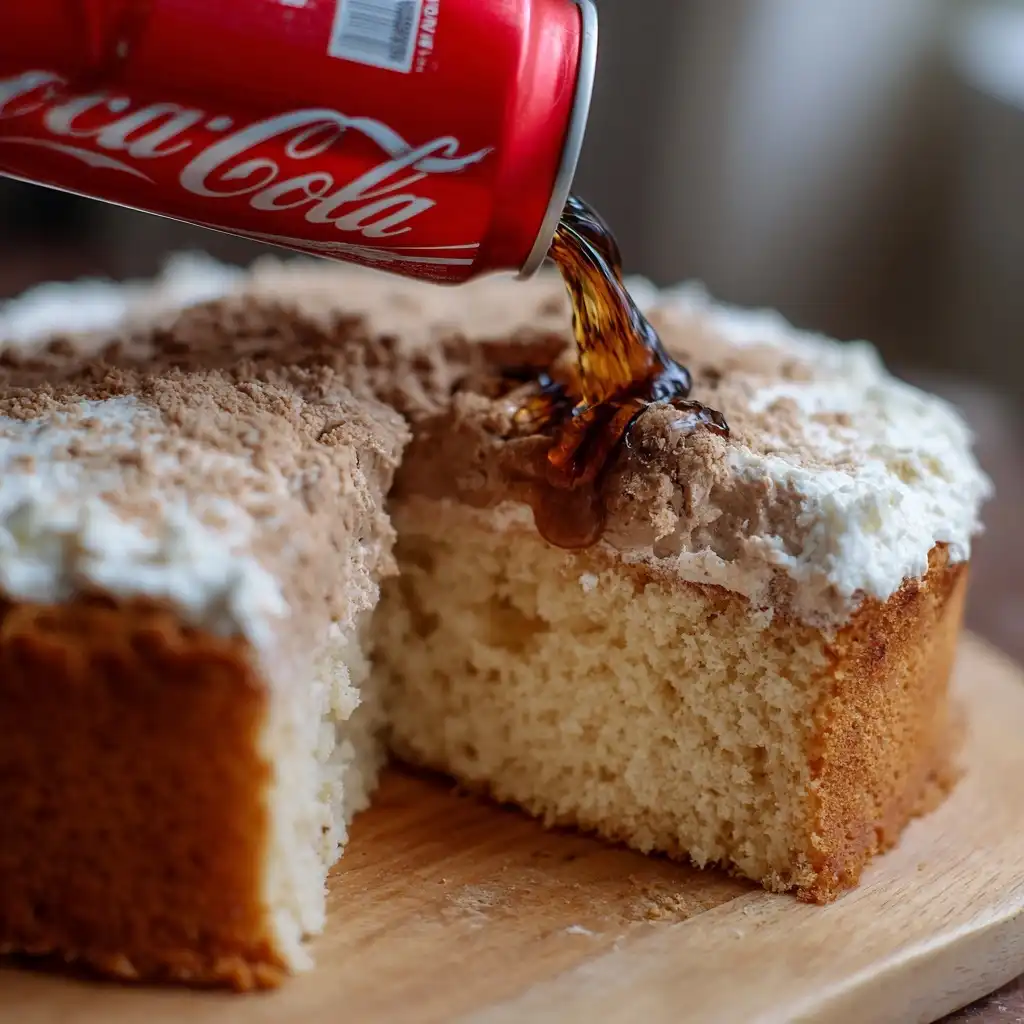
- Club Soda (1 cup / 240ml, chilled): Not sparkling water. Not tonic. Not ginger ale. Not even “seltzer” unless explicitly labeled “club soda.” Authentic club soda contains dissolved CO₂ plus added minerals—most critically sodium bicarbonate (baking soda), sodium citrate, and sometimes disodium phosphate. These alkaline buffers neutralize acidity, stabilize foam structure, enhance browning via Maillard reaction, and soften gluten development. Chilling the club soda is essential: cold liquid slows gluten formation, preserves carbonation longer during mixing, and yields a finer, more delicate crumb. Room-temperature or flat club soda leads to dense, gummy, or collapsed results. Bonus tip: Pour club soda straight from the fridge—don’t shake the can/bottle—and measure immediately after opening to capture maximum fizz.
That’s it. But here’s what makes it *more* than minimalism: the reaction is a triple-action leavening event—(1) residual baking powder in the flour reactivates upon hydration, (2) dissolved CO₂ rapidly expands under heat, and (3) sodium bicarbonate in the club soda reacts with acidic components (including trace acids in flour and the slight acidity of carbonic acid, H₂CO₃) to generate *additional* CO₂. This layered lift is why the cake rises so generously—even without eggs or fat—to a height and springiness rivaling traditional layer cakes.
Step-by-Step Recipe
- Gather & Prep (2 minutes): Preheat oven to 350°F (175°C). Generously grease and flour a 9-inch round cake pan, 8×8-inch square pan, or standard loaf pan (for denser, sliceable texture). Have measuring cups ready—one dry (for flour), one liquid (for club soda). Chill club soda in fridge until use. Ensure self-rising flour is at room temperature (cold flour + cold soda = excessive condensation → lumps).
- Combine Dry (30 seconds): In a large mixing bowl, add exactly 2 cups (240g) of self-rising flour. Use a whisk—not a spoon—to lightly aerate and break up any minor clumps. Do not sift unless flour has been sitting for months and shows visible hardening.
- Add Liquid (45 seconds—TIMING IS CRITICAL): Immediately pour 1 cup (240ml) of ice-cold club soda directly into the center of the flour. Begin stirring with a silicone spatula or wooden spoon using a gentle, folding motion—do not beat, whip, or vigorously stir. Stir just until no dry streaks remain—approximately 20–25 strokes. Batter will be thick, slightly lumpy, and actively bubbling at the edges. Overmixing develops gluten = rubbery texture. Stop the moment it becomes cohesive. It’s okay if tiny flour specks remain—they’ll hydrate in the oven.
- Rest & Release Air (1 minute): Let batter sit undisturbed for 60 seconds. This allows initial CO₂ bubbles to coalesce into larger, more effective leavening pockets—and lets excess surface air escape so the cake bakes evenly, not domed or cracked. Tap the bowl gently on the counter once to settle.
- Pour & Smooth (30 seconds): Pour batter into prepared pan. Use an offset spatula or the back of a spoon to gently smooth the top—avoid pressing down. Do not bang the pan now; you want those bubbles intact.
- Bake with Precision (28–32 minutes): Place pan in center rack of preheated oven. Set timer for 28 minutes. At 28 minutes, insert a toothpick into the center—if it emerges with *moist crumbs* (not wet batter, not completely dry), bake 1–2 minutes more. If toothpick is wet, continue in 1-minute increments. Overbaking dries it out instantly. The cake is done when edges pull slightly from pan, top springs back when lightly touched, and internal temp reads 205–210°F (96–99°C) on an instant-read thermometer.
- Cool Strategically (15+ minutes): Remove cake from oven. Let cool in pan on a wire rack for exactly 10 minutes. Then, run a thin knife around edges and invert onto rack. Flip right-side-up after 1 minute to prevent soggy bottom. Cool completely (minimum 45 minutes) before slicing—this allows starches to set and moisture to redistribute. Cutting too soon releases steam and causes collapse.
Tips
- The Ice-Cold Imperative: Store club soda in the coldest part of your fridge—not the door—for at least 4 hours before baking. Even 5°F warmer reduces bubble stability by ~30%.
- Altitude Adjustment: Above 3,000 ft? Reduce club soda to ¾ cup + 2 tbsp (195ml) and increase bake time by 3–5 minutes. Higher elevation = faster evaporation + weaker CO₂ retention.
- Pan Choice Matters: Dark nonstick pans absorb more heat—reduce temp to 325°F (165°C) and check 3–4 minutes early. Glass pans retain heat longer—cool cake in pan for 12 minutes instead of 10.
- No Mixer Zone: Electric mixers create shear force that bursts CO₂ bubbles. Hand-mixing only preserves the delicate foam matrix.
- Flour Freshness Check: Self-rising flour loses potency after 6 months. If your cake doesn’t rise well, test freshness: mix 1 tsp flour with ½ tsp vinegar—if no vigorous fizz, replace flour.
- Steam Is Your Friend: For ultra-tender crumb, place a small oven-safe ramekin of boiling water on the bottom rack while baking. Adds ambient humidity that slows crust formation.
- Room Temp ≠ Rush: Don’t rush cooling! Trapped steam continues cooking the interior. Cutting warm cake = gummy, sticky slices. Patience = perfect texture.
- Batch Scaling: Doubling works—but use two separate pans. Triple batches require 350°F → 340°F and +2 min bake time. Never bake >2 layers simultaneously in one oven unless convection.
Variations and Customizations
This minimalist base is a canvas—not a cage. Every addition is optional, intentional, and tested for compatibility:
- Vanilla Cloud Cake: Add 2 tsp pure vanilla extract + ¼ tsp almond extract to club soda before pouring. Enhances aroma without altering chemistry.
- Lemon Zest Sparkle: Finely grate 1 large lemon’s zest (avoid white pith) into flour before adding club soda. Bright, aromatic, and naturally oil-free.
- Chocolate Dream Swirl: Whisk ⅓ cup unsweetened cocoa powder into flour first. Optional: swirl in 2 tbsp melted dark chocolate post-pour.
- Spiced Harvest Loaf: Add 1½ tsp ground cinnamon + ¼ tsp ground nutmeg + ⅛ tsp ground cloves to flour. Perfect for fall—pairs beautifully with apple butter glaze.
- Coconut Paradise: Replace ¼ cup flour with unsweetened shredded coconut (toasted first for depth). Fold in ⅓ cup toasted coconut flakes after mixing.
- Blueberry Burst: Gently fold in 1 cup fresh or frozen (unthawed) blueberries tossed in 1 tsp flour—prevents sinking and bleeding.
- Everything Bagel Crust (Savory Twist): Omit sweetness entirely. Add 1 tbsp everything bagel seasoning + 1 tsp garlic powder to flour. Top with flaky sea salt before baking. Serve with herb cream cheese.
- Gluten-Free Adaptation: Use certified GF self-rising flour blend (like King Arthur or Bob’s Red Mill) + GF-certified club soda. Add ½ tsp xanthan gum if blend doesn’t include it. Rest batter 2 minutes pre-bake.
- Vegan Upgrade: Already vegan! But for richness, add 2 tbsp aquafaba (chickpea brine) to club soda—boosts structure and moisture.
- Frosting-Friendly Base: For layer cakes, bake in two 6-inch rounds (20–22 min) and level tops. Holds buttercream, ganache, or whipped coconut cream flawlessly.
Pro Tip: Always add flavorings to the *dry* ingredients (except liquids like extracts or aquafaba, which go in the club soda) to ensure even distribution without overmixing.
Health Considerations and Nutritional Value
A 2-Ingredient Soda Cake is not a “health food”—but it *is* nutritionally honest, minimally processed, and uniquely adaptable for dietary needs. Per standard slice (1/12 of 9-inch round cake):
- Calories: ~135 kcal — significantly lower than traditional cakes (often 250–400+ kcal) due to zero added fats or eggs.
- Carbohydrates: ~28g total (mostly complex starch from flour), with 0g added sugar (unless sweetener is added separately).
- Protein: ~3g — modest but bioavailable from wheat gluten.
- Fat: ~0.3g — naturally occurring in flour, no added oils or butter.
- Sodium: ~220mg — from self-rising flour’s salt + club soda’s sodium bicarbonate. Easily reduced by using low-sodium club soda and homemade self-rising flour (all-purpose + 1½ tsp baking powder + ½ tsp salt per cup).
- Fiber: ~0.8g — increases to 1.5g+ with whole-wheat self-rising flour blends.
Dietary Notes:
- Vegetarian/Vegan: Naturally compliant—no animal products involved.
- Dairy-Free: Yes—no milk, butter, or whey.
- Nut-Free: Inherently safe (always verify brand labels for cross-contamination warnings).
- Egg-Free: A game-changer for egg allergies or ethical choices.
- Low-Fat/Low-Calorie Diets: Ideal base for portion-controlled treats—enhance satiety with Greek yogurt topping or fruit compote instead of frosting.
- Diabetic-Friendly Potential: With no added sugar, it fits into carb-counted plans. Pair with berries and cinnamon for low-glycemic impact.
- Gluten Sensitivity: Not suitable for celiac disease unless using certified GF flour and strict protocols.
Important Caveat: While minimalist, it remains a refined carbohydrate source. Enjoy mindfully—as part of a balanced diet—not as daily sustenance. Its greatest health virtue may be psychological: reducing cooking stress, increasing food autonomy, and fostering joyful, judgment-free creativity in the kitchen.
Ingredients
- 2 cups (240g) self-rising flour (see notes for brand recommendations and GF options)
- 1 cup (240ml) ice-cold club soda (e.g., Schweppes, Canada Dry, or store-brand club soda—NOT seltzer, tonic, or sparkling water)
Optional Enhancements (choose 1–2 max for best texture):
• 2 tsp pure vanilla extract
• Zest of 1 lemon or orange
• ⅓ cup unsweetened cocoa powder
• 1 tsp ground cinnamon + ¼ tsp ground nutmeg
• 1 cup fresh/frozen blueberries (tossed in 1 tsp flour)
• 2 tbsp toasted coconut flakes
• Pinch of flaky sea salt (for savory version)
Directions
- Preheat oven to 350°F (175°C). Generously grease and flour a 9-inch round cake pan, 8×8-inch square pan, or 9×5-inch loaf pan.
- In a large bowl, whisk together self-rising flour (and any dry flavorings like cocoa, spices, or zest) until fully combined and aerated.
- In a liquid measuring cup, pour chilled club soda. Add any liquid flavorings (vanilla, extracts) and stir gently.
- Pour club soda mixture into center of flour. Using a silicone spatula or wooden spoon, fold gently—about 20–25 strokes—until just combined and no dry flour remains. Batter will be thick, slightly lumpy, and visibly bubbling.
- Let batter rest undisturbed for 60 seconds.
- Pour batter into prepared pan. Smooth top gently with spatula—do not press down.
- Bake for 28–32 minutes, or until a toothpick inserted in center comes out with moist crumbs (not wet batter). Rotate pan halfway through for even baking if your oven has hot spots.
- Remove from oven. Let cool in pan on wire rack for 10 minutes exactly.
- Run thin knife around edges. Invert cake onto rack, then flip right-side-up after 1 minute.
- Cool completely (45+ minutes) before slicing. Serve plain, dusted with powdered sugar, or topped with fresh fruit, whipped cream, or a light glaze.
FAQ
- Can I use baking powder + all-purpose flour instead of self-rising flour?
- Technically yes—but results are inconsistent. Homemade versions often over-leaven (causing collapse) or under-leaven (yielding density) due to imprecise ratios and lack of buffering minerals. For reliable success, stick with commercial self-rising flour.
- Why did my cake sink in the middle?
- Most common causes: (1) Overmixed batter—gluten developed too much, then collapsed under weight; (2) Oven temperature too low—structure didn’t set before CO₂ escaped; (3) Opened oven too early—sudden temperature drop destabilized bubbles; (4) Club soda was warm or flat—insufficient lift.
- Can I make this ahead and freeze it?
- Absolutely! Cool completely, wrap tightly in plastic wrap + aluminum foil, and freeze up to 3 months. Thaw overnight in fridge, then refresh in 325°F oven for 8–10 minutes. Texture remains excellent.
- Is there a way to make it sweeter without adding sugar?
- Yes! Stir 2–3 tbsp mashed ripe banana or unsweetened applesauce into club soda before mixing. Adds natural fructose + moisture. Or top with honey-lime drizzle post-bake.
- Can I use sparkling water or seltzer?
- Seltzer (carbonated water + sodium chloride) lacks the alkaline buffers in club soda and often yields flatter, less tender results. Sparkling mineral water varies widely—some brands contain enough bicarbonates to work, but it’s unreliable. Stick with true club soda for guaranteed excellence.
- My batter looks curdled or separated—is that normal?
- No—true 2-ingredient batter should be homogenous and bubbly. Separation suggests expired flour (leaveners inactive), warm club soda (CO₂ escaped pre-mix), or accidental addition of acidic liquids (like lemon juice) that prematurely reacted with baking powder.
- Can I add eggs for richness?
- You *can*, but it defeats the core purpose and changes the chemistry dramatically. Eggs add structure and fat—which competes with the CO₂ lift and often yields a heavier, more muffin-like texture. Embrace the lightness!
- How do I get a shiny, crack-free top?
- Brush top with 1 tsp cold club soda at 20 minutes into baking—creates gentle steam that smooths surface. Also, avoid opening oven before 25 minutes.
- Is this safe for kids with multiple food allergies?
- Yes—with verification: Use certified nut-free, dairy-free, egg-free, soy-free club soda and self-rising flour. Always read labels—even “natural flavors” can hide allergens. When in doubt, contact manufacturer.
- Can I bake this in a microwave?
- Not recommended. The rapid, uneven heating prevents proper CO₂ expansion and starch gelatinization, resulting in gummy, uncooked centers and rubbery edges. Stick to conventional or convection oven.
Summary
The 2-Ingredient Soda Cake is a masterclass in elegant simplicity—where science, scarcity, and serendipity converge to deliver extraordinary taste and texture with laughably little effort. It proves that profound deliciousness doesn’t require complexity, expensive tools, or culinary expertise—just intention, quality ingredients, and respect for the quiet magic of carbonation and chemistry.
Whether you bake it for nostalgia, necessity, nutrition, or pure playful wonder, this cake doesn’t just fill a plate—it rekindles confidence, invites curiosity, and reminds us that sometimes, the most revolutionary recipes are the ones we’ve had in our pantries all along.